Runtime Kernel Syscall Enforcement with Cilium Tetragon
Real-time in-kernel attack detection and autonomous prevention. Authoring Tetragon TracingPolicies, inspecting `sys_execve` arguments, preventing container breakouts, and triggering sub-millisecond in-kernel SIGKILL.
Runtime Kernel Syscall Enforcement with Cilium Tetragon
The Blindness of User-Space Security
Traditional runtime security tools poll Linux system logs, parse auditd streams, or inspect user-space process trees. These approaches suffer from high latency (seconds to minutes) and are easily circumvented by modern kernel exploits, namespace escapes, or log tampering.
In-Kernel Enforcement via eBPF
Cilium Tetragon hooks directly into kernel system calls, tracepoints, and Linux Security Module (LSM) hooks. It evaluates security policies in-kernel before the system call returns. If an adversary attempts an unauthorized action, Tetragon executes an instantaneous in-kernel process termination (SIGKILL), neutralizing the threat in microseconds.
Defense Scenarios
- Container Breakout Prevention: Block processes from executing
sys_setnsor modifying host namespaces. - Reverse Shell Neutralization: Detect execution of shells (
/bin/sh,/bin/bash) spawned by web servers (nginx, nodejs, python) and immediately kill the child process. - Privilege Escalation Interception: Detect unauthorized transitions to root UID (0).
apiVersion: cilium.io/v1alpha1
kind: TracingPolicy
metadata:
  name: block-reverse-shell-in-web
  namespace: production
spec:
  kprobes:
    - call: "sys_execve"
      syscall: true
      args:
        - index: 0
          type: "string"
      selectors:
        - matchArgs:
            - index: 0
              operator: "Prefix"
              values:
                - "/bin/sh"
                - "/bin/bash"
                - "/usr/bin/python"
          matchNamespaces:
            - "production"
          matchActions:
            - action: Sigkill
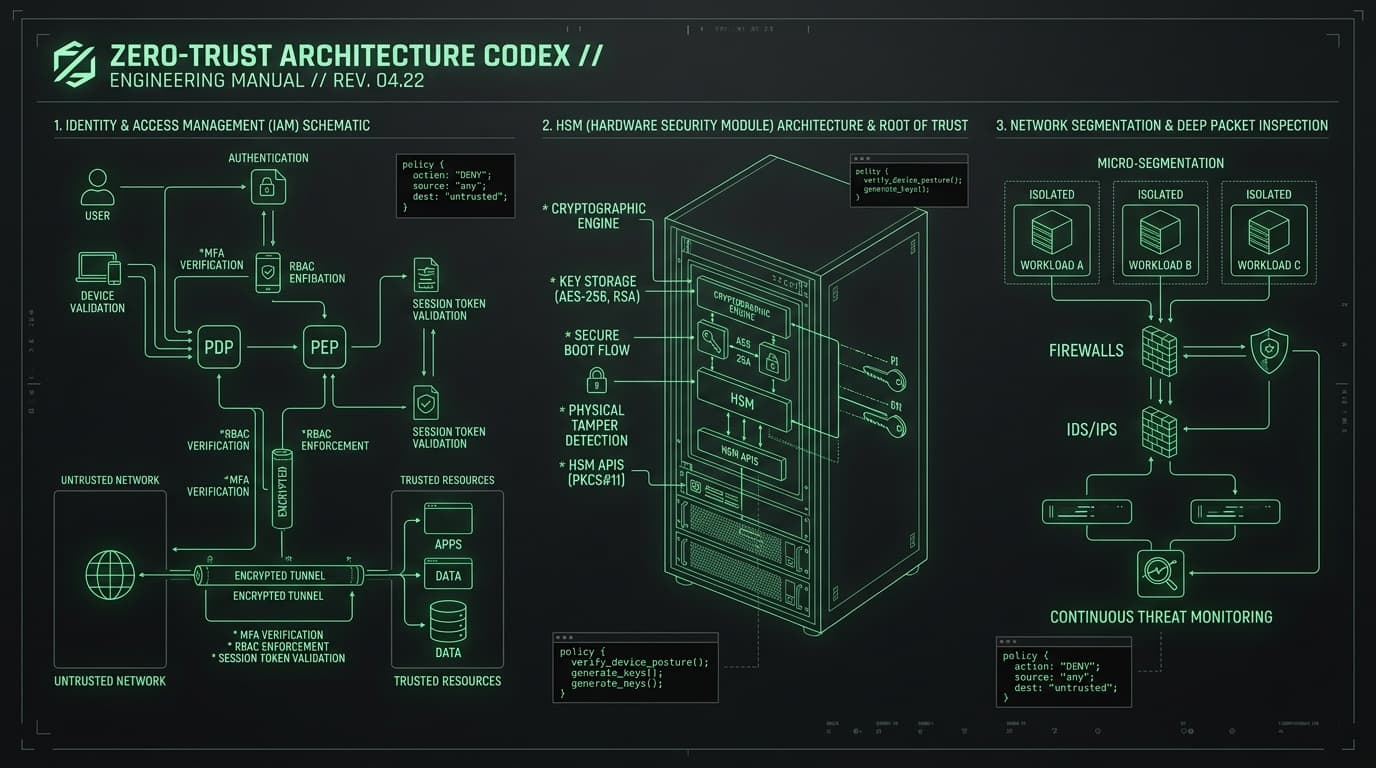
Canonical Zero-Trust Defense per NIST SP 800-207 & CISA ZTMM 2.0: Eliminate static credentials, enforce eBPF microsegmentation, and preempt threats with in-kernel runtime telemetry.