> why_the_chaos_stack_exists
Why The Chaos Stack Exists
Modern software systems do not fail because one person made one mistake. They fail because architecture, incentives, meetings, roadmaps, tools, shortcuts, context, cost, and assumptions quietly stack on top of each other.
The Chaos Stack turns that invisible stack into characters.
Explore the Universe
The thematic pillars of predictability and pain.
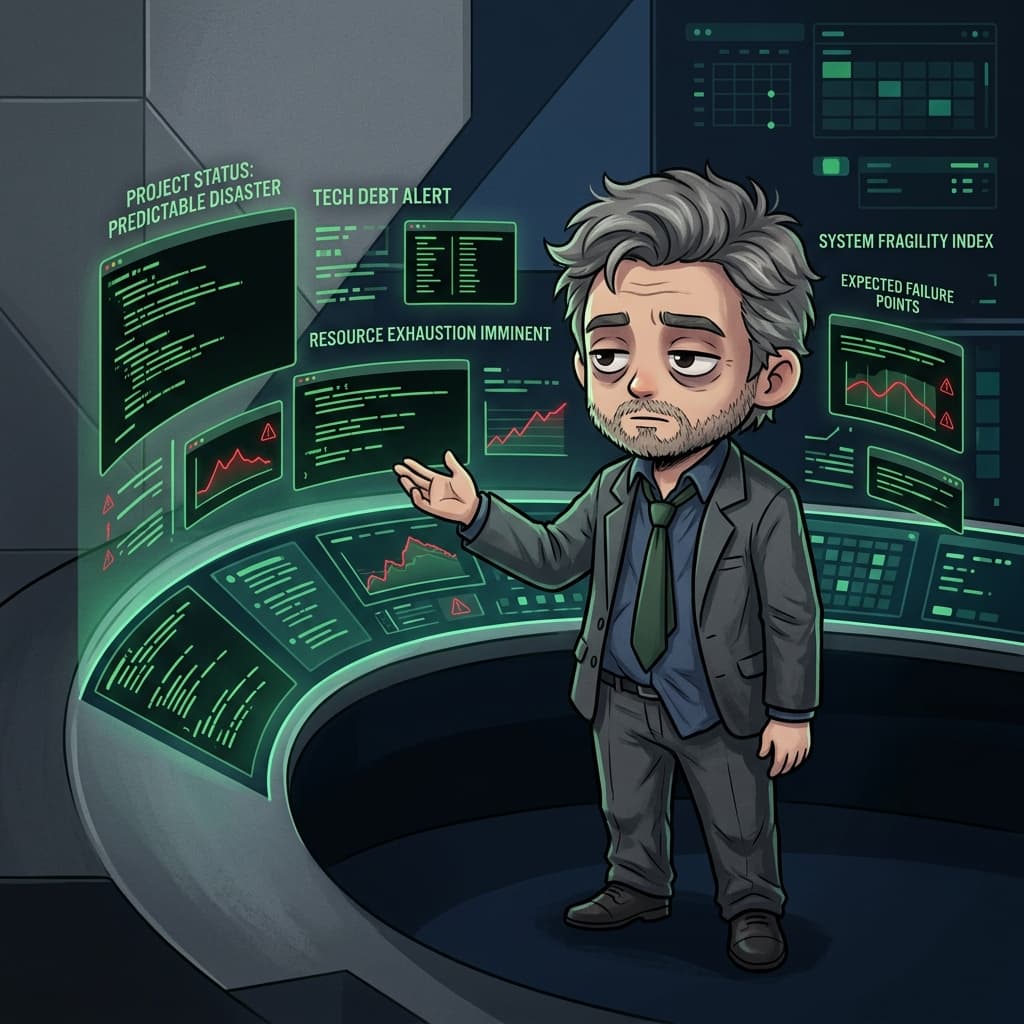
The personification of technical trade-offs.
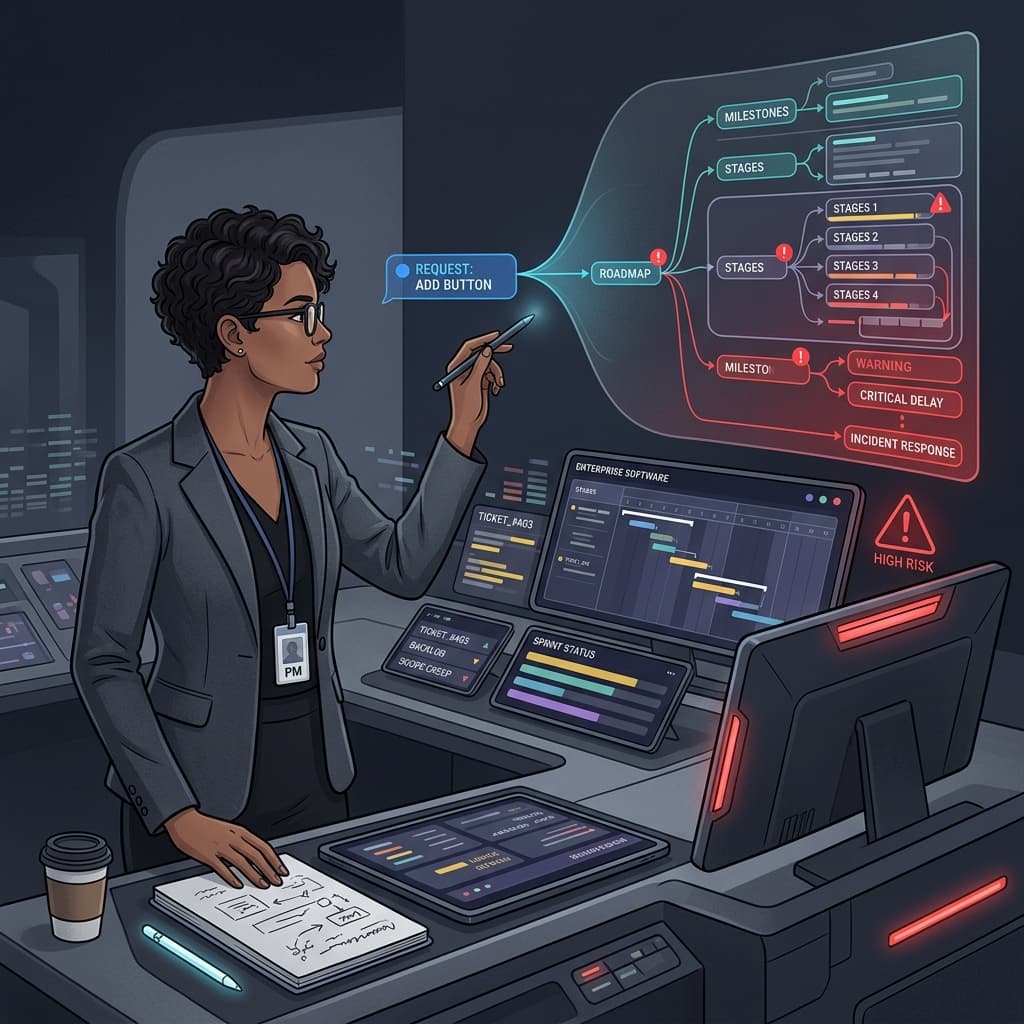
Governance, delivery, and corporate structure.
The infrastructural reality behind the buzzwords.
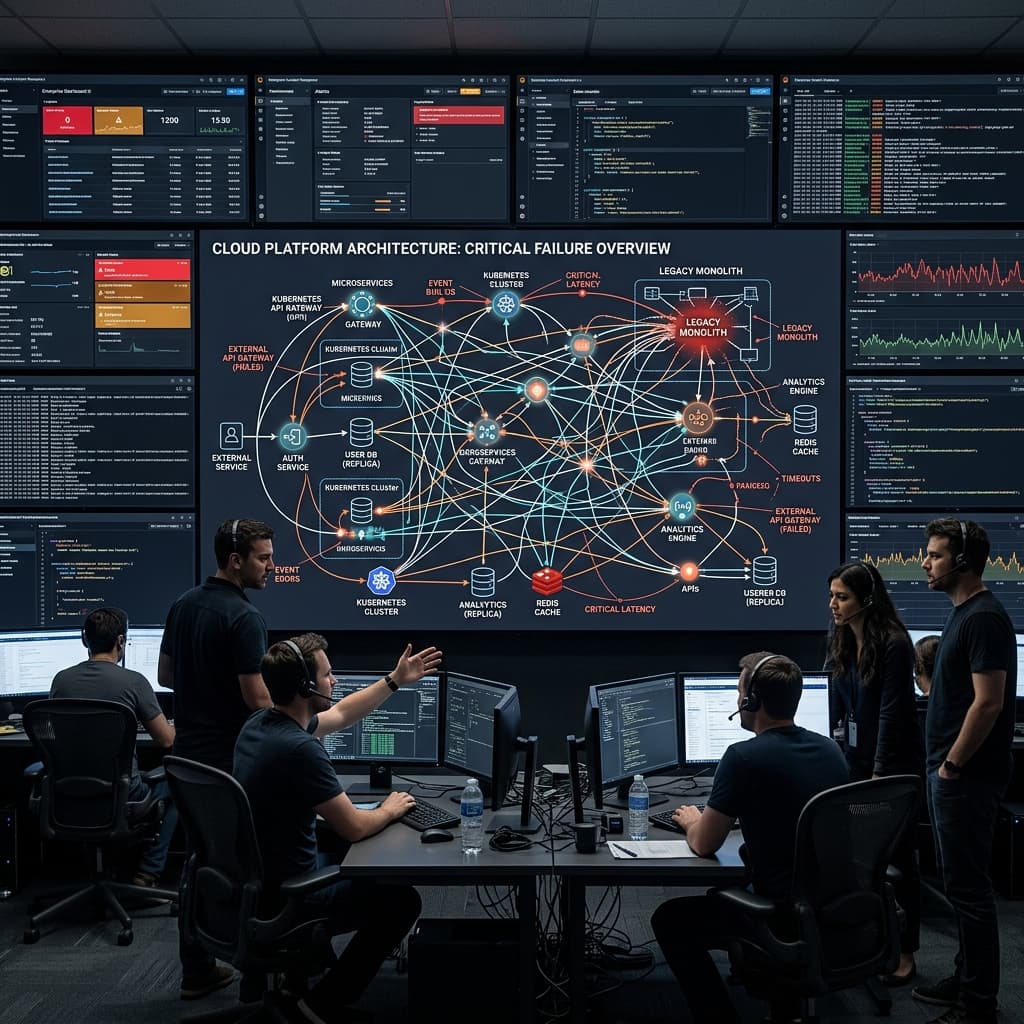
Conceptual breakdowns and recurring failures.
When systems, people, and assumptions collide.
Stack Constellation
The Agentic Operations Stack
The Answer Engine Stack
The Cloud Cost Stack
The Compliance Stack
The Data Truth Stack
The Delivery Theater Stack
The Enterprise AI Stack
The Executive Transformation Stack
The FinOps Stack
The Incident Humor Stack
The Legacy Gravity Stack
The Migration Stack
The ModelOps Stack
The Observability Stack
The Platform Ownership Stack
The Procurement Theater Stack
The Security and Governance Stack
The Chaos Stack
The Hype Stack
The Vibe Coding Stack
Character Worlds
System Landscape
Representative infrastructure layers powering the chaos.
ARCHITECTURE
Architecture
Provides a theoretical map of how systems should communicate when reality is ignored.
Monolith
Runs the entire business inside a single, tightly coupled codebase that nobody fully understands.
Microservices
Decouples domains into independently deployable services that communicate over the network.
Microservices Architecture
A network of independent nodes working together to appear as a single coherent system.
The Monolith
An outdated but critical system that continues to serve business needs despite immense technical debt.
Platform Team
Centralized internal services or platforms provided to multiple independent product teams to standardize operations.
Consensus
The process of designating a single node as the coordinator for tasks in a distributed cluster.
COMPUTE
Workflow
Orchestrates complex business logic through a series of predictable, sequential steps.
Thread Pool
A group of standby threads or processes ready to execute concurrent asynchronous tasks.
CDN Edge
Computing infrastructure placed closer to the user to reduce latency and save bandwidth.
K8s
A sophisticated orchestration platform for automating the deployment, scaling, and management of containerized applications.
AWS Region
A geographically distinct physical location hosting multiple isolated availability zones for cloud services.
Scheduled Task
A robust, time-based job scheduler used to automatically execute recurring scripts or commands.
MESSAGING
Pipeline
Moves data seamlessly from source to destination with perfect fidelity.
Queue
Buffers transient spikes in traffic to ensure asynchronous processing reliability.
Event Bus
An intermediary module that translates, routes, and queues messages between different applications or services.
DLQ
A holding area for messages or events that a system could not process successfully after multiple attempts.
How the Universe Connects
Stack → The overarching themes of failure (e.g. The Chaos Stack).
Characters → Live inside Stacks, representing trade-offs.
Systems → The infrastructure that Characters interact with.
Topics → The technical disciplines attempting to manage it all.
Episodes → The narrative events where everything breaks predictably.
Personnel describes the responsibility and governance wrapping around all of these surfaces.
Guided Paths
The Chaos Stack Universe FAQs
Why does The Chaos Stack exist?
The Chaos Stack personifies the trade-offs, incentives, and predictable failure patterns behind modern software systems.
Are the characters based on real people?
No. They represent architectural patterns, team dynamics, and production behaviors, not specific individuals.
AI Summary
This page explains why TinyCTO.tv and The Chaos Stack exist. TinyCTO.tv uses character-led parables to explain software architecture, AI workflows, cloud costs, incidents, technical debt, delivery pressure, and engineering leadership. The Chaos Stack turns invisible software failure modes into characters. Each character represents a technical trade-off.