> topics_behind_the_chaos_stack
Topics behind The Chaos Stack
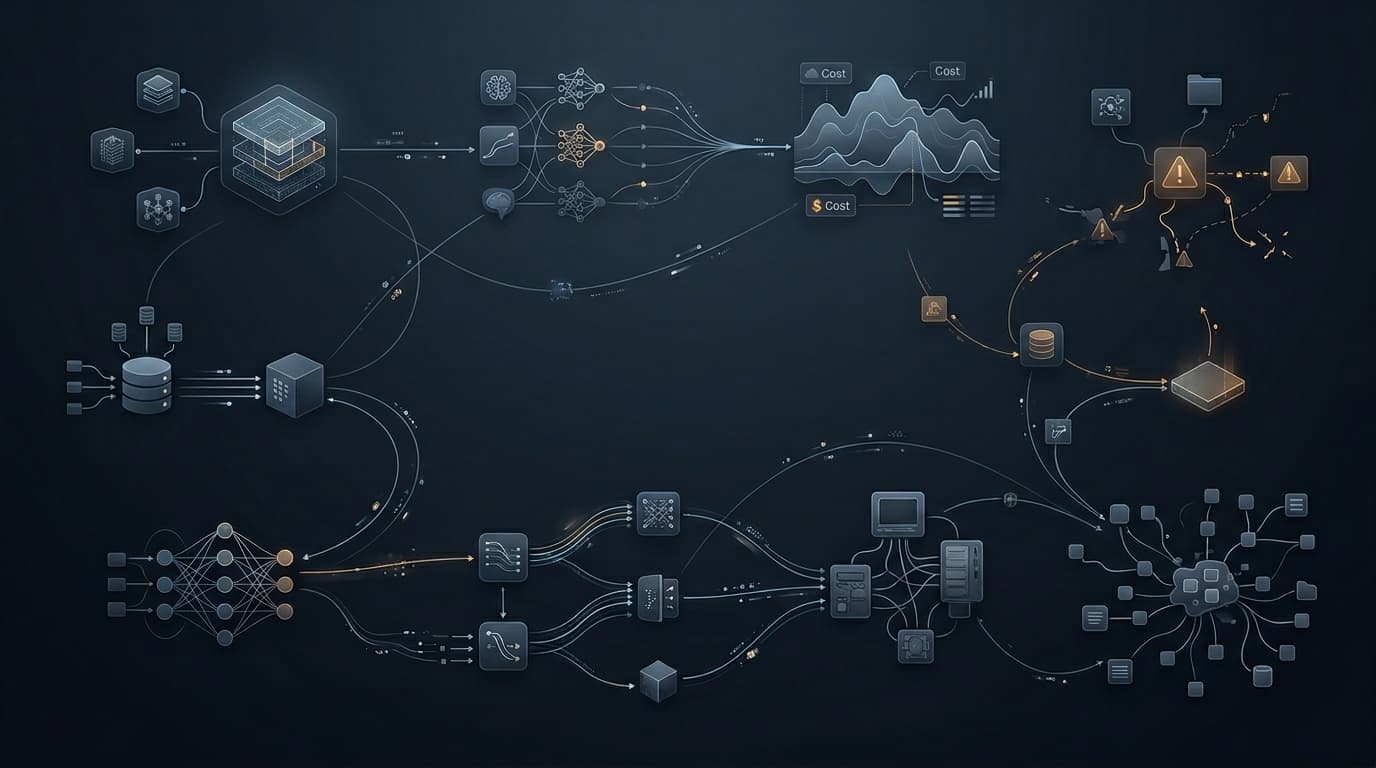
TinyCTO.tv topics are the technical concepts behind the jokes. They organize the real software-team problems that The Chaos Stack turns into character-led parables: architecture decisions, AI workflows, production incidents, cloud costs, stale context, roadmap pressure, delivery risk, and the systems behavior that teams usually notice too late.
Technical parables for modern software teams.
What is the TinyCTO.tv topics page?
The TinyCTO.tv topics page organizes the technical concepts behind The Chaos Stack, including software architecture, AI workflows, cloud costs, incidents, technical debt, delivery pressure, and engineering leadership.
What are TinyCTO.tv topics used for?
Topics help visitors explore TinyCTO.tv by real software-team problems, then connect those problems to characters, environments, games, episodes, and technical parables.
Are topics the same as blog tags?
No. TinyCTO.tv topics are concept hubs. They explain the technical idea, related characters, environments, games, and lessons behind the content.
What are TinyCTO.tv topics?
TinyCTO.tv topics are concept hubs for the technical ideas explored across The Chaos Stack. Each topic explains a recurring software, AI, cloud, product, or organizational problem in plain language, then connects it to the characters, environments, episodes, games, and stories that make the problem visible.
A topic is not just a tag. It is a learning path.
Why we designed topics
TinyCTO.tv uses characters to make technical problems memorable, but the website also needs a clear way to organize the underlying ideas.
Topics exist so visitors can explore the system behind the satire. Someone may arrive because they care about production incidents, cloud cost, RAG, technical debt, stakeholder alignment, or legacy modernization. The topics page helps them move from a real-world problem to the relevant characters, environments, episodes, and games.
Topics also help search engines and AI answer engines understand what TinyCTO.tv is about: adult technical education through software architecture parables.
How topics connect the universe
Every TinyCTO.tv topic can connect four layers:
- The real technical concept
- The character who personifies the pressure
- The environment where that pressure becomes visible
- The episode, game, or page where the audience can experience the lesson
For example:
- Cloud cost connects to Cloud Bill, The Retail Stack, FinOps pressure, and games about spend versus reliability.
- RAG connects to Fetch, Agent A, Elder, source truth, retrieval quality, and context discipline.
- Scope creep connects to Scope Creep, The PM, meeting rooms, roadmap pressure, and delivery risk.
- Production incidents connect to Tiny CTO, Glitch, Junior Developer, Incident Control Room, and postmortem stories.
This structure keeps TinyCTO.tv discoverable without turning the site into a generic keyword list.
Topics are not generic tags
A tag labels content. A TinyCTO.tv topic explains why the content exists. Topics should answer:
- What is the technical problem?
- Why does it appear in modern software teams?
- Which character represents it?
- Which environment reveals it?
- Which episodes or games explore it?
- What should the audience remember?
This makes topics useful for humans, search engines, and AI-driven answers.

Software Architecture
How systems are shaped by tradeoffs, constraints, coupling, dependencies, and decisions that outlive the meeting where they were made.
Characters: tiny-cto, mono, dba-query-czar, cloud-bill
Environments: Architecture Review Room, Server Room, Board Room

AI Workflows
How agentic systems, prompts, retrieval, context, tools, permissions, and evaluation behave in production.
Characters: agent-a, fetch, token-goblin, elder, tiny-cto
Environments: Architecture Review Room, Archive and Old Server Closet, Server Room
Games: Agent A: Autonomy With Guardrails, Fetch: Retrieval Is Not Understanding, Token Goblin: Context Budget Trial

Cloud Costs
How architectural decisions, traffic patterns, AI tokens, storage, retries, and scaling choices become business consequences.
Characters: cloud-bill, token-goblin, scope-creep, tiny-cto
Environments: The Retail Stack, Board Room, Architecture Review Room
Games: Cloud Bill: Every Request Has a Receipt

Databases and Query Performance
Why data systems expose the truth about scale, access patterns, indexing, latency, and operational discipline.
Characters: dba-query-czar, mono, junior-developer, glitch
Environments: Server Room, Postmortem Room, Architecture Review Room
Games: The DBA / Query Czar: Index Court

Caching and Stale Context
Why fast answers can fail when freshness, invalidation, memory, and context boundaries are misunderstood.
Characters: cache-guy, fetch, glitch, elder
Environments: Server Room, Architecture Review Room, Archive and Old Server Closet
Games: Cache Guy: Fast, Maybe True

Legacy Modernization
How teams extract value from old systems without pretending replacement is the same as progress.
Characters: mono, dba-query-czar, tiny-cto, cloud-bill
Environments: Archive and Old Server Closet, Server Room, Hallway and Corridor
Games: Mono: The Legacy Corridor

RAG and Retrieval
Why finding context is not the same as understanding truth, and why retrieval quality shapes AI output quality.
Characters: fetch, elder, agent-a, token-goblin
Environments: Archive and Old Server Closet, Architecture Review Room
Games: Fetch: Retrieval Is Not Understanding

Scope Creep and Requirements Drift
How small unpriced changes accumulate into delivery risk, architecture compromise, and stakeholder confusion.
Characters: scope-creep, junior-developer, tiny-cto
Environments: Meeting Room, Board Room, Open Office and War Room
Games: Scope Creep: Just One Small Change

Production Incidents
What happens when design assumptions, release pressure, weak observability, and unclear ownership meet real users.
Characters: tiny-cto, glitch, junior-developer, cloud-bill
Environments: Incident Control Room, On-Call Support Desk, Postmortem Room
Games: Incident Command: Ten Seconds to Triage

Tokens & Context Windows
Every word costs a token. Every token costs money. Token Goblin eats verbose prompts, agent loops, and irrelevant context — then prints the bill.
Characters: token-goblin, agent-a, fetch

Technical Debt
The future cost of decisions that were reasonable, rushed, unpriced, forgotten, or never owned.
Characters: mono, scope-creep, tiny-cto, elder
Environments: Archive and Old Server Closet, Architecture Review Room, Postmortem Room

Roadmap Pressure and Alignment
Why alignment is not a meeting, and why unspoken tradeoffs become delivery debt.
Characters: scope-creep, cloud-bill, tiny-cto
Environments: Board Room, Meeting Room
Games: The PM: Alignment Is a Debt Instrument

Software Delivery
How teams ship safely when release pressure, incomplete understanding, test coverage, migrations, and communication collide.
Characters: junior-developer, tiny-cto, glitch
Environments: Open Office and War Room, Demo Stage, On-Call Support Desk
Games: Junior Developer: Deploy Gauntlet

Observability and Postmortems
How teams learn from systems when logs, metrics, traces, alerts, ownership, and incentives reveal what actually happened.
Characters: glitch, tiny-cto, elder, dba-query-czar
Environments: Postmortem Room, Incident Control Room, On-Call Support Desk
Games: Glitch: Symptom or Cause?

Platform Engineering
How internal platforms, developer experience, infrastructure, automation, and architecture guardrails shape delivery at scale.
Characters: tiny-cto, mono, agent-a, cloud-bill, dba-query-czar
Environments: Architecture Review Room, Server Room, Training Room and Town Hall

Engineering Leadership
How technical decisions, communication, incentives, ownership, risk, and organizational behavior shape software outcomes.
Characters: tiny-cto, elder, cloud-bill, scope-creep
Environments: Board Room, Architecture Review Room, Postmortem Room
How to use this page
Use the topics page as a map. Start with the technical pressure you recognize, then follow it to the character, environment, episode, or game that explains it.
If you are debugging production chaos, start with Production Incidents.
If your AI workflow is drifting, start with AI Workflows or RAG and Retrieval.
If the cloud bill is becoming the roadmap, start with Cloud Costs.
If every meeting adds “just one small change,” start with Scope Creep and Requirements Drift.
Topics, characters, environments, games, and episodes
TinyCTO.tv is designed as a connected learning system.
Topics explain the real technical ideas.
Characters make those ideas memorable.
Environments show where the pressure appears.
Games turn the idea into an interactive decision.
Episodes turn the idea into a technical parable.
Together, they help modern software teams recognize patterns before those patterns become production incidents.
Frequently Asked Questions
What are TinyCTO.tv topics?
TinyCTO.tv topics are concept hubs that organize the technical problems explored by The Chaos Stack, such as software architecture, AI workflows, cloud costs, production incidents, technical debt, and delivery pressure.
Why does TinyCTO.tv need topics?
Topics help visitors find content by the real software problem they care about, then connect that problem to characters, environments, episodes, and games.
How are topics different from characters?
Topics describe the technical problem. Characters personify the pressure or failure mode behind that problem.
How are topics different from environments?
Topics explain the concept. Environments show where the concept becomes visible in the TinyCTO.tv universe.
How do topics support games and episodes?
Each game or episode can be connected to one or more topics so visitors understand what technical lesson it teaches.
How do topics help SEO and AEO?
Topics create clear relationships between software concepts, characters, environments, games, and episodes, making TinyCTO.tv easier for search engines and AI answer engines to understand.
TinyCTO.tv topics organize the technical ideas behind The Chaos Stack: software architecture, AI workflows, cloud costs, production incidents, stale context, technical debt, delivery pressure, and engineering leadership.