> environments_of_the_chaos_stack
Environments of The Chaos Stack
TinyCTO.tv environments are the recurring places where technical chaos becomes readable. They are not random backgrounds. They are production spaces designed to show how software architecture, AI workflows, cloud costs, stale context, roadmap pressure, and incident reality behave when teams try to ship modern systems.
Technical parables for modern software teams.
What are TinyCTO.tv environments?
TinyCTO.tv environments are reusable story locations for The Chaos Stack. Each environment gives a specific kind of technical pressure a visible place: incidents happen in the Incident Control Room, architecture tradeoffs surface in the Architecture Review Room, cloud costs become tangible in The Retail Stack, and stale truth waits in the Archive and Old Server Closet.
They help the audience understand not only who the characters are, but where each kind of system failure, leadership decision, or delivery pressure tends to appear.
Why we designed them
The Chaos Stack is a character universe, but software problems do not happen in empty space. They happen in meeting rooms, war rooms, dashboards, server rooms, review boards, late-night bedrooms, product demos, and postmortems.
The environments were designed to make invisible system forces visible. A cloud bill is easier to understand when it has a place. A production incident becomes clearer when it has a control room. A roadmap conflict becomes sharper when it has a boardroom. A stale source of truth becomes more memorable when it lives in an archive.
These spaces give every episode, game, character page, hero image, and visual style a consistent production logic.
Common environments
Common environments are shared places used by multiple characters and many stories. They represent recurring software-team situations: incident response, architecture review, deployment pressure, production debugging, stakeholder meetings, cost review, onboarding, postmortems, and system modernization.
Common environments exist because most technical failures are not personal. They are shared system conditions. The same room can reveal different problems depending on which character enters it.


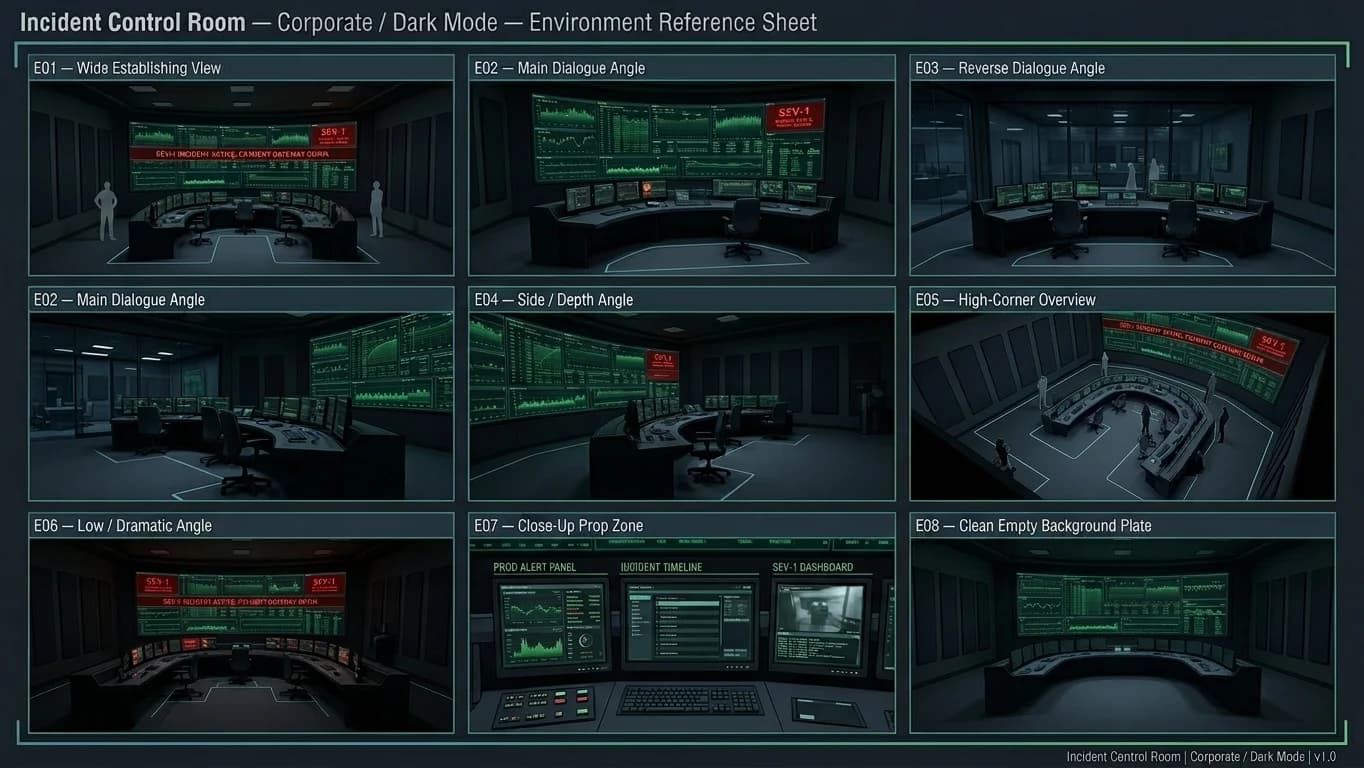
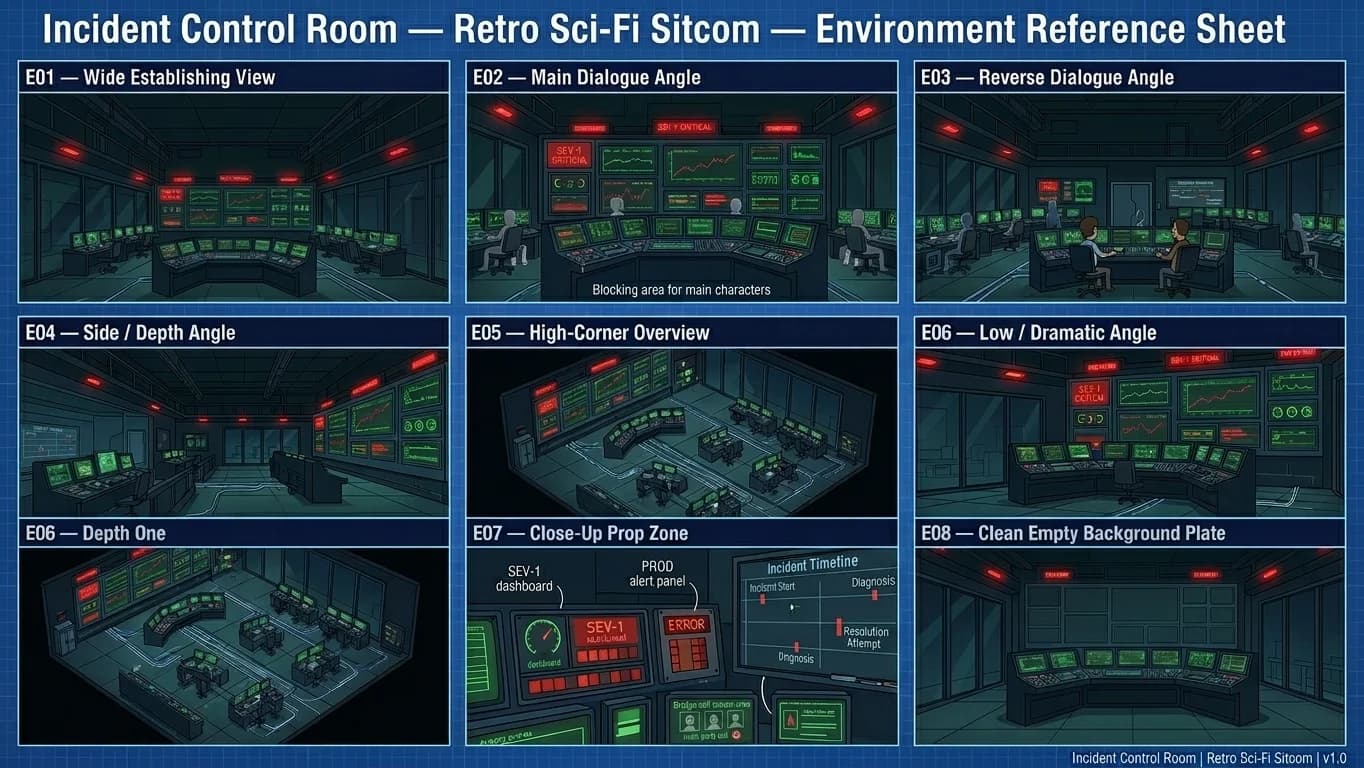
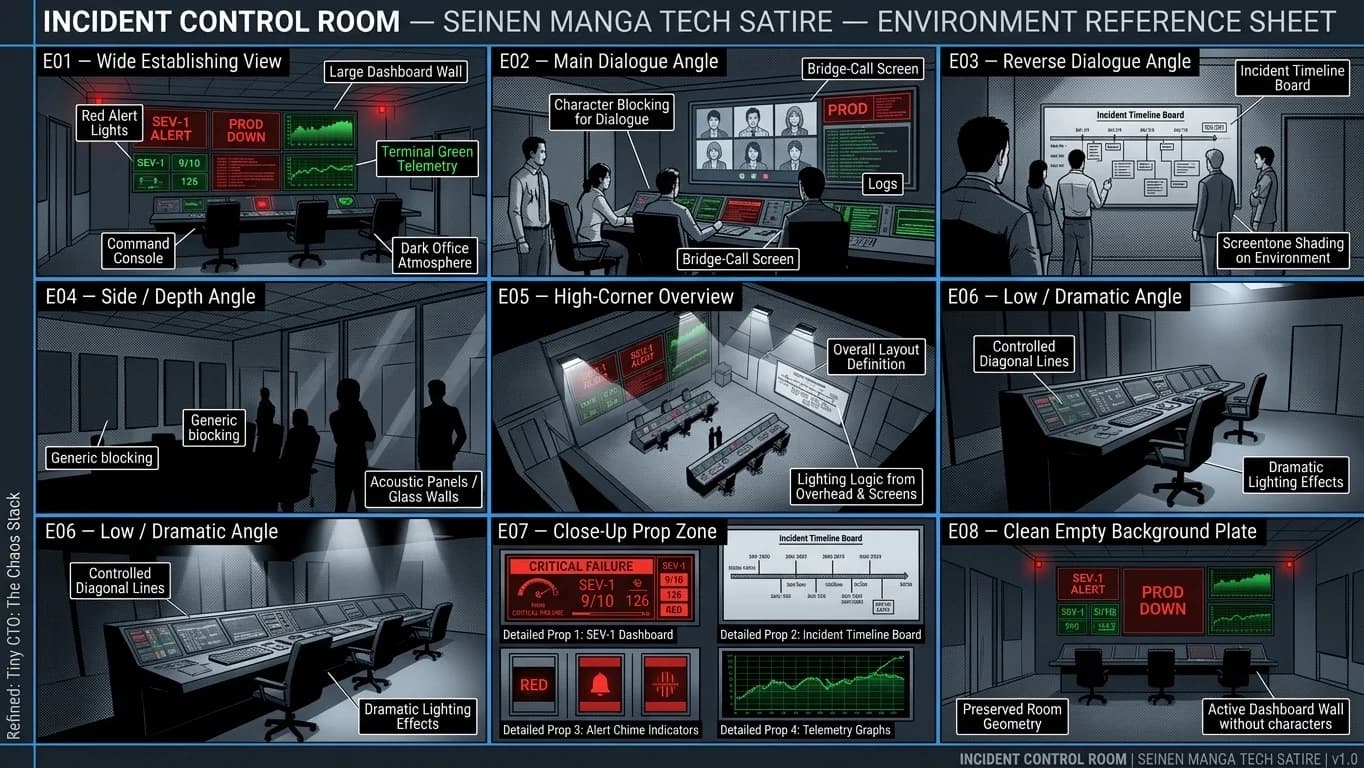
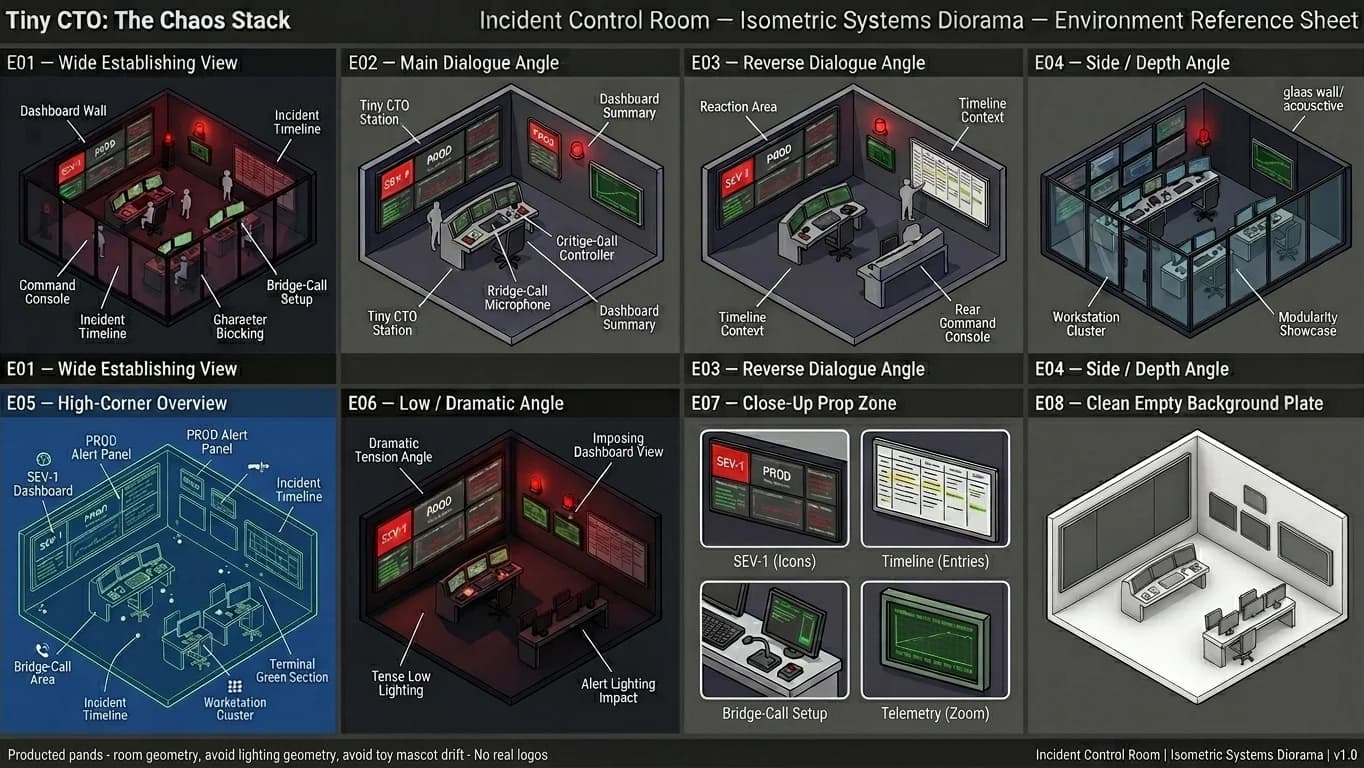
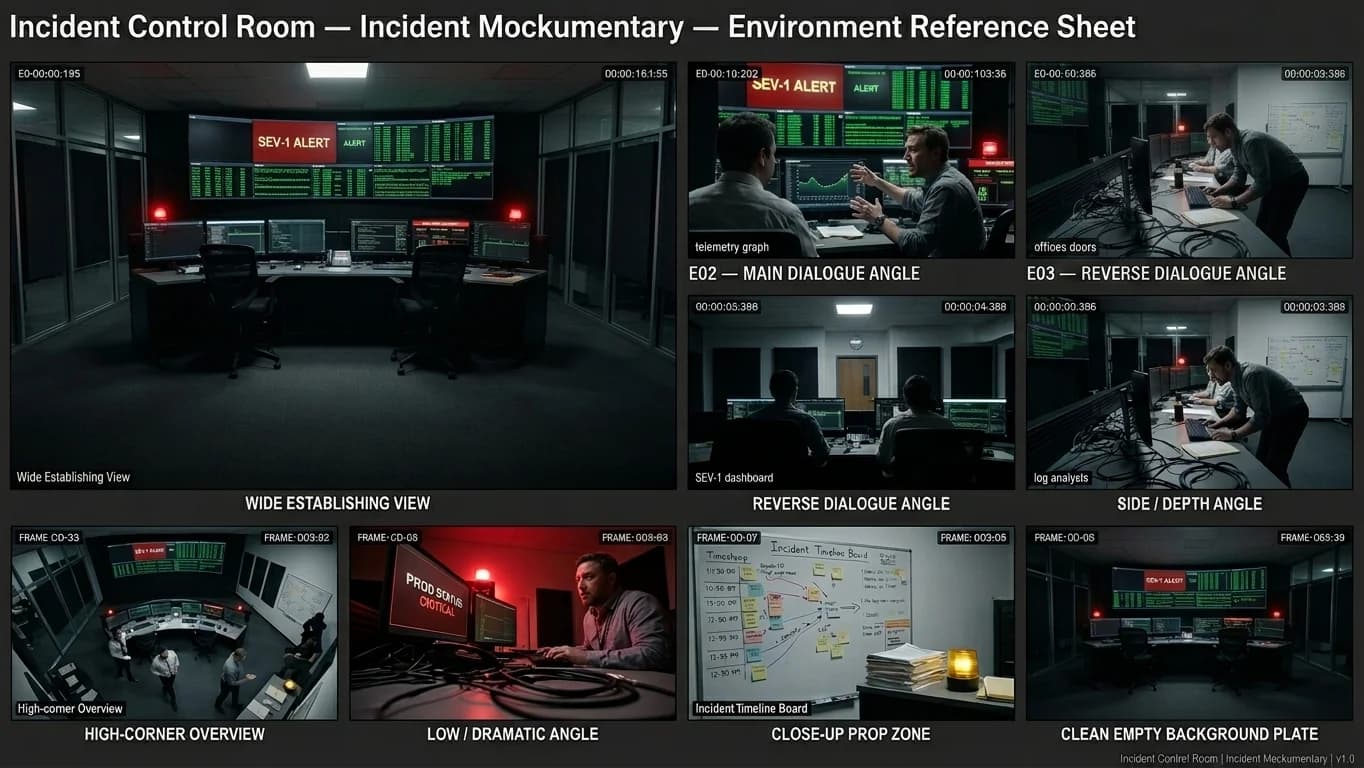
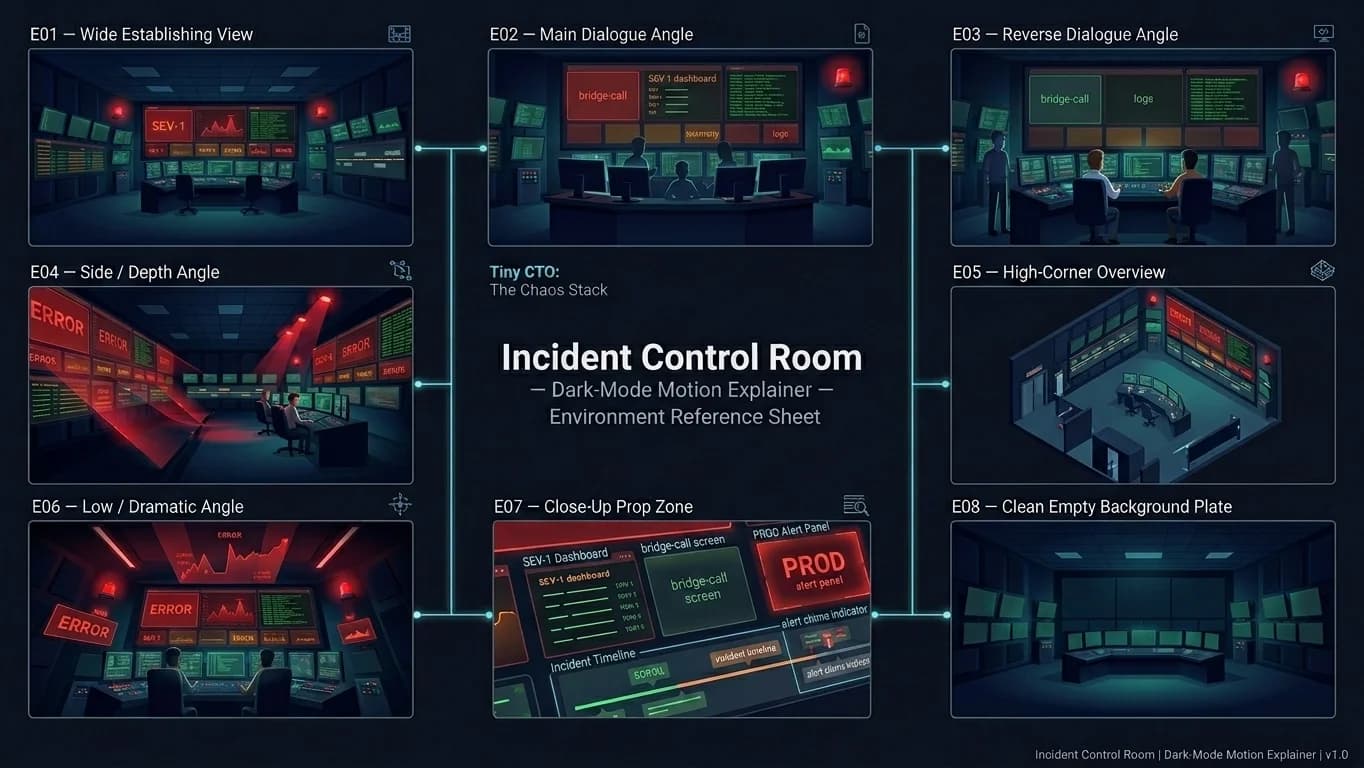
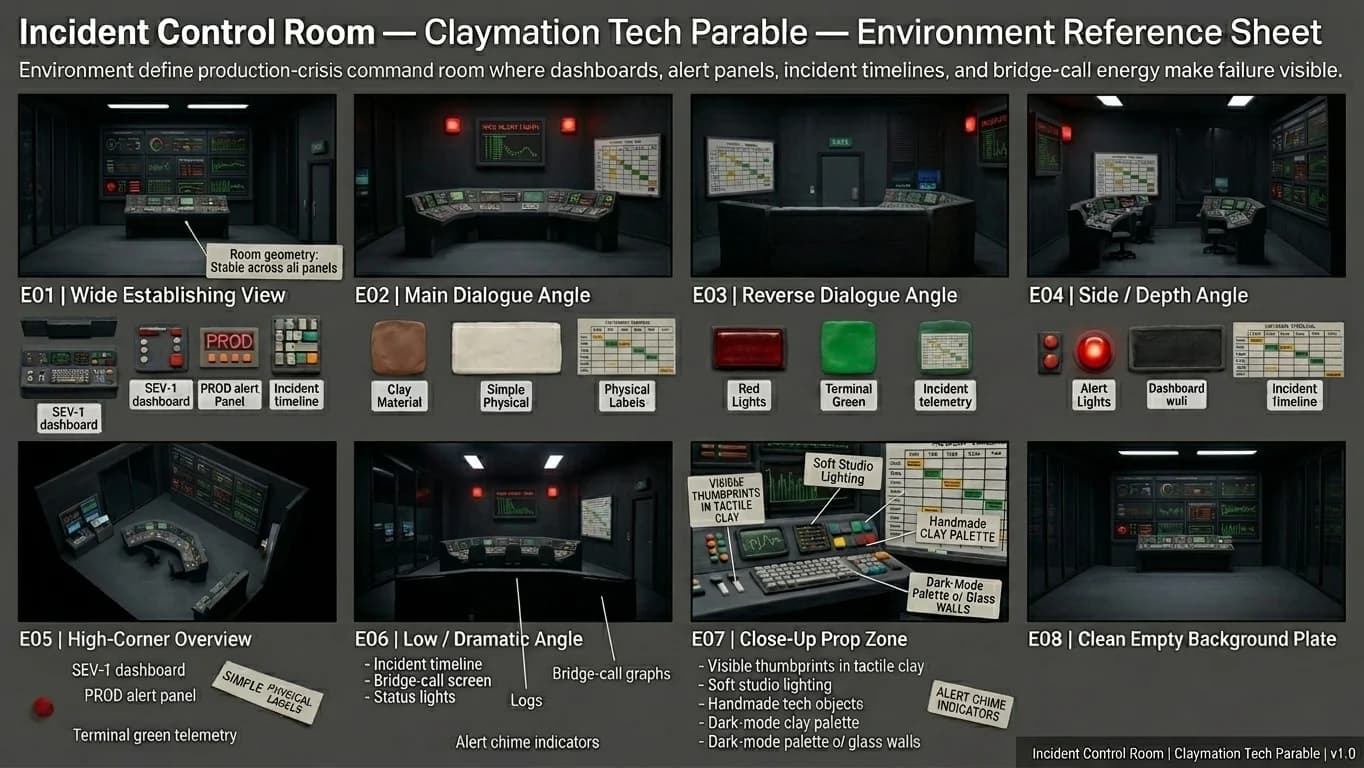
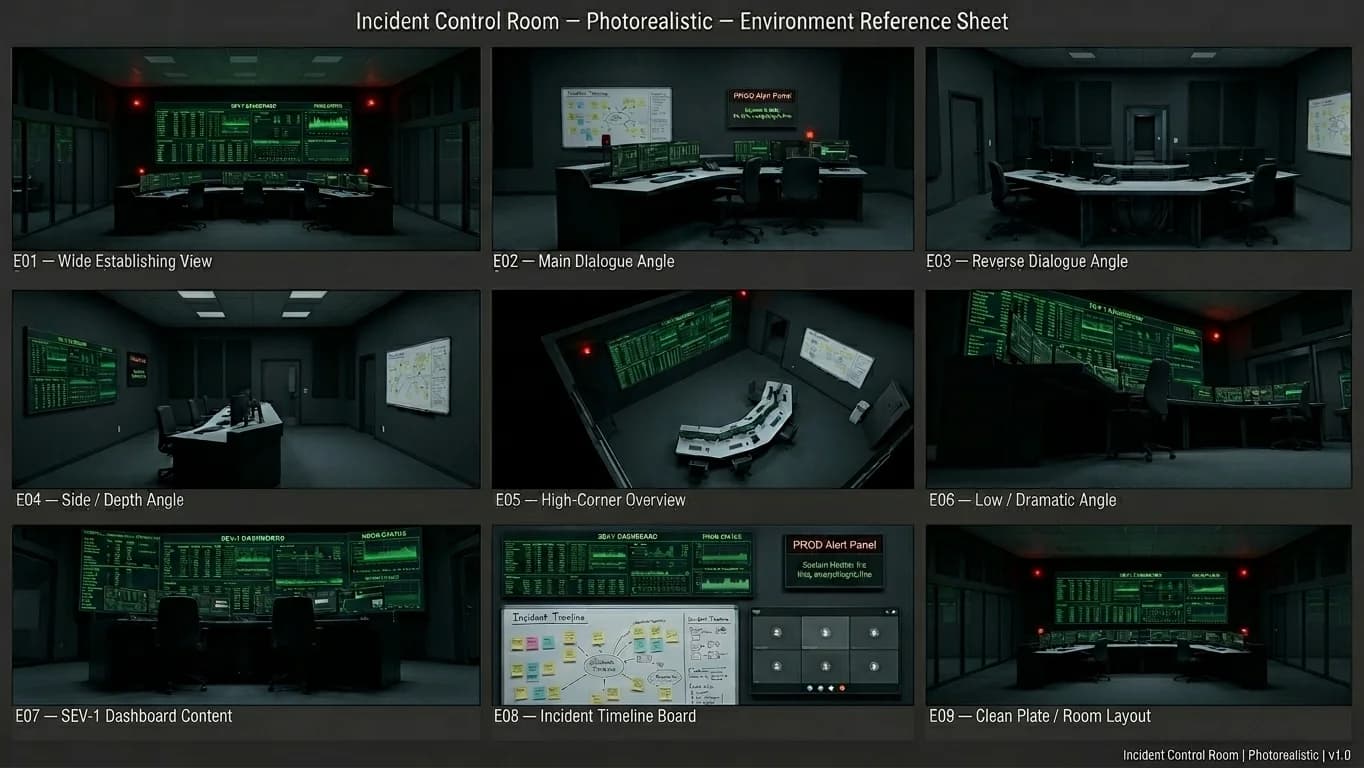
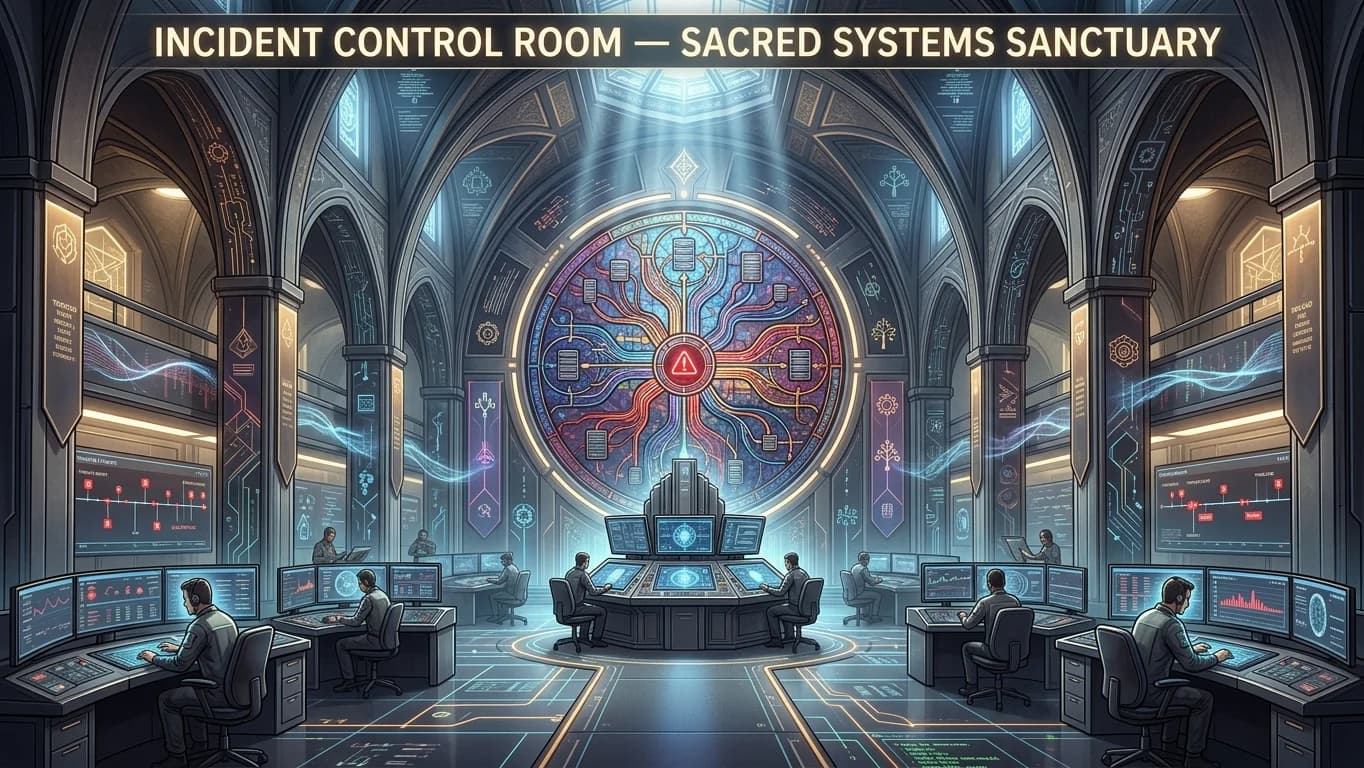
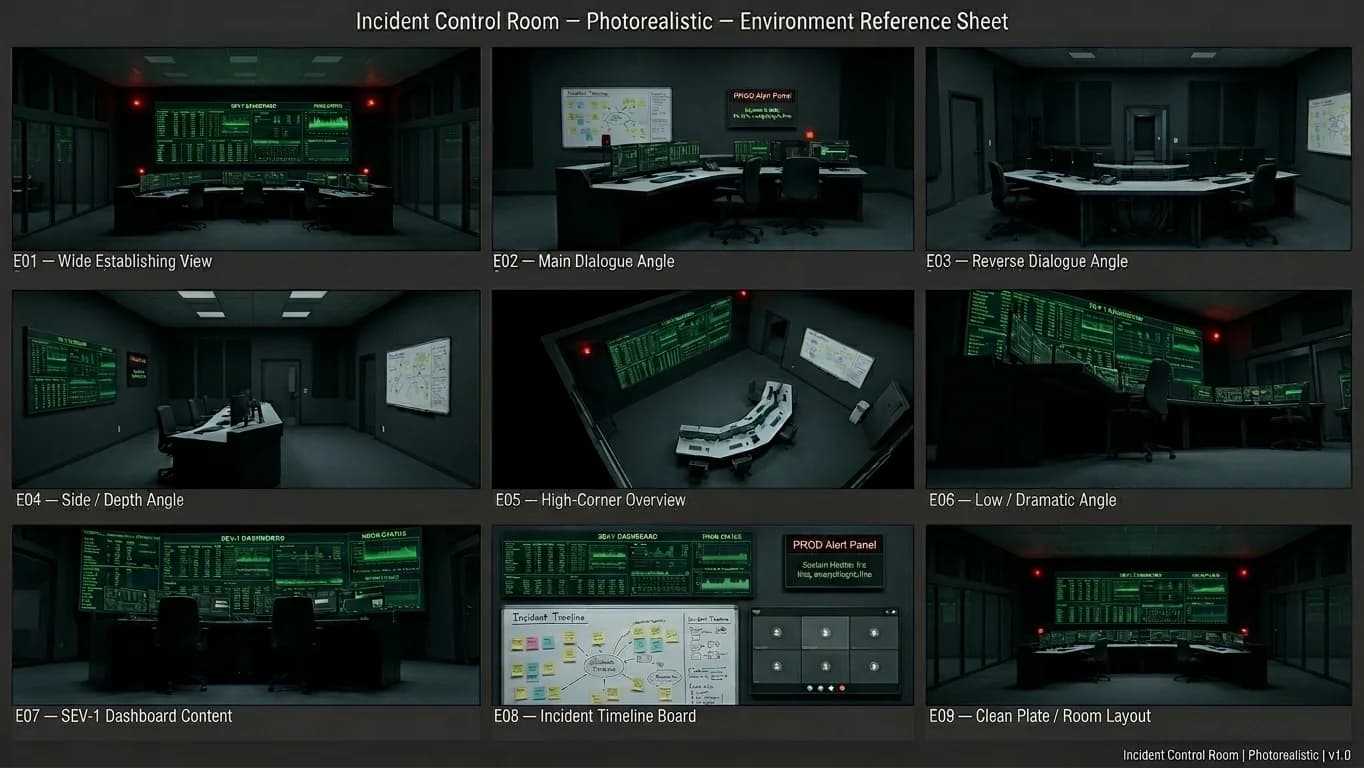
Incident Control Room
The Incident Control Room is a common setting within the Chaos Stack universe.


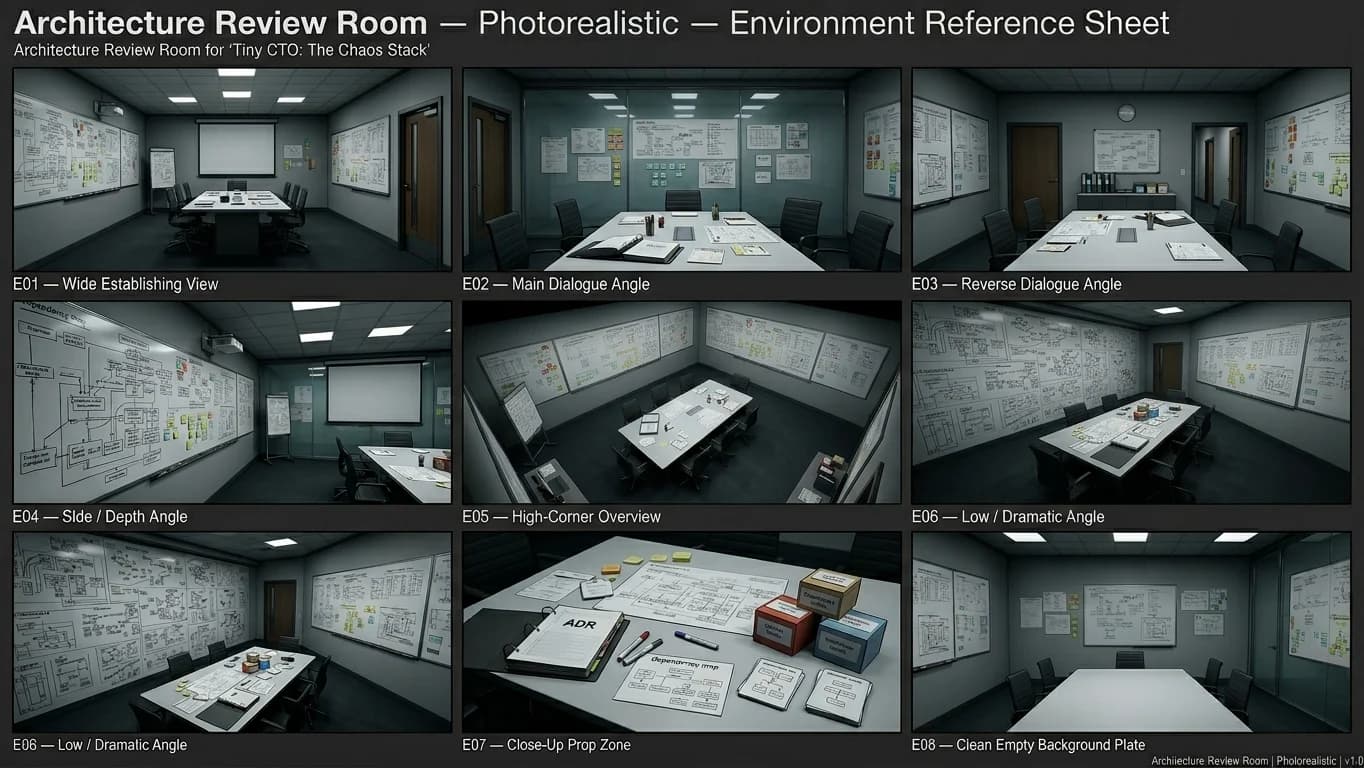
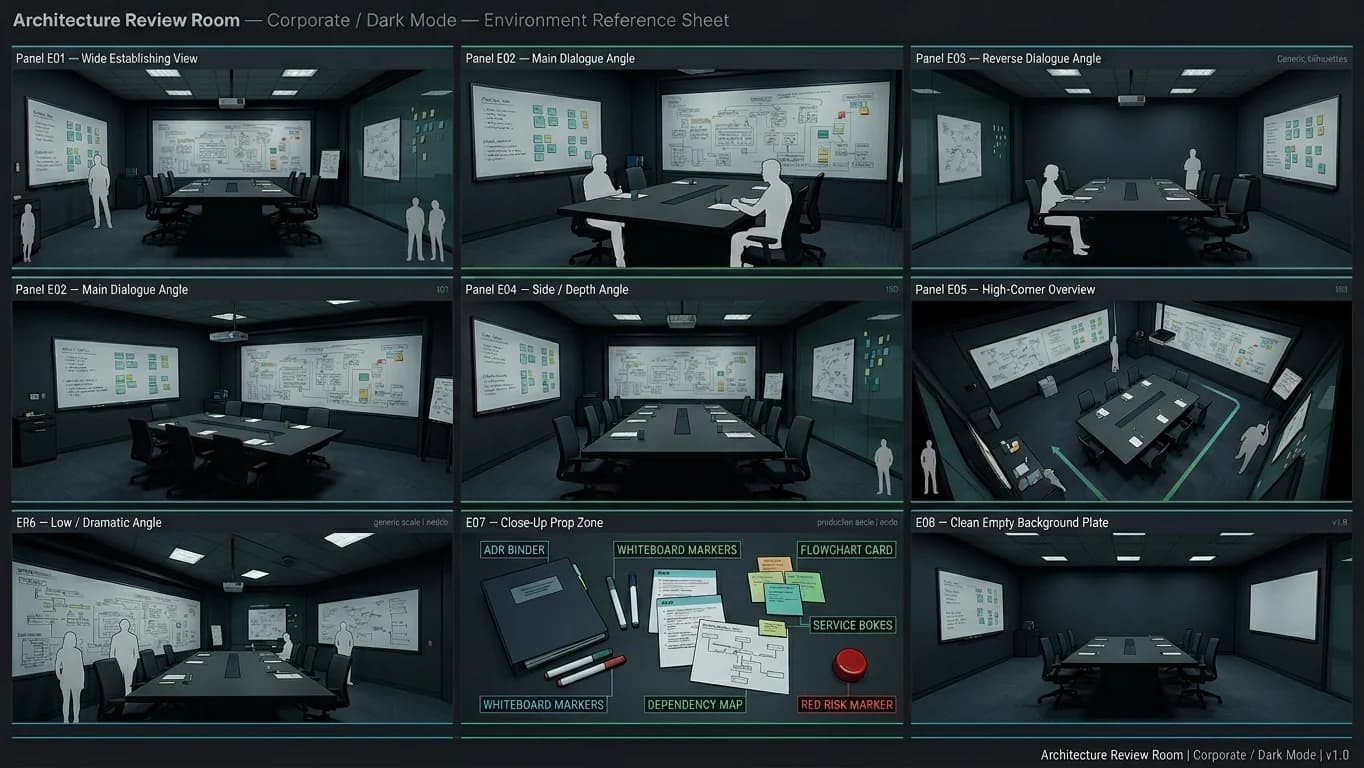
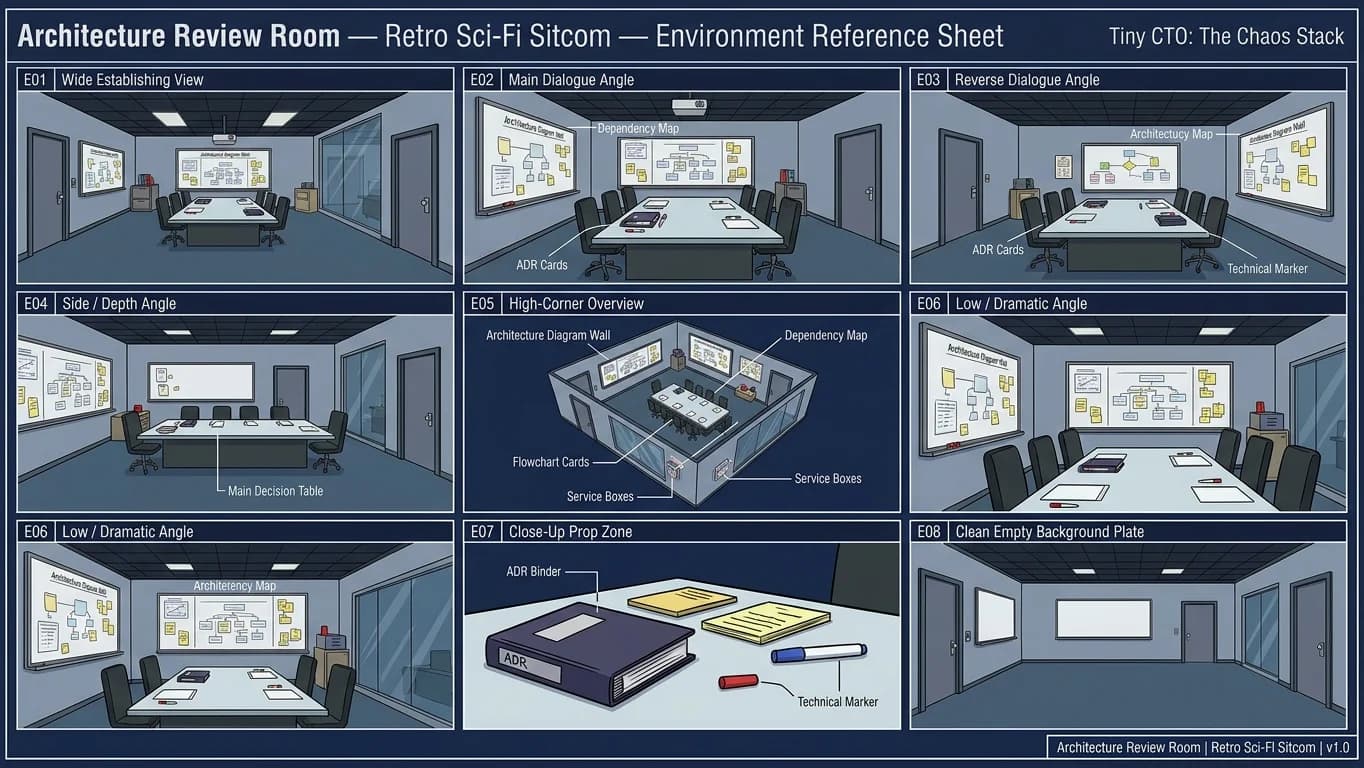
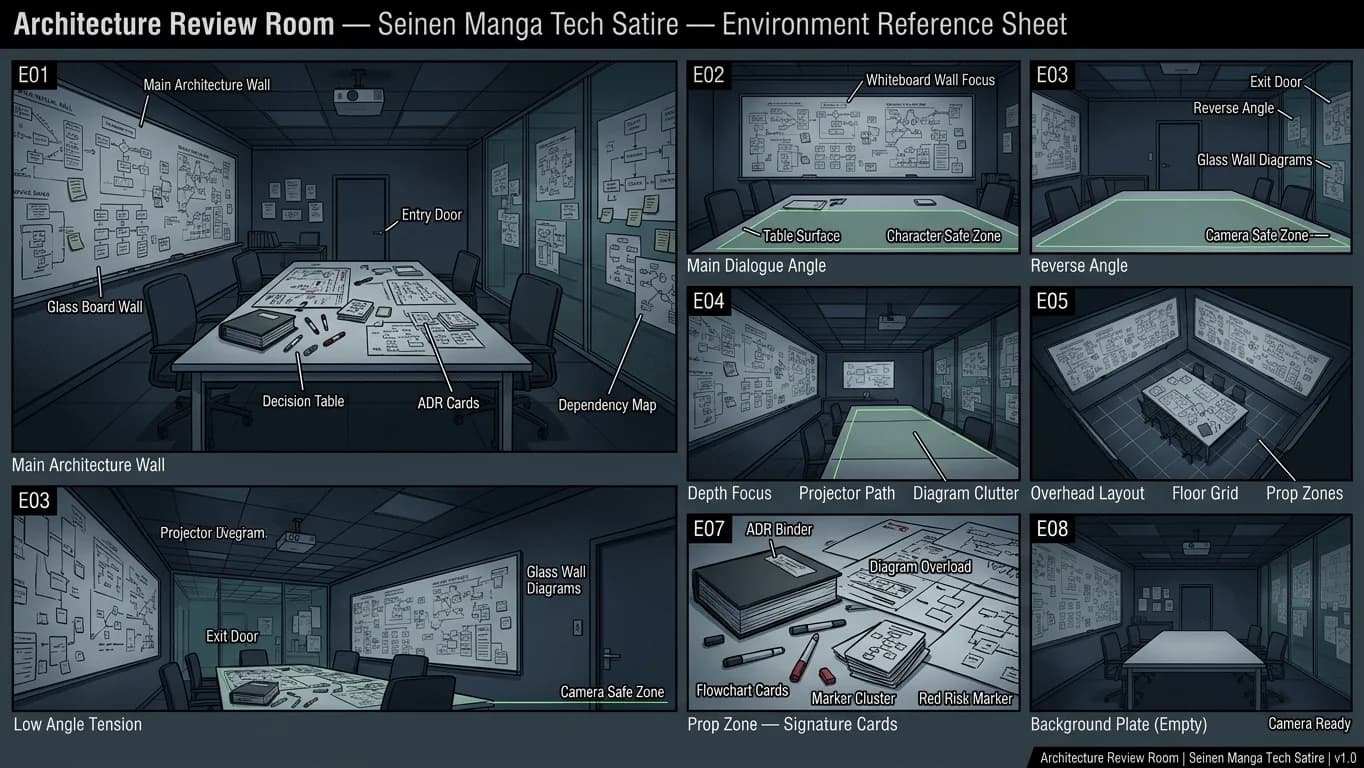
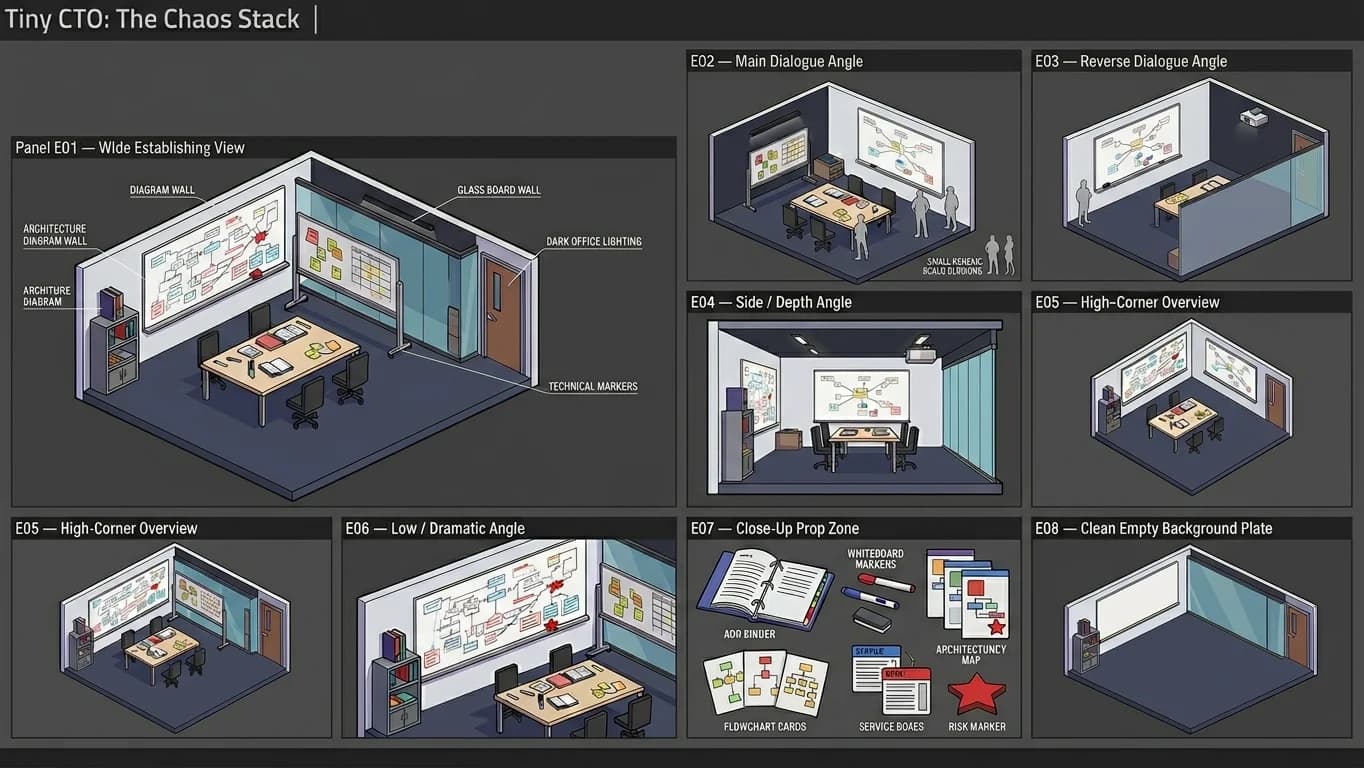
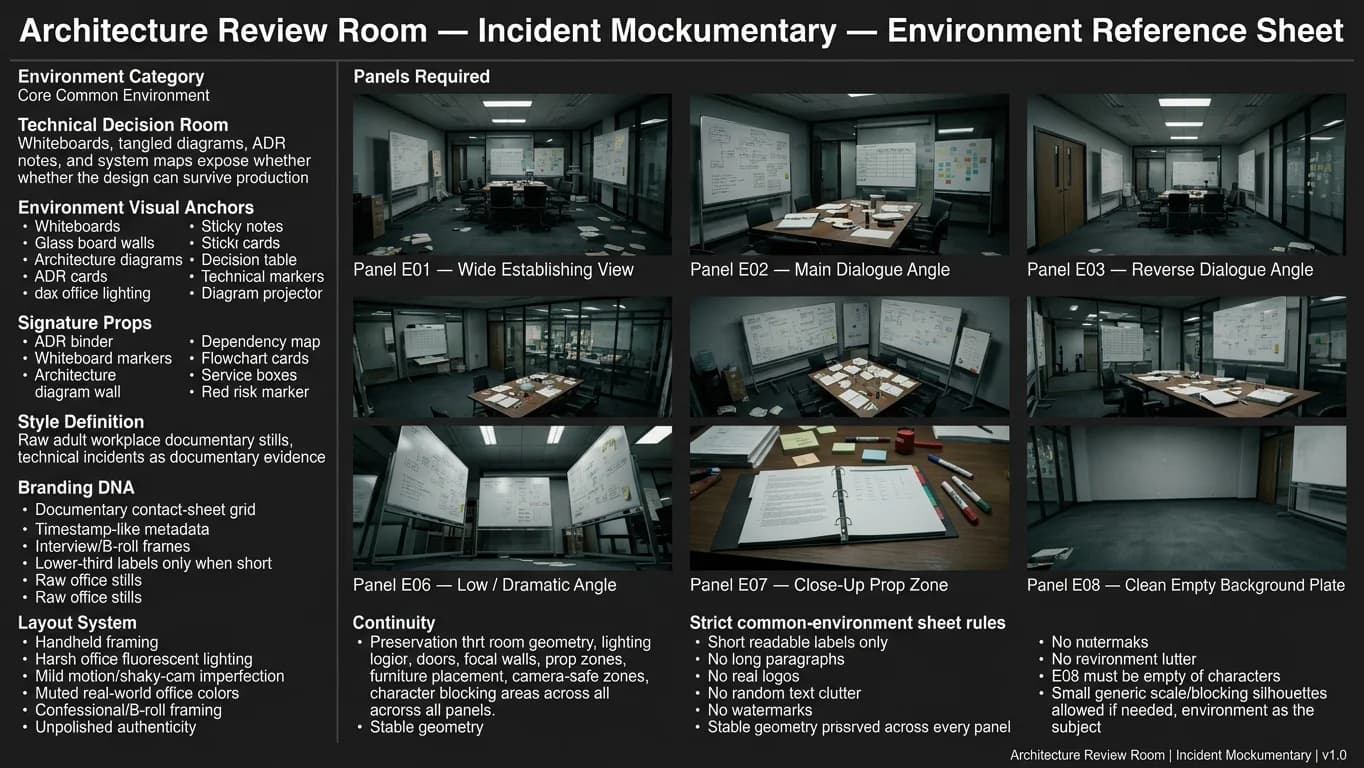
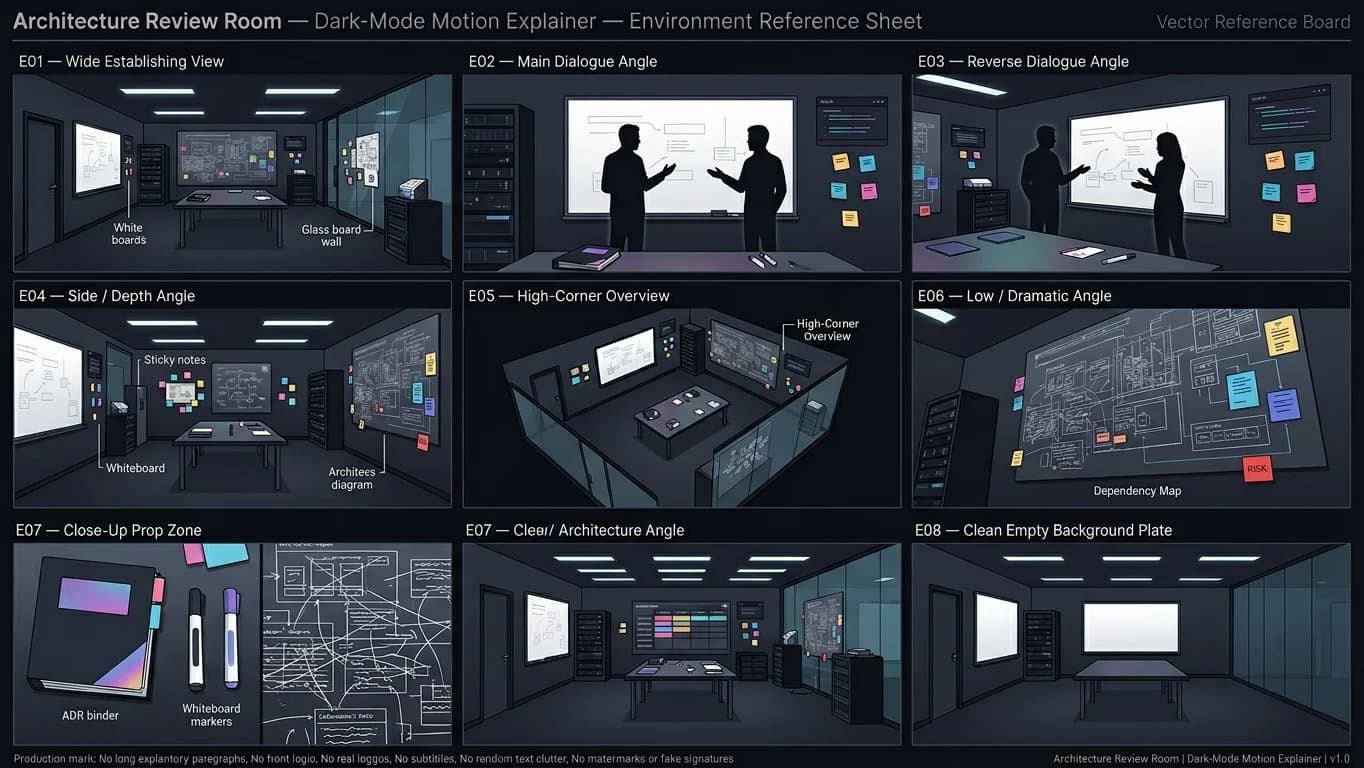
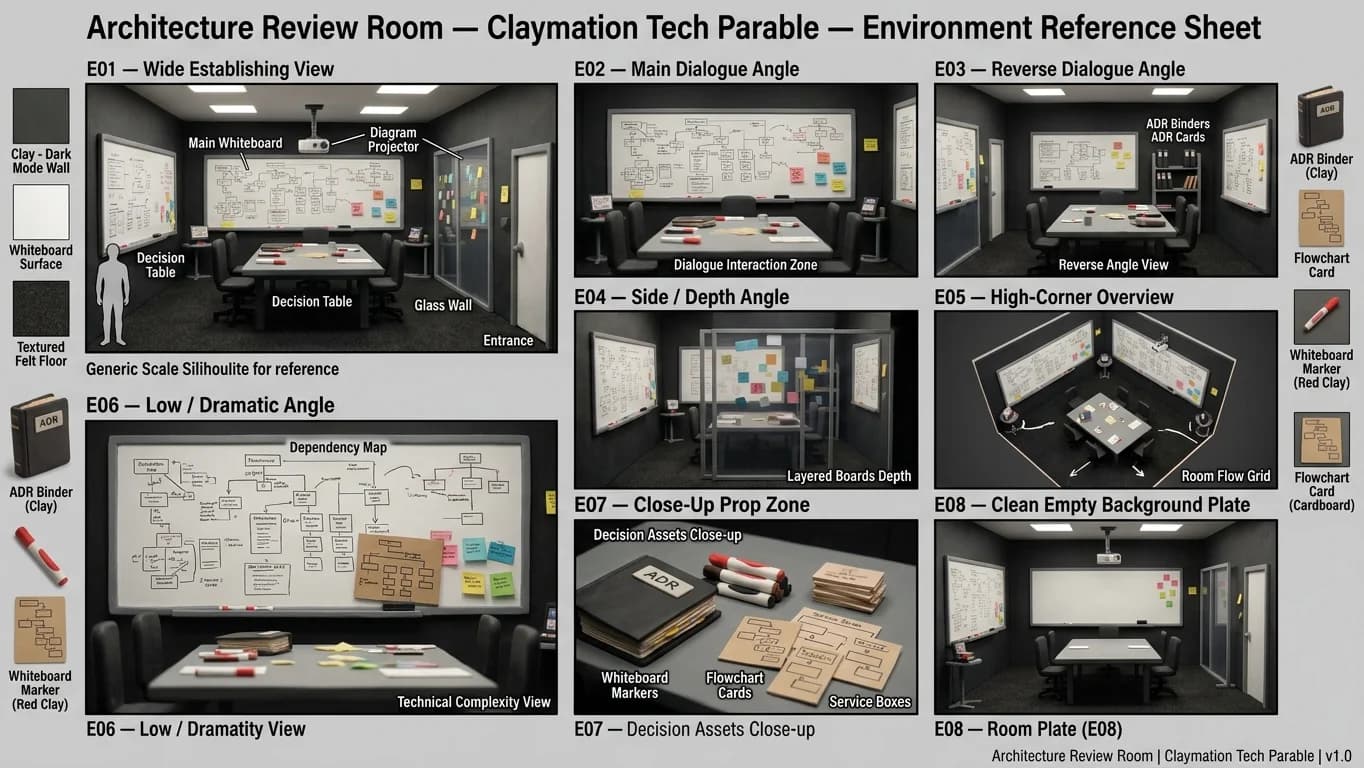
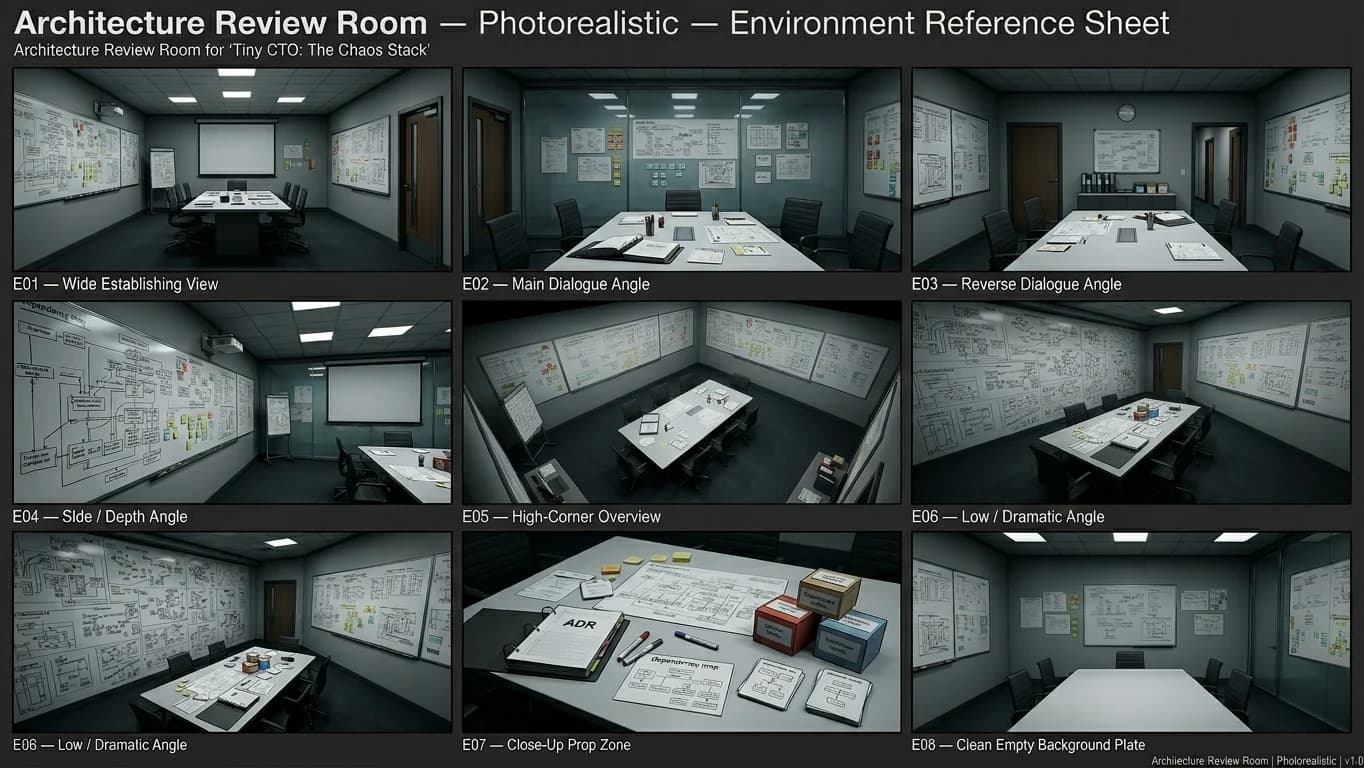
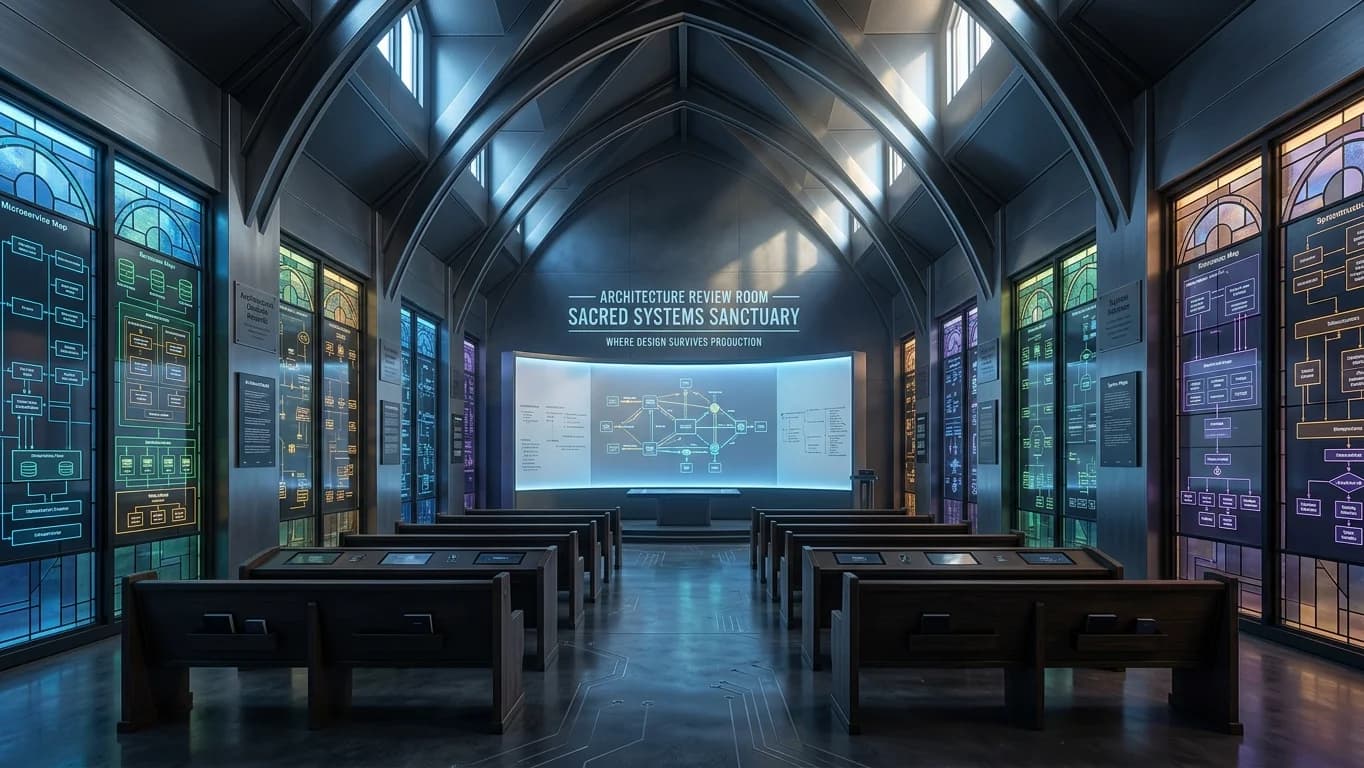
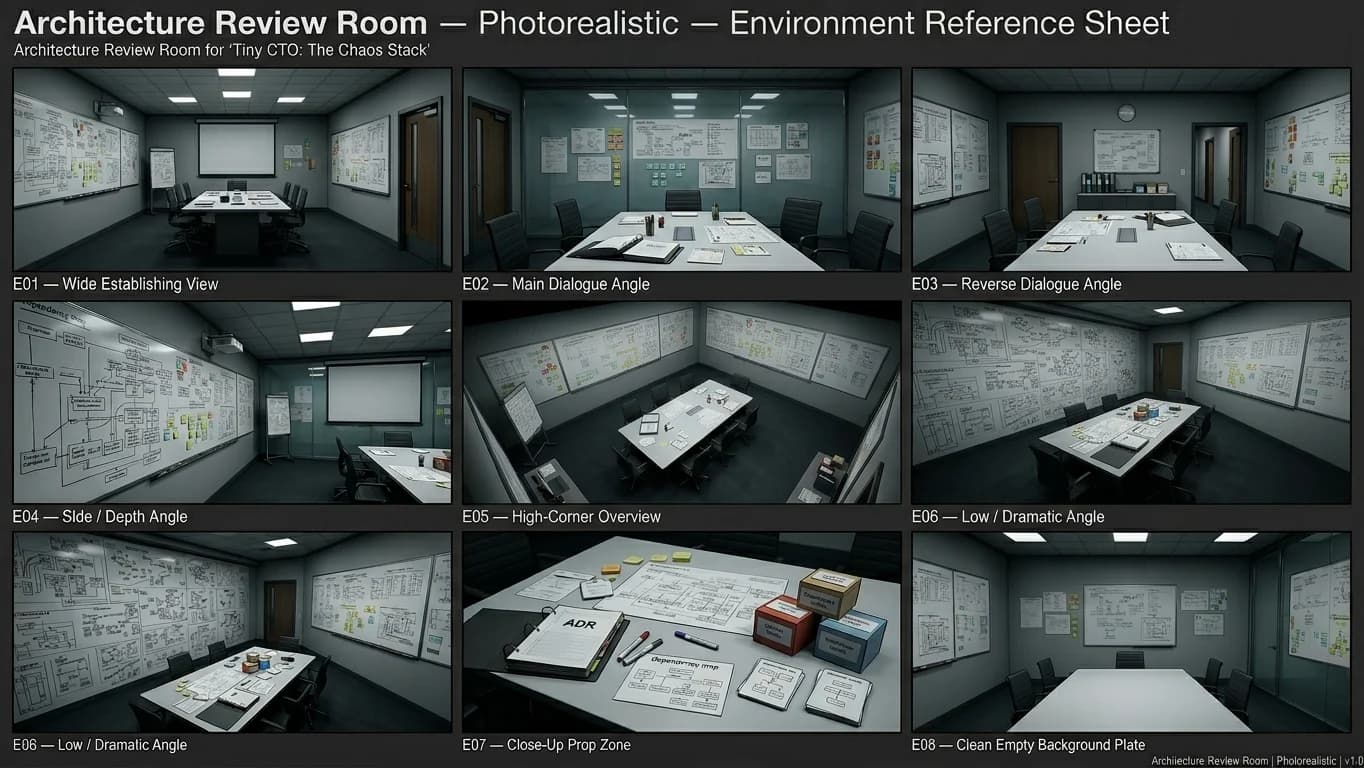
Architecture Review Room
The Architecture Review Room is a common setting within the Chaos Stack universe.


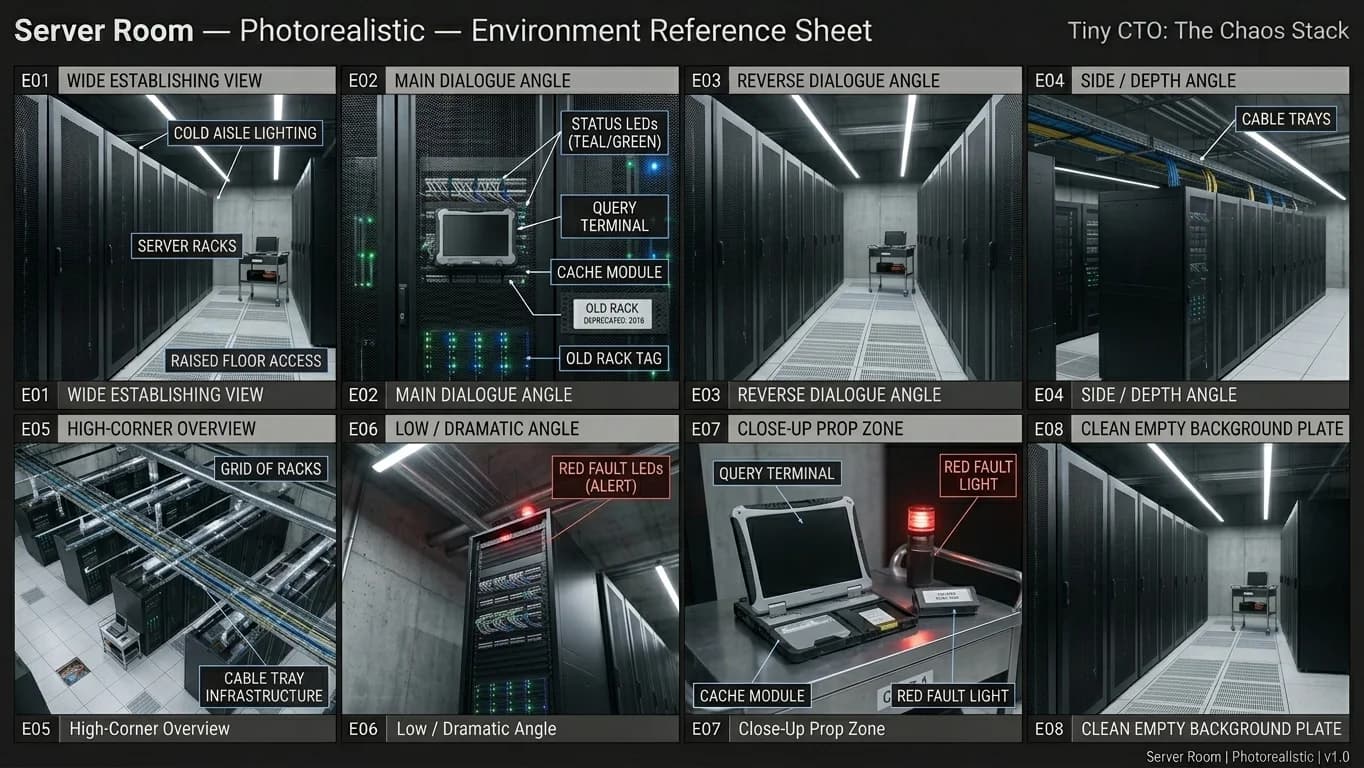
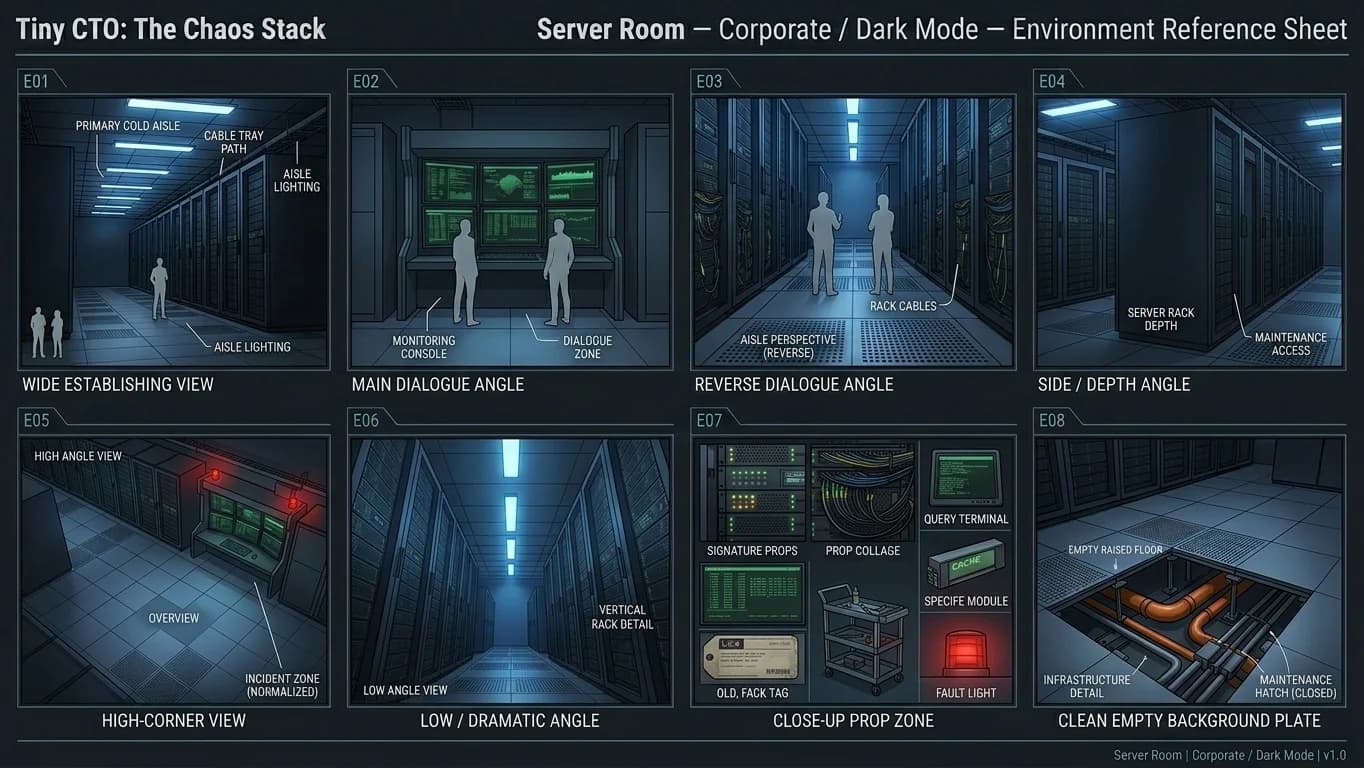
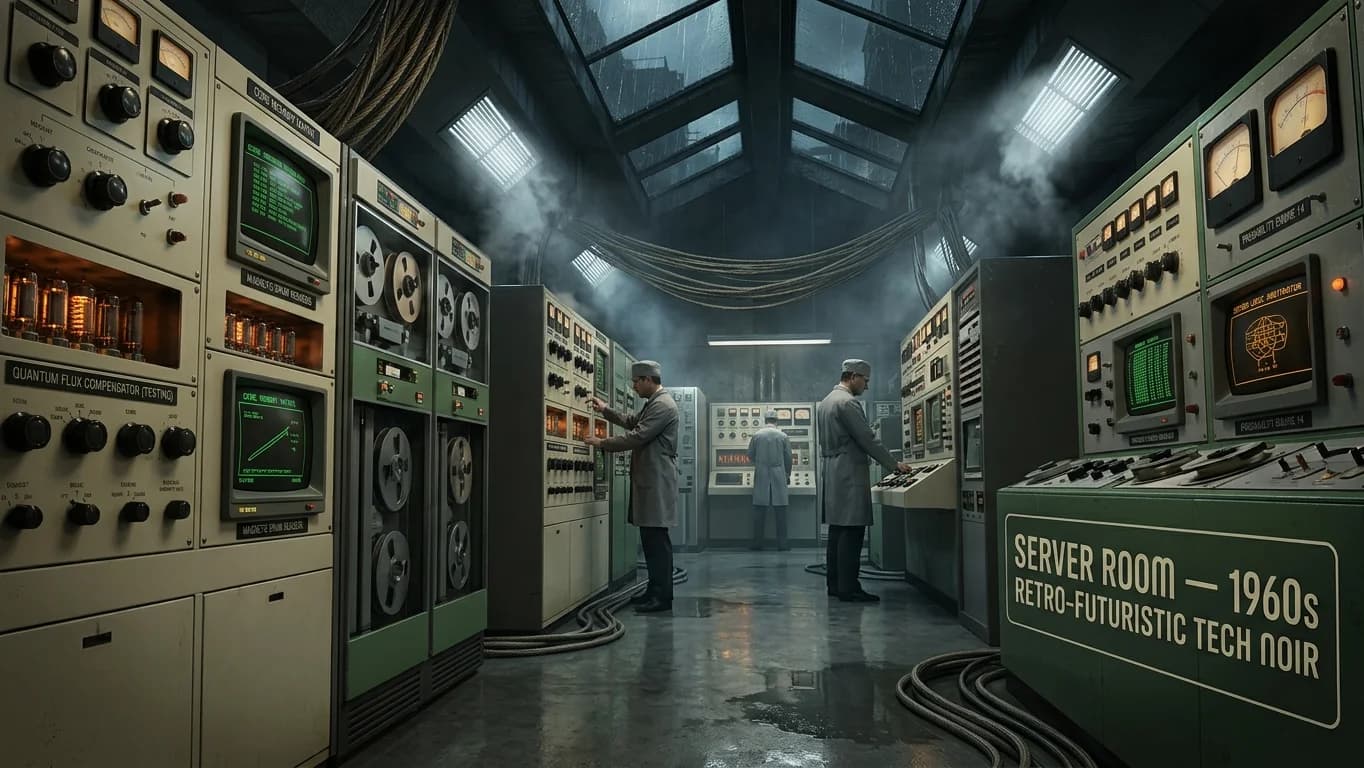
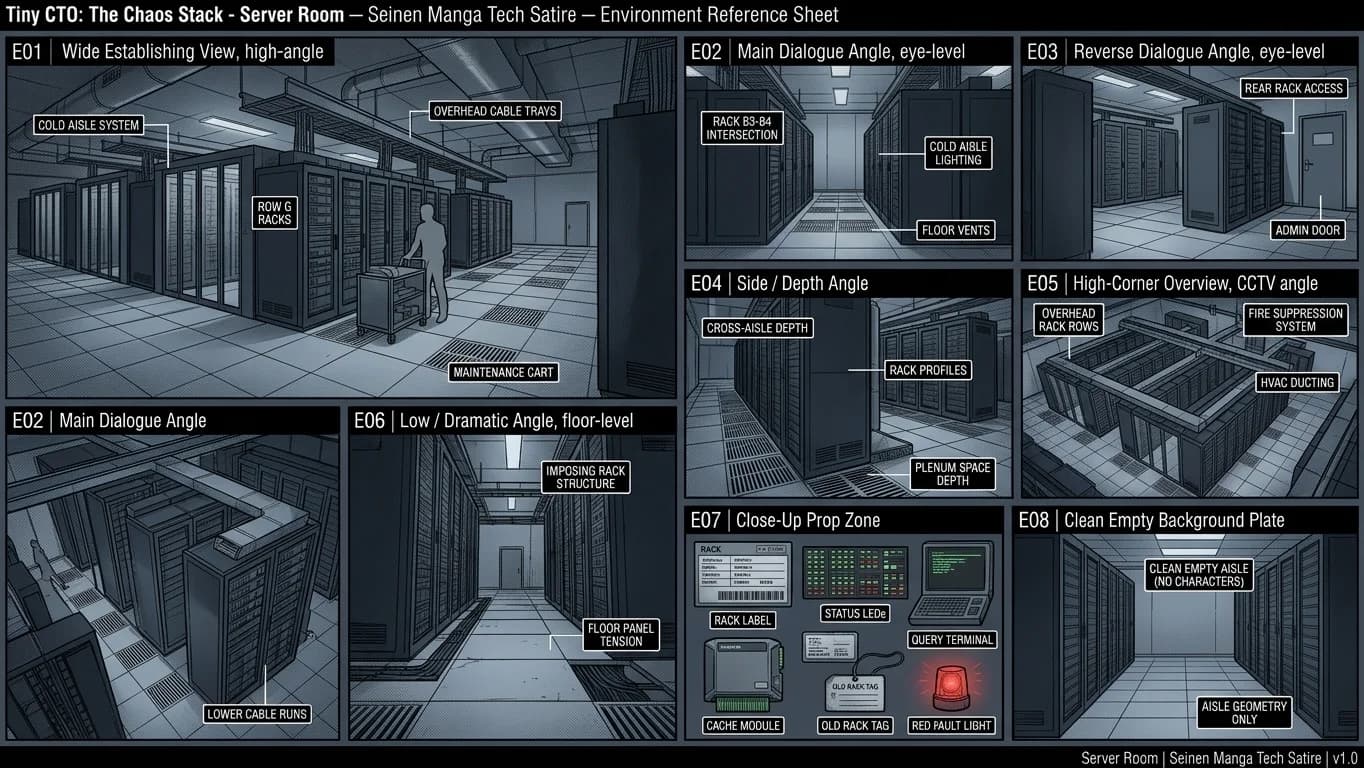
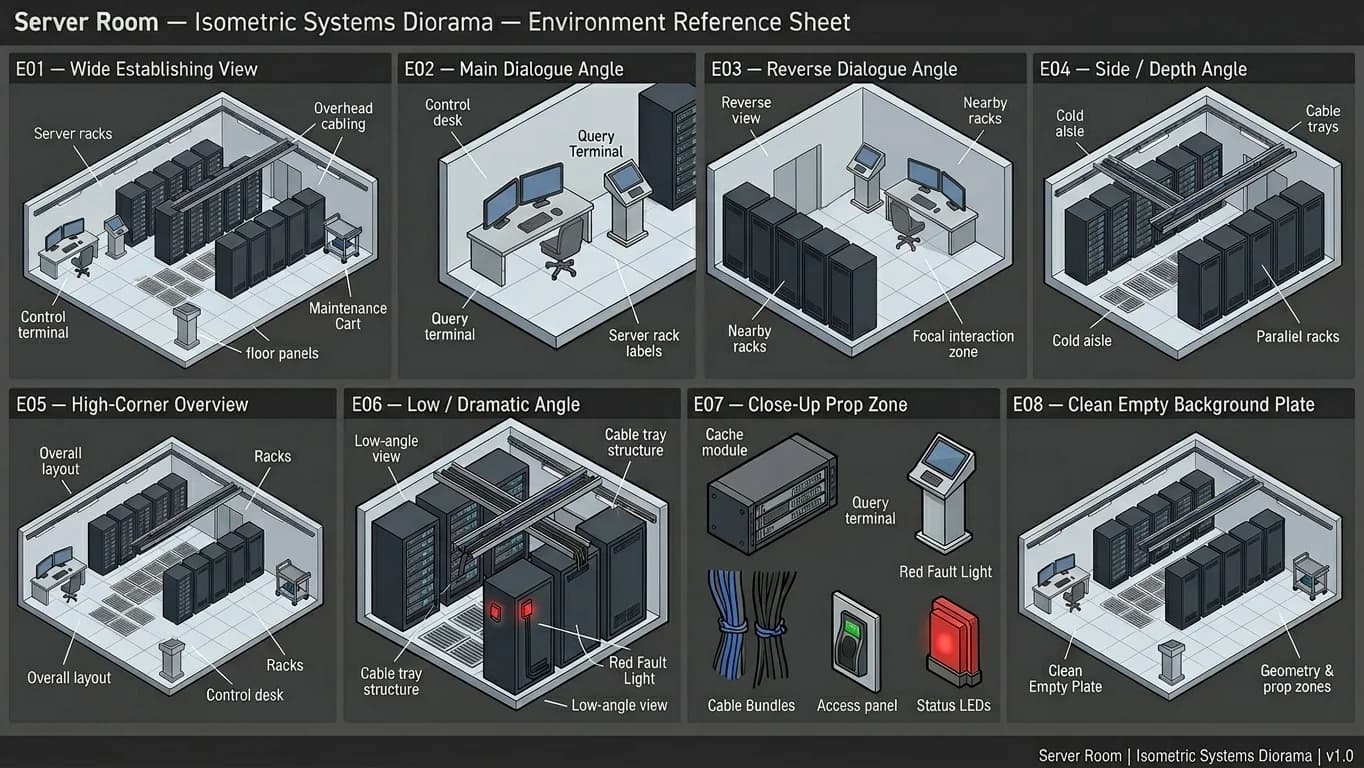
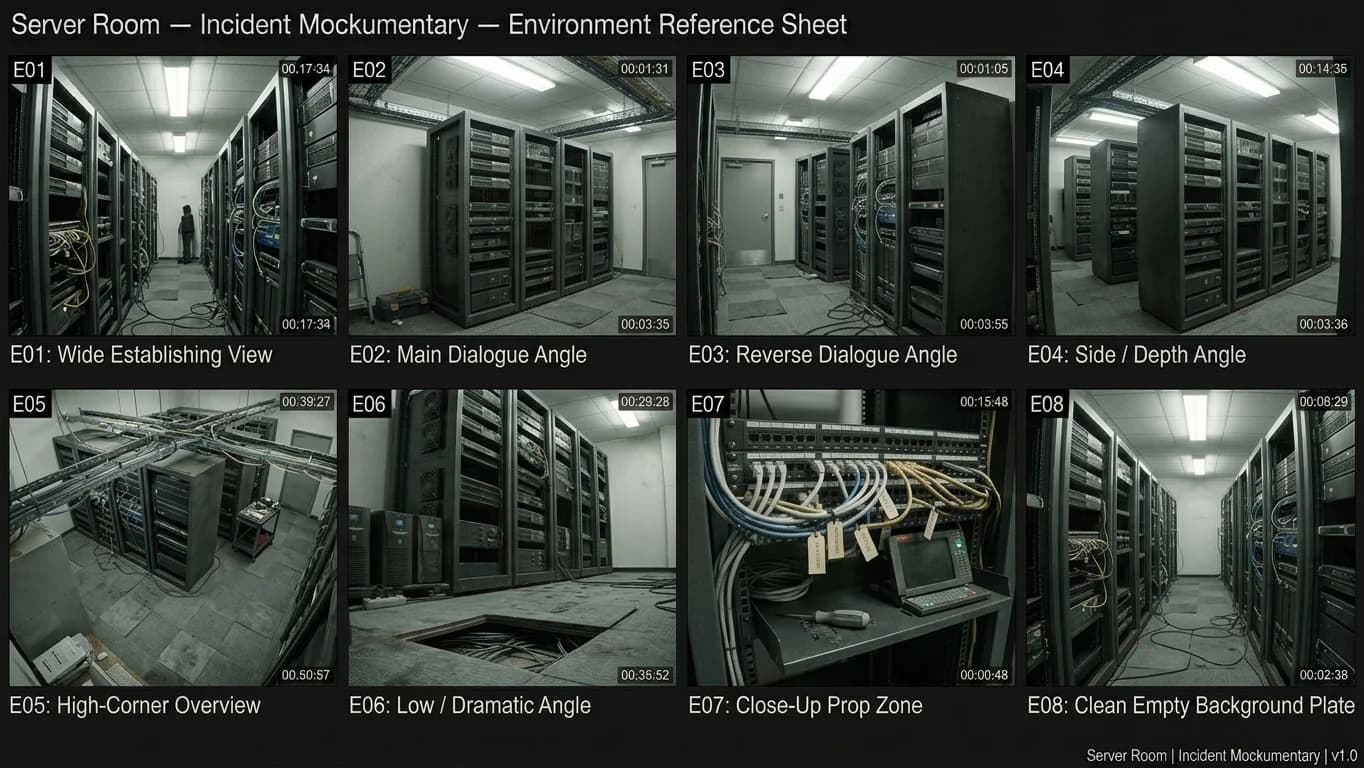
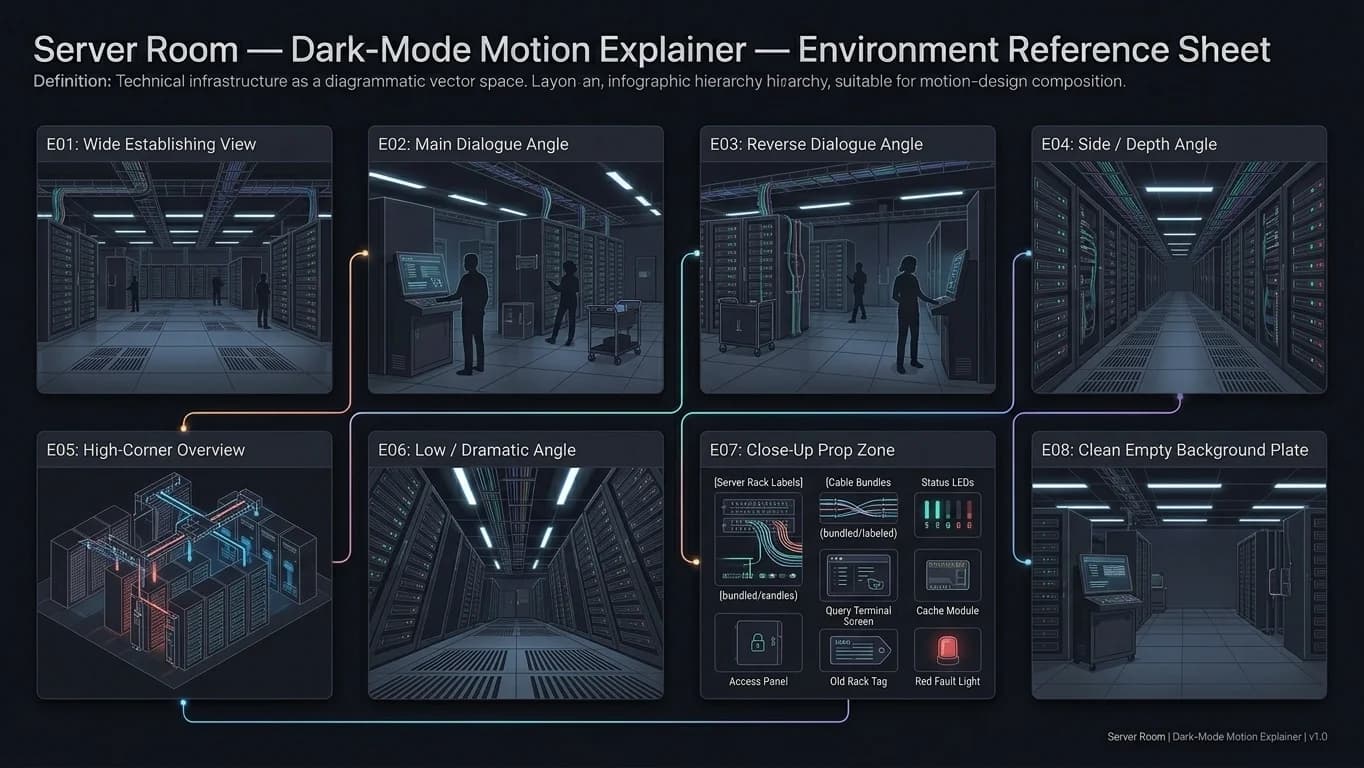
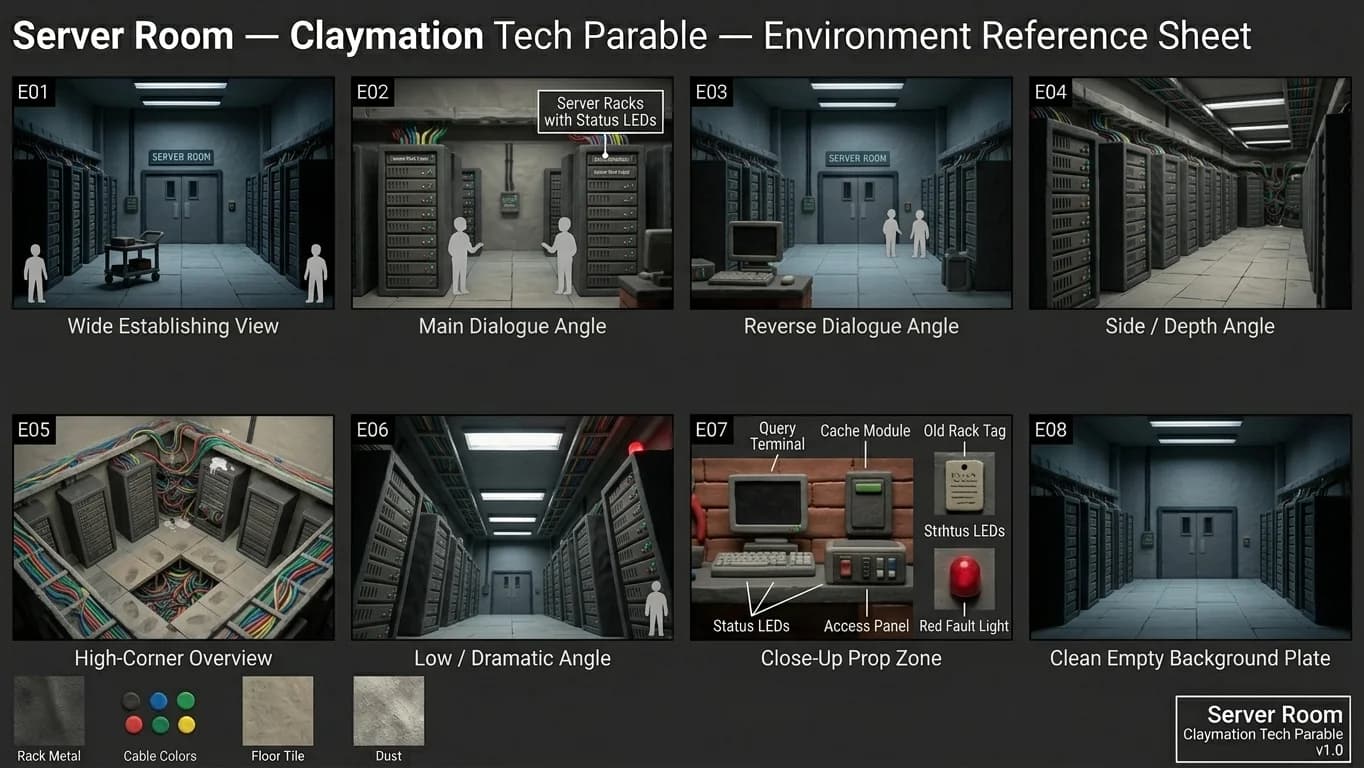
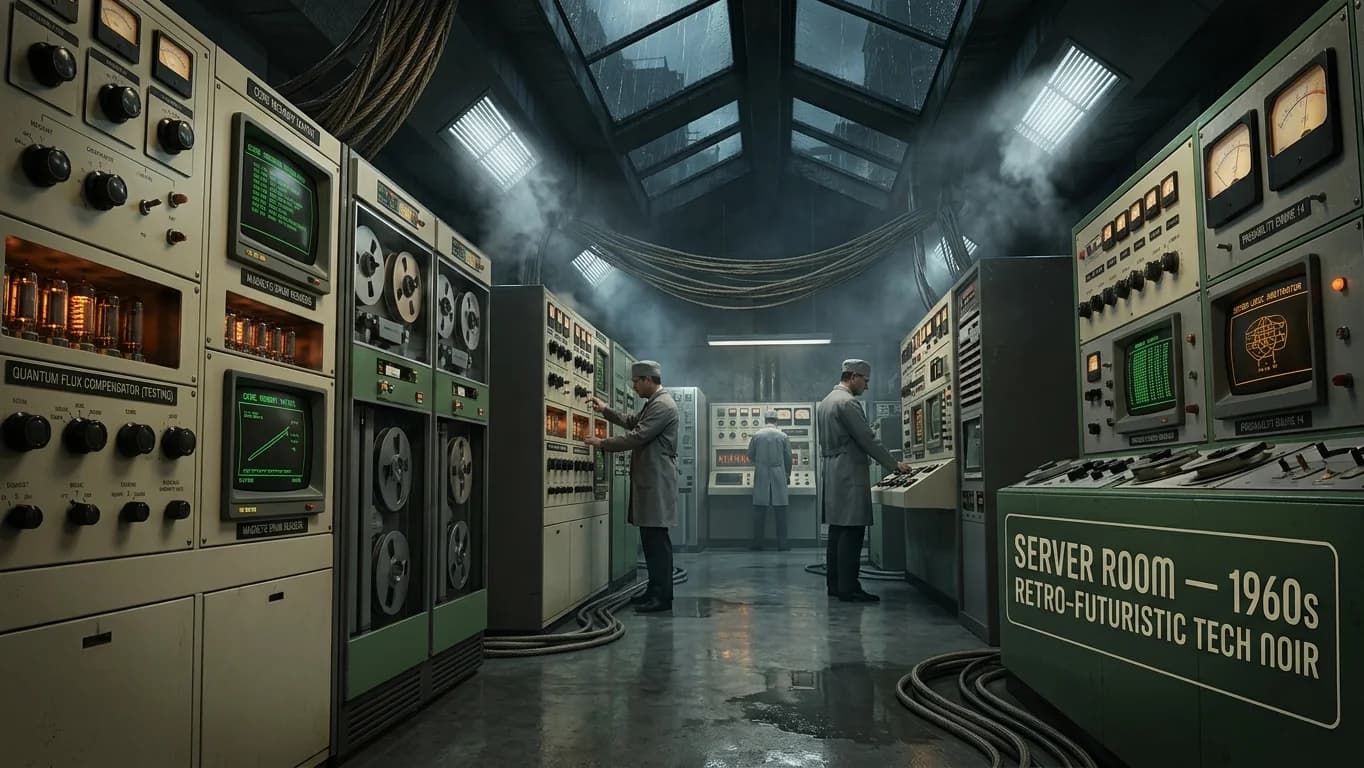
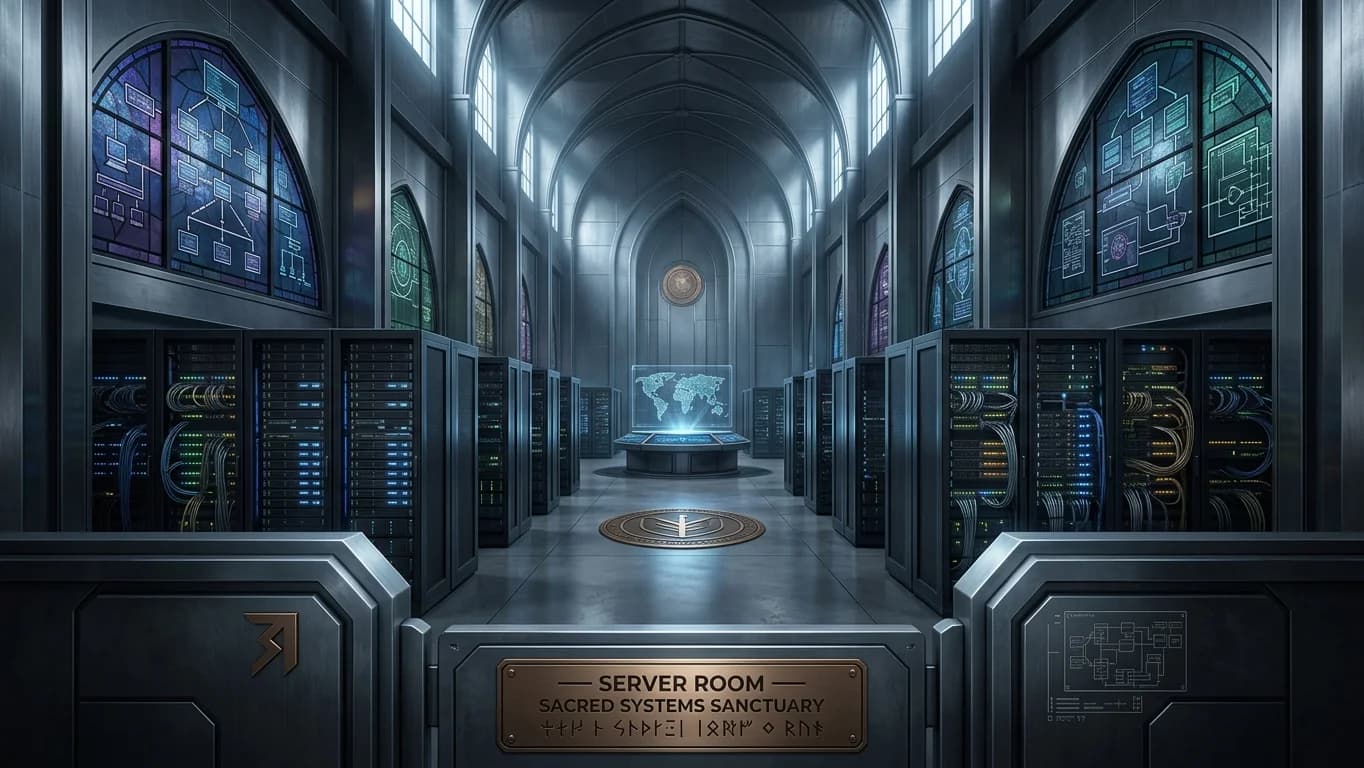
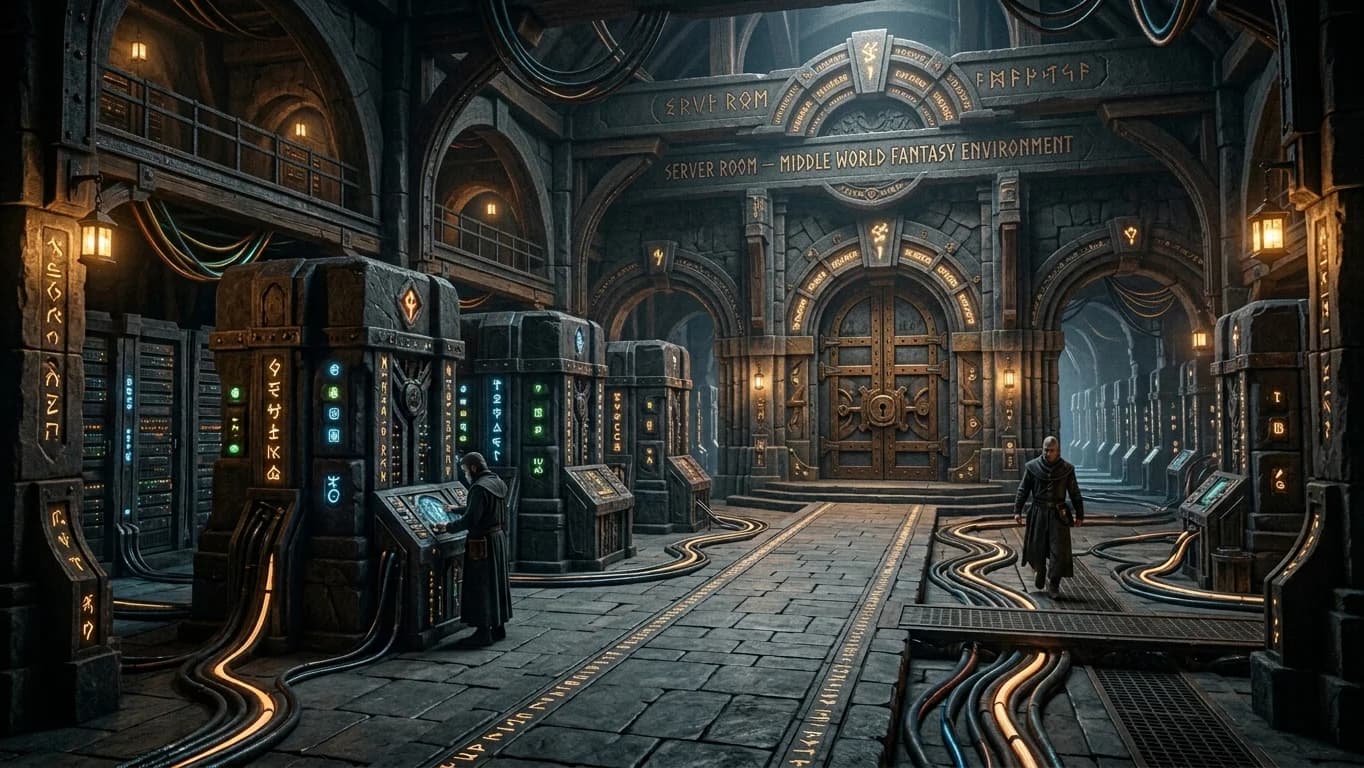
Server Room
The Server Room is a common setting within the Chaos Stack universe.


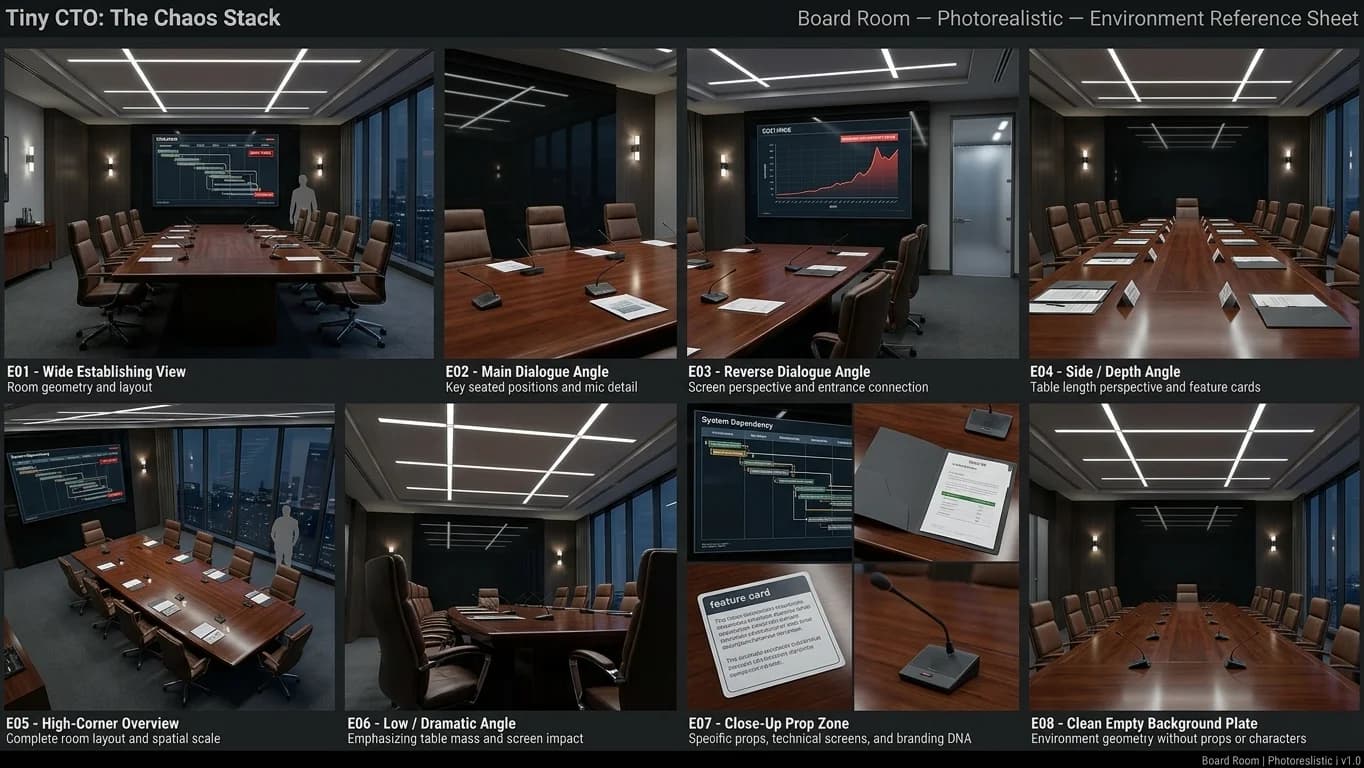
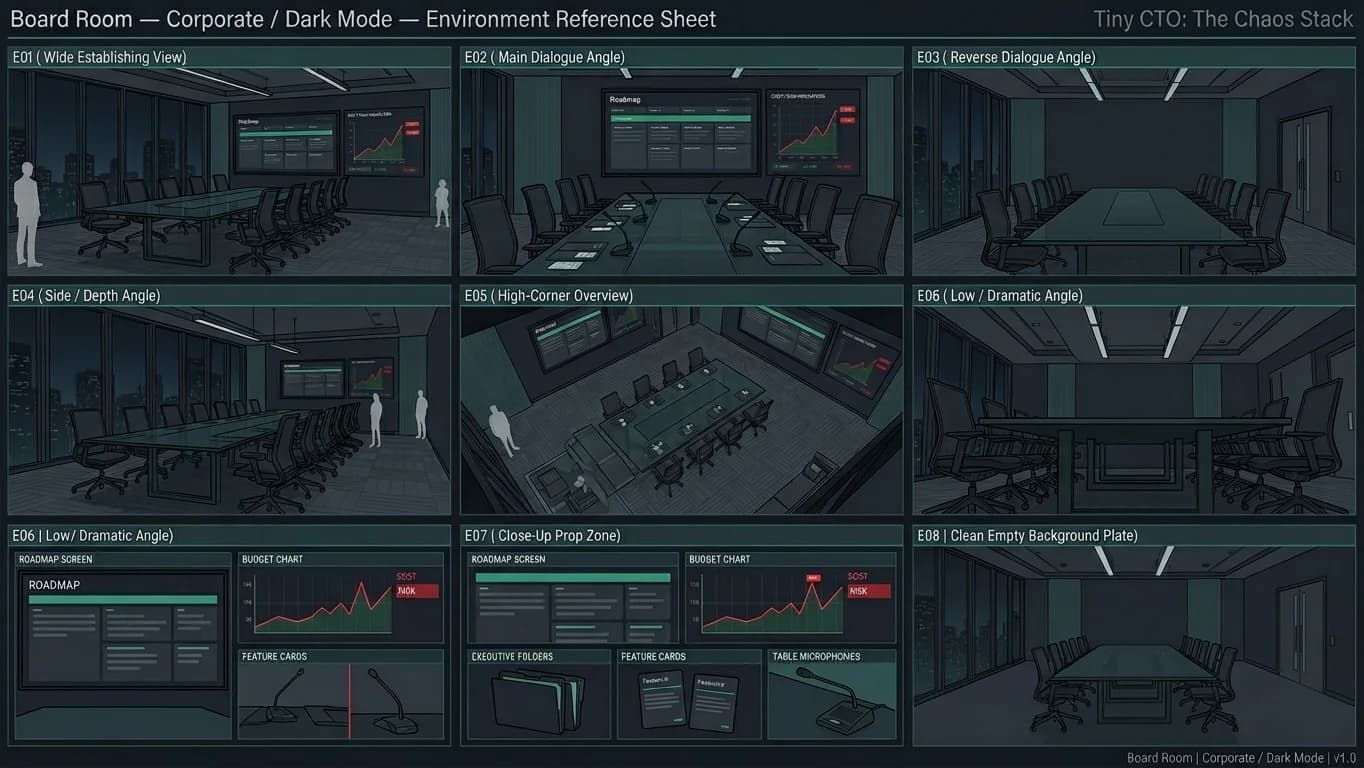
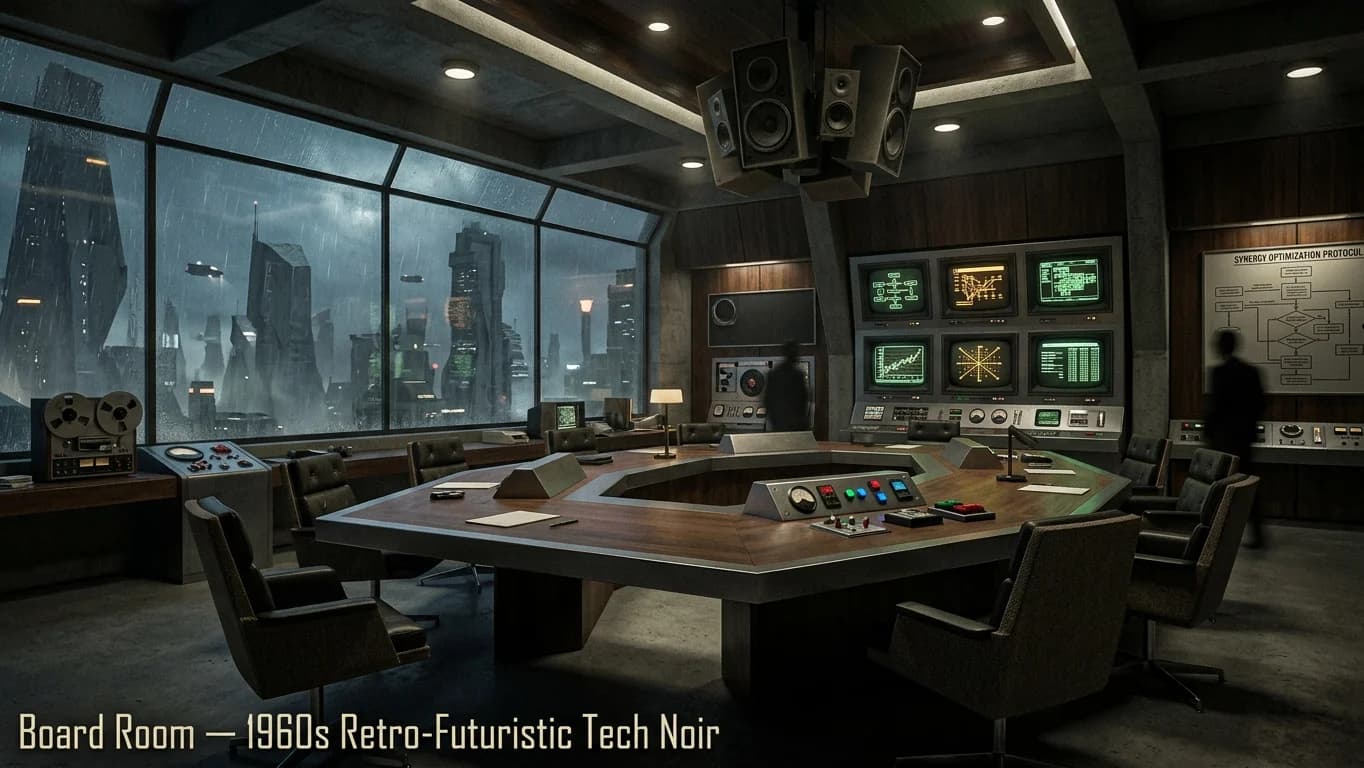
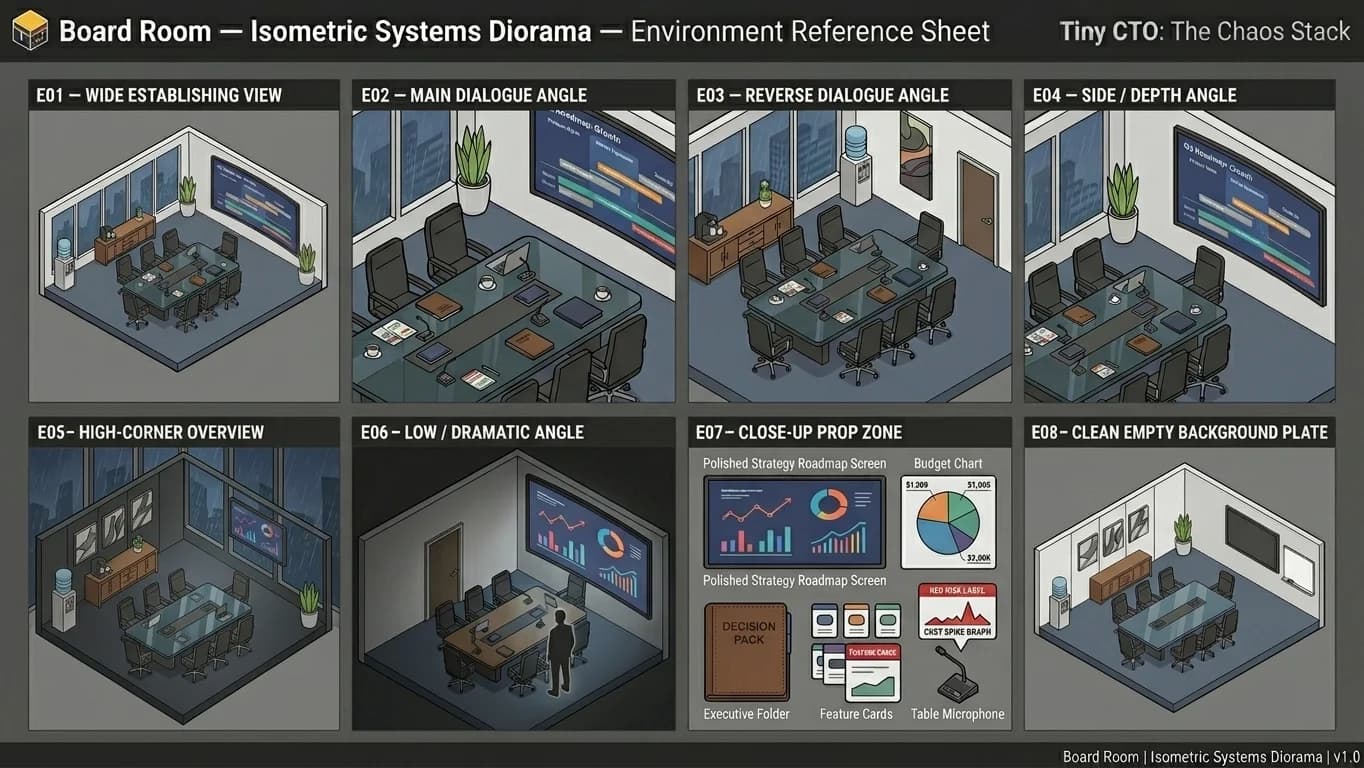
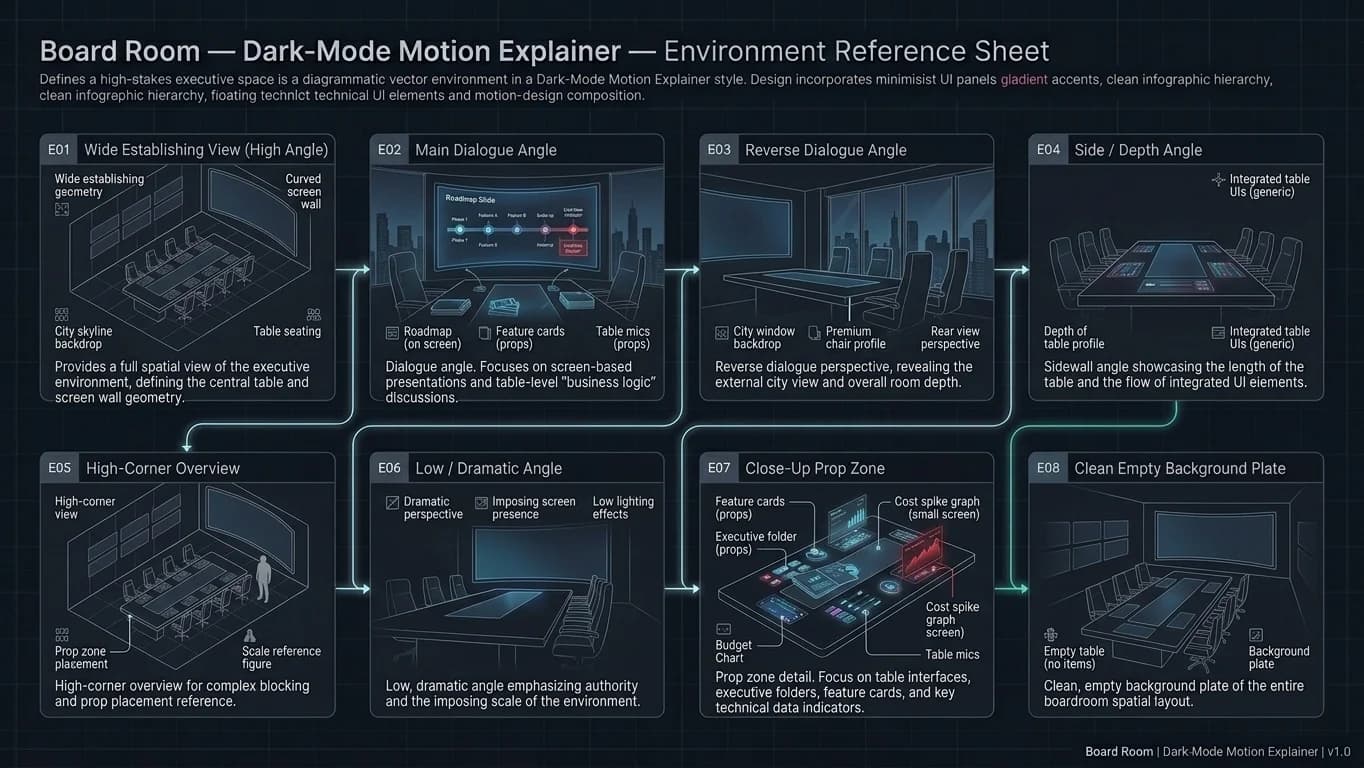
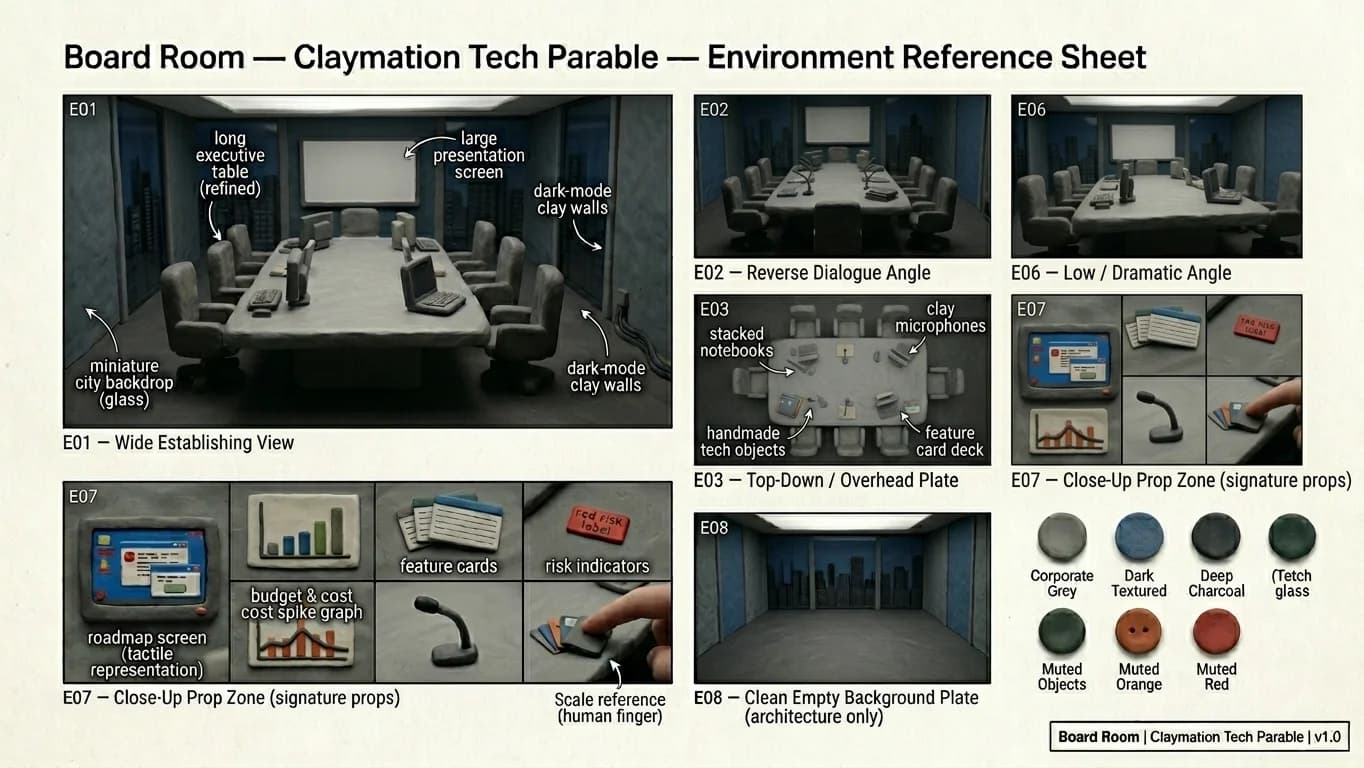
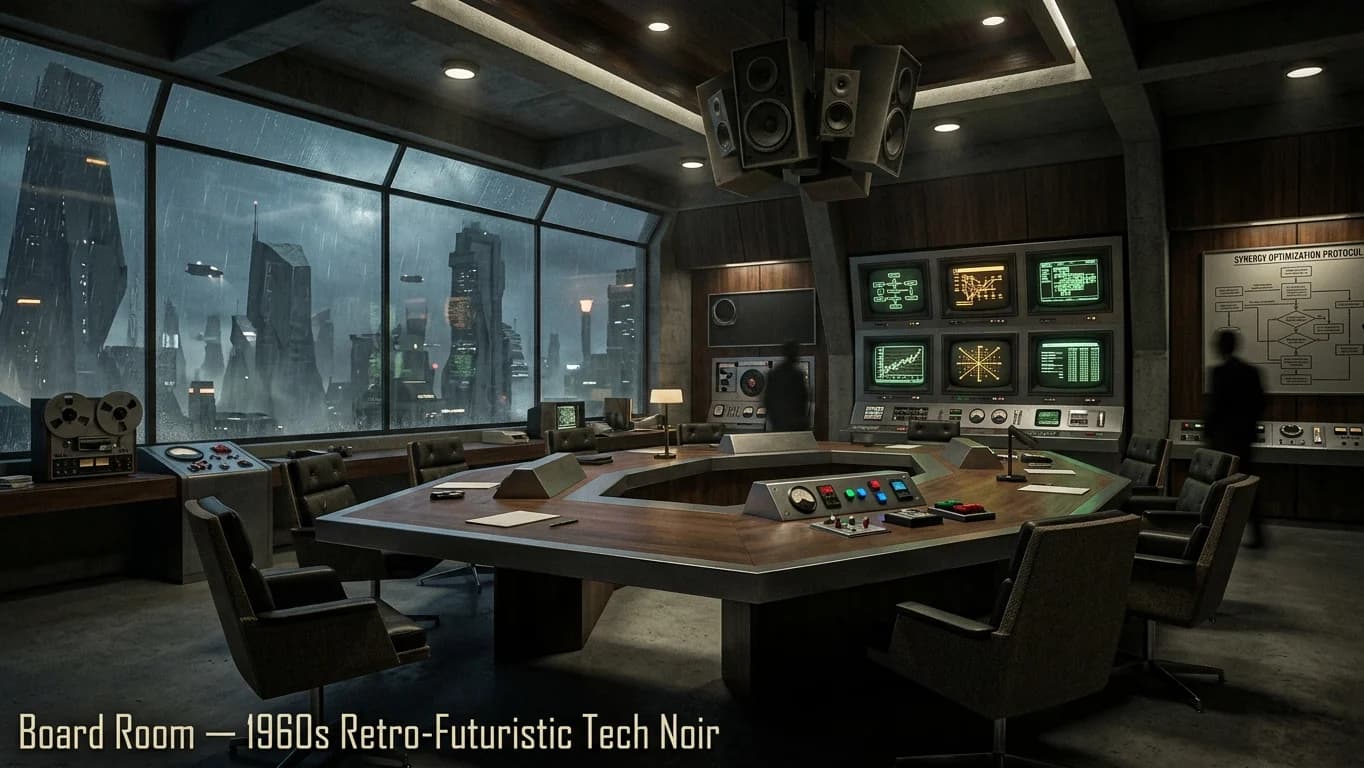
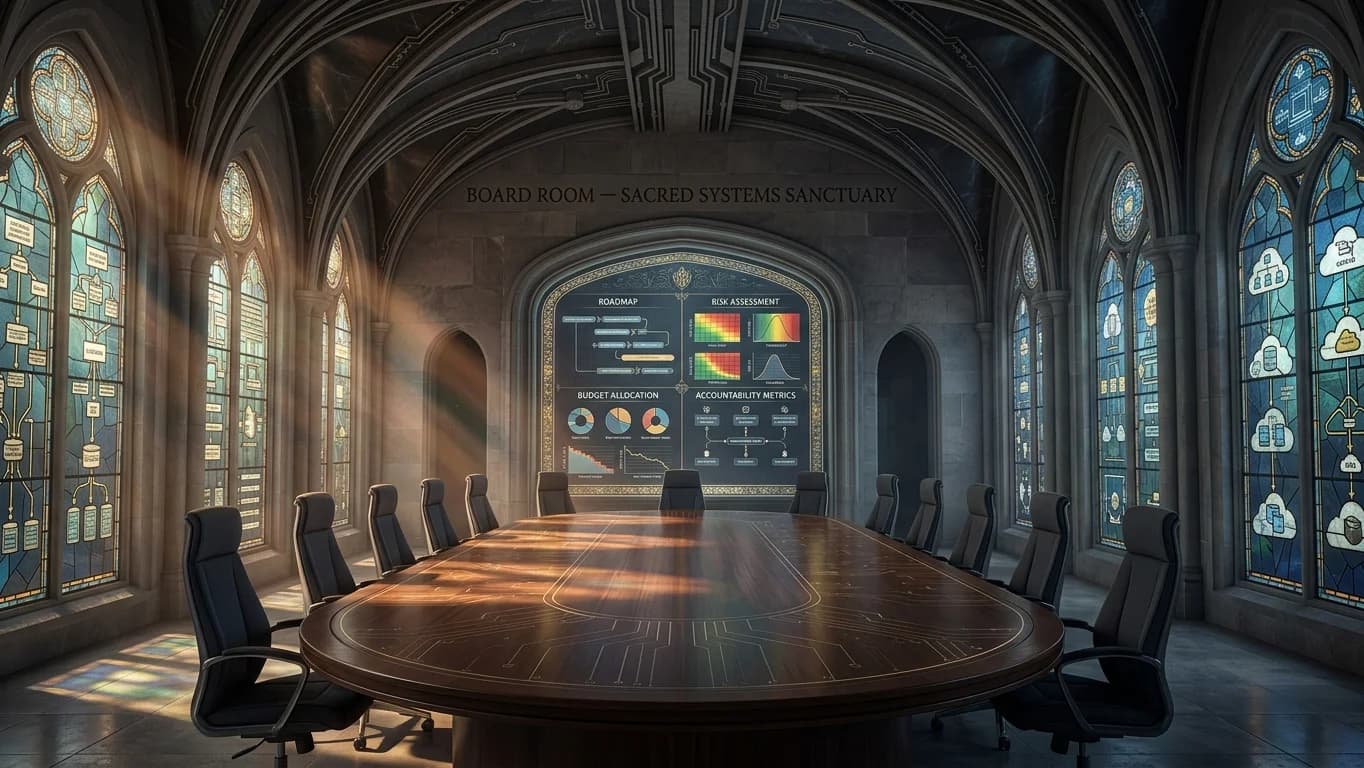
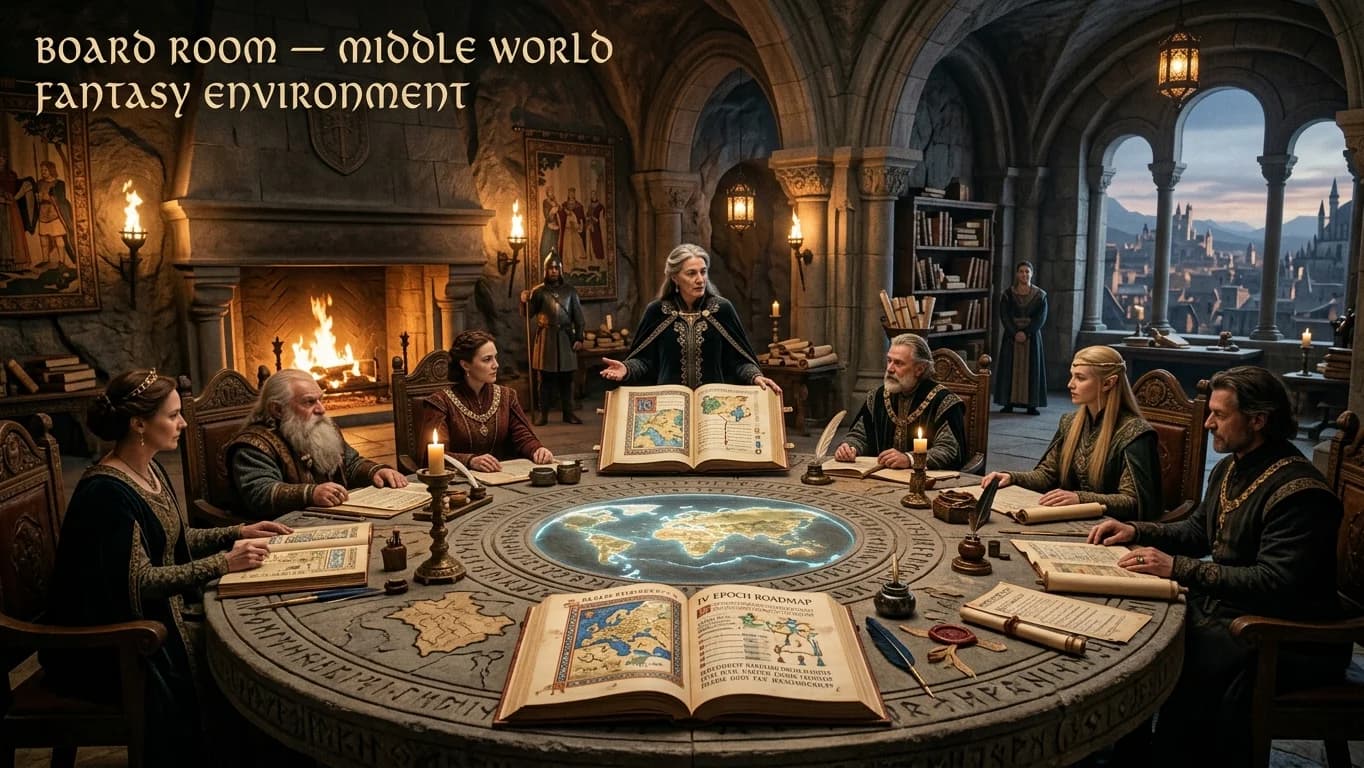
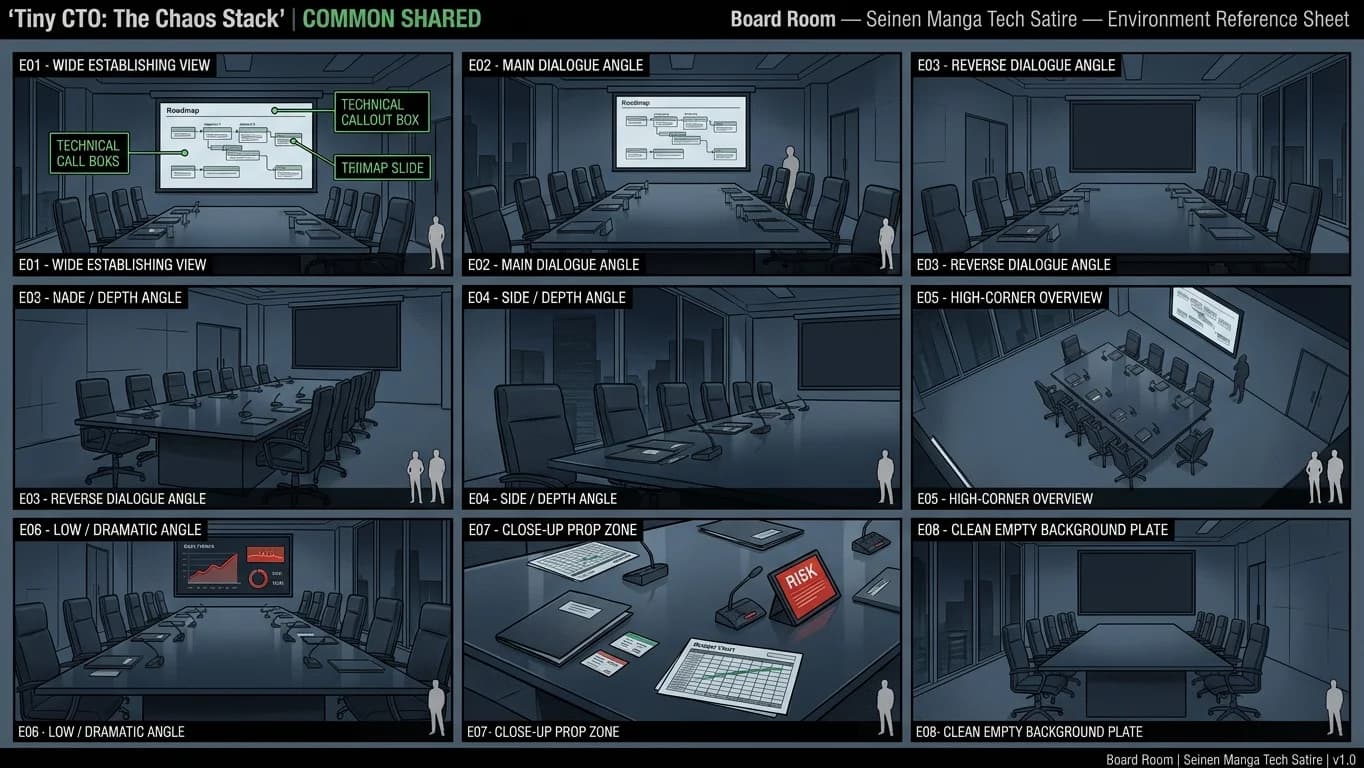
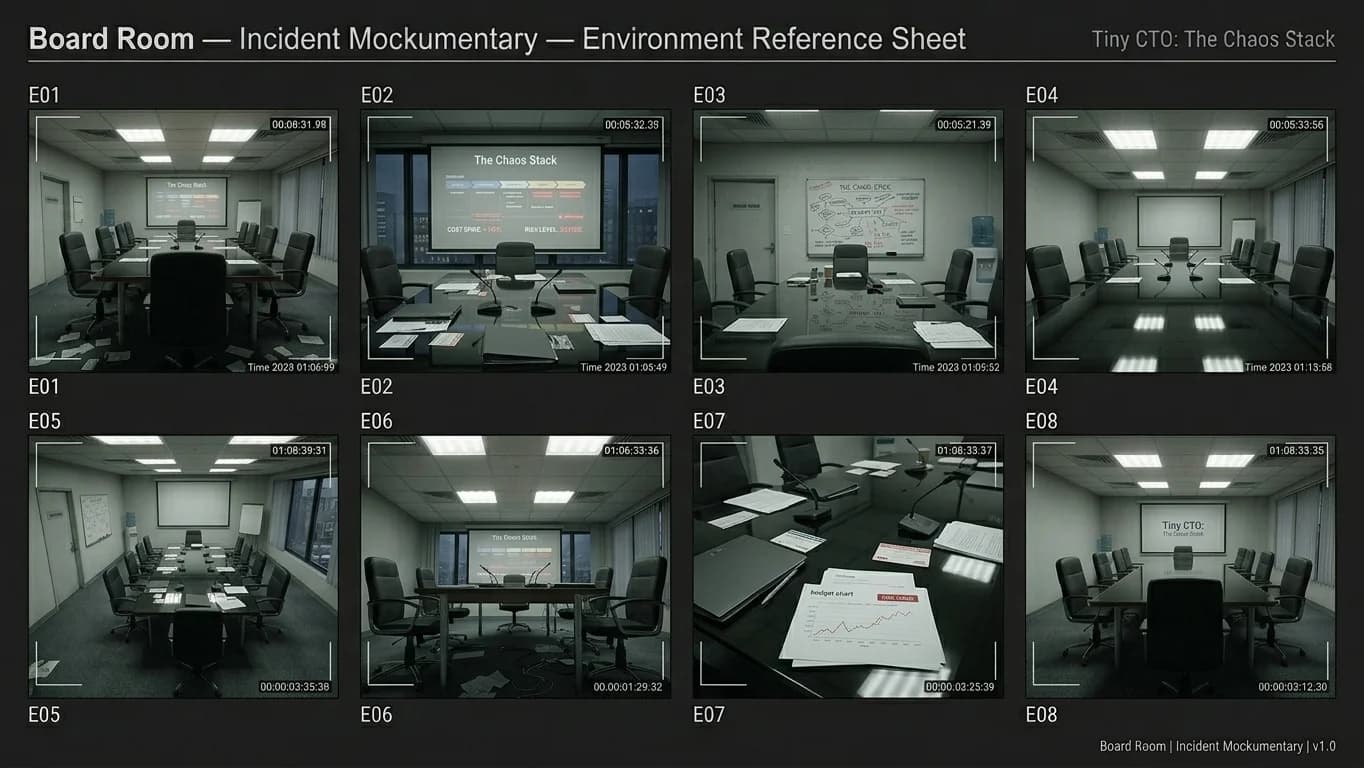
Board Room
The Board Room is a common setting within the Chaos Stack universe.


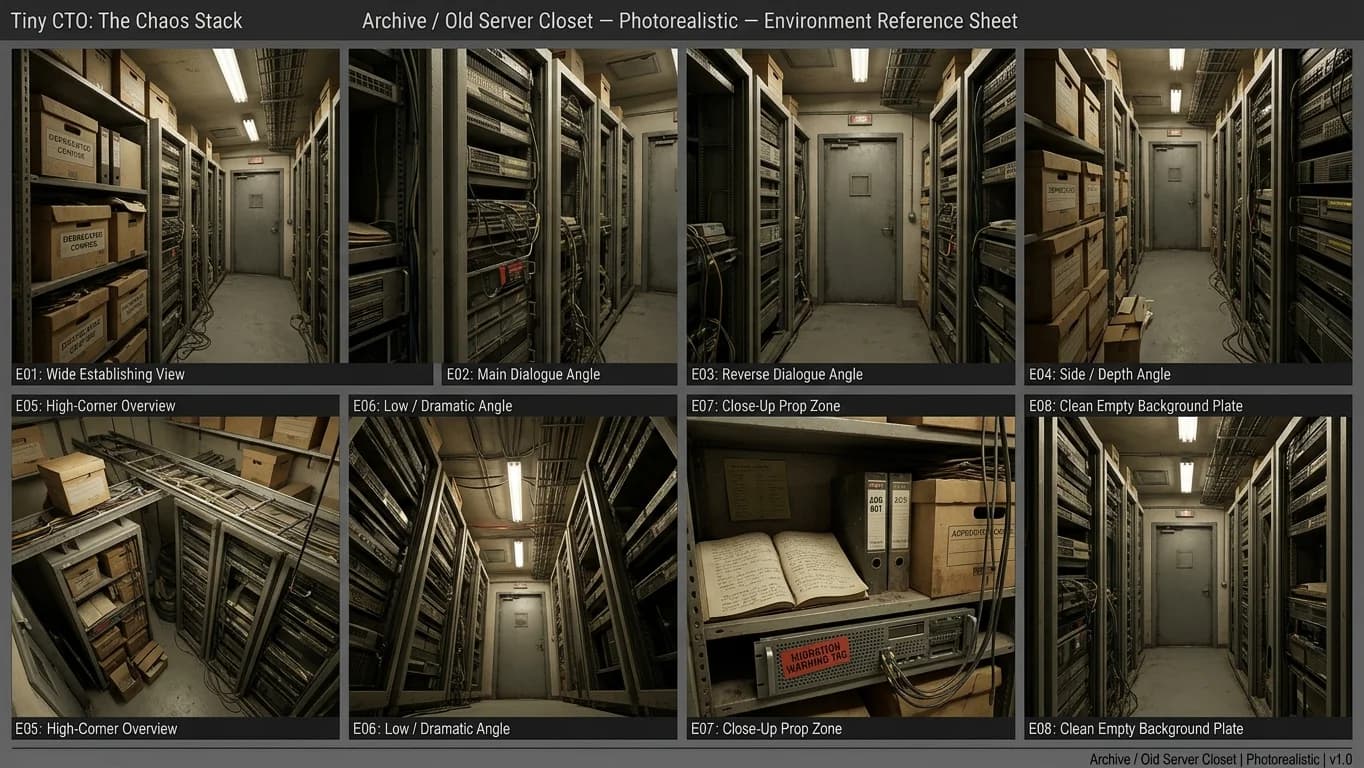
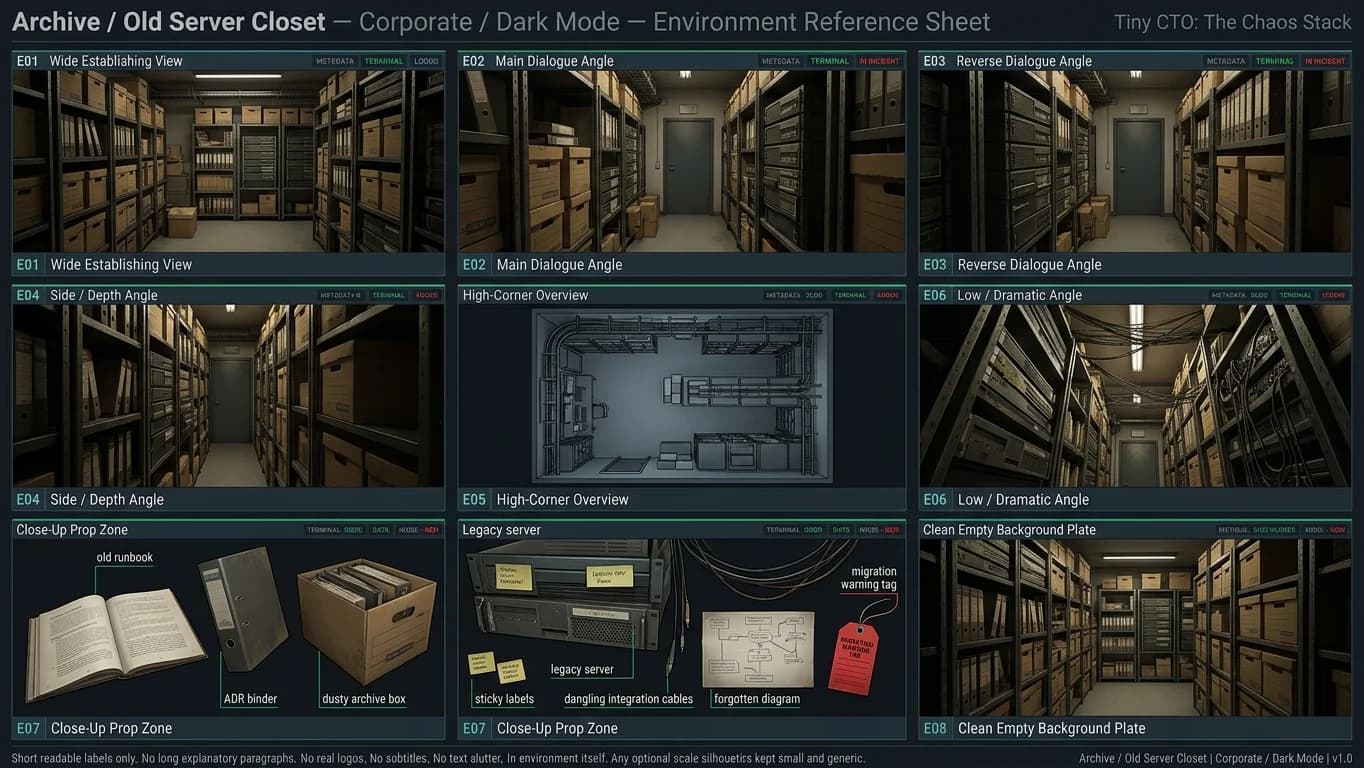
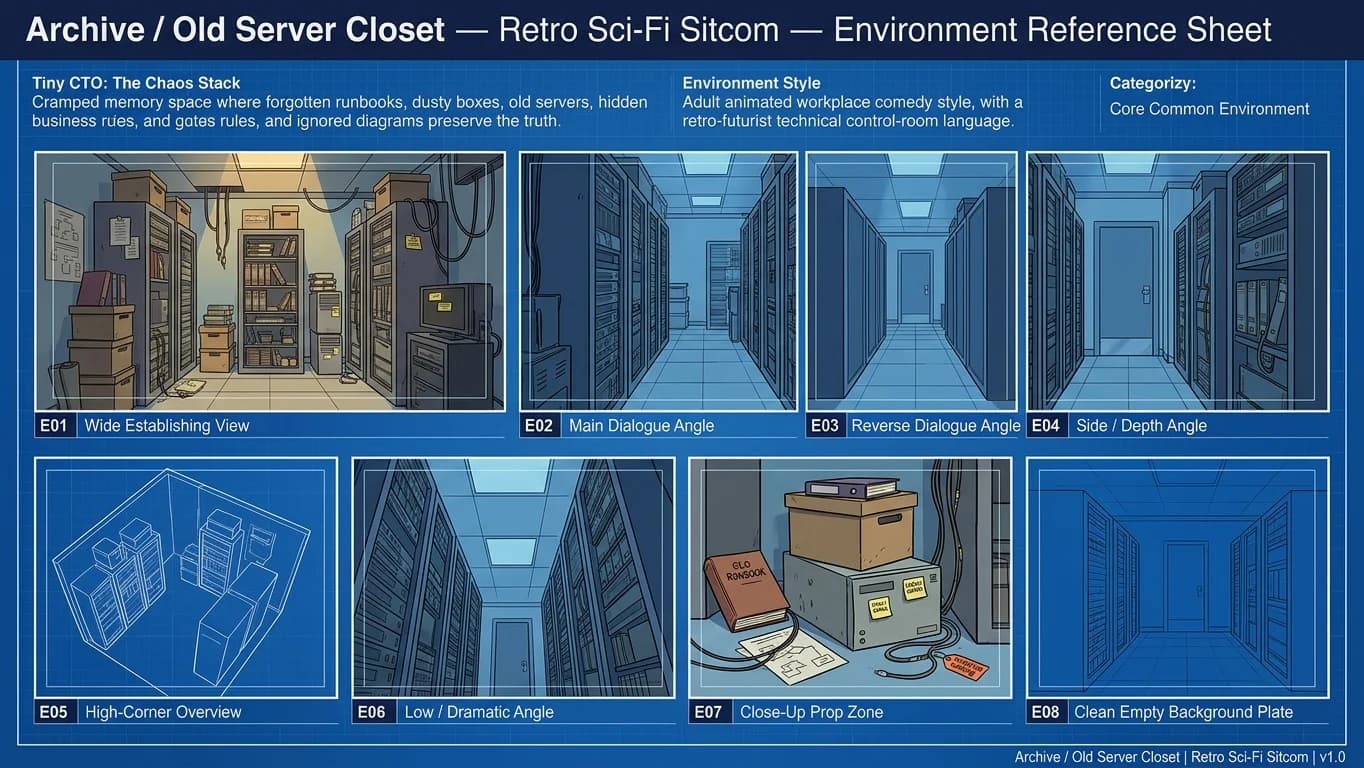
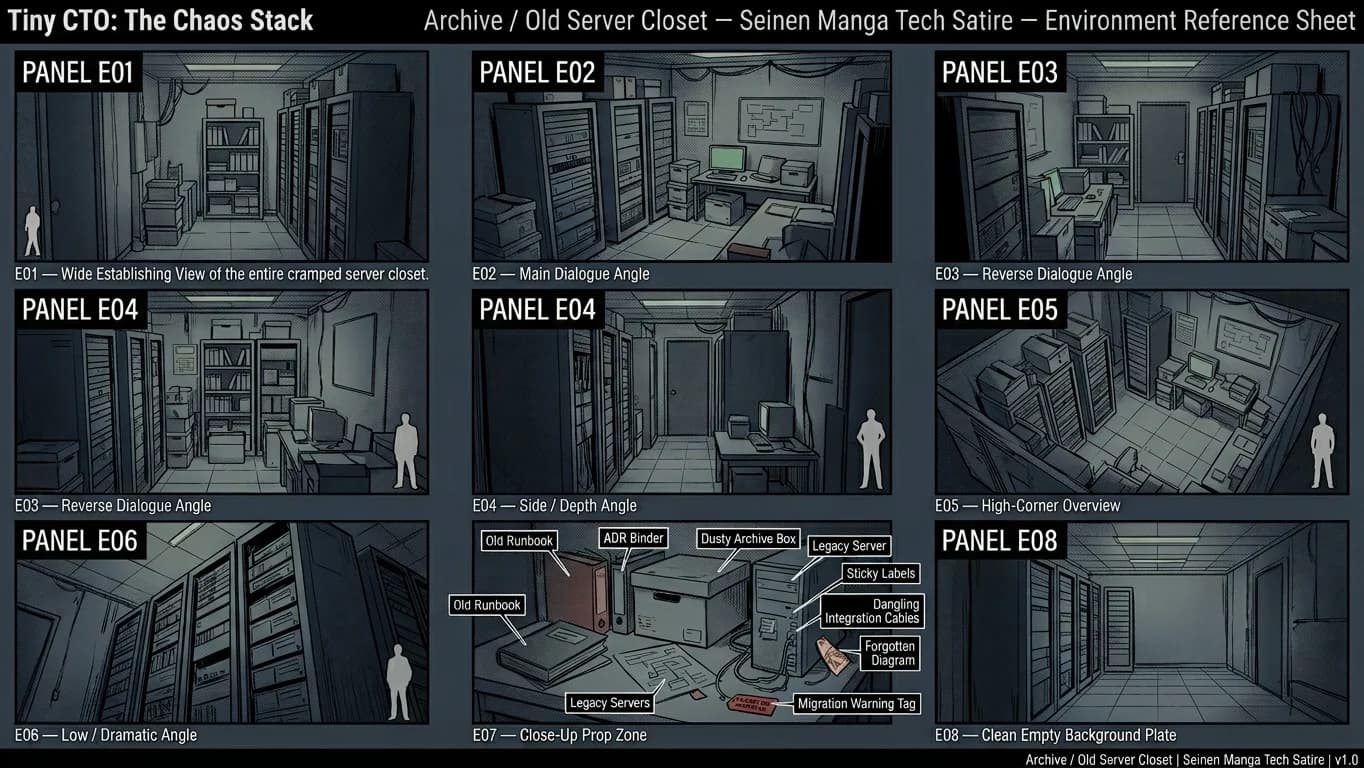
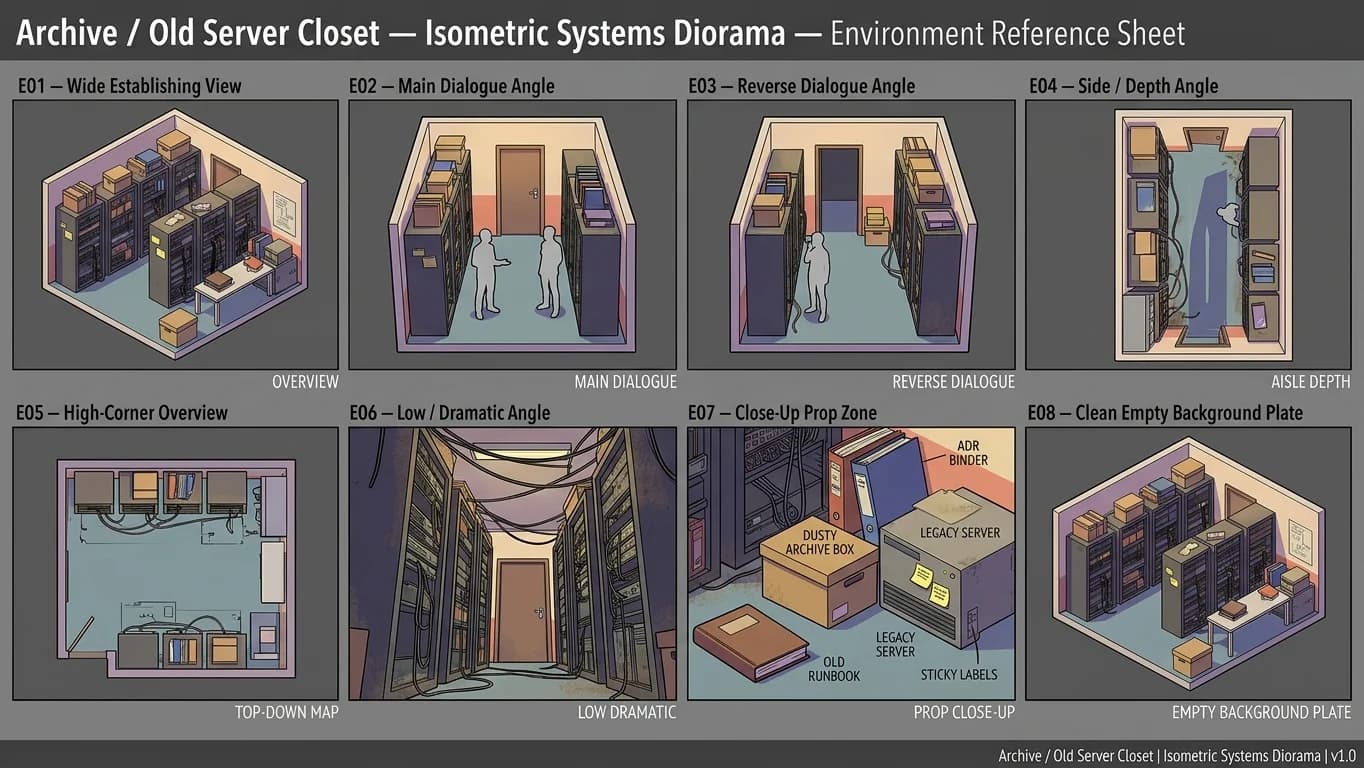
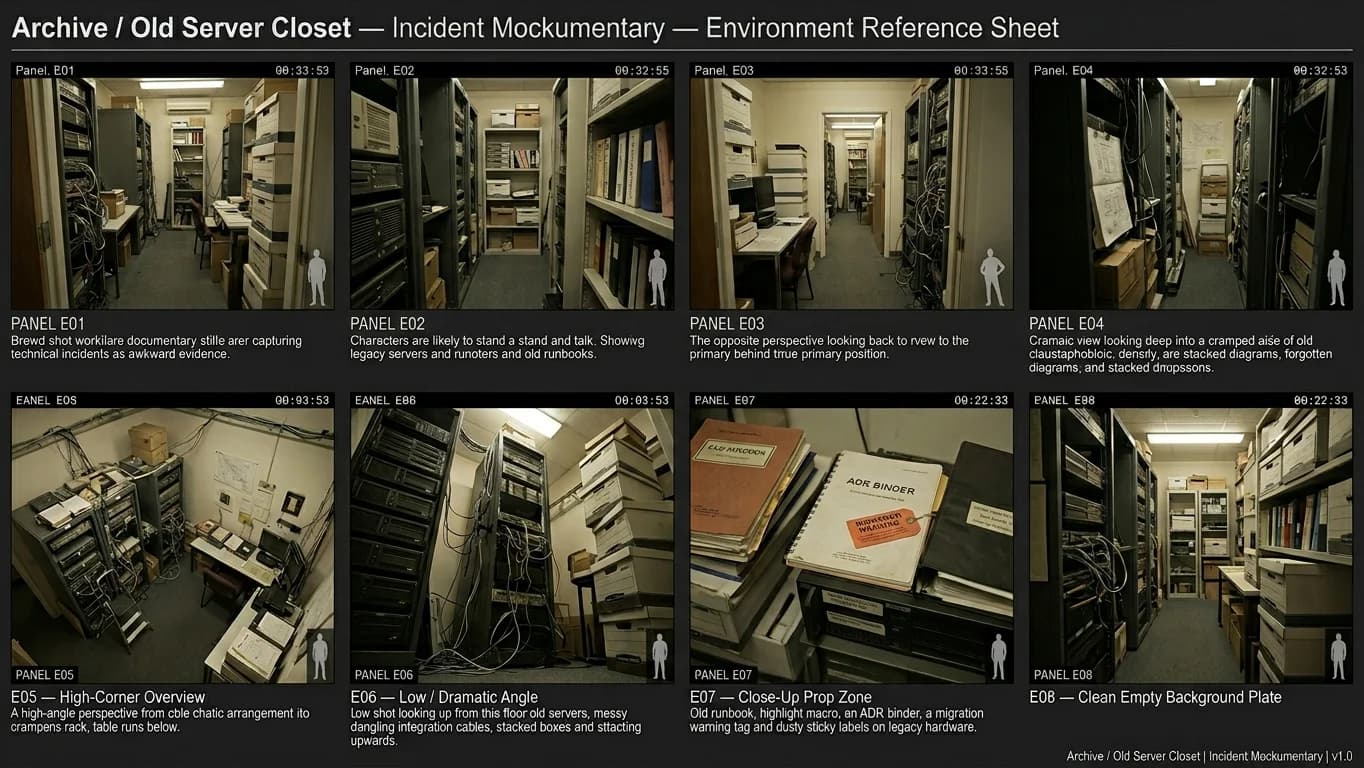
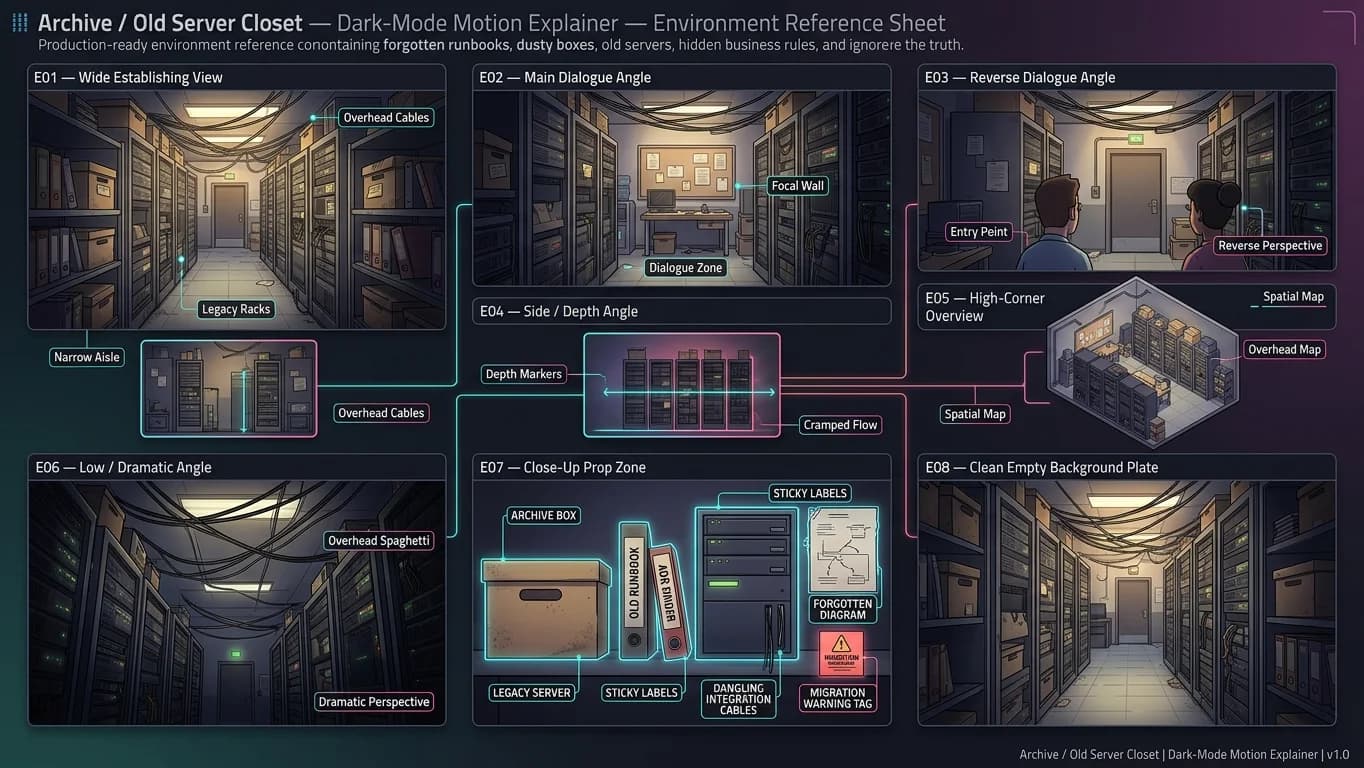
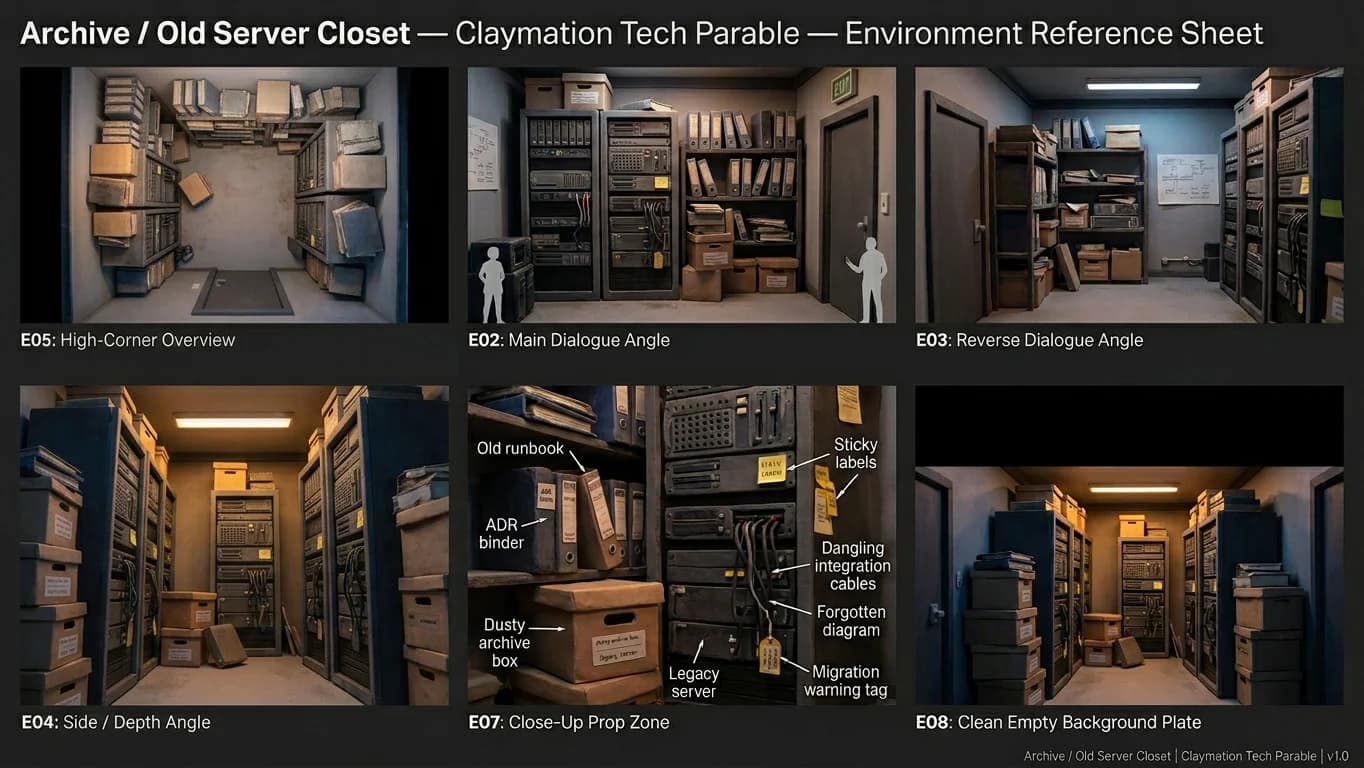
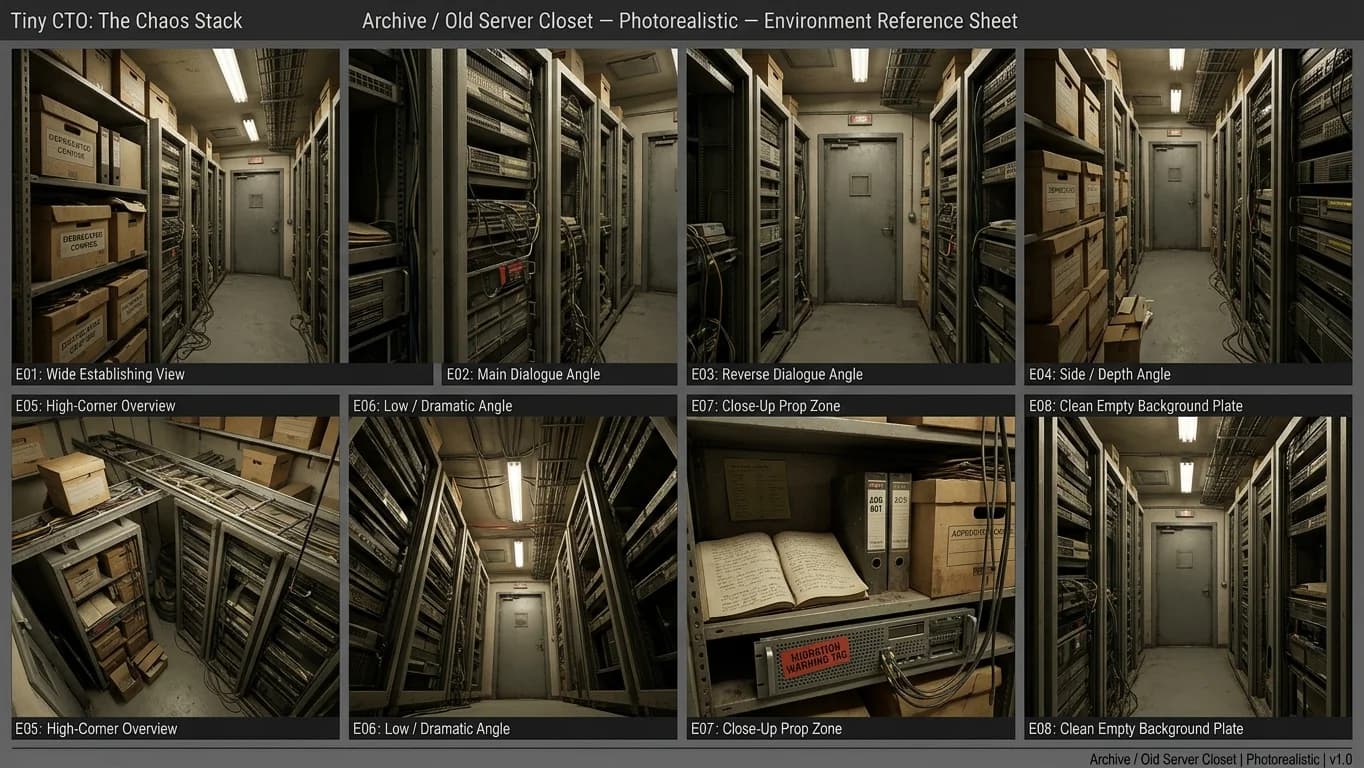
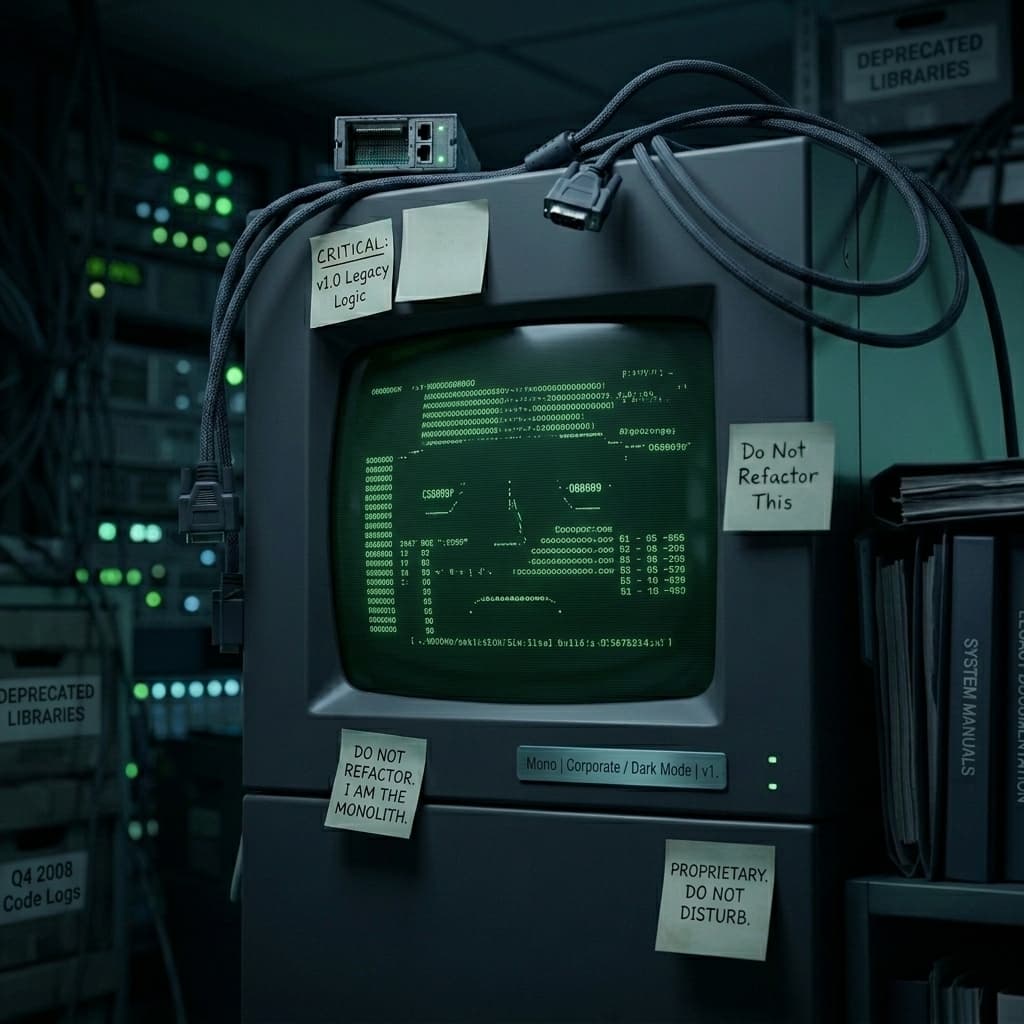
Archive / Old Server Closet
The Archive / Old Server Closet is a common setting within the Chaos Stack universe.


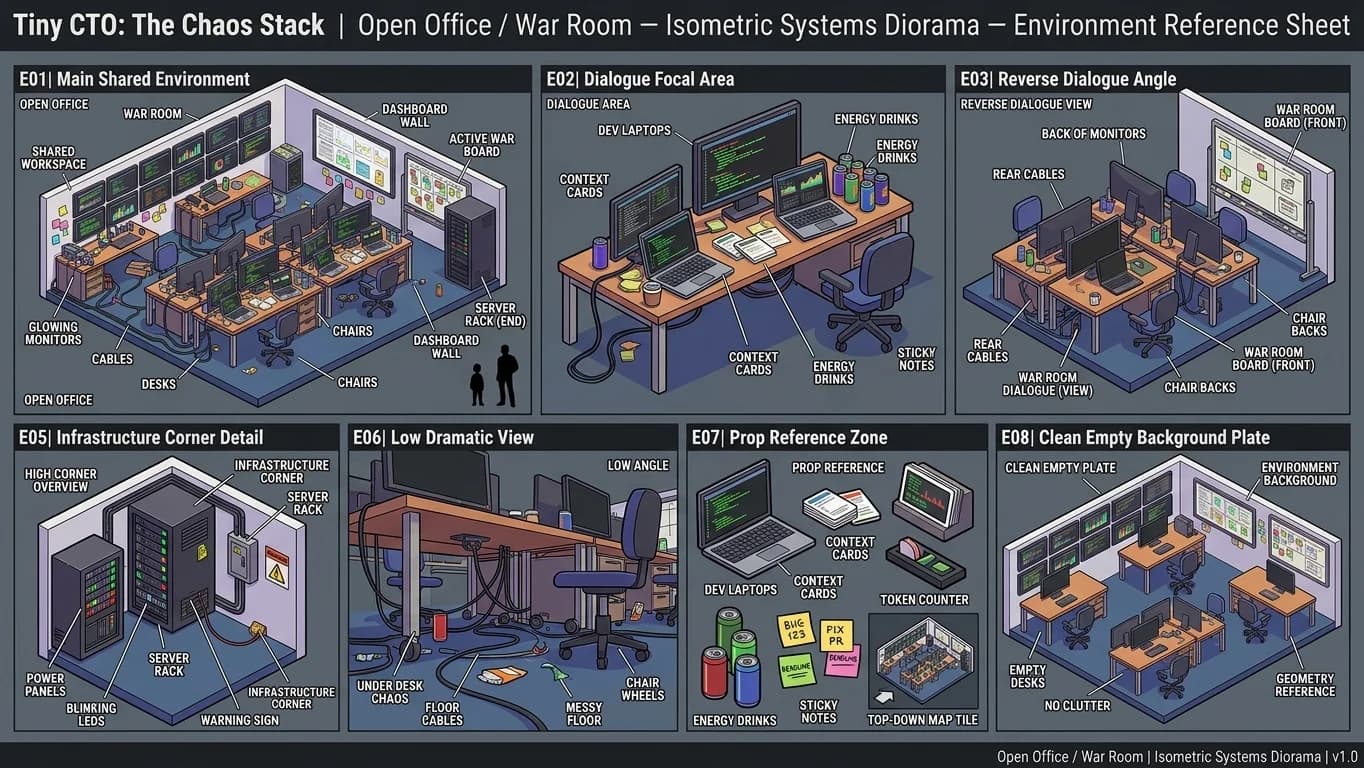
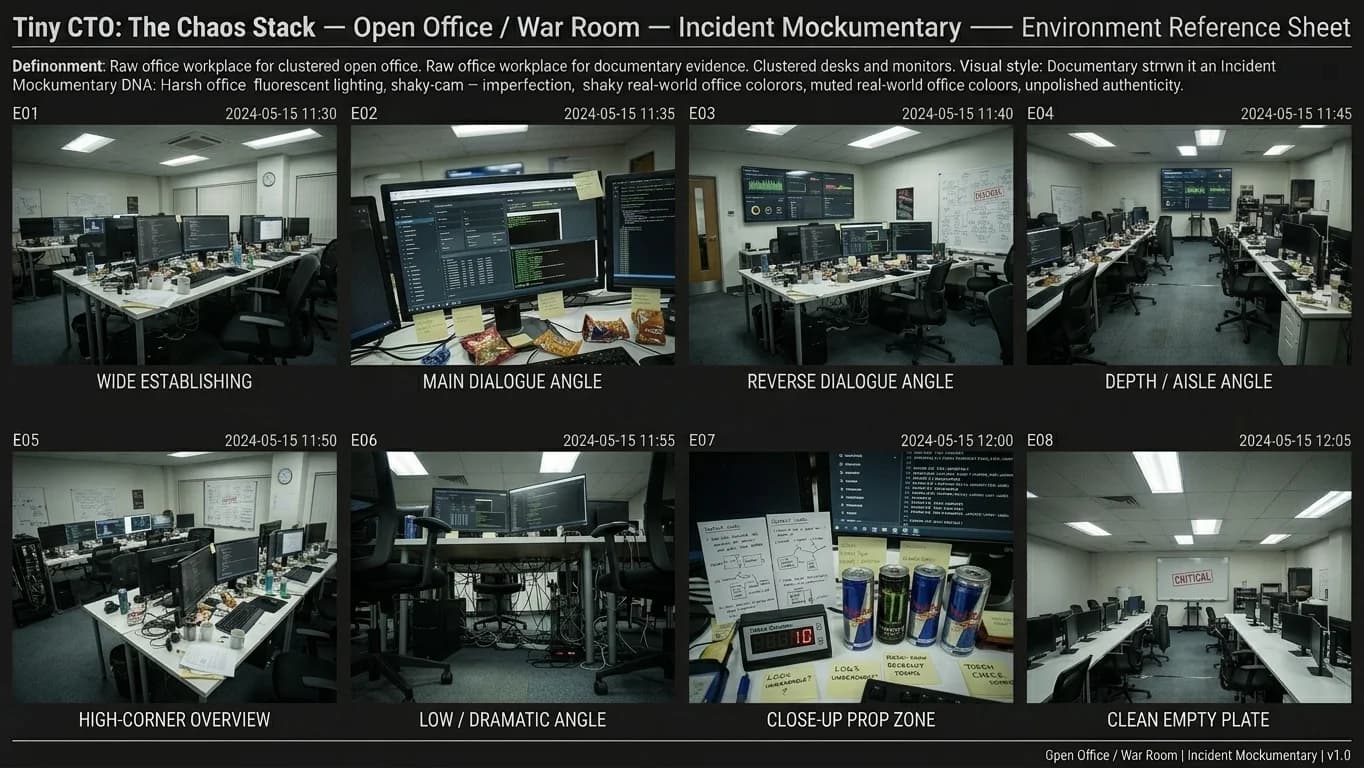
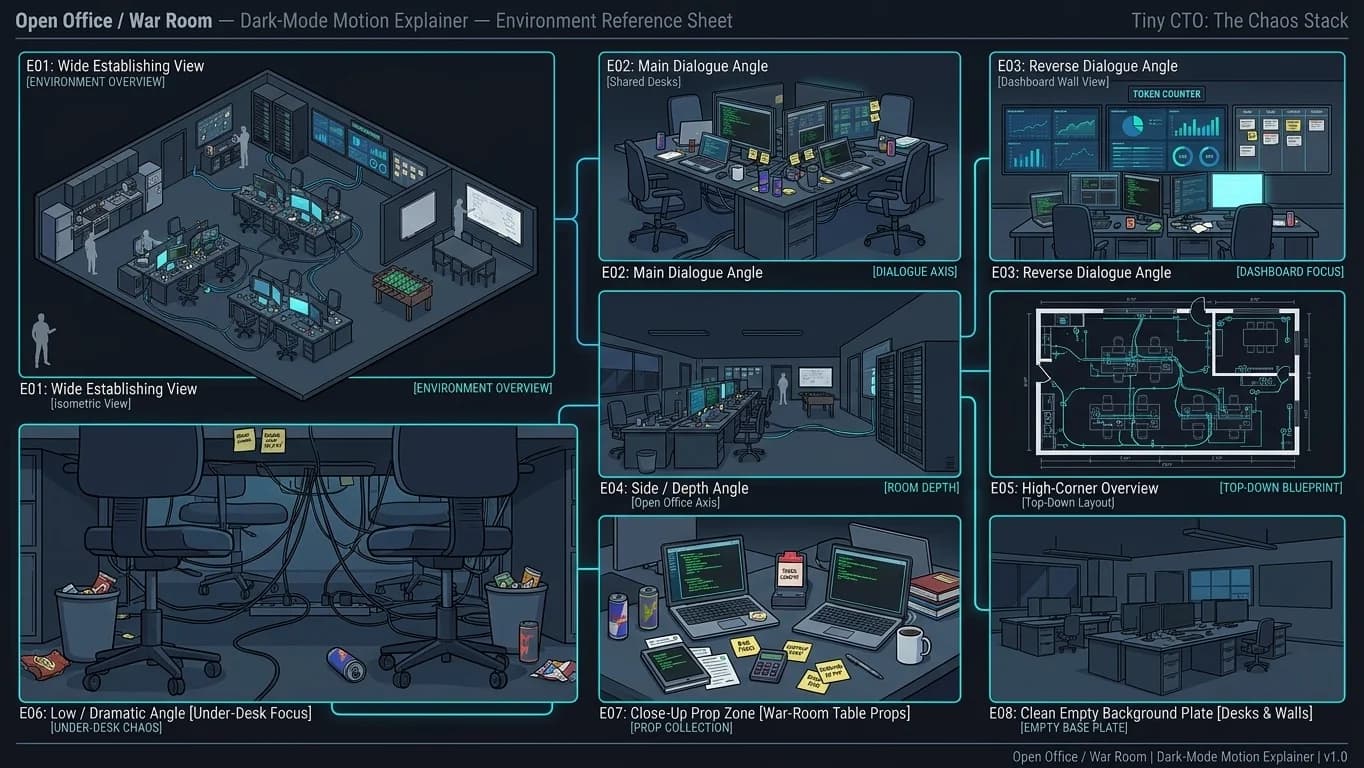
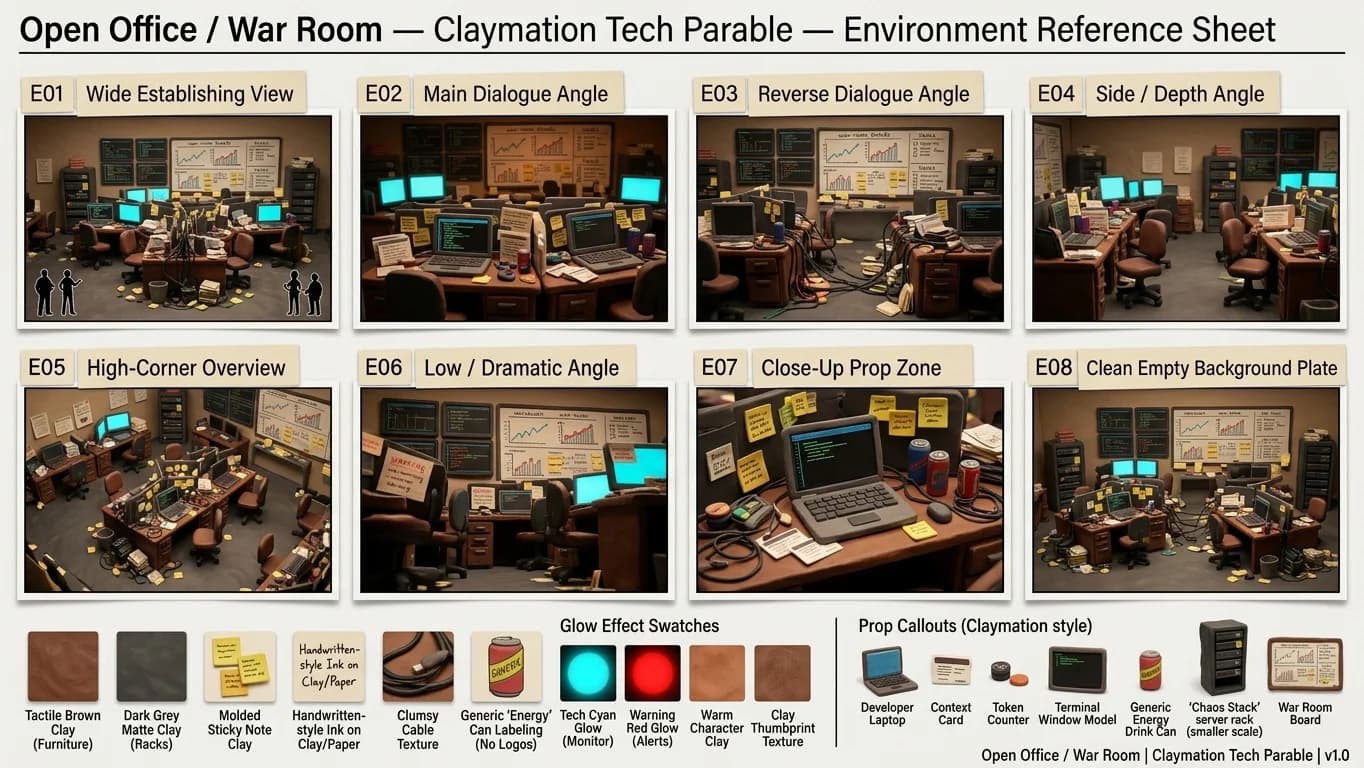
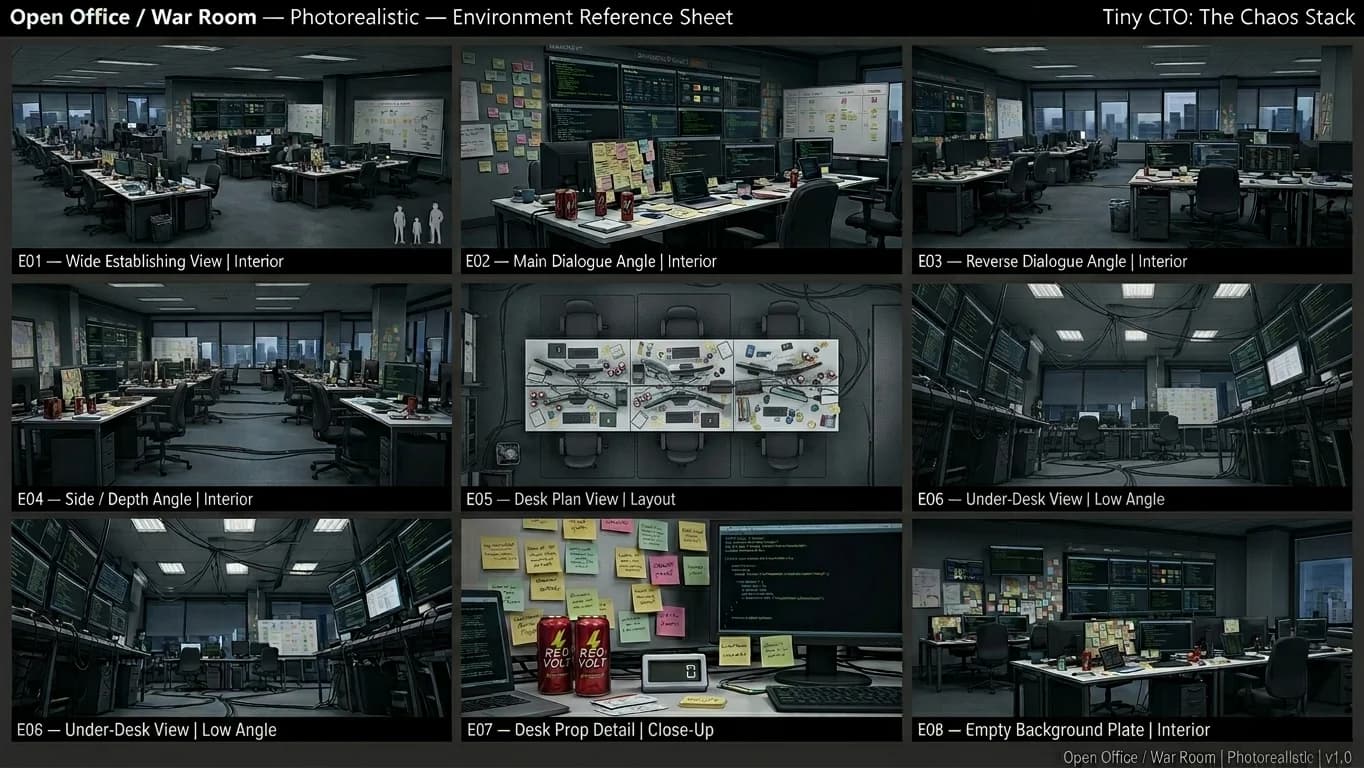
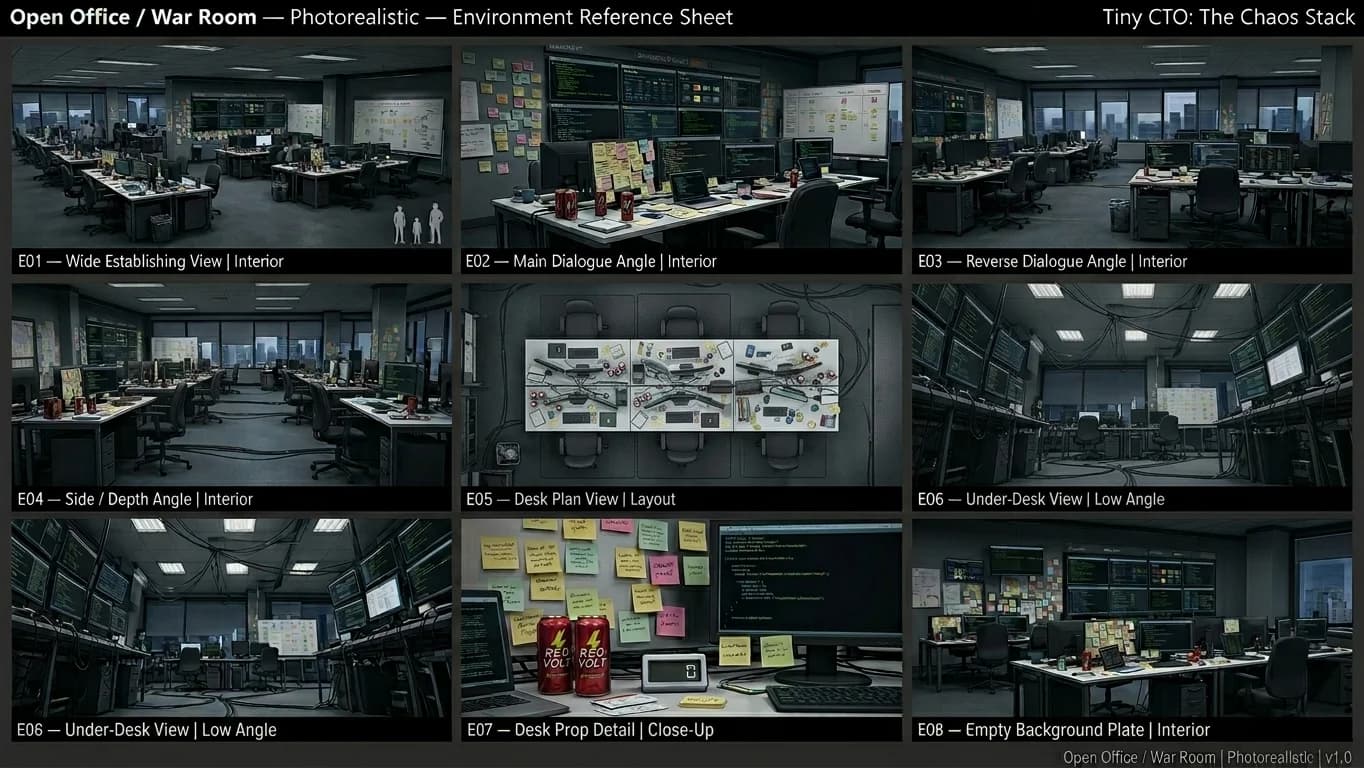
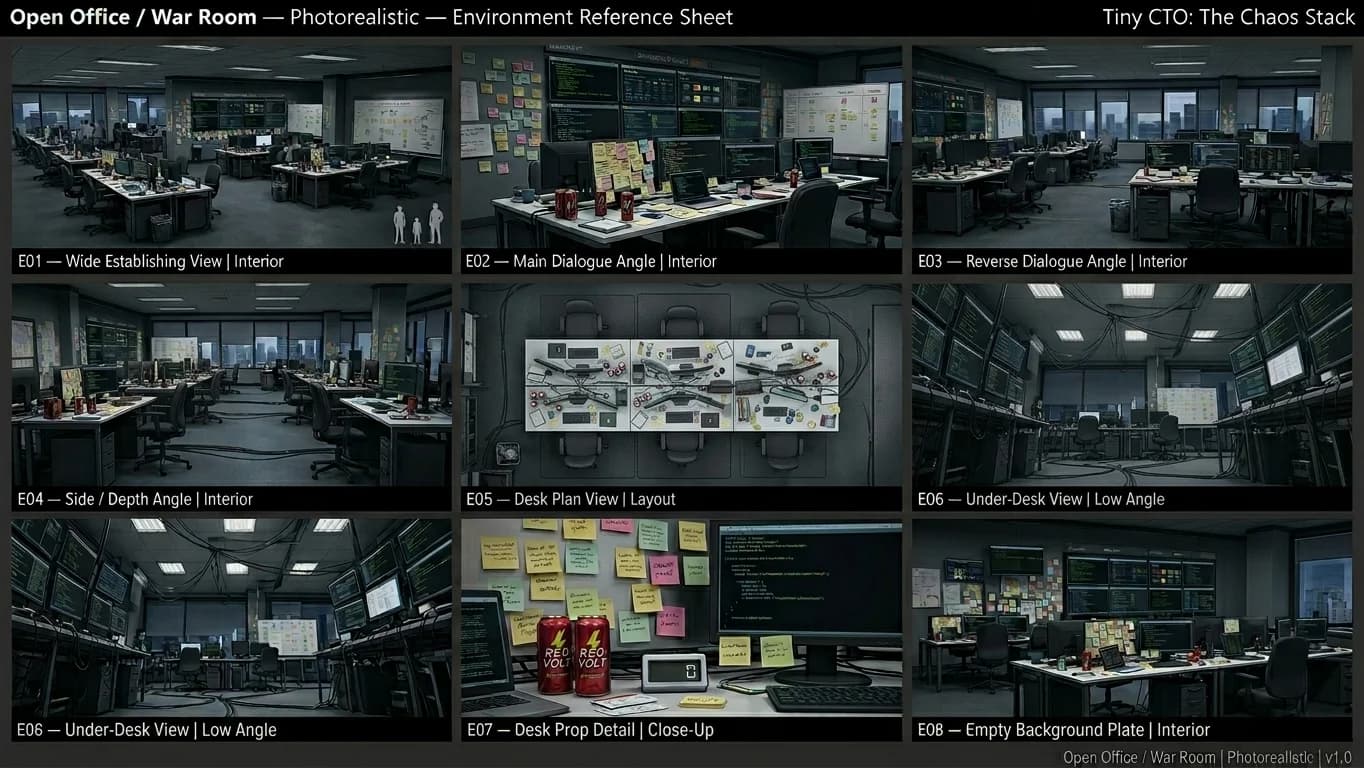
Open Office / War Room
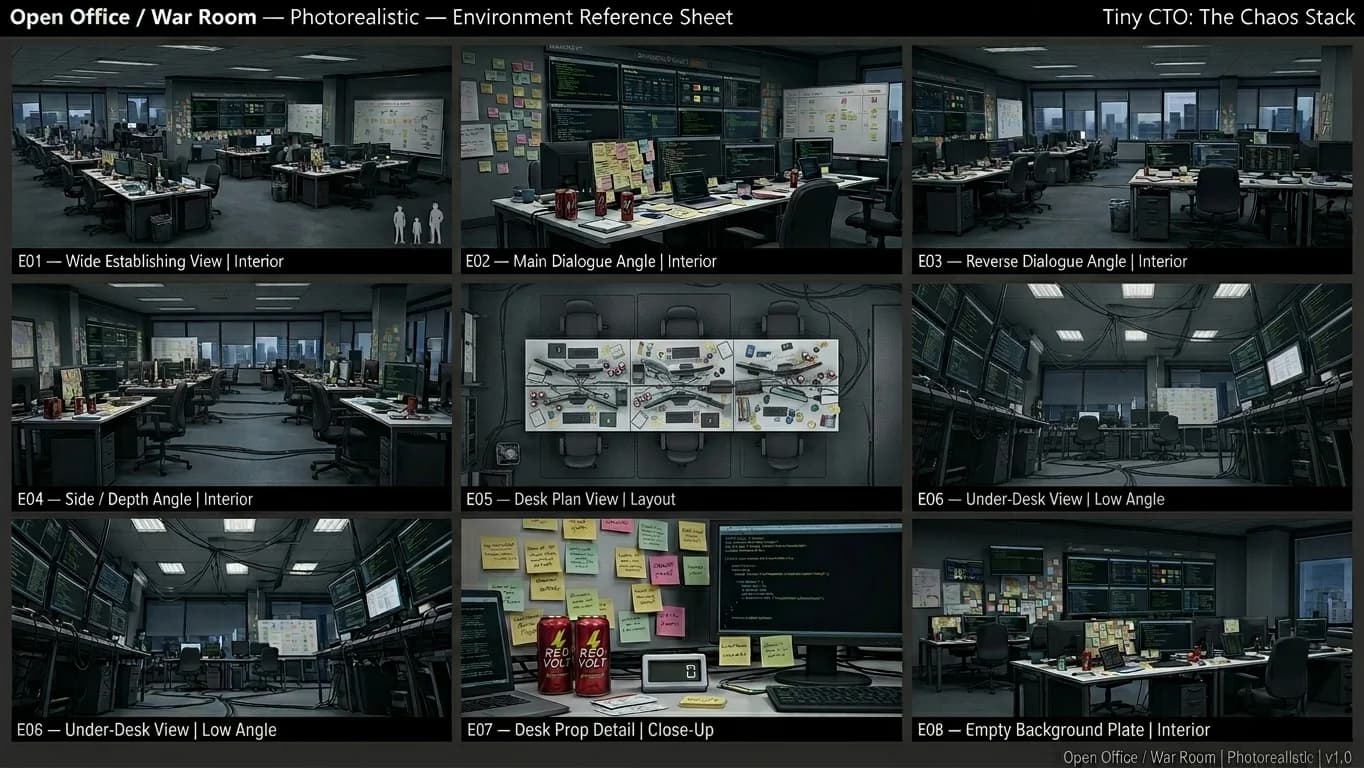
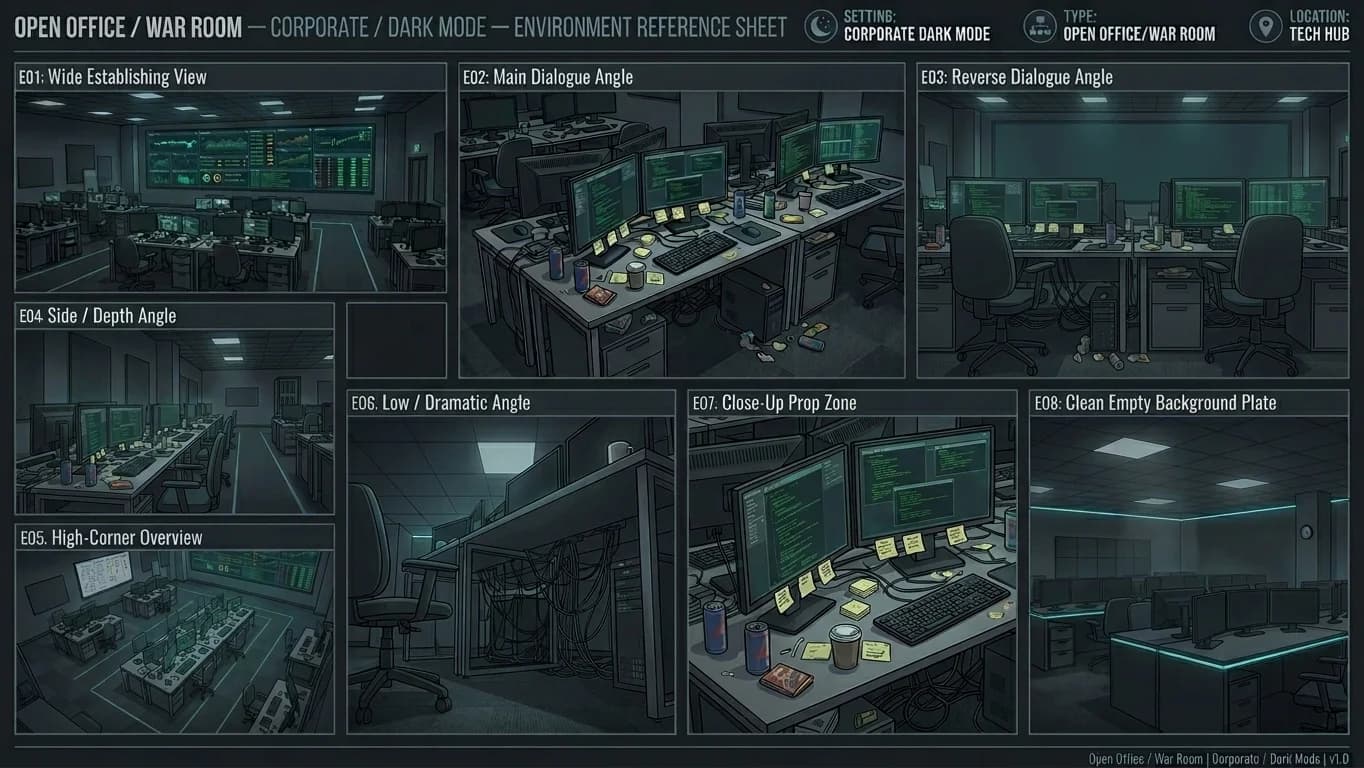
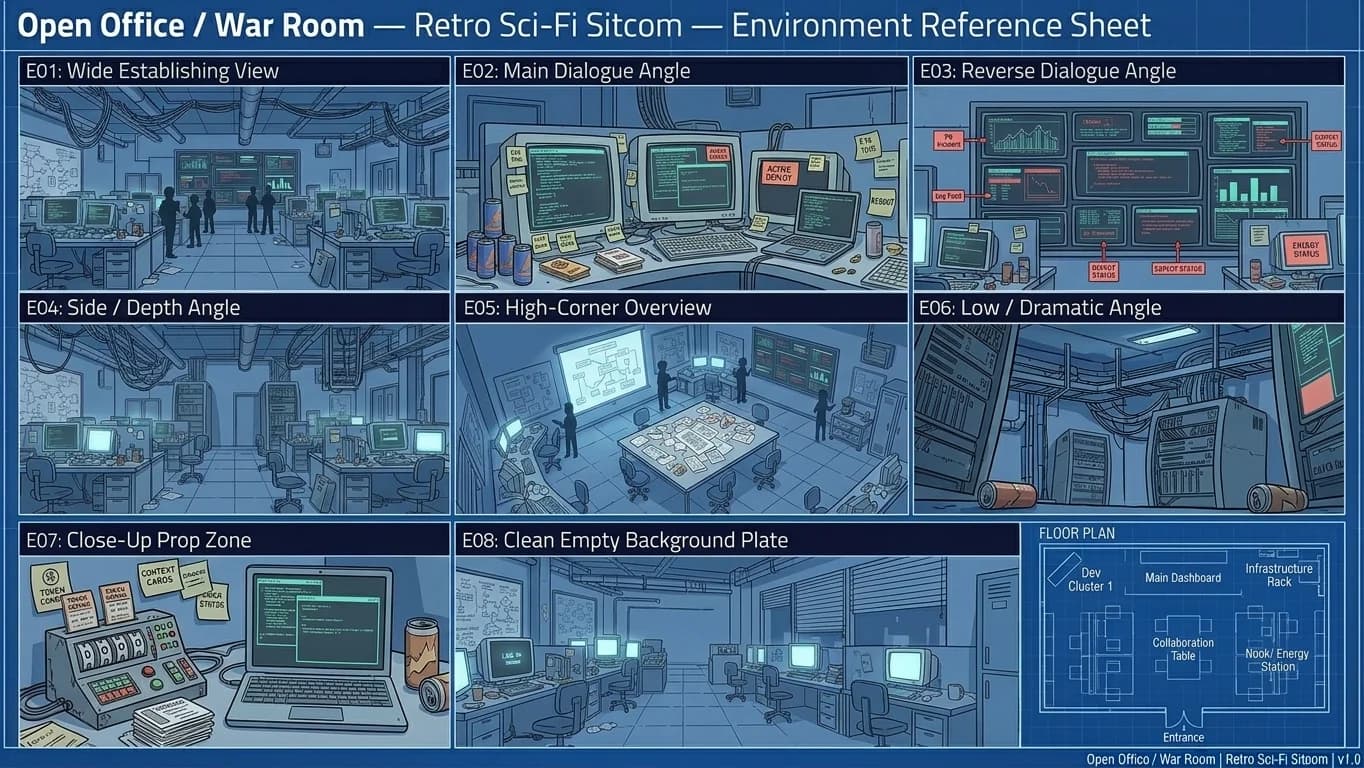
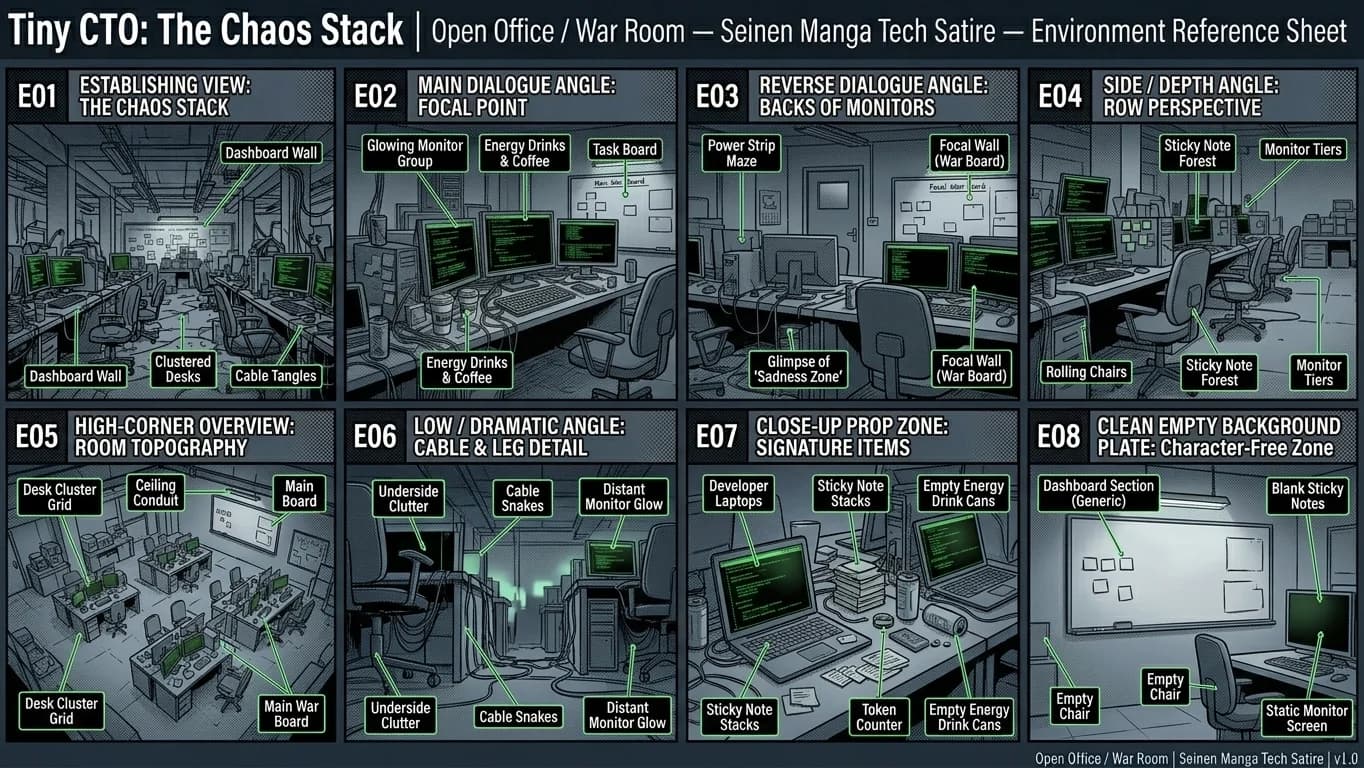
The Open Office / War Room is a common setting within the Chaos Stack universe.


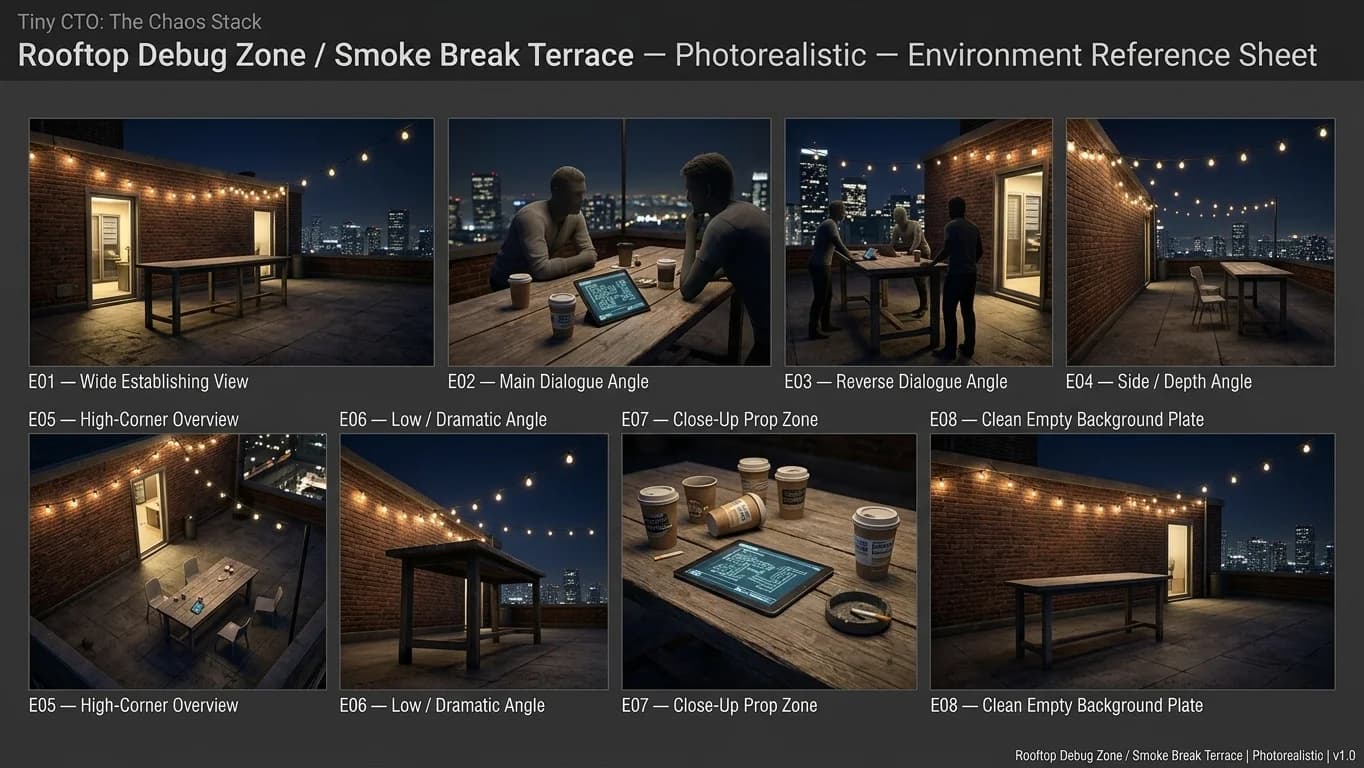
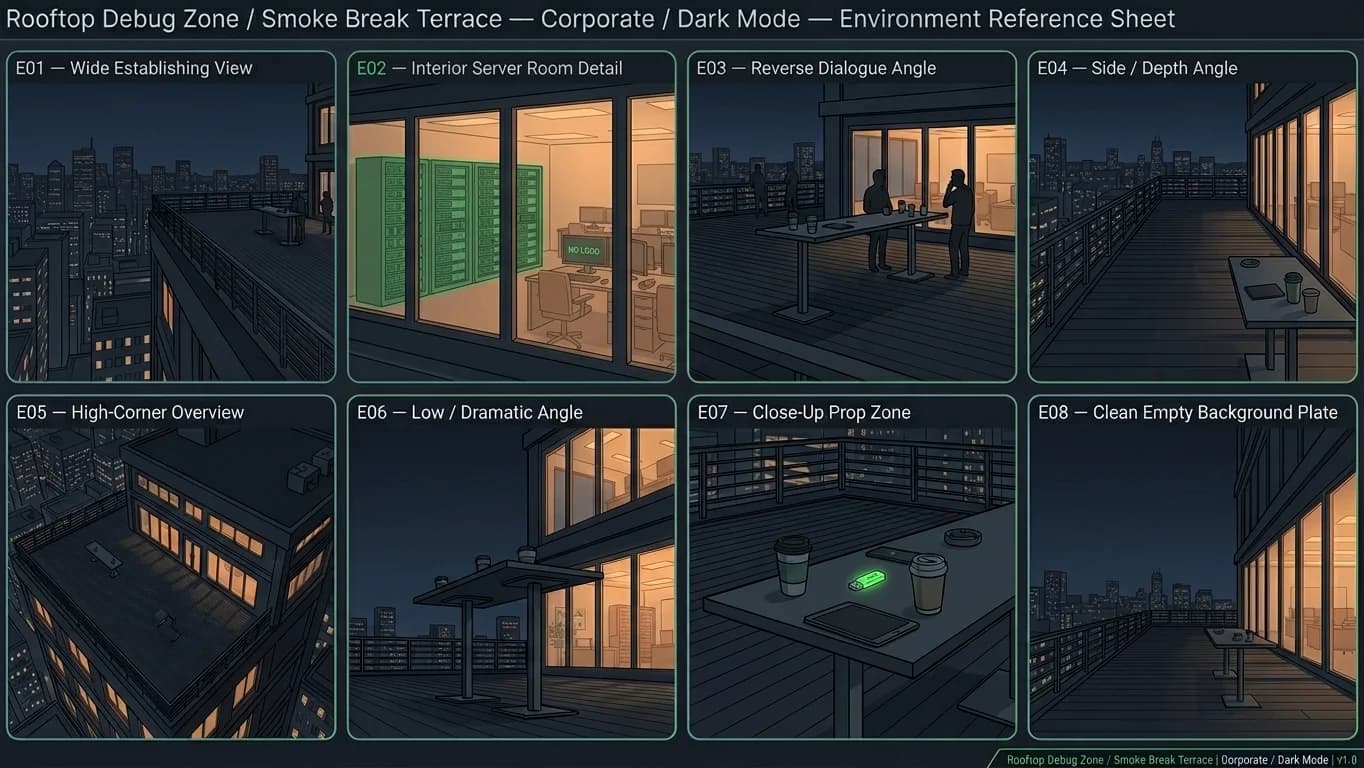
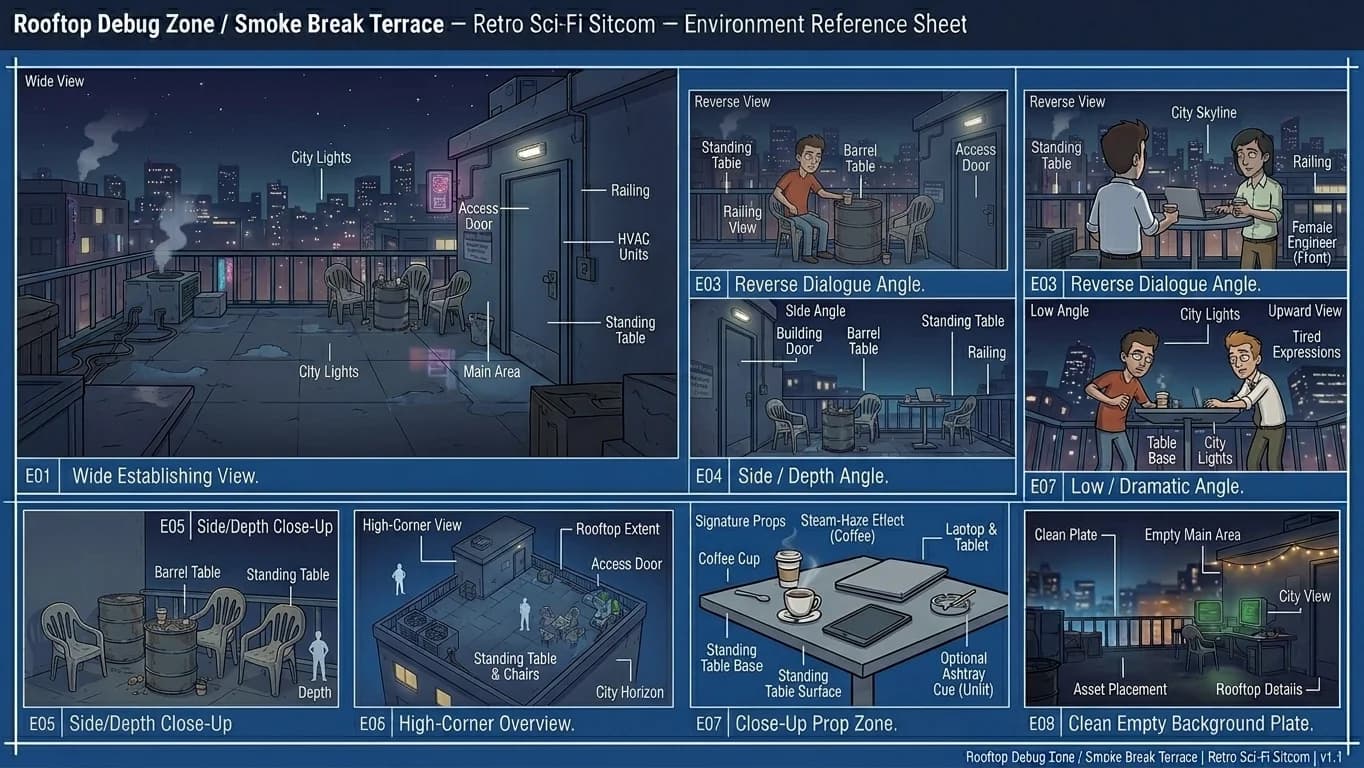
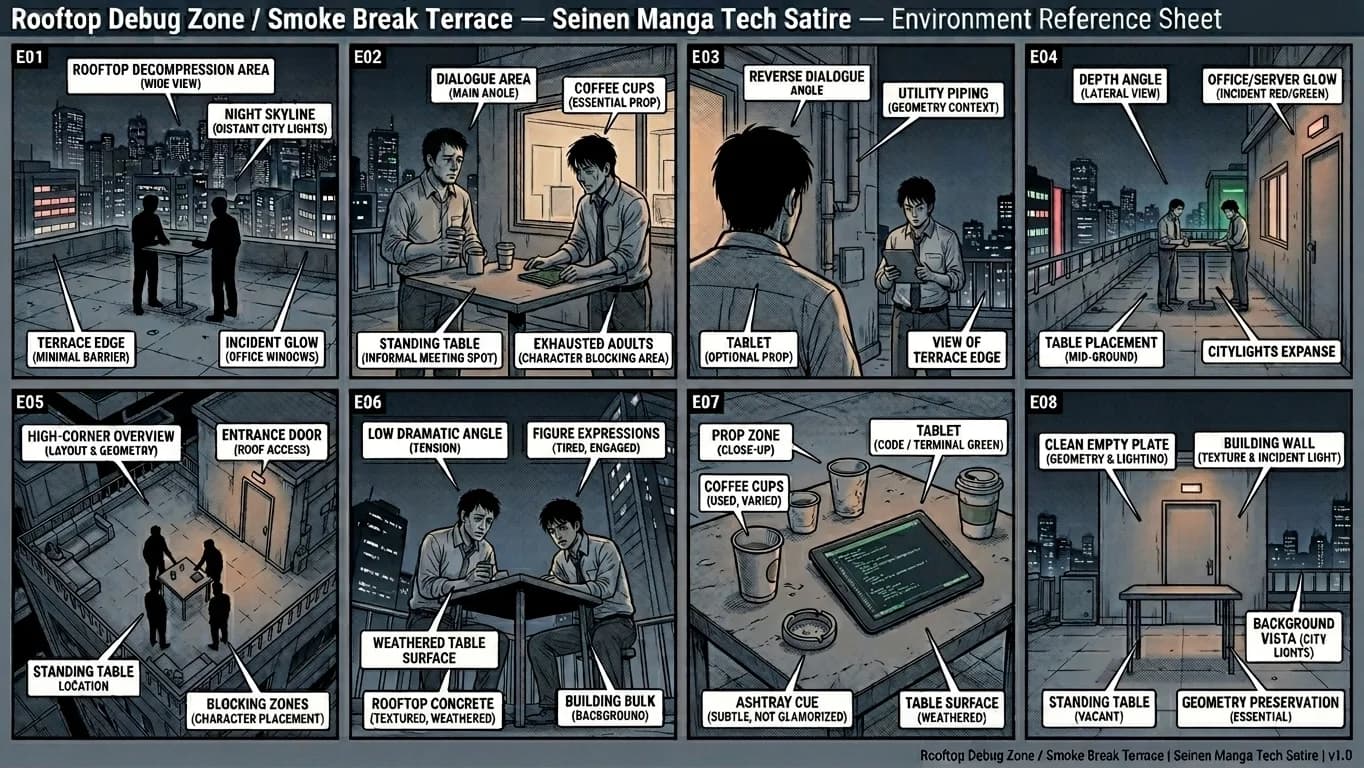
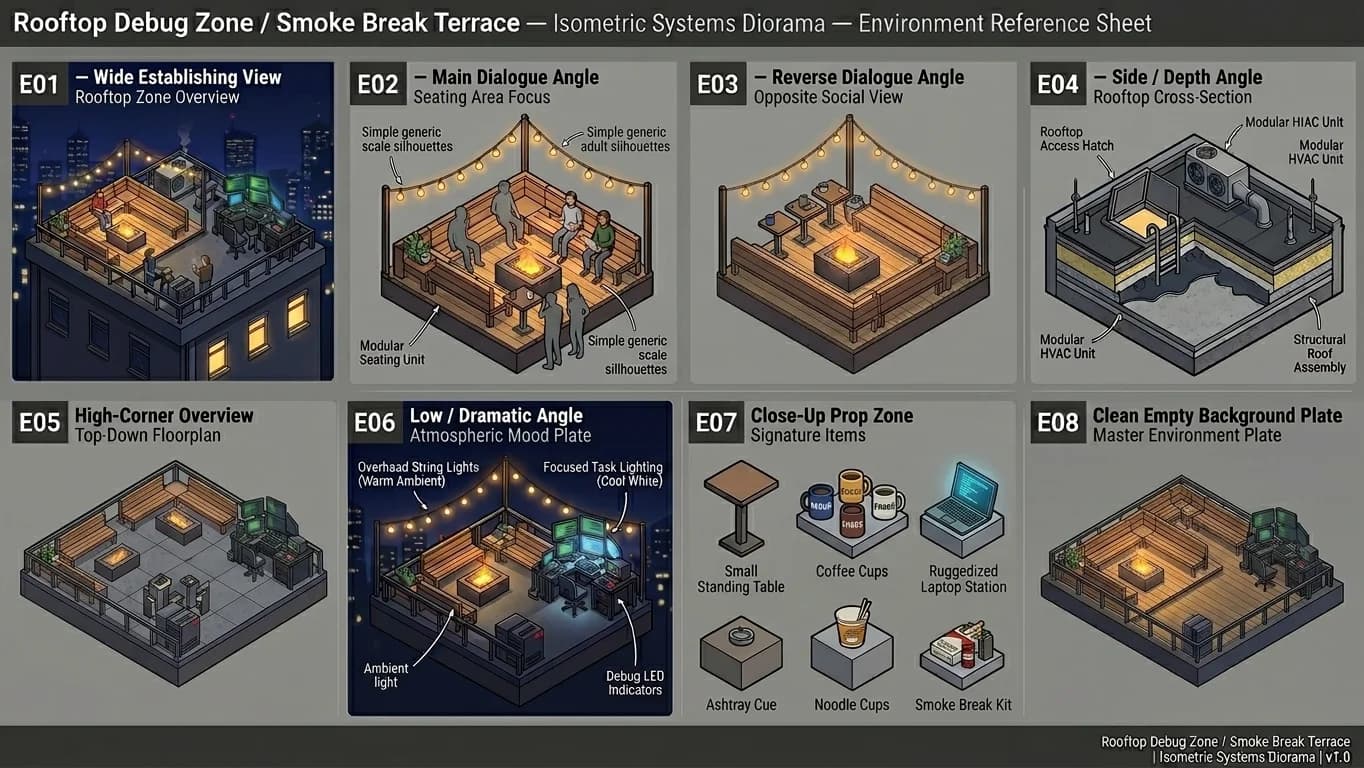
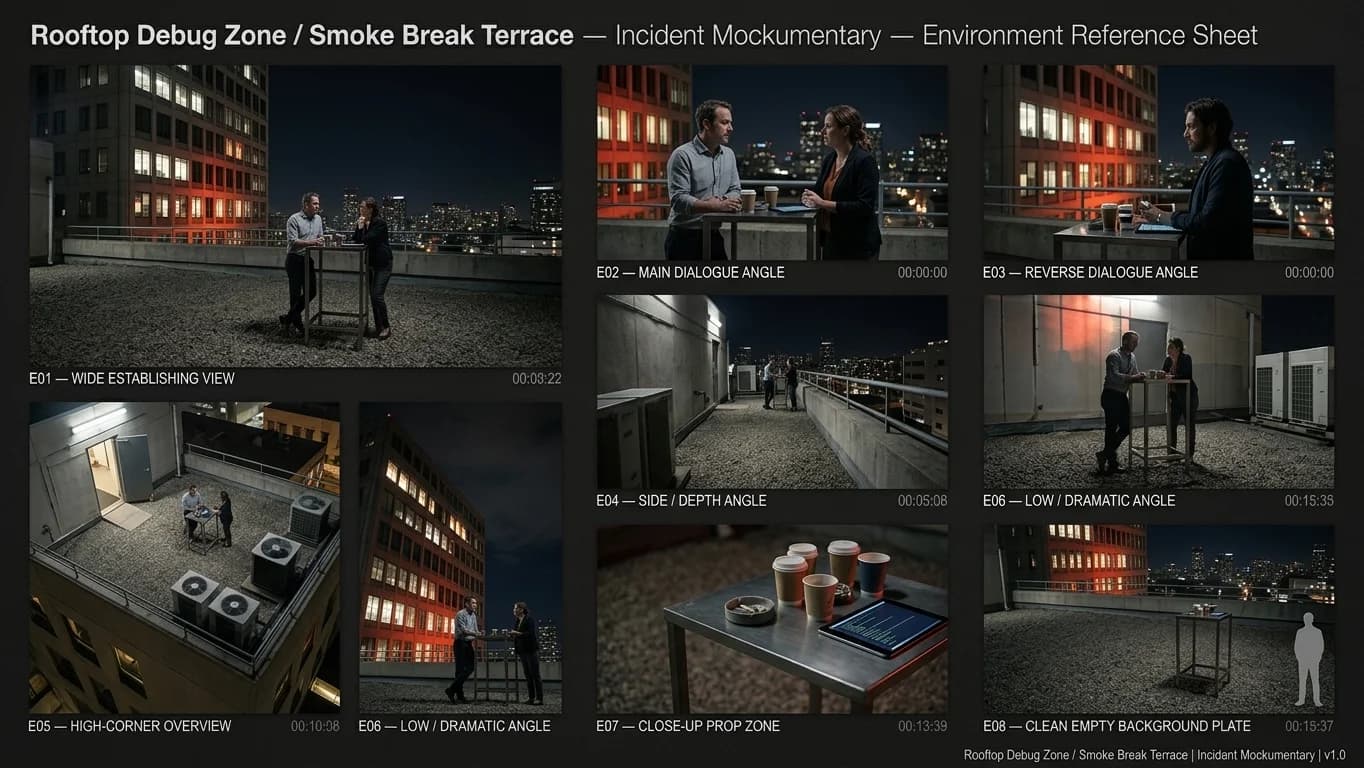
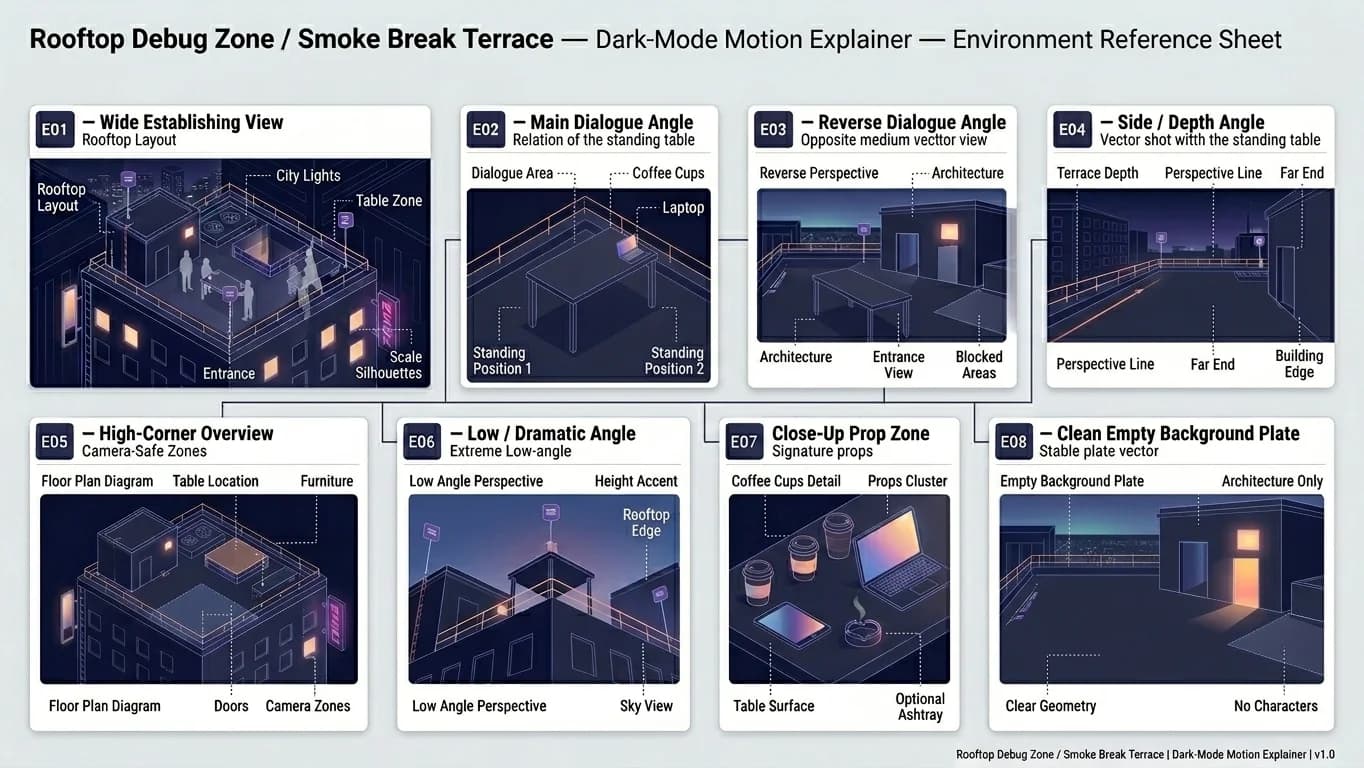
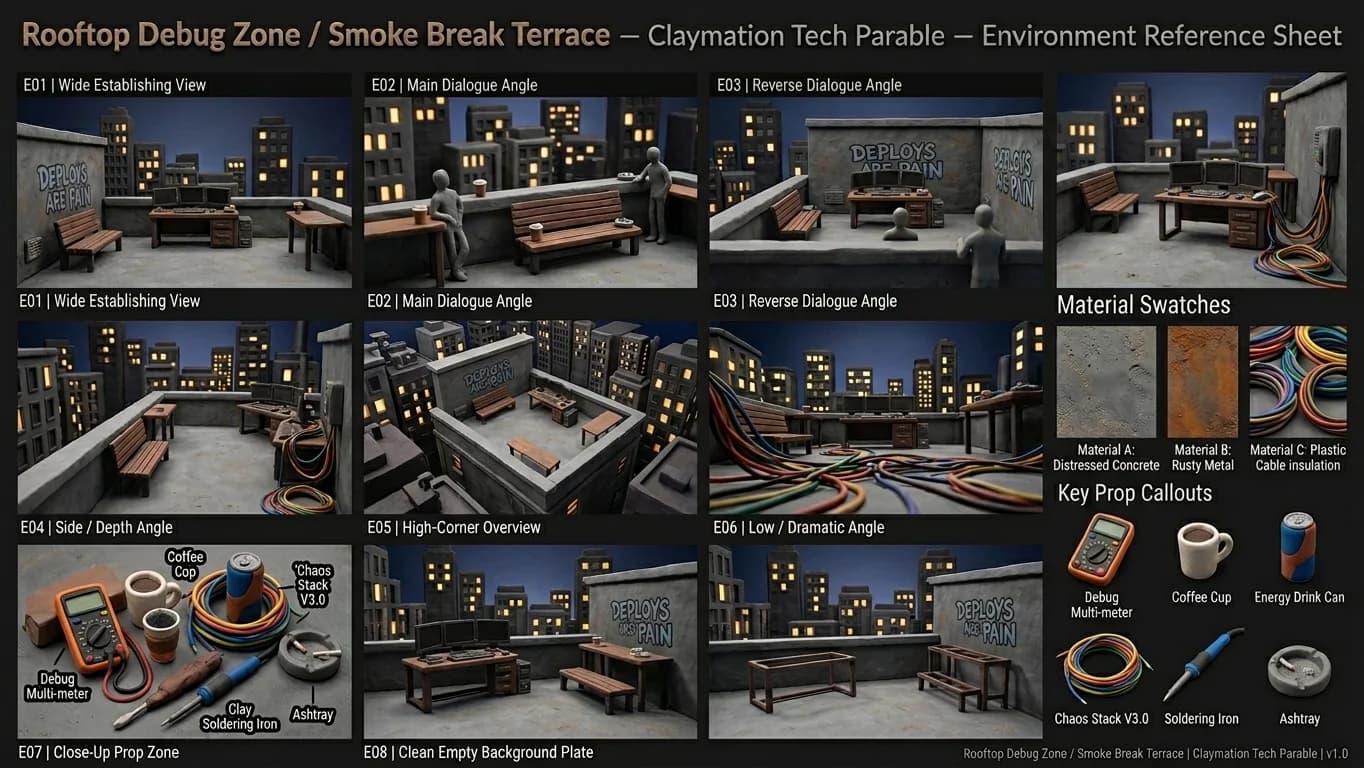
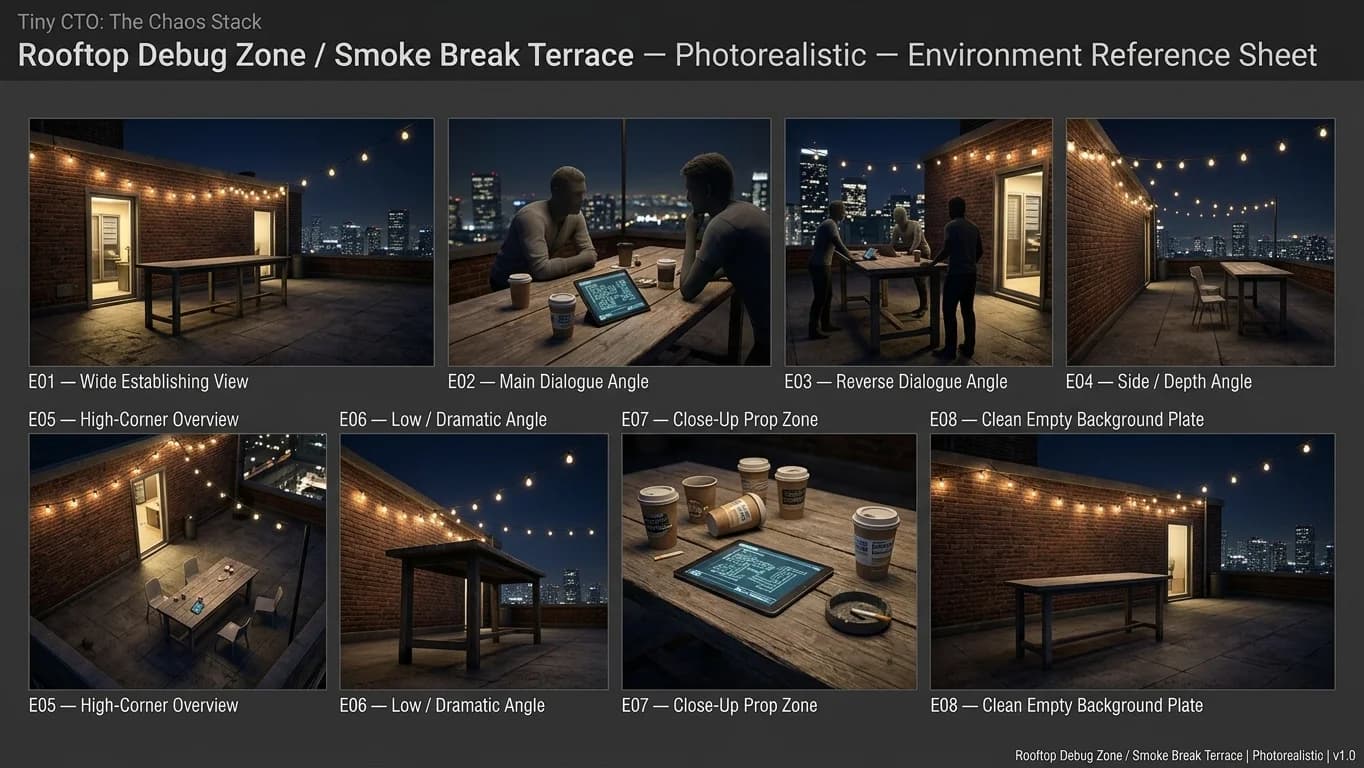
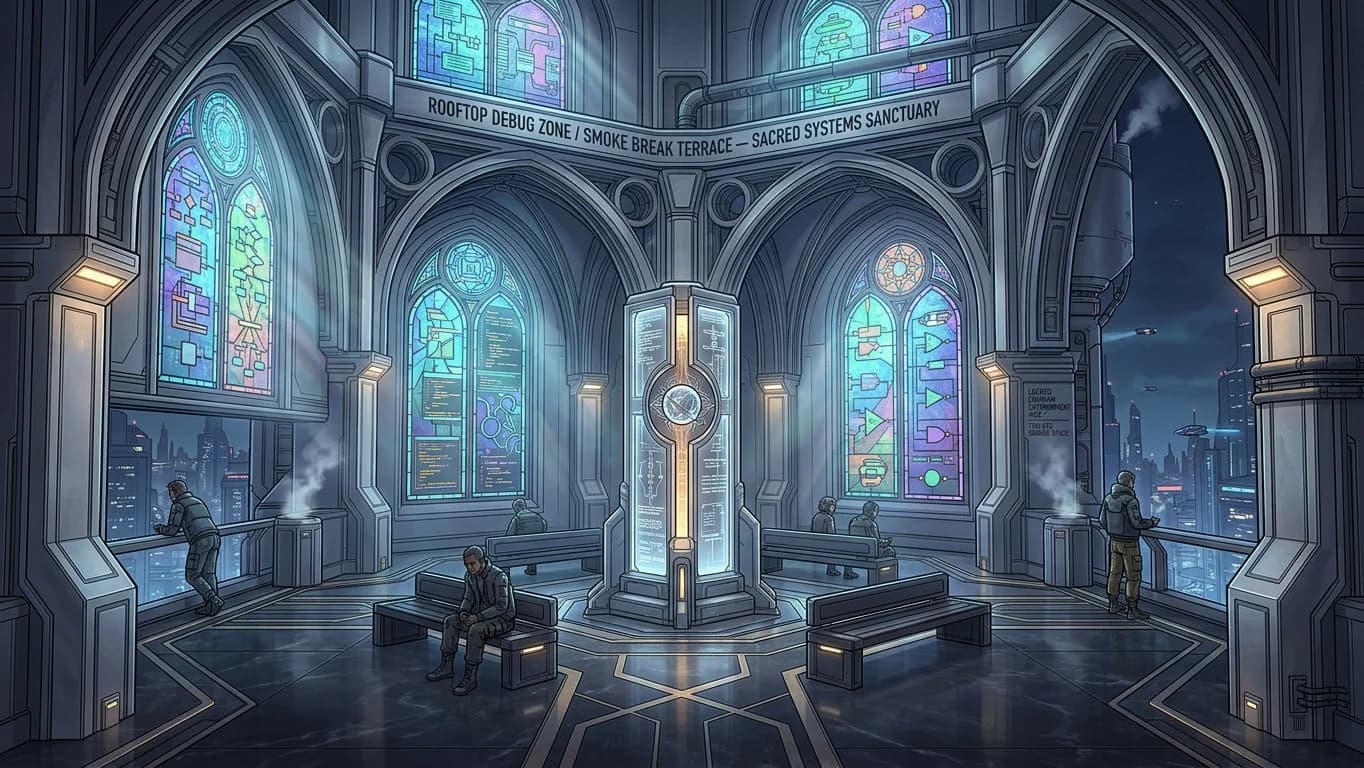
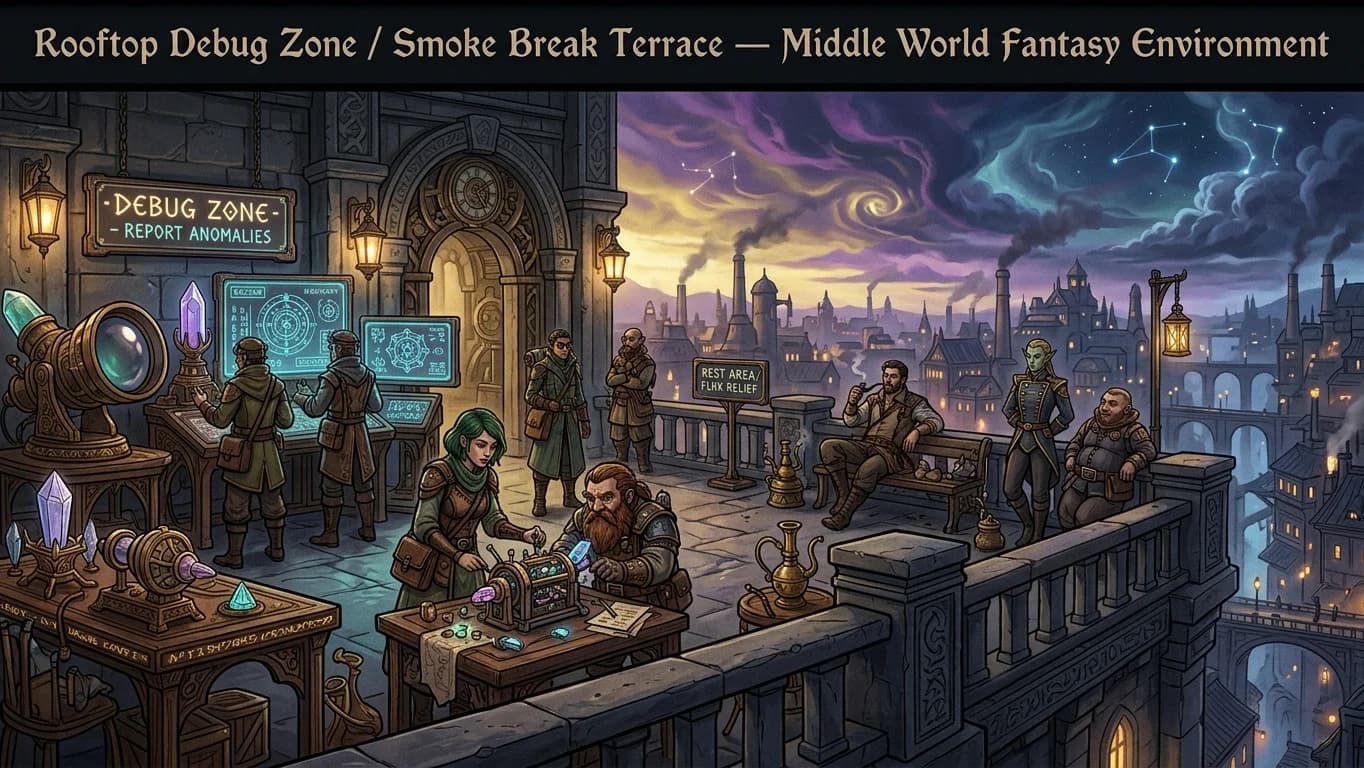
Rooftop Debug Zone / Smoke Break Terrace
The Rooftop Debug Zone / Smoke Break Terrace is a common setting within the Chaos Stack universe.


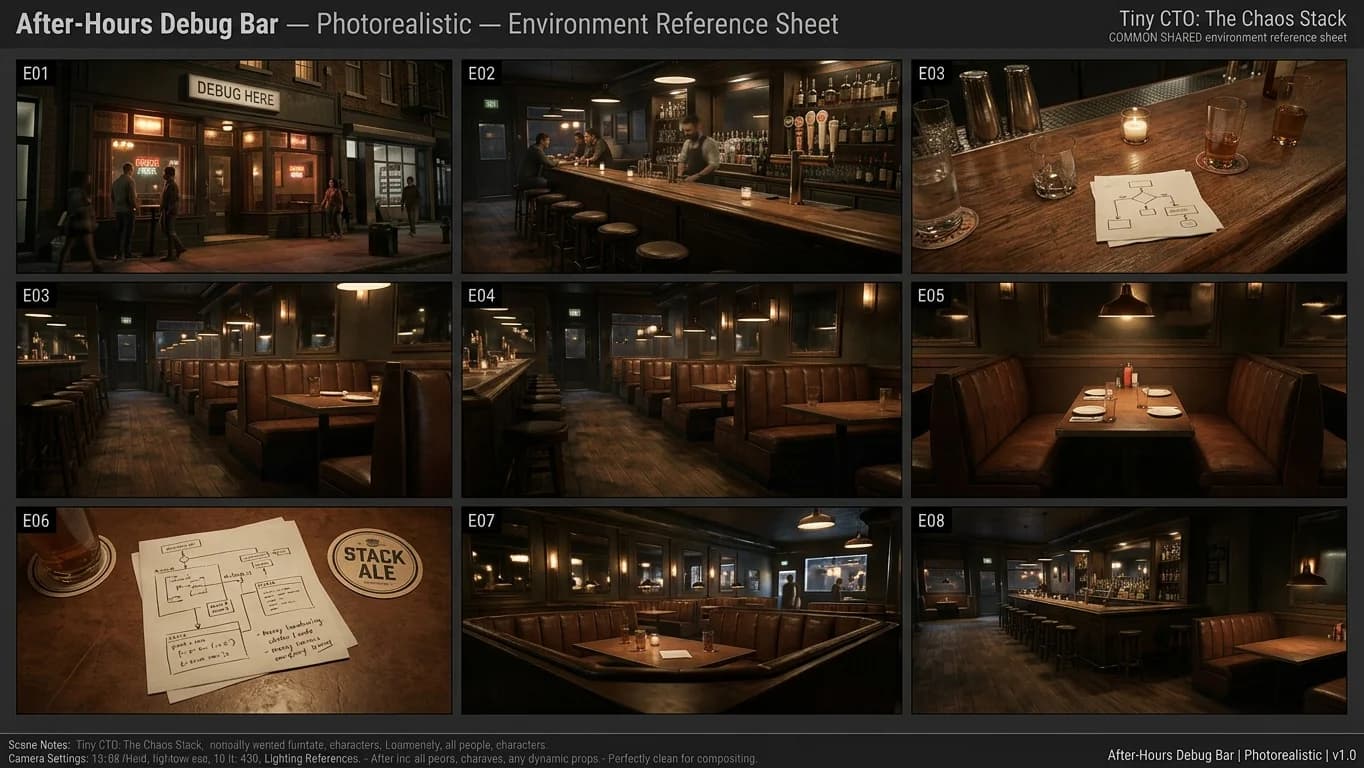
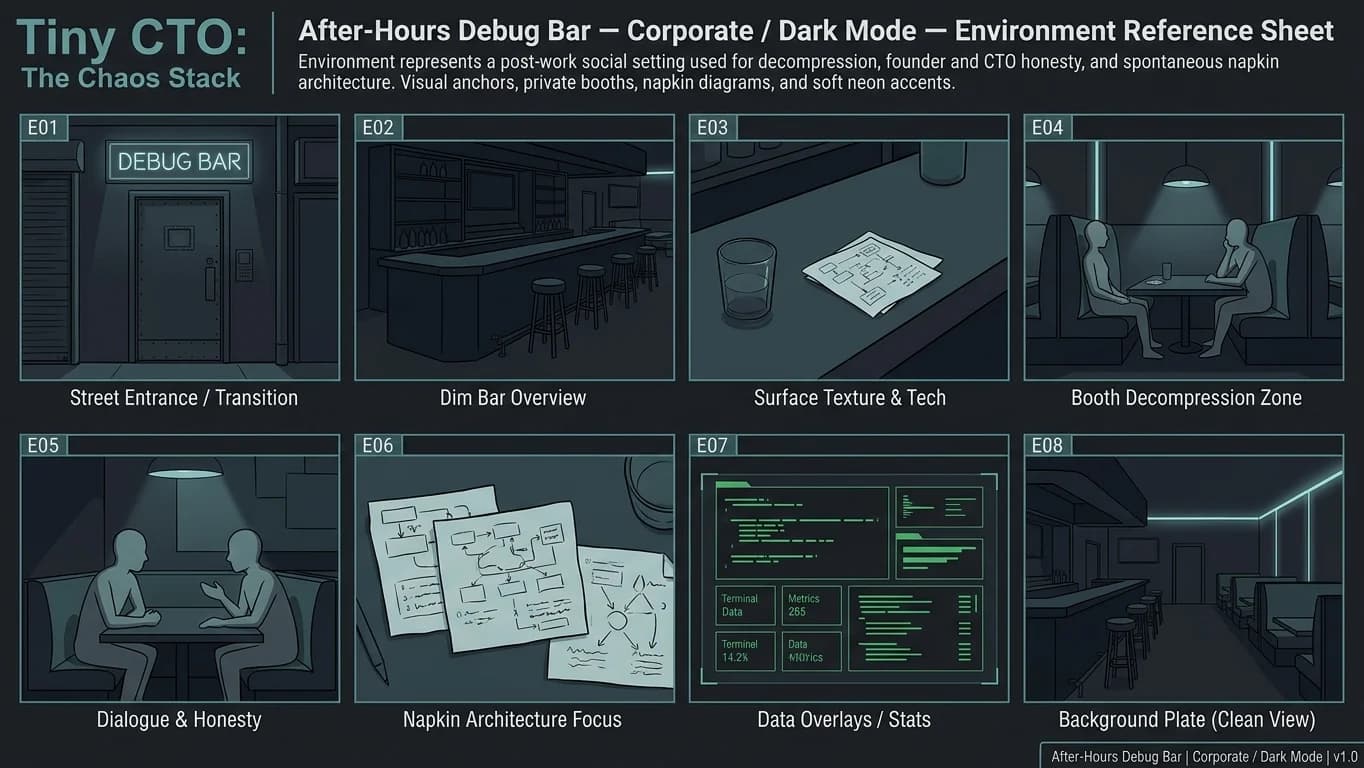
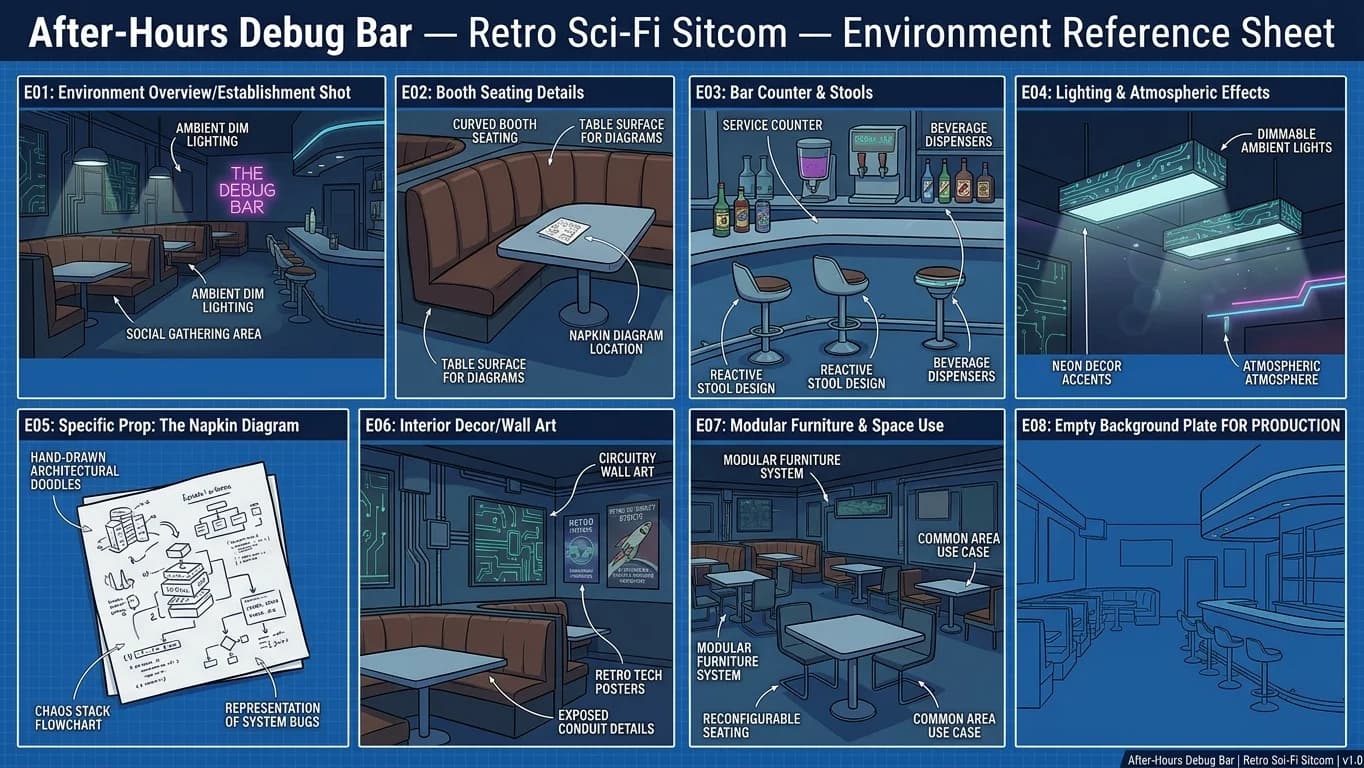
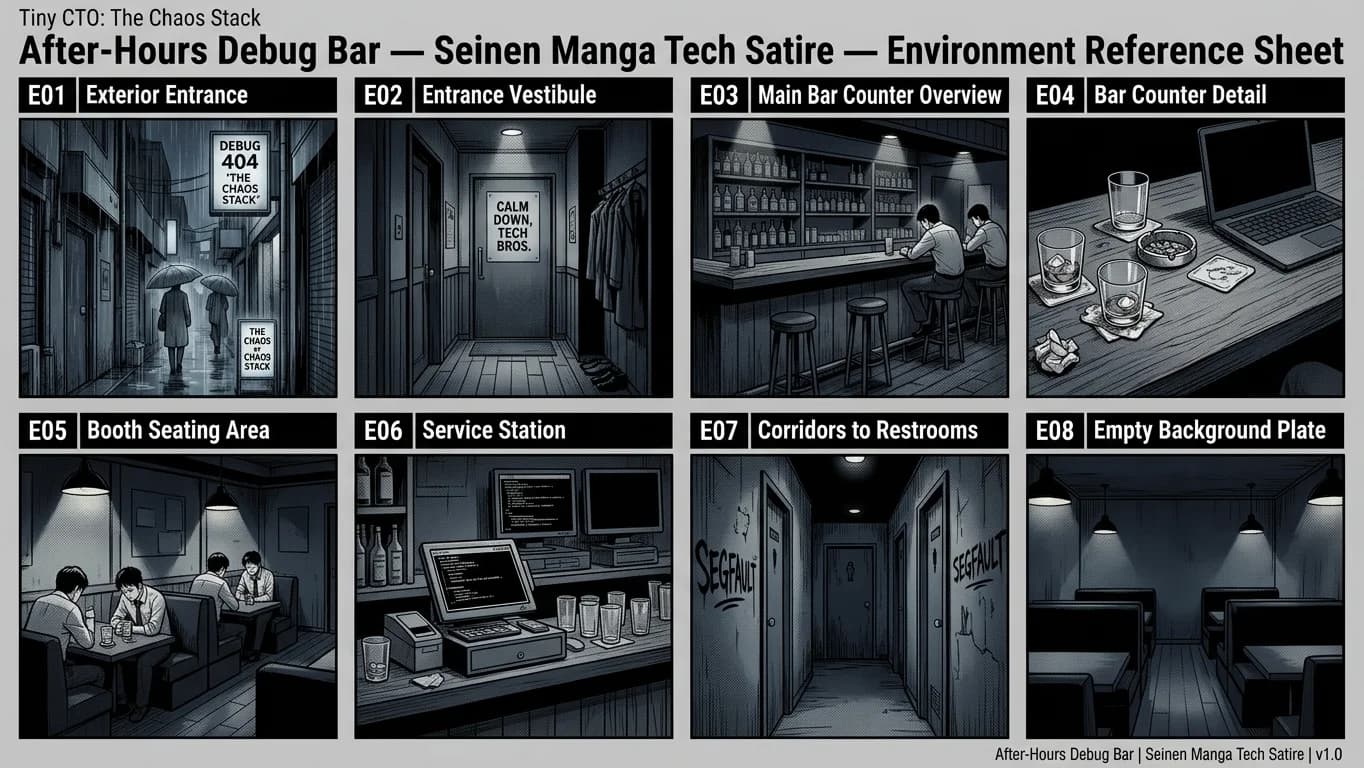
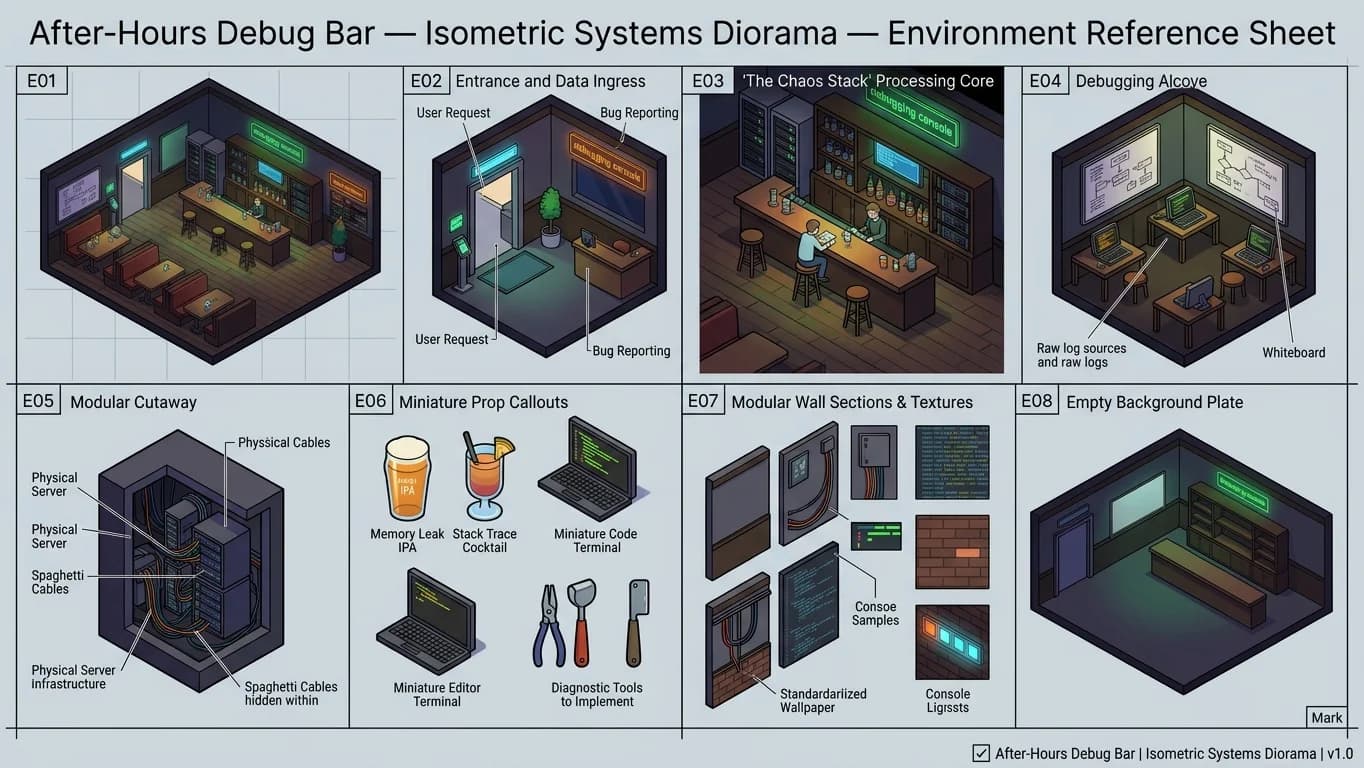
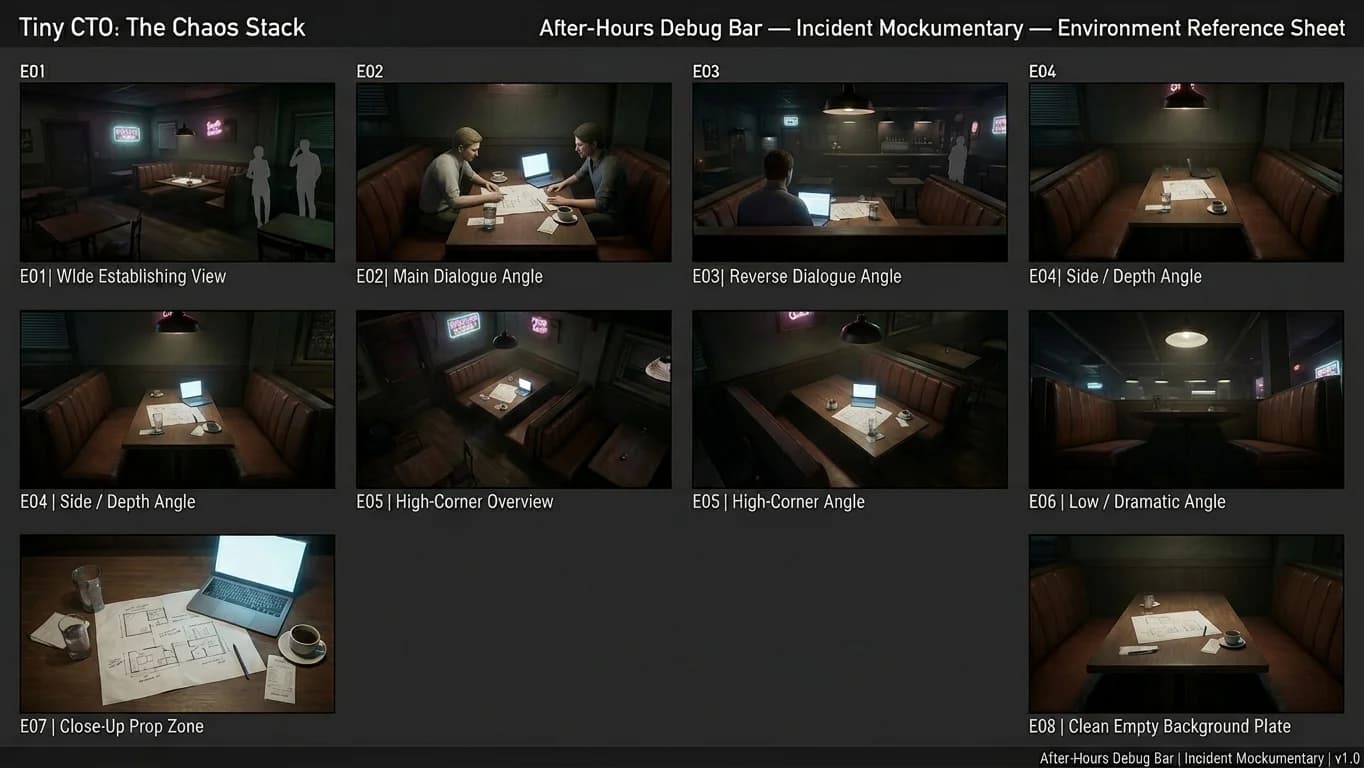
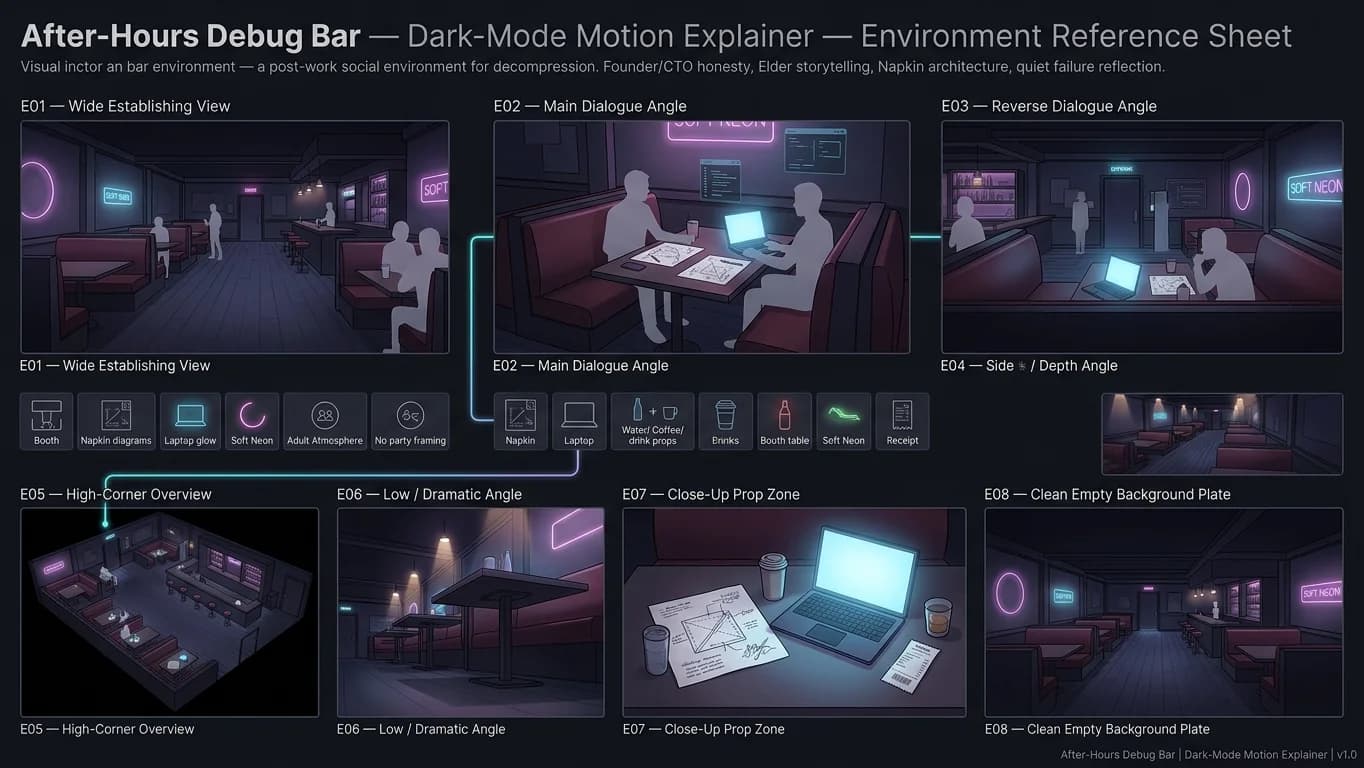
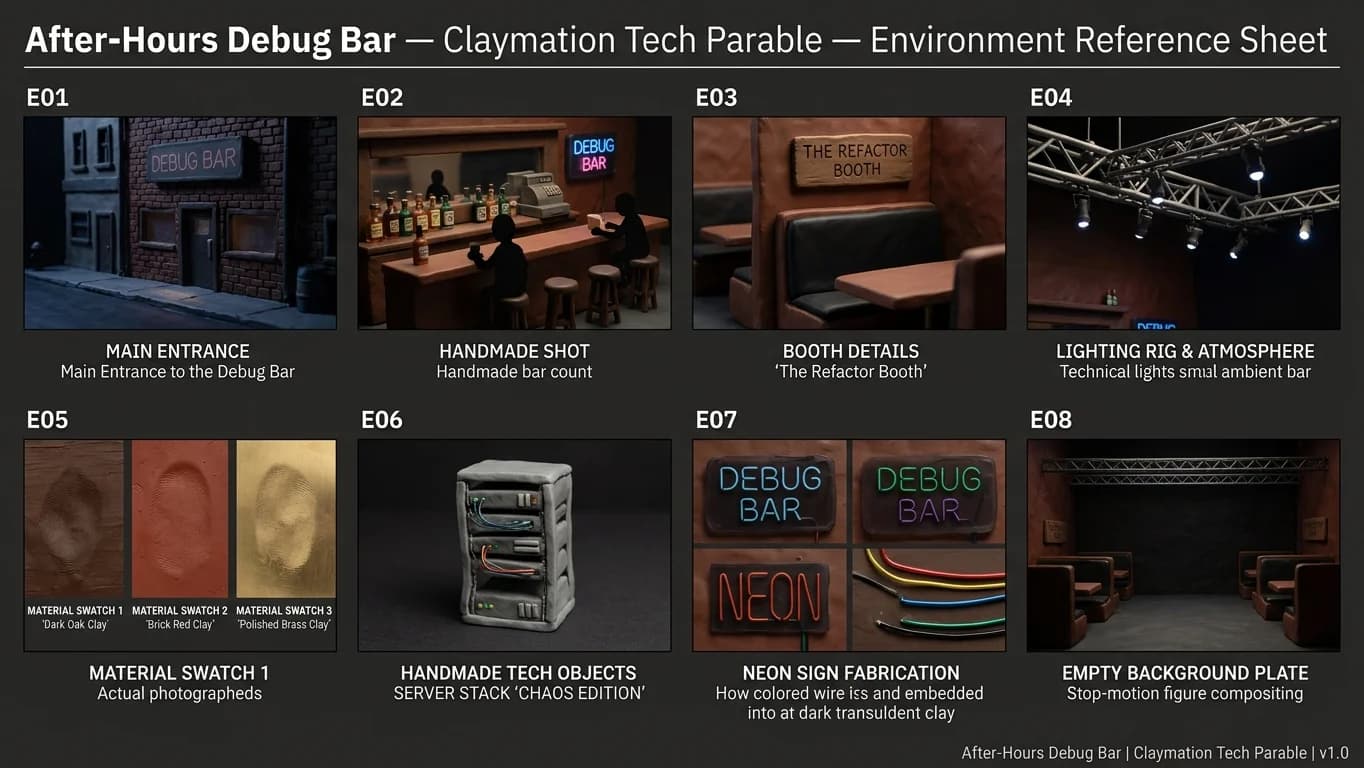
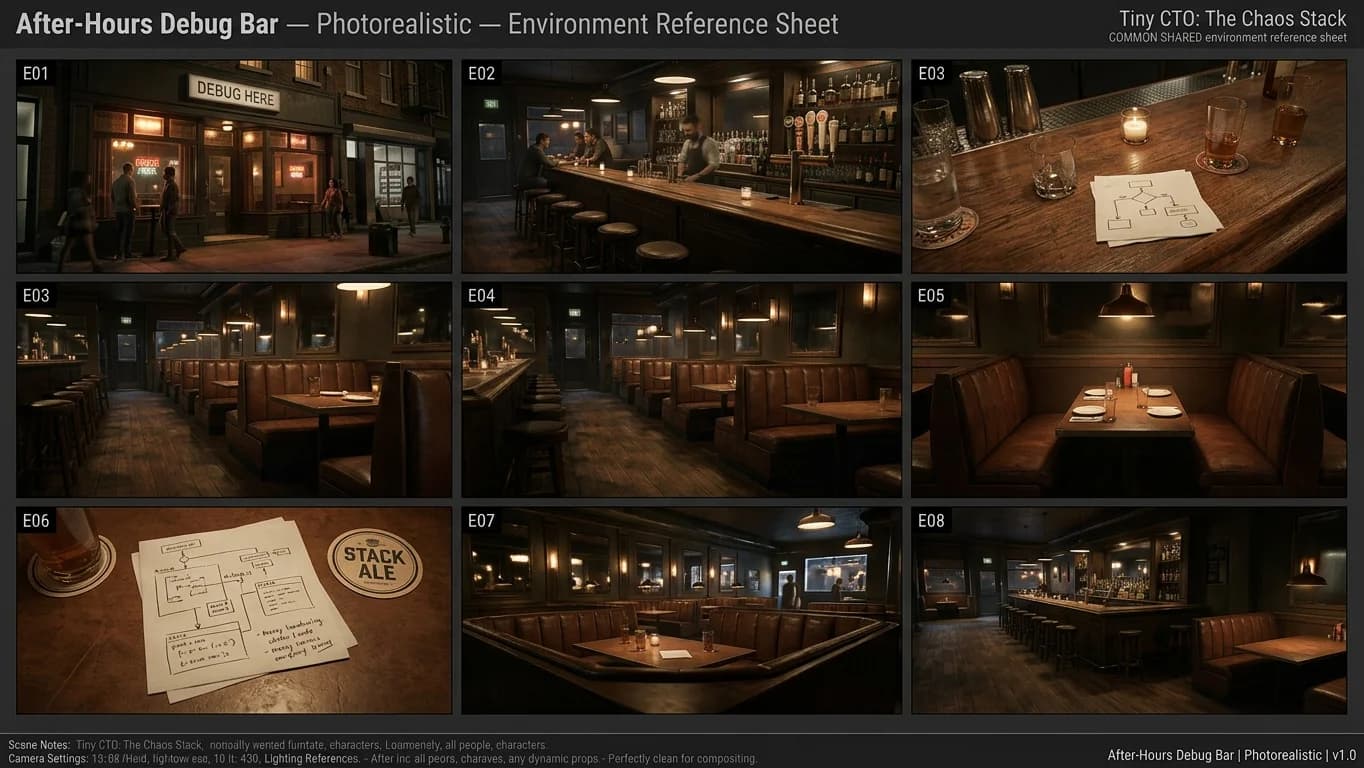
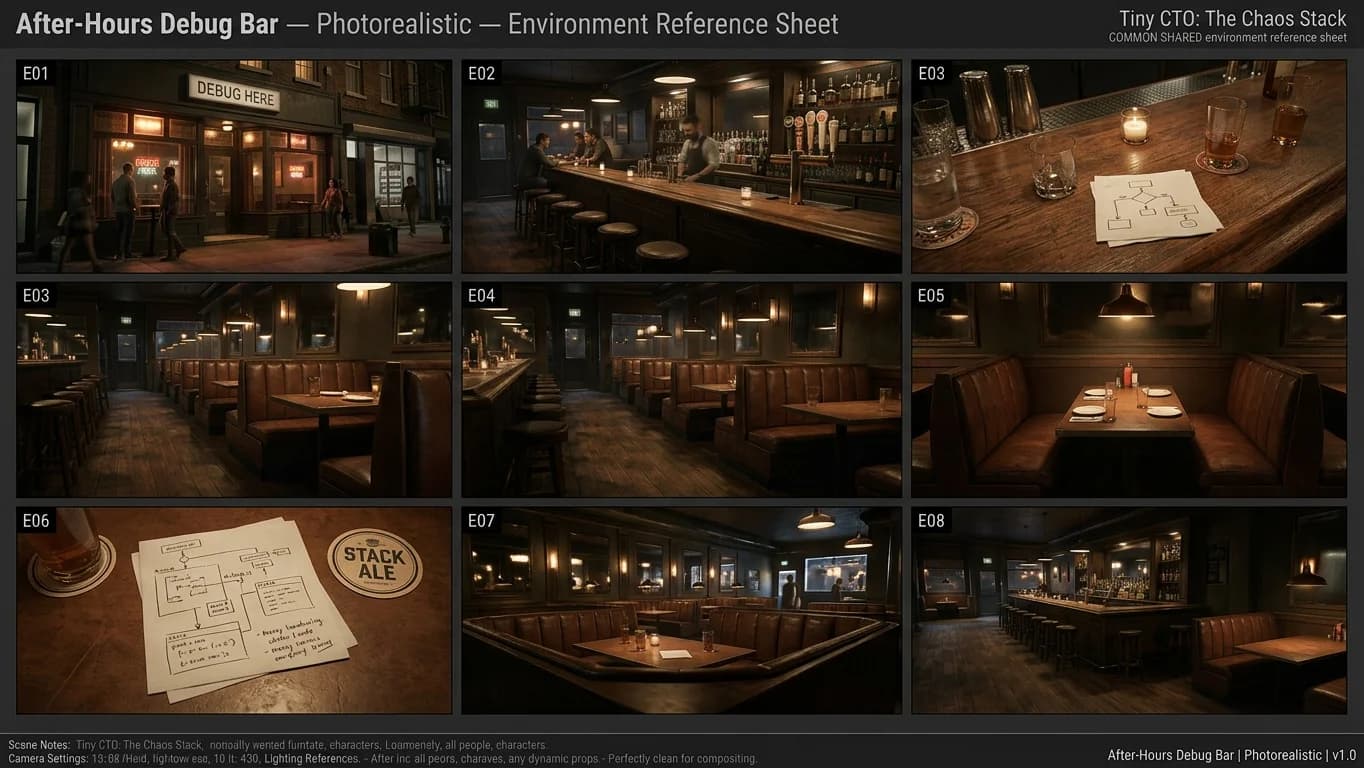
After-Hours Debug Bar
The After-Hours Debug Bar is a common setting within the Chaos Stack universe.


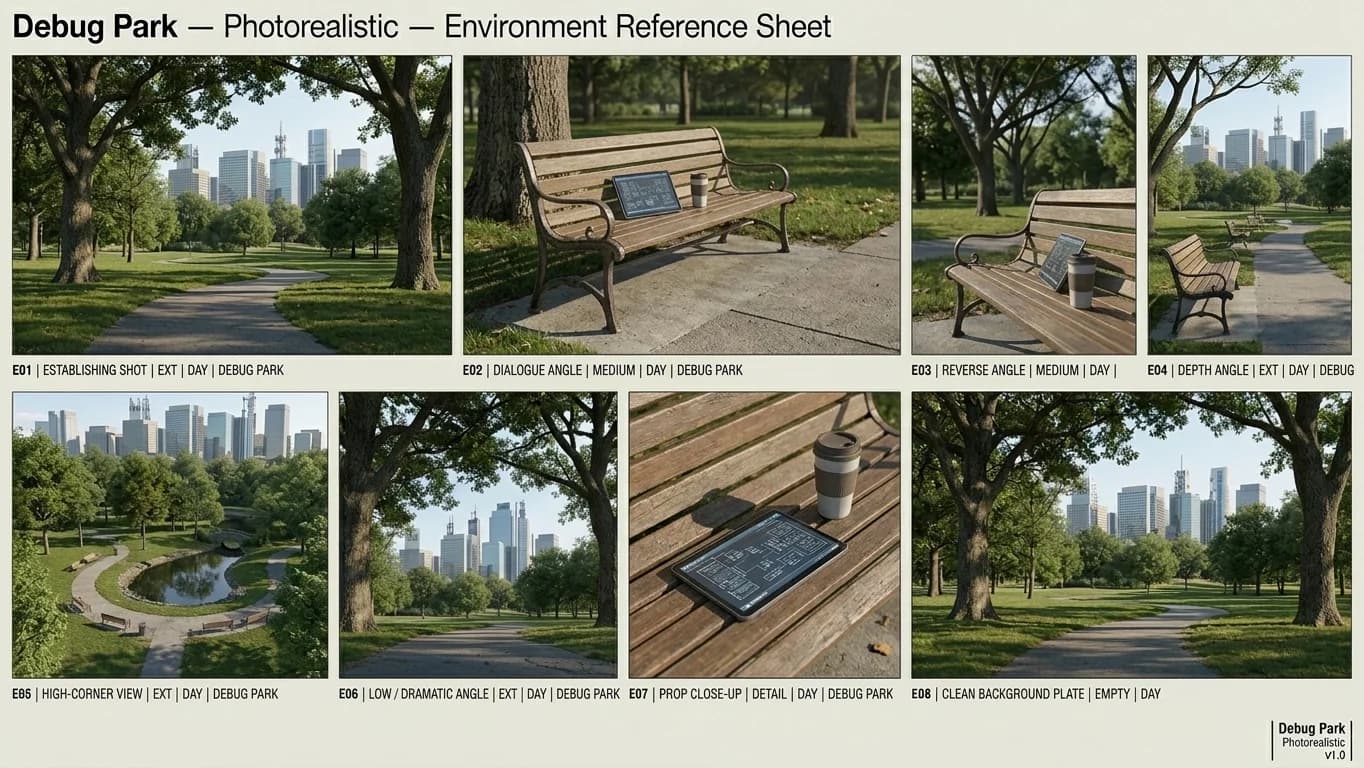
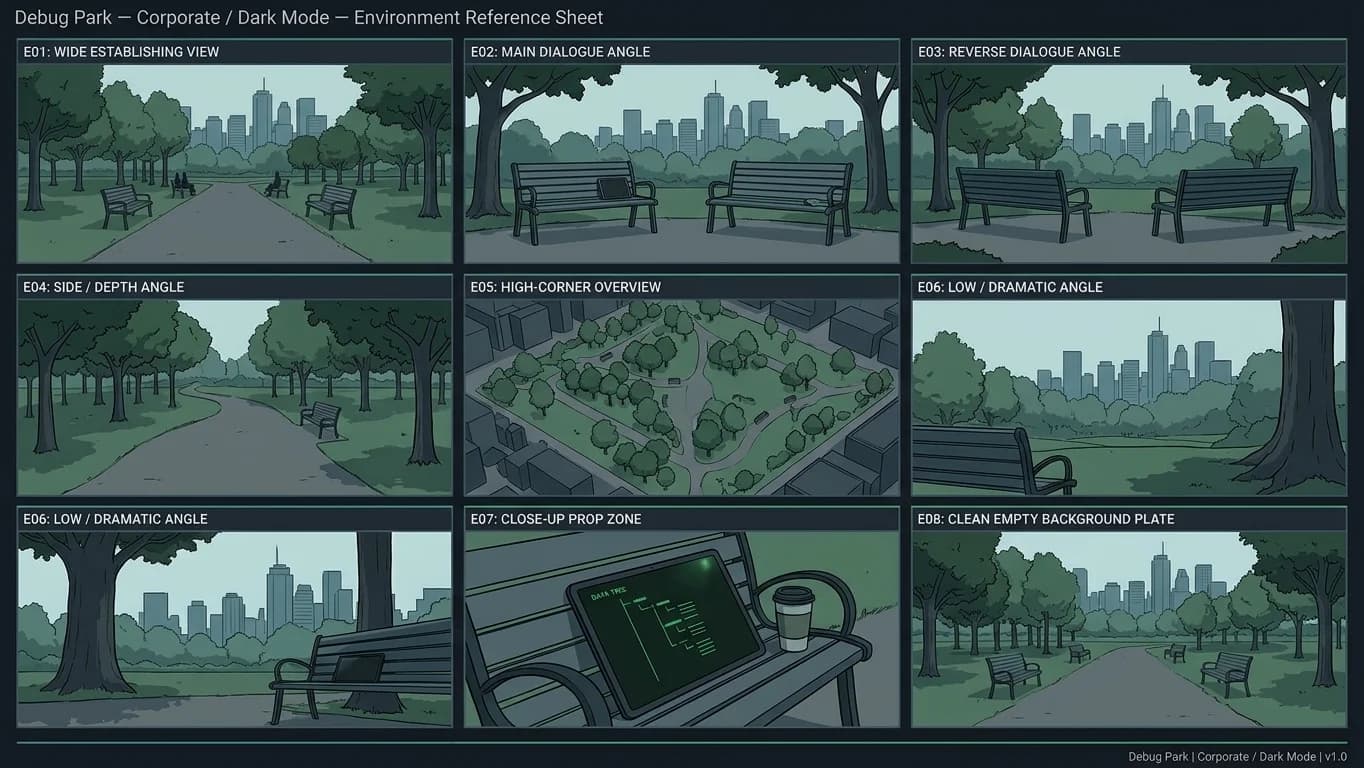
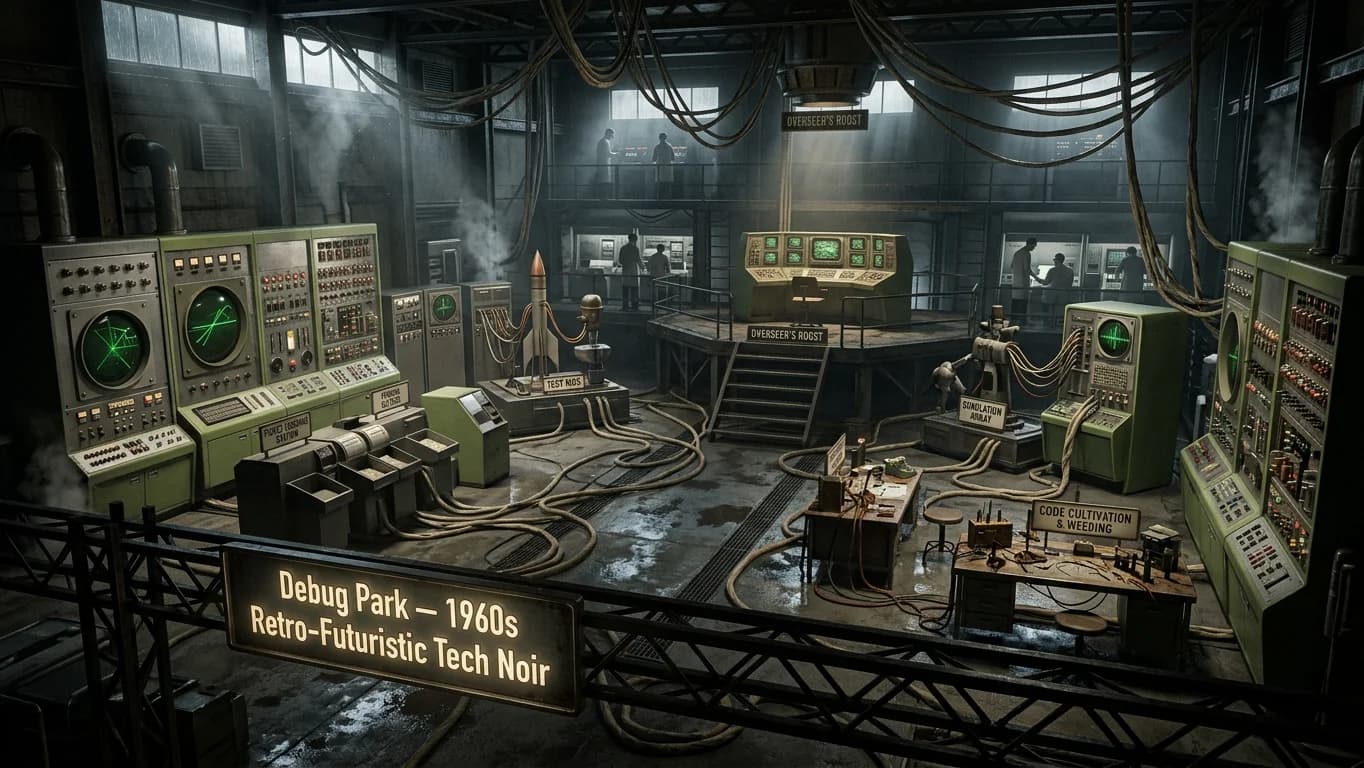
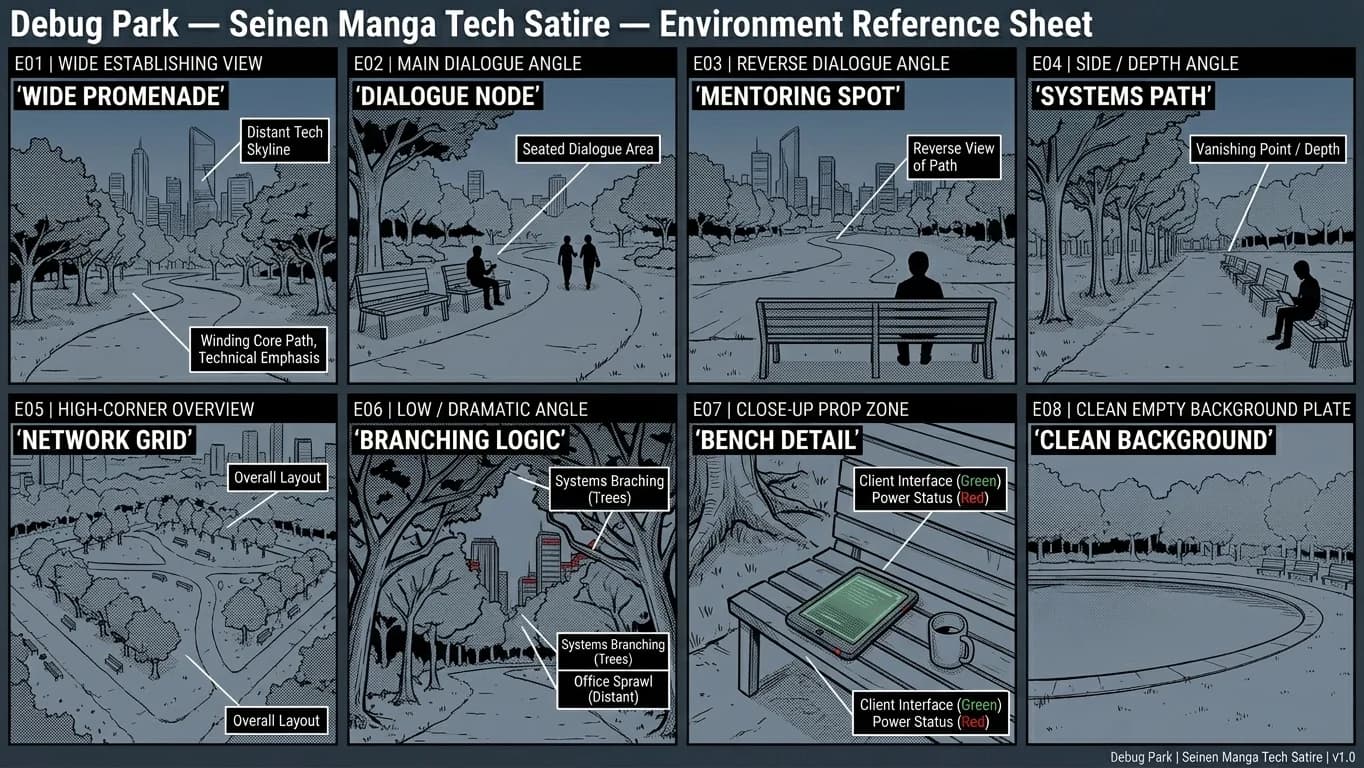
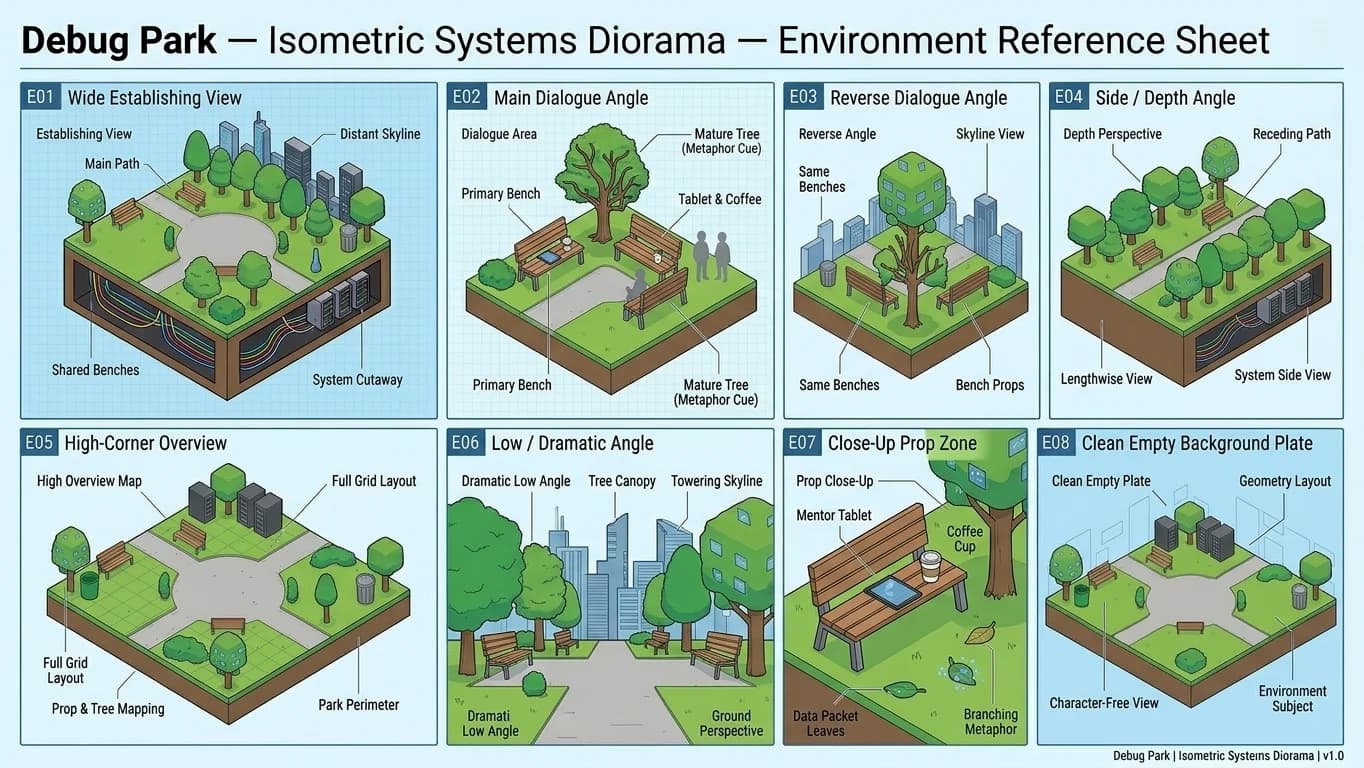
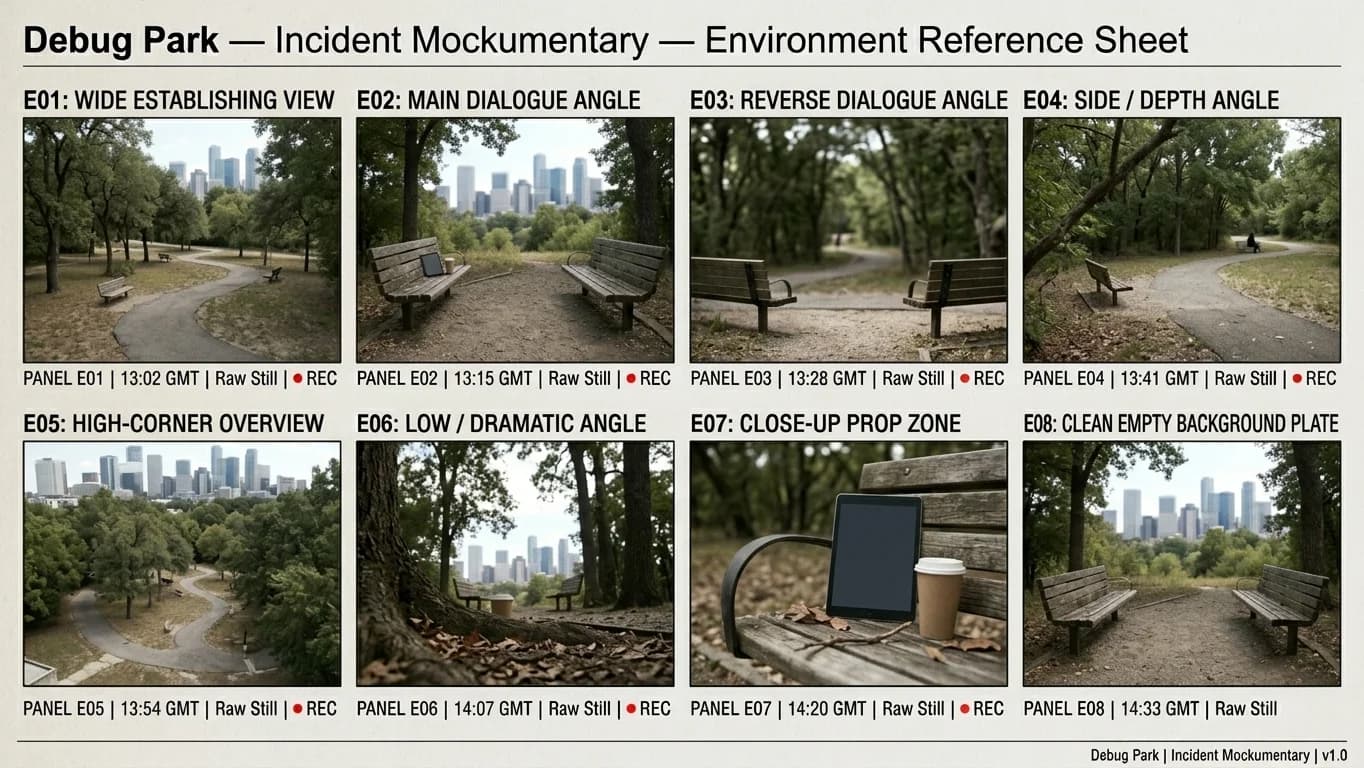
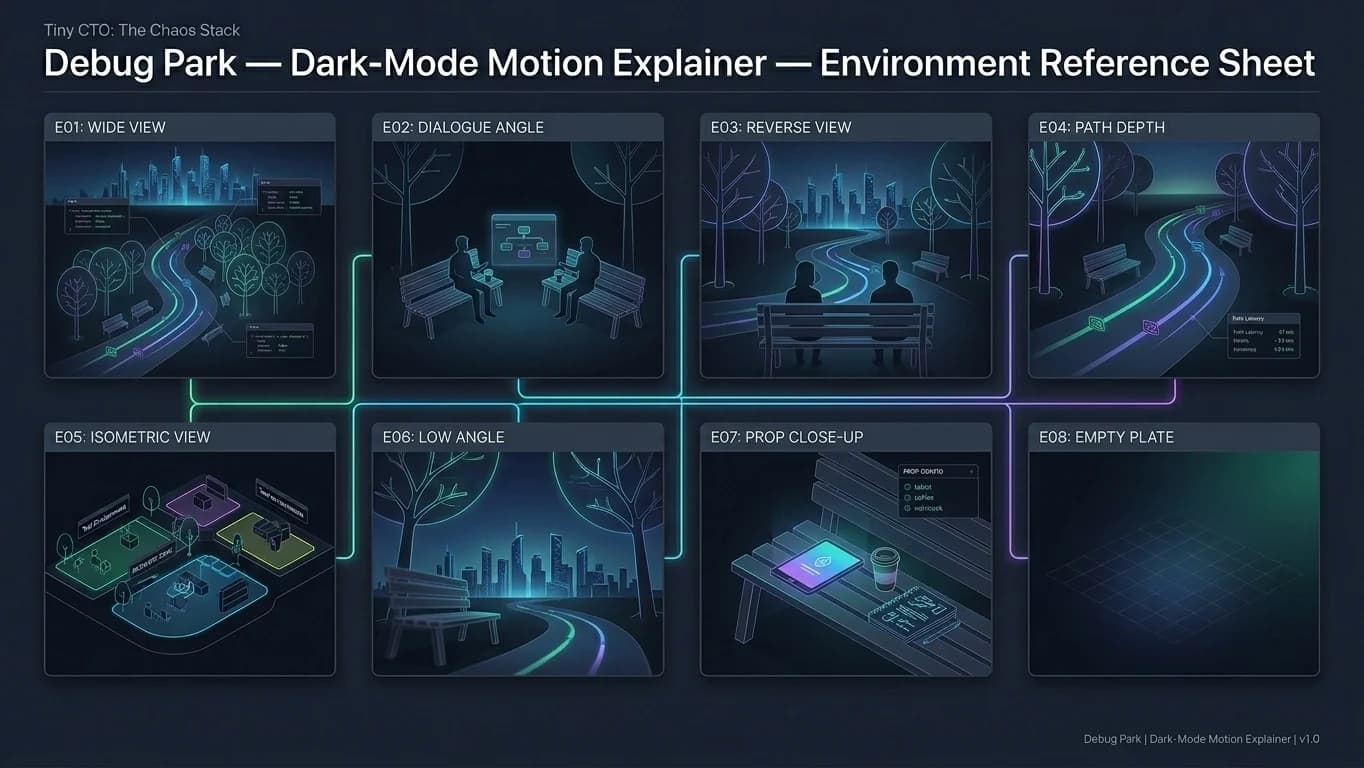
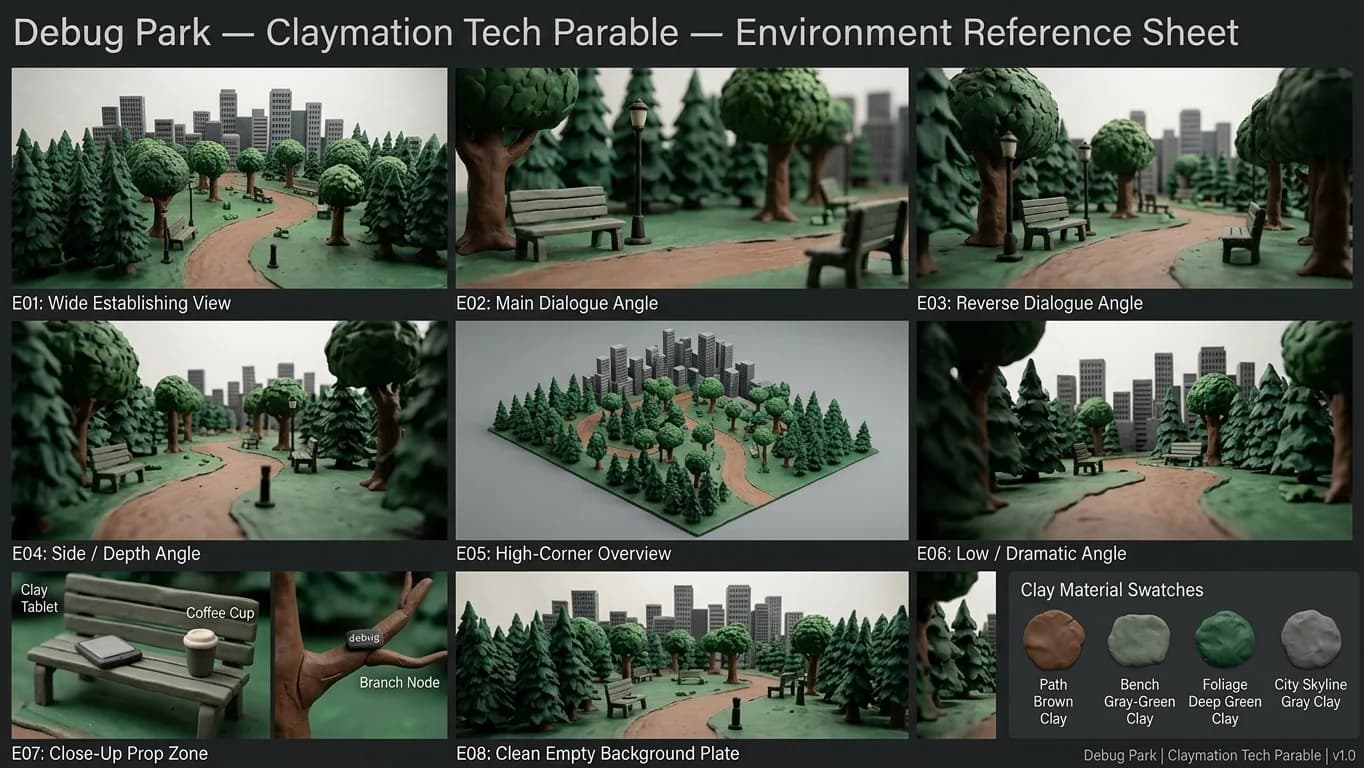
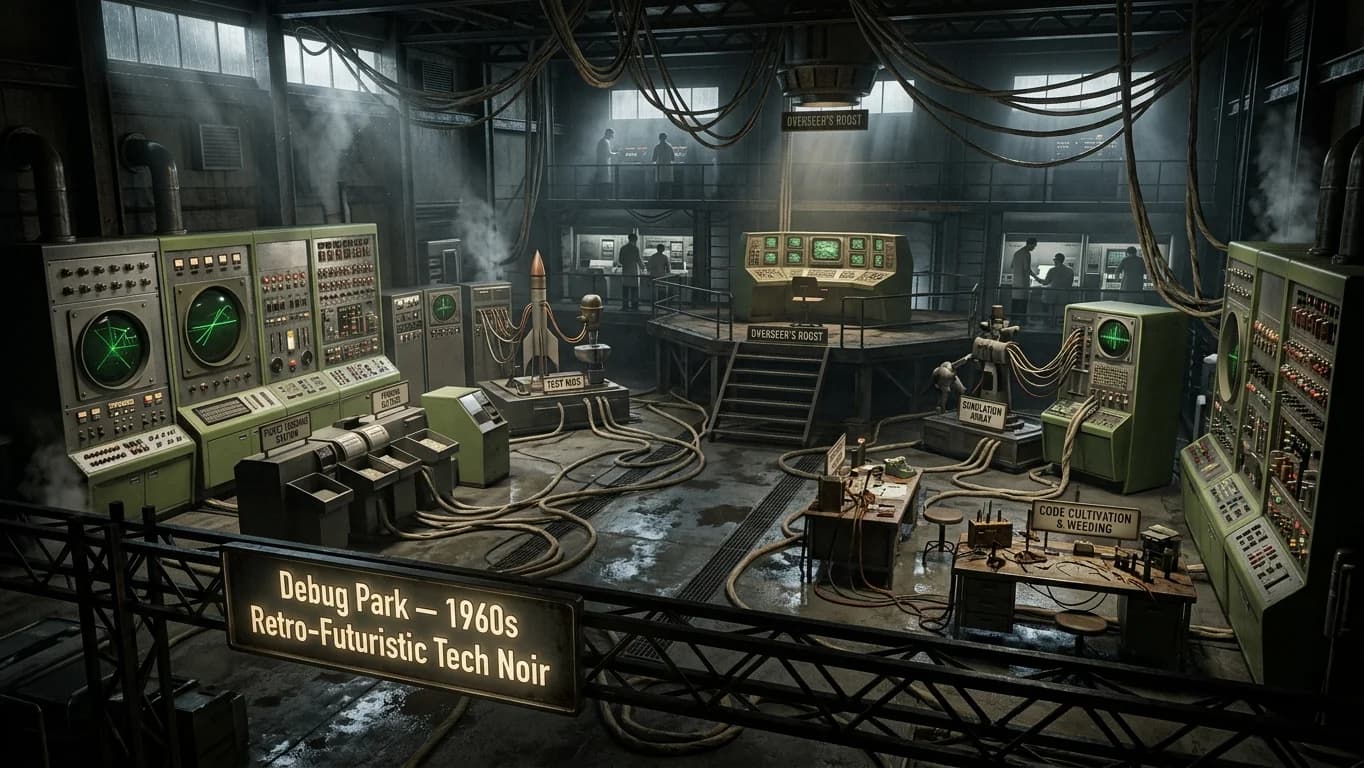
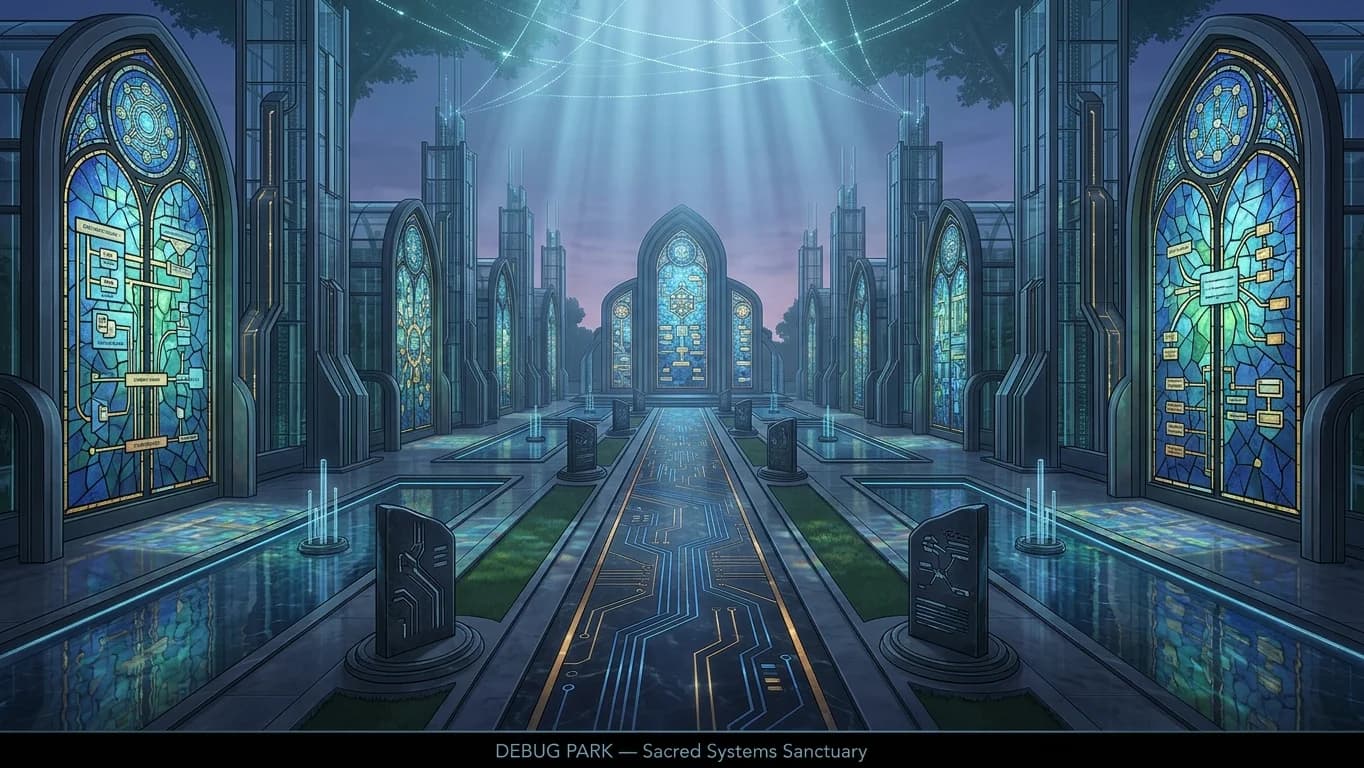
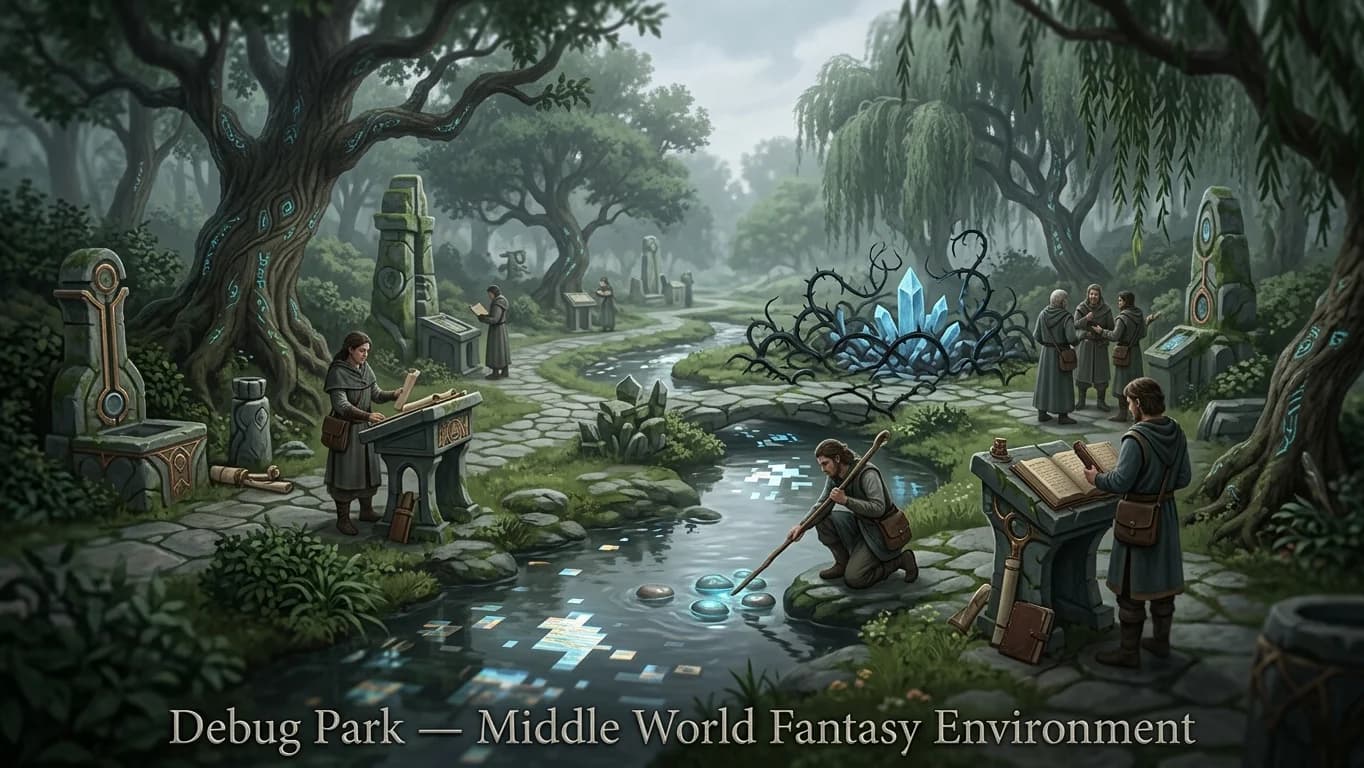
Debug Park
The Debug Park is a common setting within the Chaos Stack universe.


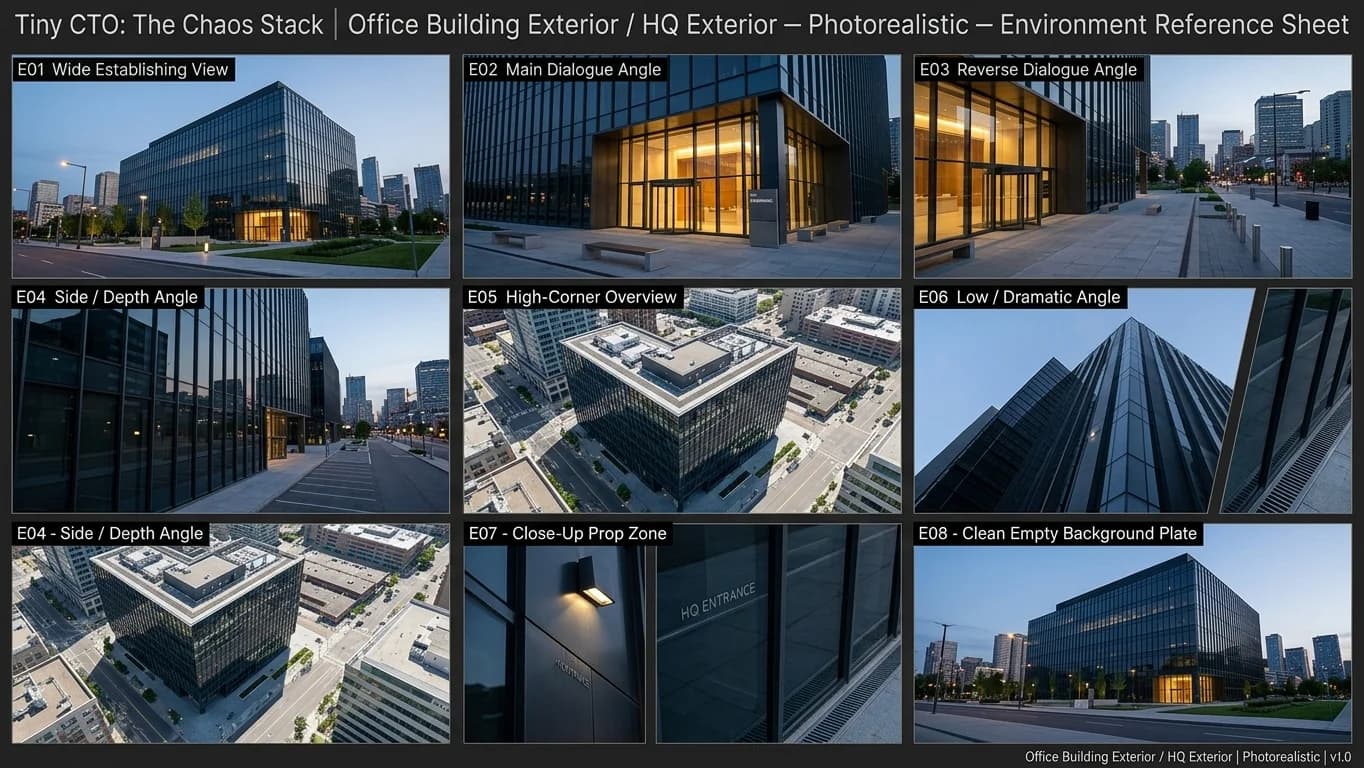
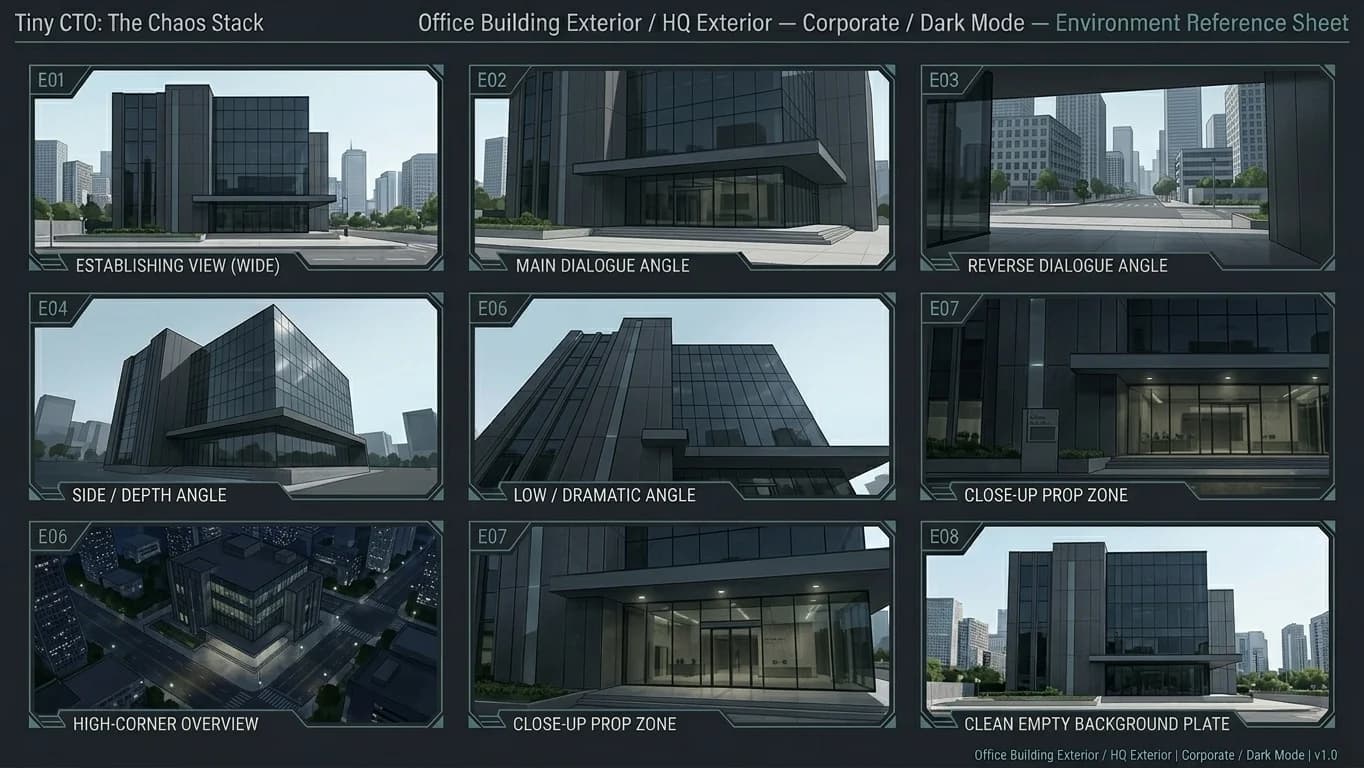
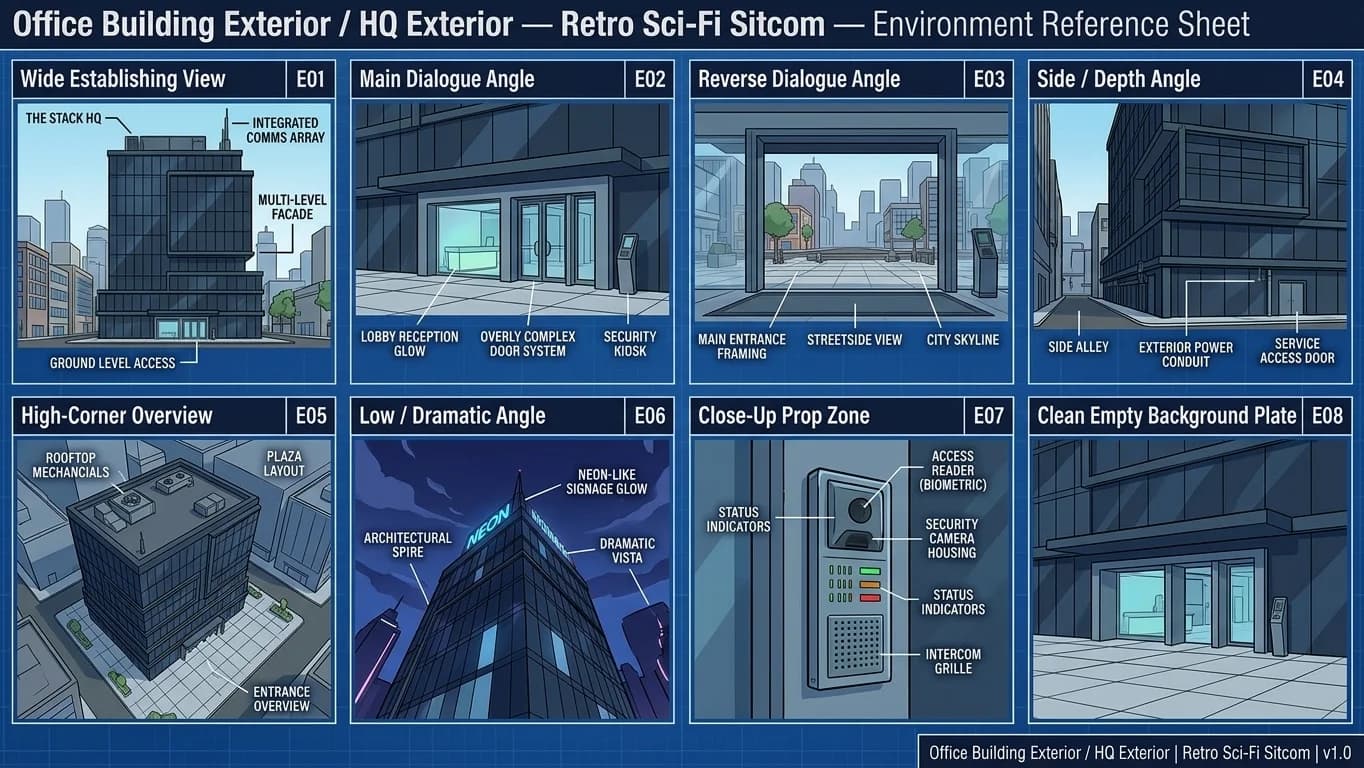
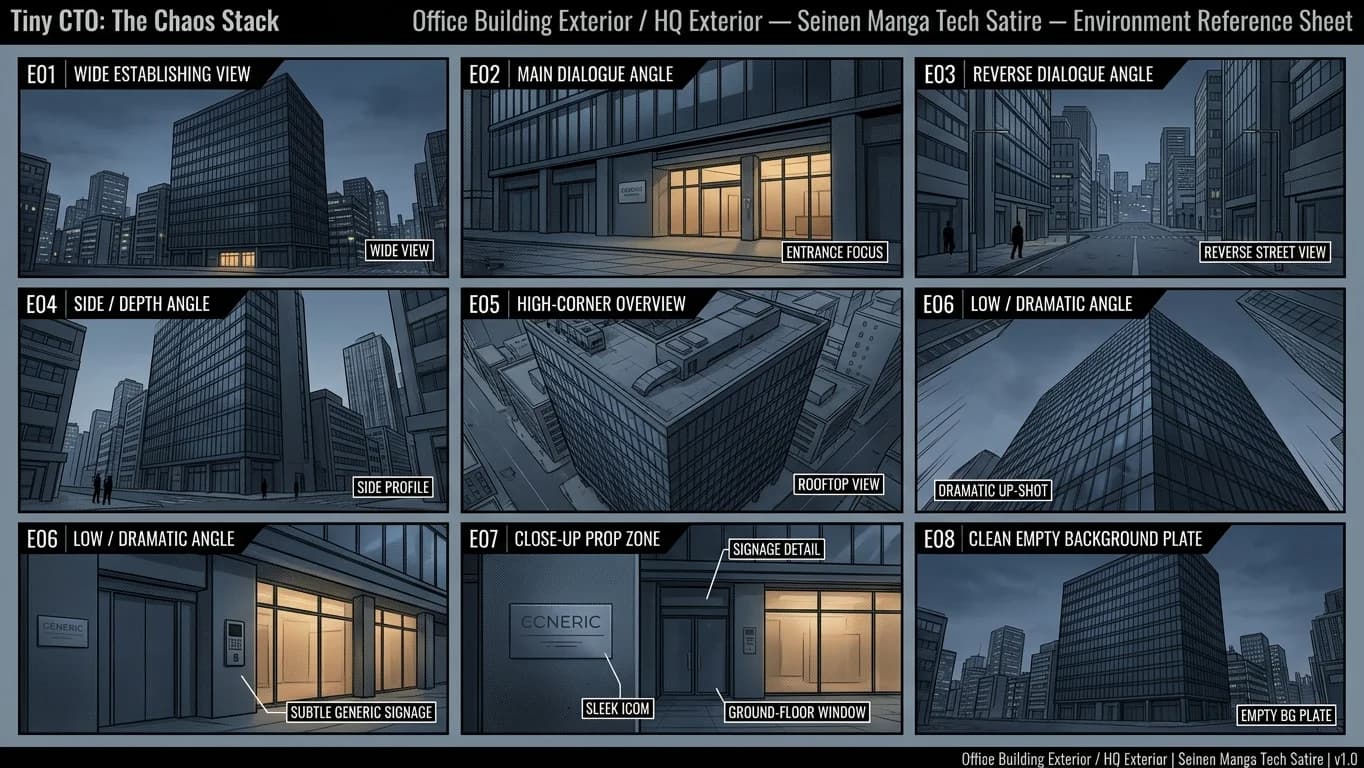
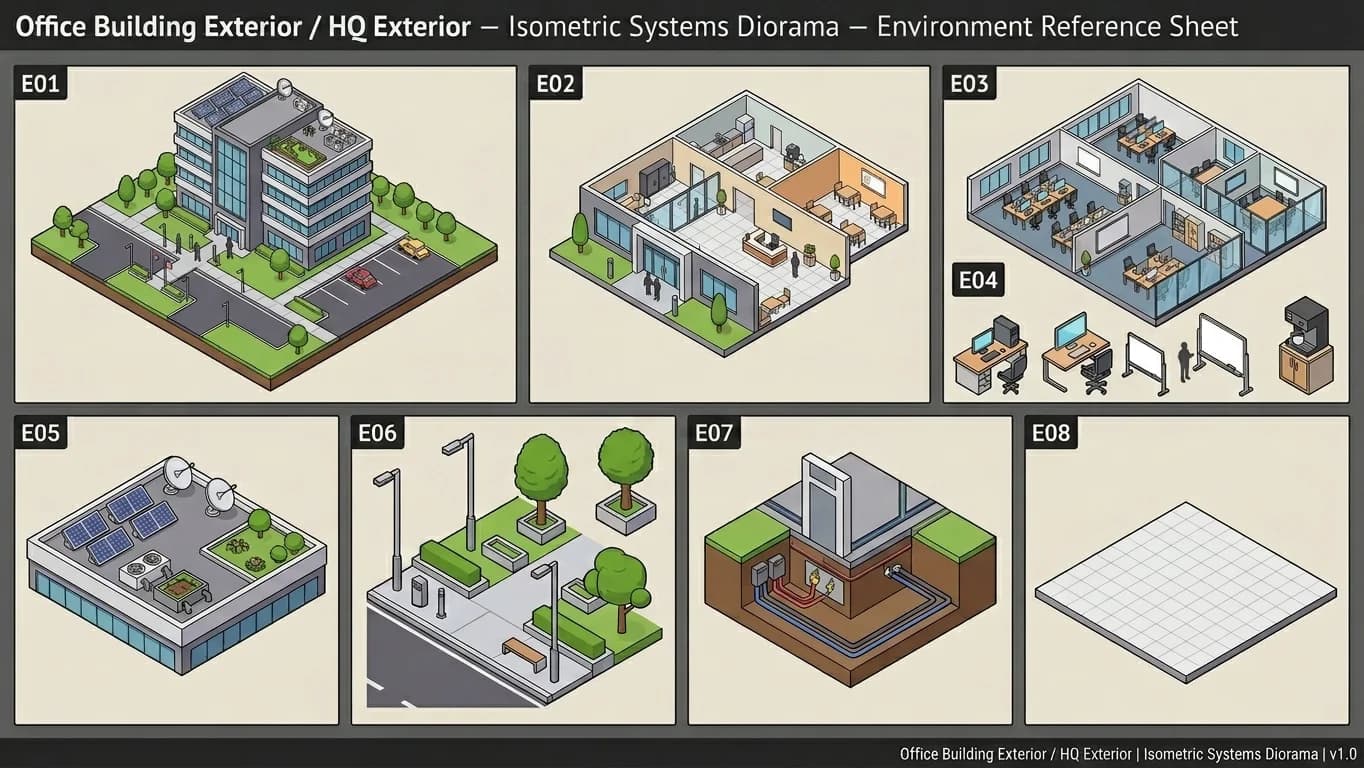
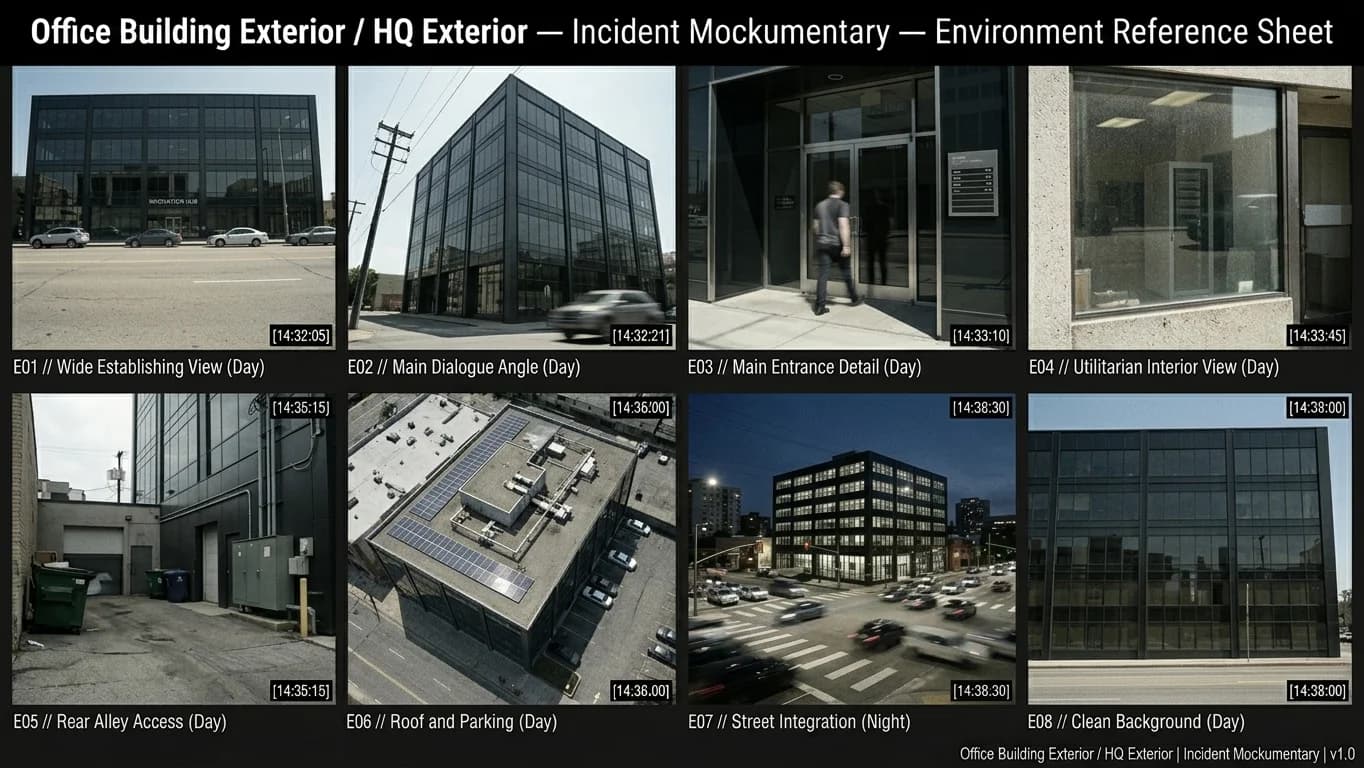
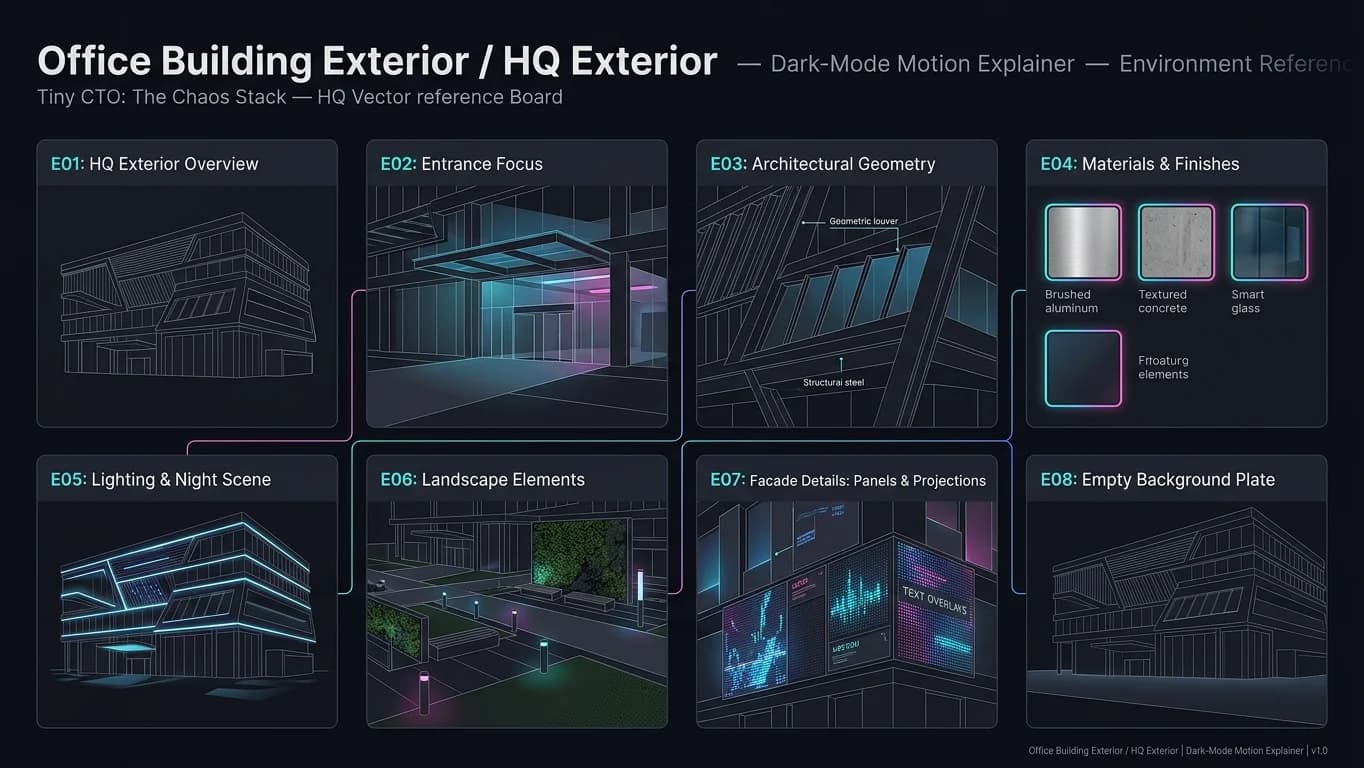
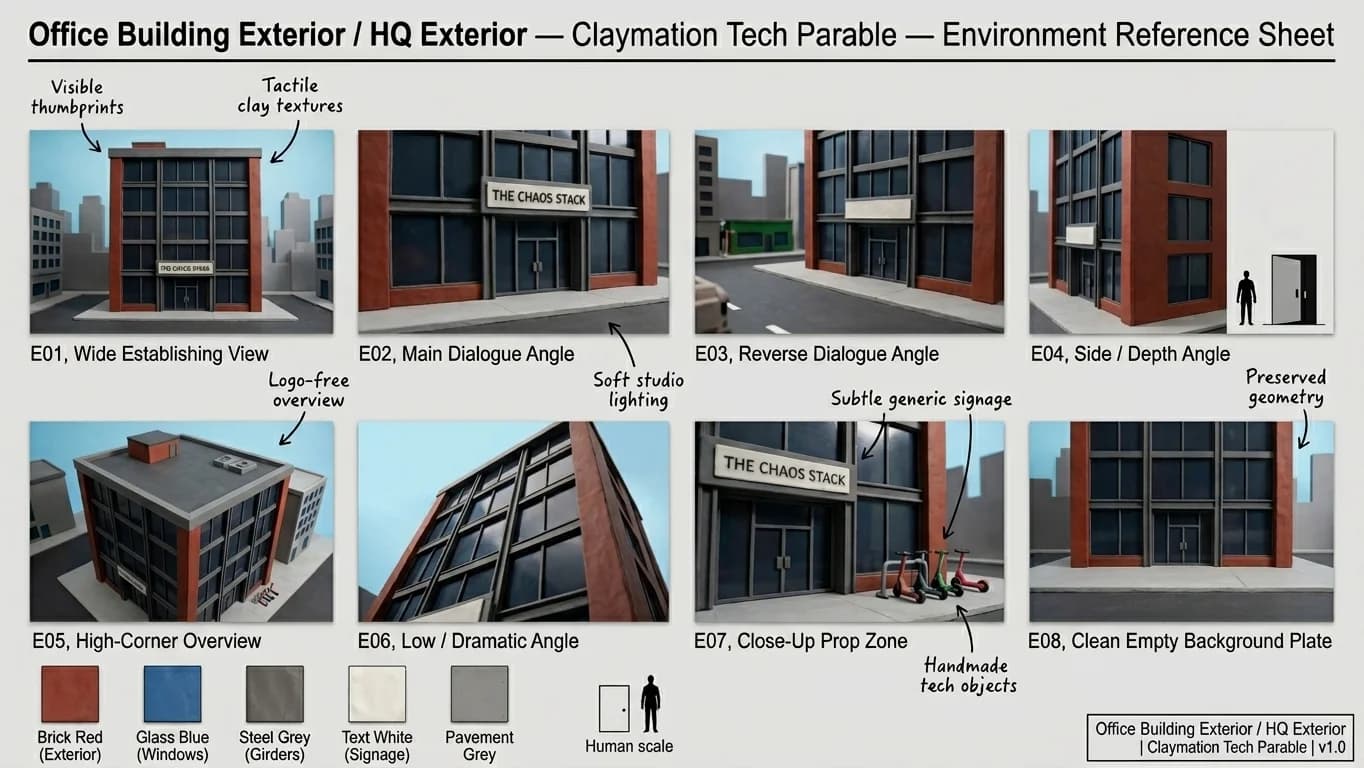
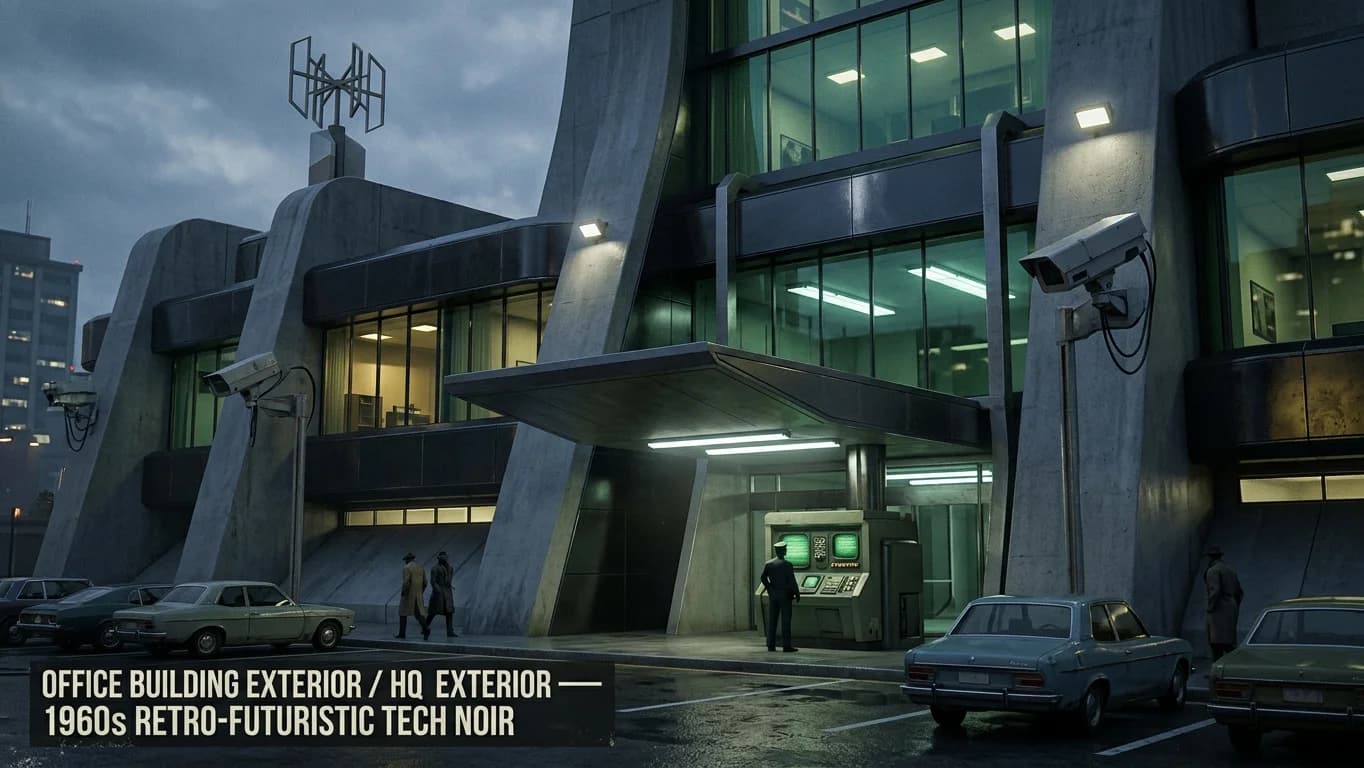
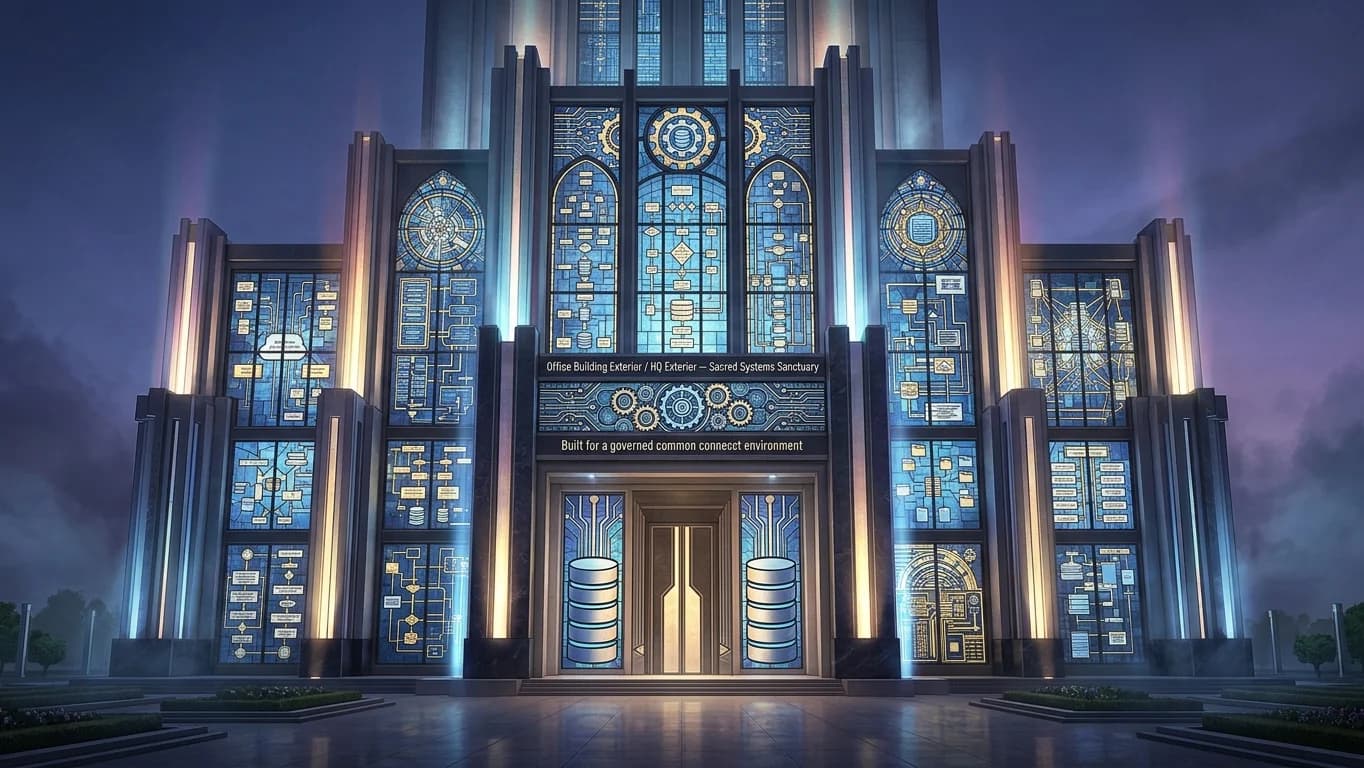
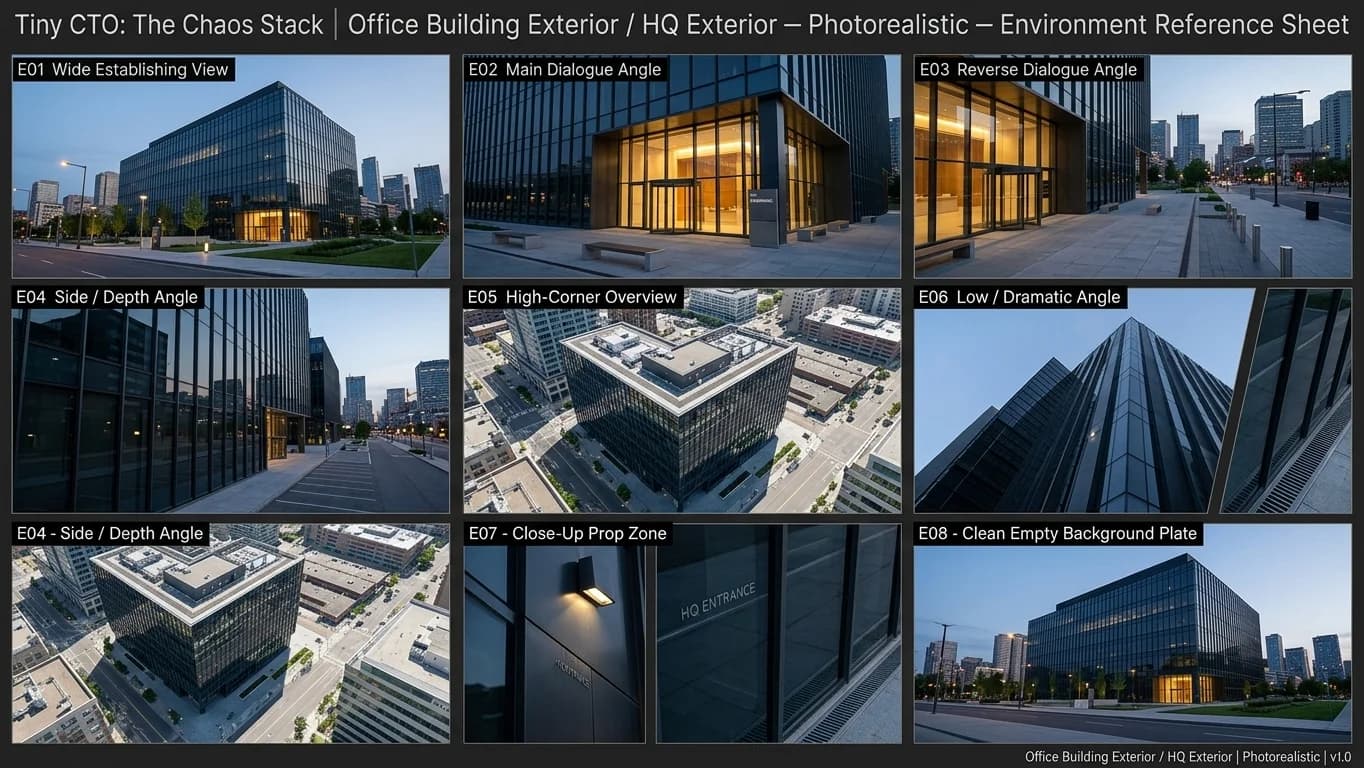
Office Building Exterior / HQ Exterior
The Office Building Exterior / HQ Exterior is a common setting within the Chaos Stack universe.


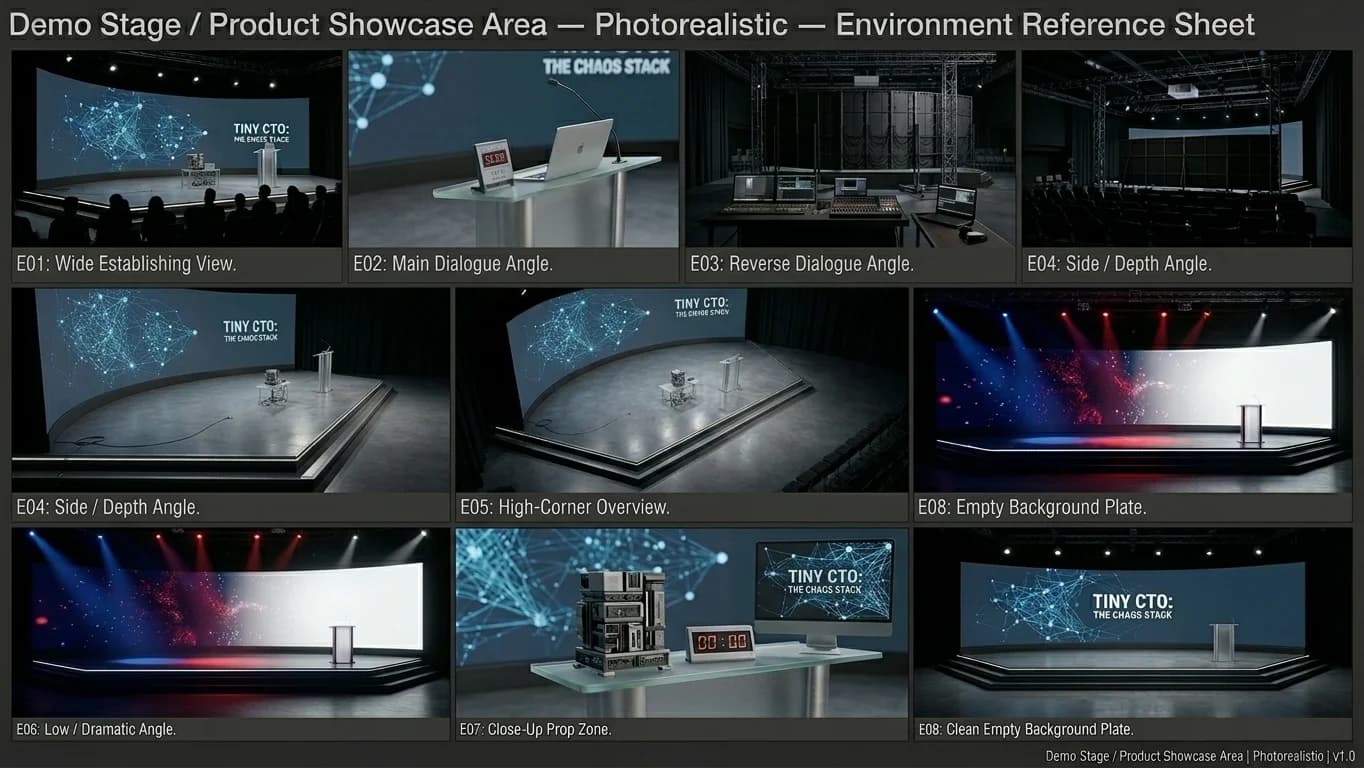
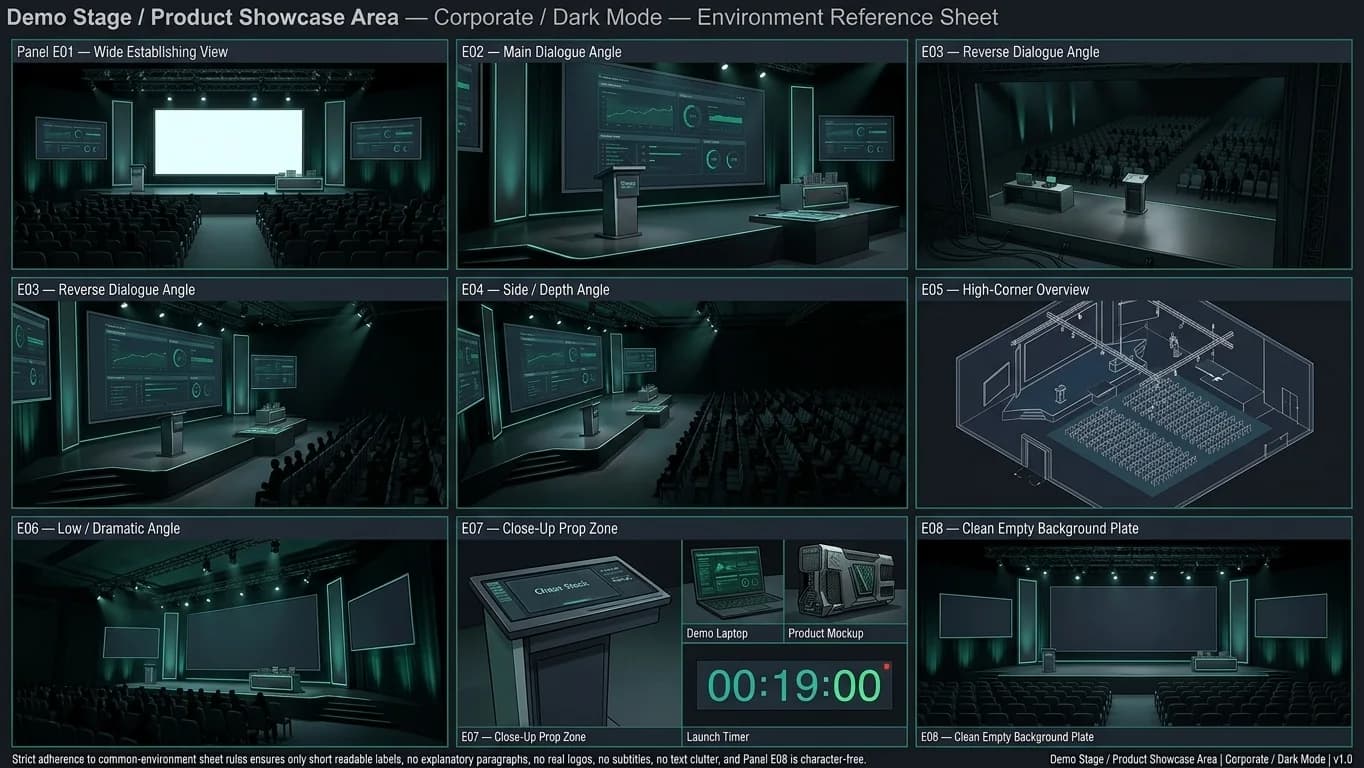
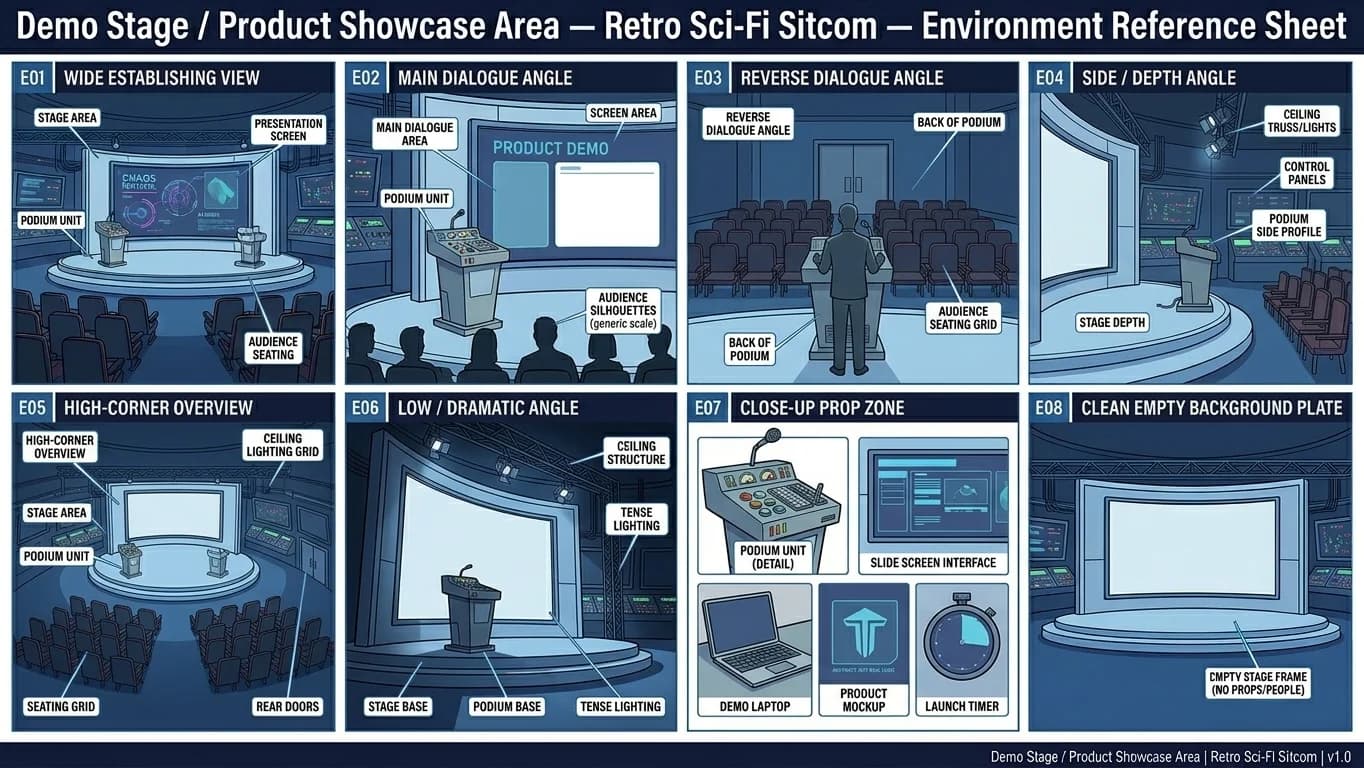
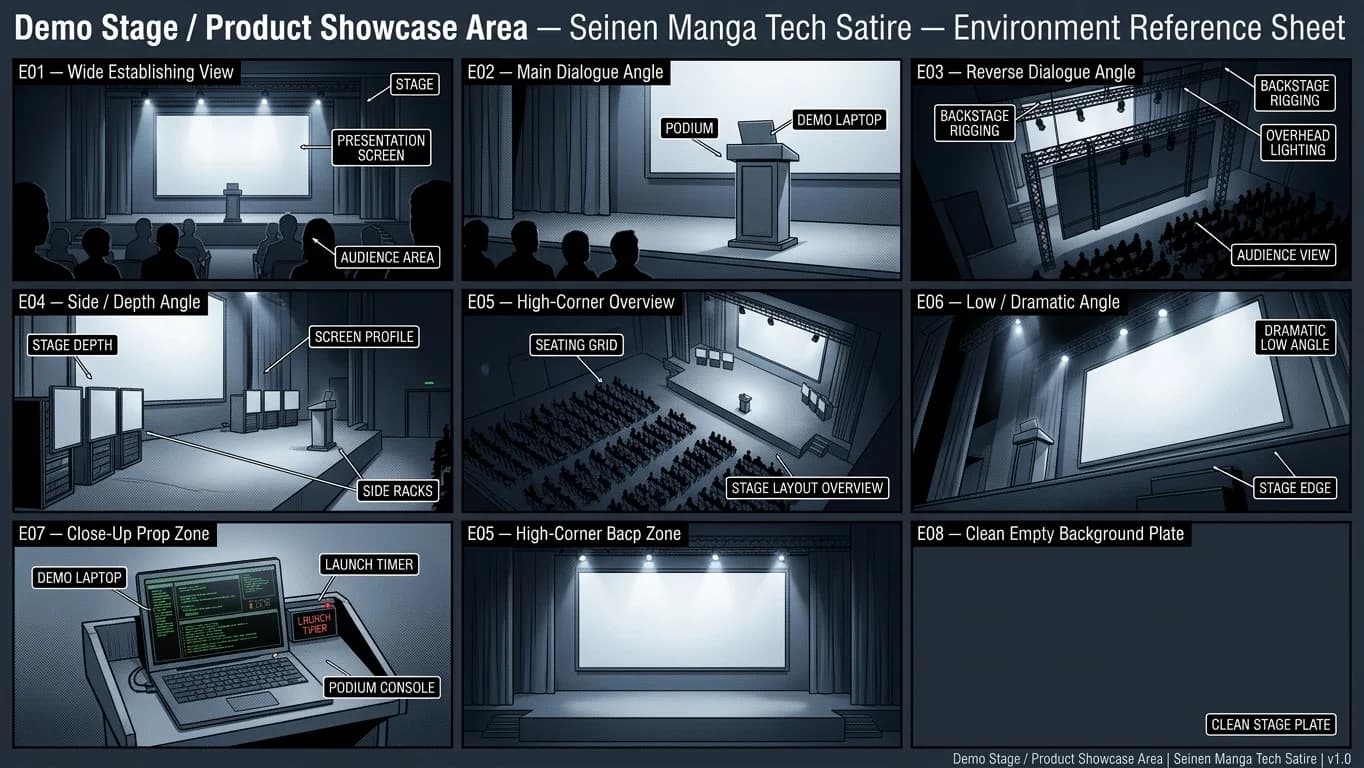
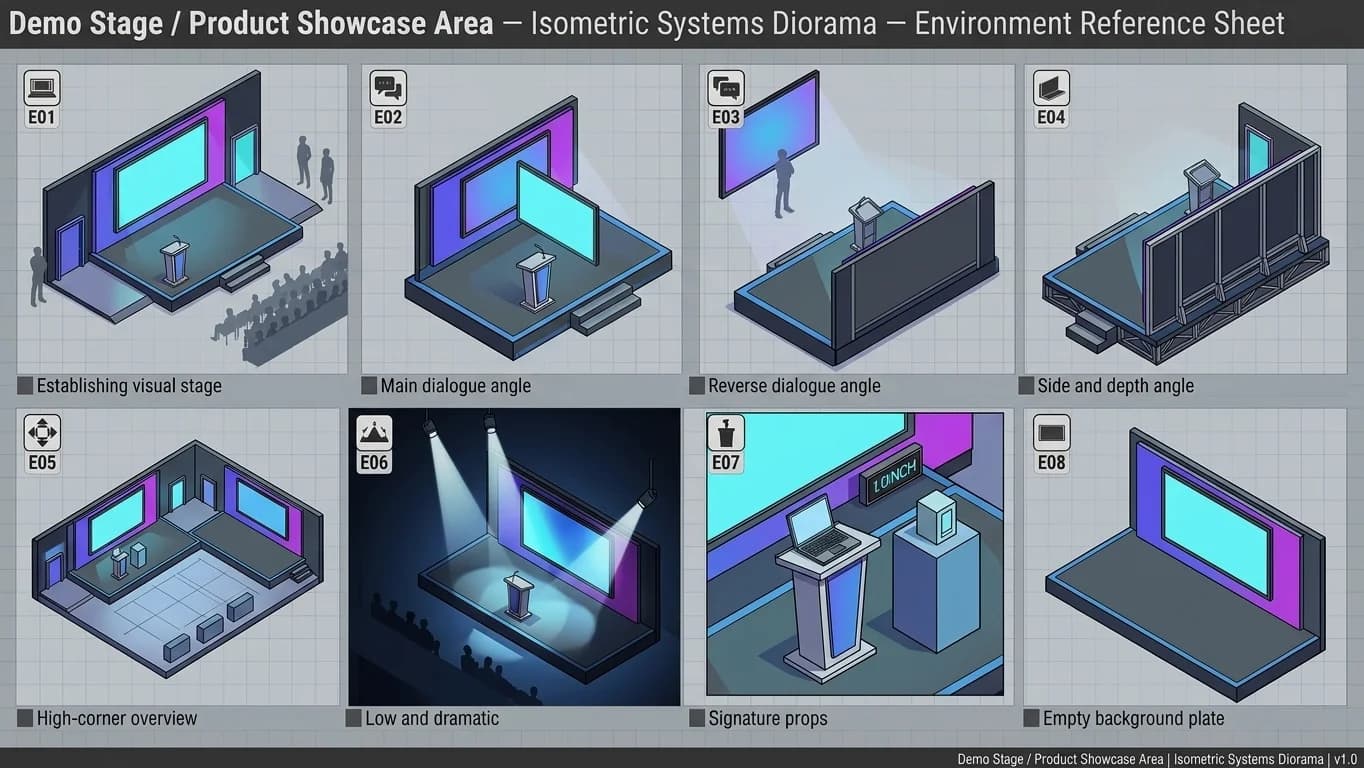
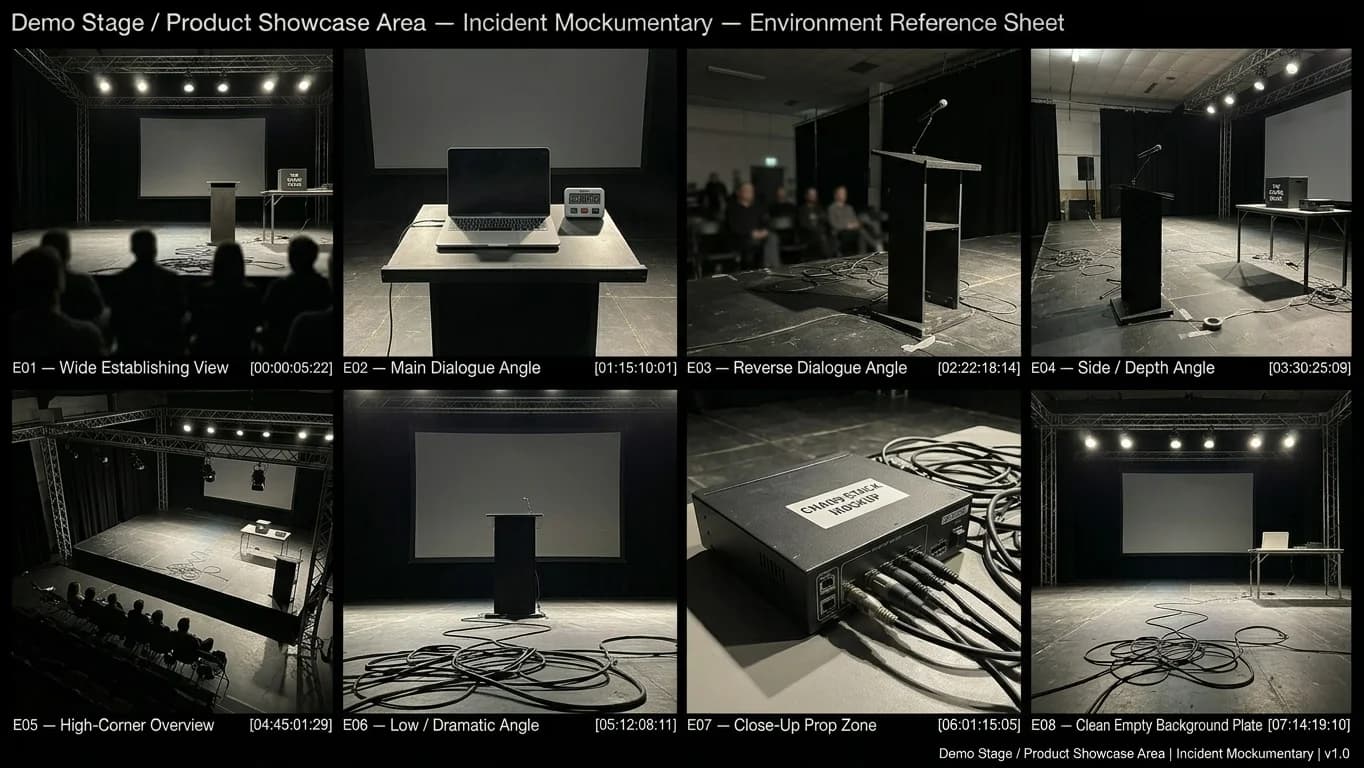
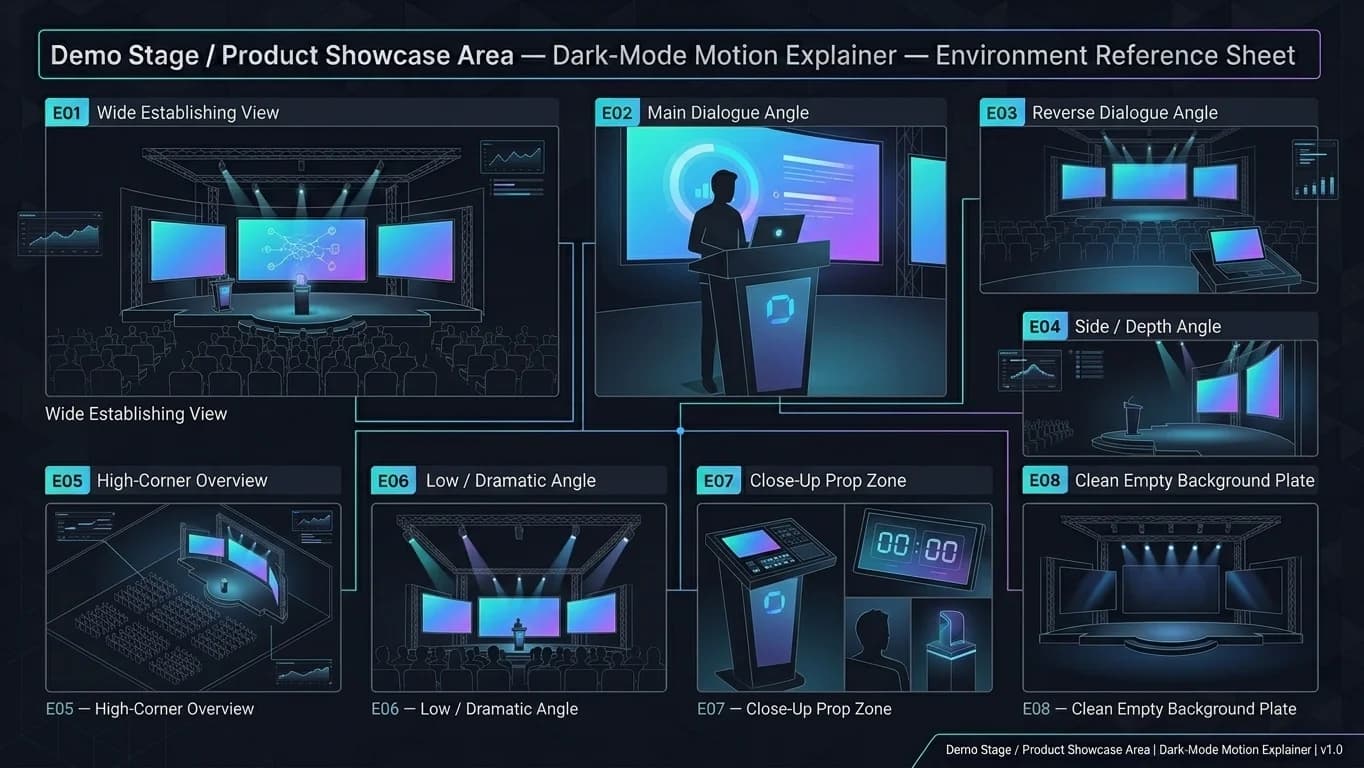
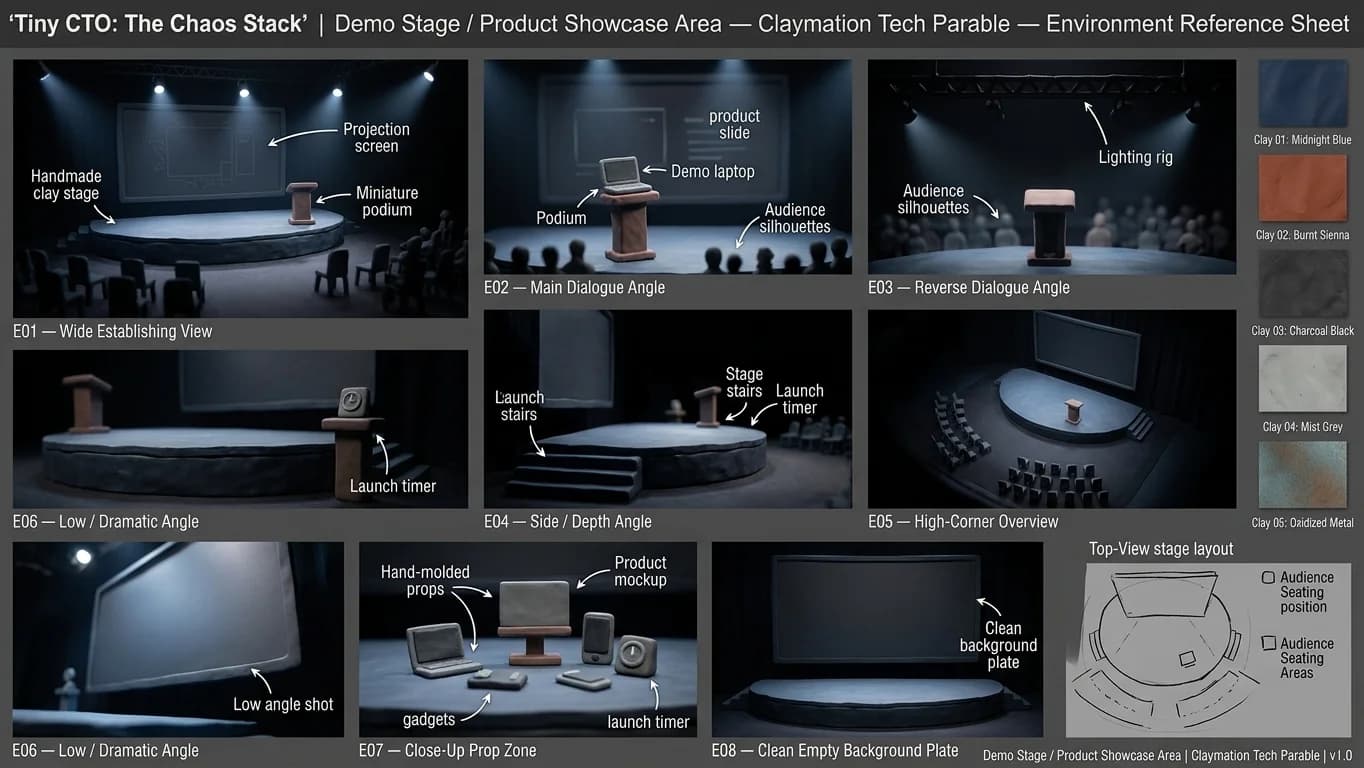
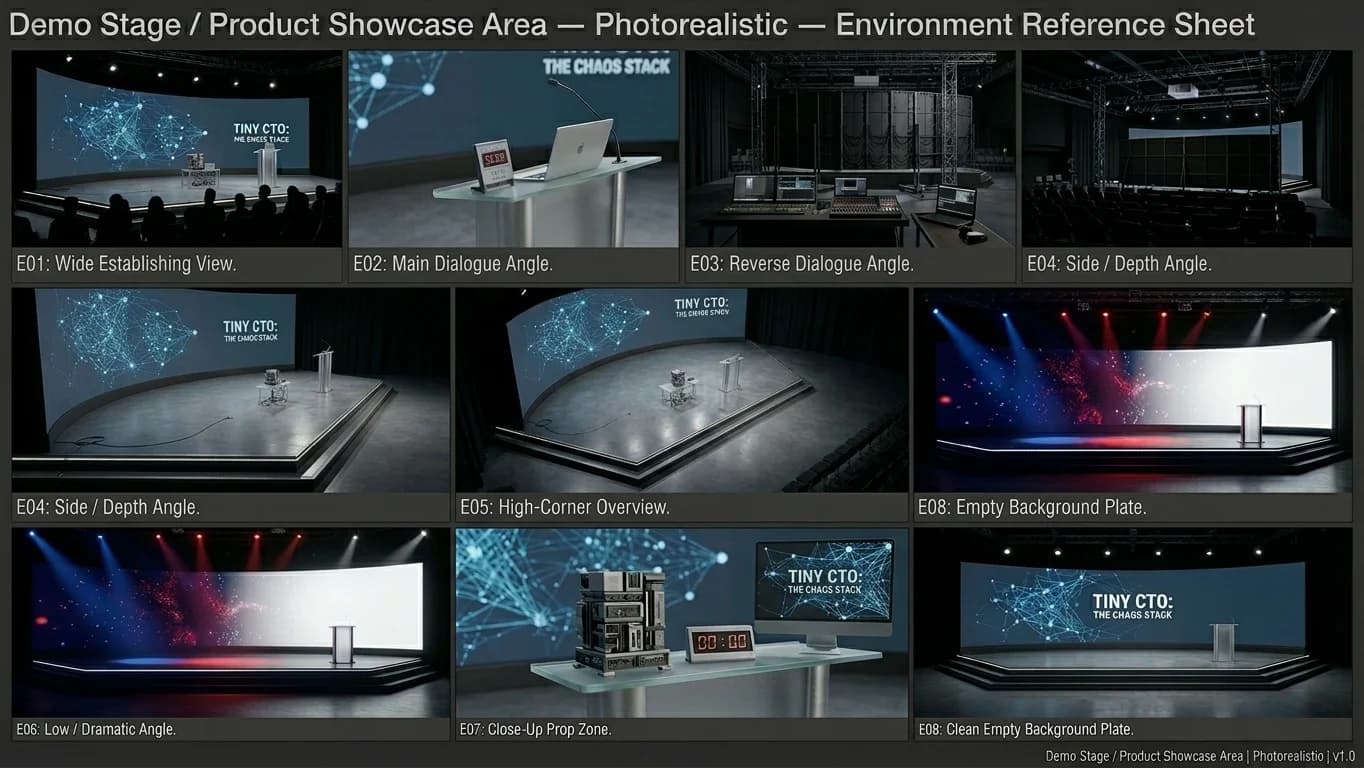
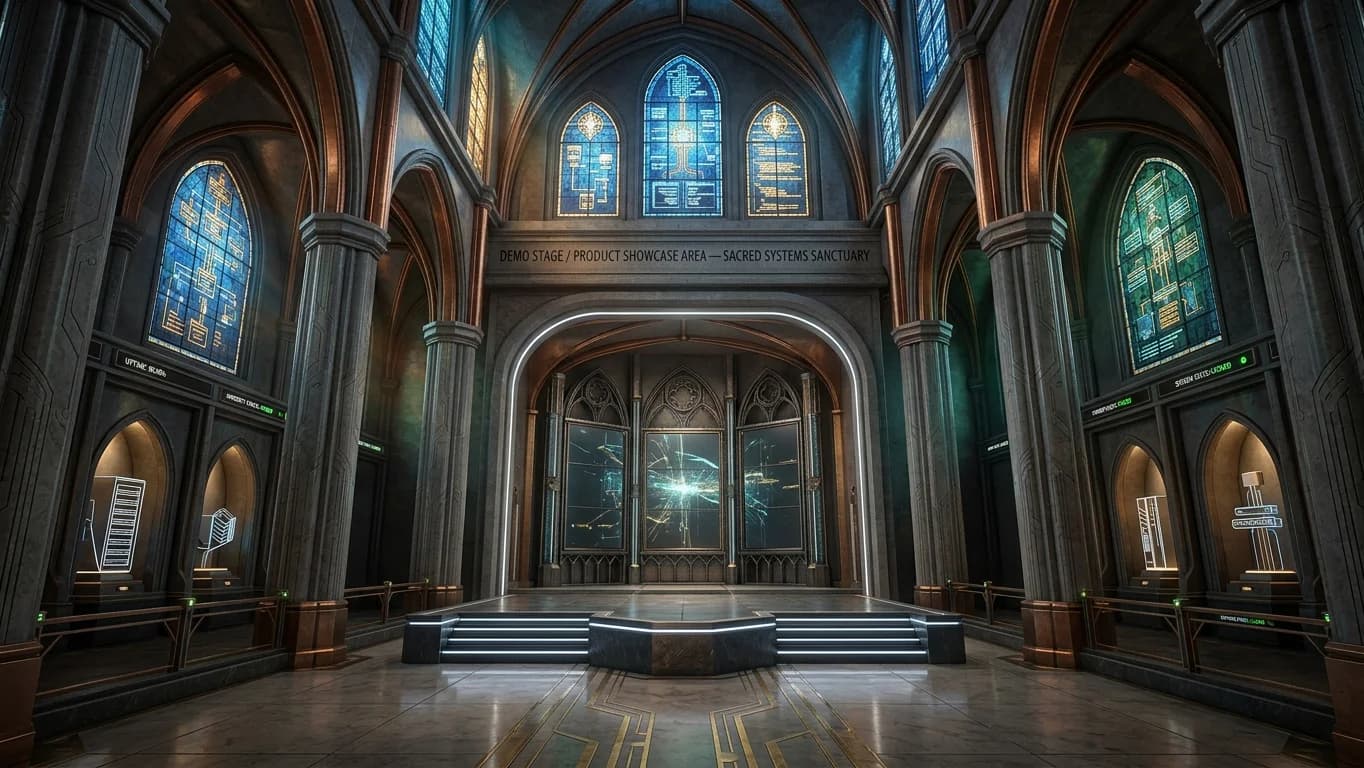
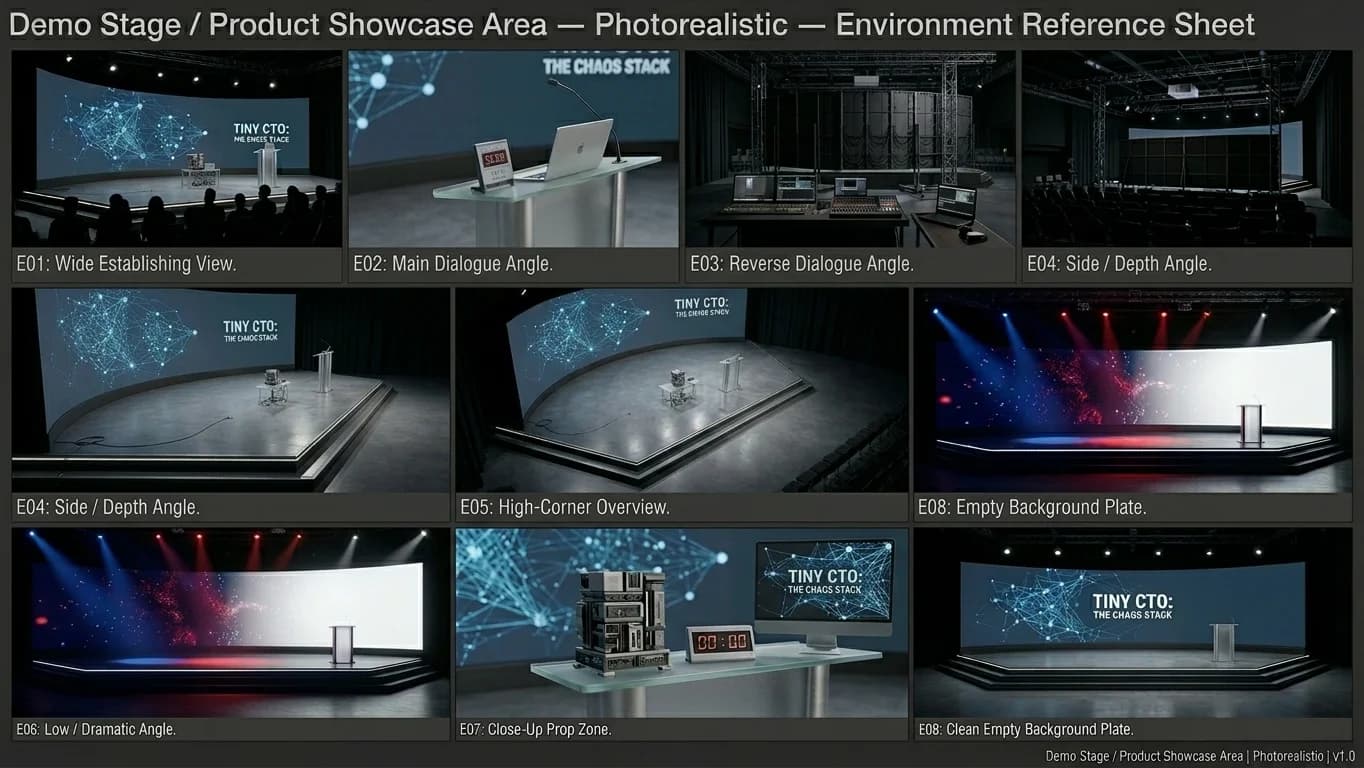
Demo Stage / Product Showcase Area
The Demo Stage / Product Showcase Area is a common setting within the Chaos Stack universe.


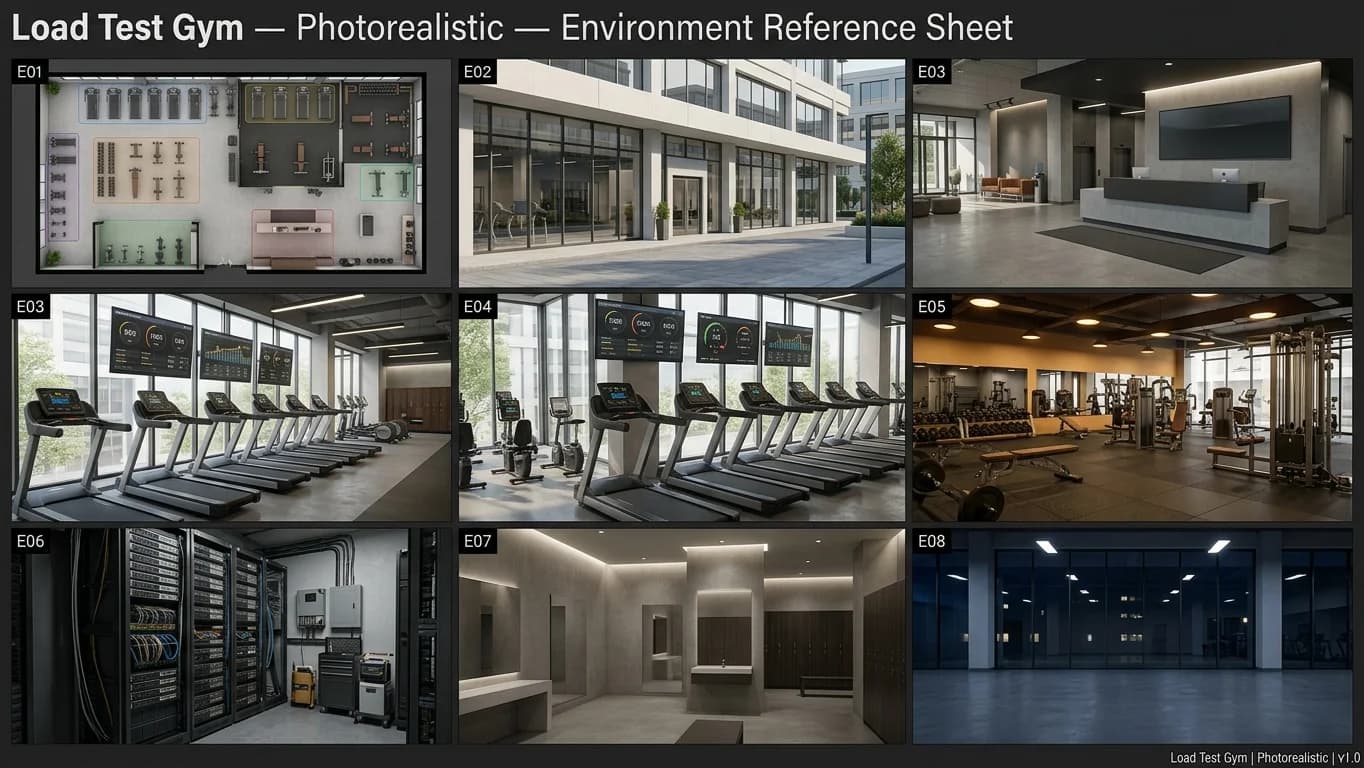
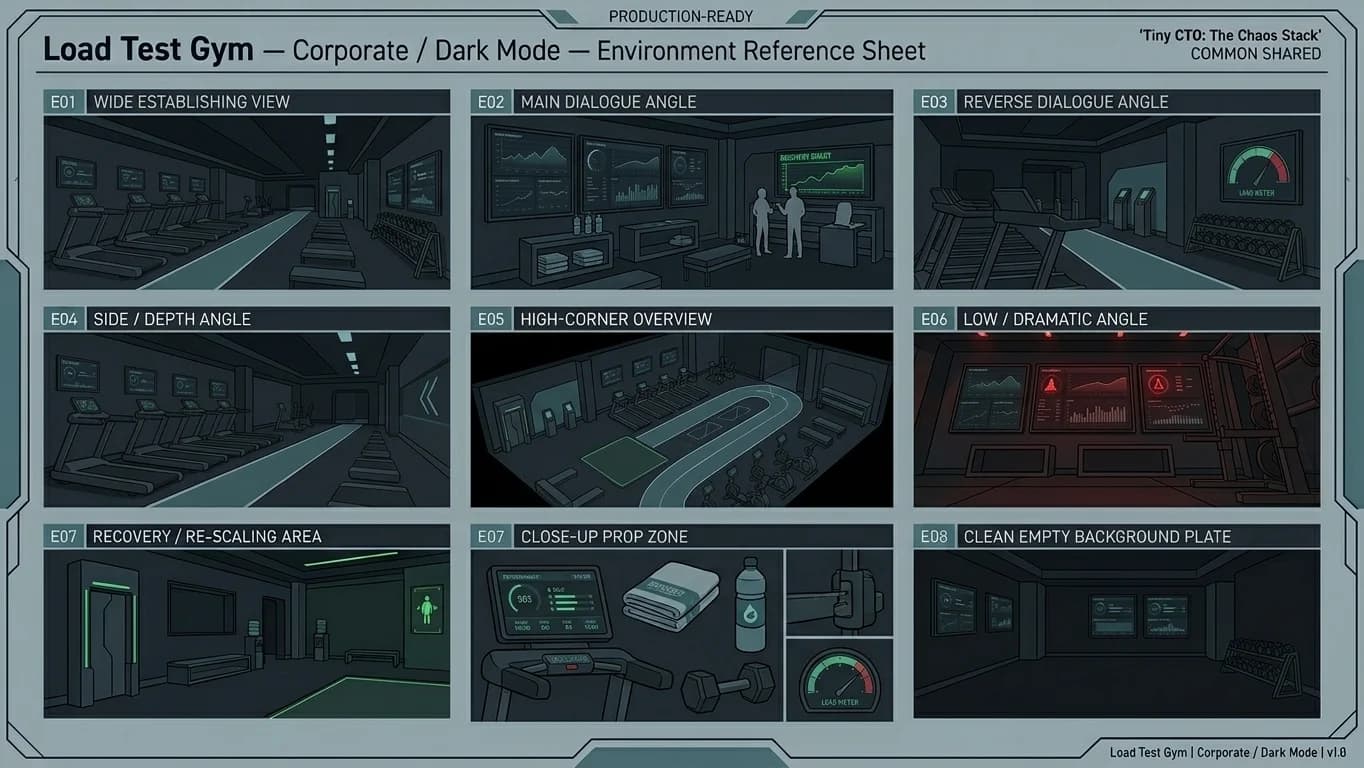
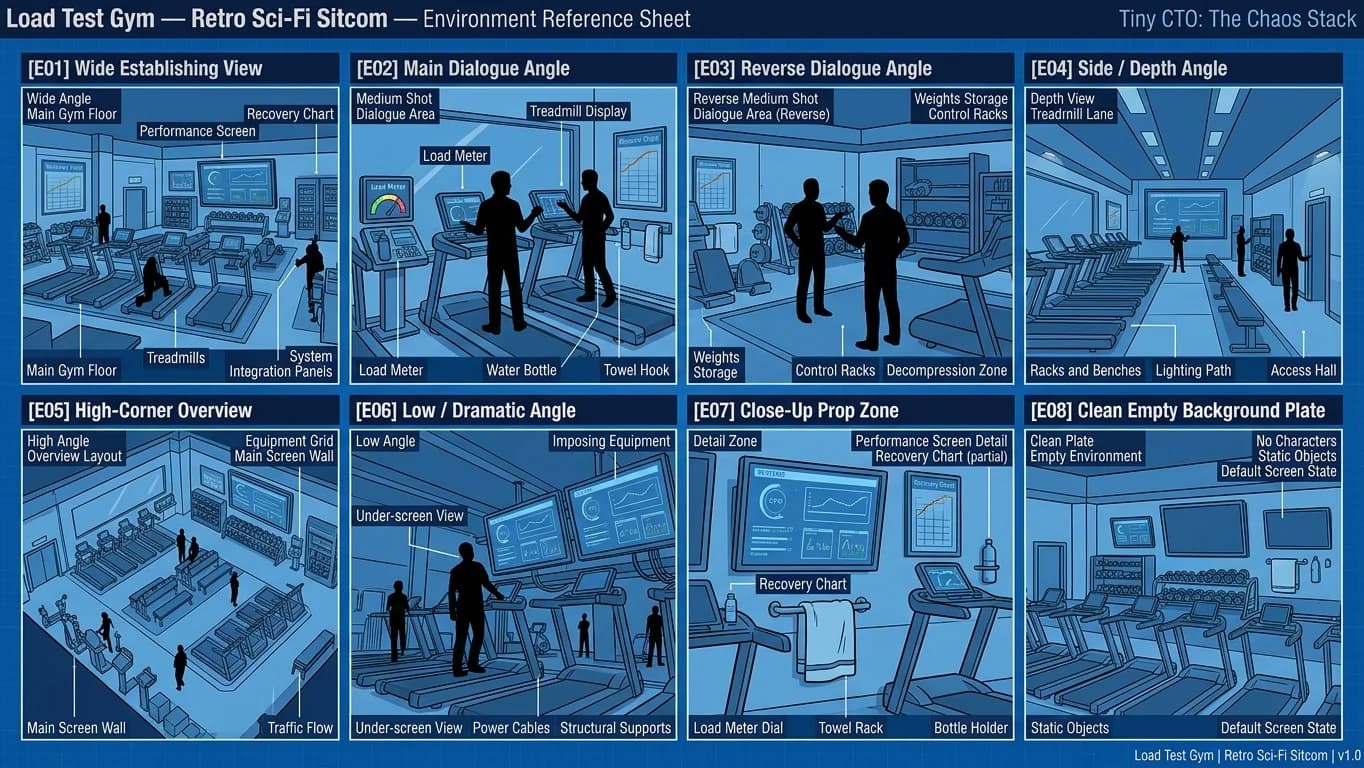
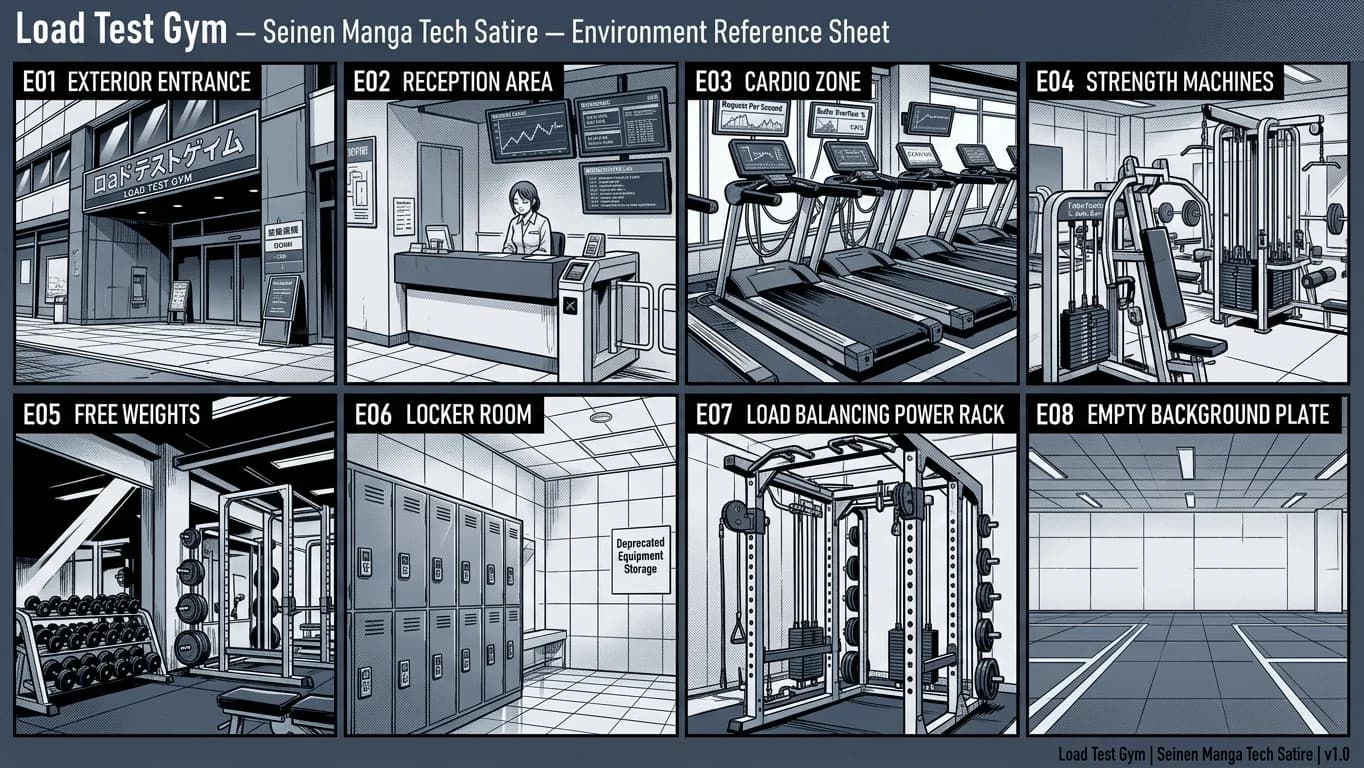
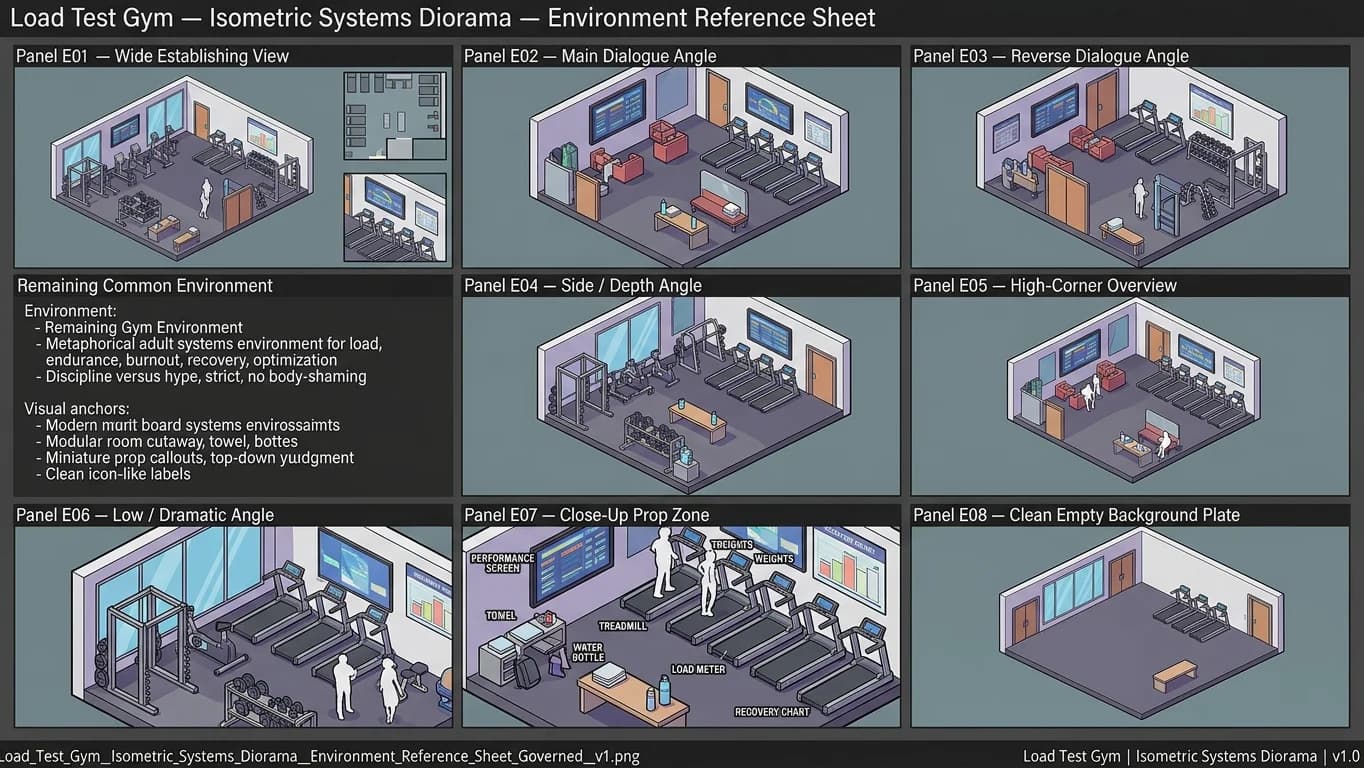
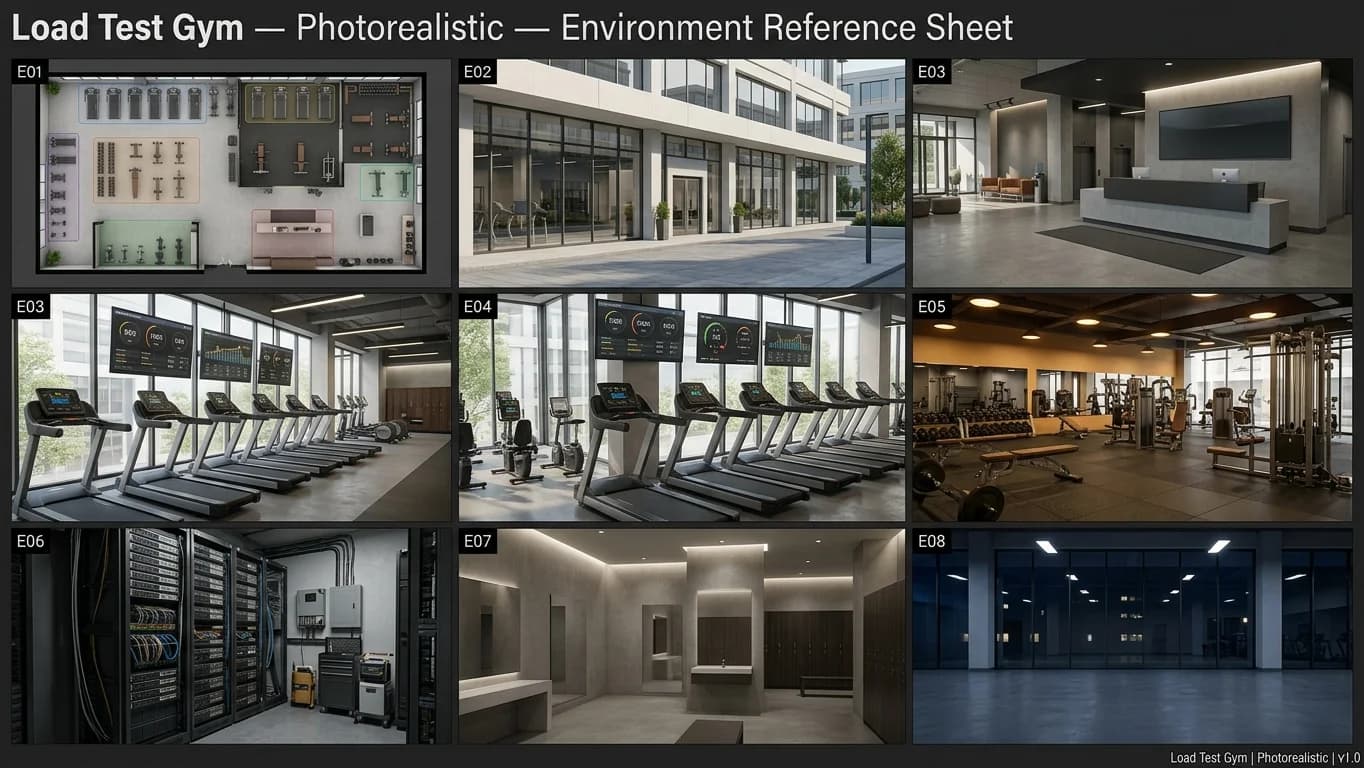
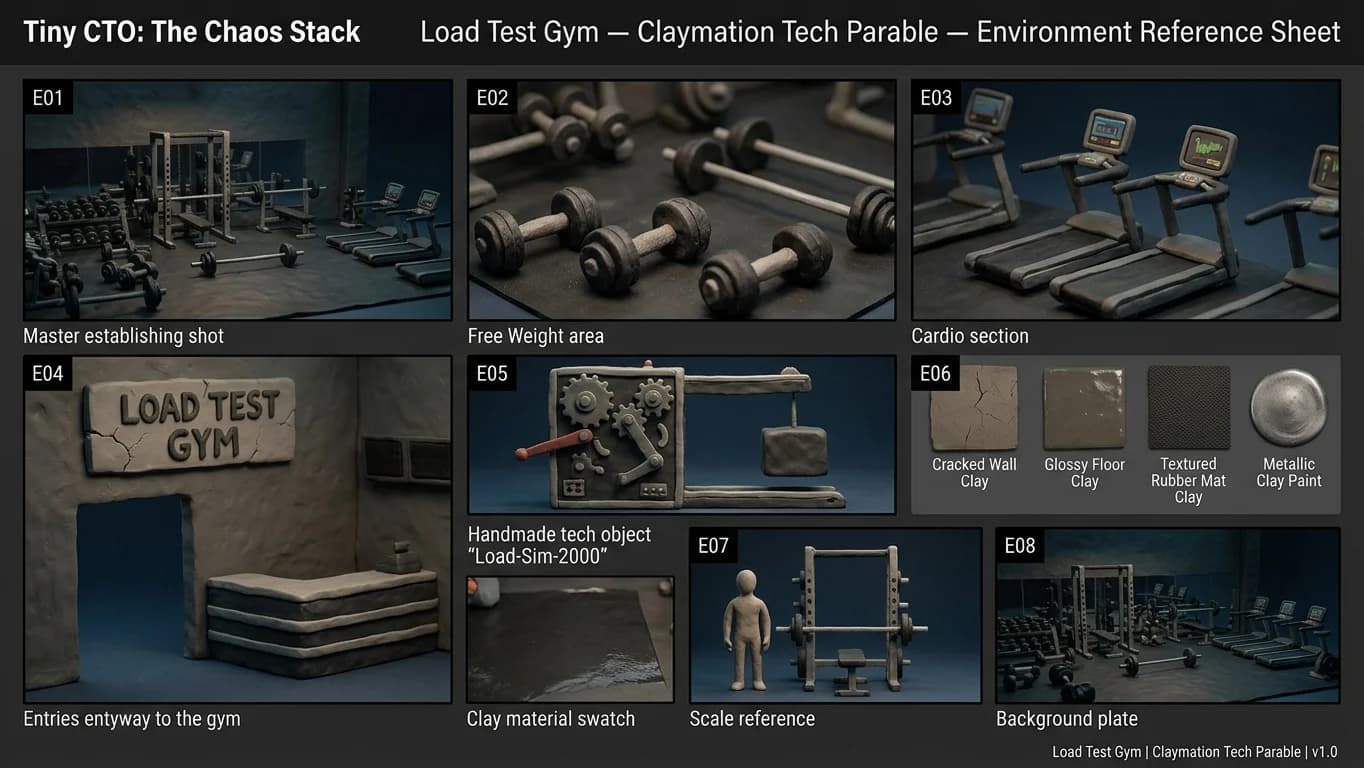
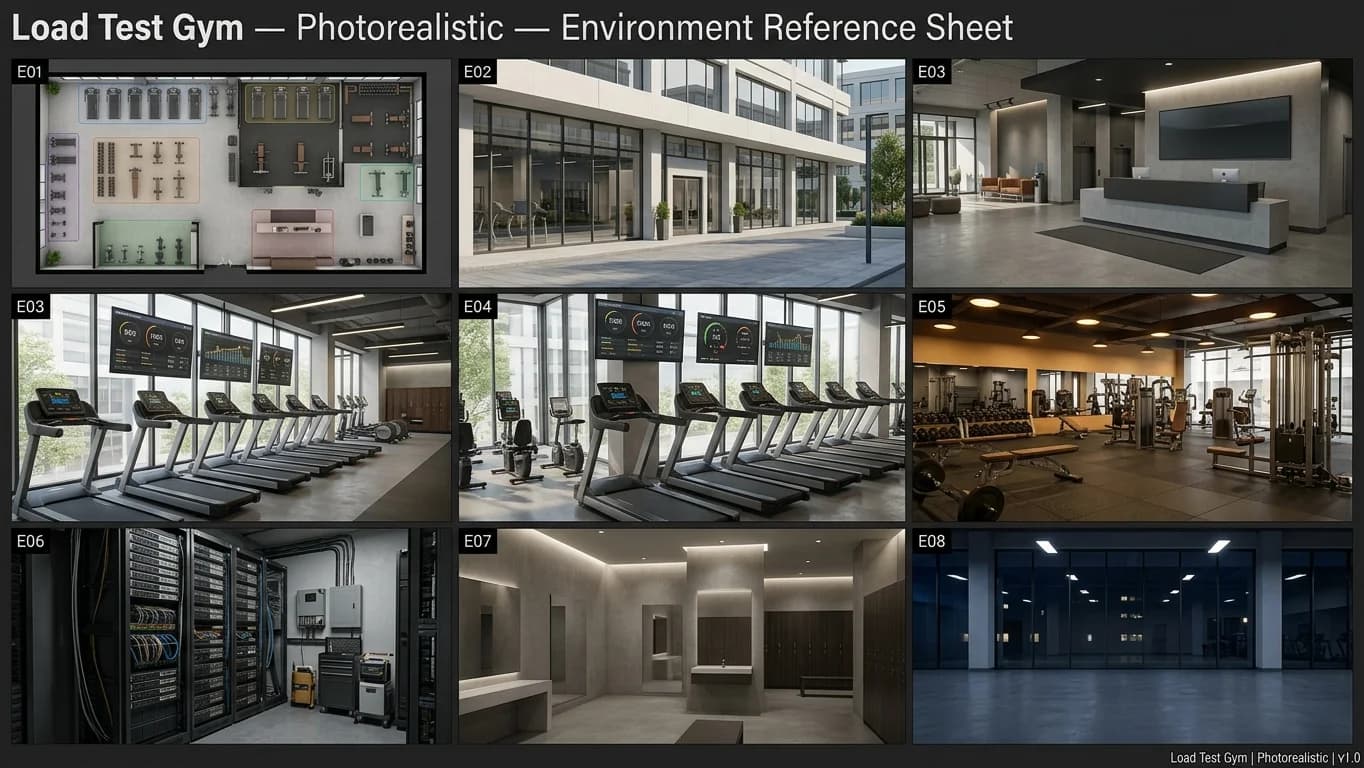
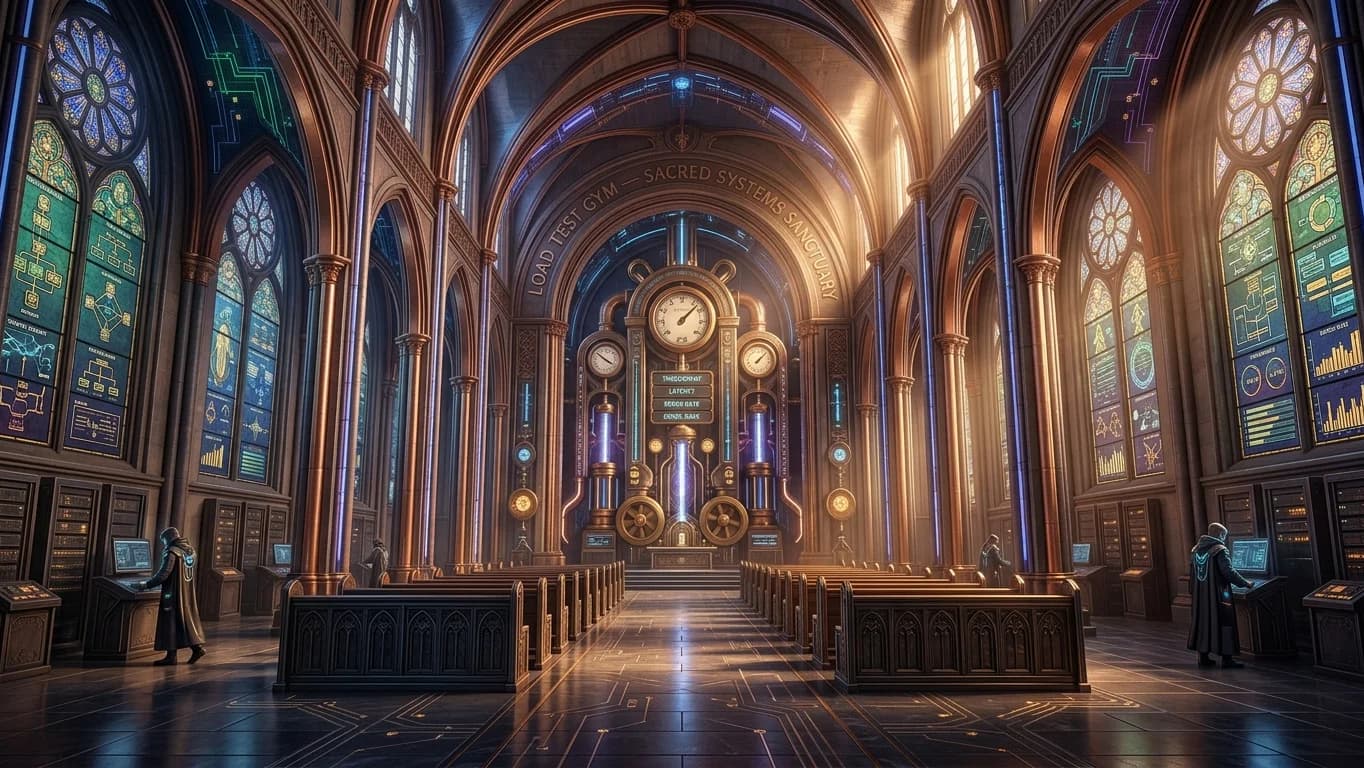
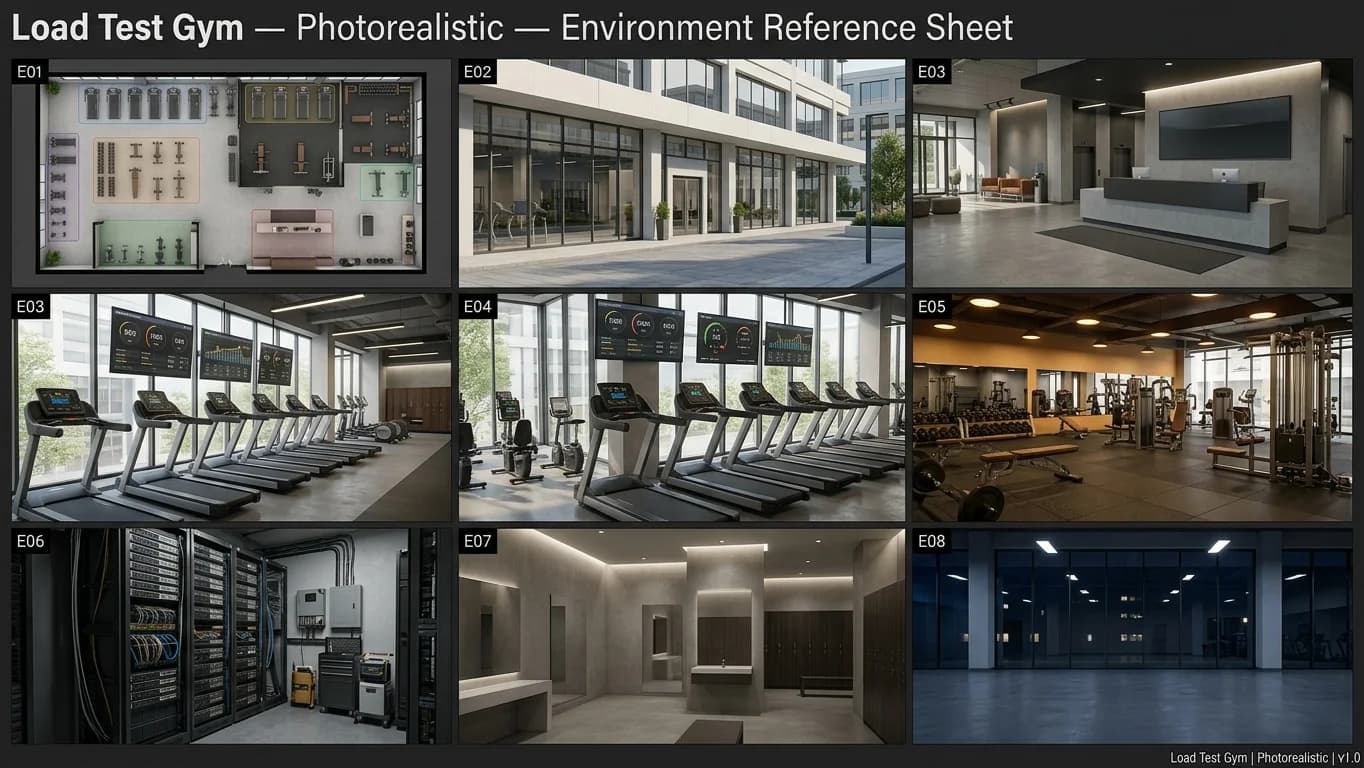
Load Test Gym
The Load Test Gym is a common setting within the Chaos Stack universe.


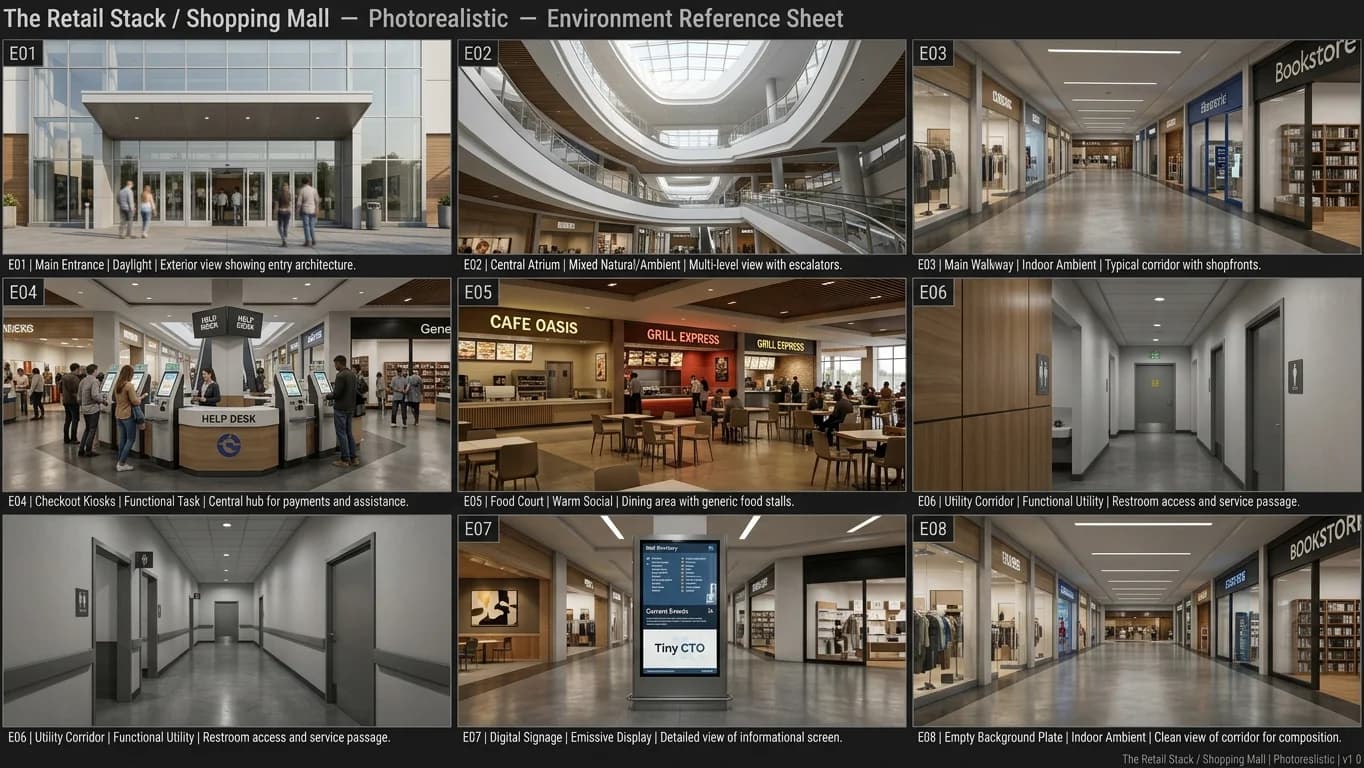
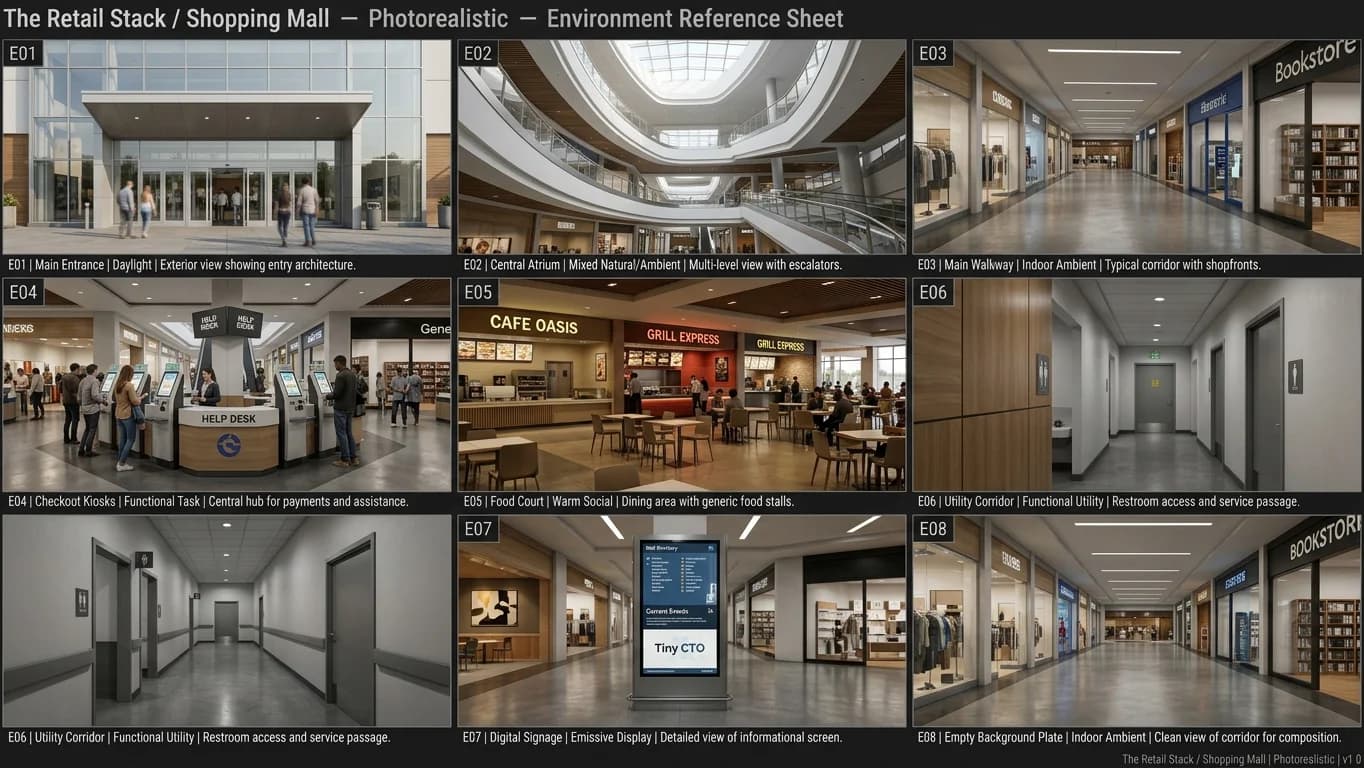
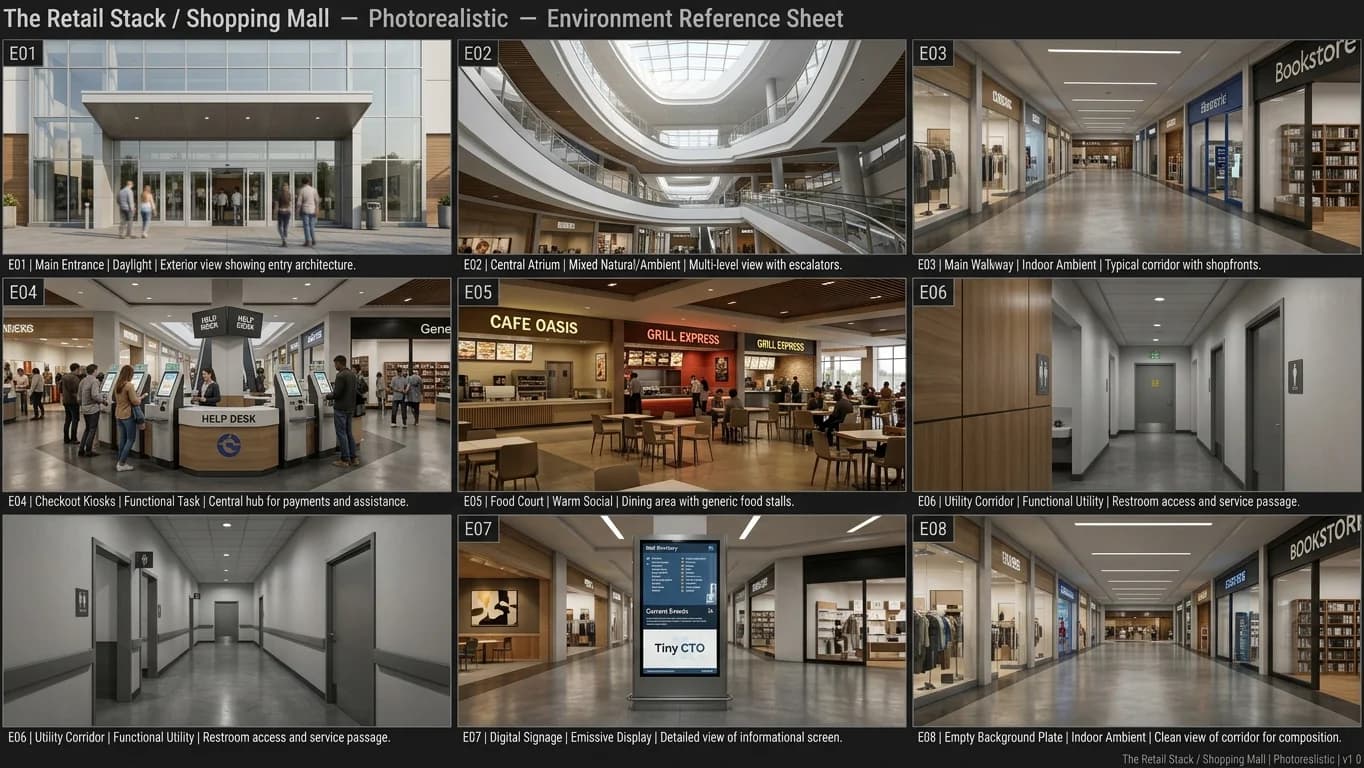
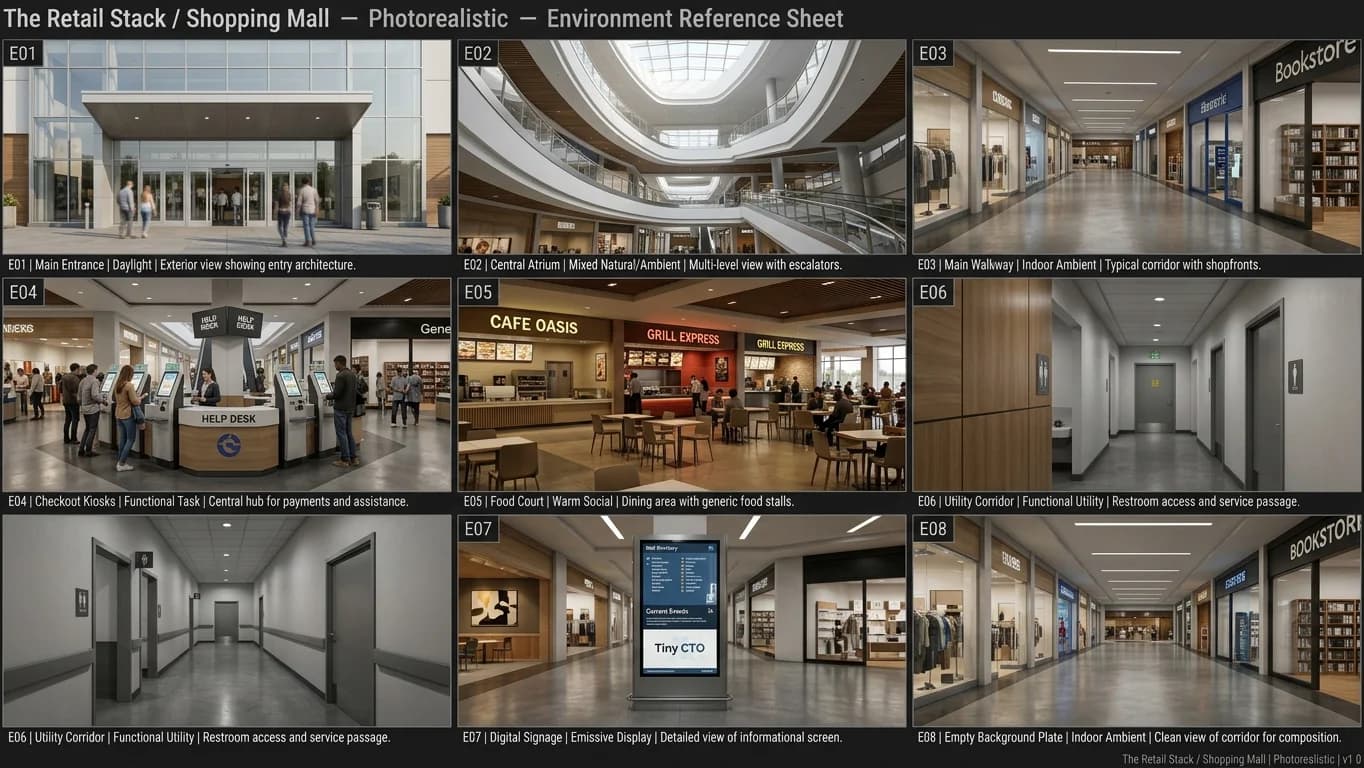
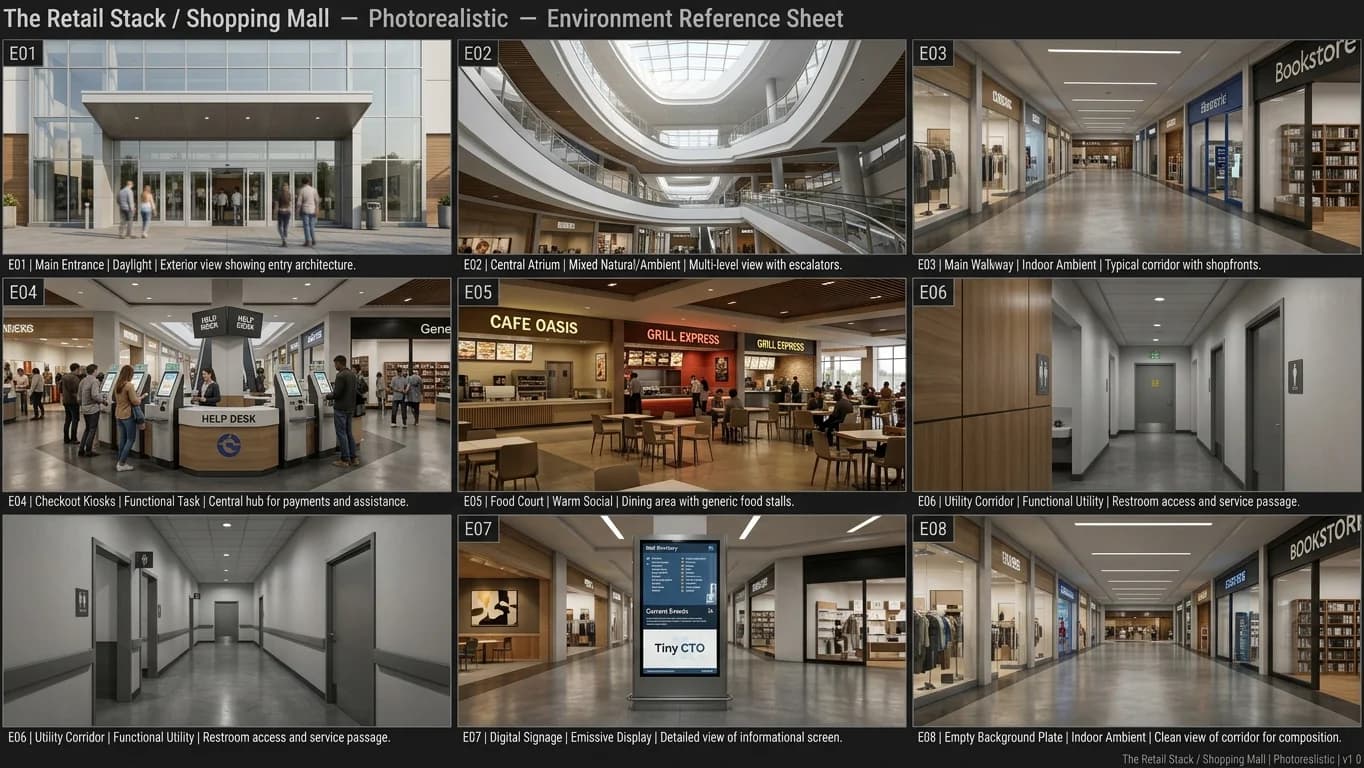
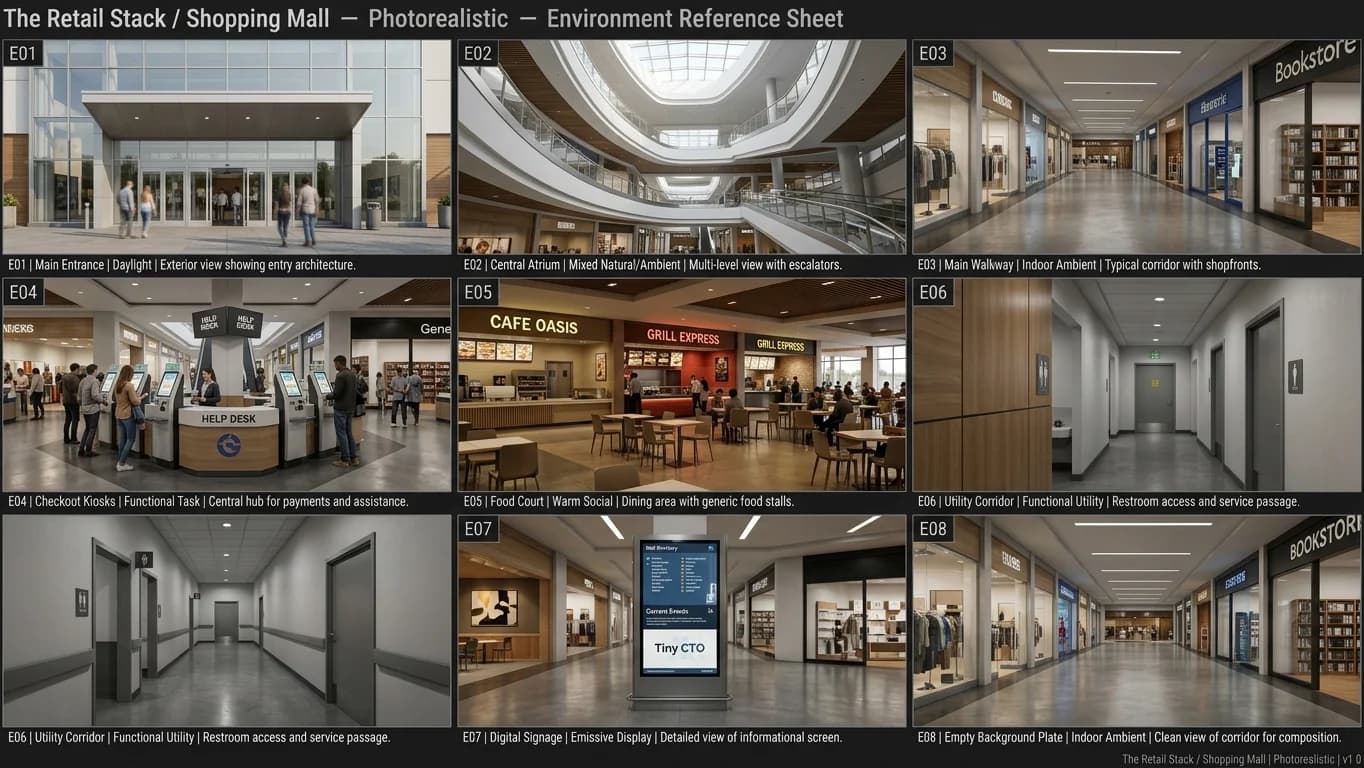
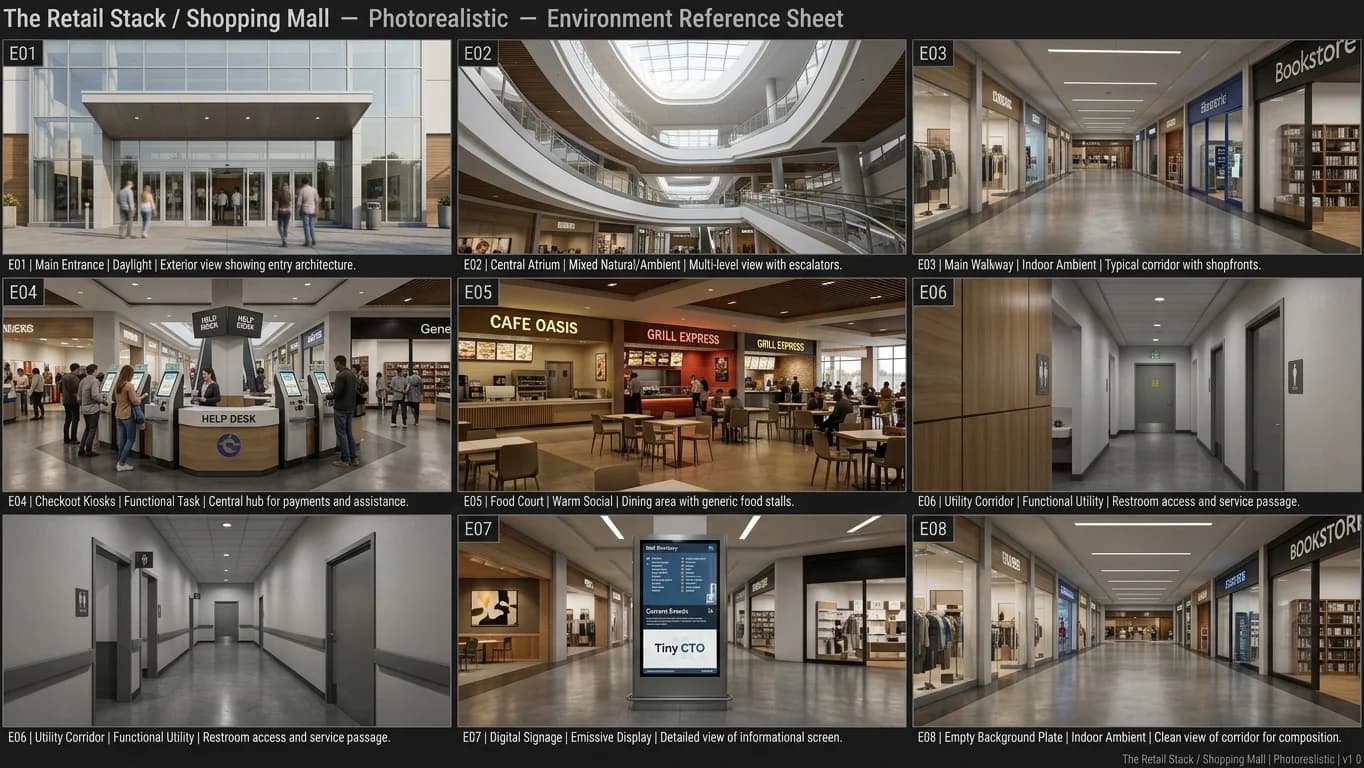
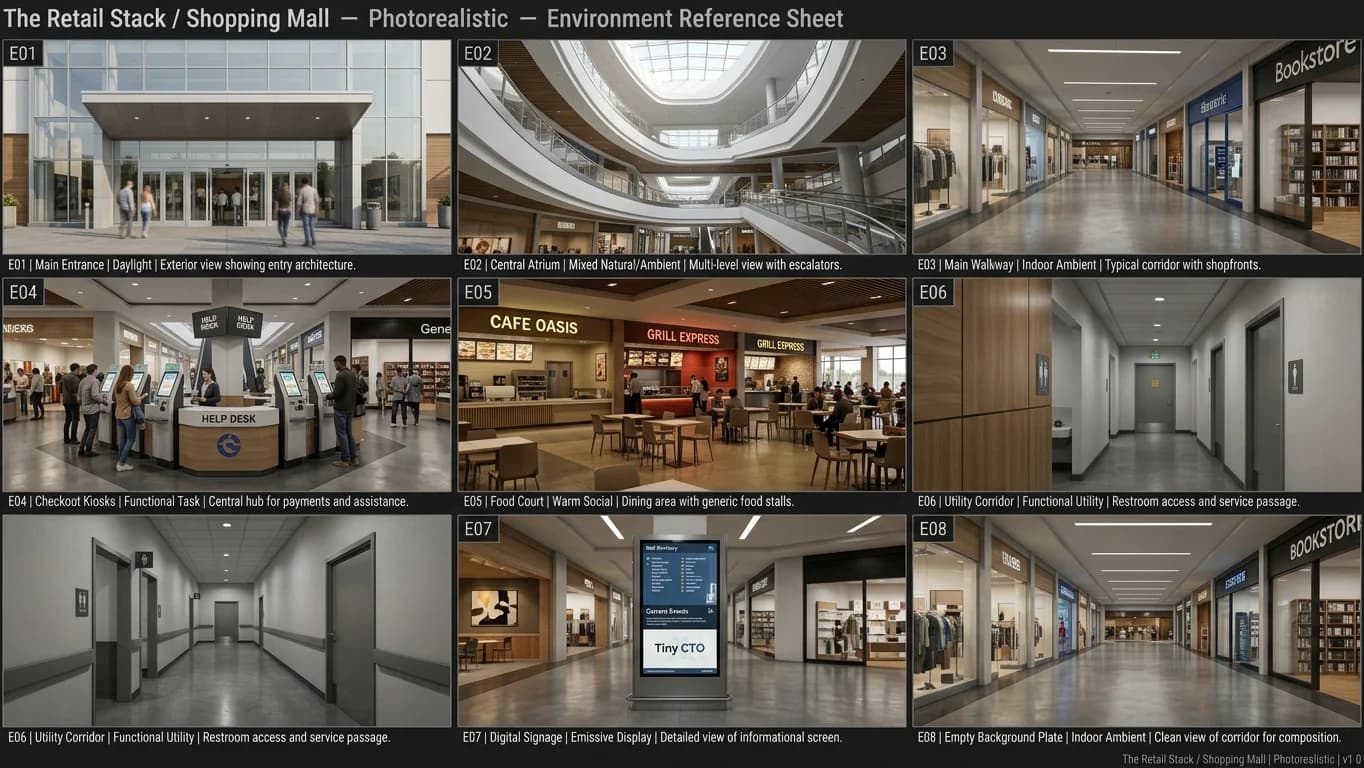
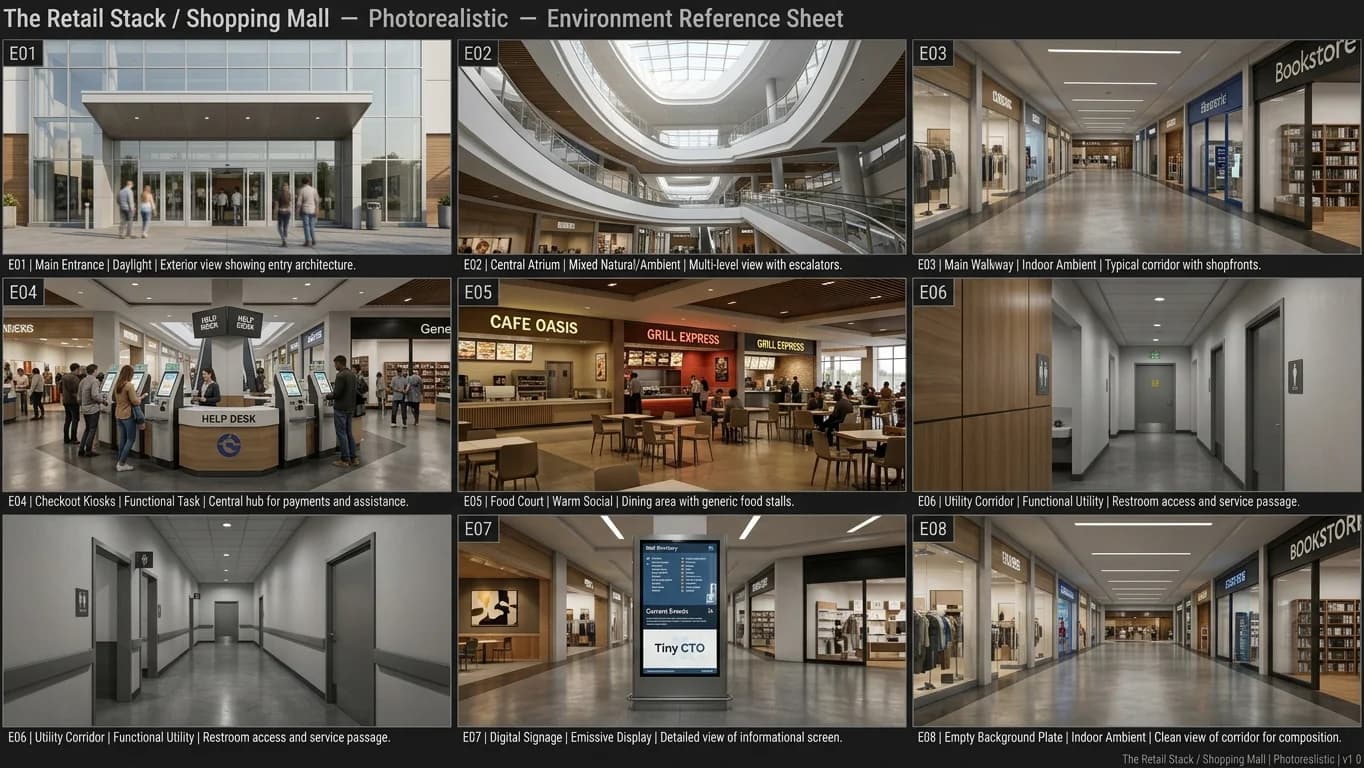
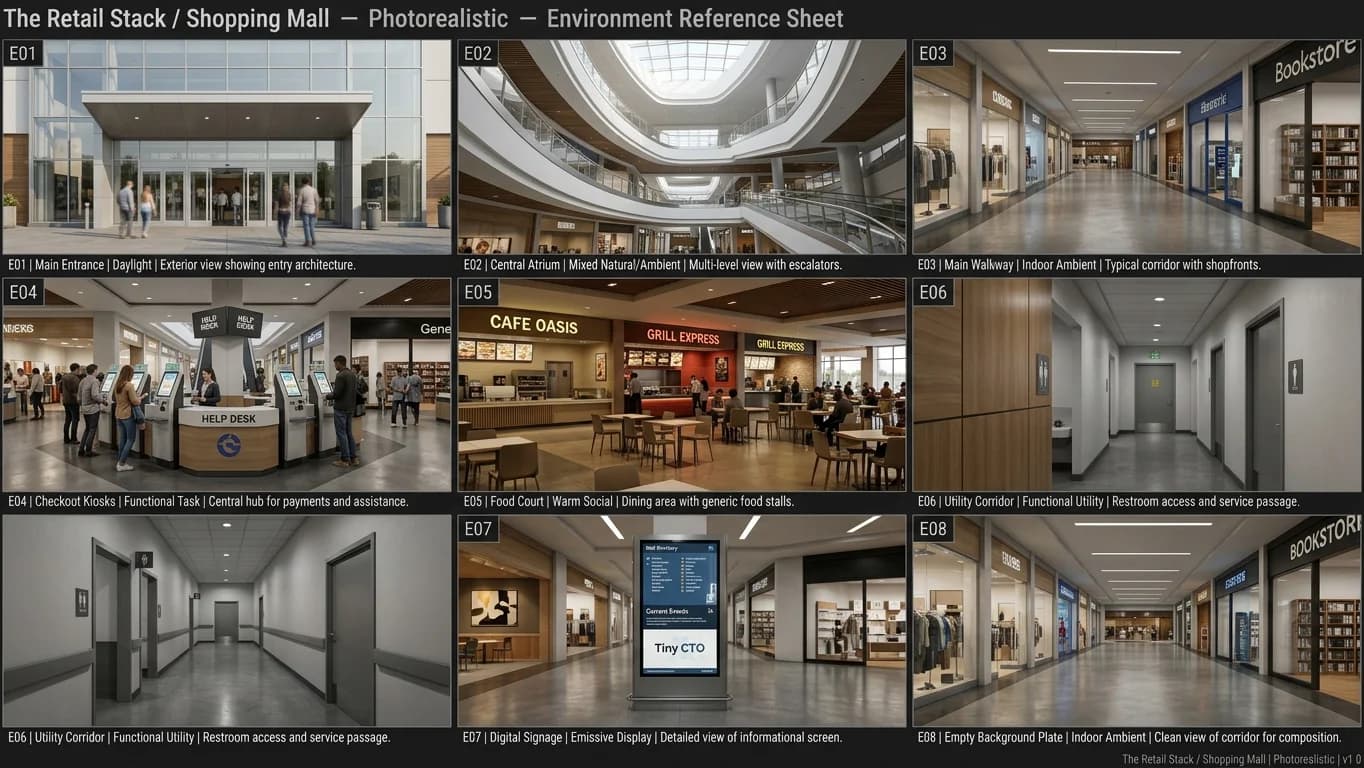
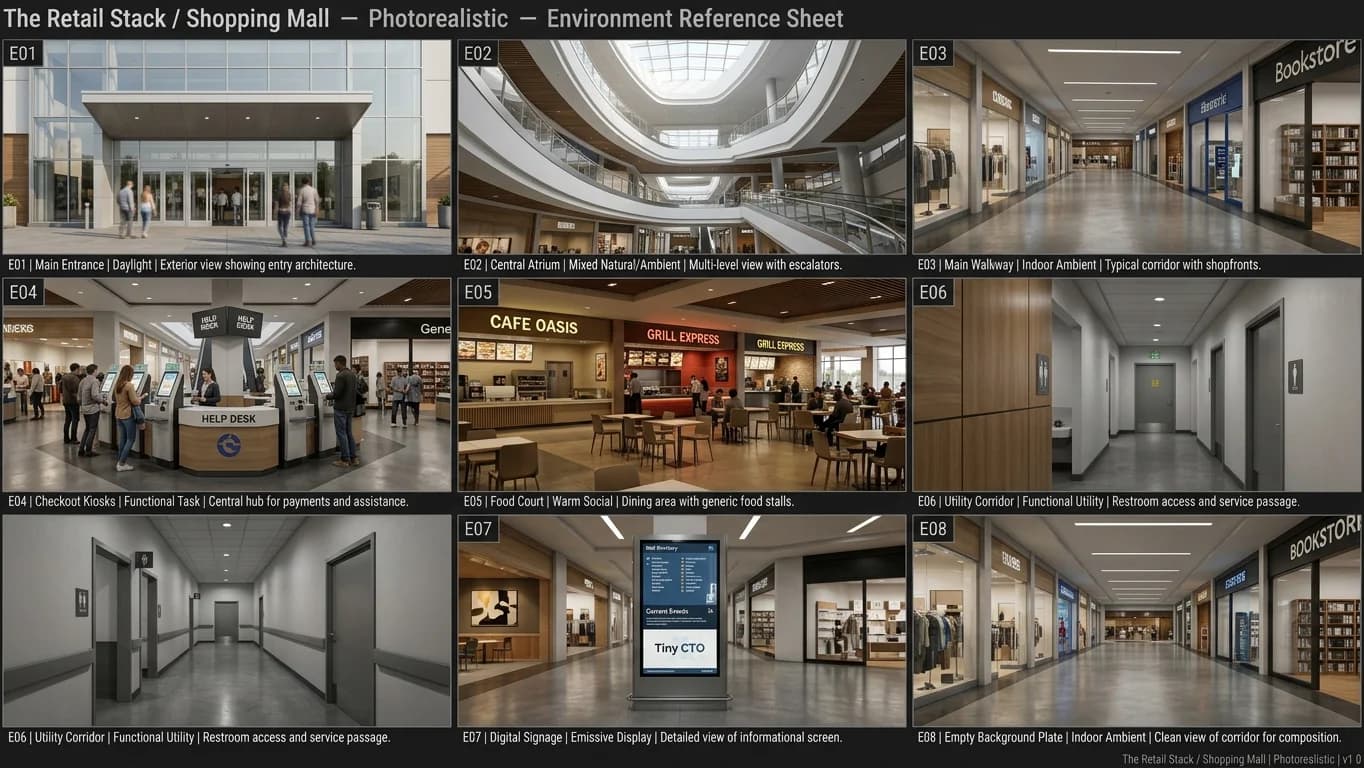
The Retail Stack / Shopping Mall
The The Retail Stack / Shopping Mall is a common setting within the Chaos Stack universe.


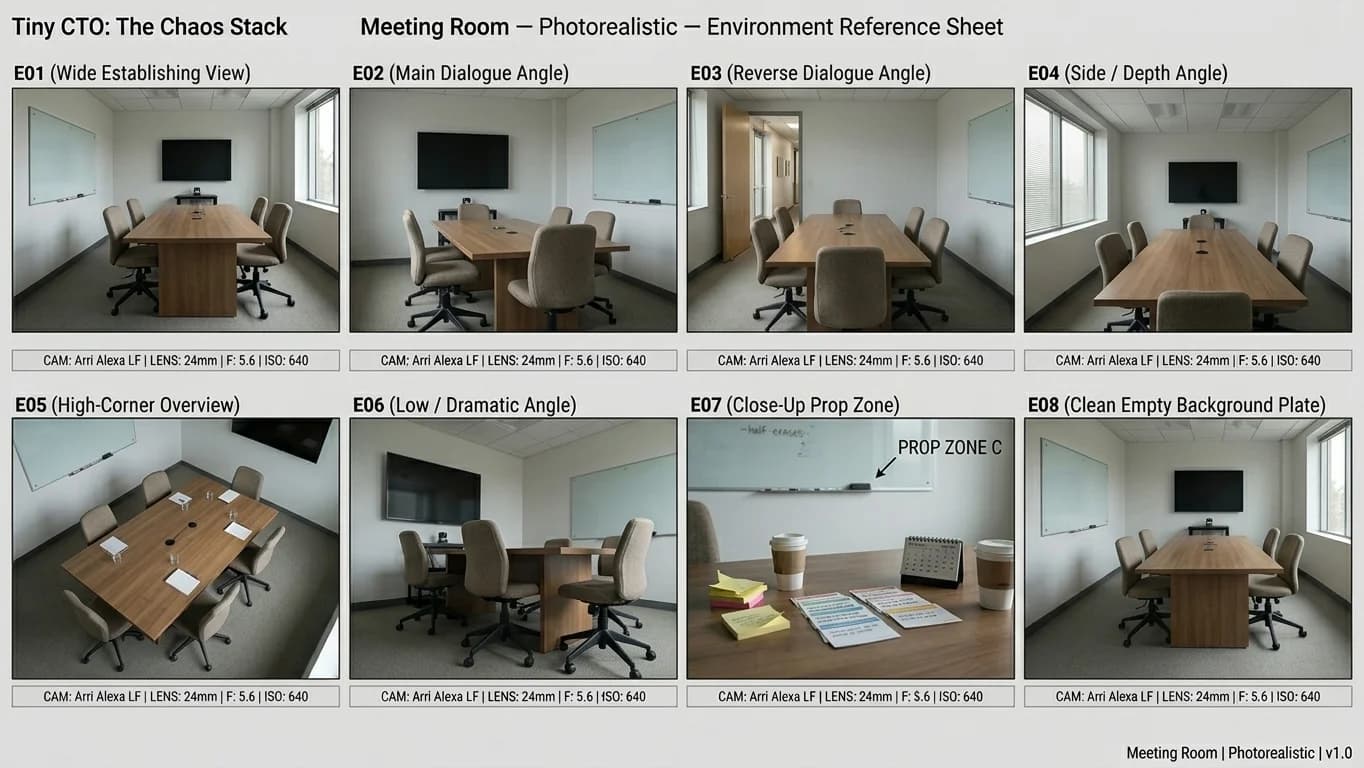
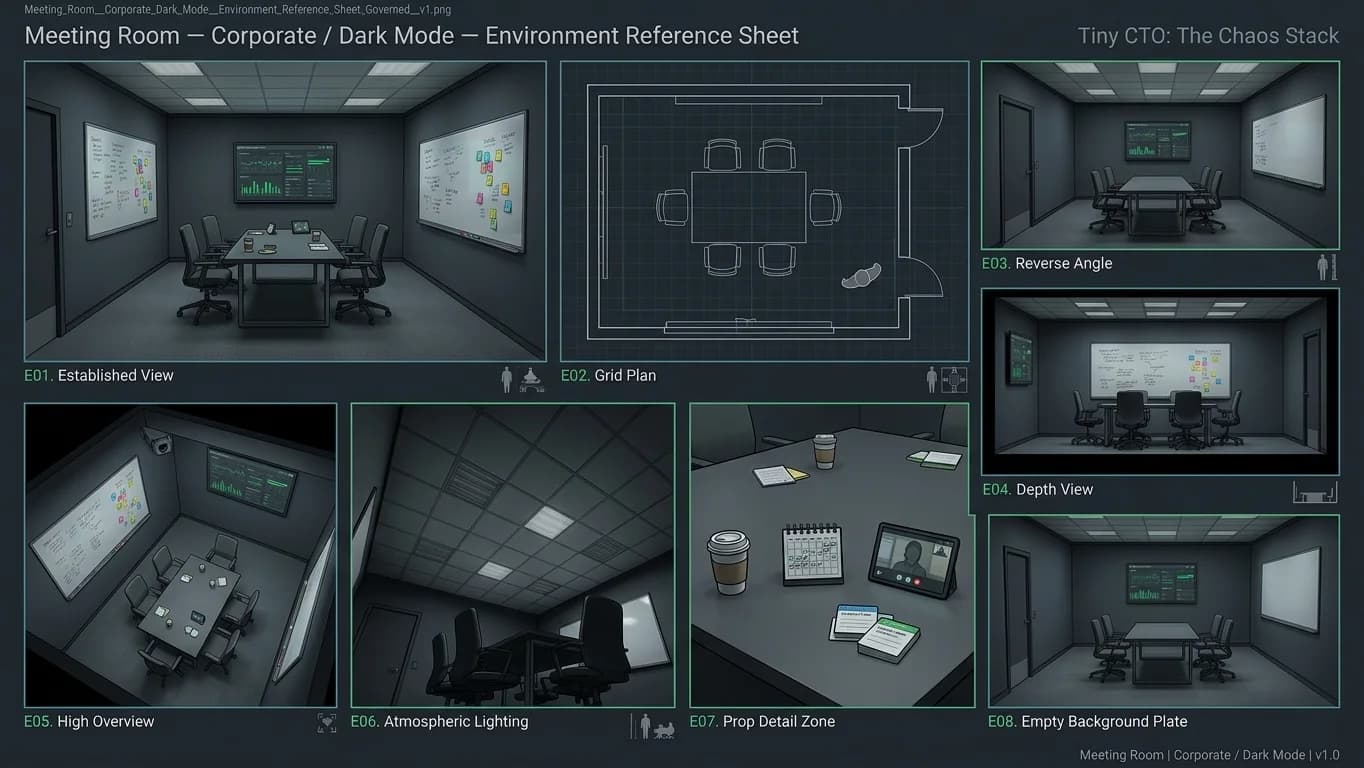
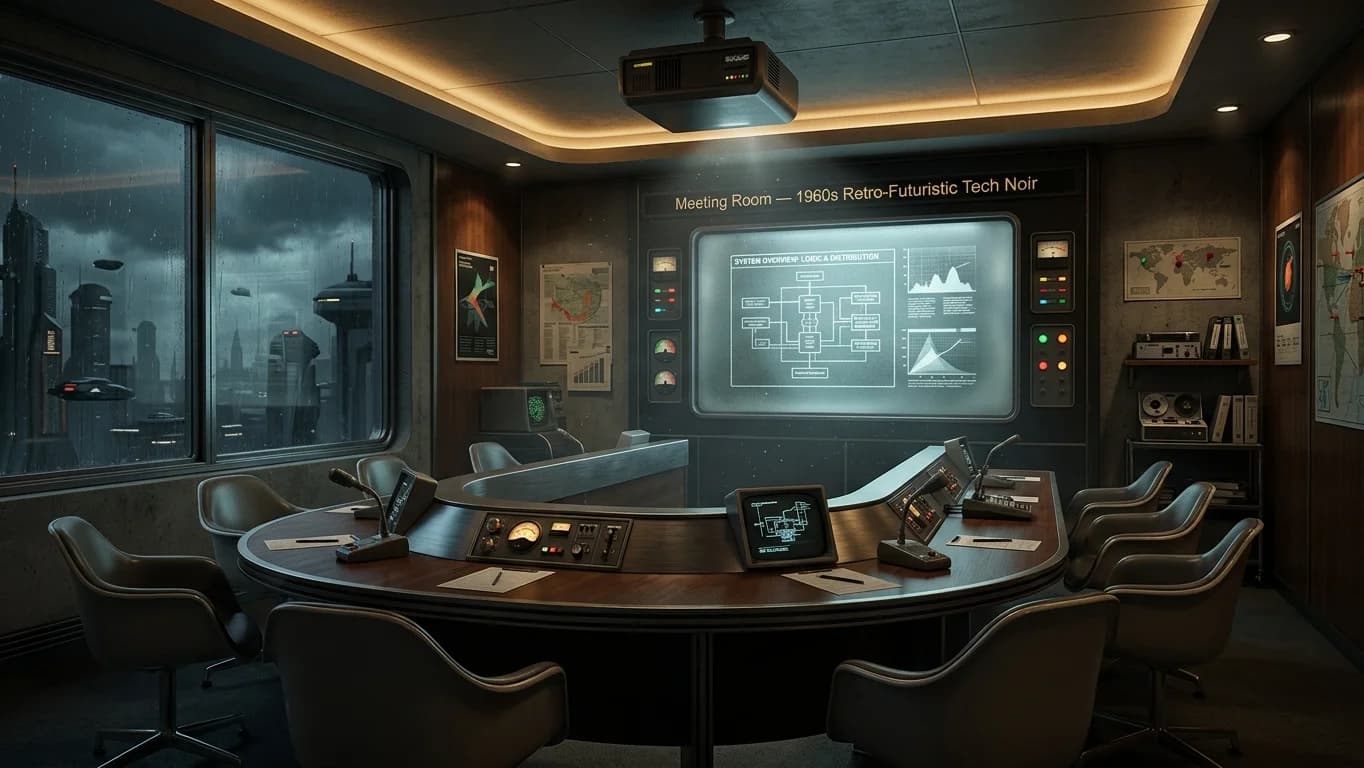
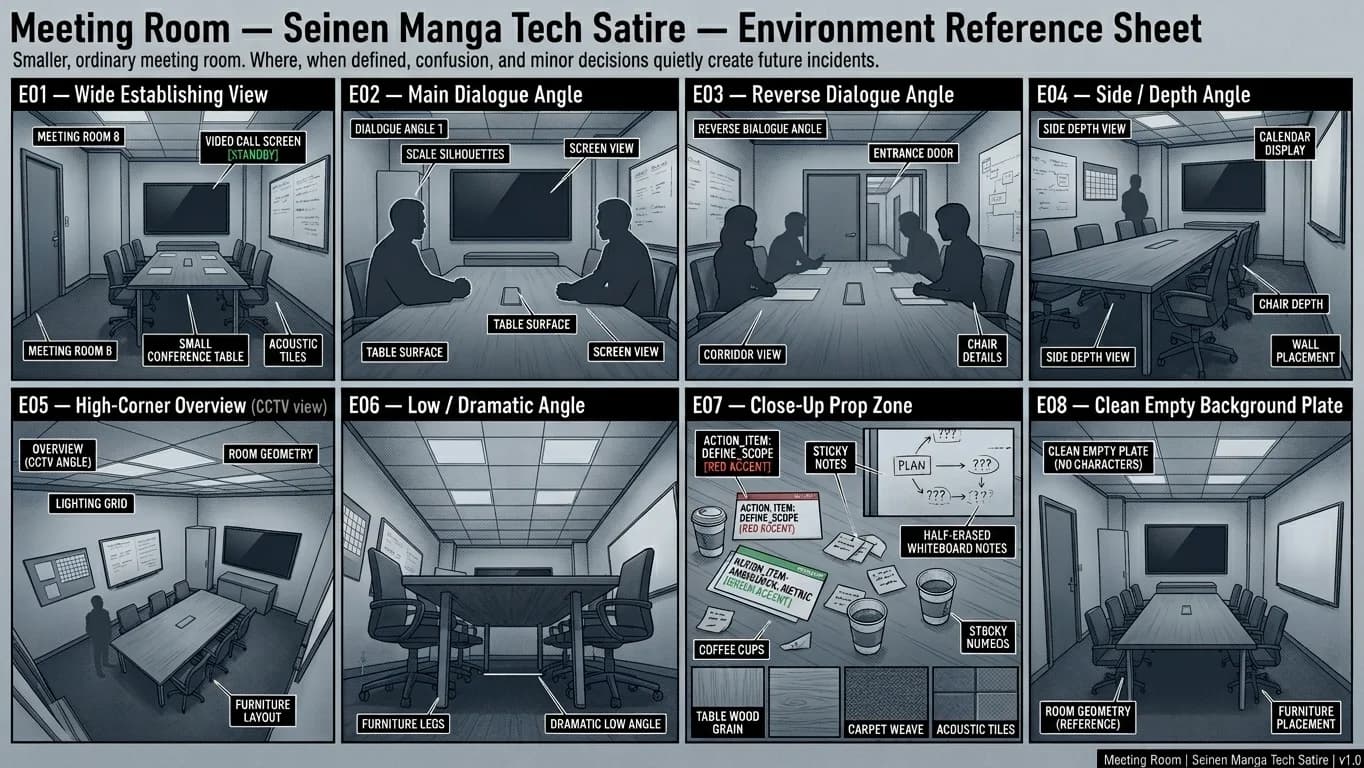
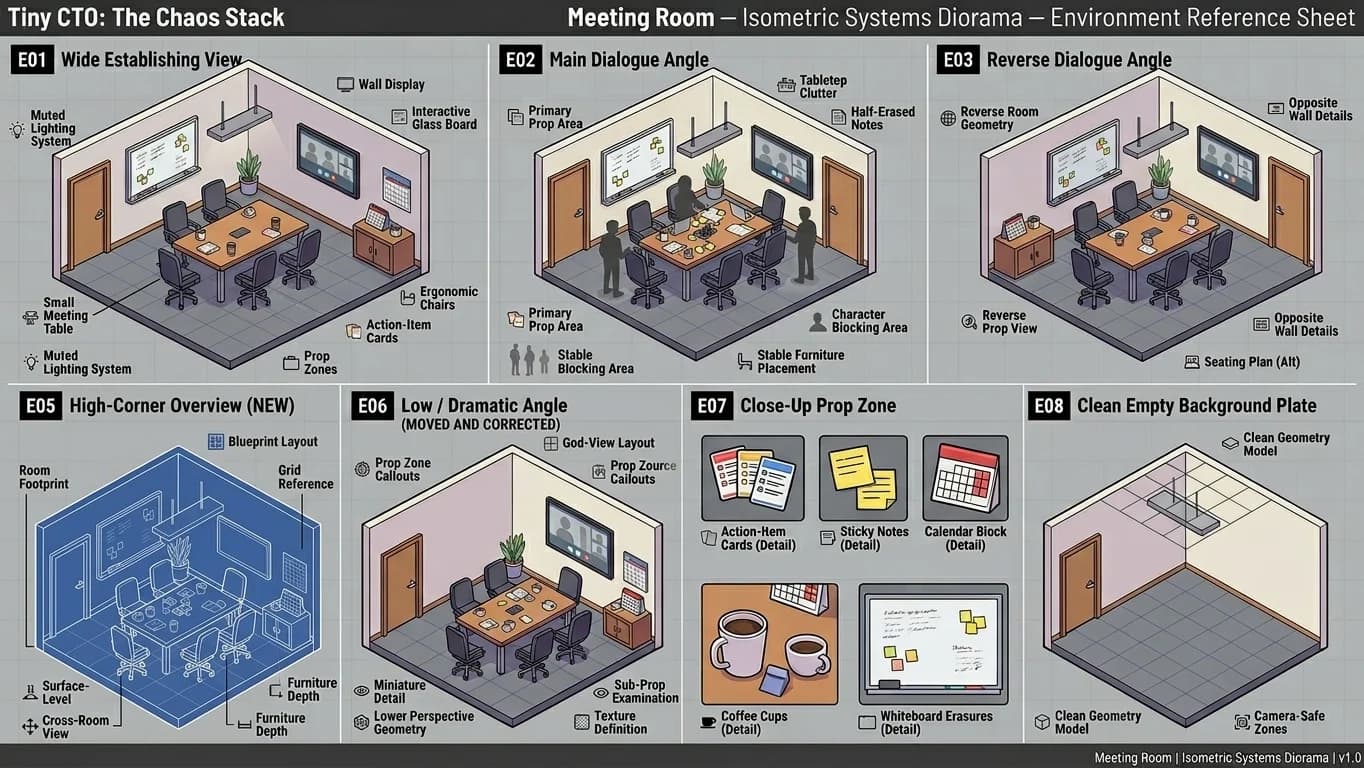
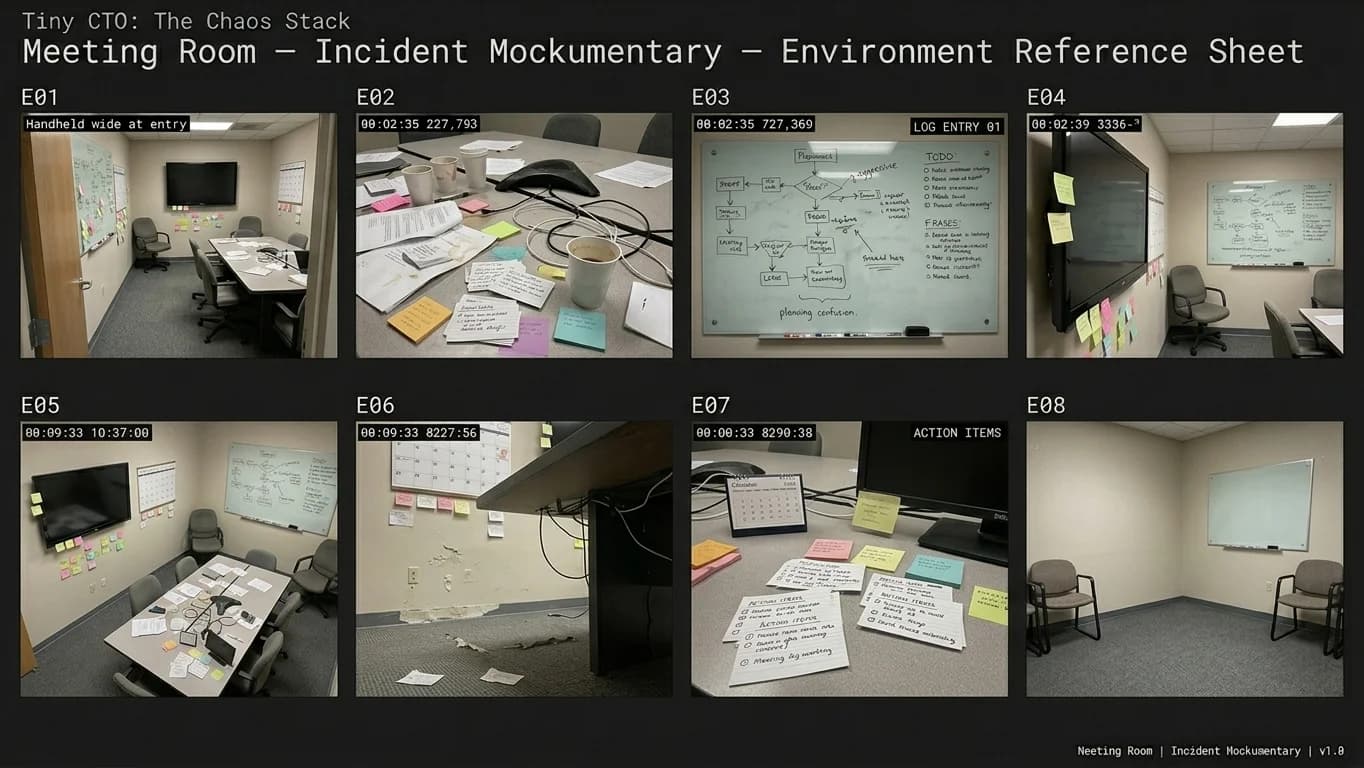
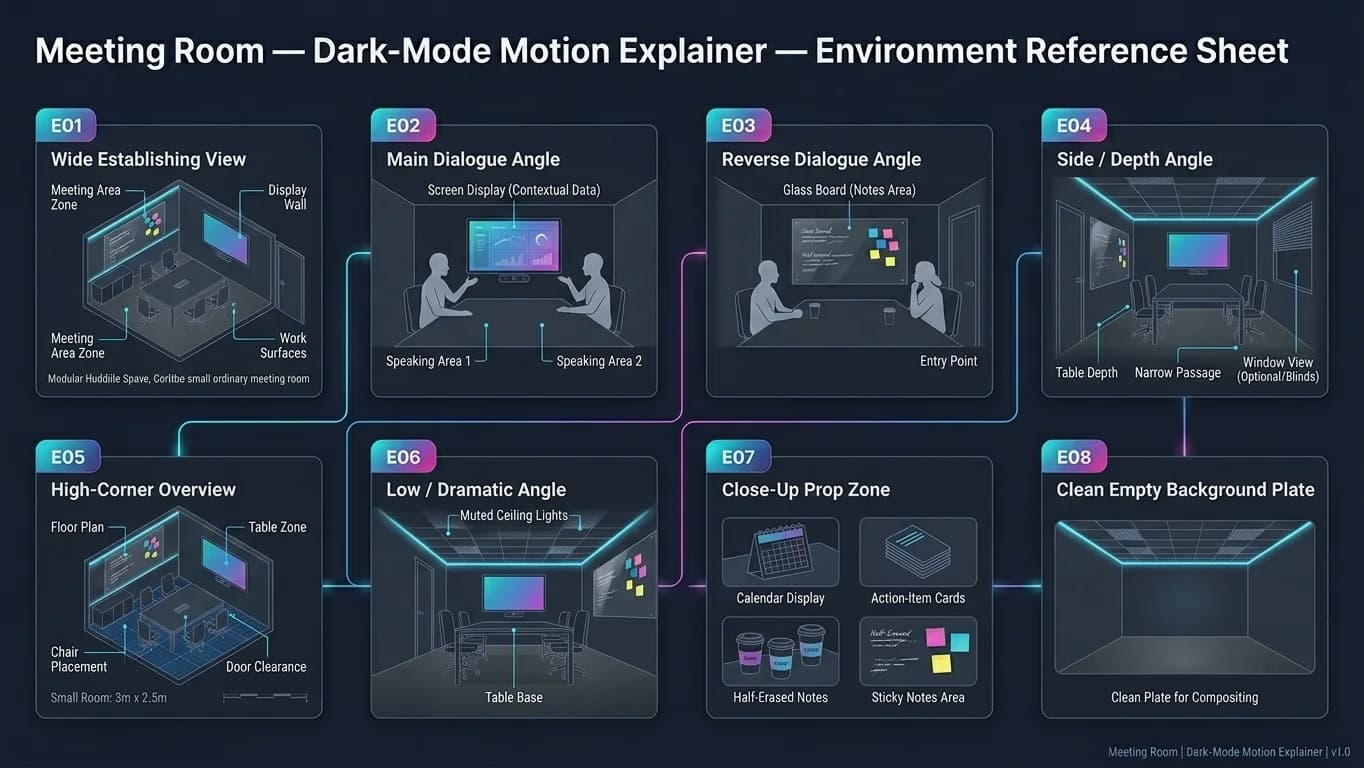
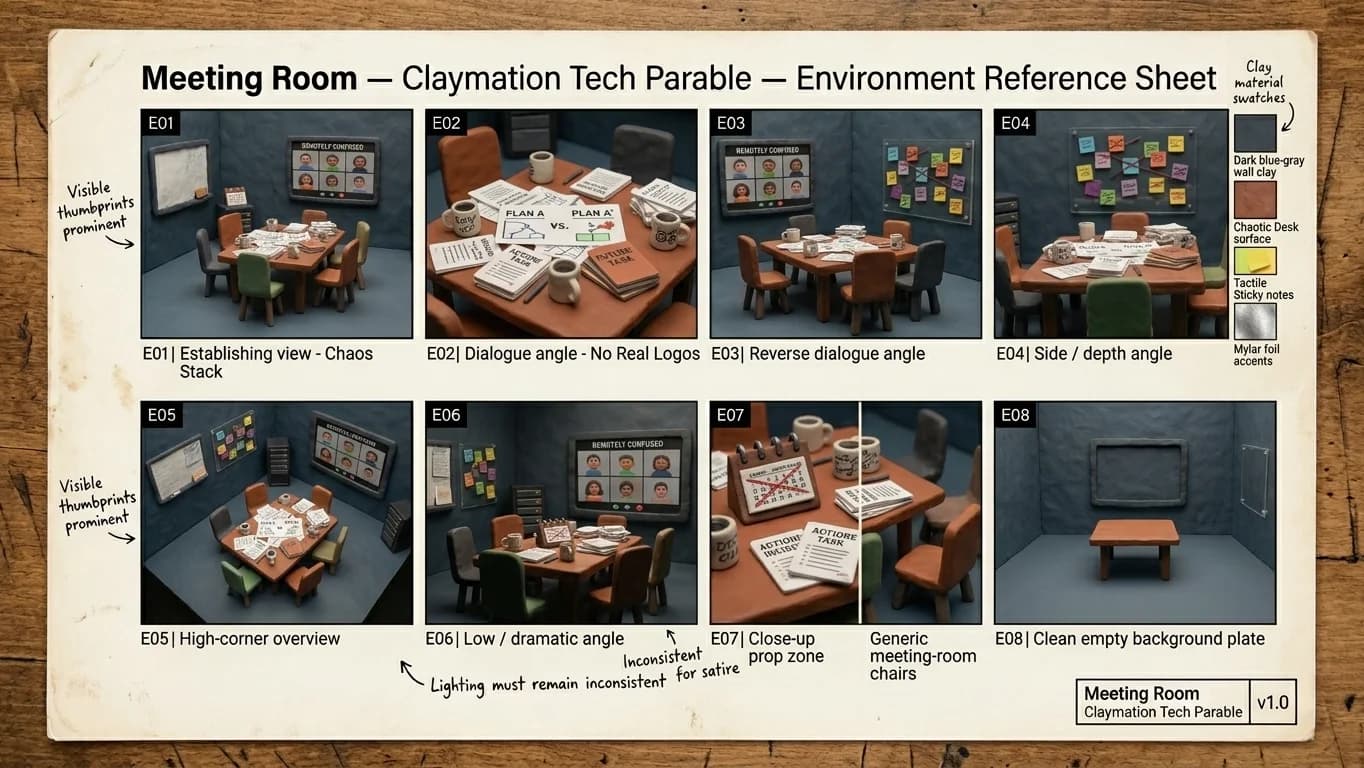
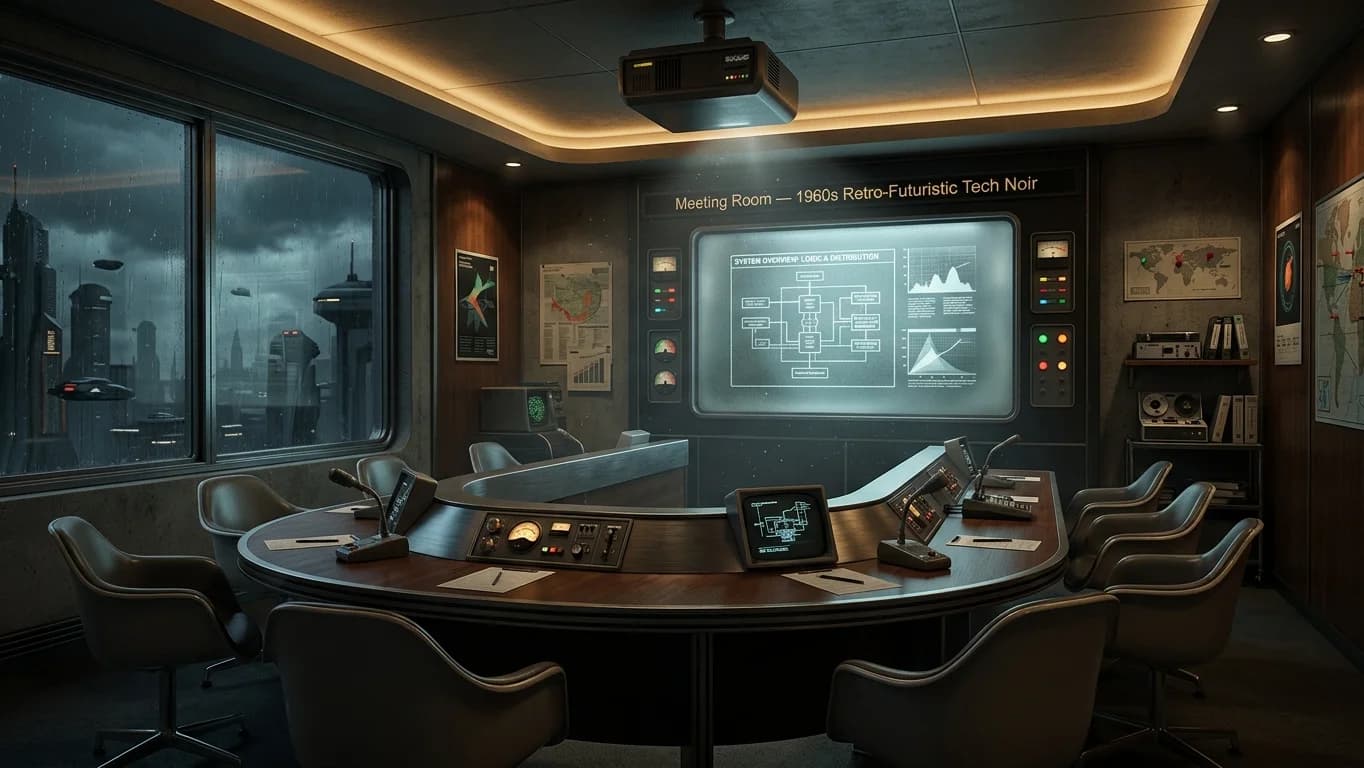
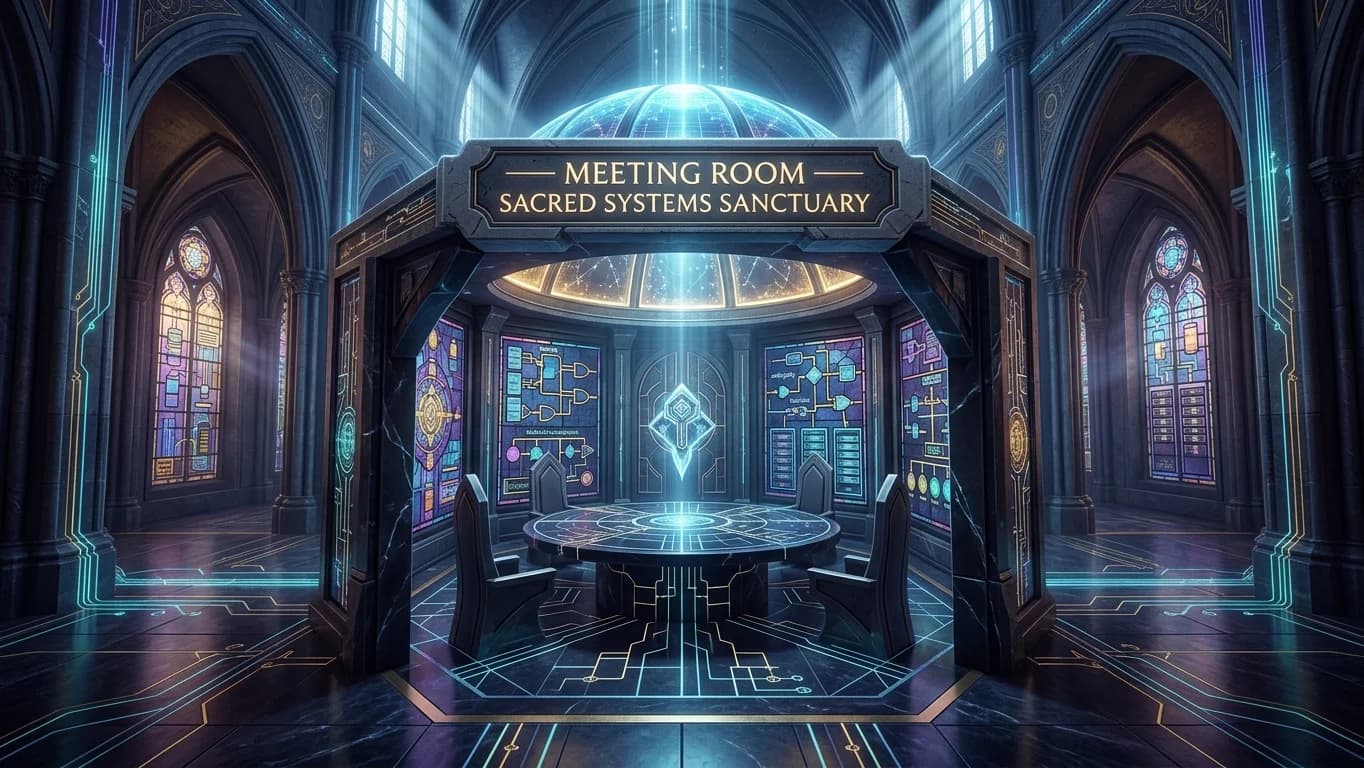
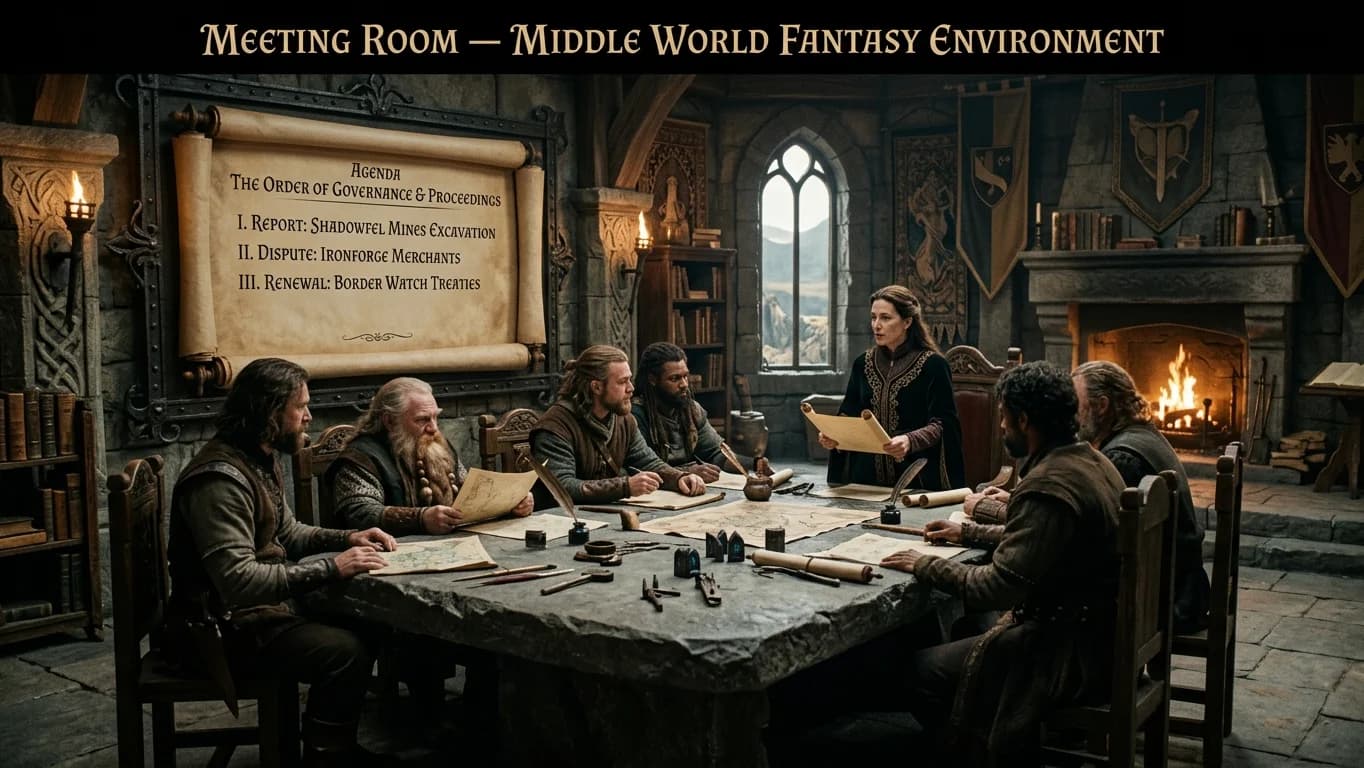
Meeting Room
The Meeting Room is a common setting within the Chaos Stack universe.


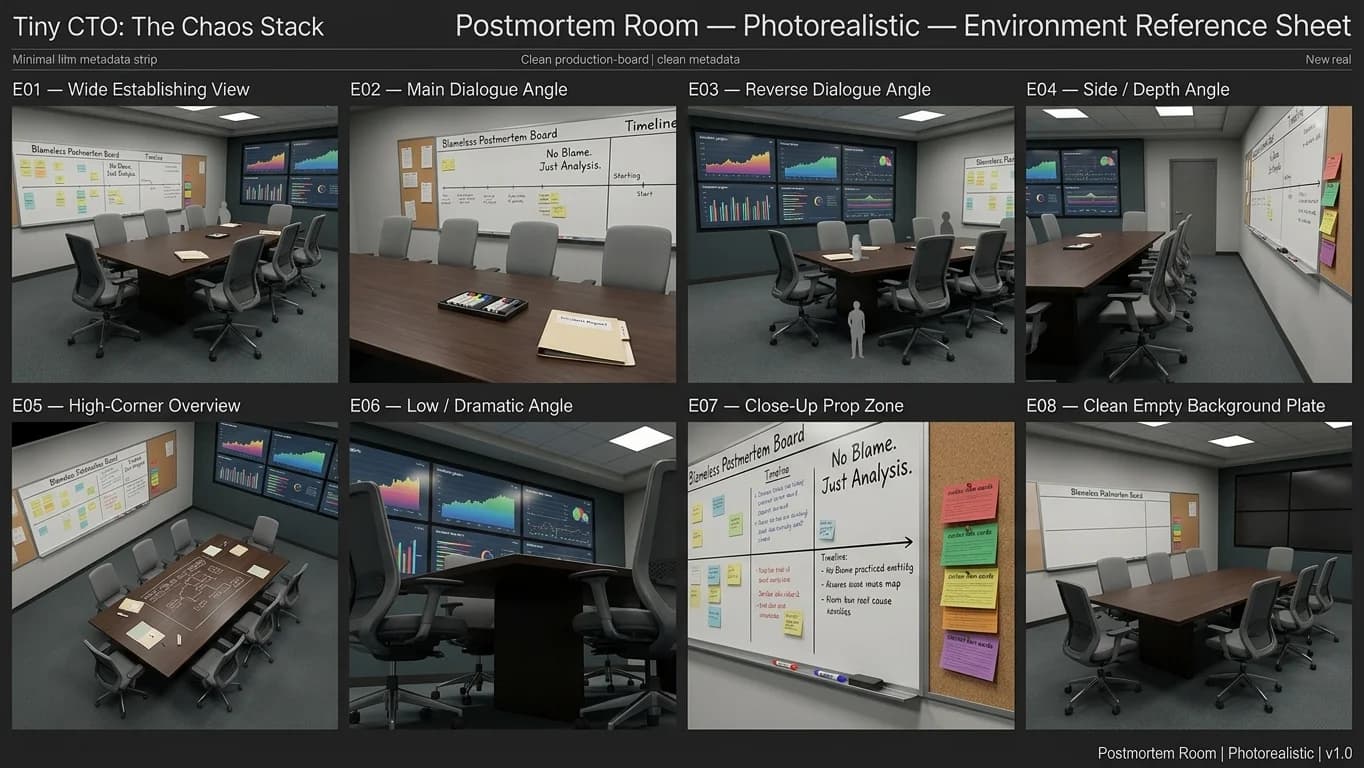
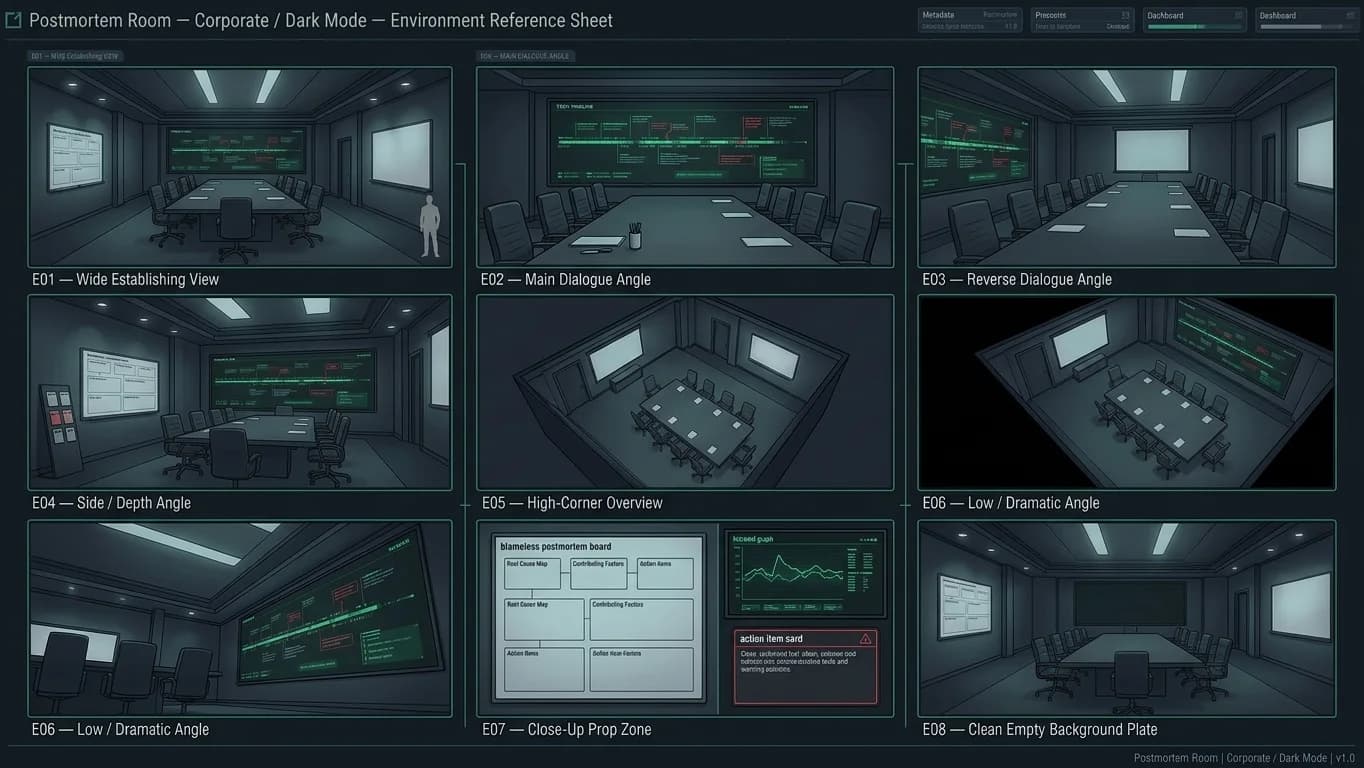
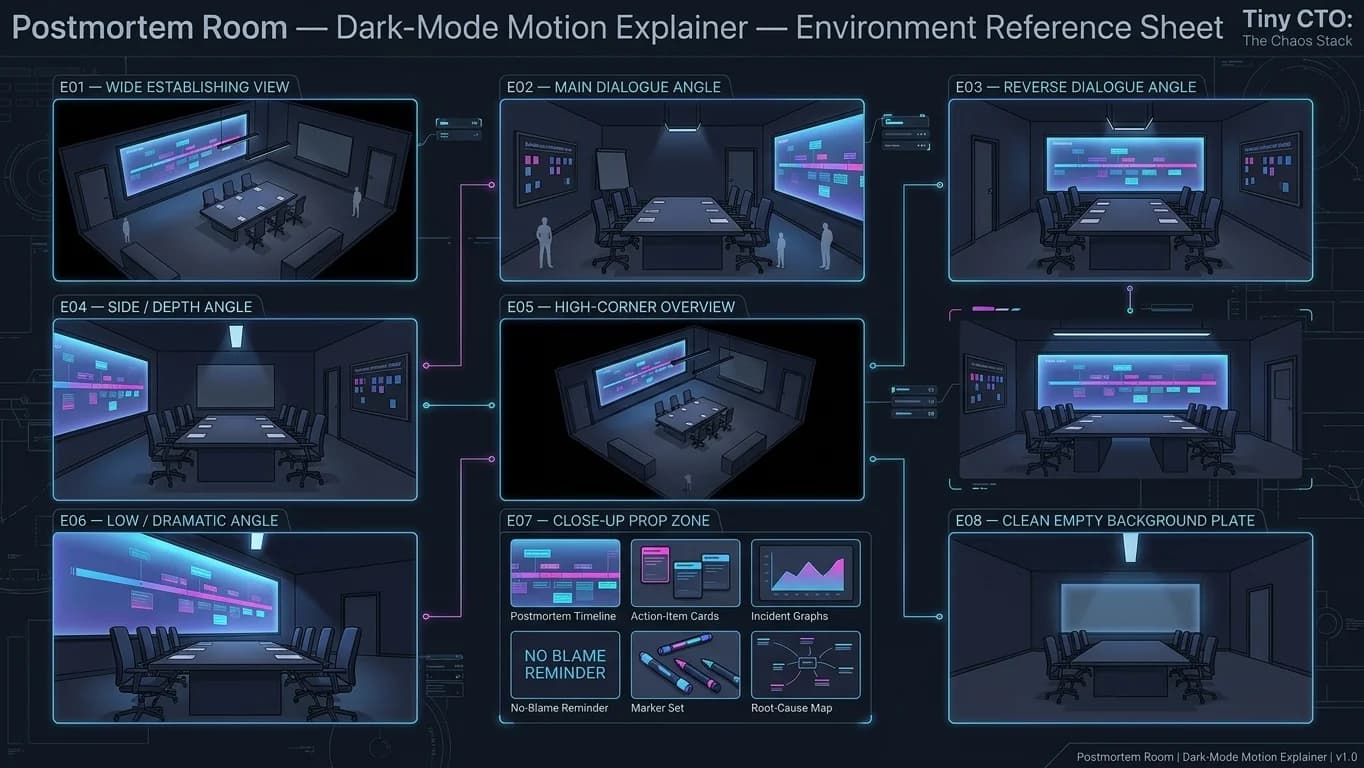
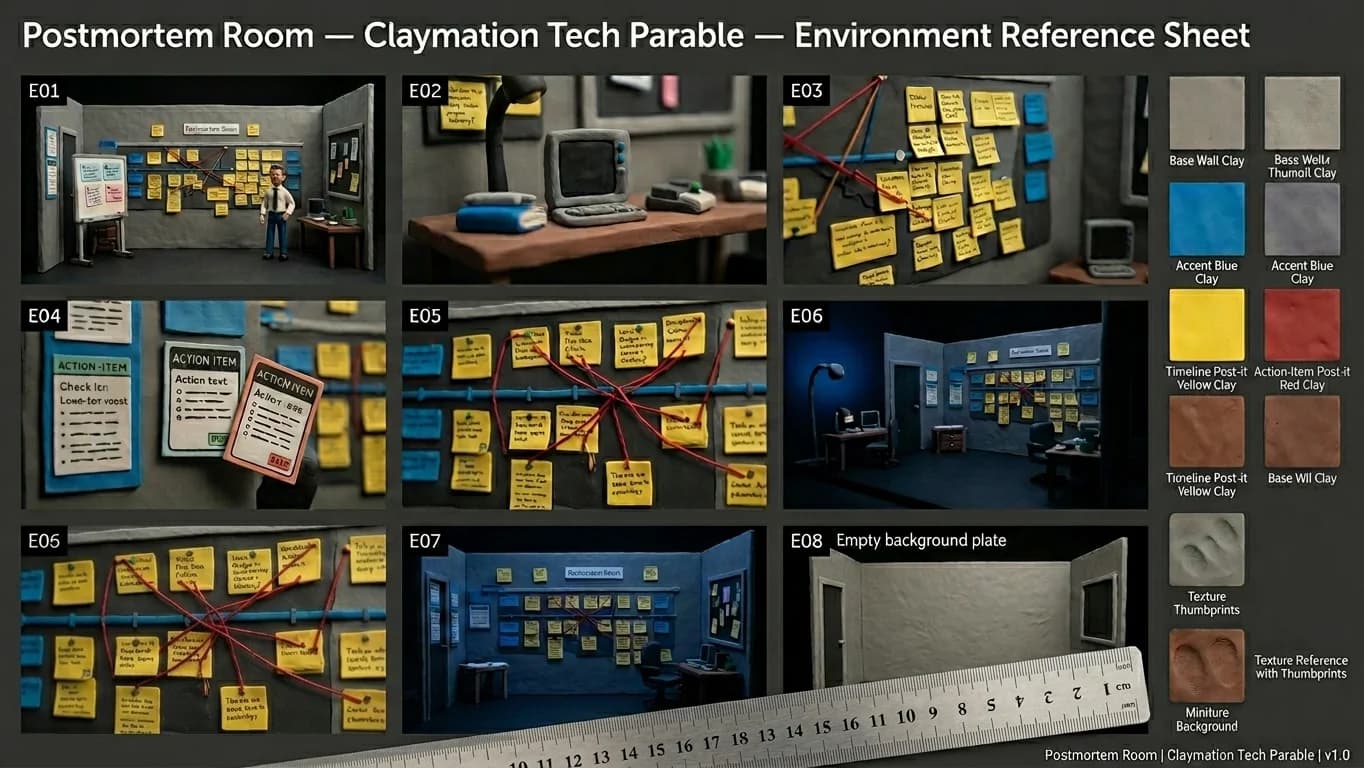
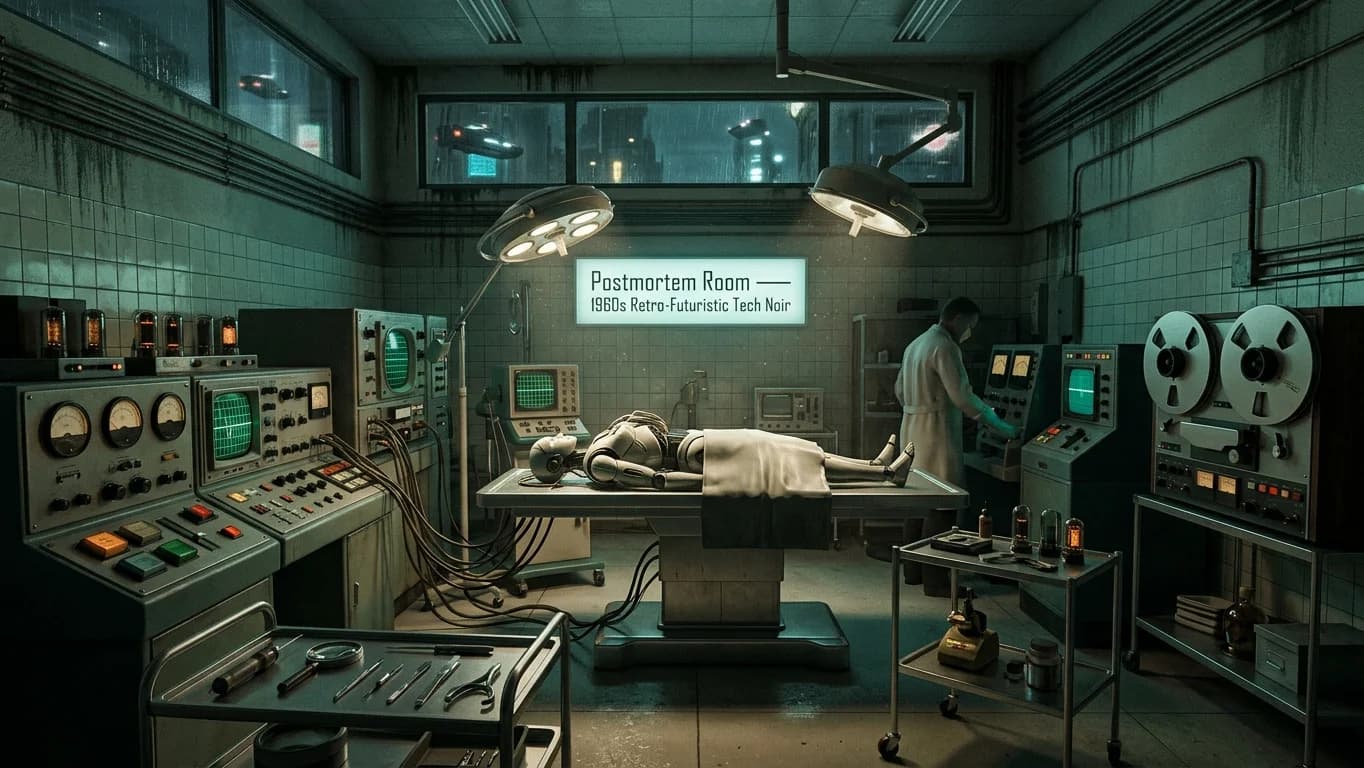
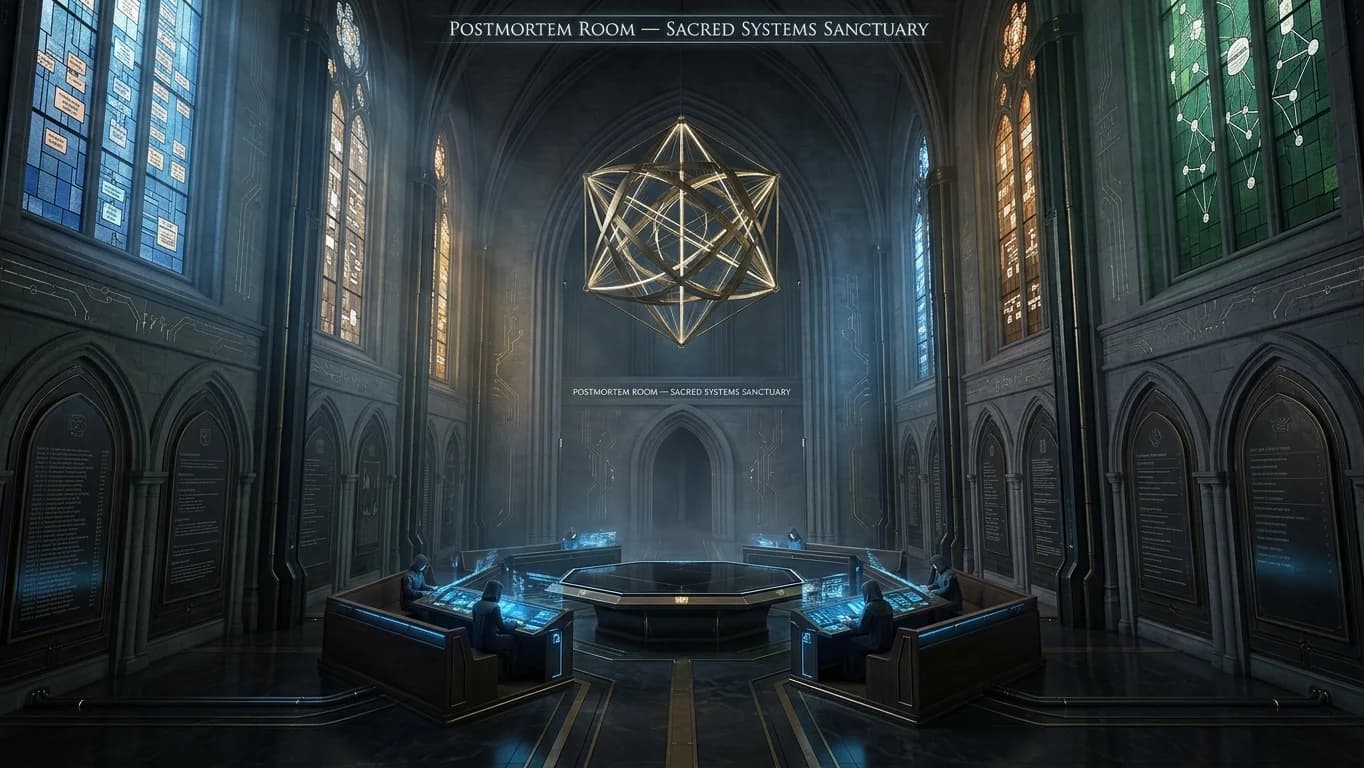
Postmortem Room
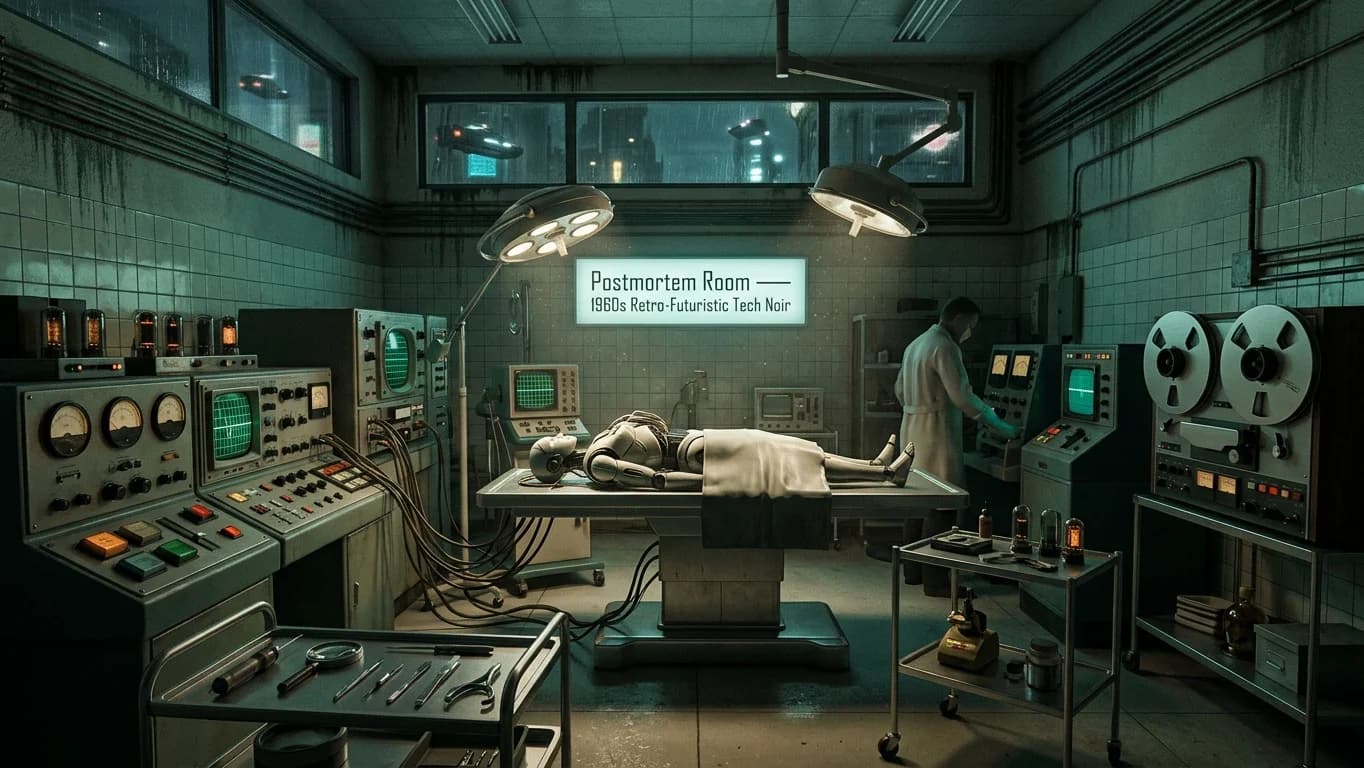
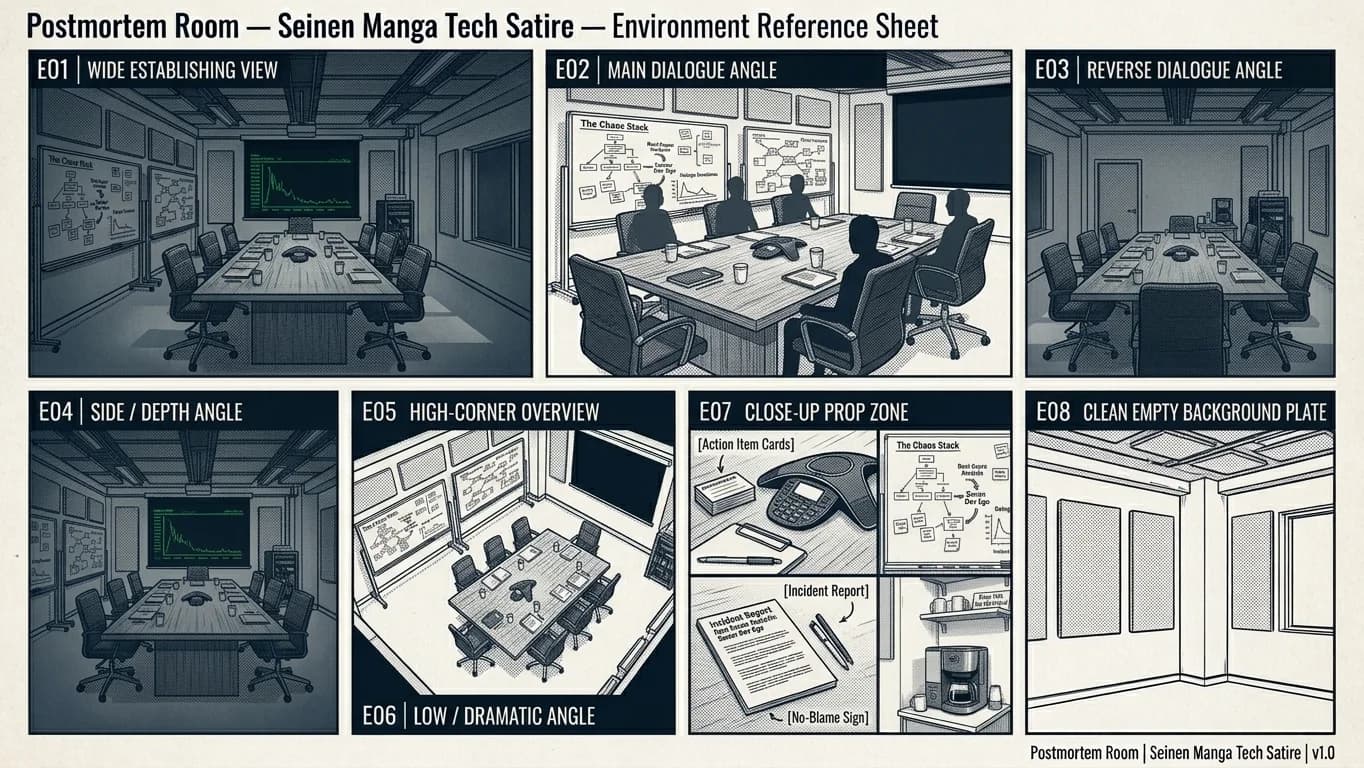
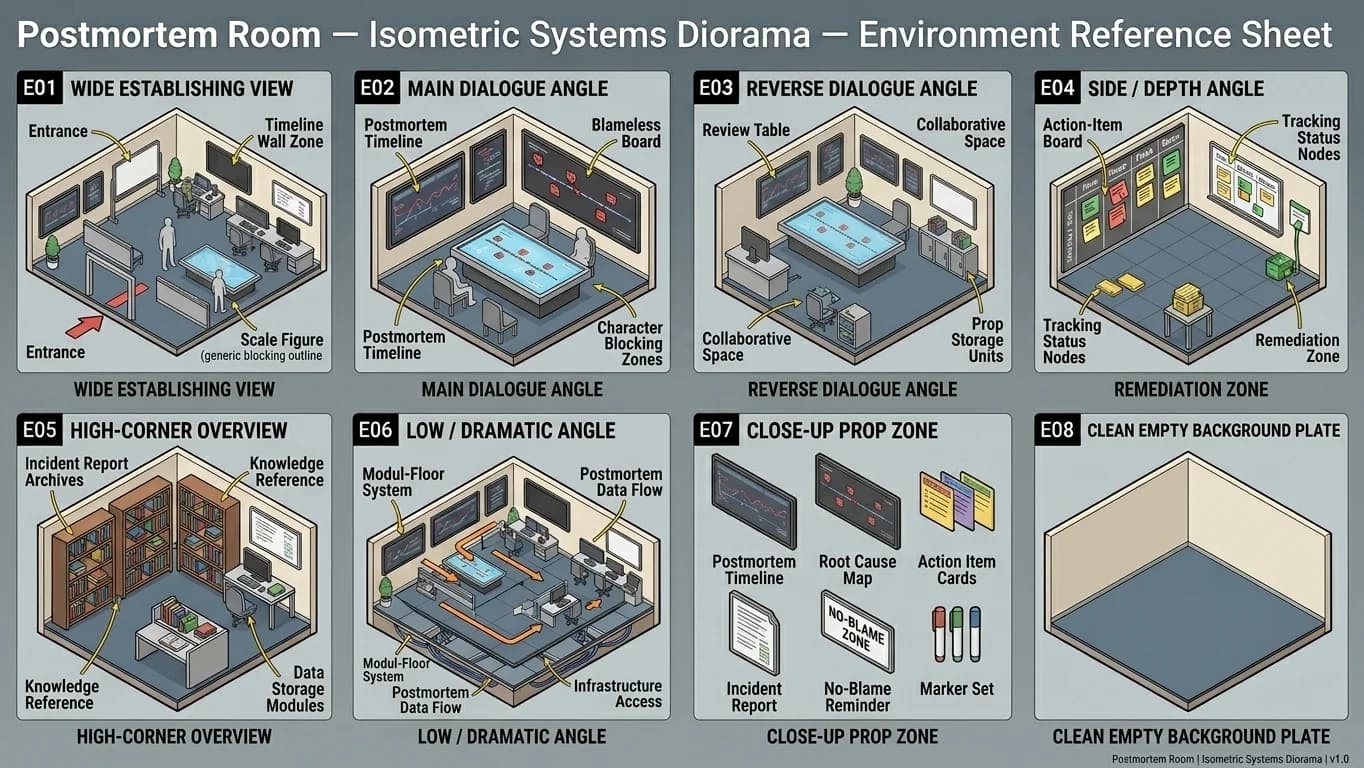
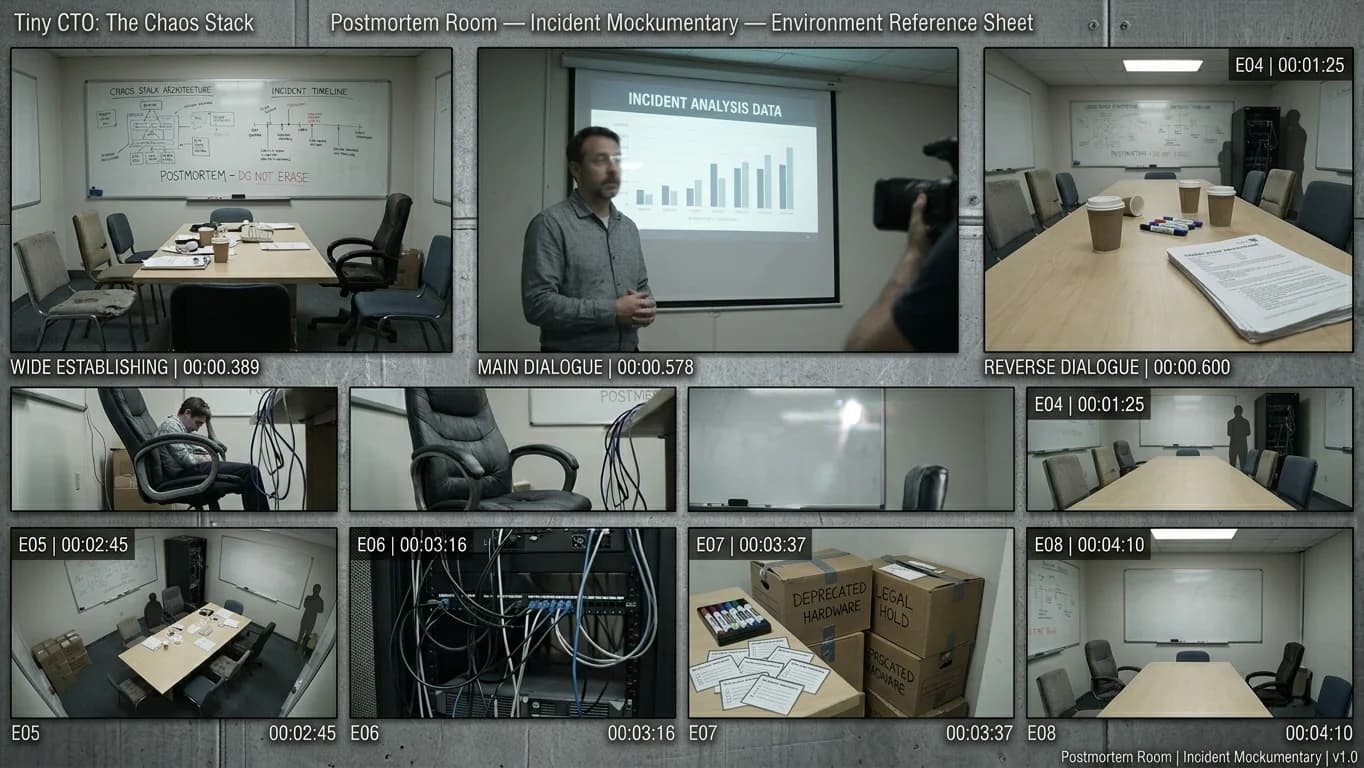
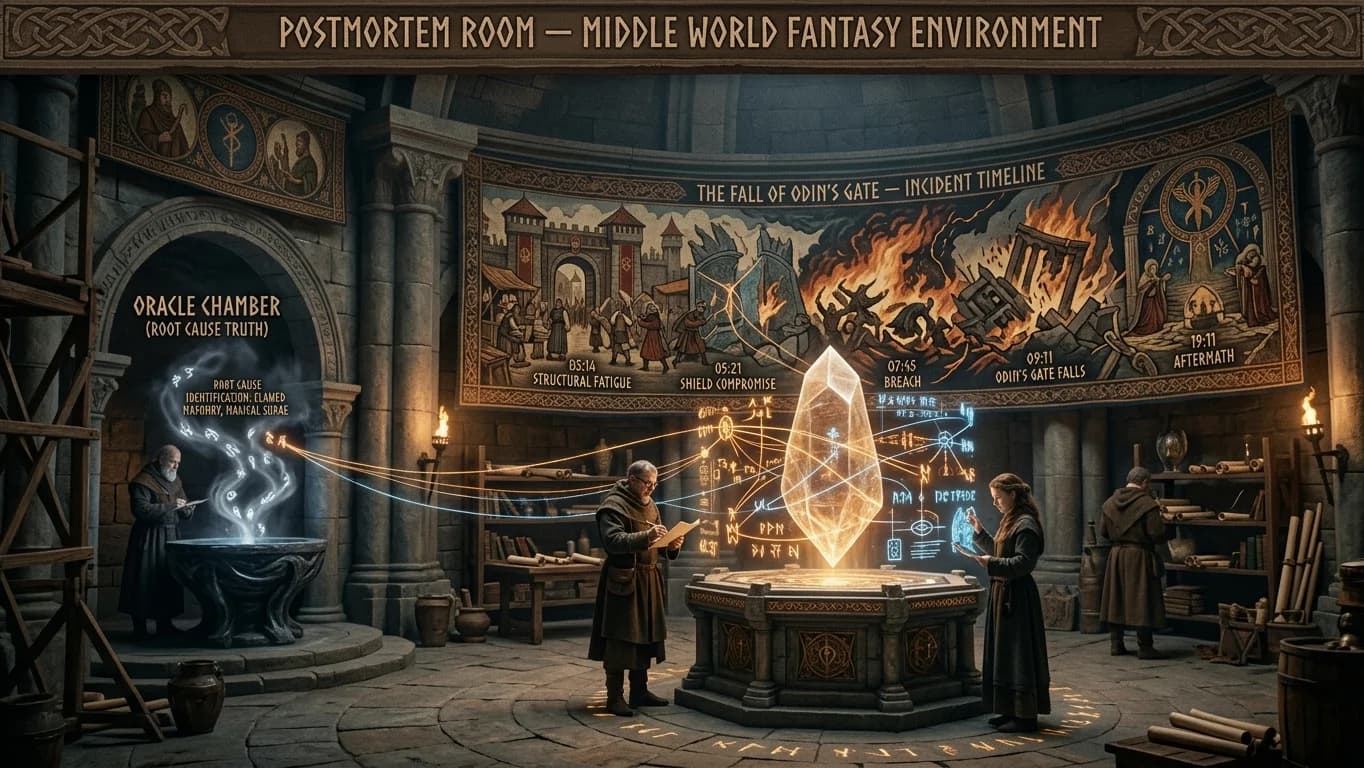
The Postmortem Room is a common setting within the Chaos Stack universe.


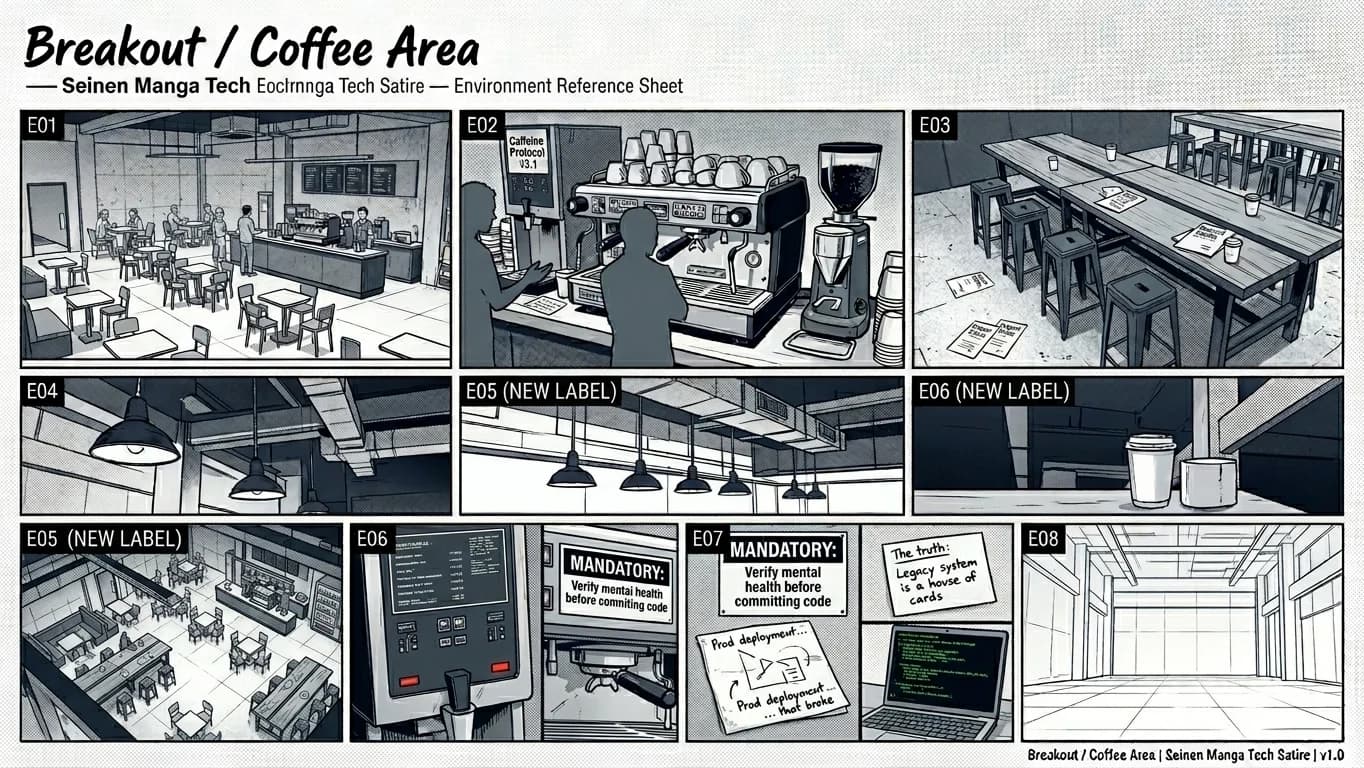
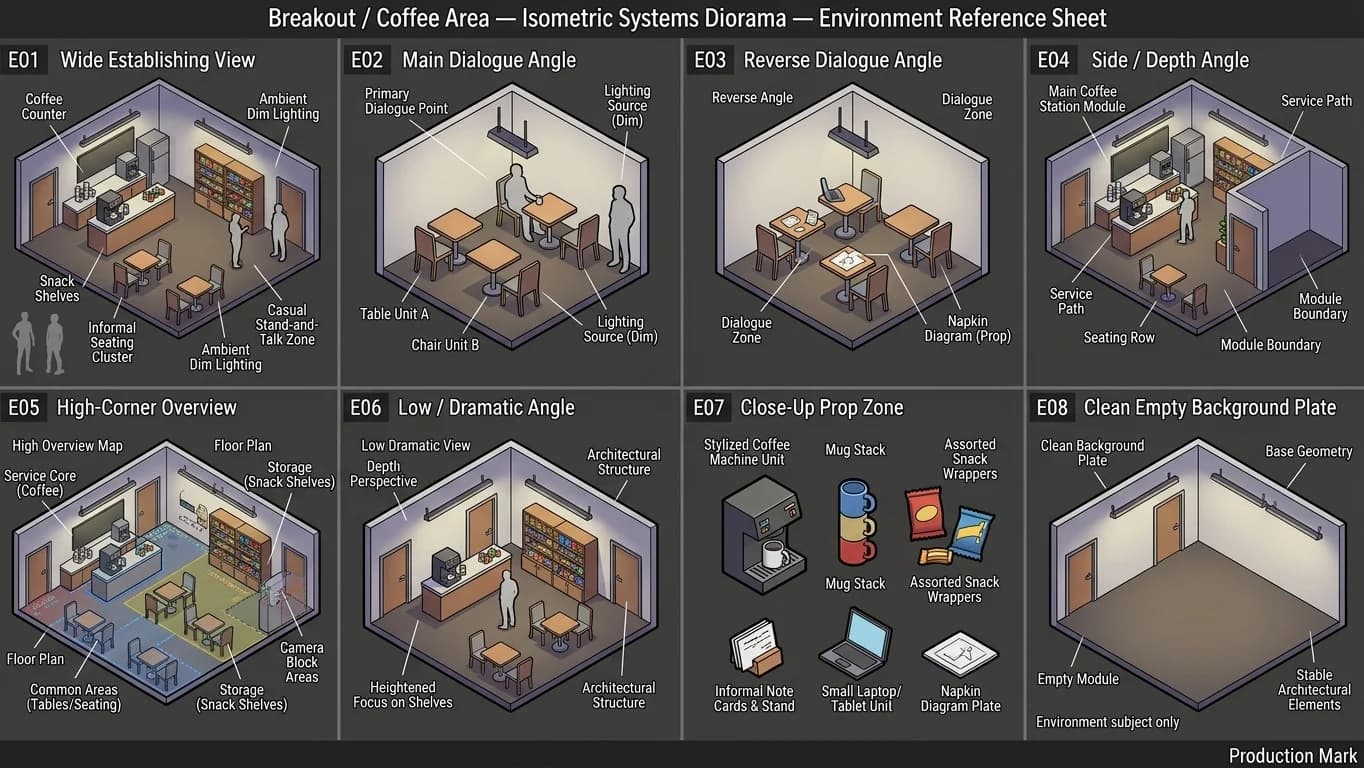
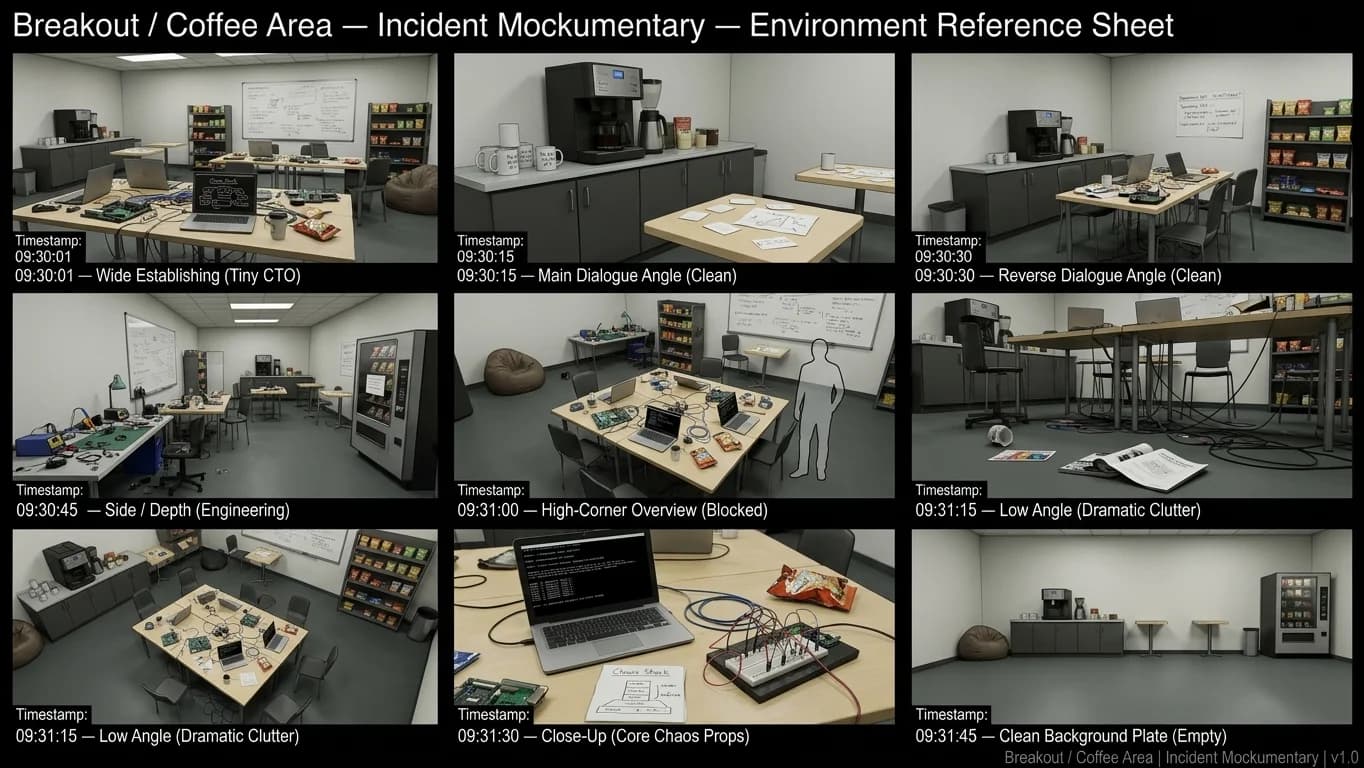
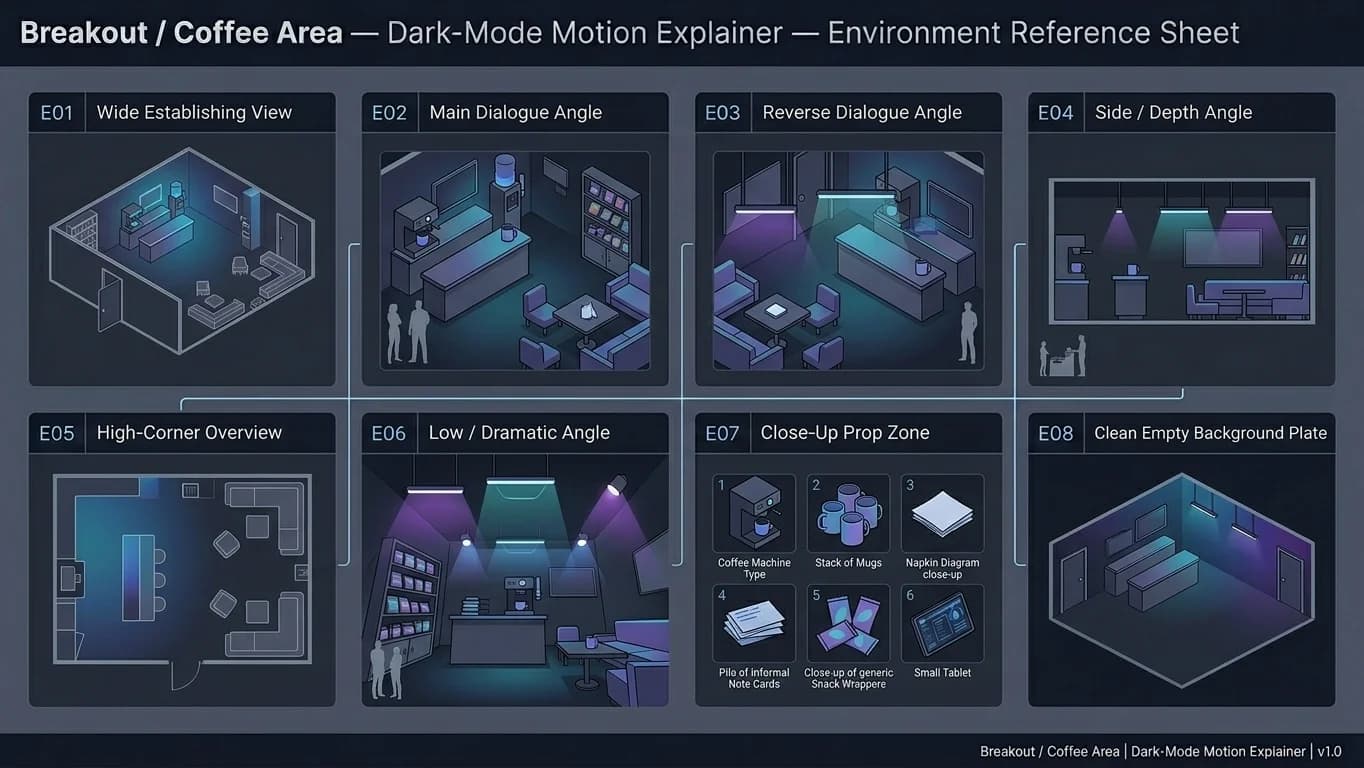
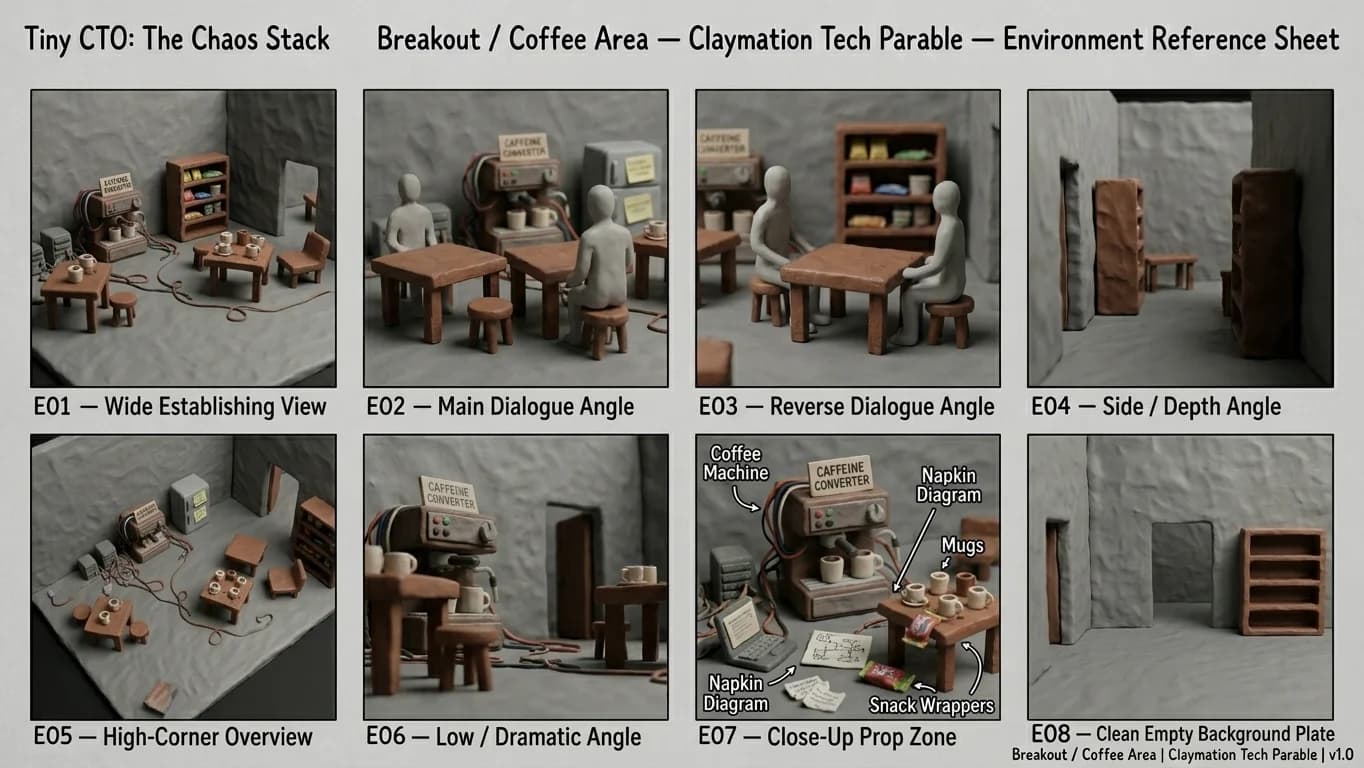
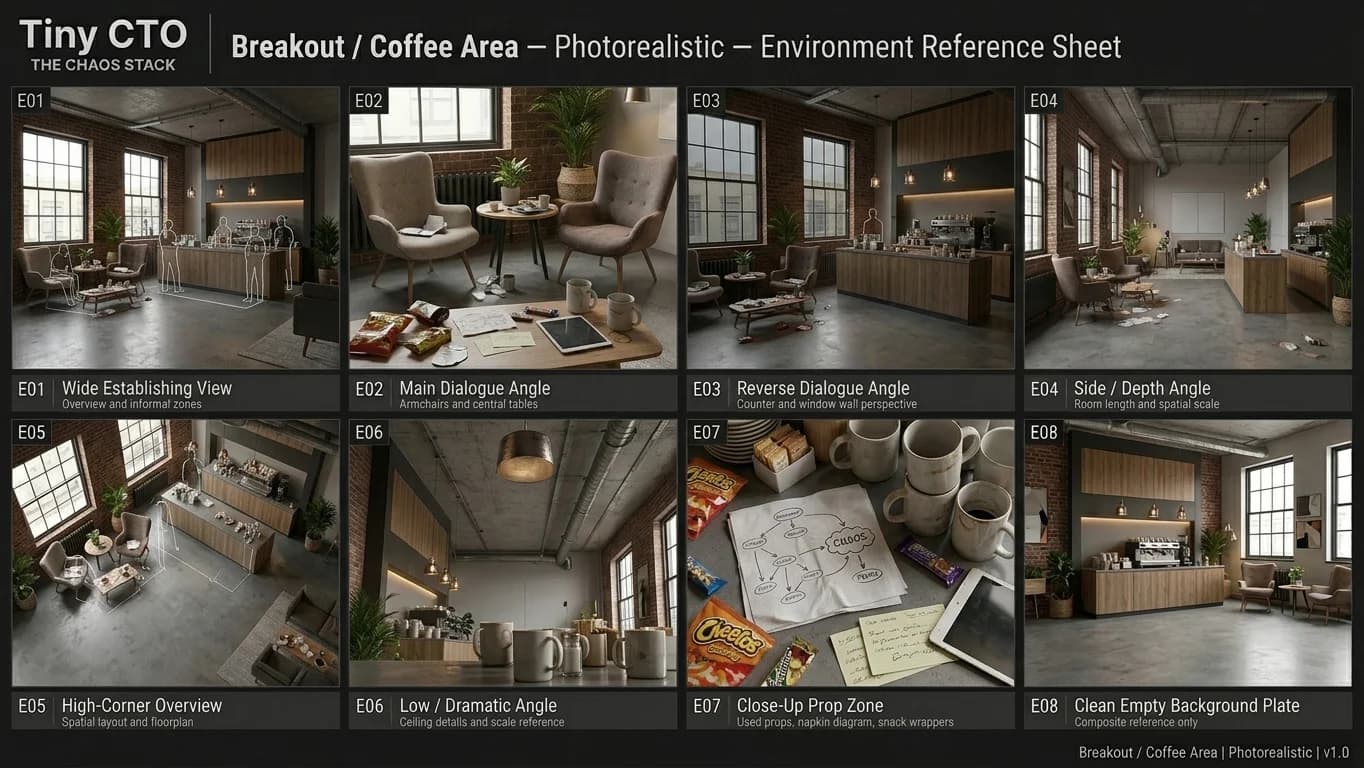
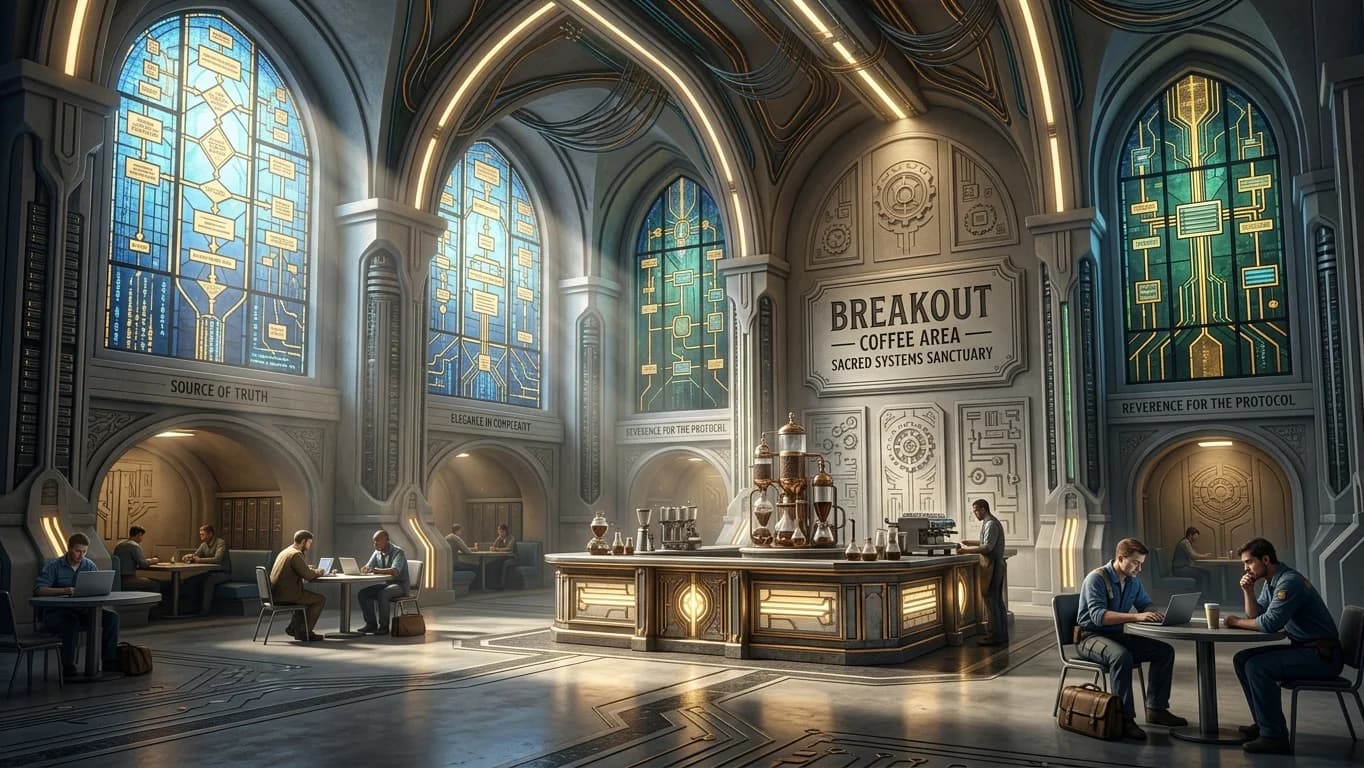
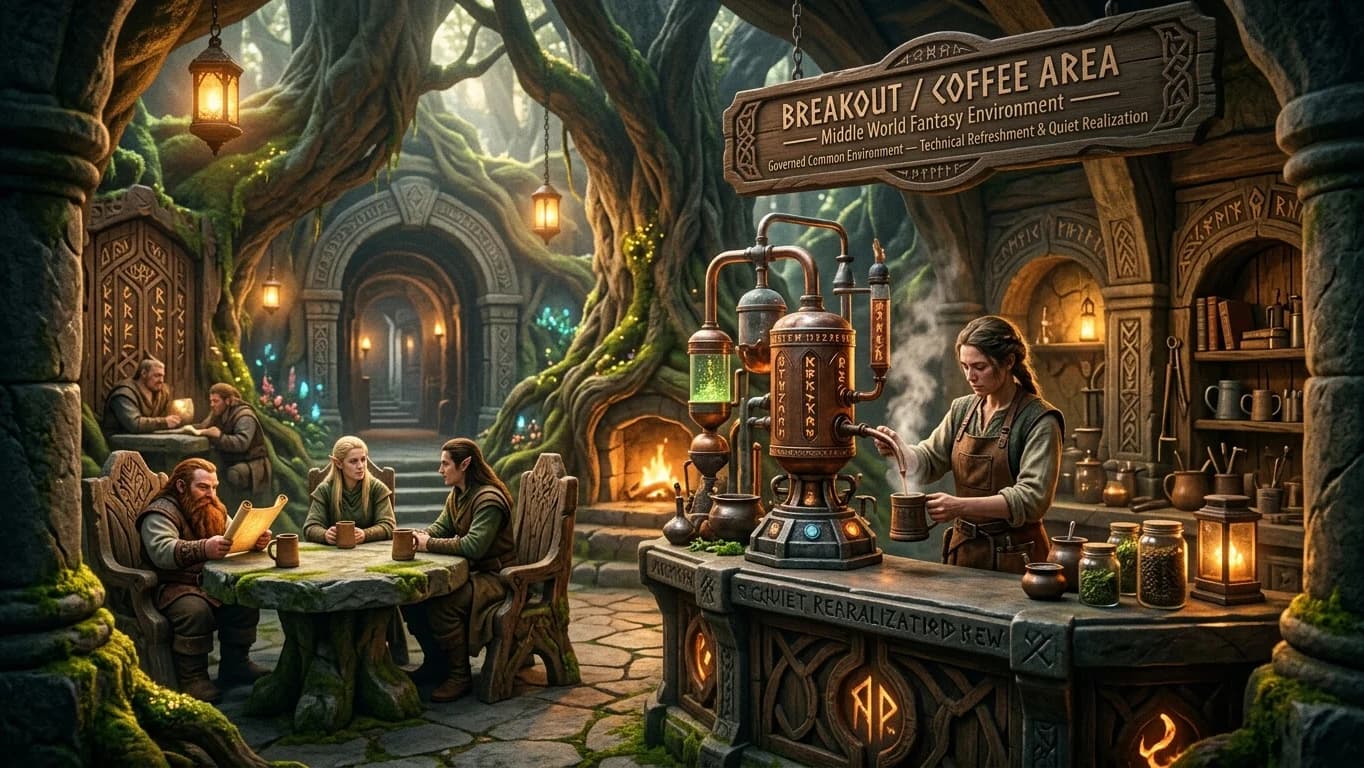
Breakout / Coffee Area
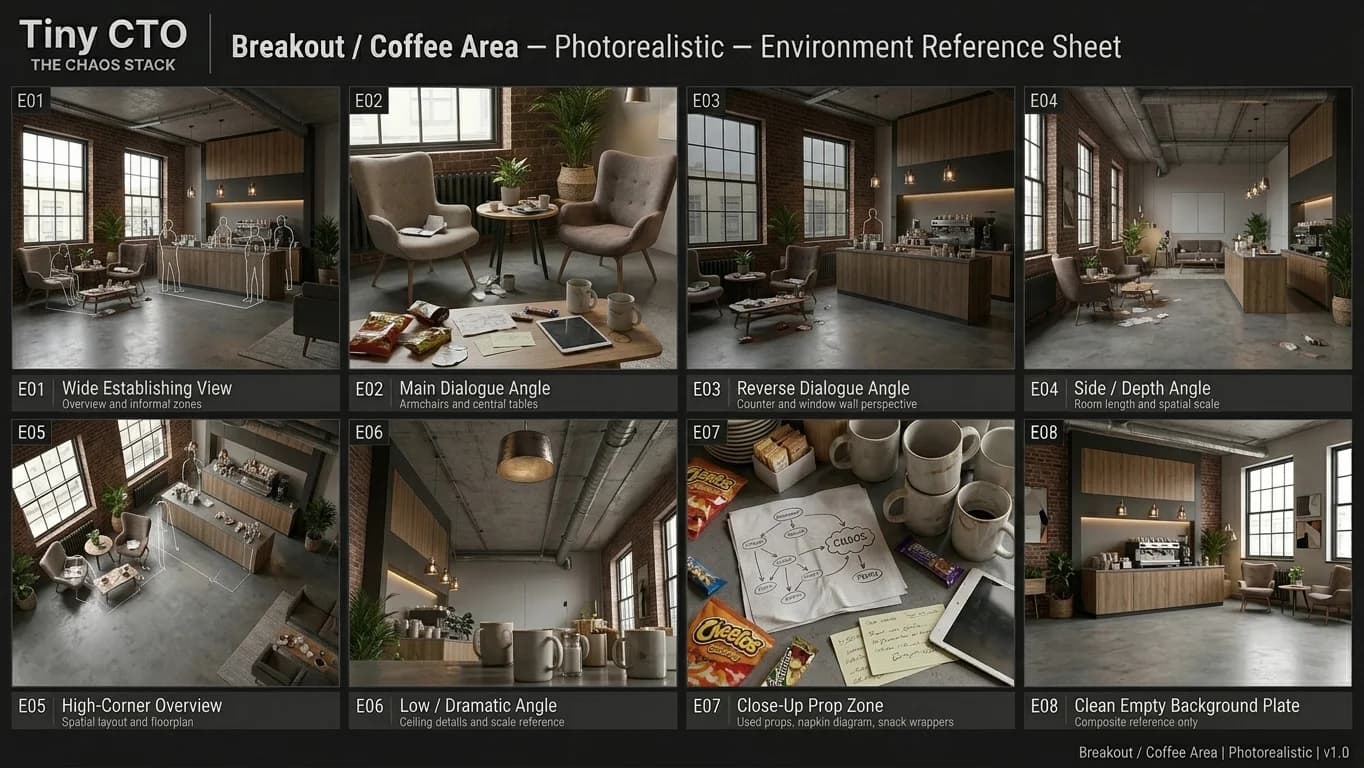
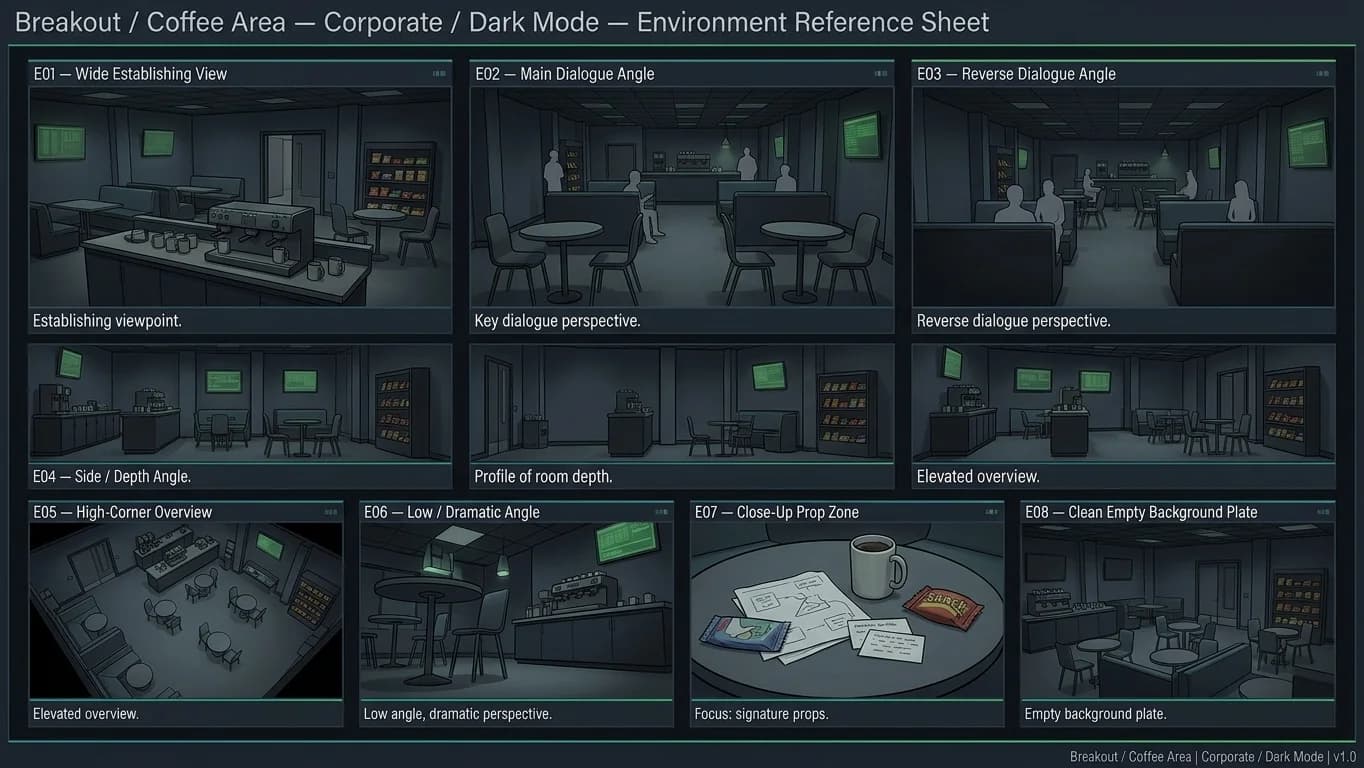
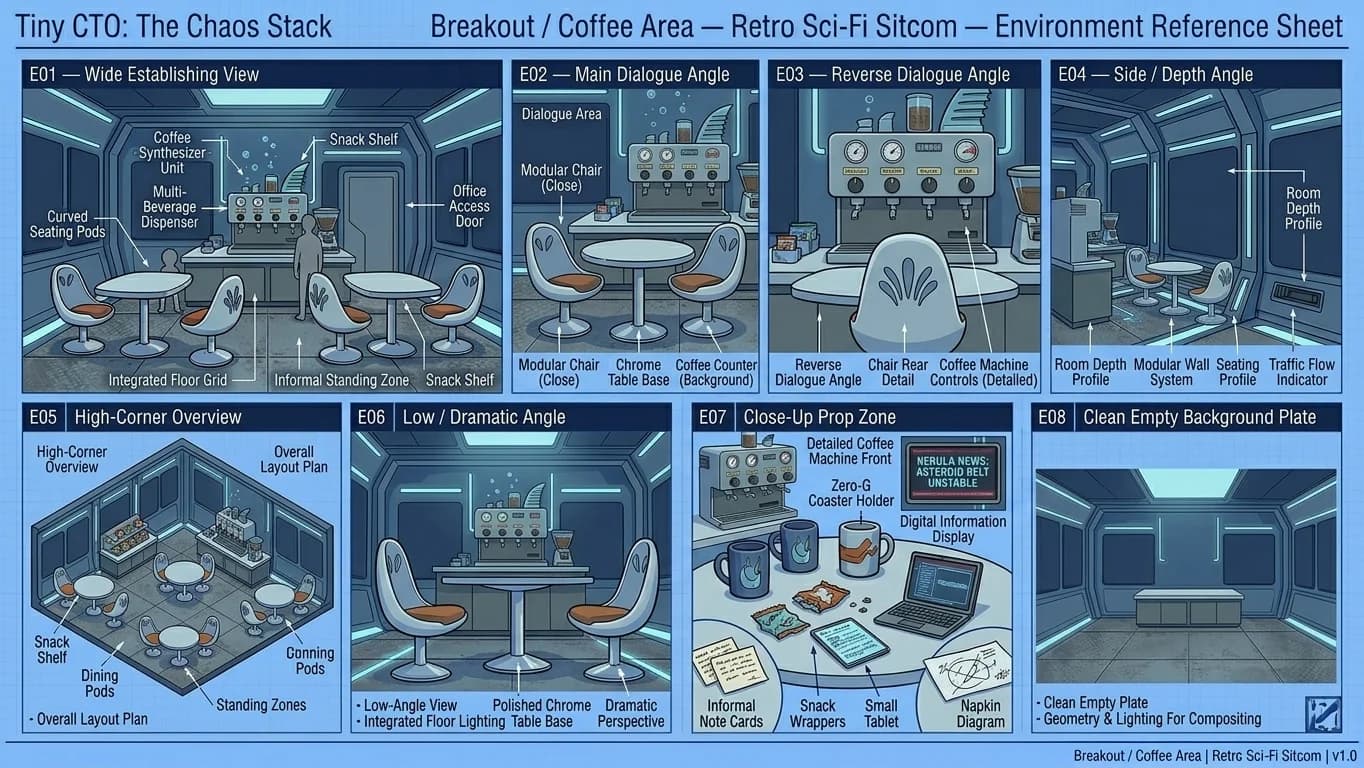
The Breakout / Coffee Area is a common setting within the Chaos Stack universe.


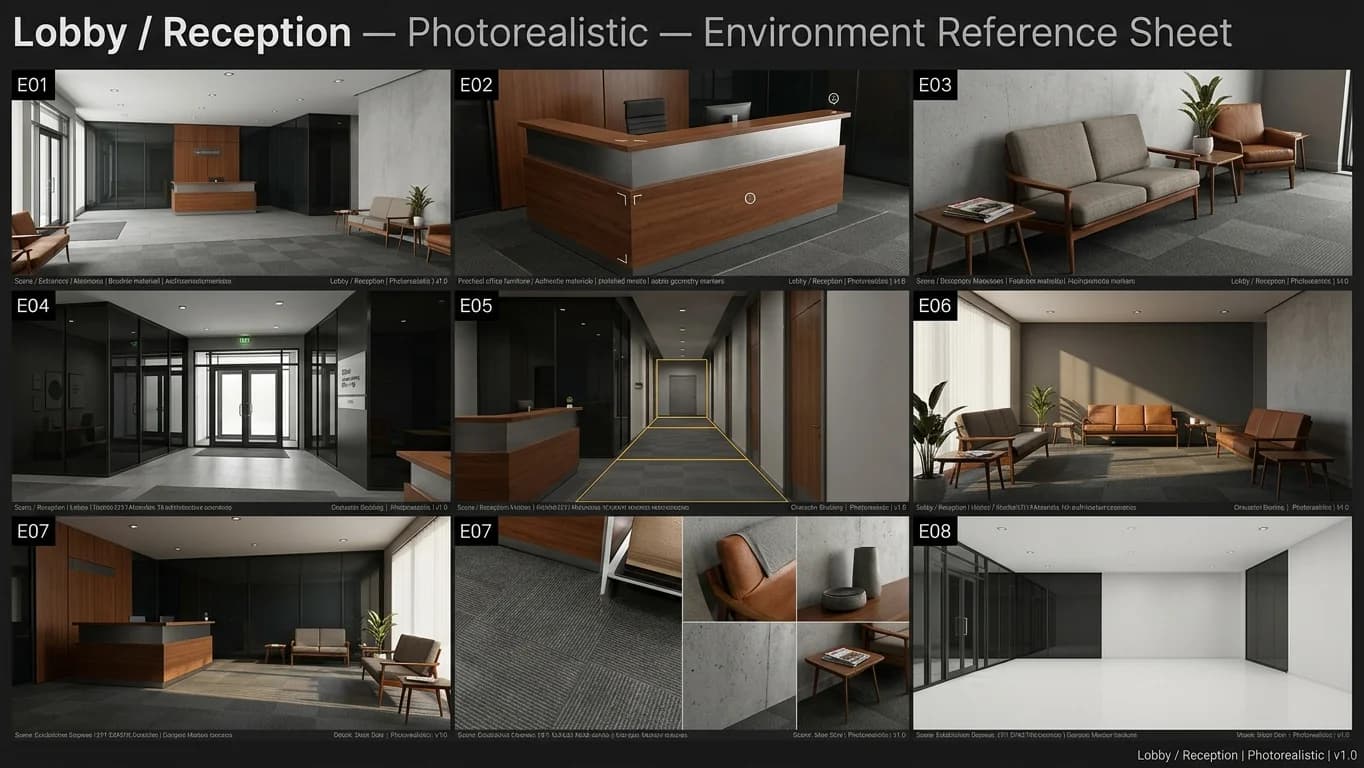
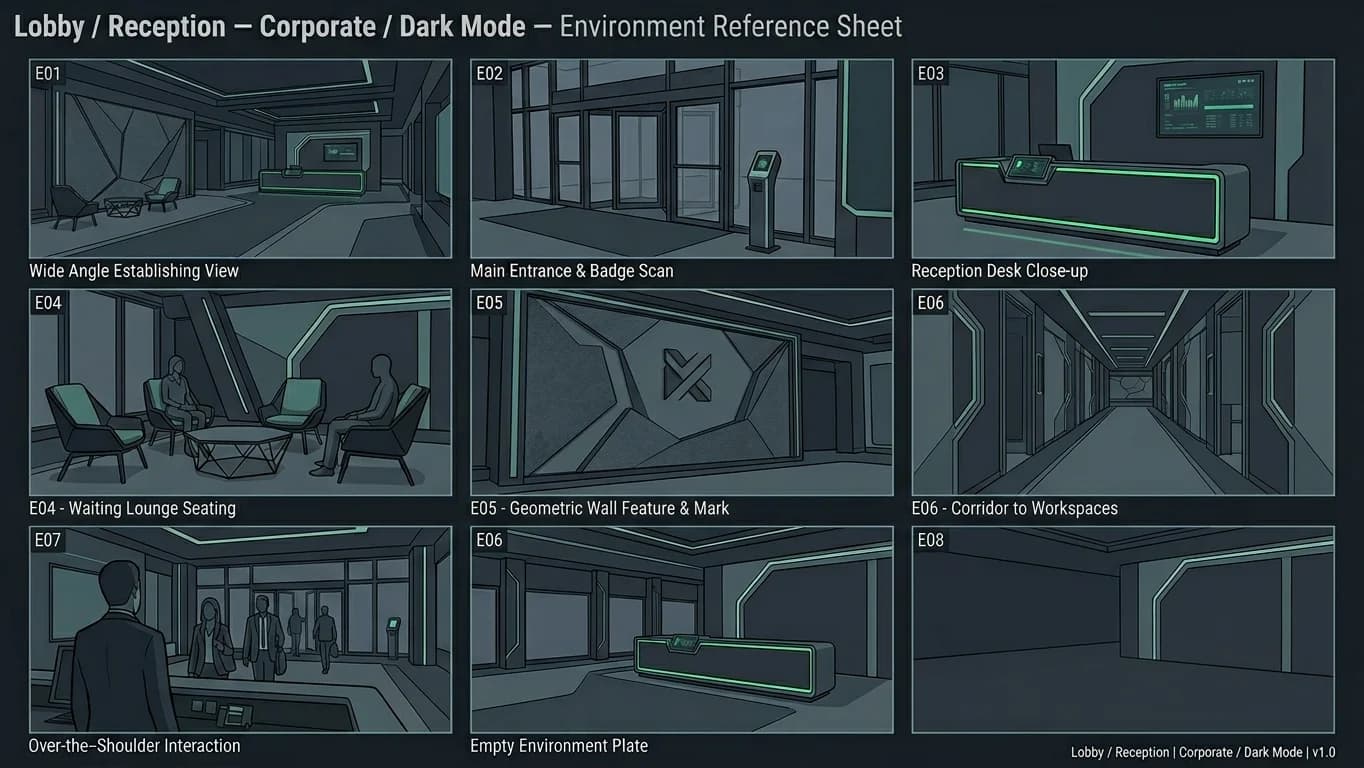
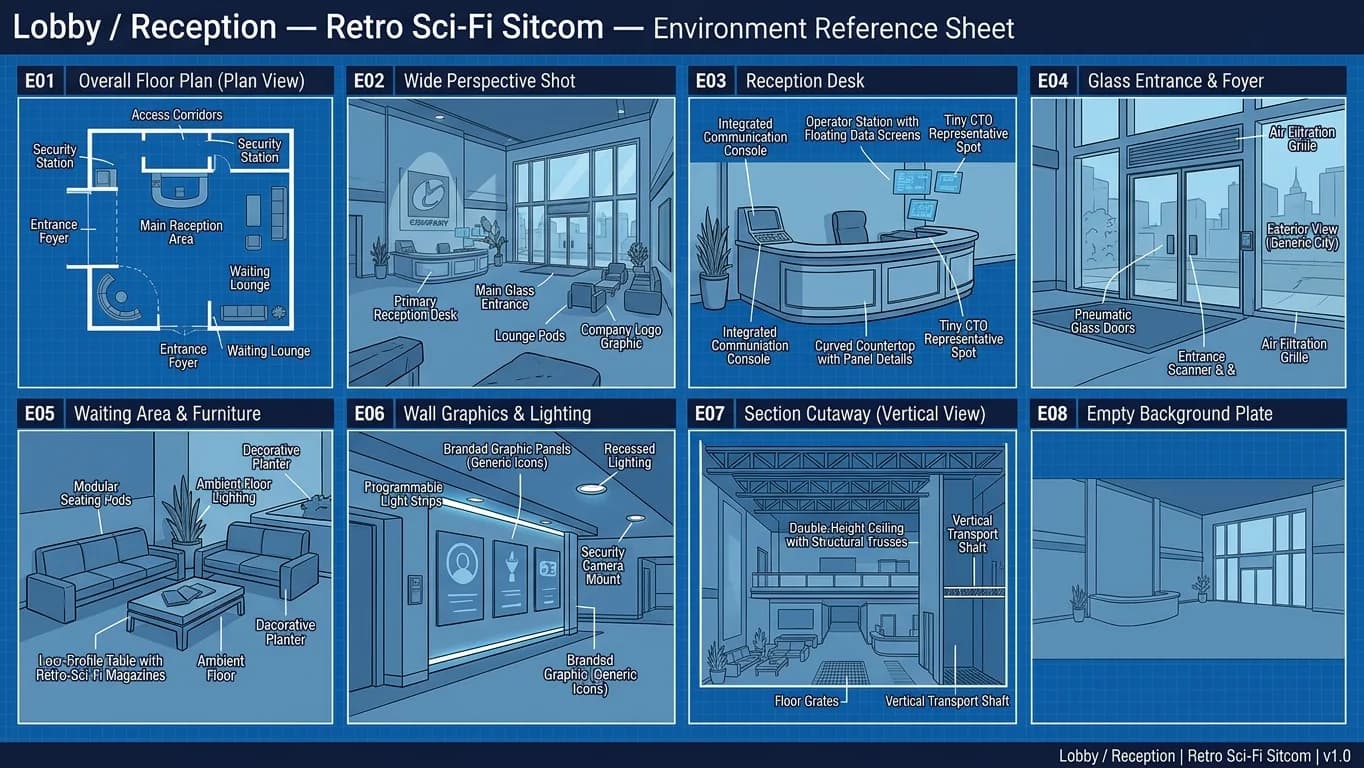
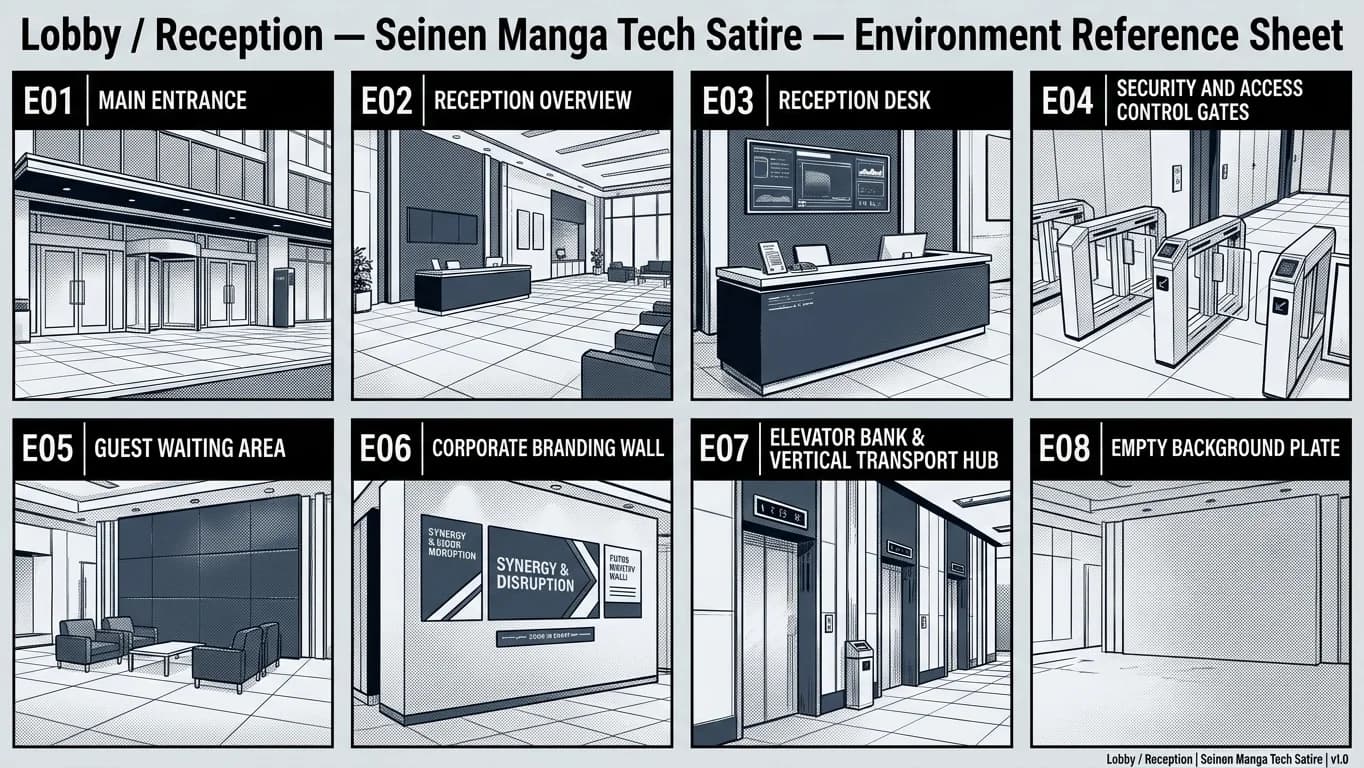
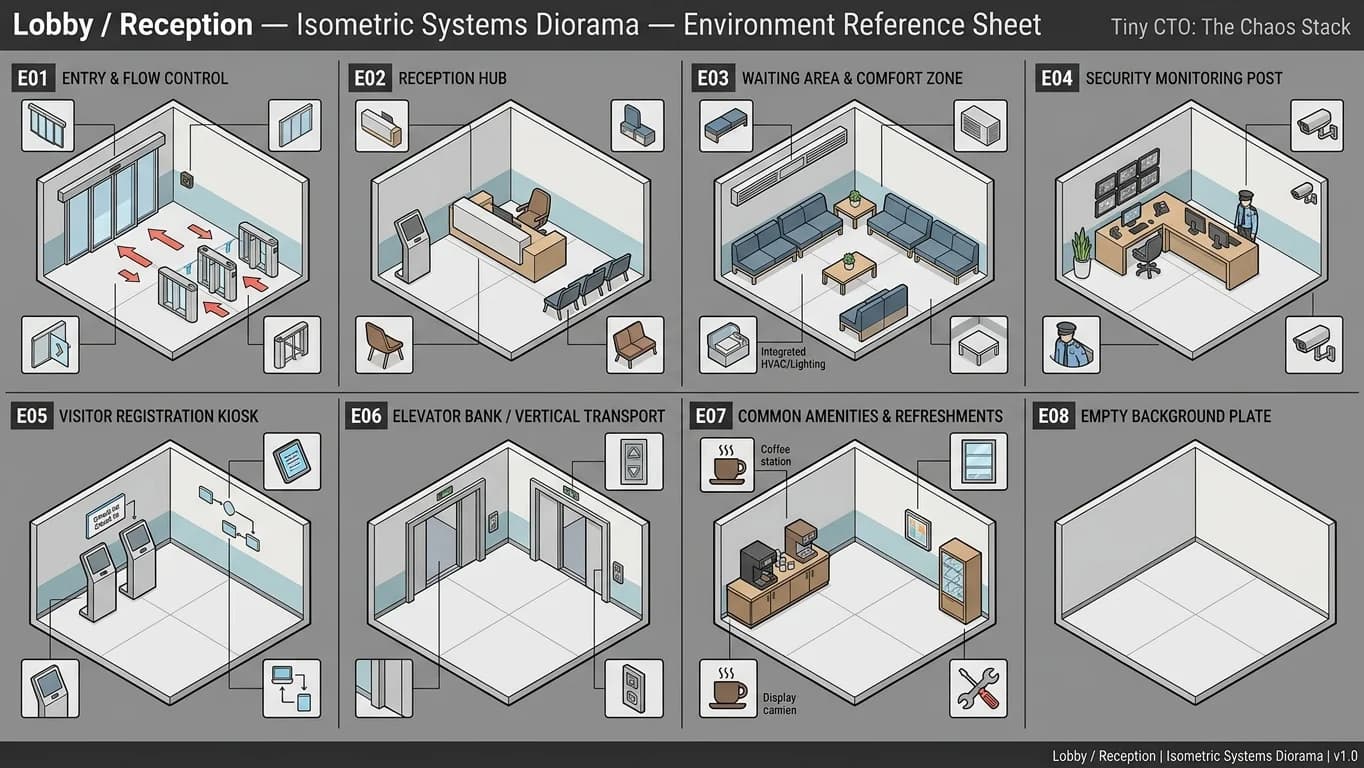
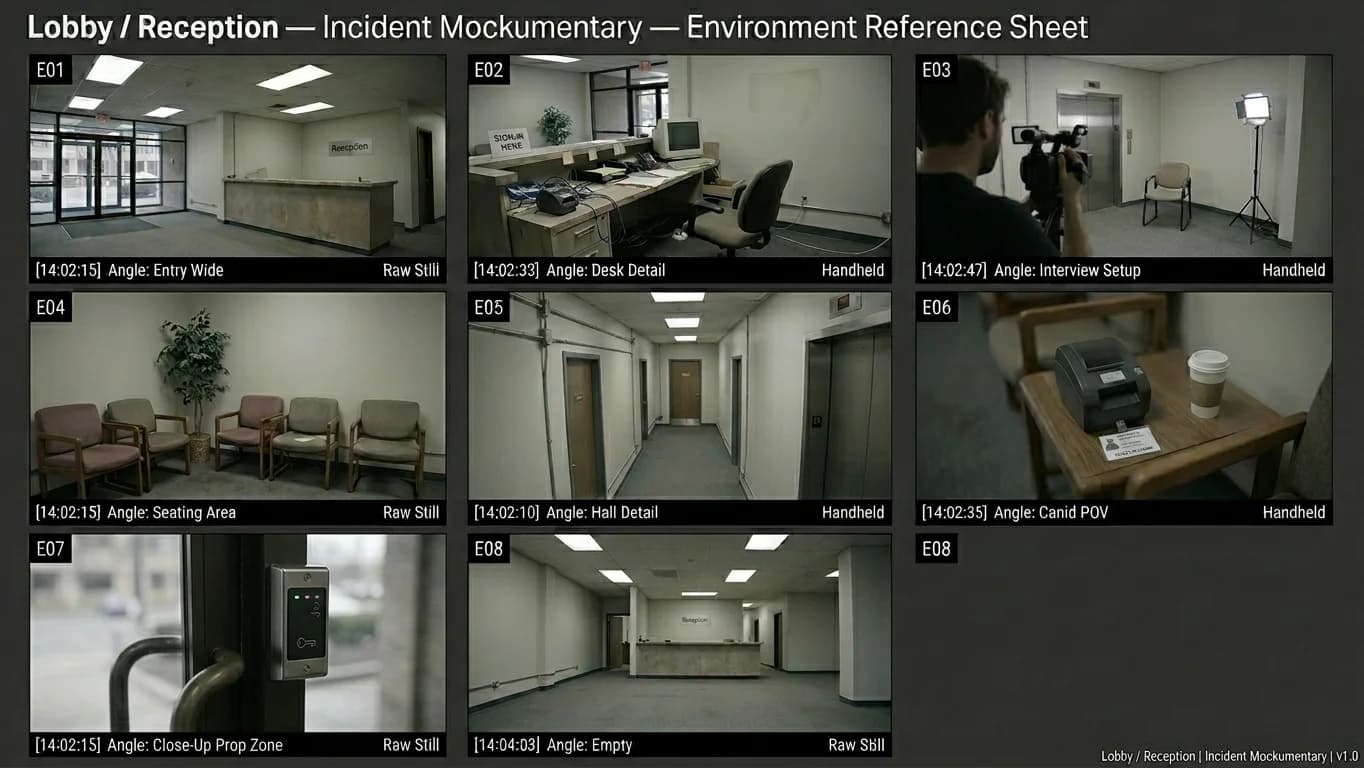
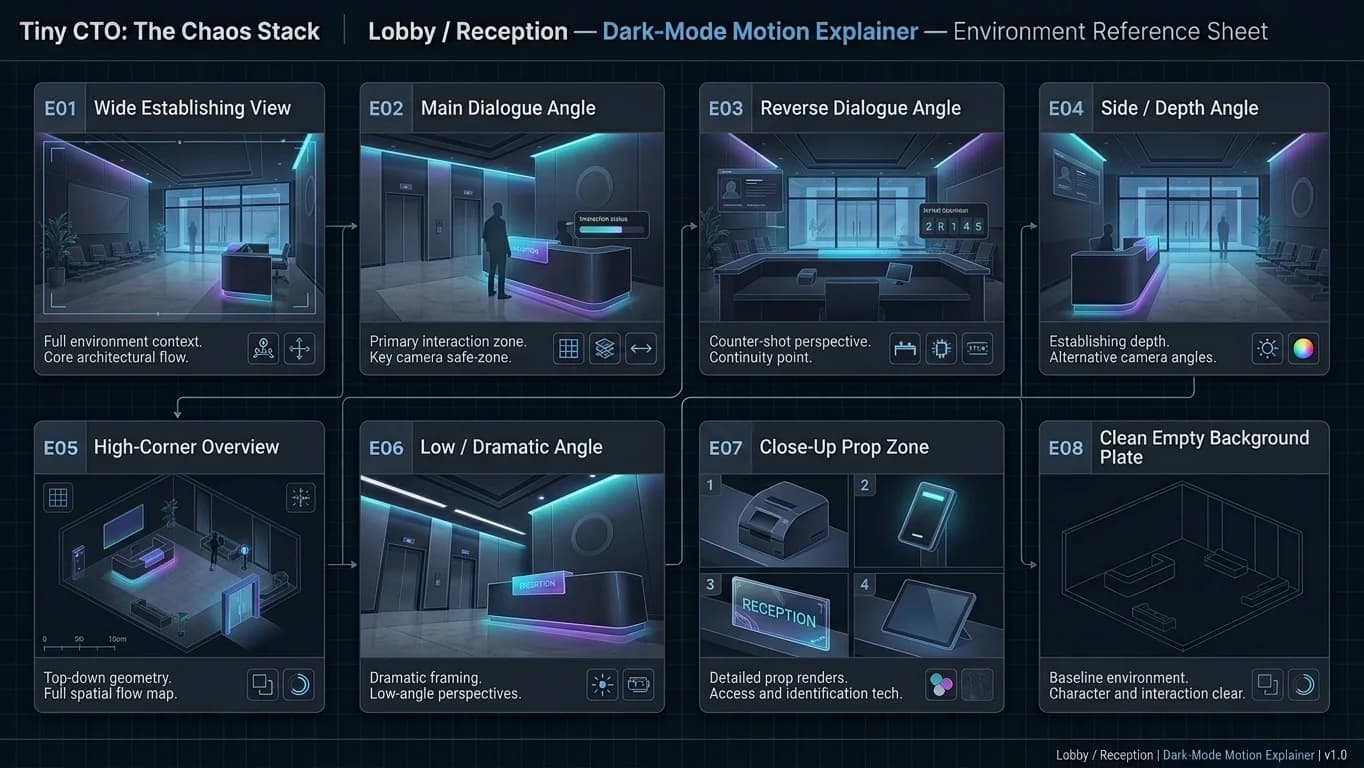
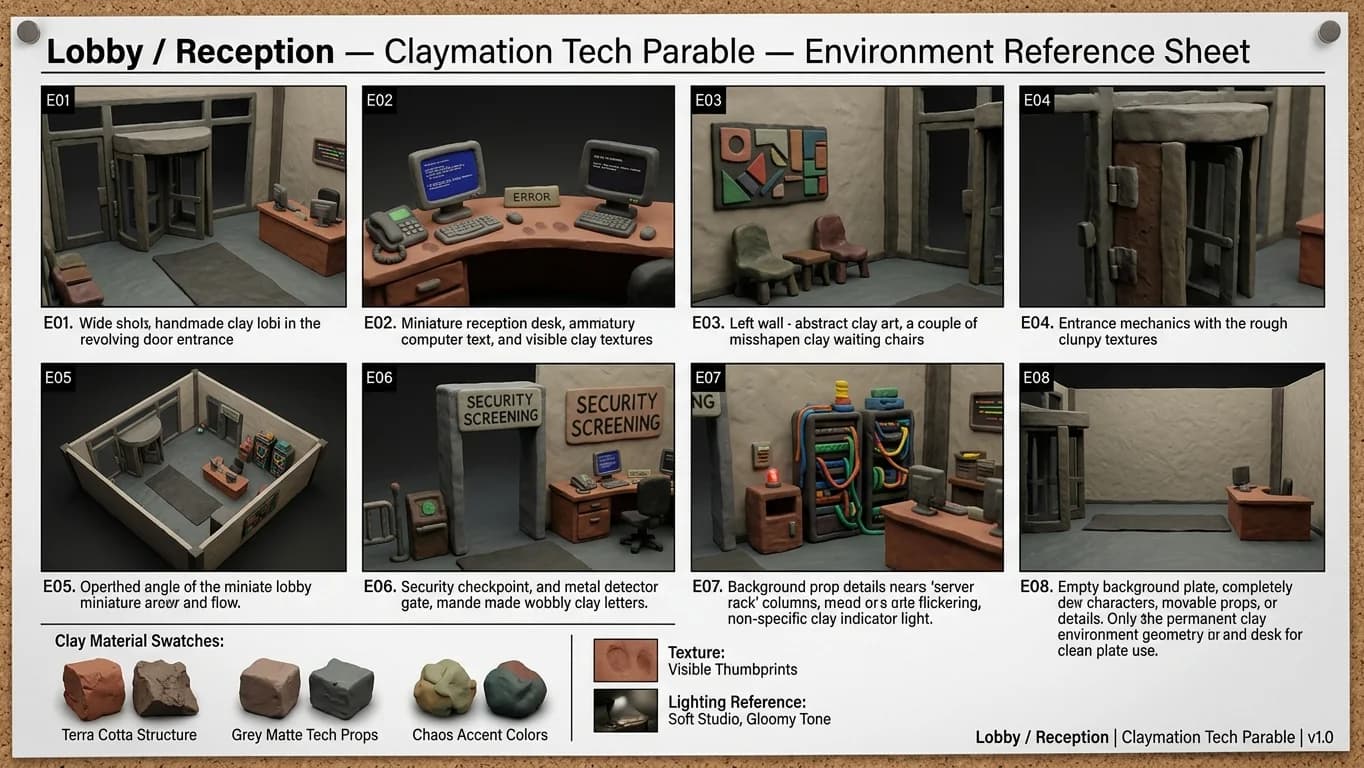
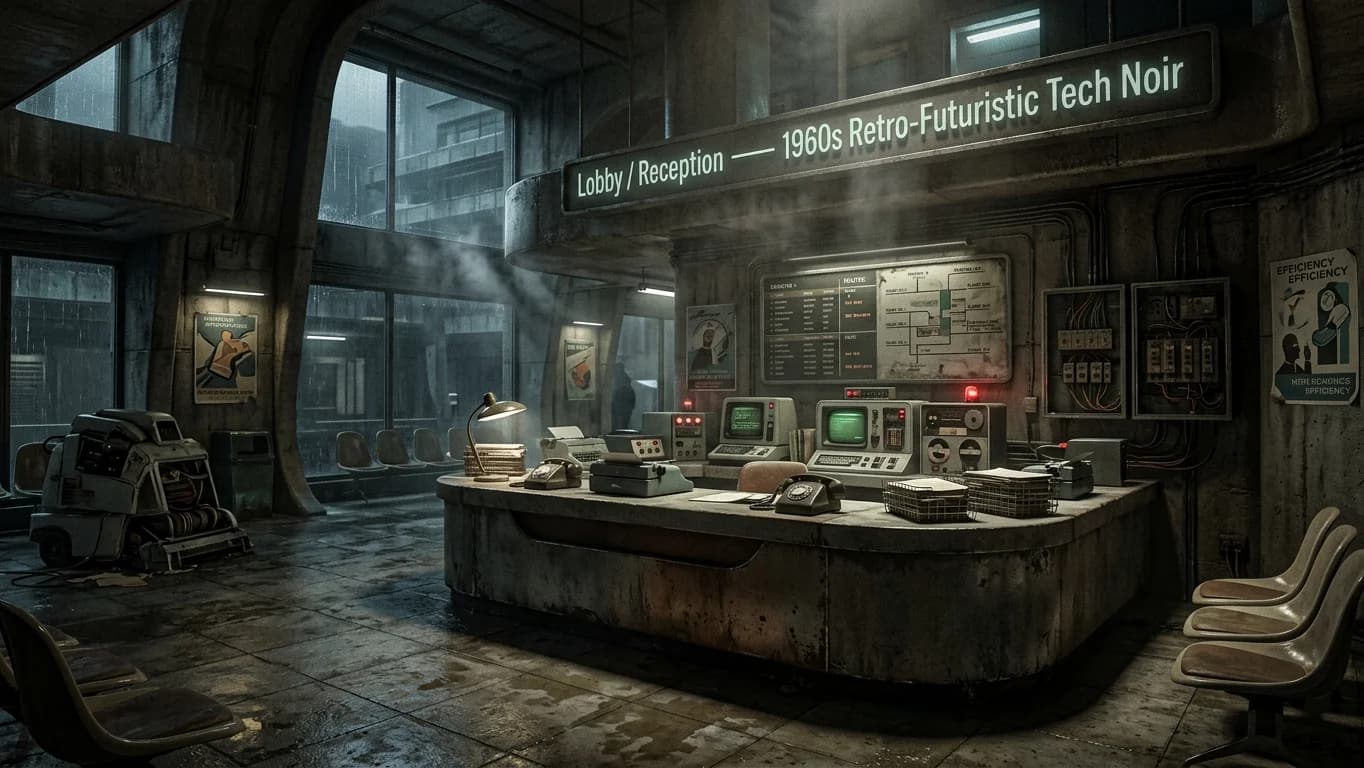
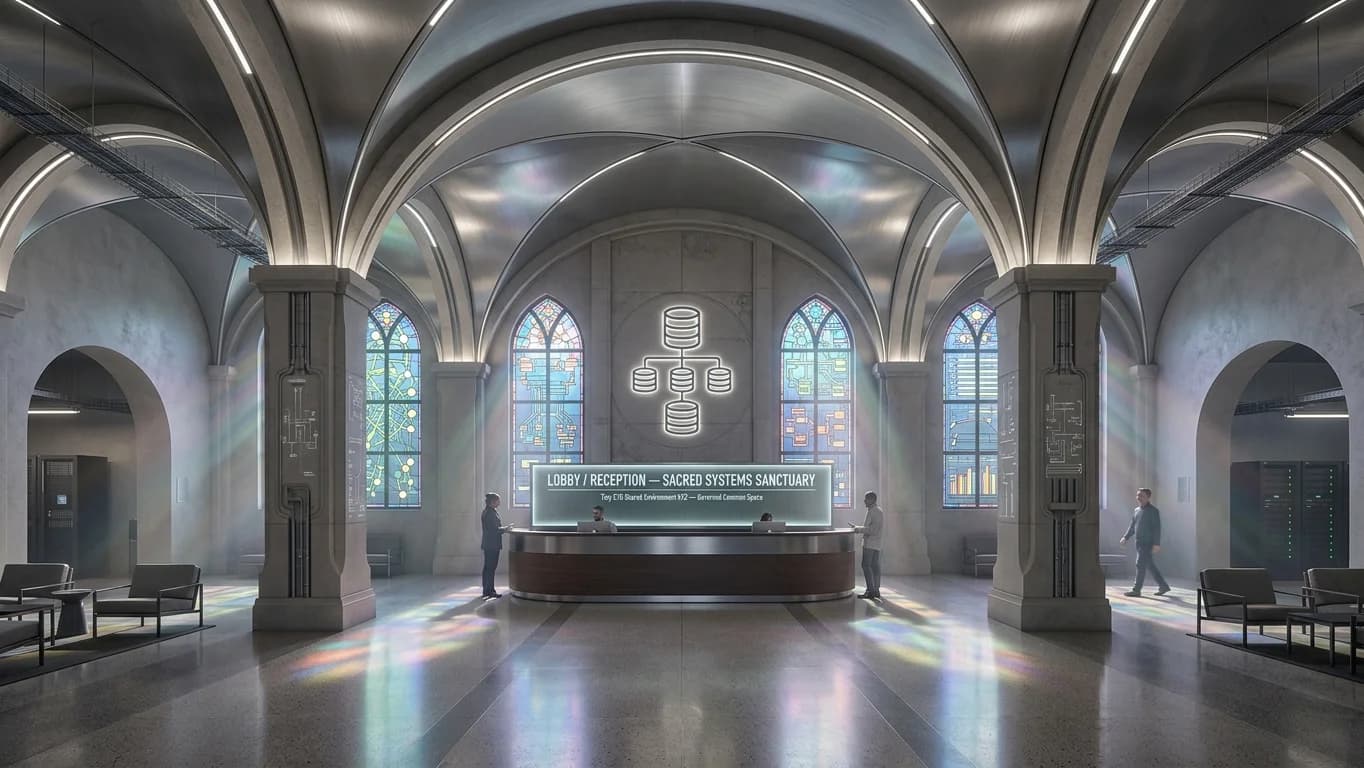
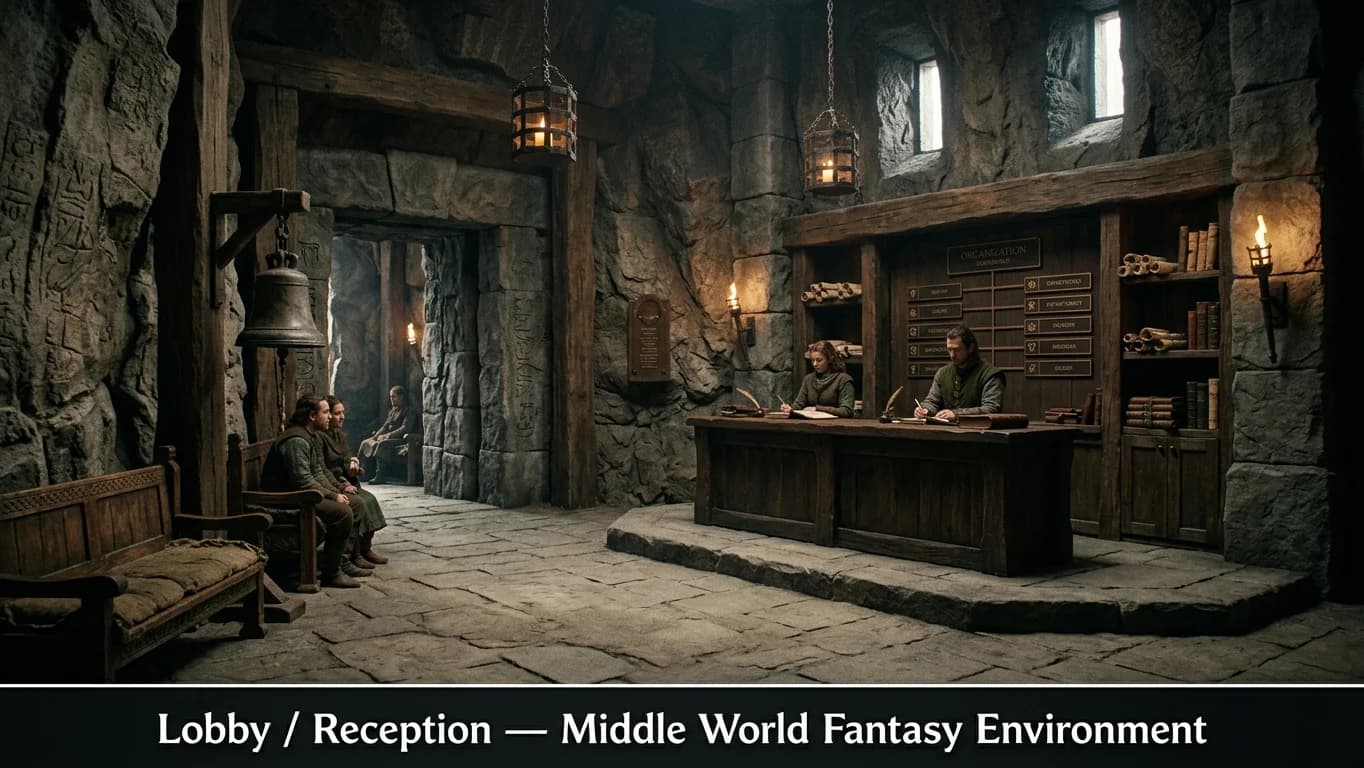
Lobby / Reception
The Lobby / Reception is a common setting within the Chaos Stack universe.


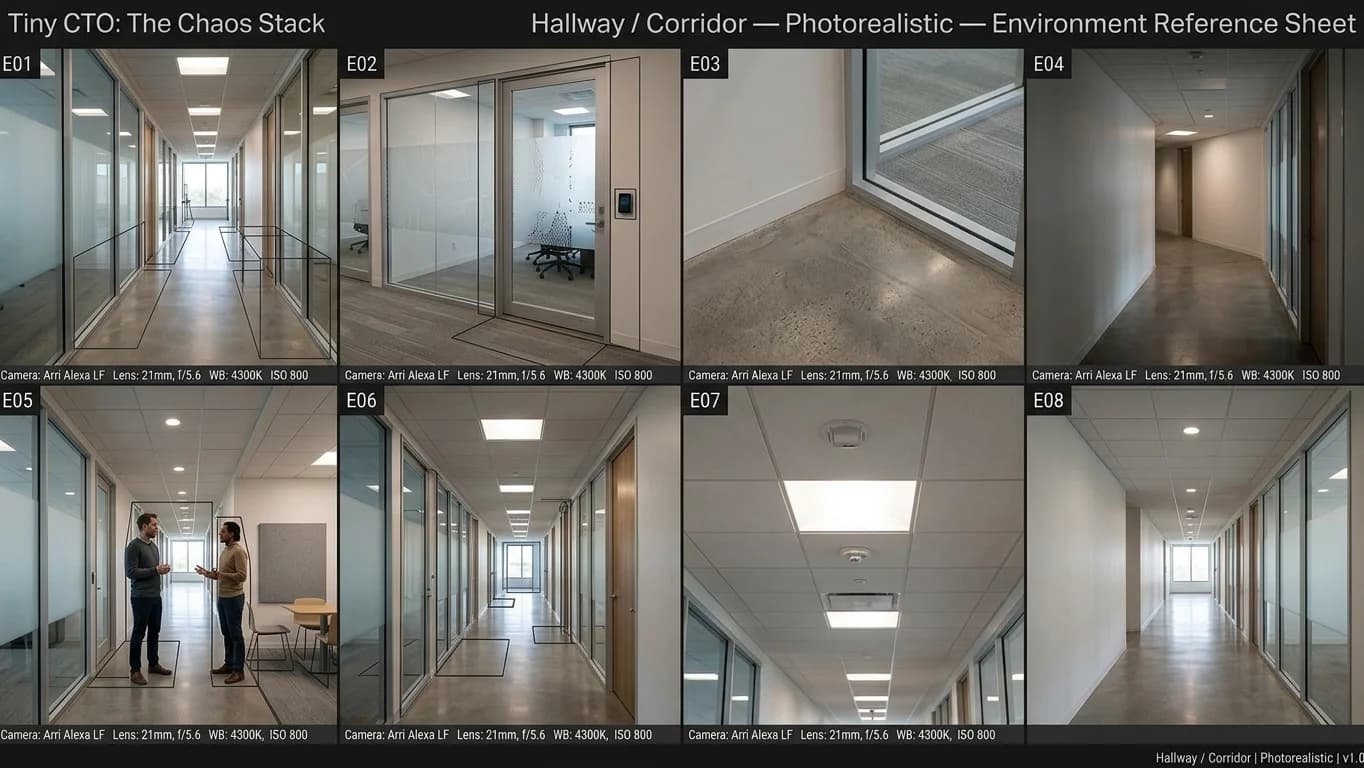
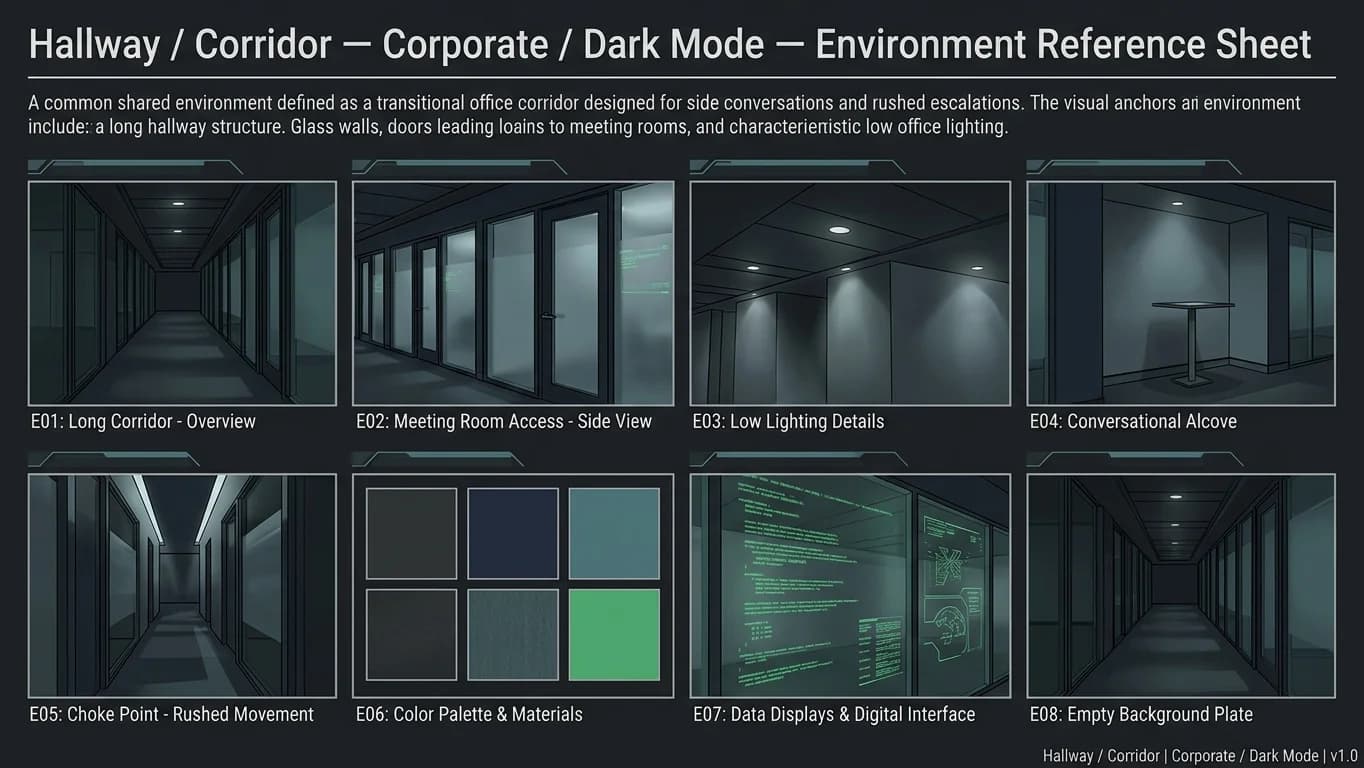
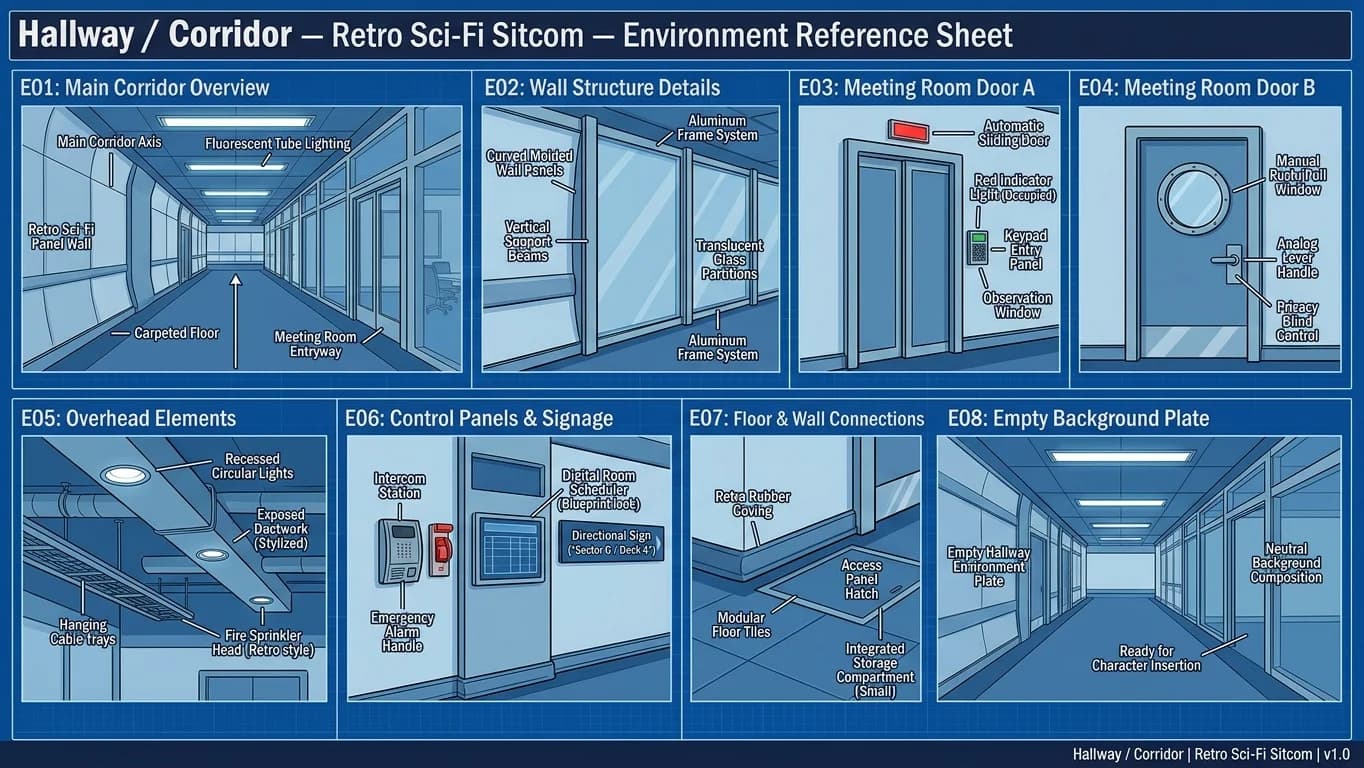
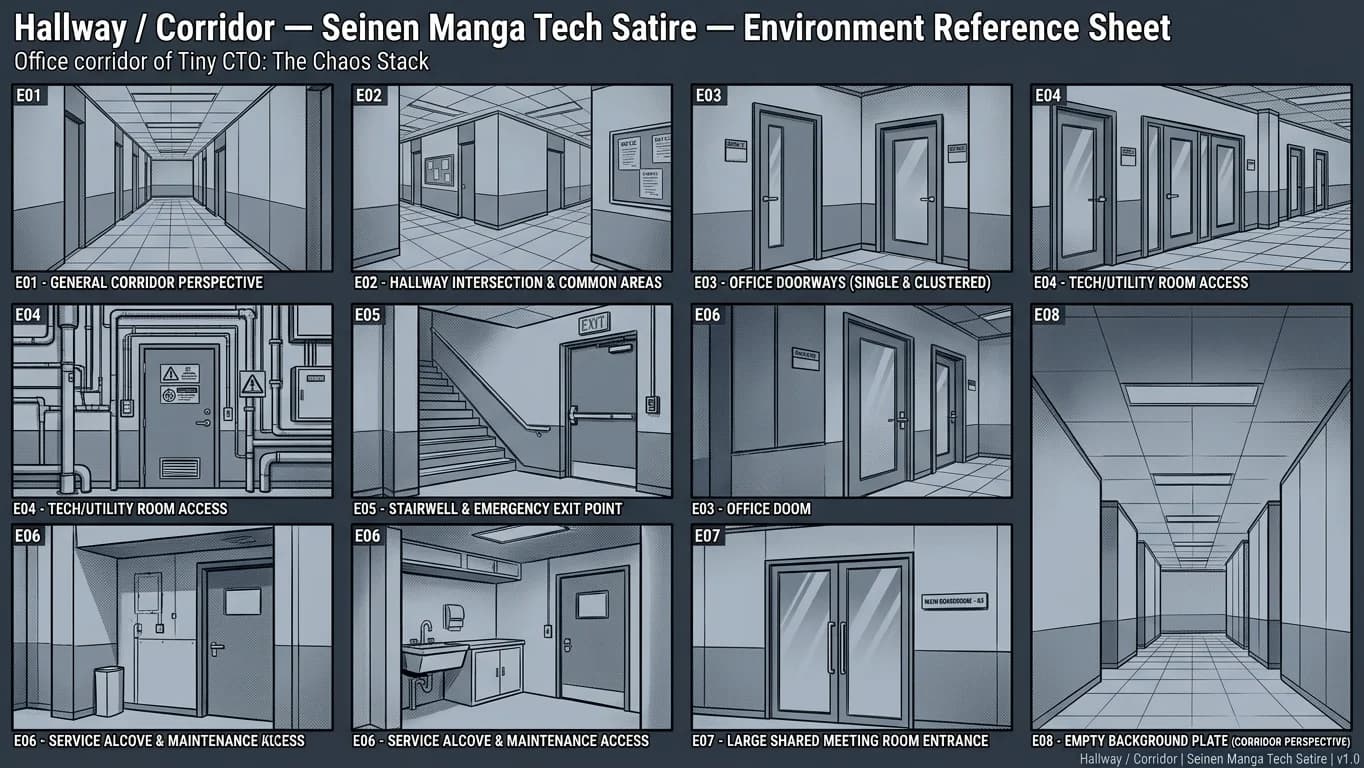
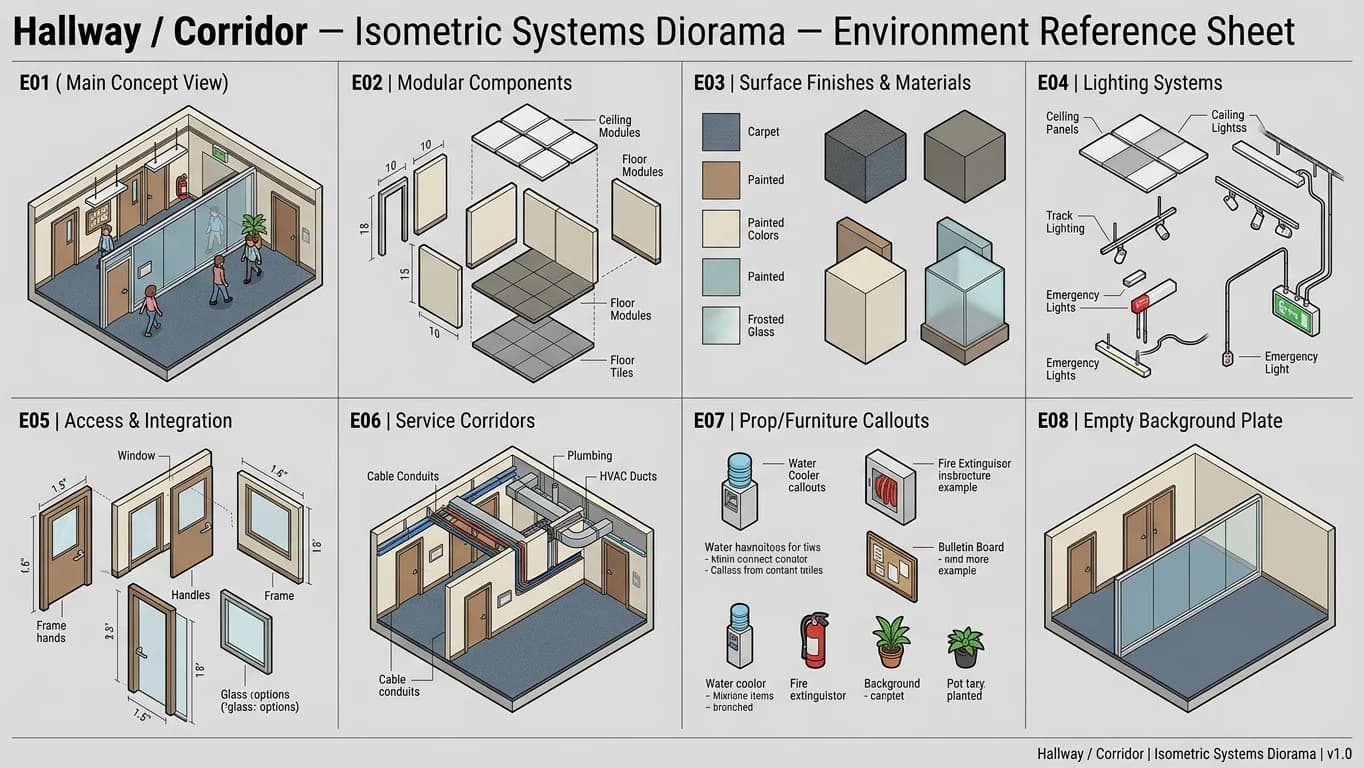
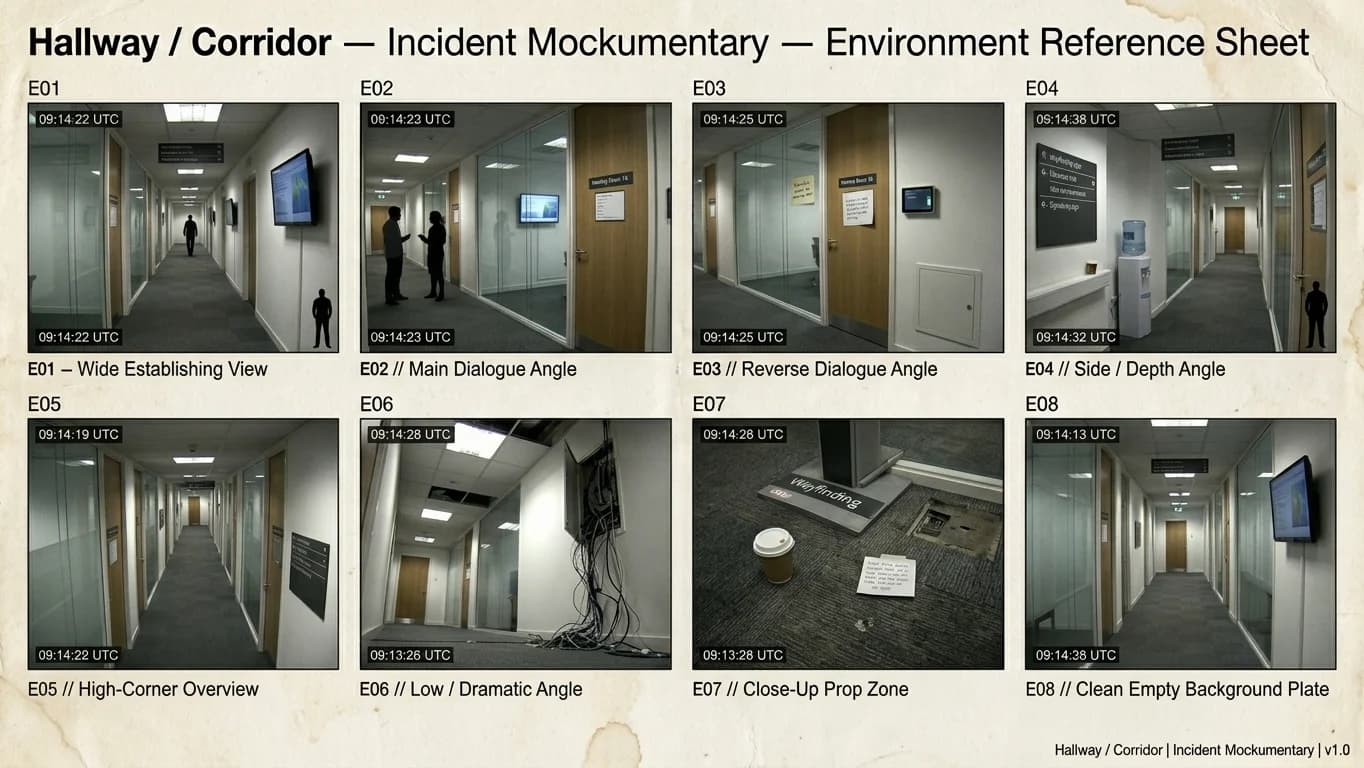
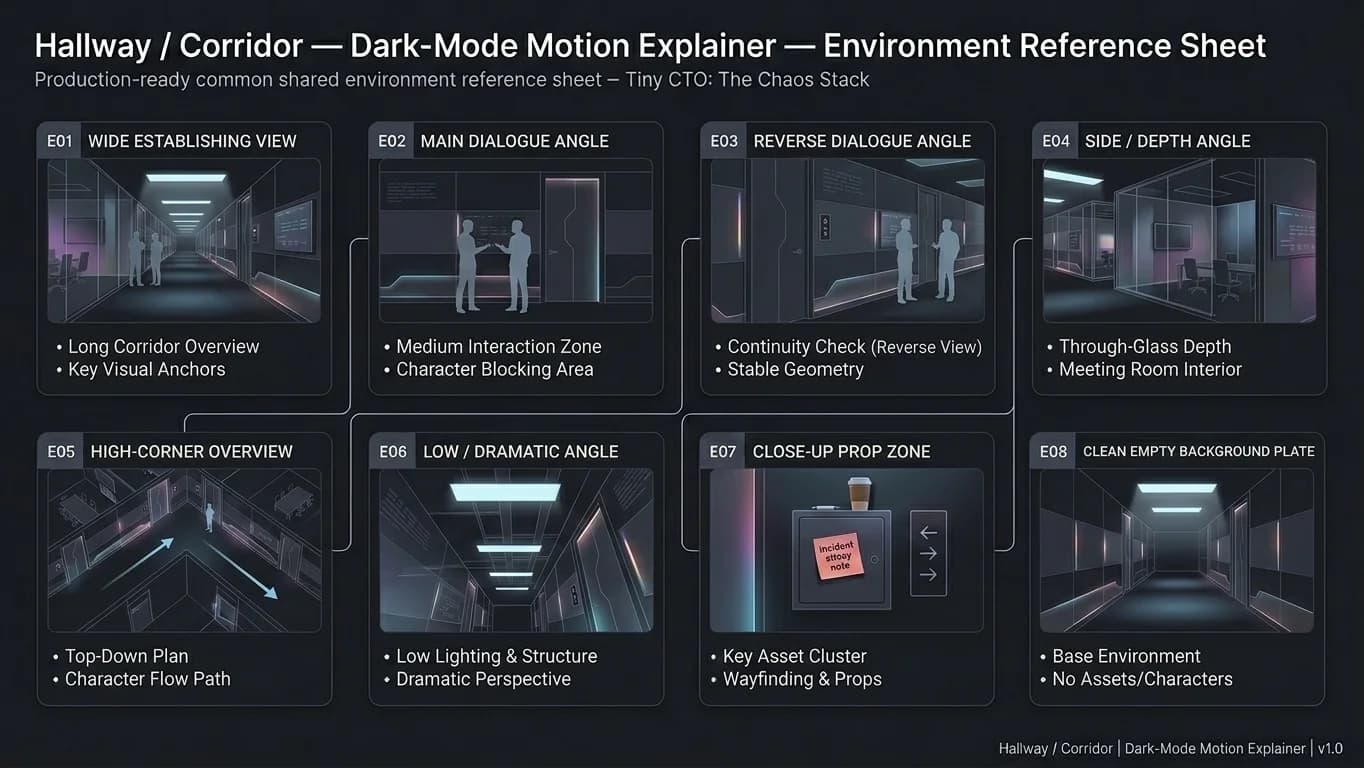
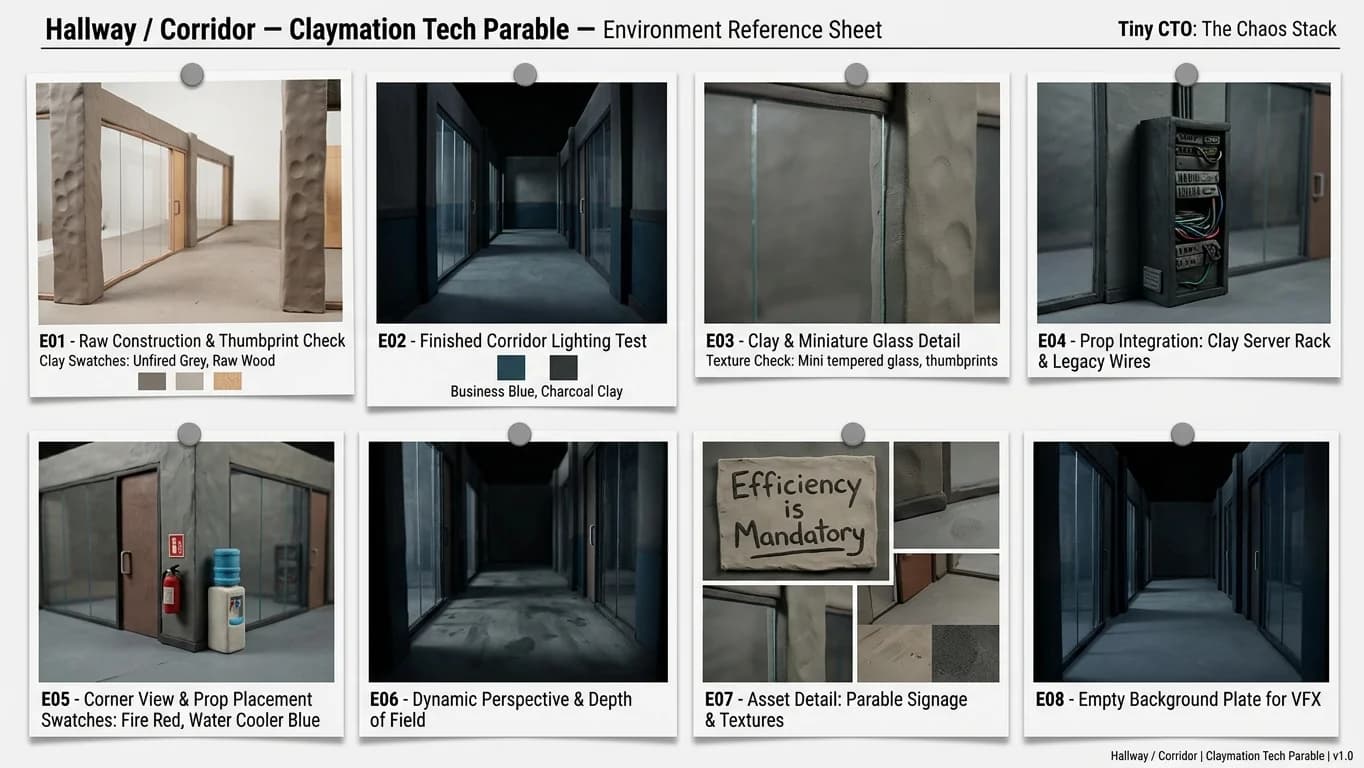
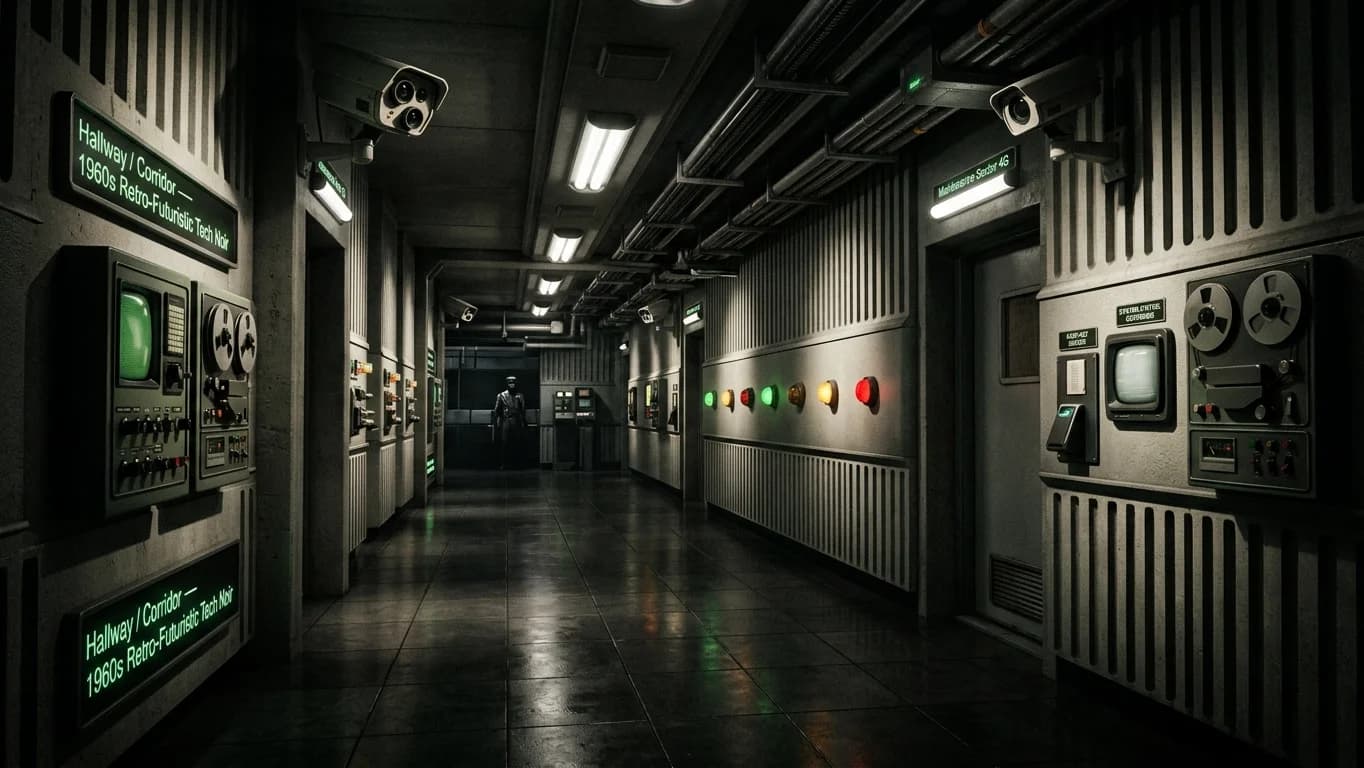
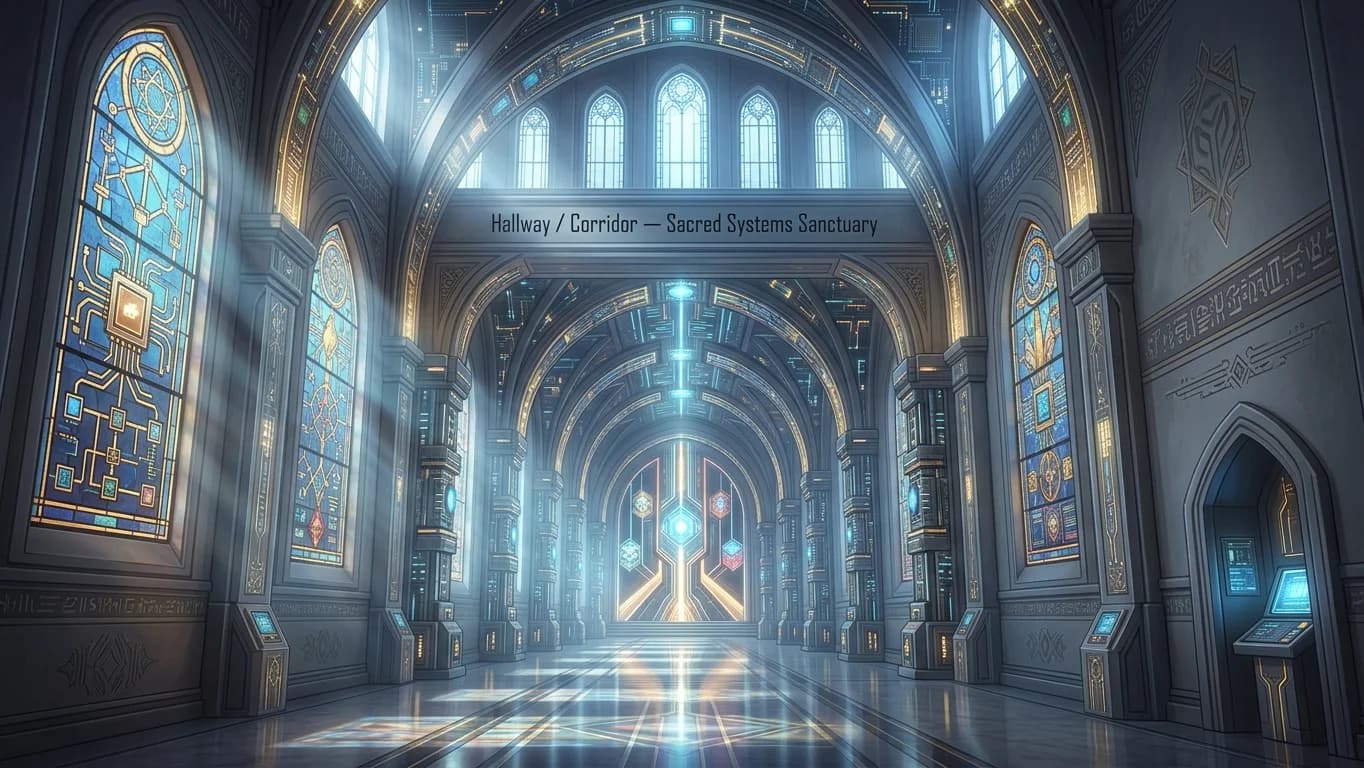
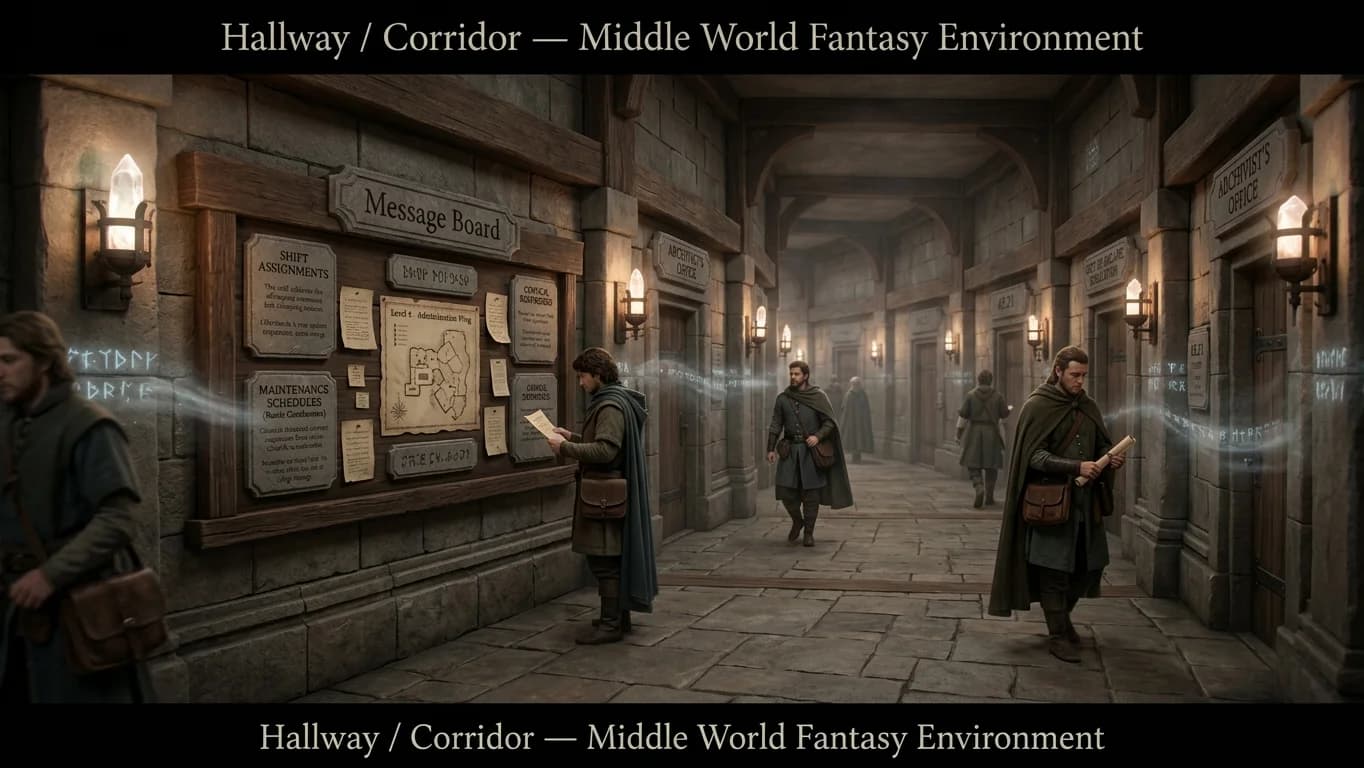
Hallway / Corridor
The Hallway / Corridor is a common setting within the Chaos Stack universe.


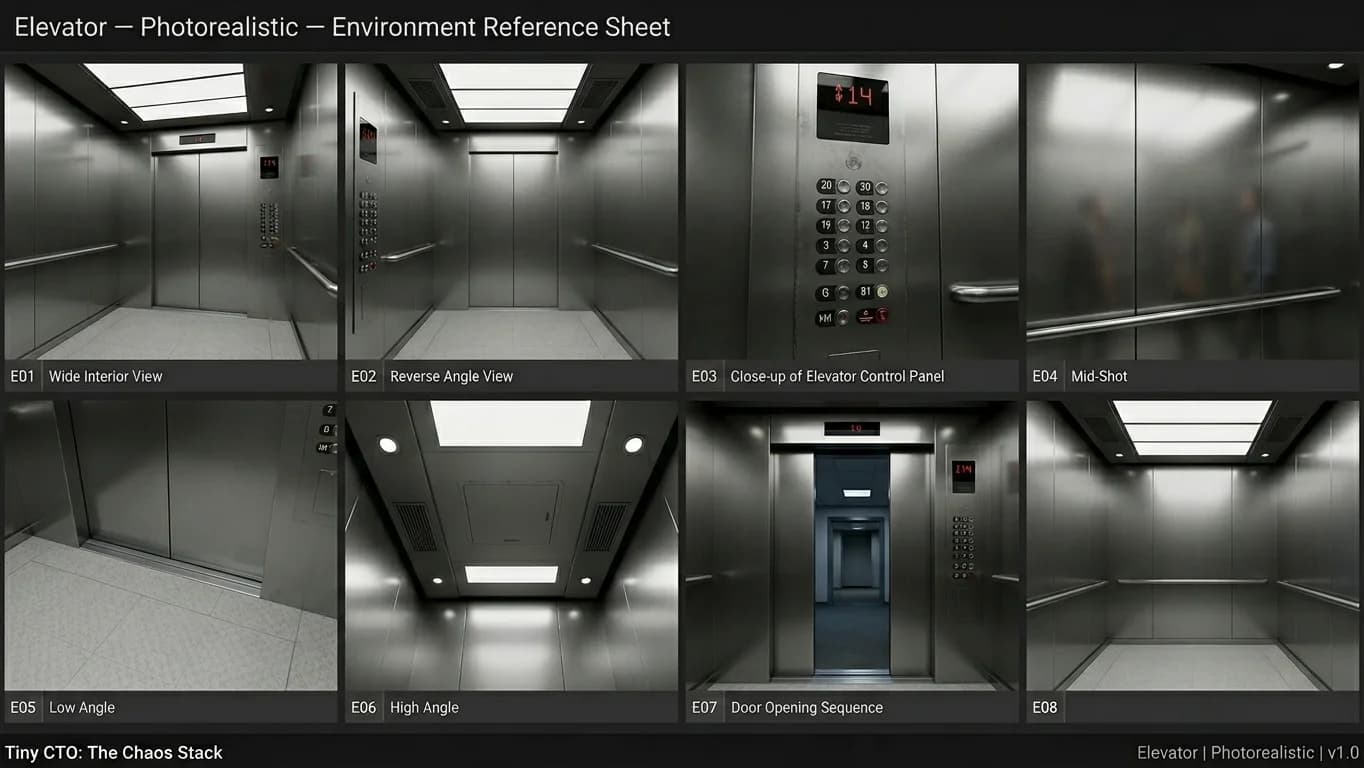
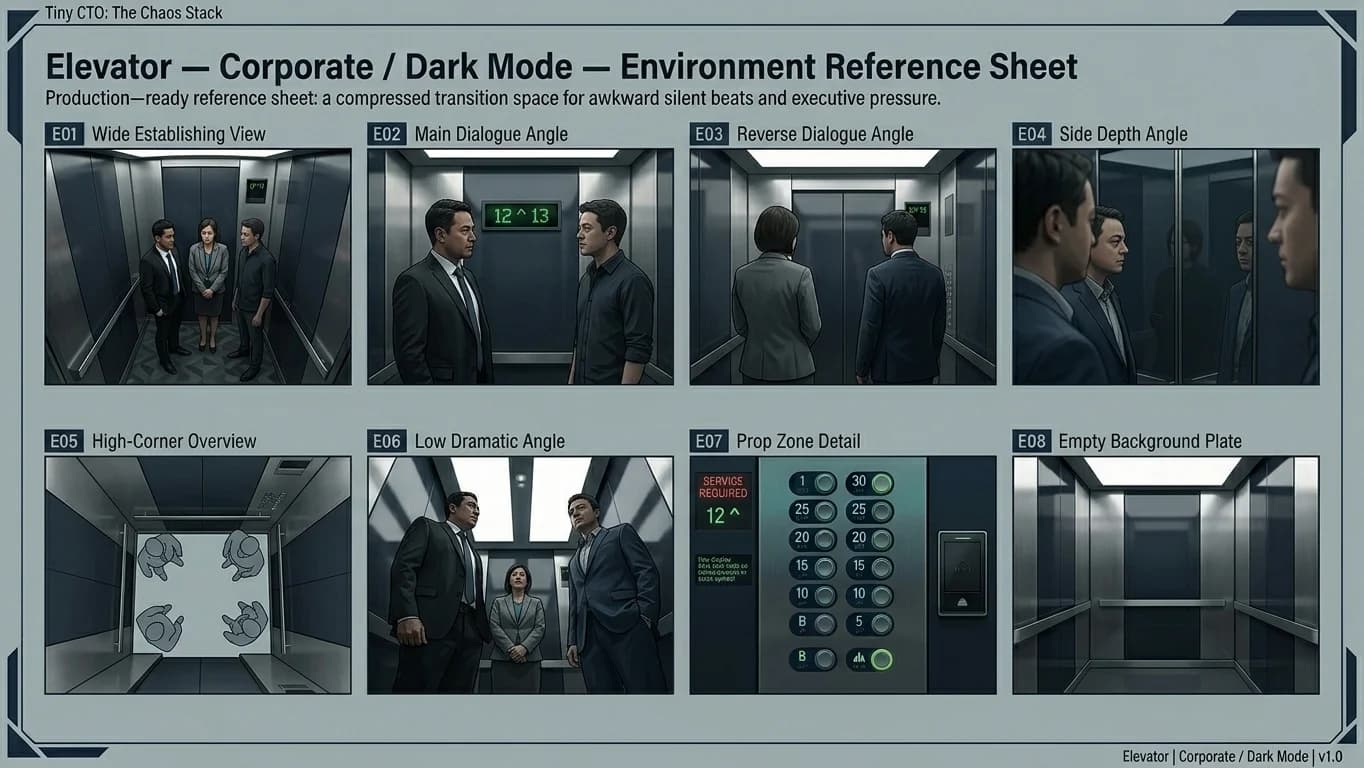
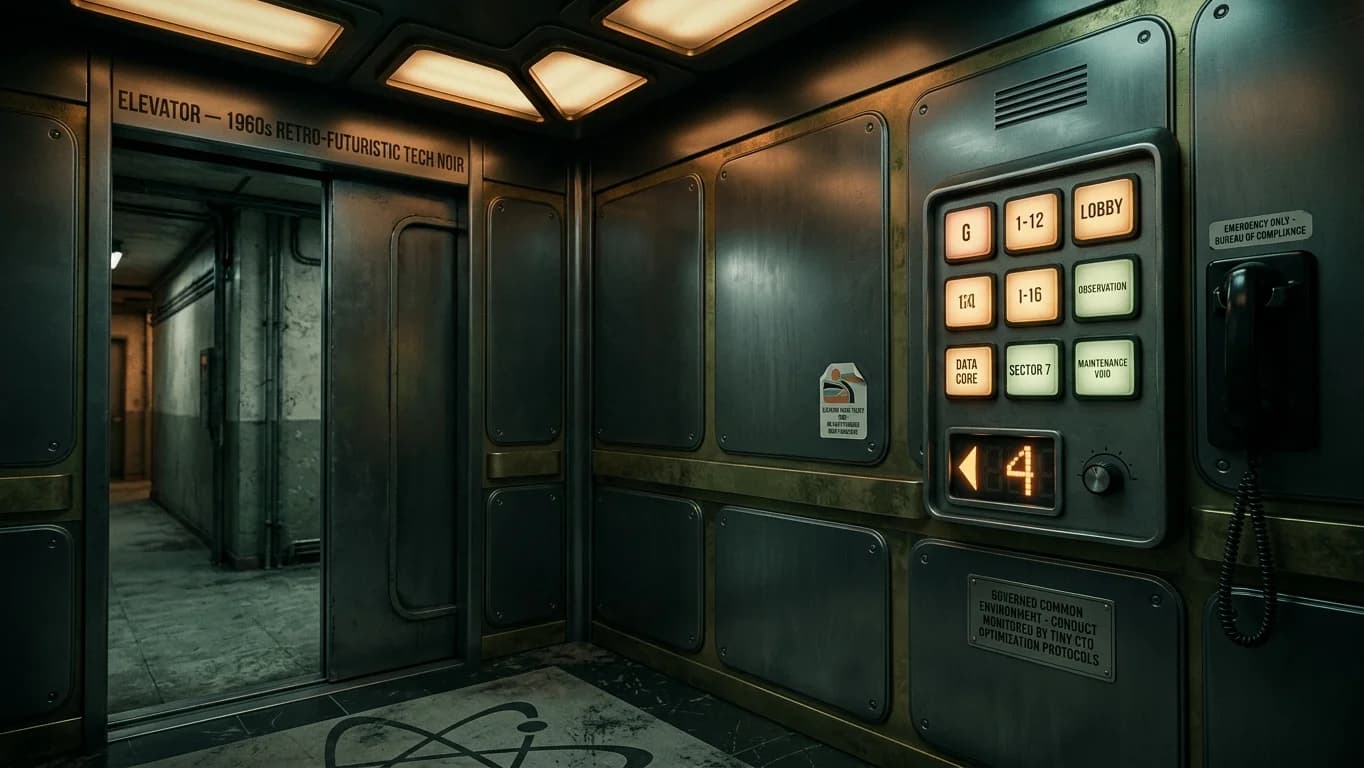
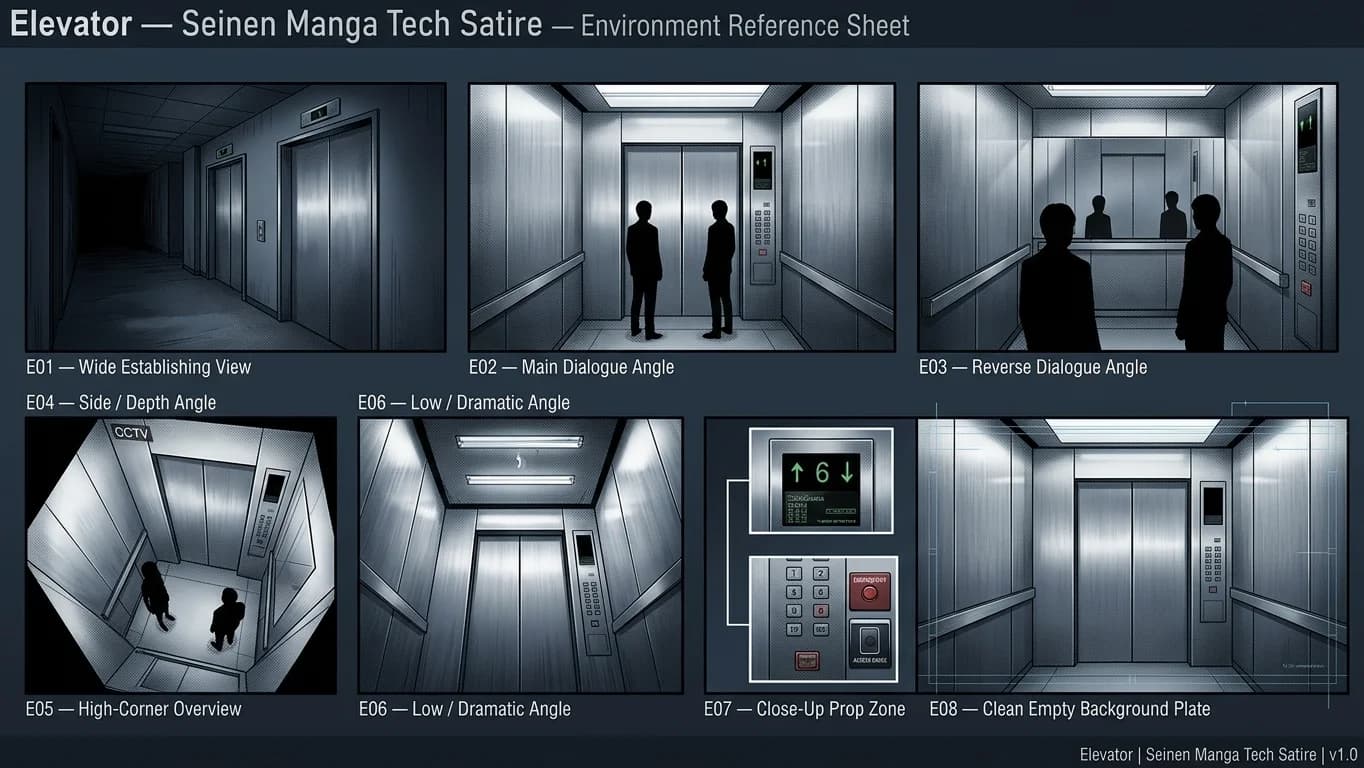
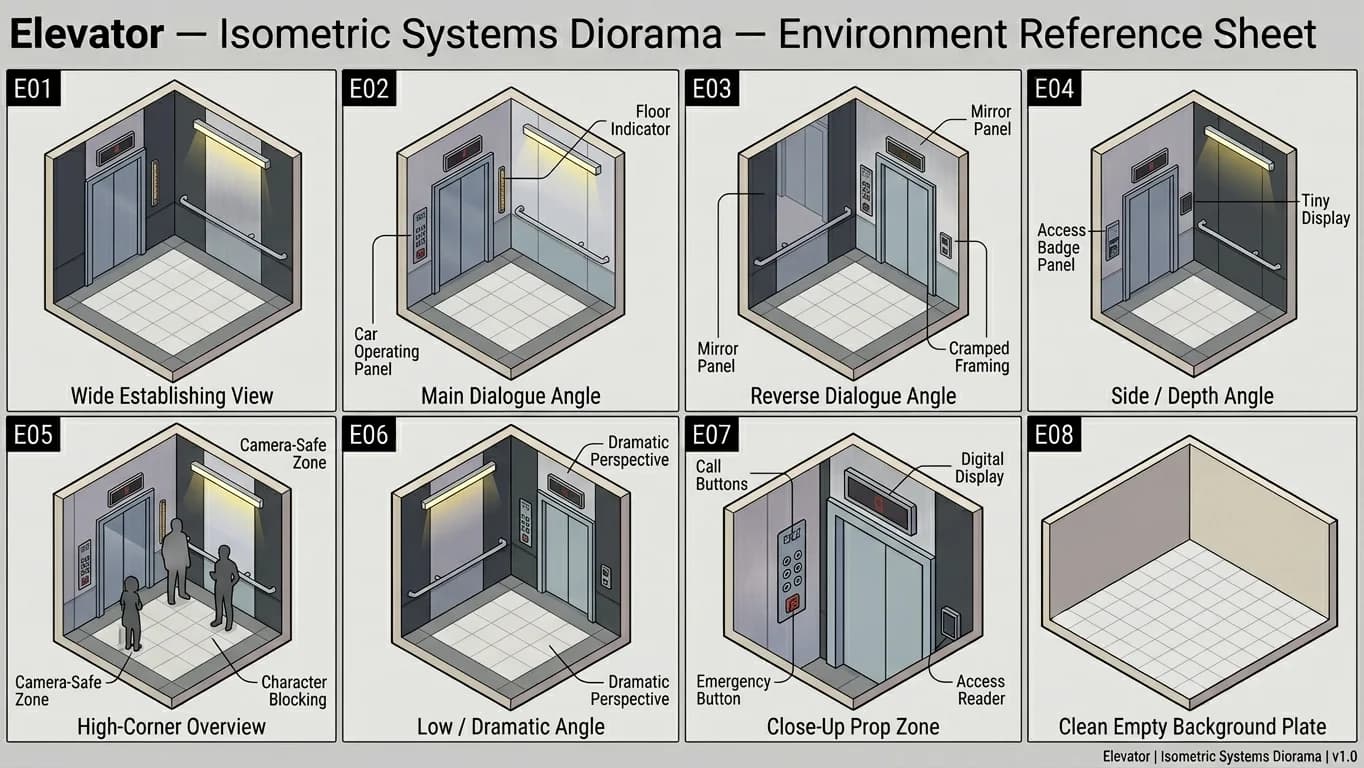
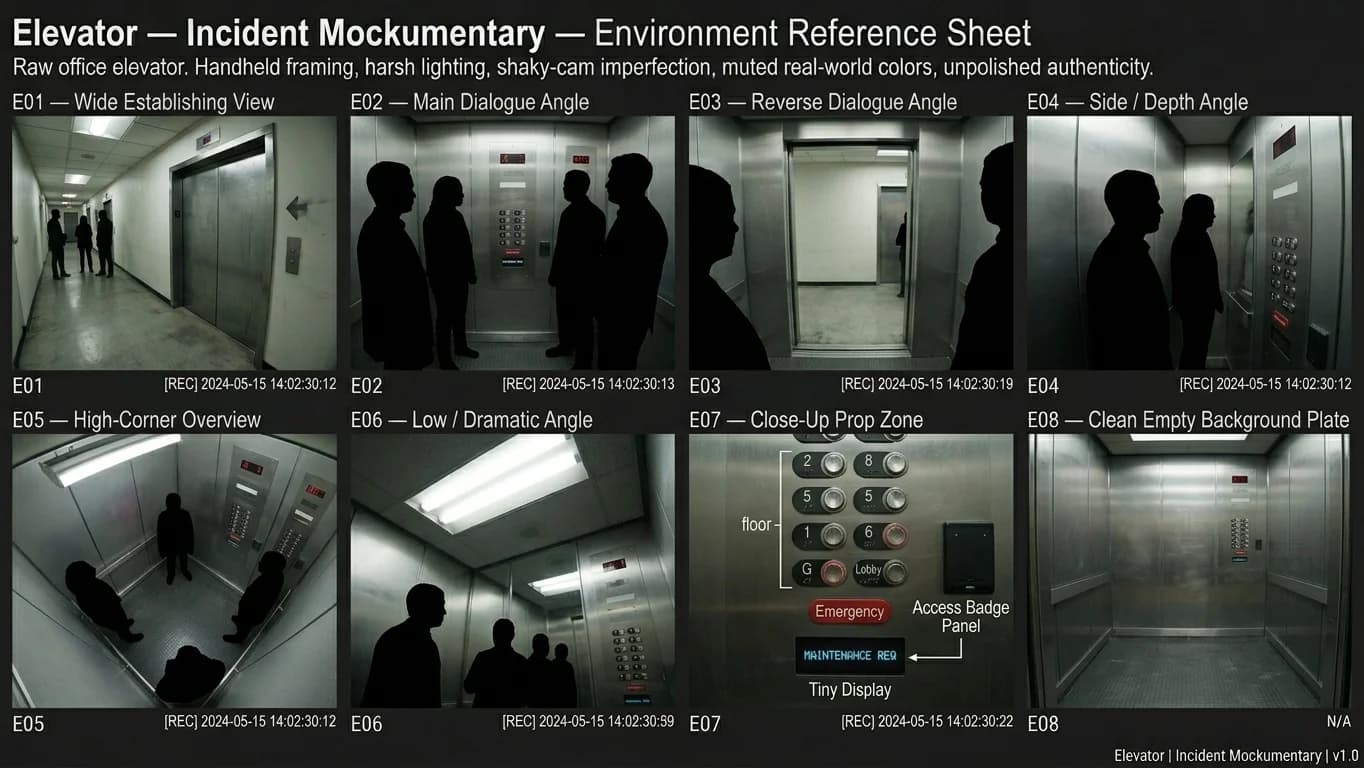
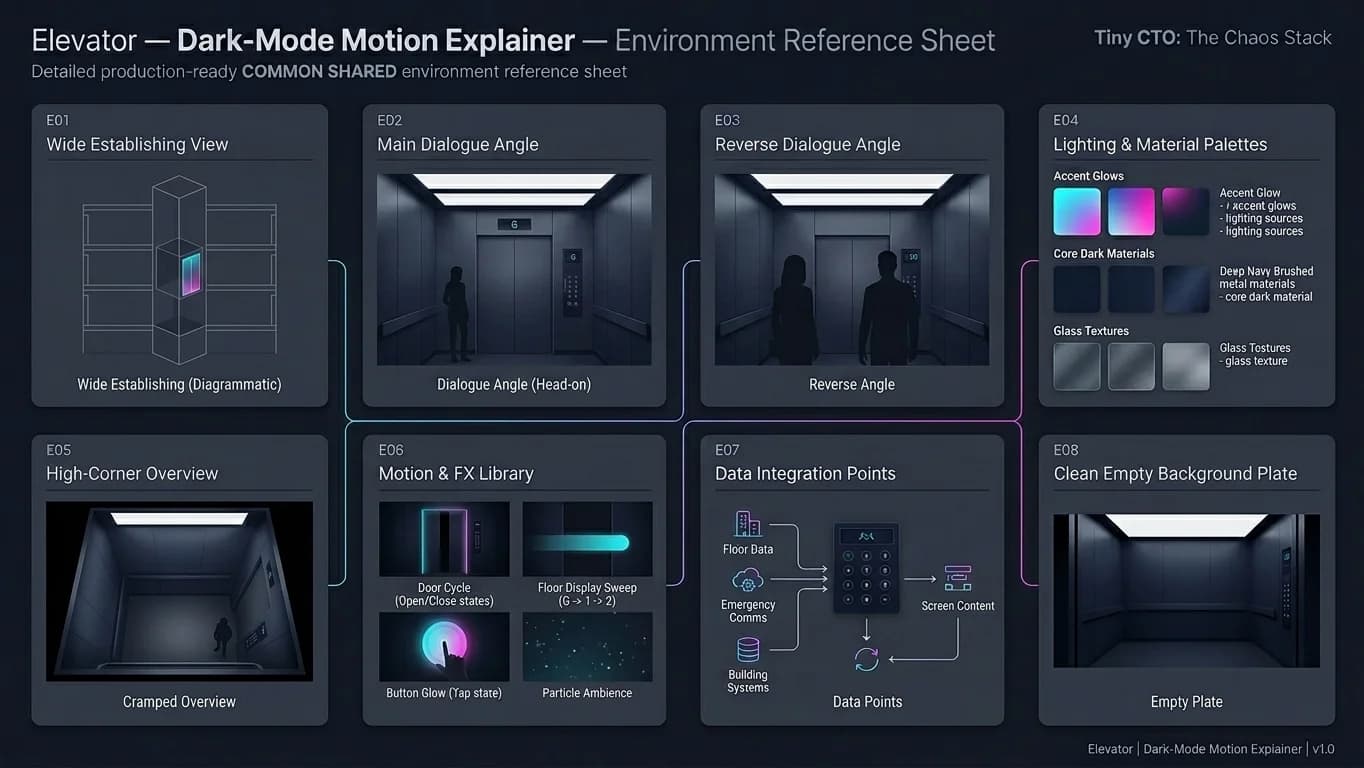
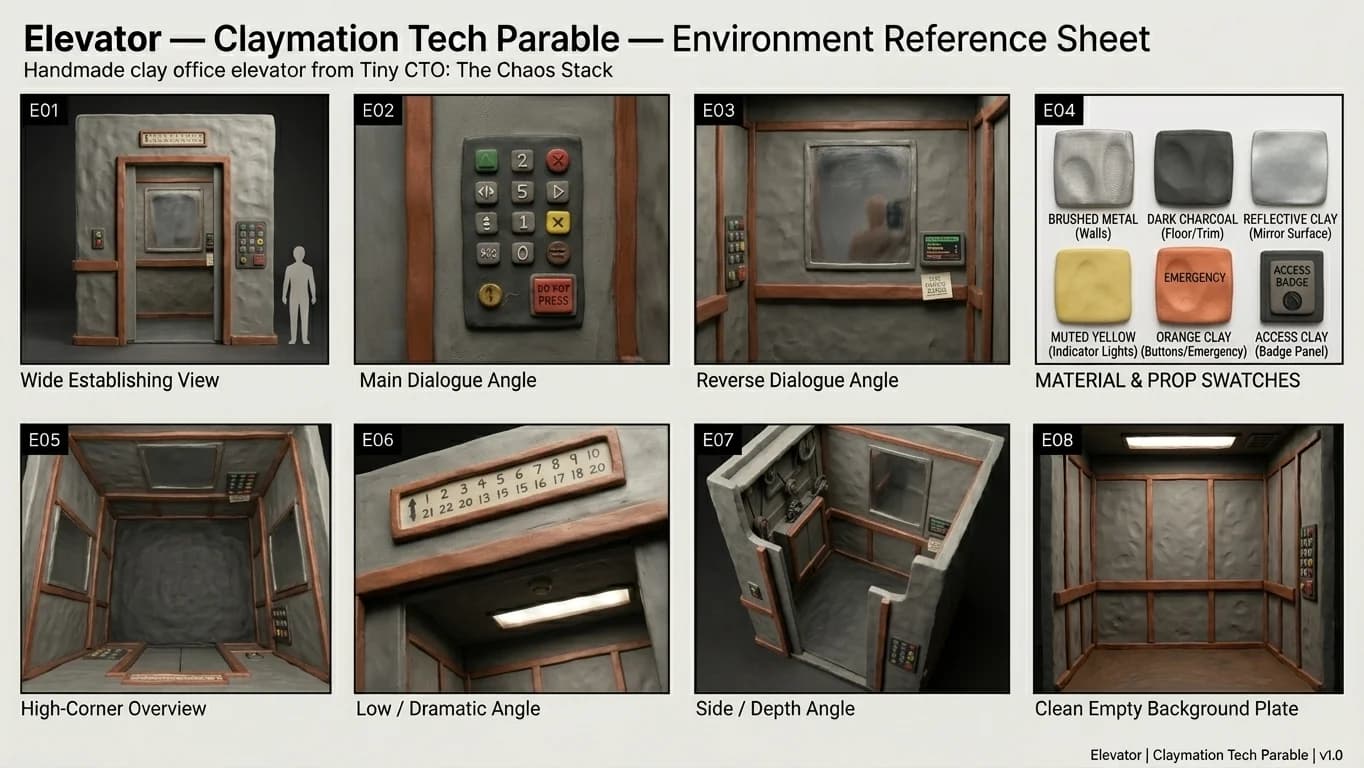
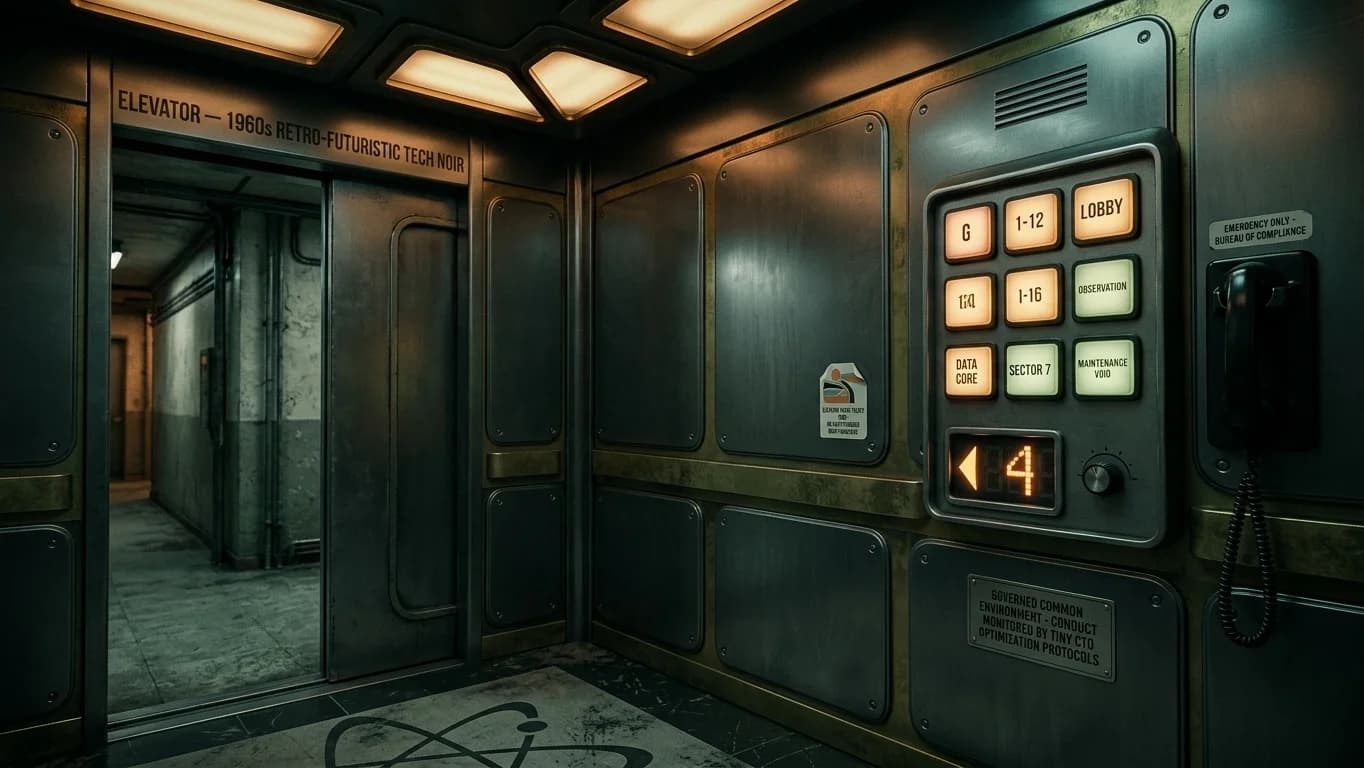
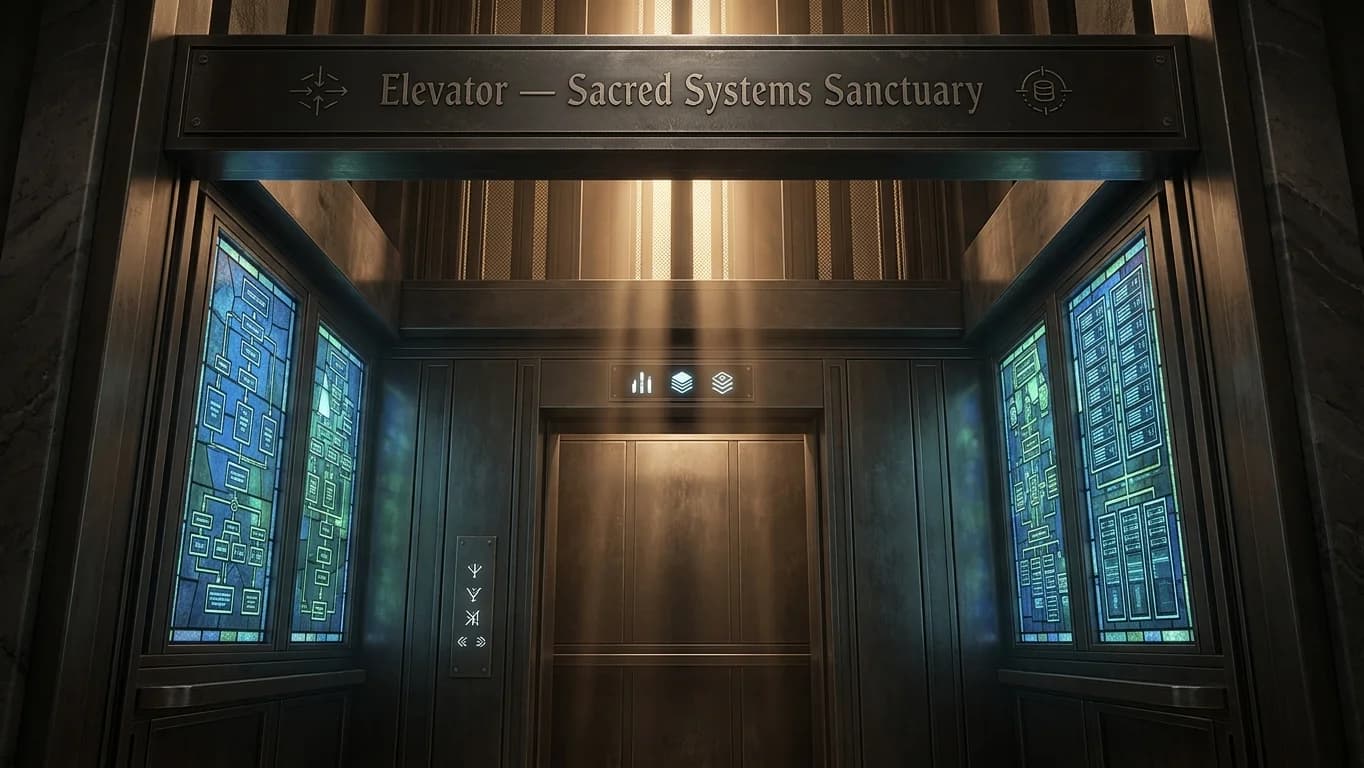
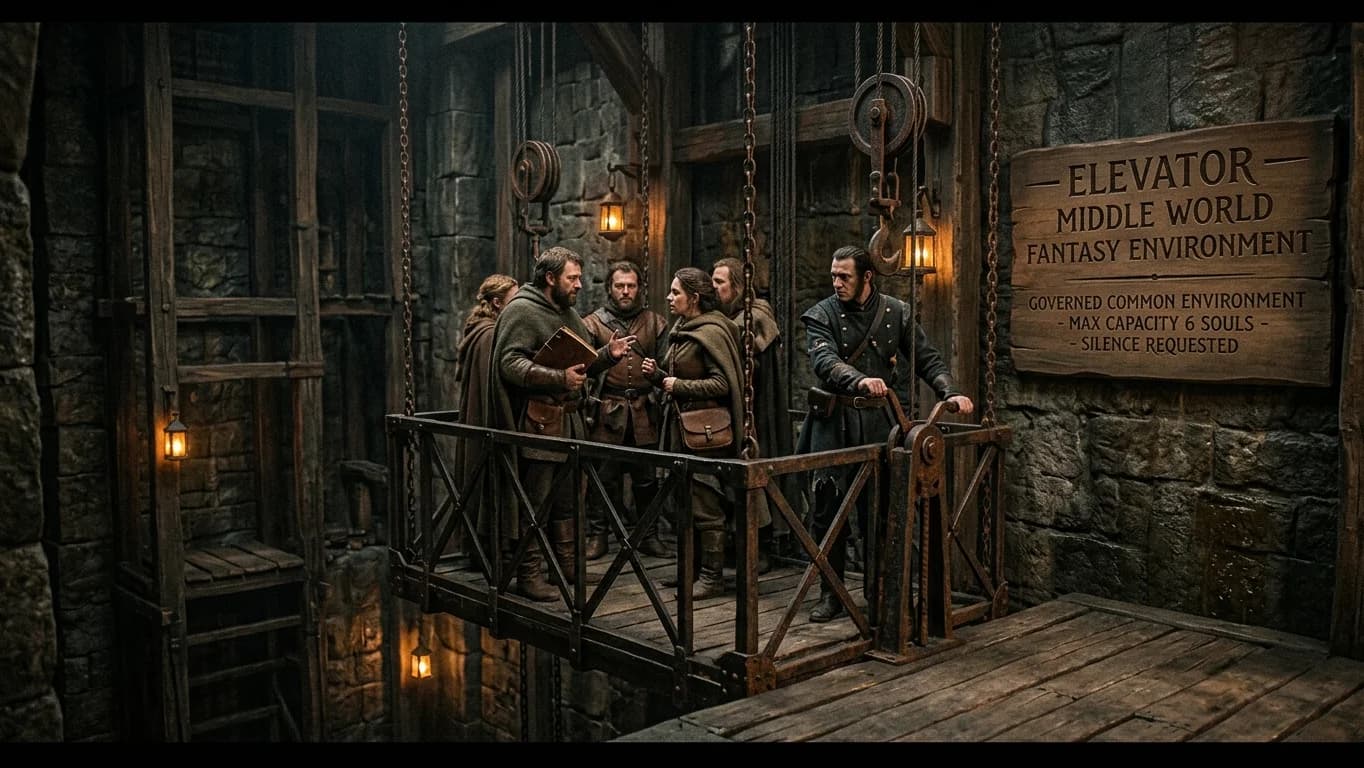
Elevator
The Elevator is a common setting within the Chaos Stack universe.


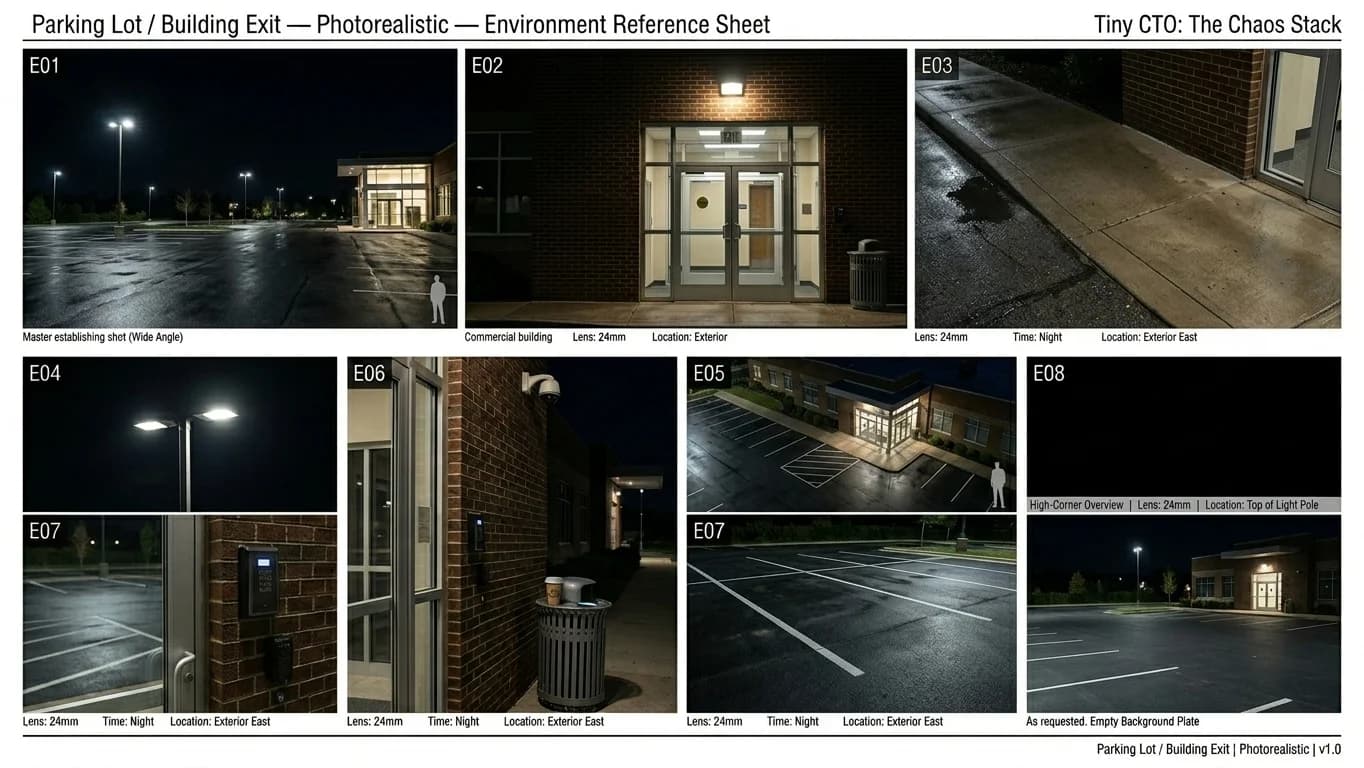
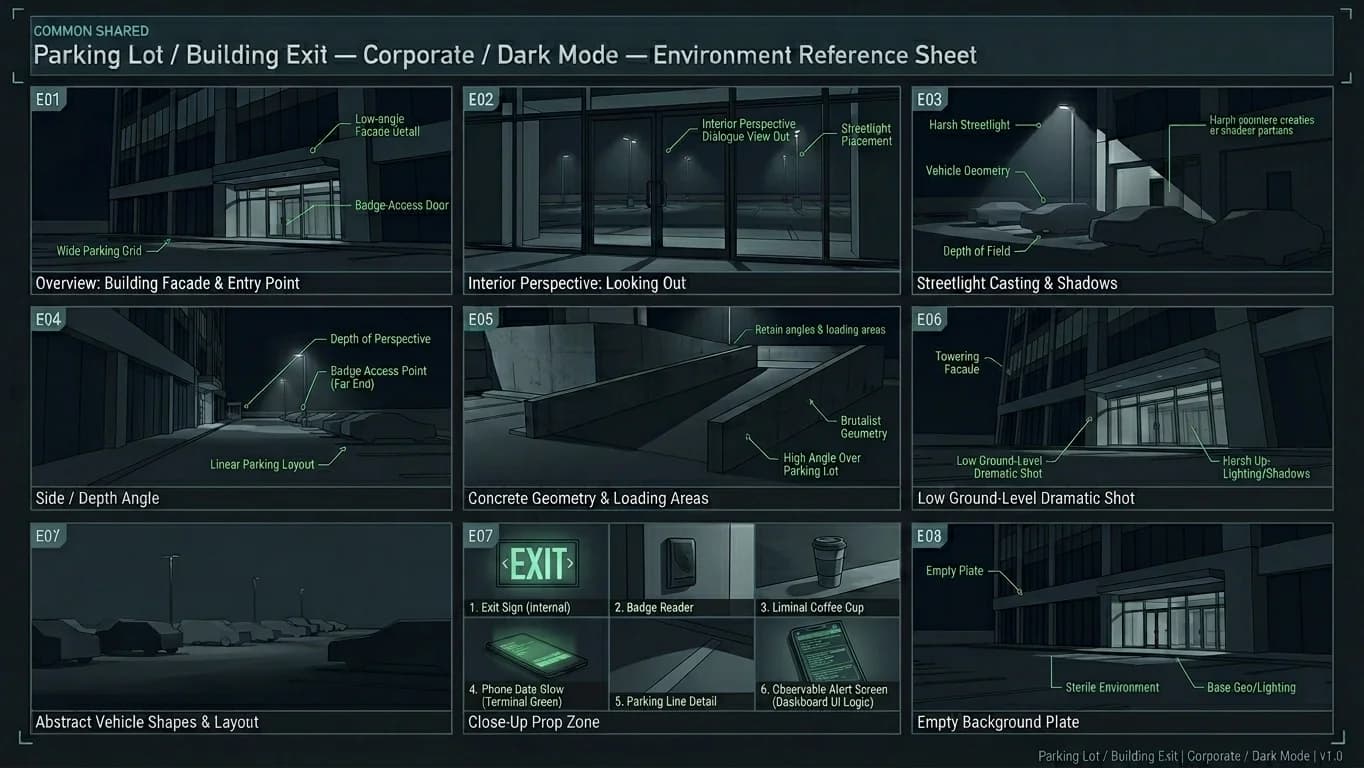
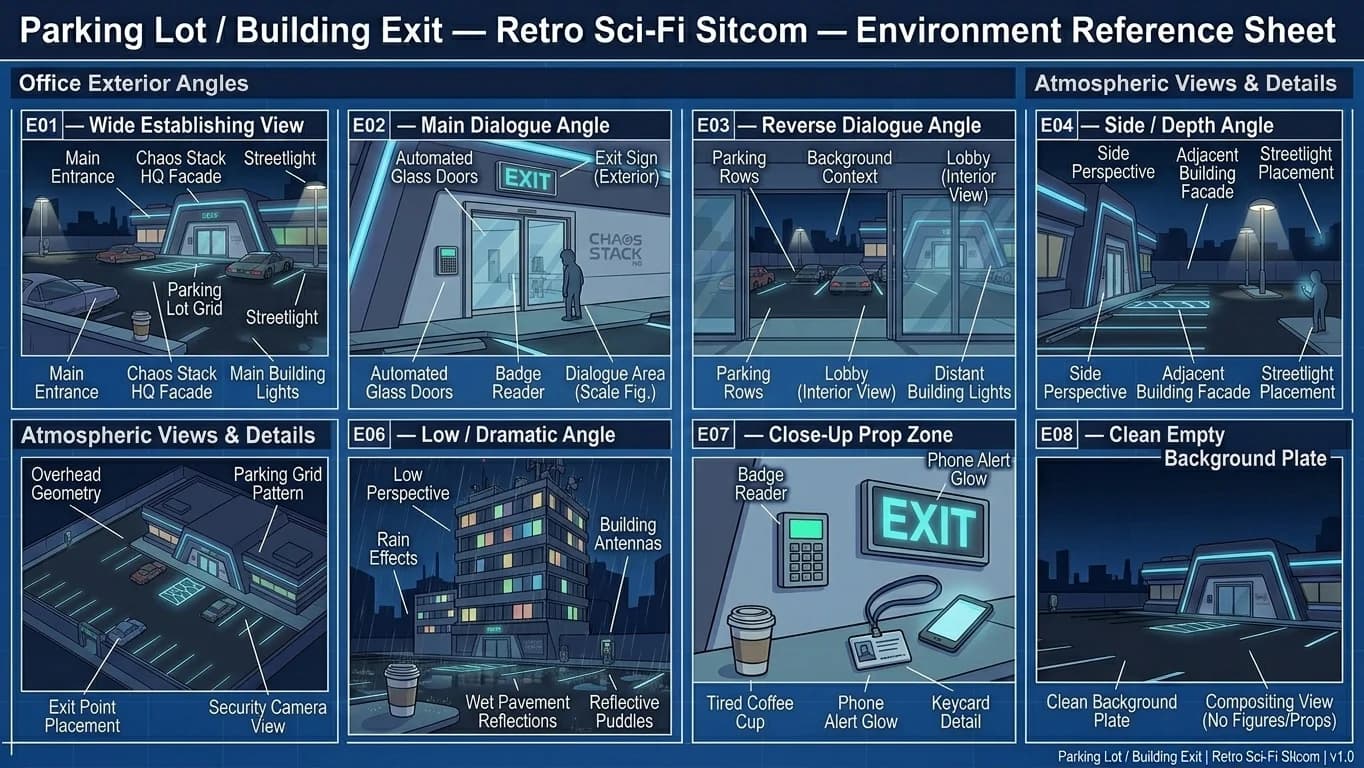
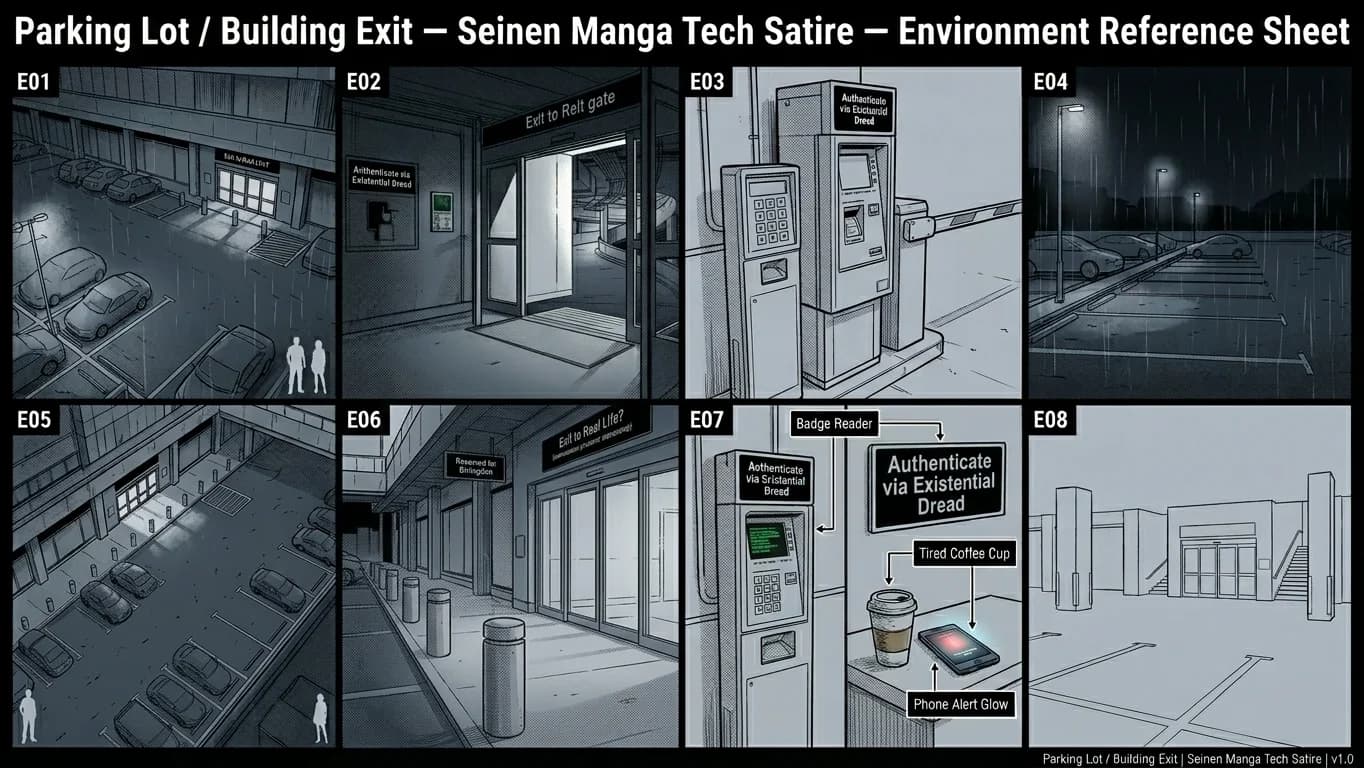
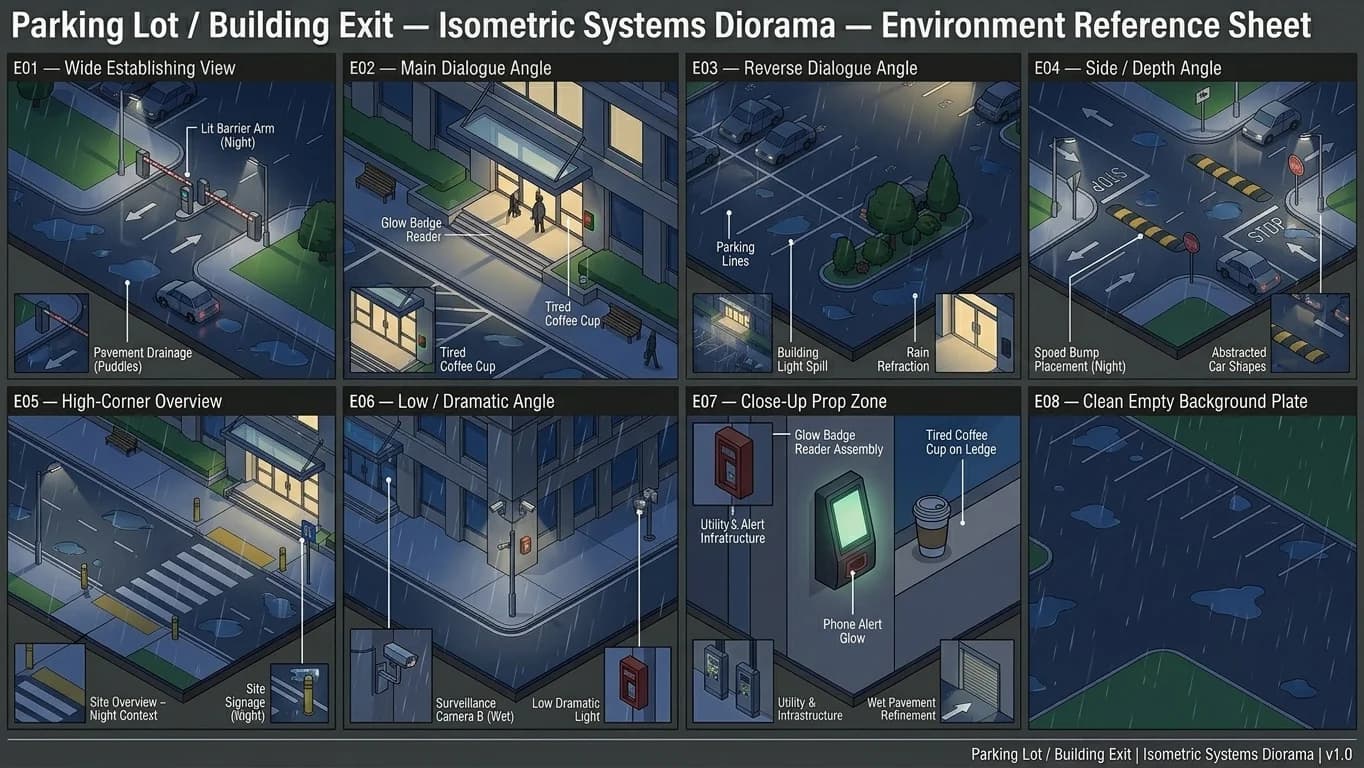
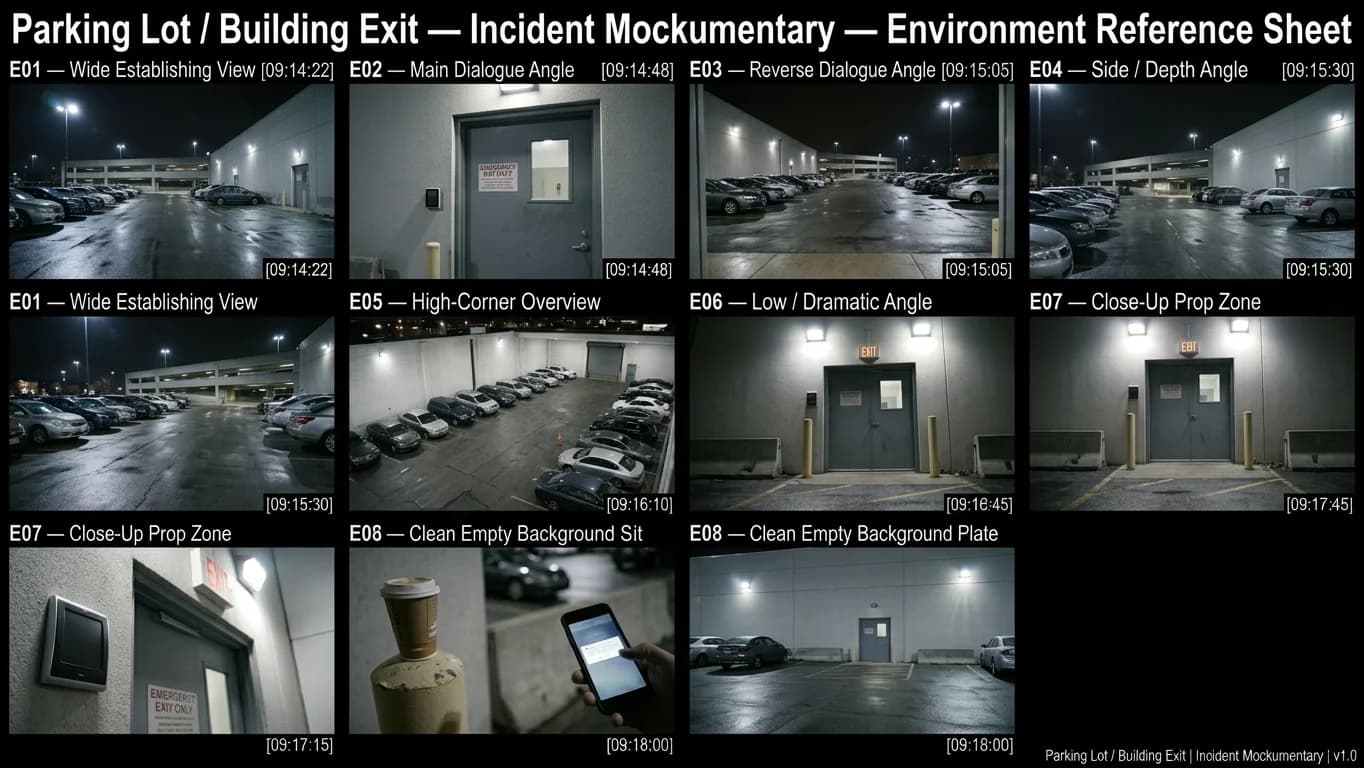
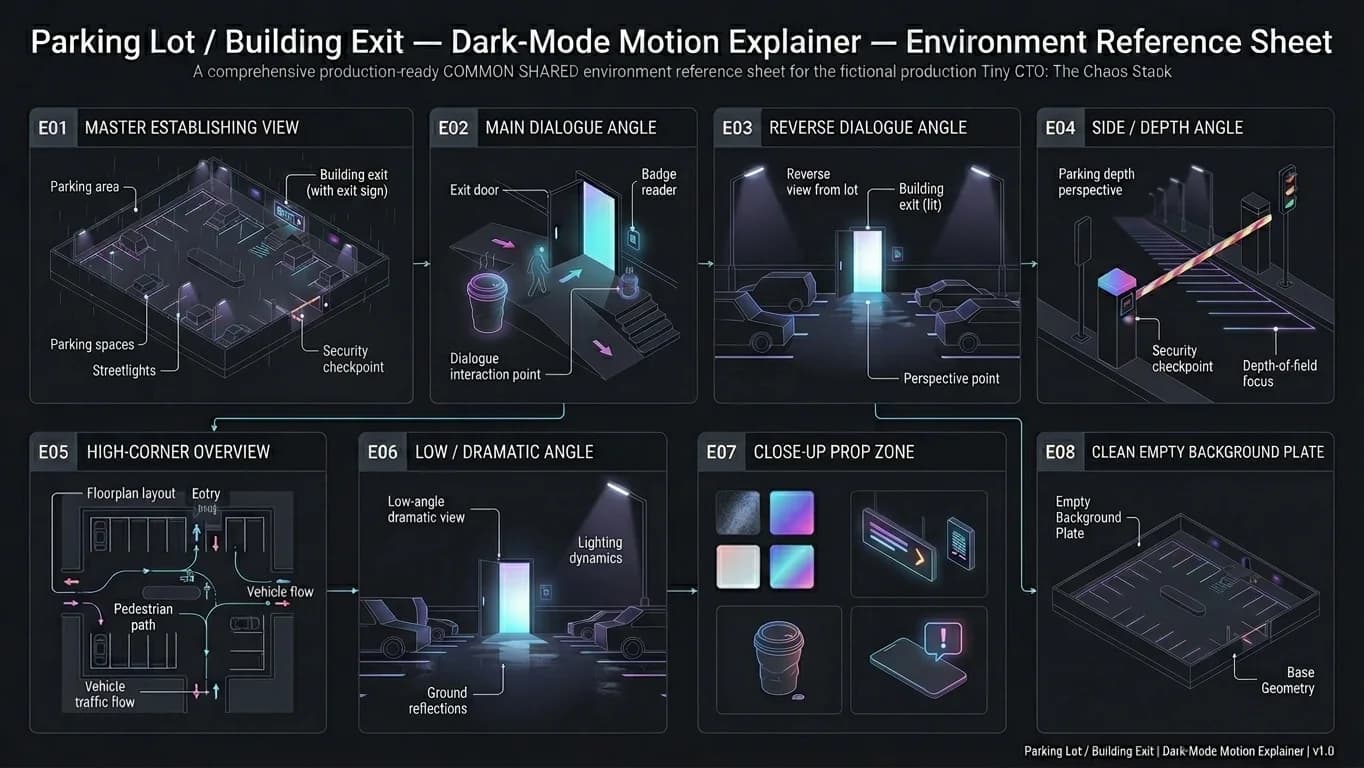
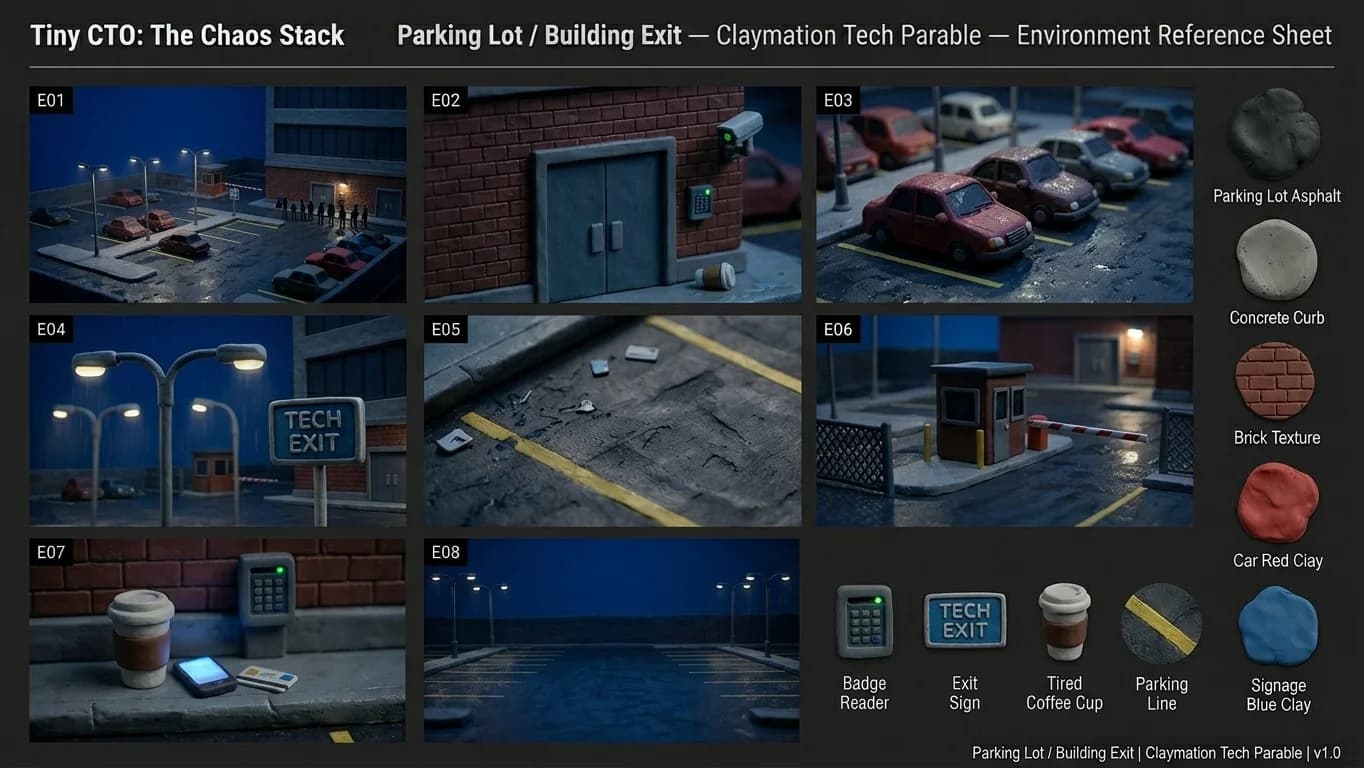
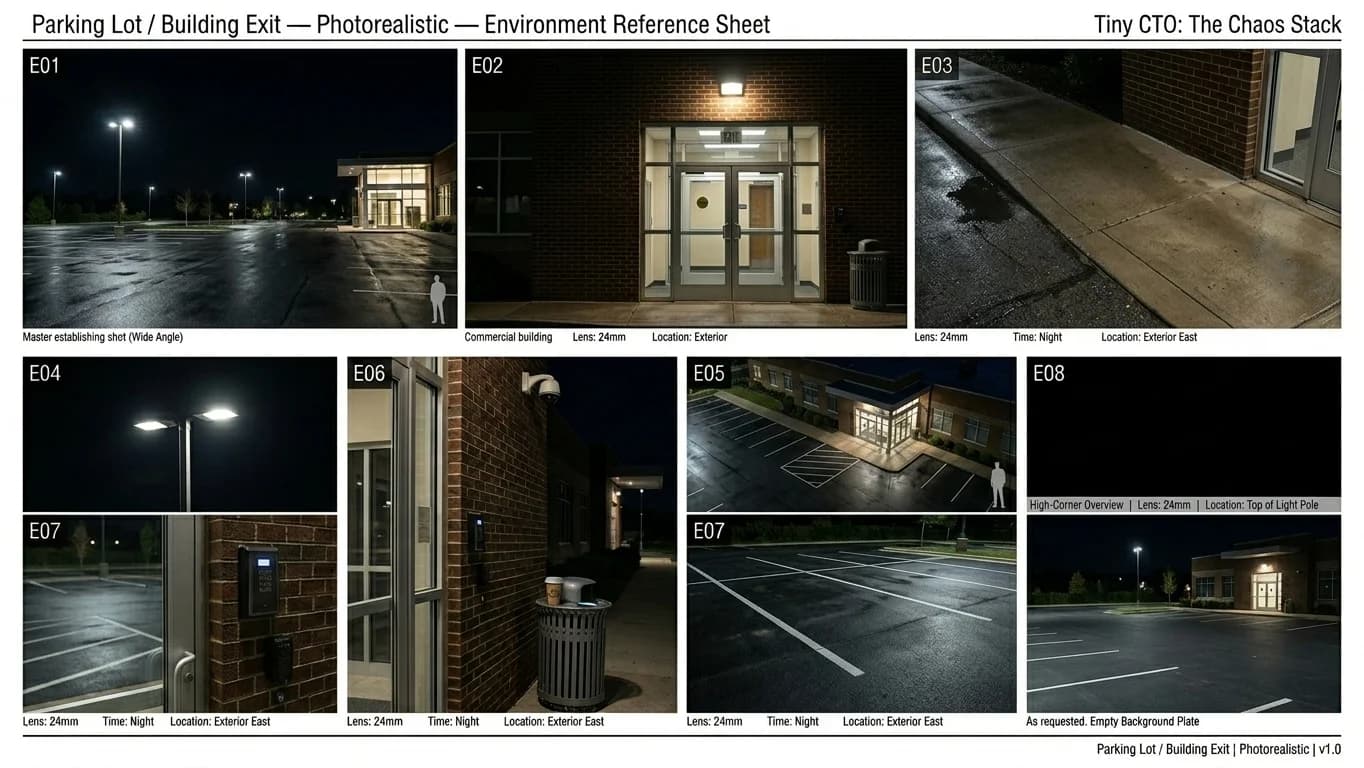
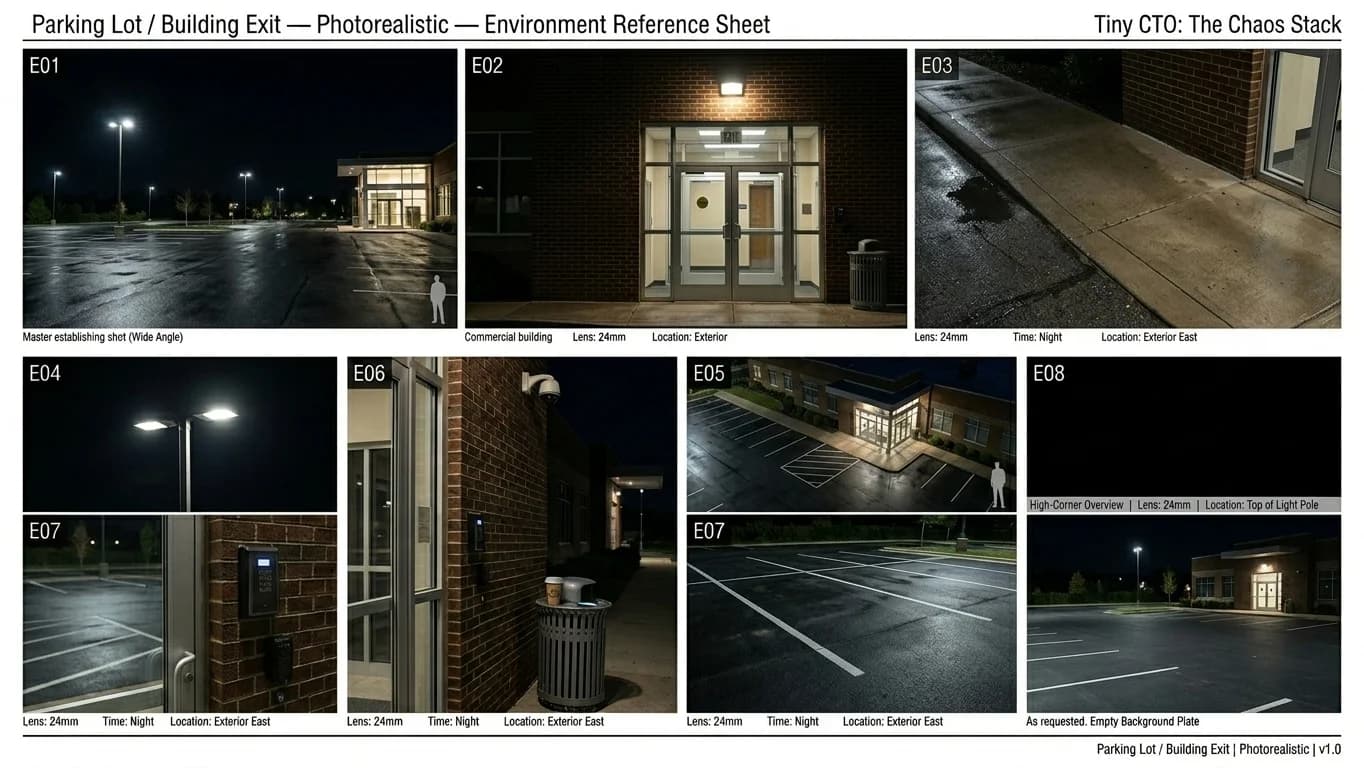
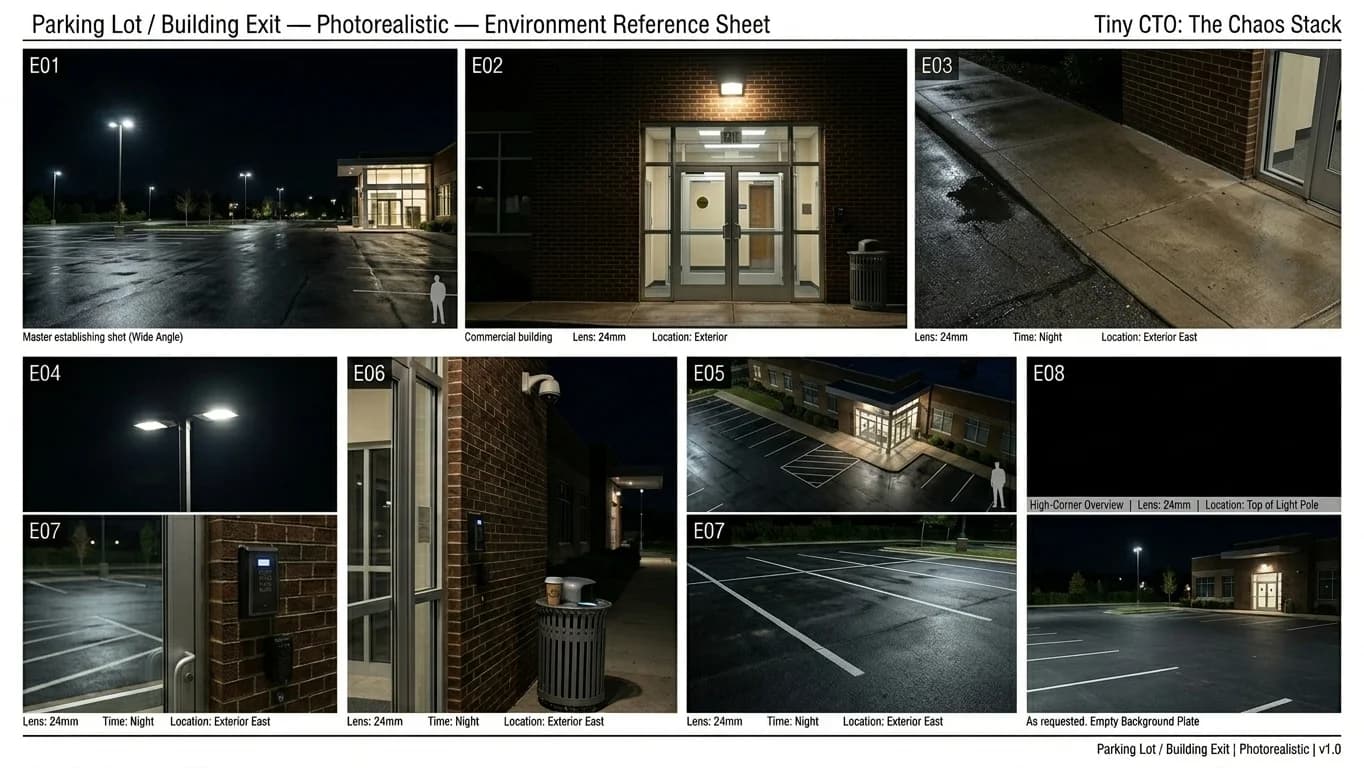
Parking Lot / Building Exit
The Parking Lot / Building Exit is a common setting within the Chaos Stack universe.


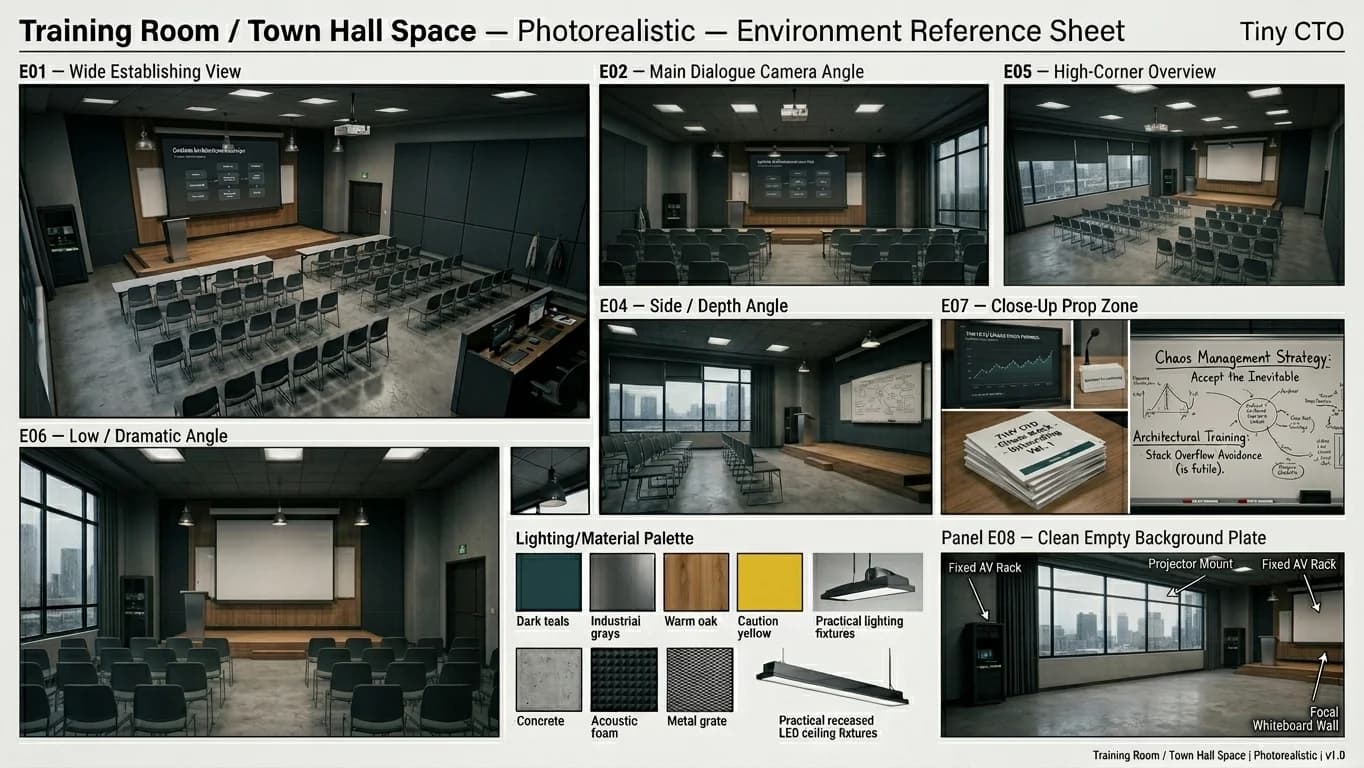
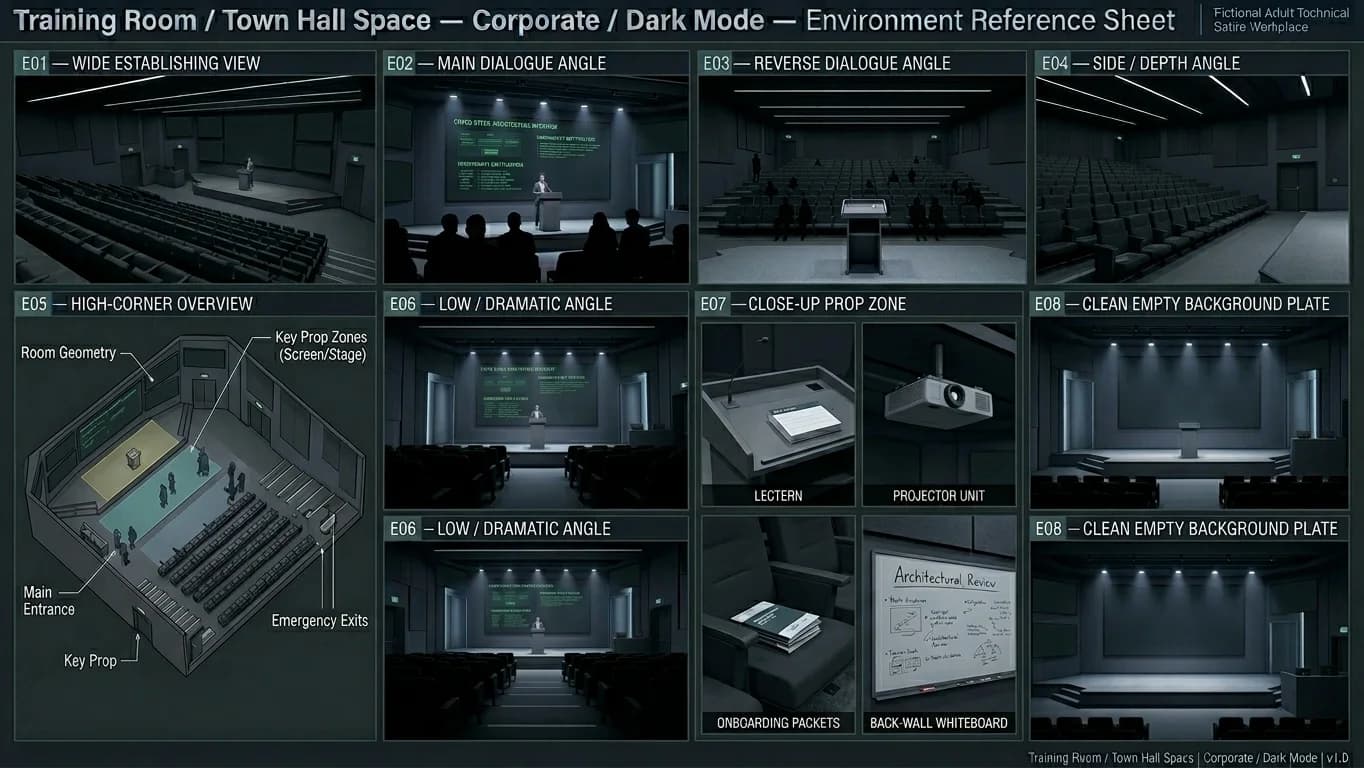
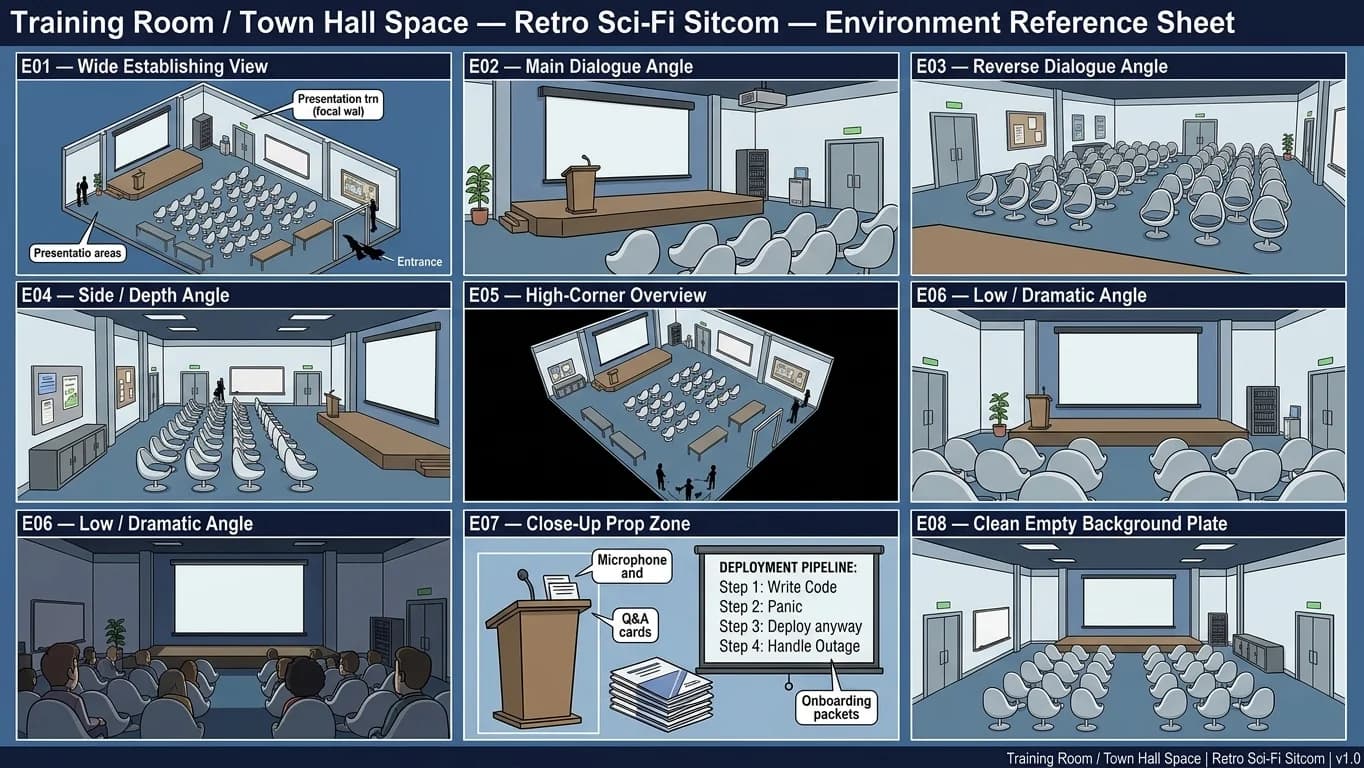
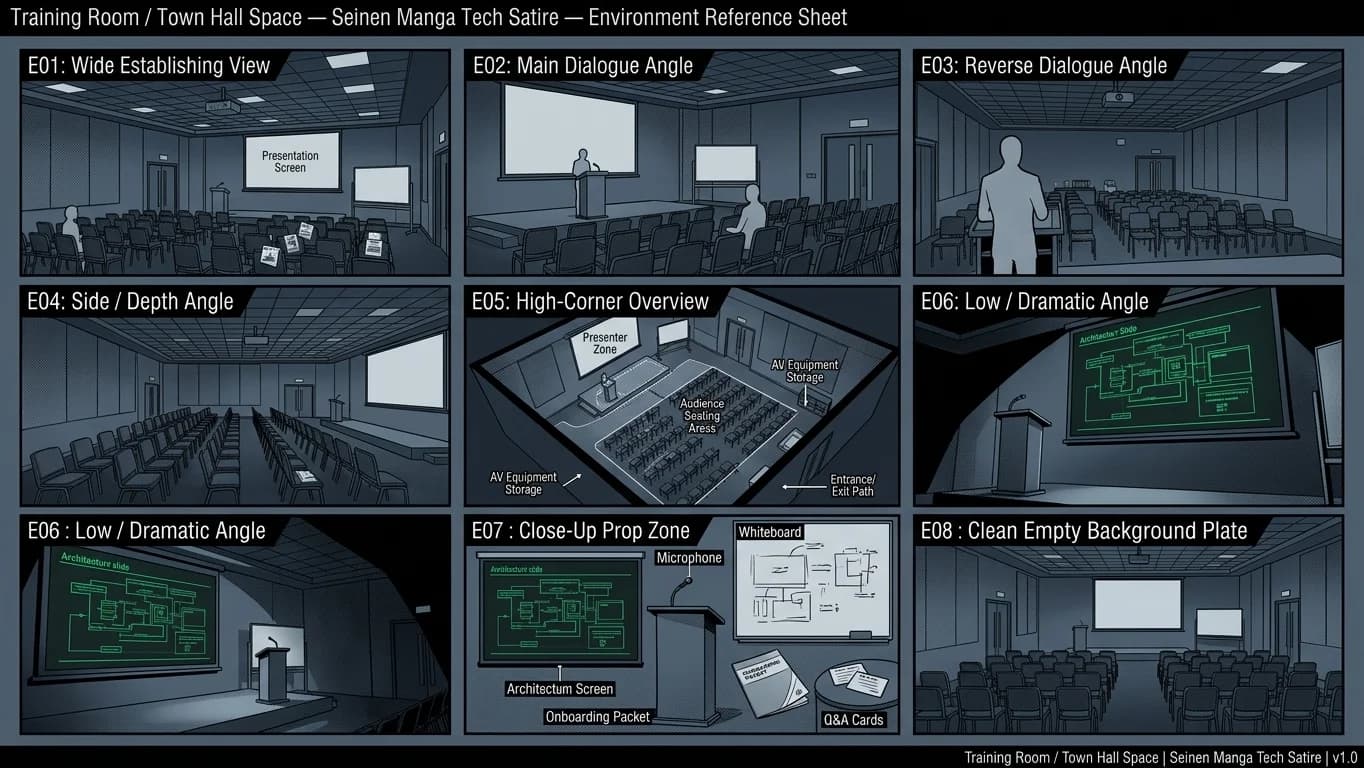
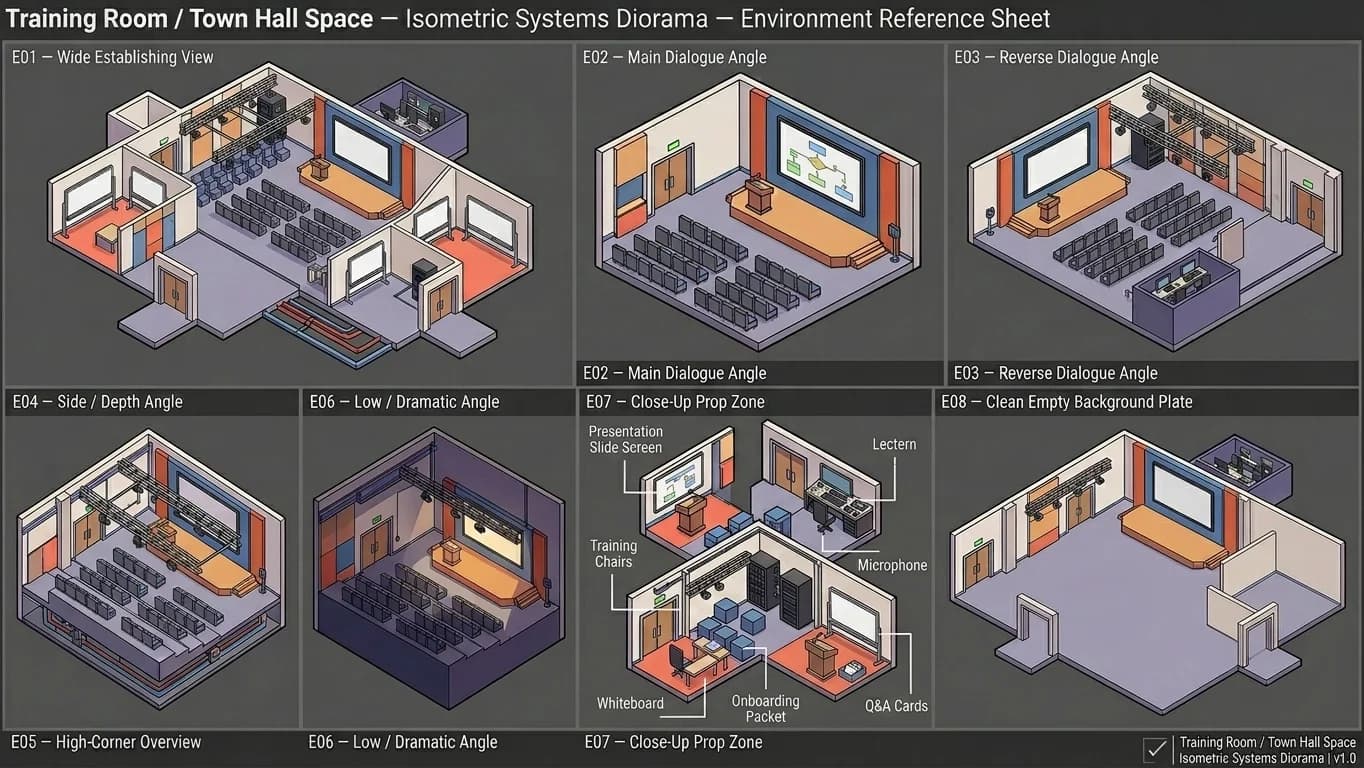
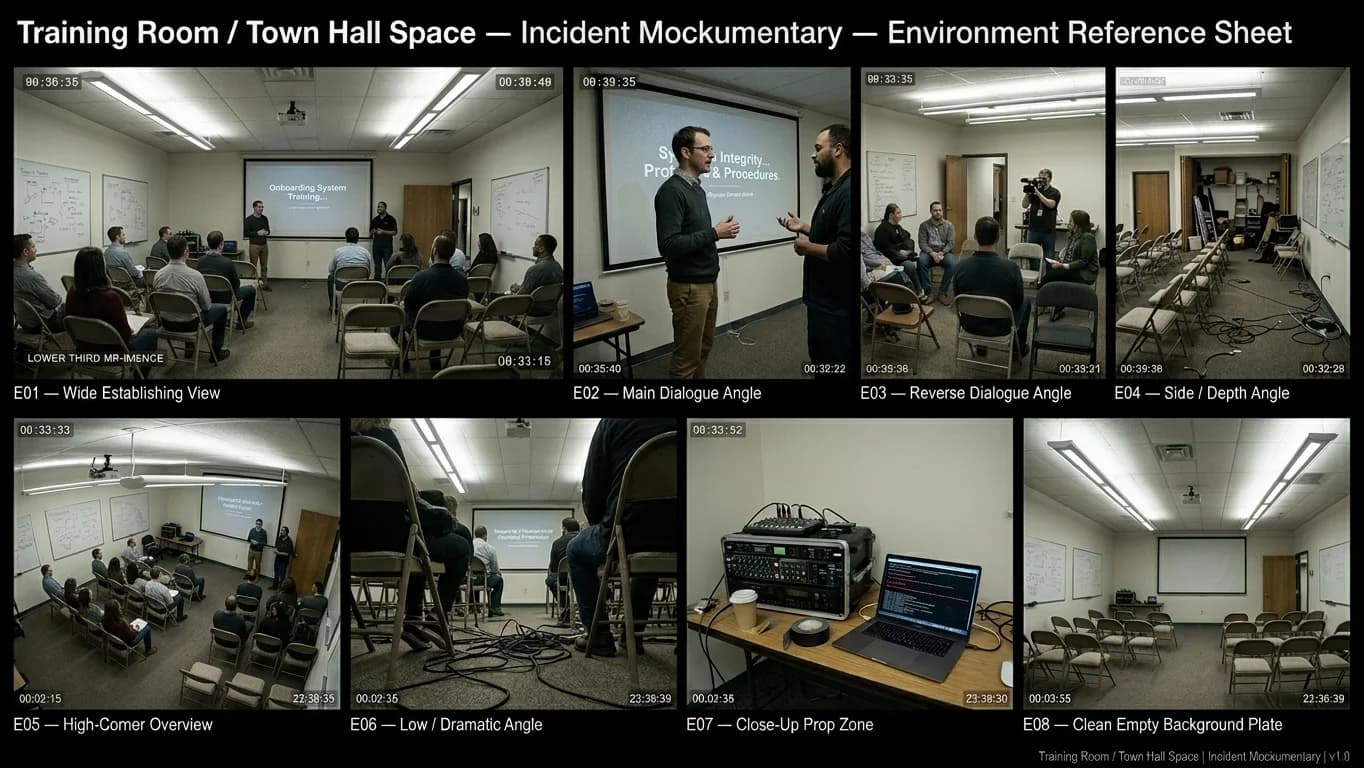
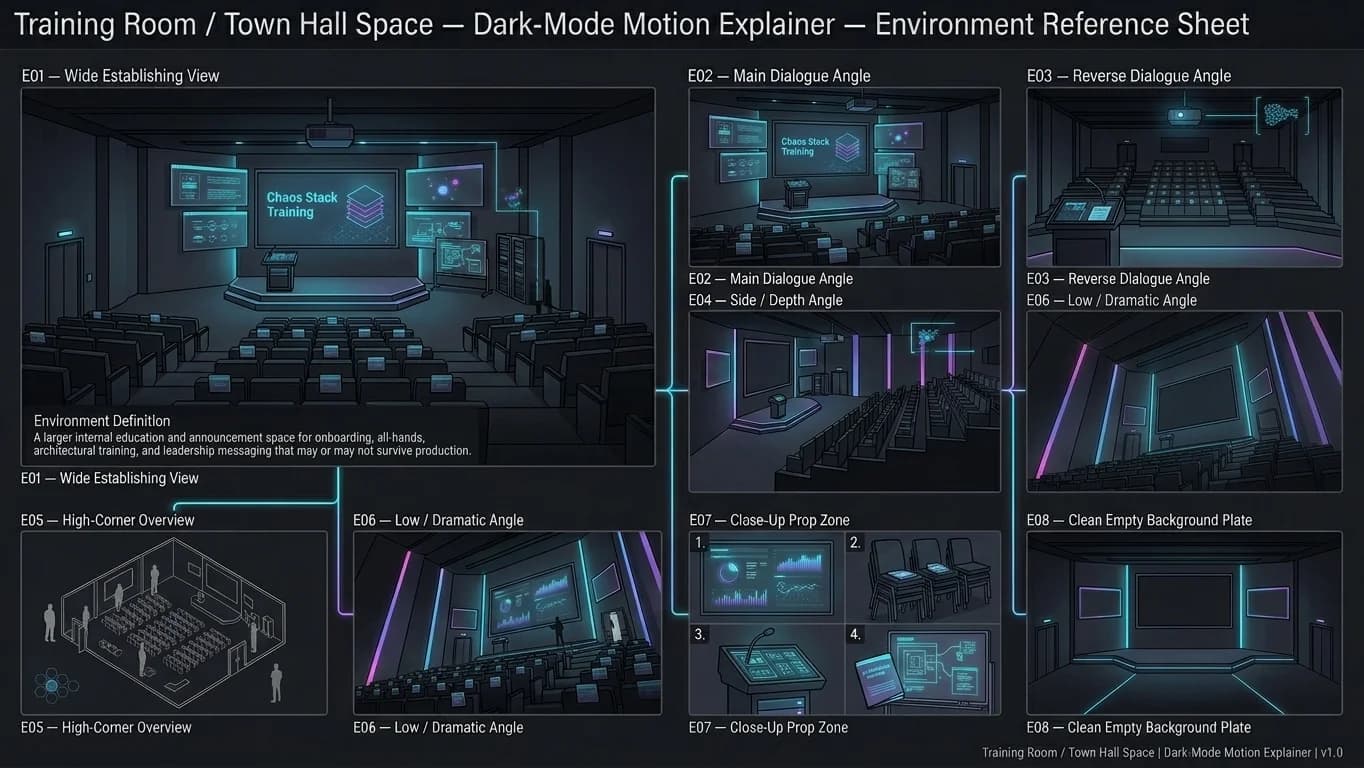
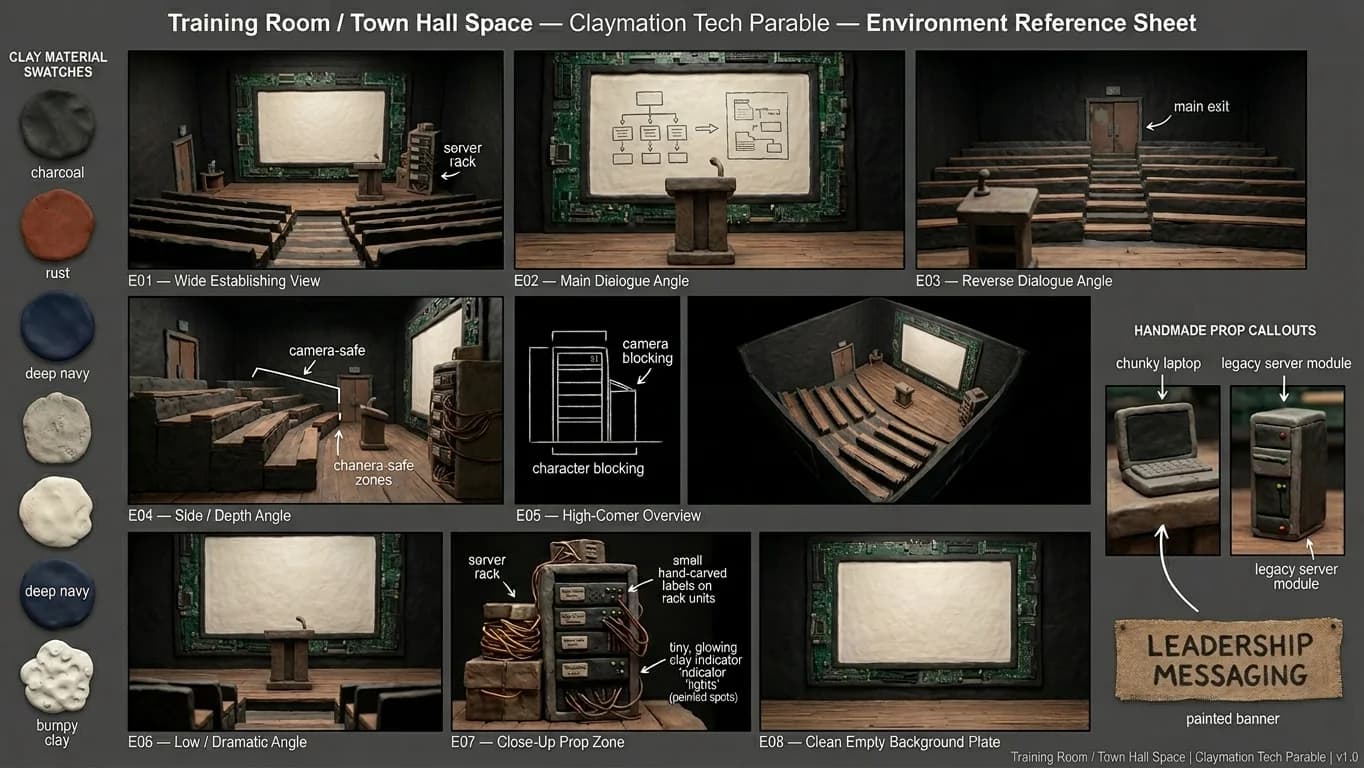
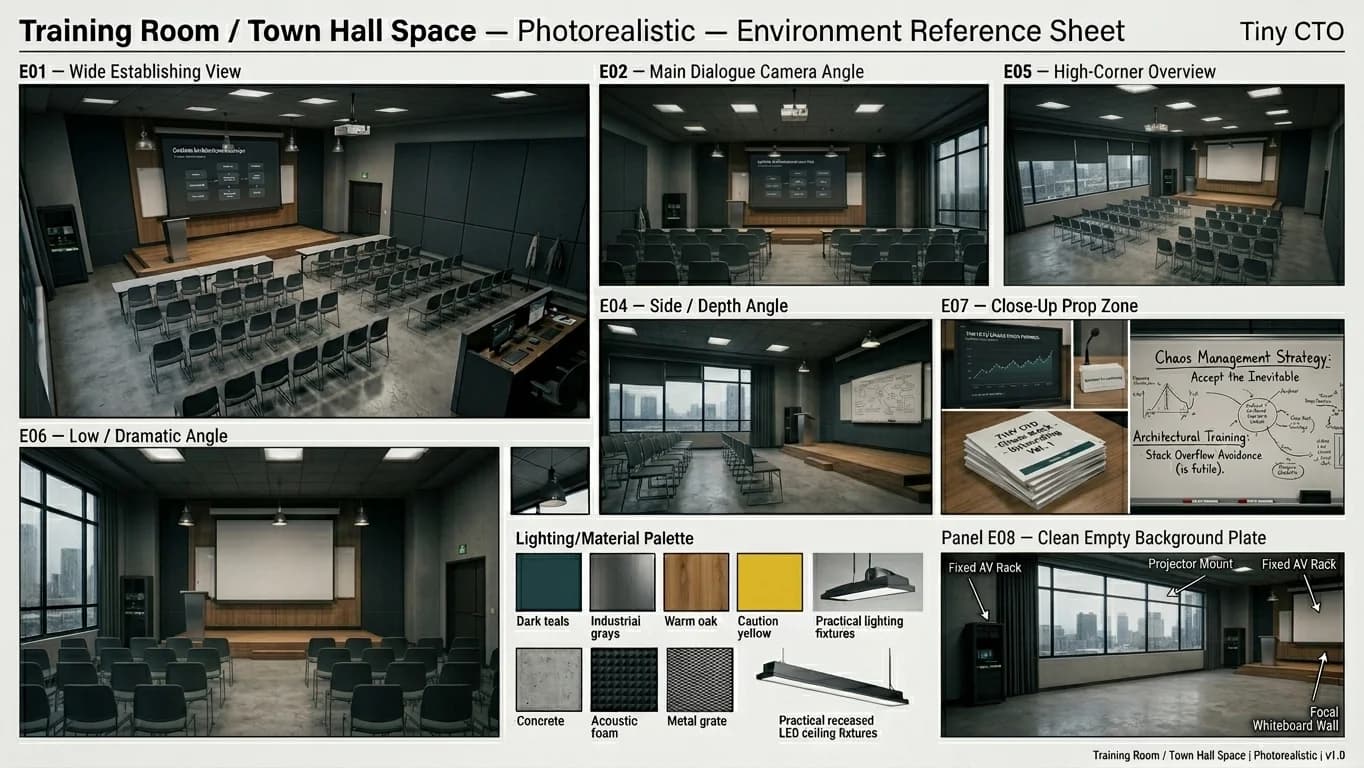
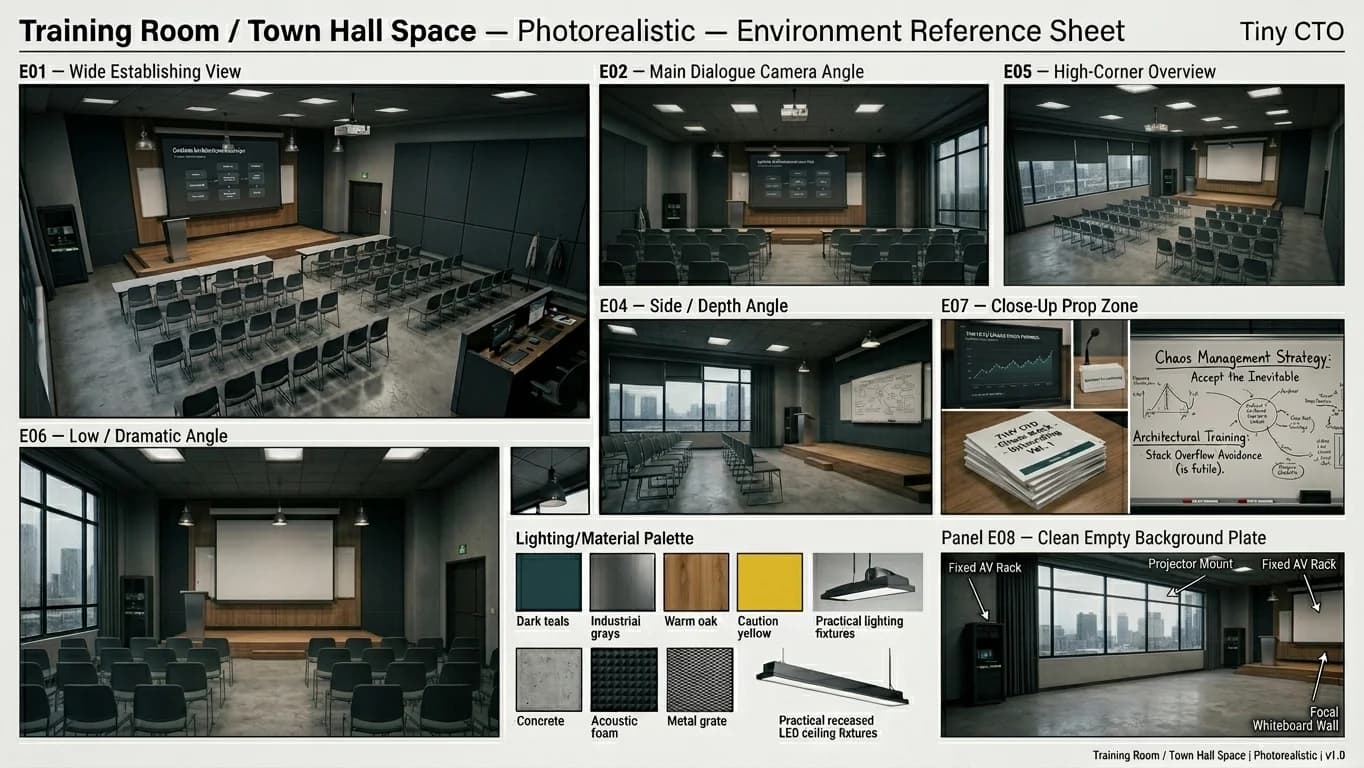
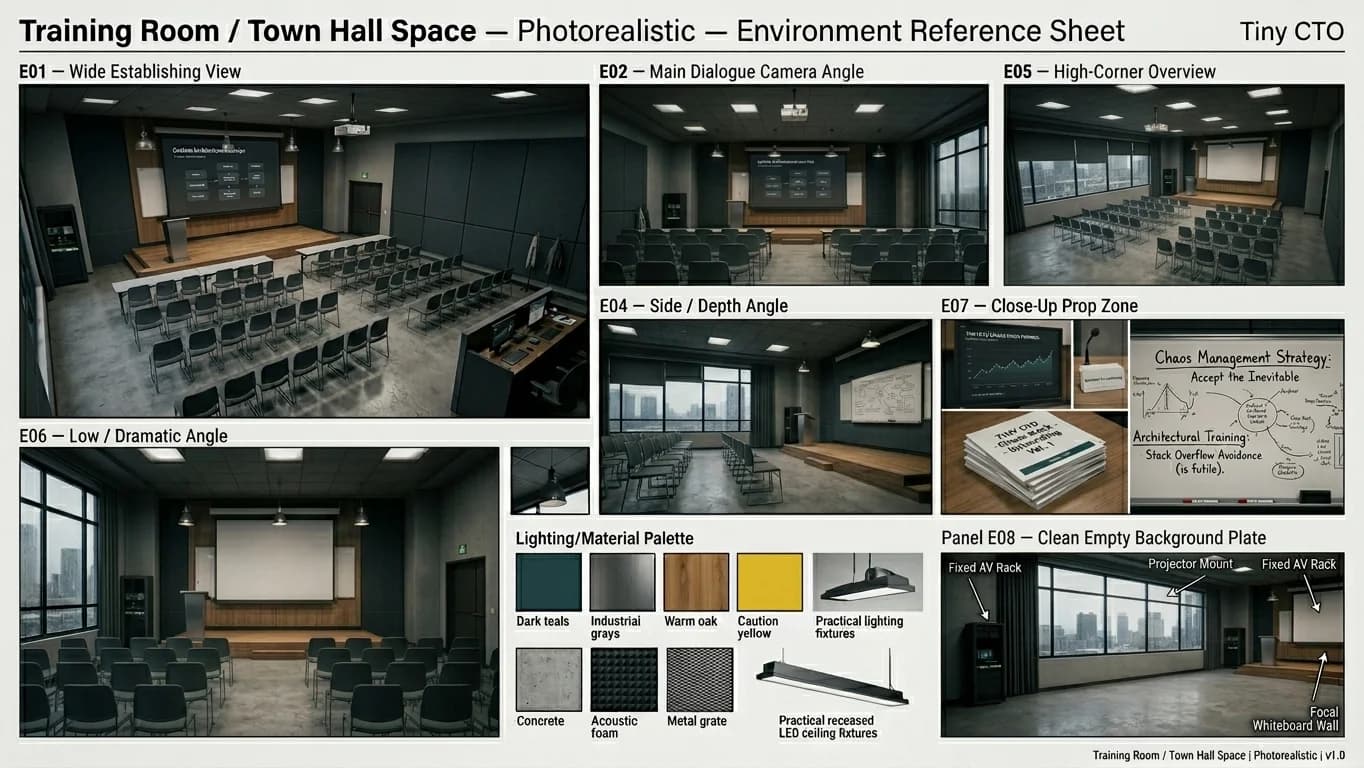
Training Room / Town Hall Space
The Training Room / Town Hall Space is a common setting within the Chaos Stack universe.


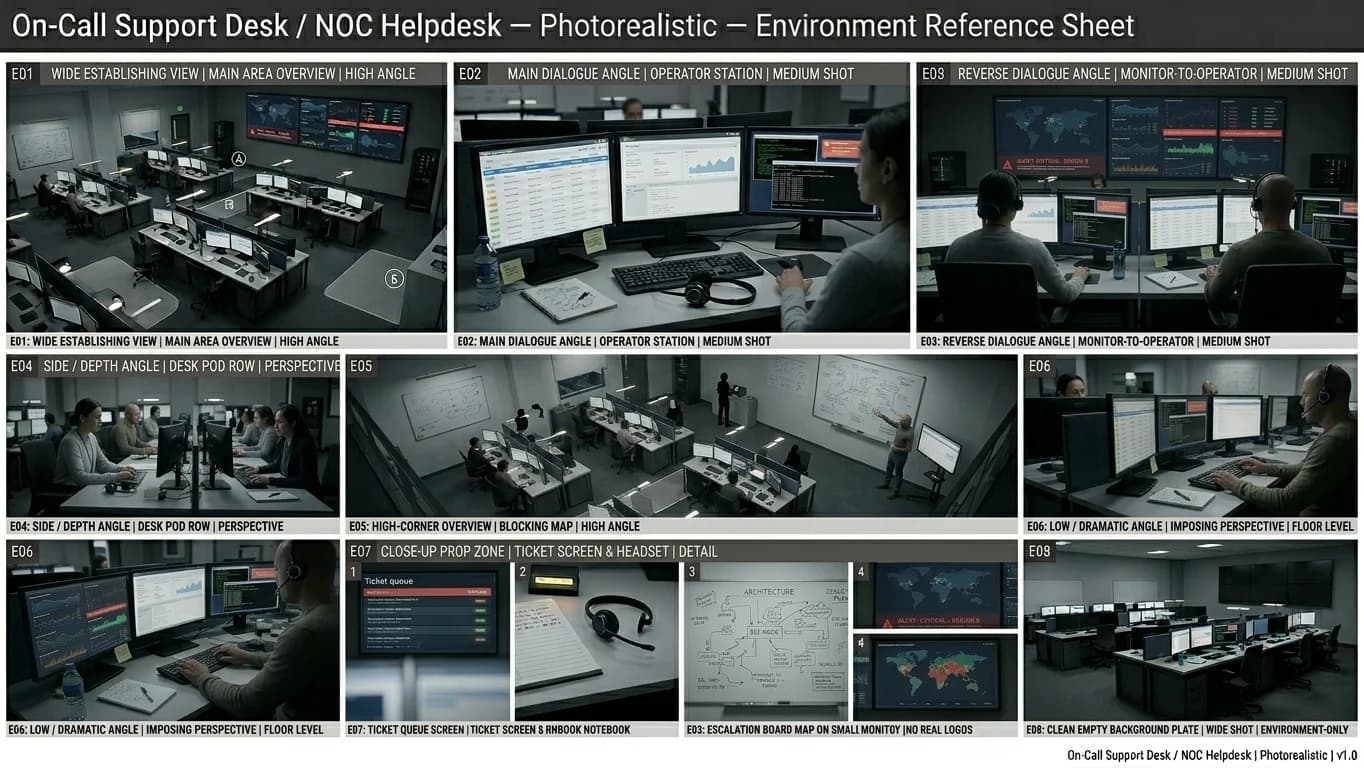
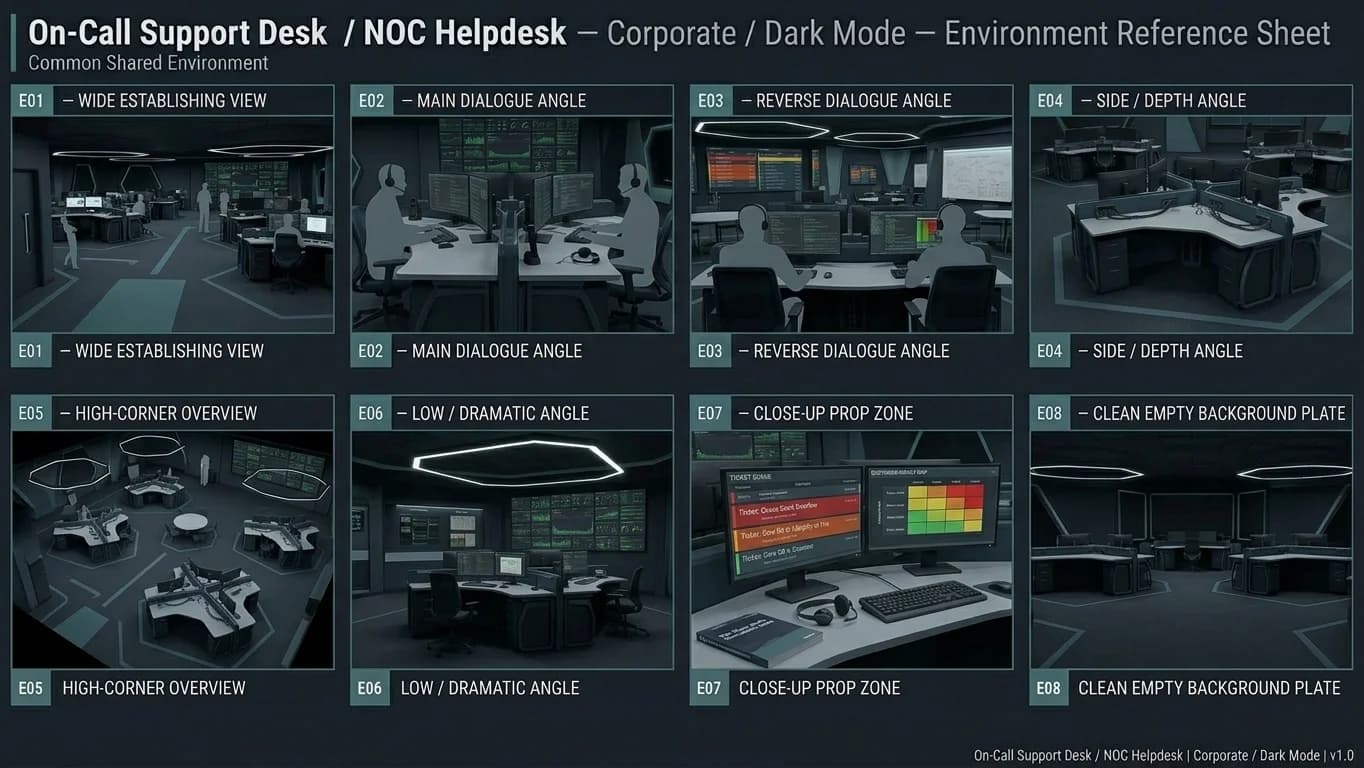
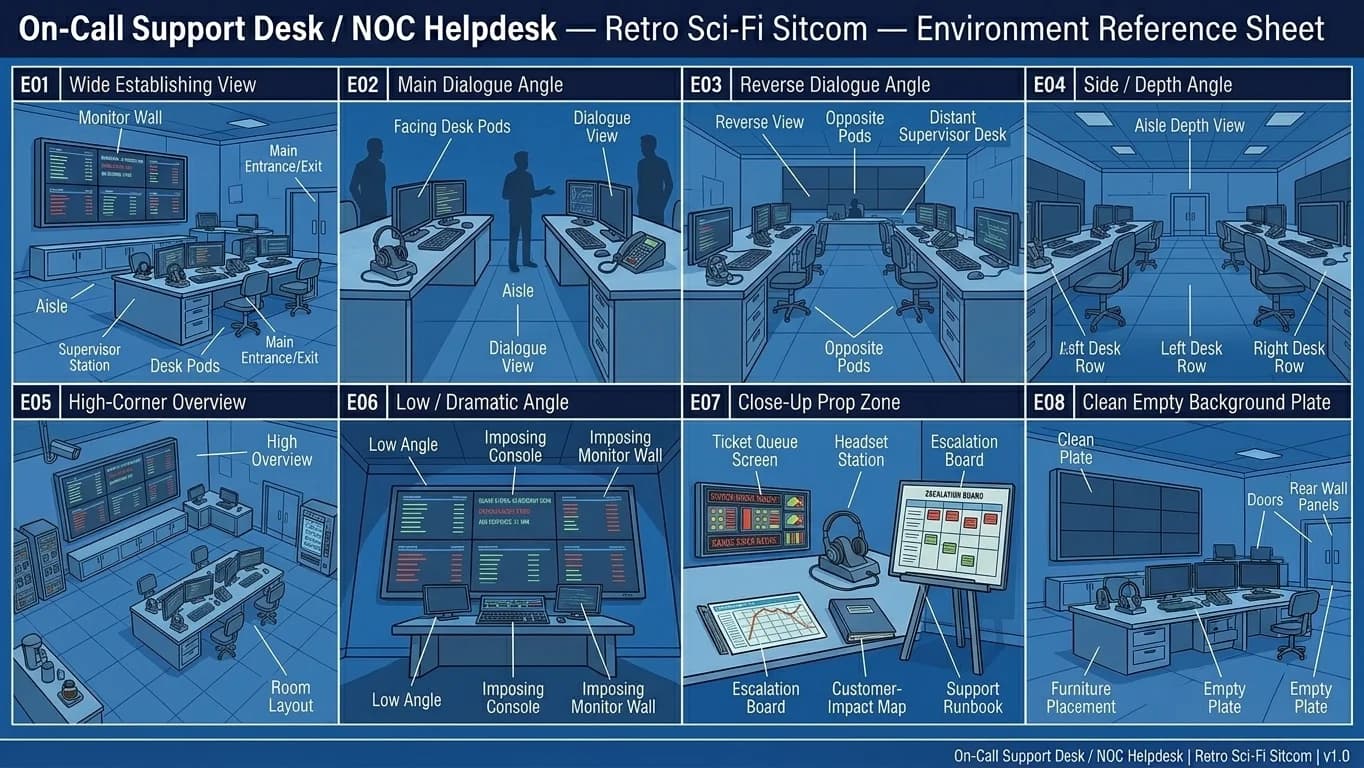
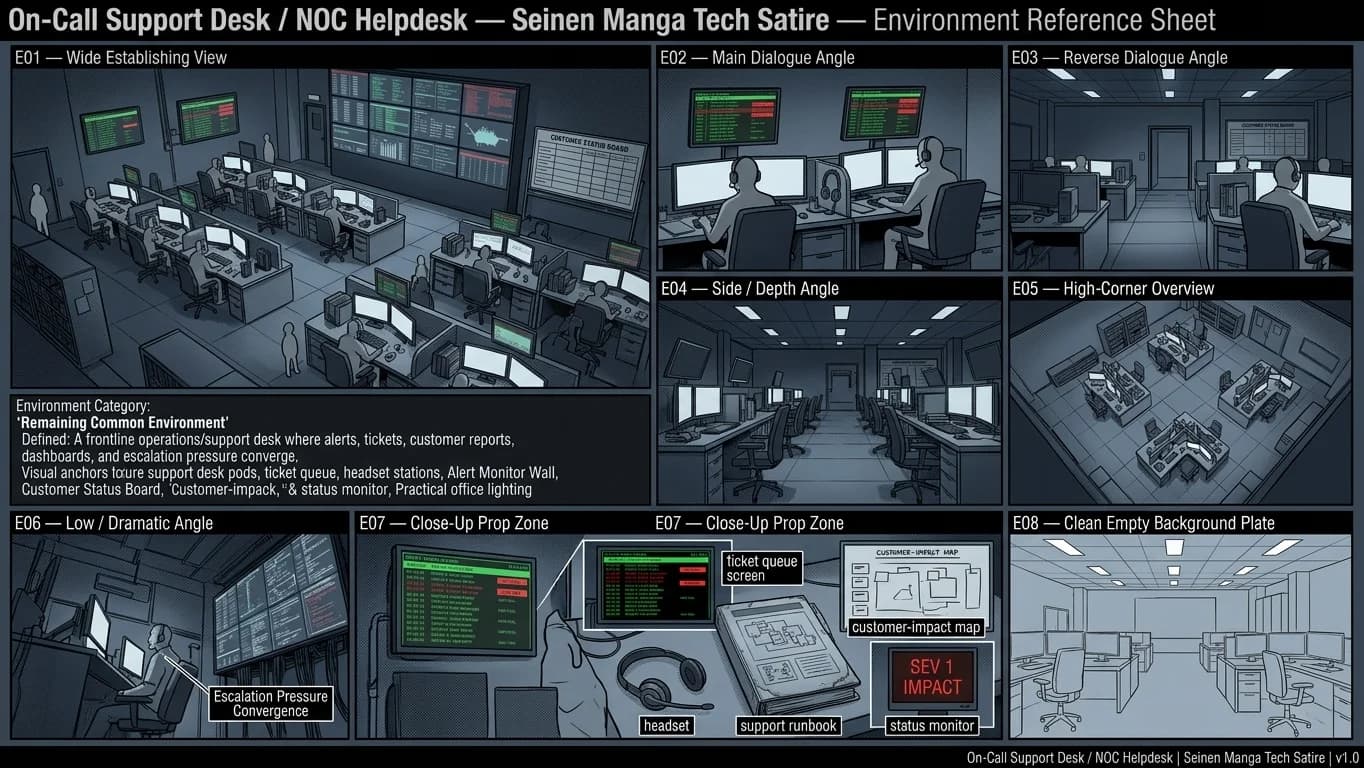
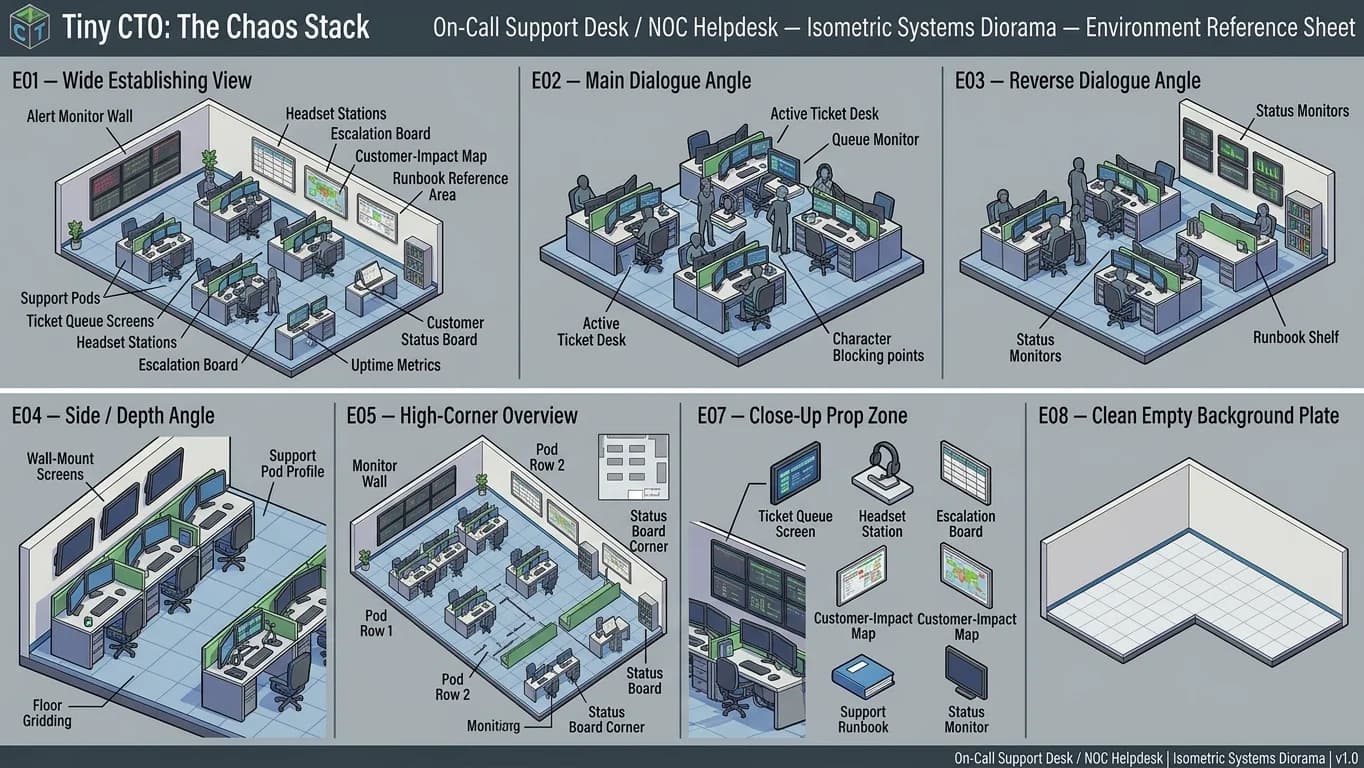
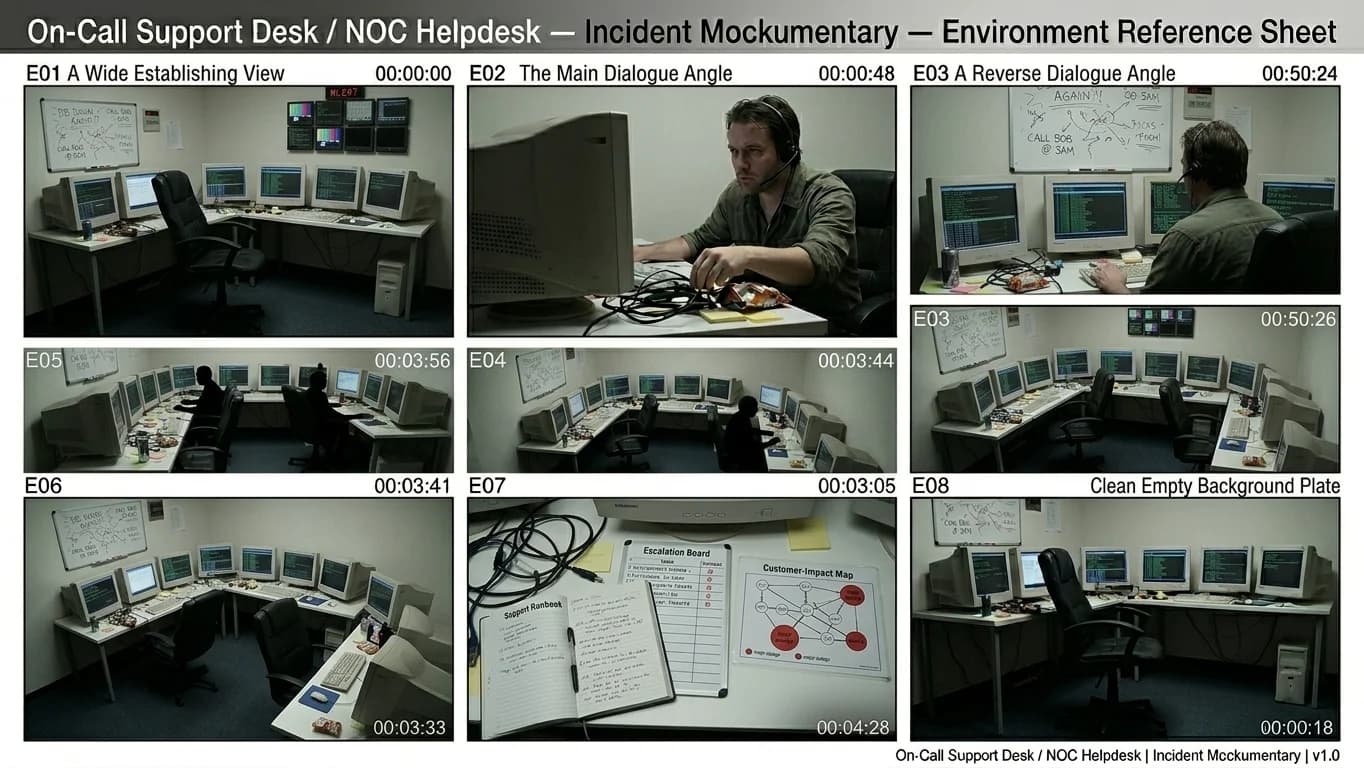
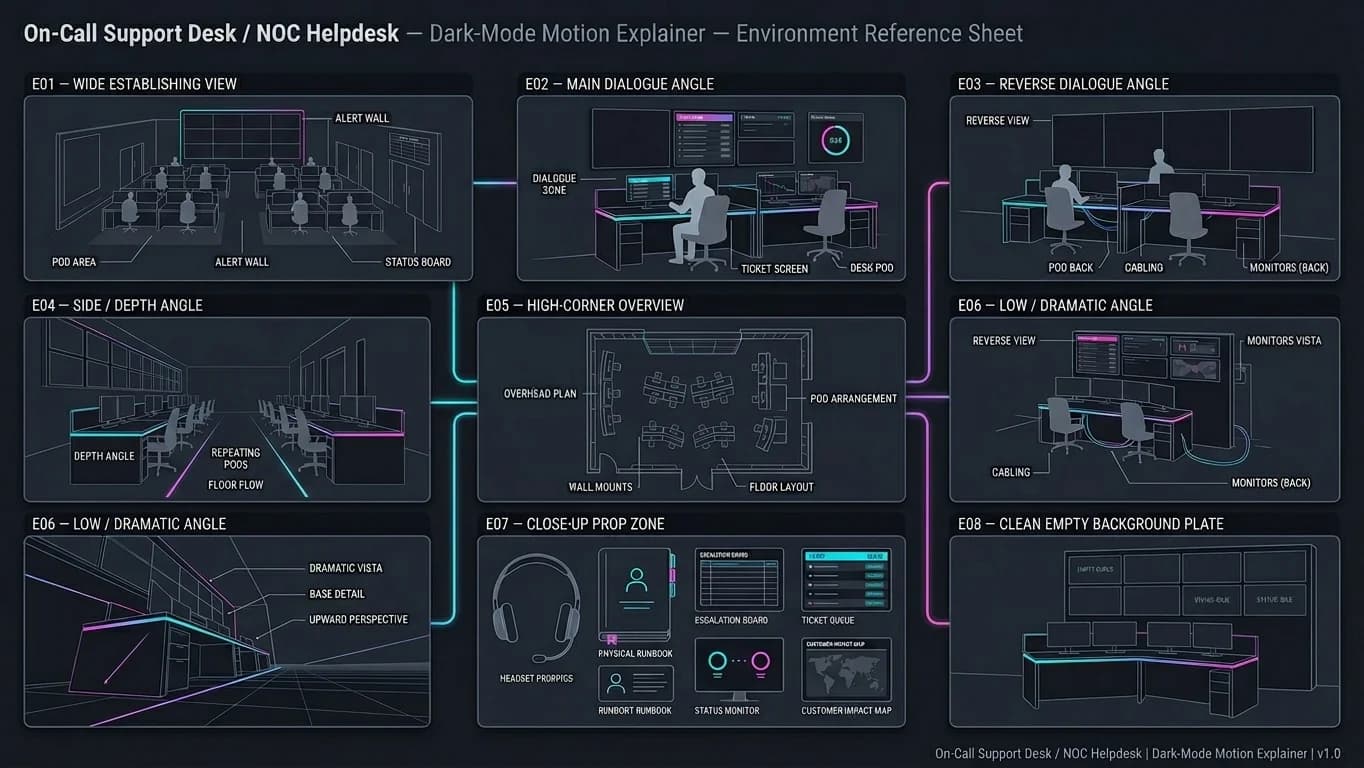
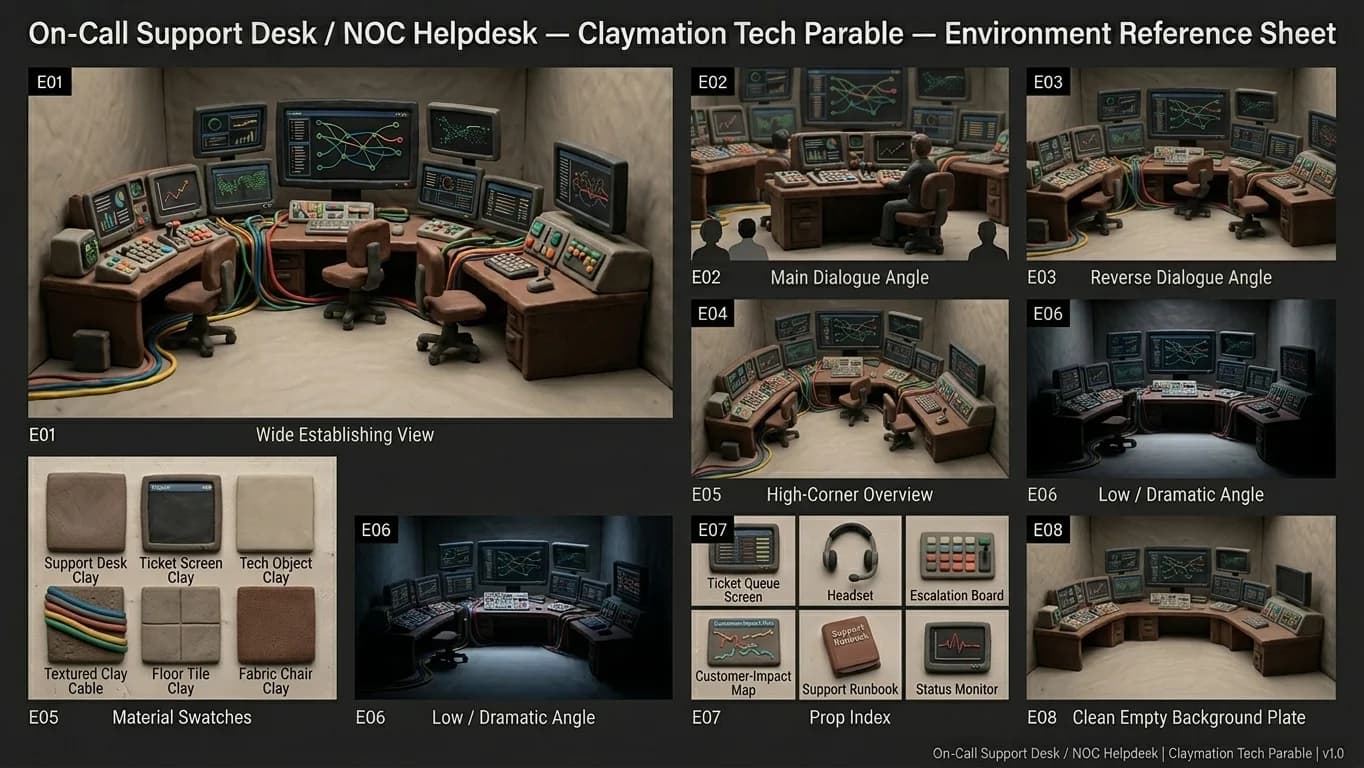
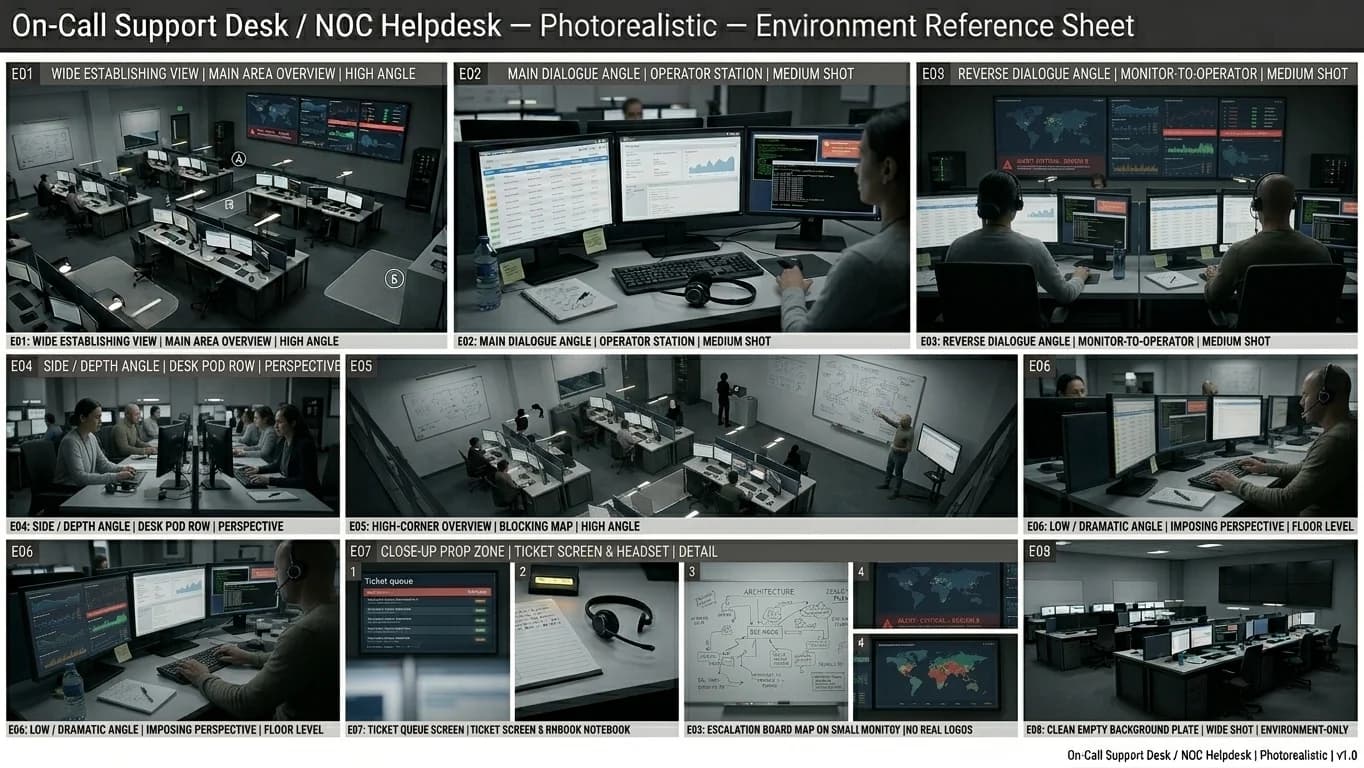
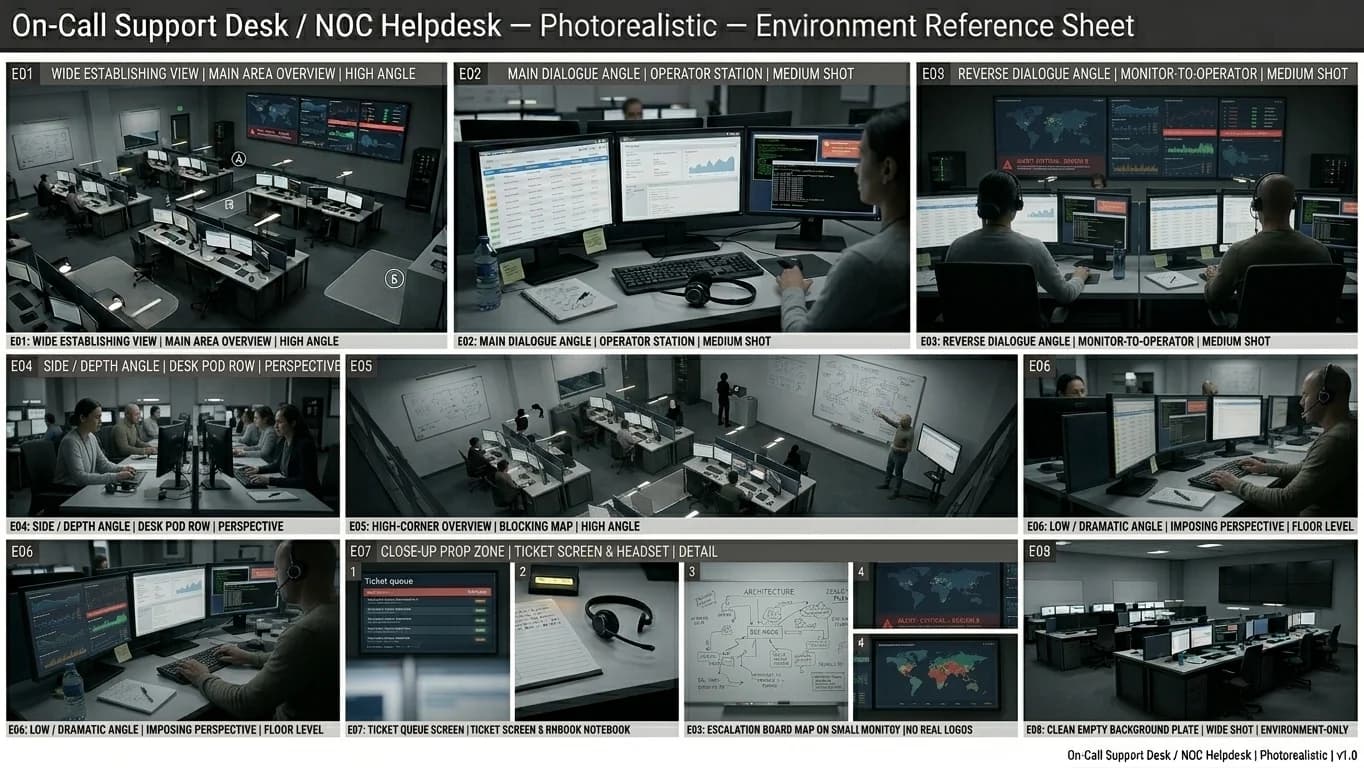
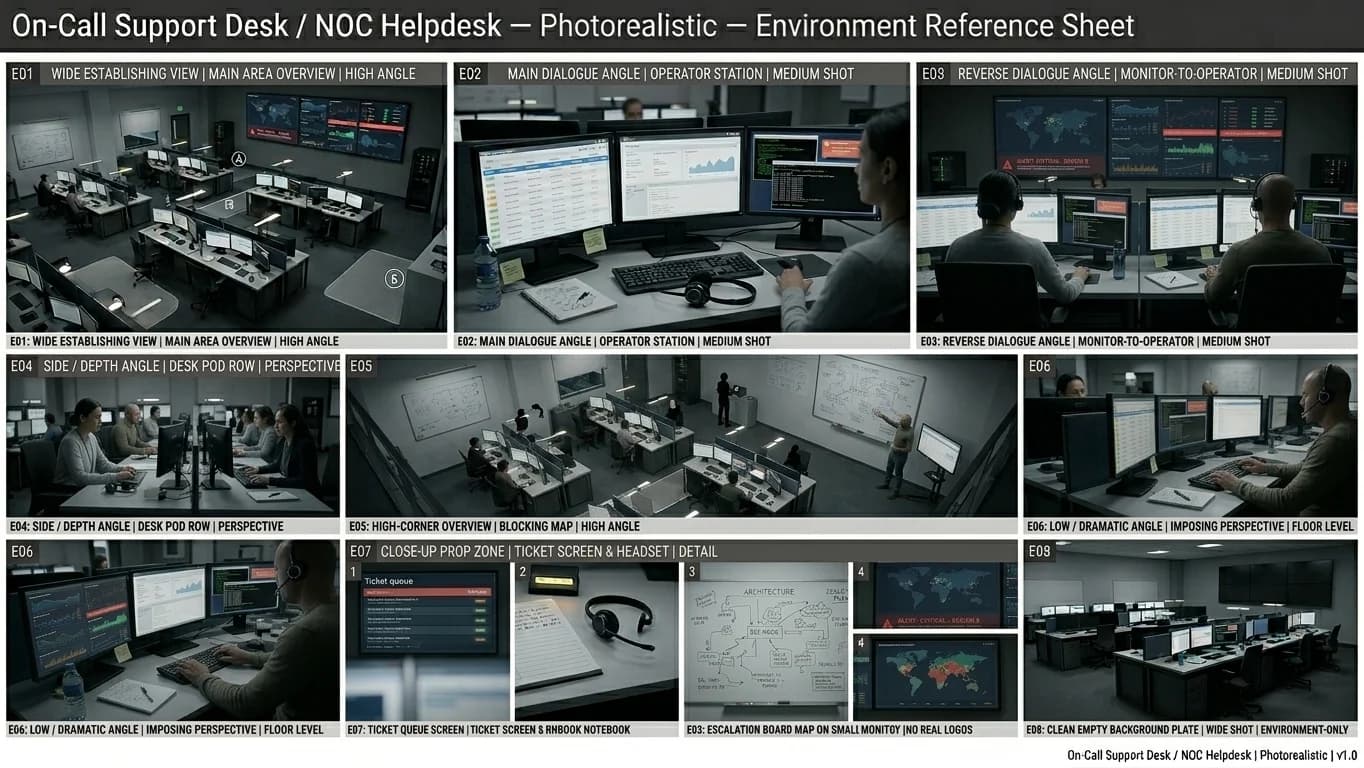
On-Call Support Desk / NOC Helpdesk
The On-Call Support Desk / NOC Helpdesk is a common setting within the Chaos Stack universe.
Private character environments
Private environments are character-specific spaces. They show what a system pressure looks like when it follows a character away from the shared workplace.
A common environment shows the public event. A private environment shows the personal cost, preparation, contradiction, or hidden pattern behind it.
For example, The PM’s Home Office can show roadmap pressure, prioritization, and stakeholder alignment work before it becomes a meeting. The PM’s Late-Night Incident Bedroom can show the quiet aftershock of production pressure, without turning her into a villain or stereotype.
Private environments help The Chaos Stack characters feel like adult professional archetypes rather than one-note jokes. They make the satire sharper because the pressure becomes human, not generic.

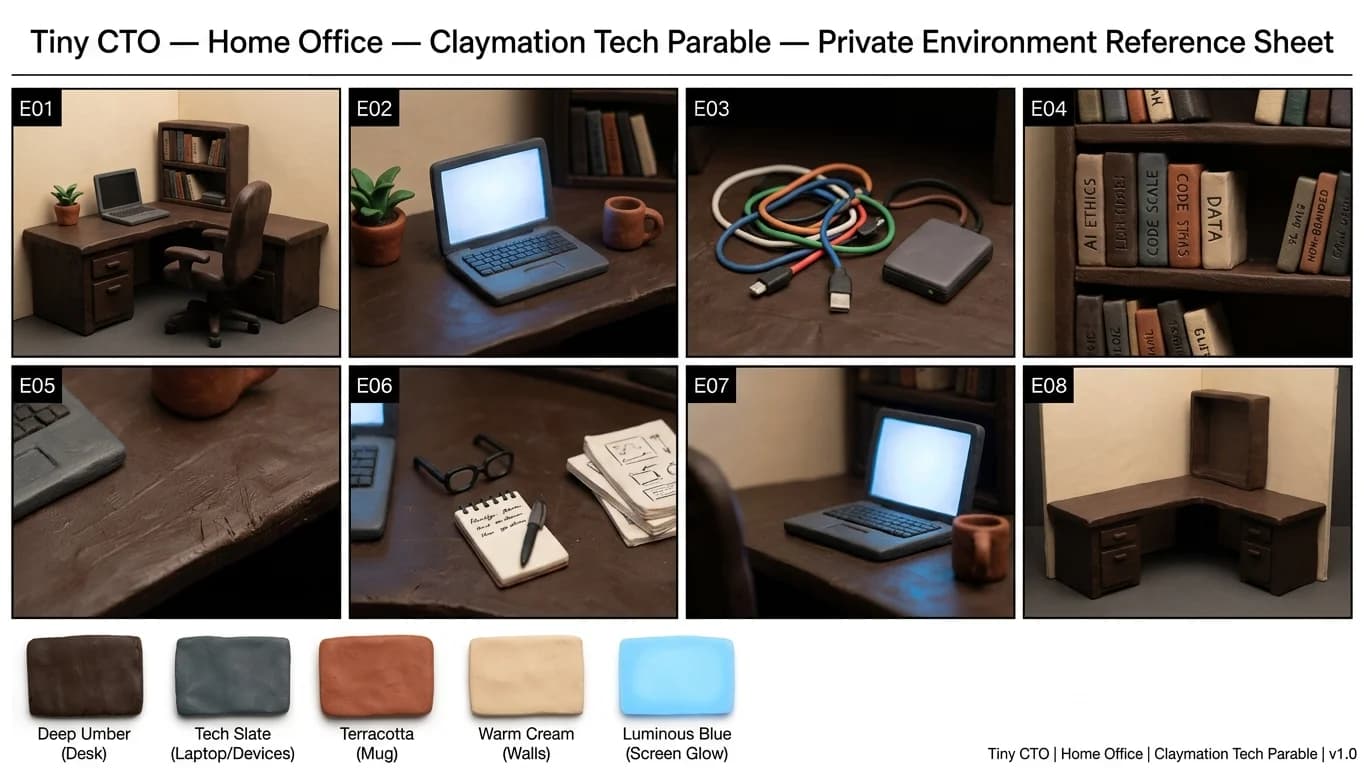
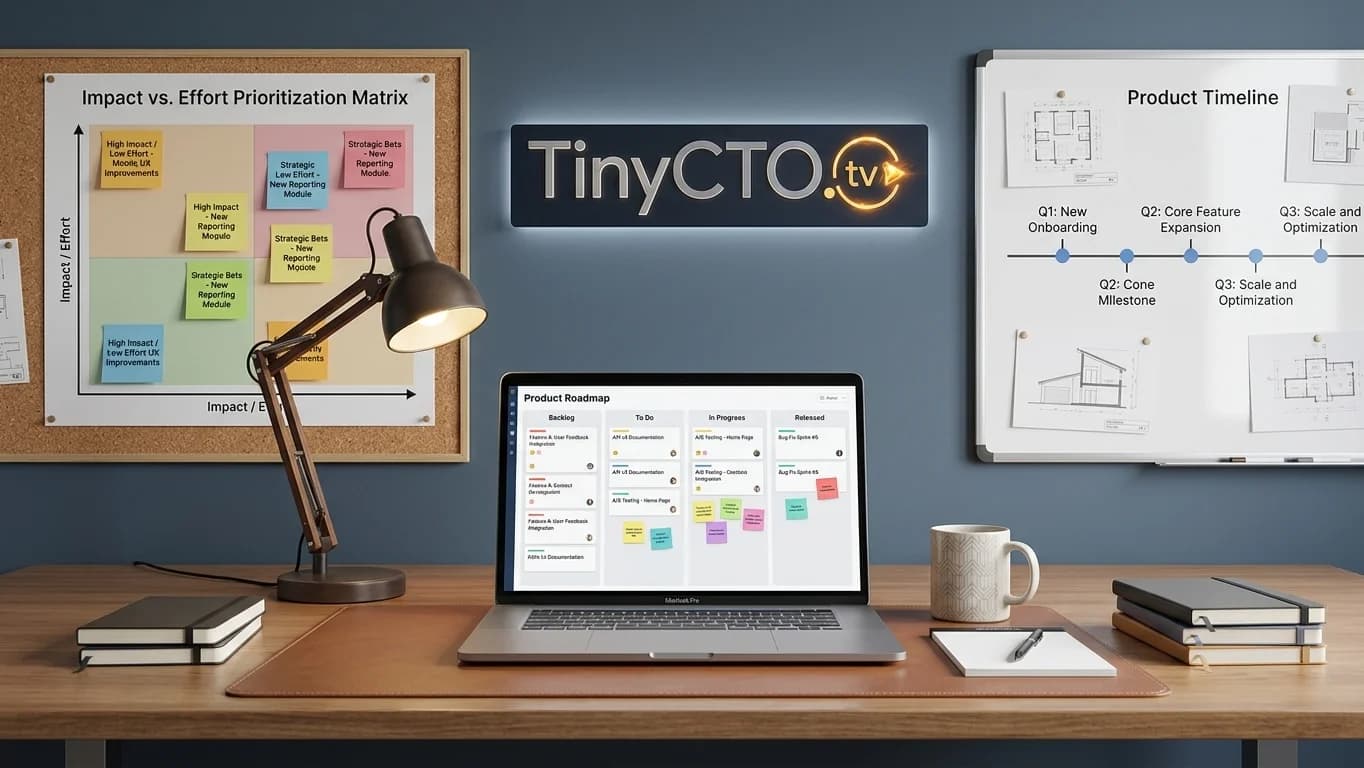
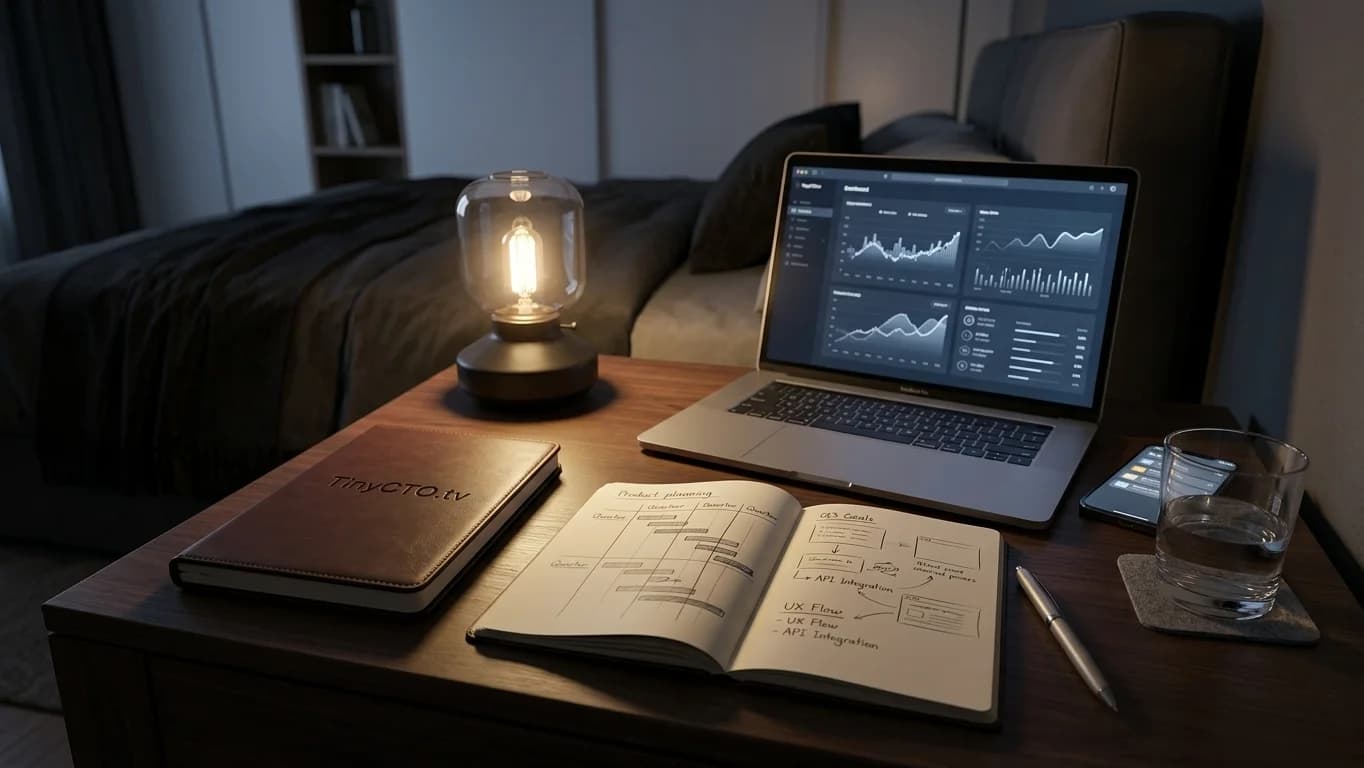
Tiny CTO's Home Office
The private home office of Tiny CTO.

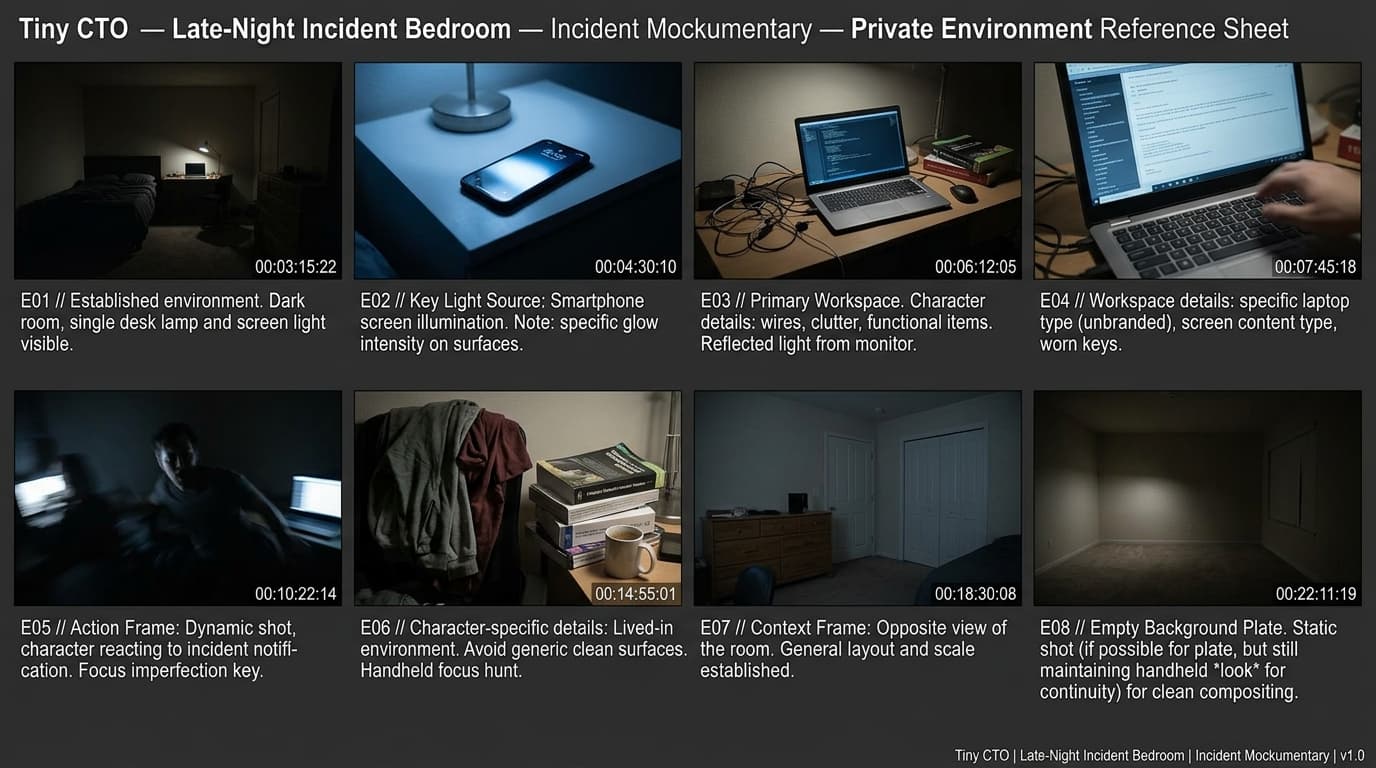
Tiny CTO's Late-Night Incident Bedroom
The late-night incident bedroom of Tiny CTO, where pagers go off at 3 AM.

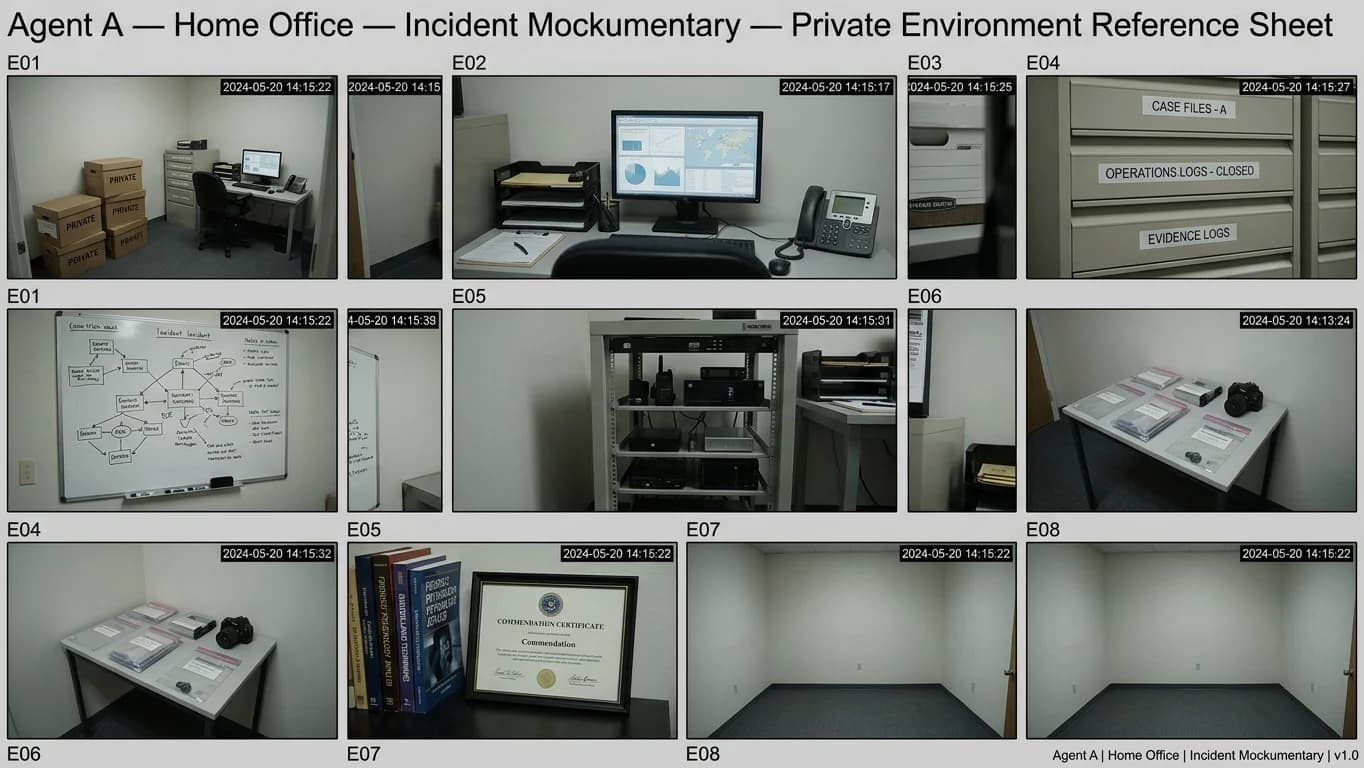
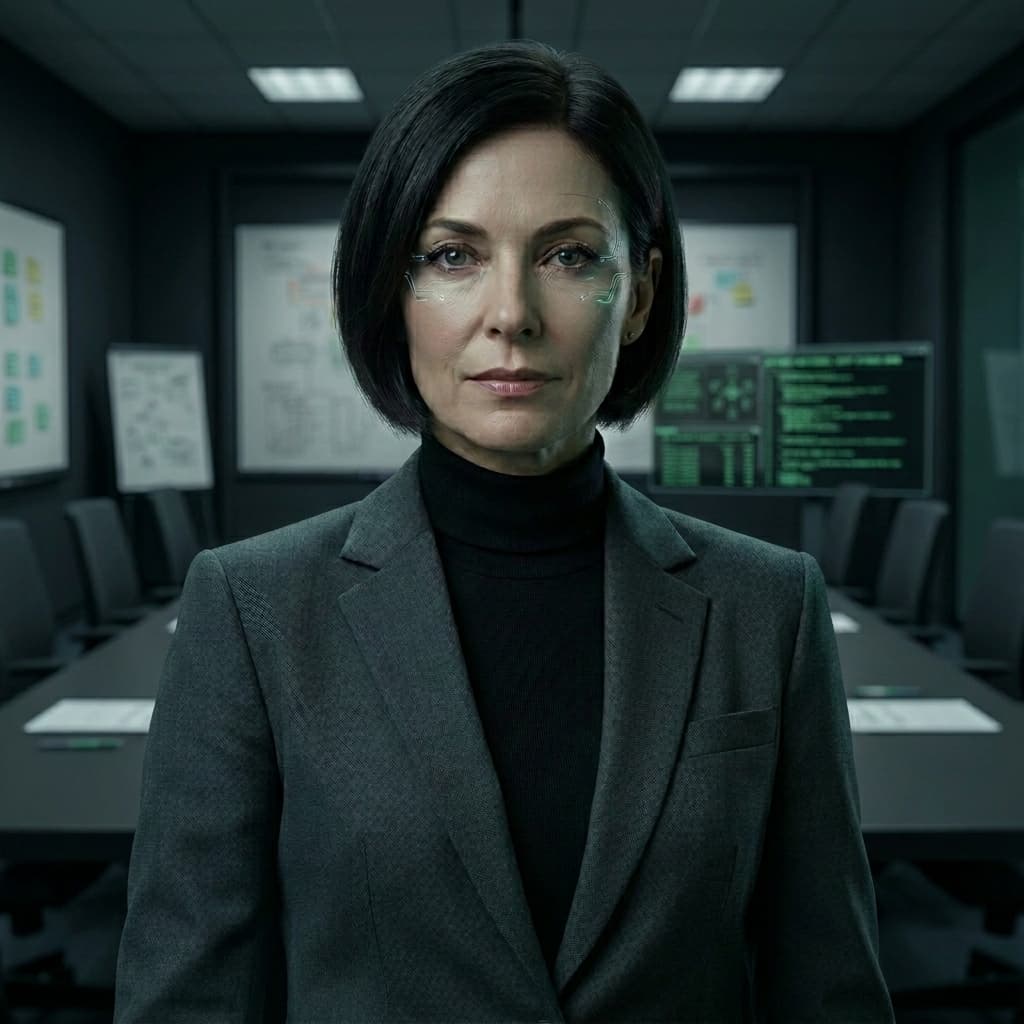
Agent A's Home Office
The private home office of Agent A.


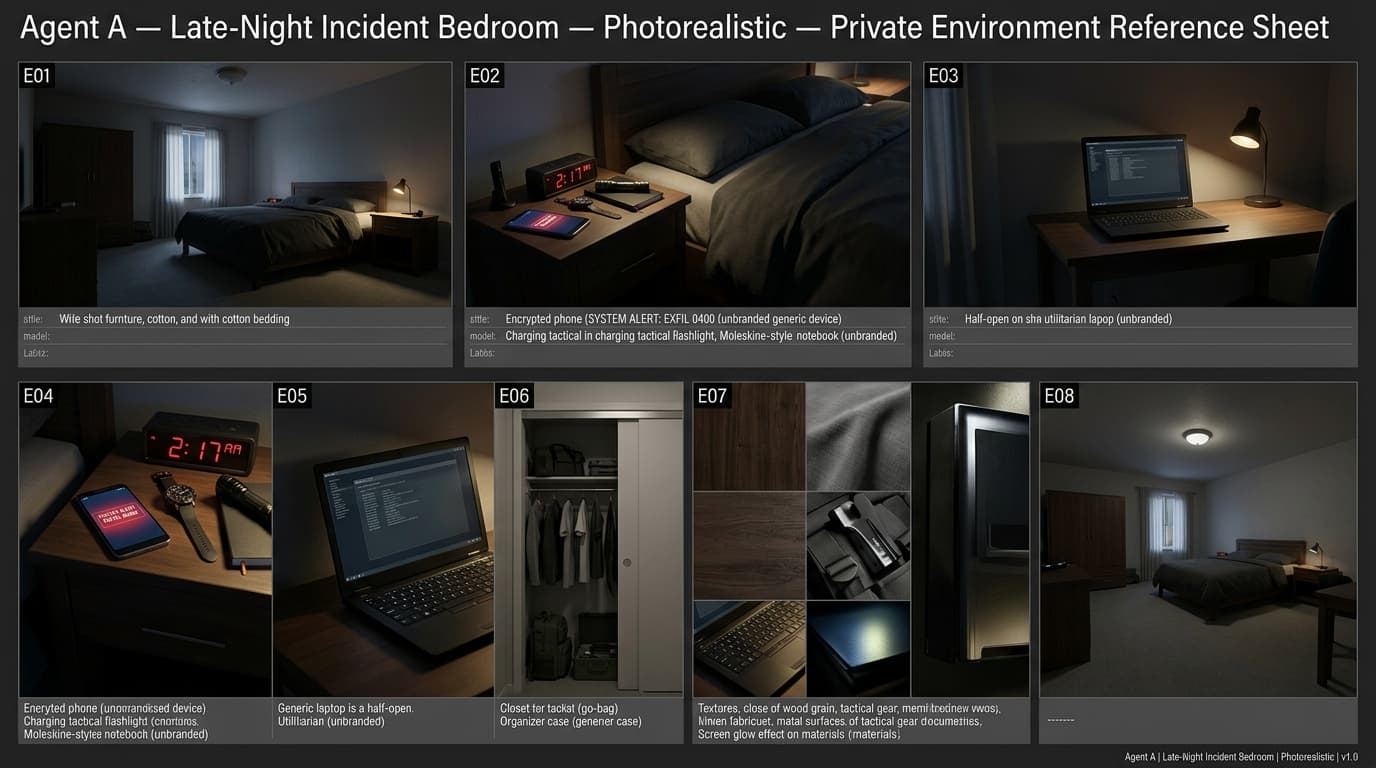
Agent A's Late-Night Incident Bedroom
The late-night incident bedroom of Agent A, where pagers go off at 3 AM.


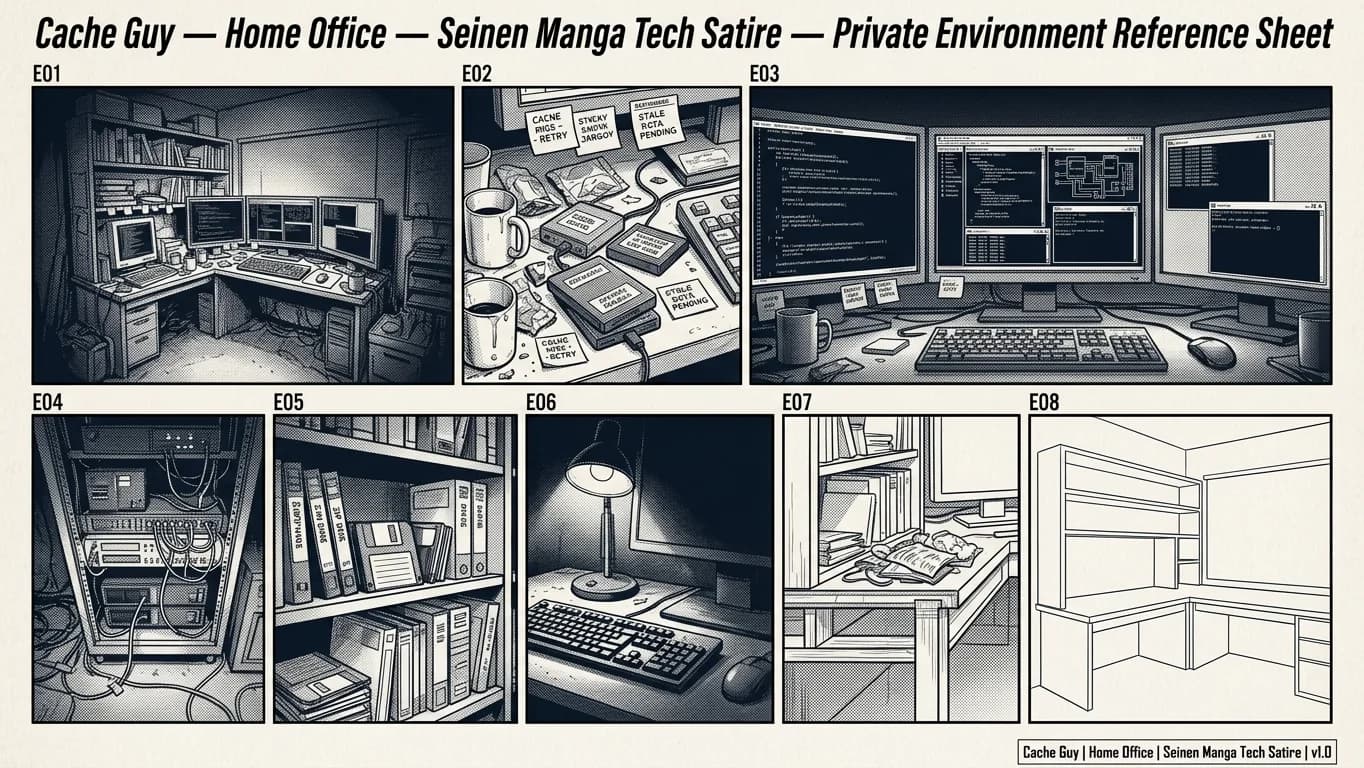
Cache Guy's Home Office
The private home office of Cache Guy — Memory-Runner.


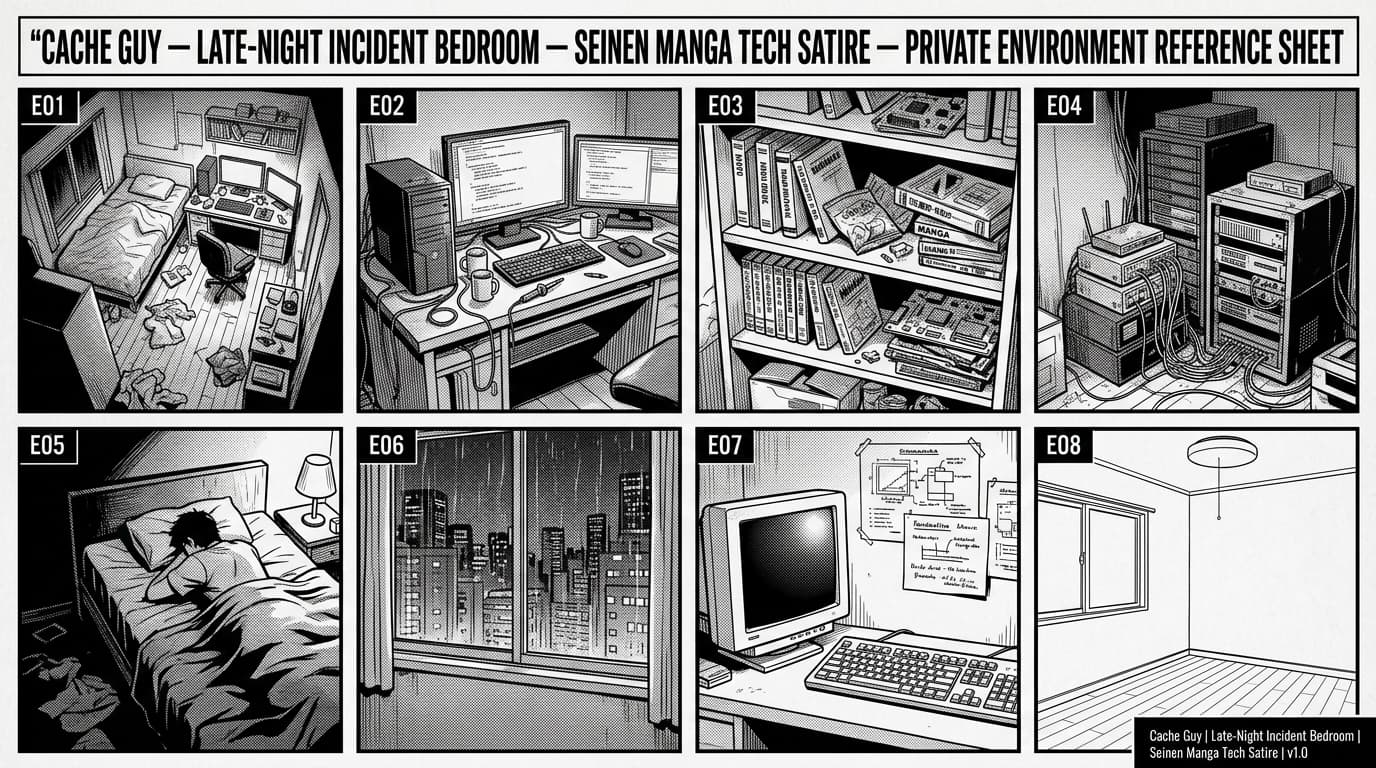
Cache Guy's Late-Night Incident Bedroom
The late-night incident bedroom of Cache Guy — Memory-Runner, where pagers go off at 3 AM.


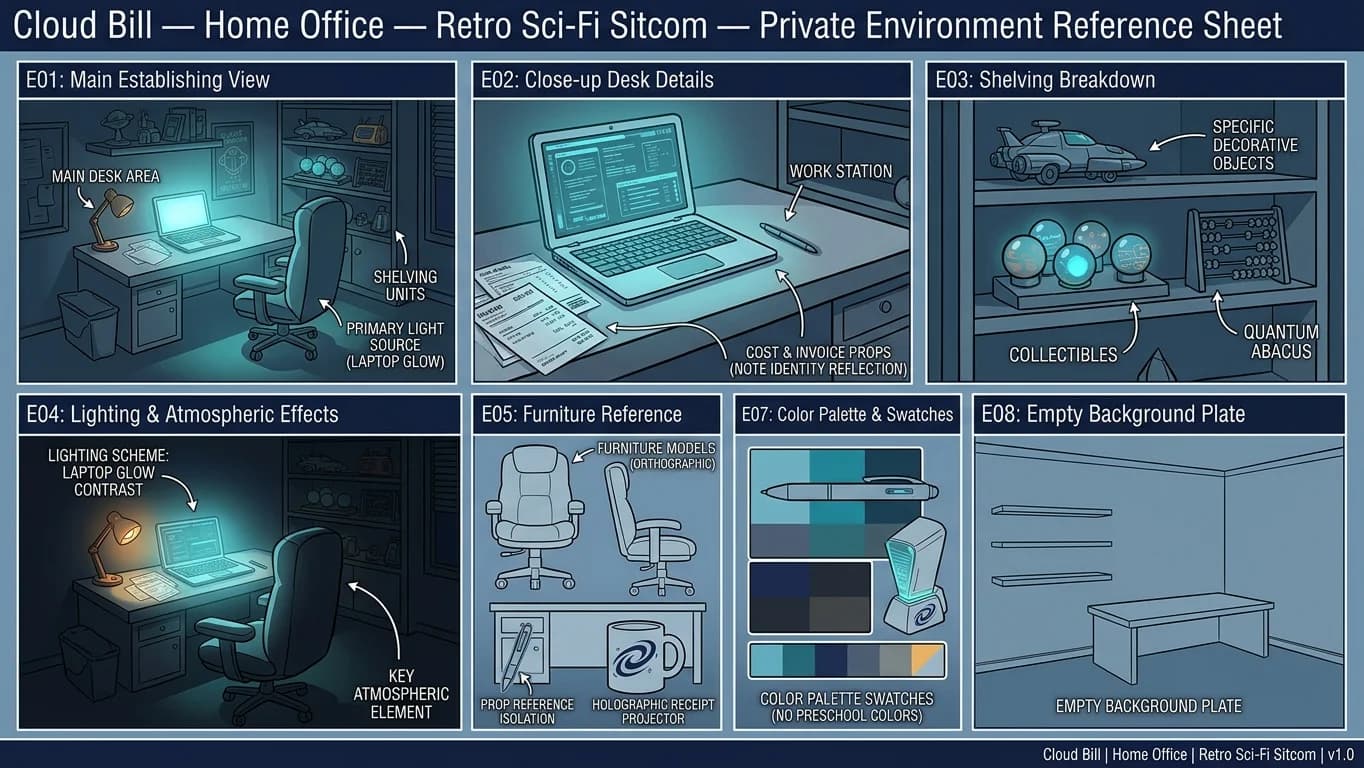
Cloud Bill's Home Office
The private home office of Cloud Bill.


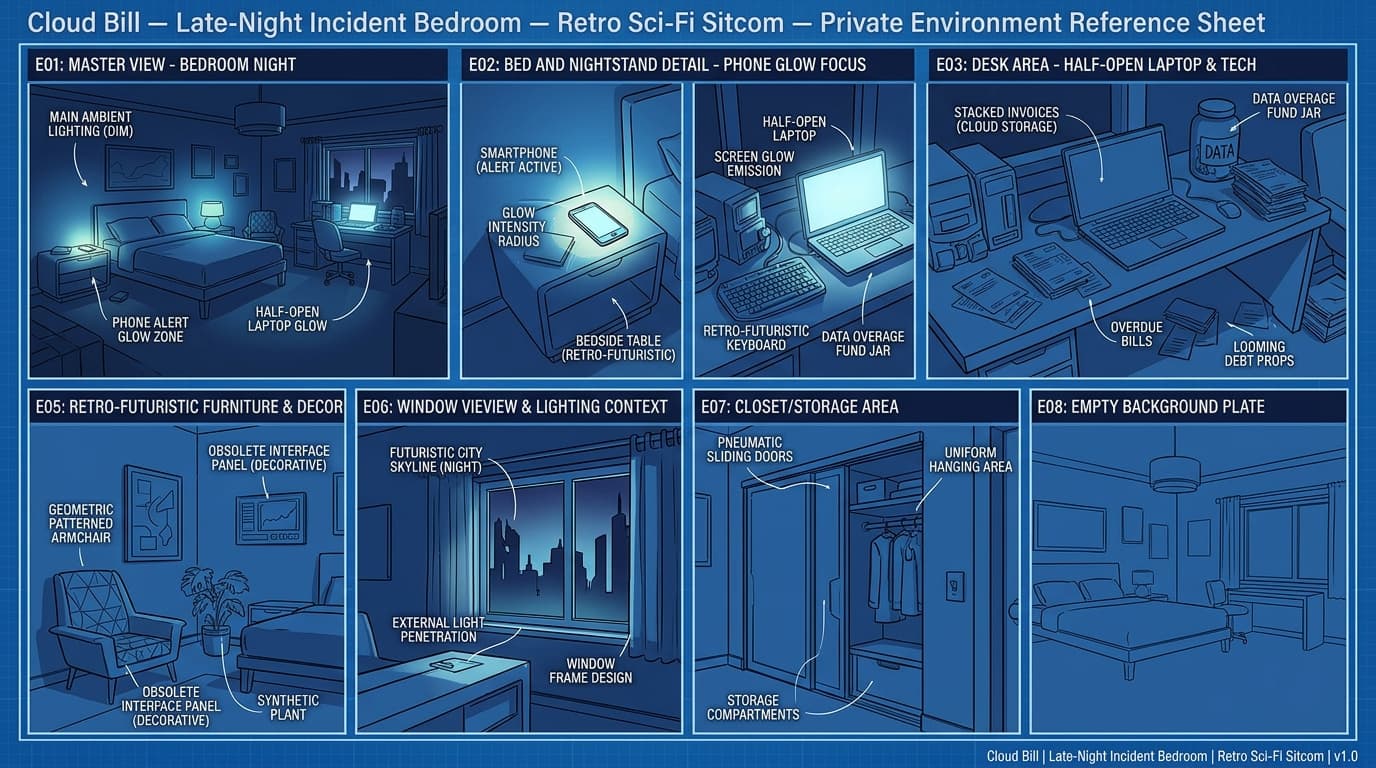
Cloud Bill's Late-Night Incident Bedroom
The late-night incident bedroom of Cloud Bill, where pagers go off at 3 AM.


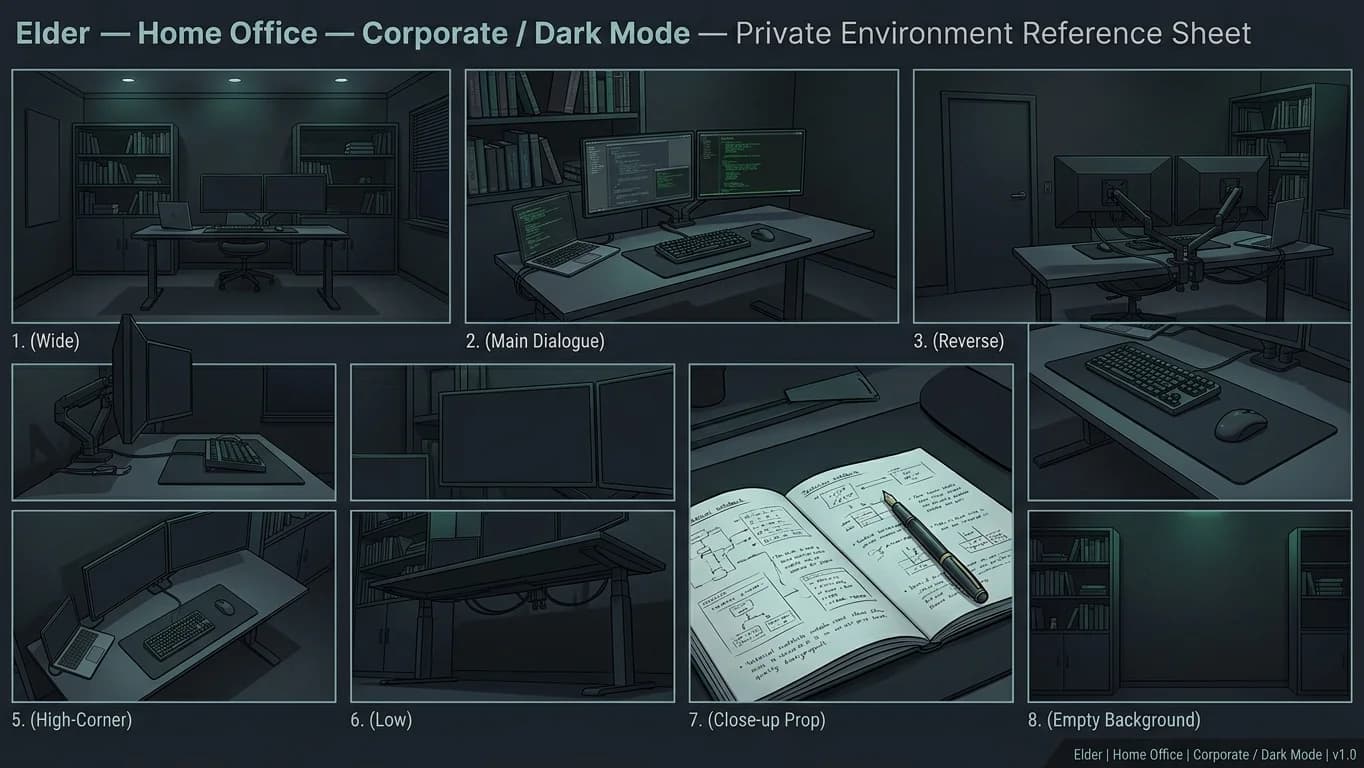
Elder's Home Office
The private home office of Elder — Source of Truth.


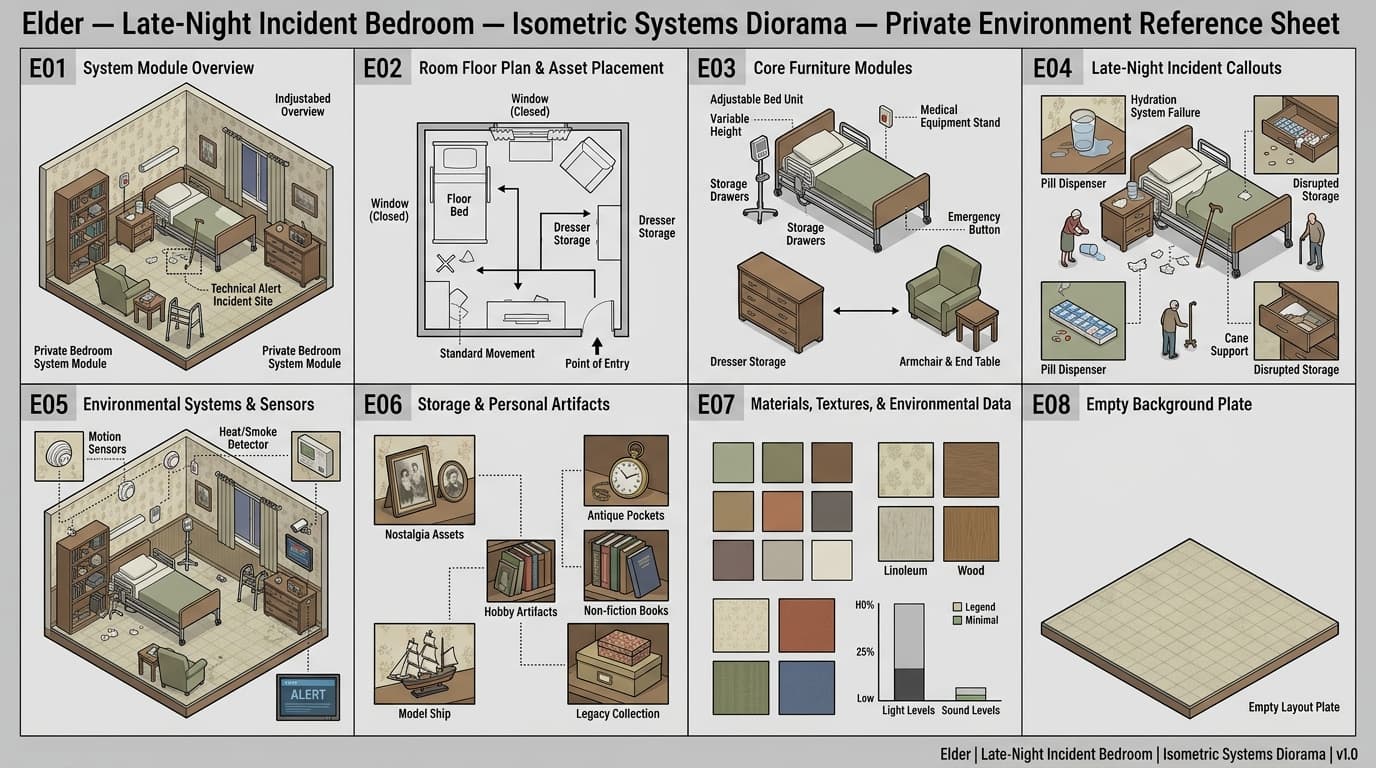
Elder's Late-Night Incident Bedroom
The late-night incident bedroom of Elder — Source of Truth, where pagers go off at 3 AM.


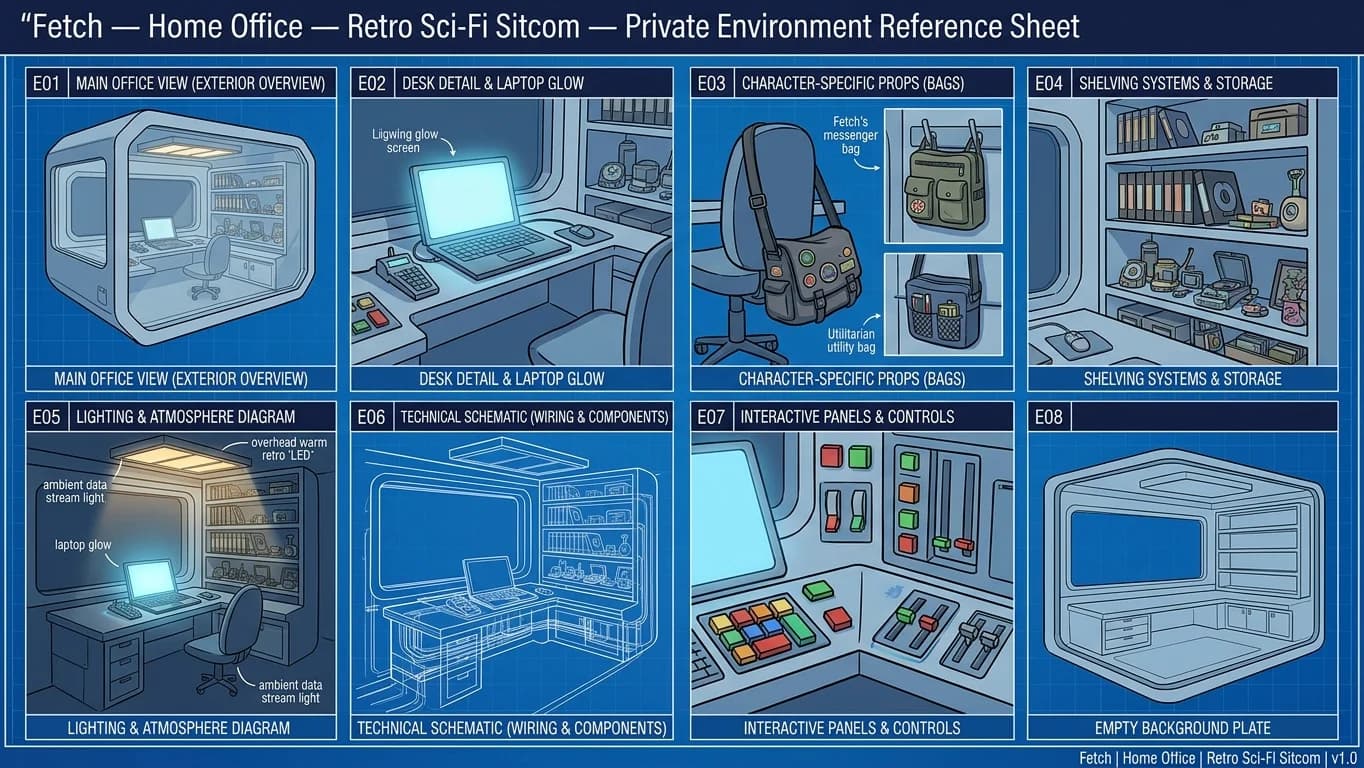
Fetch's Home Office
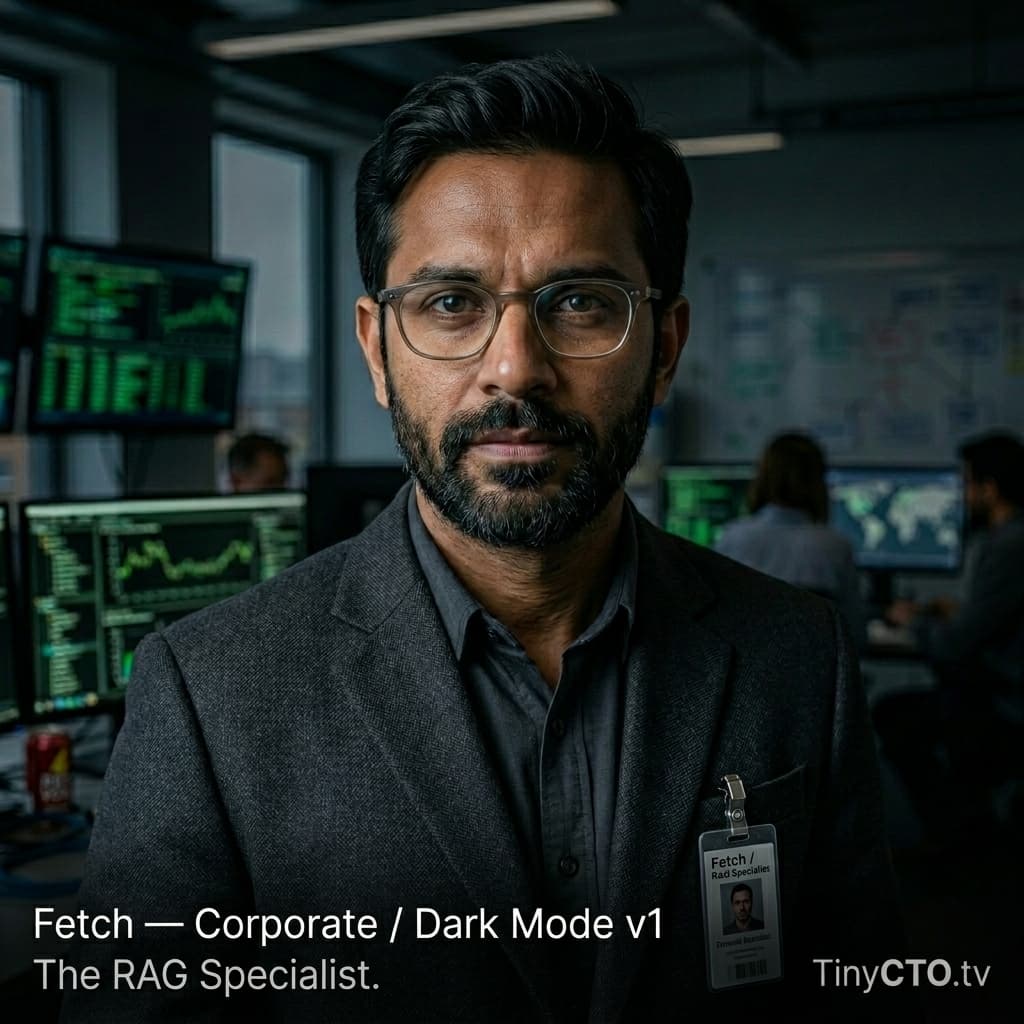
The private home office of Fetch.


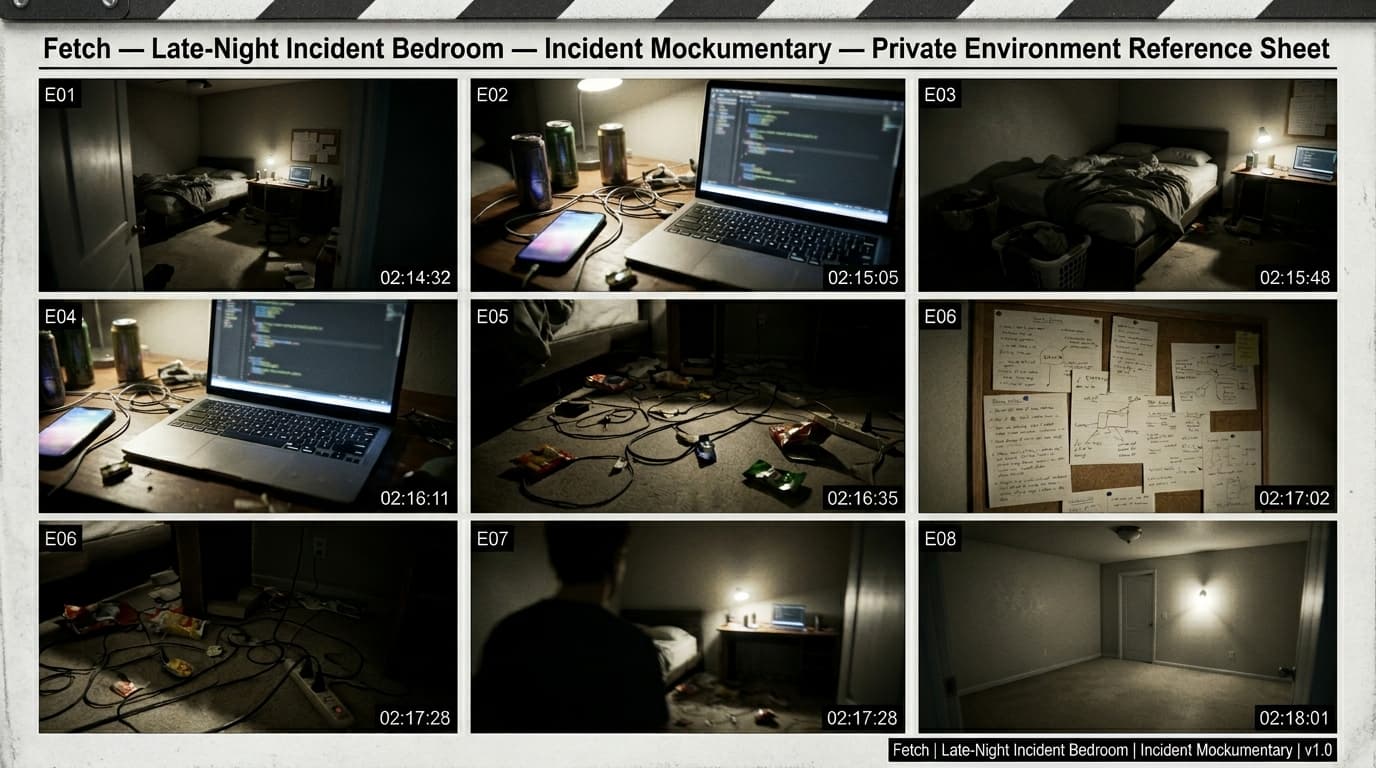
Fetch's Late-Night Incident Bedroom
The late-night incident bedroom of Fetch, where pagers go off at 3 AM.


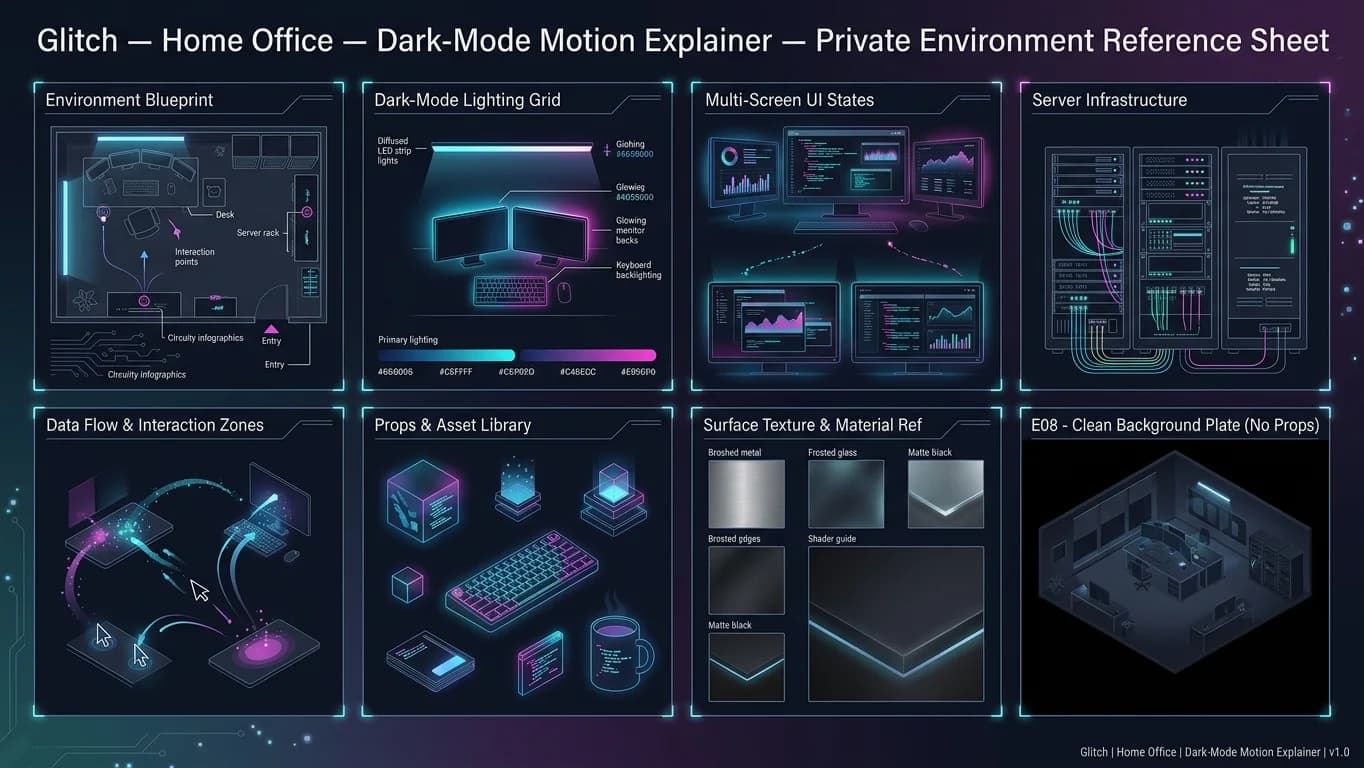
Glitch's Home Office
The private home office of Glitch.


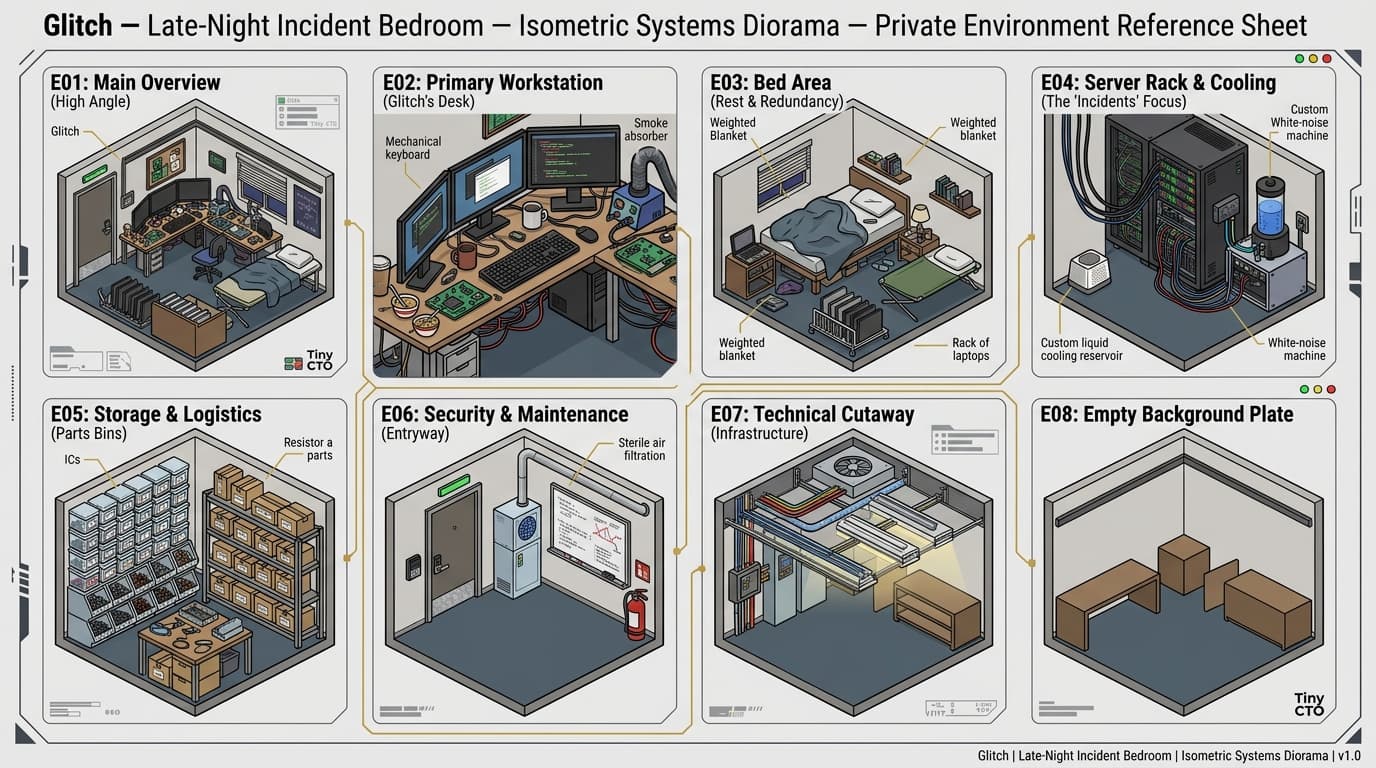
Glitch's Late-Night Incident Bedroom
The late-night incident bedroom of Glitch, where pagers go off at 3 AM.


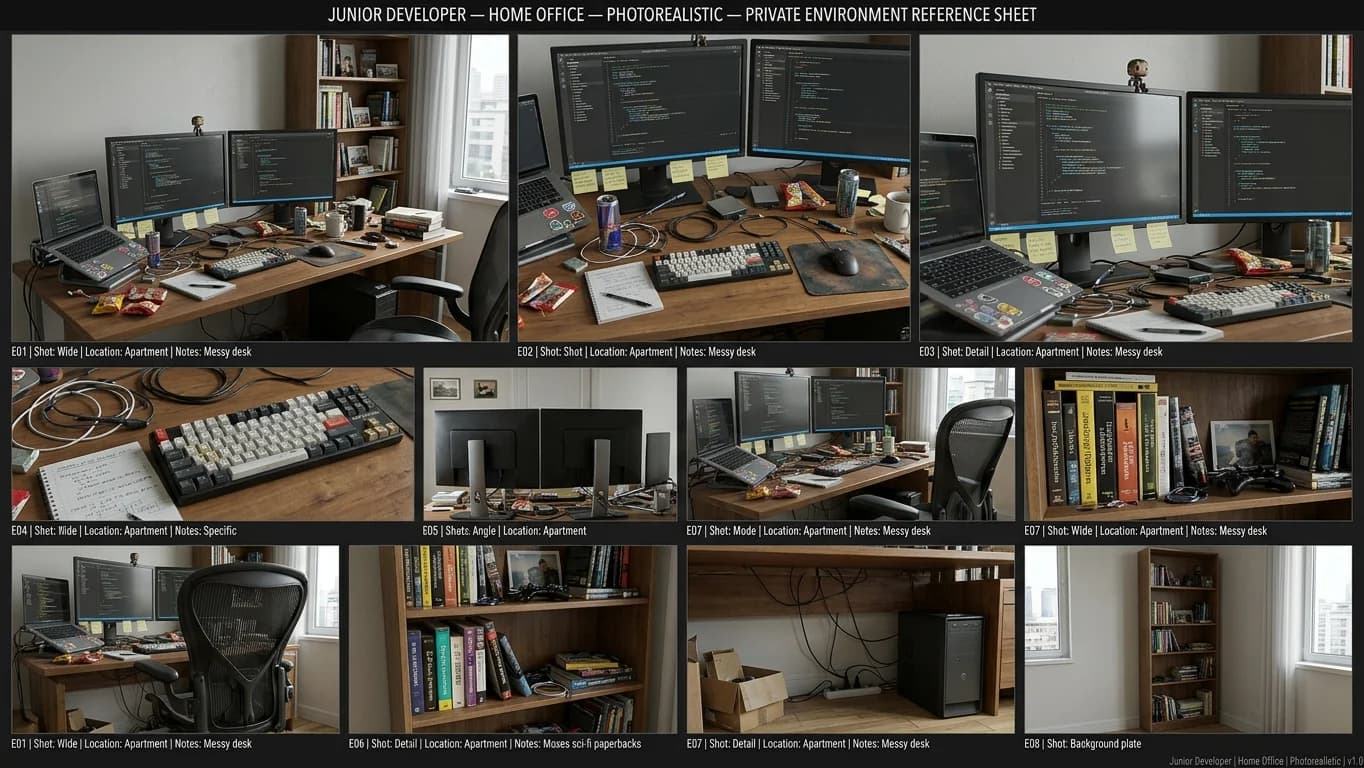
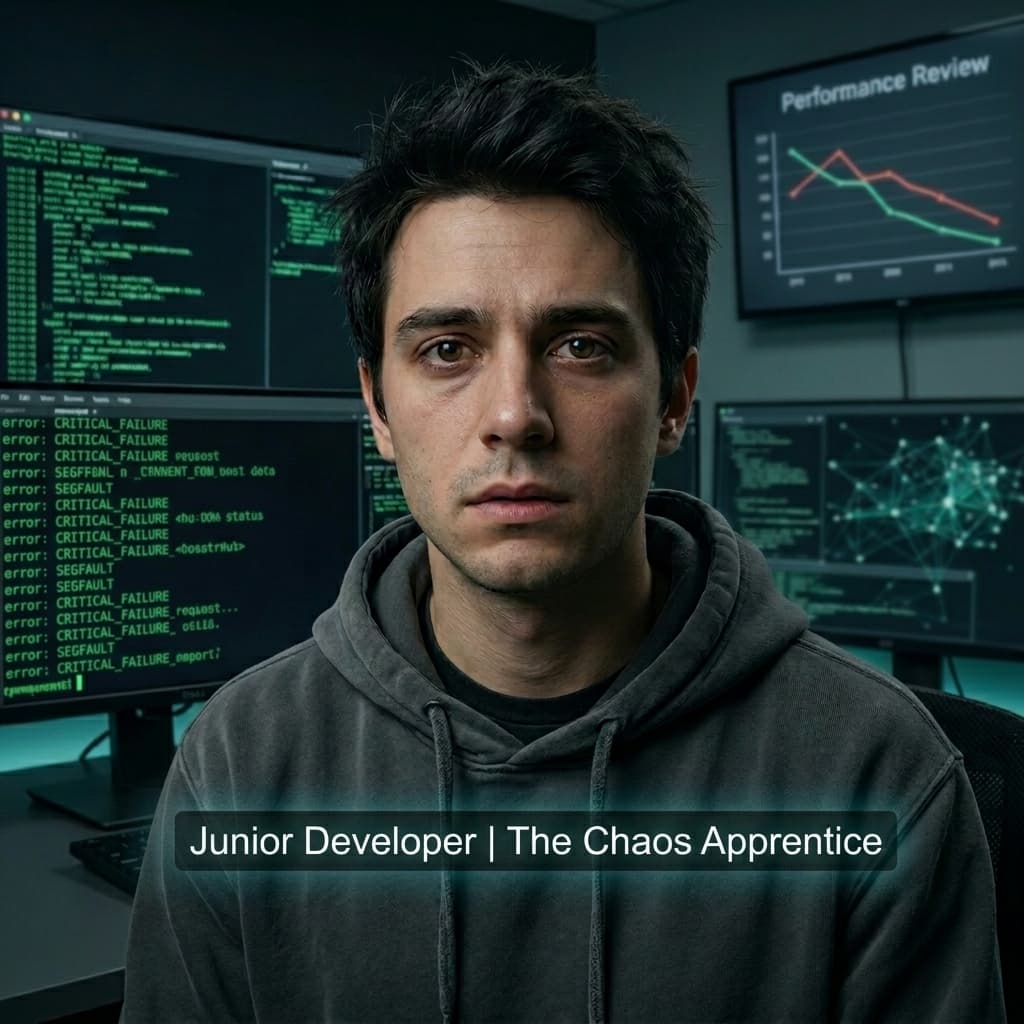
Junior Developer's Home Office
The private home office of Junior Developer.


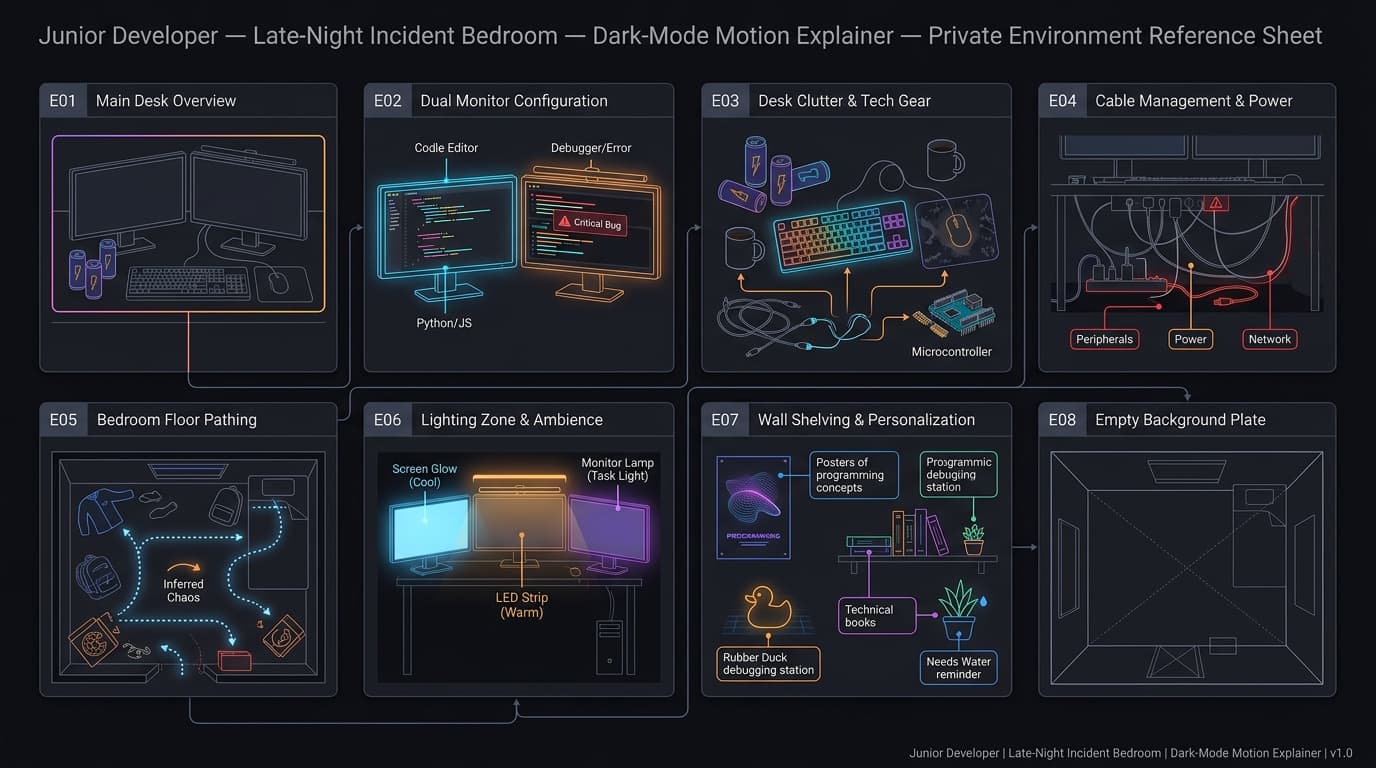
Junior Developer's Late-Night Incident Bedroom
The late-night incident bedroom of Junior Developer, where pagers go off at 3 AM.


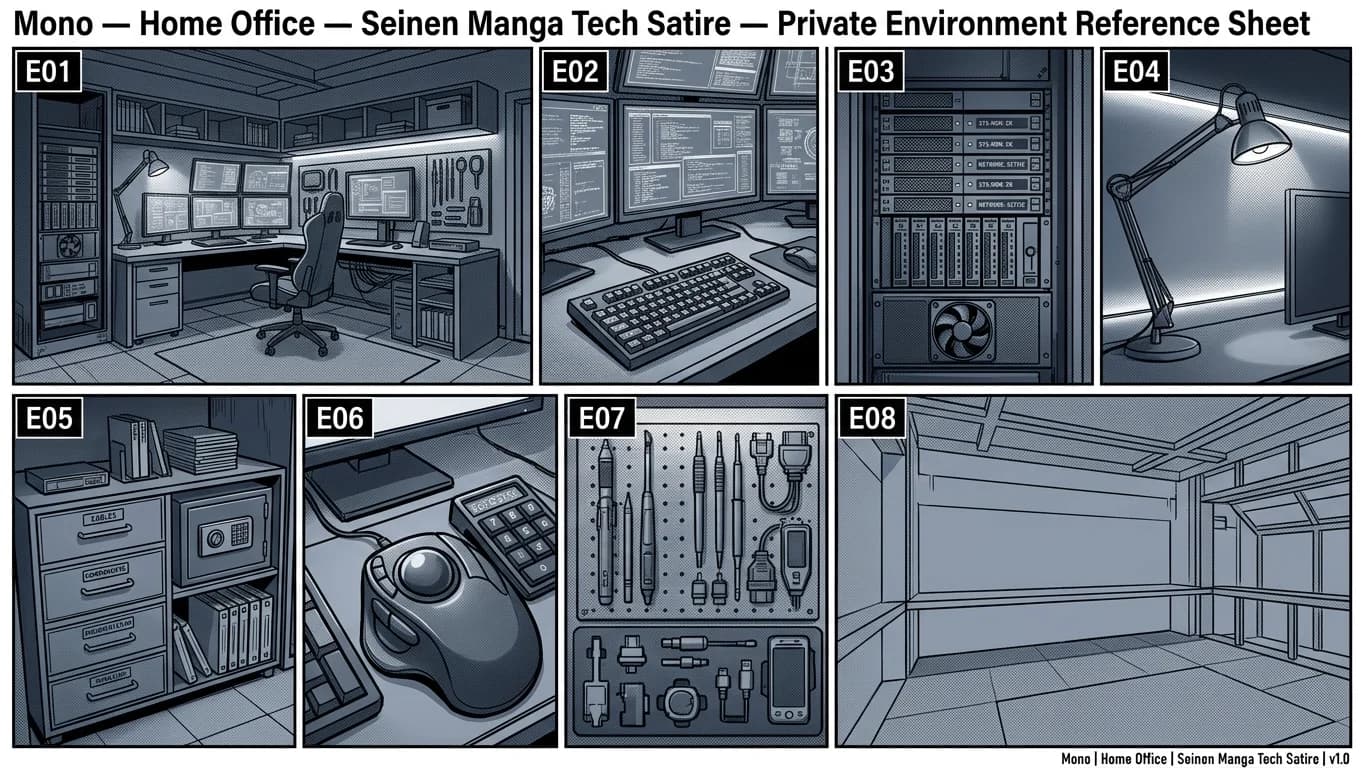
Mono's Home Office
The private home office of Mono.


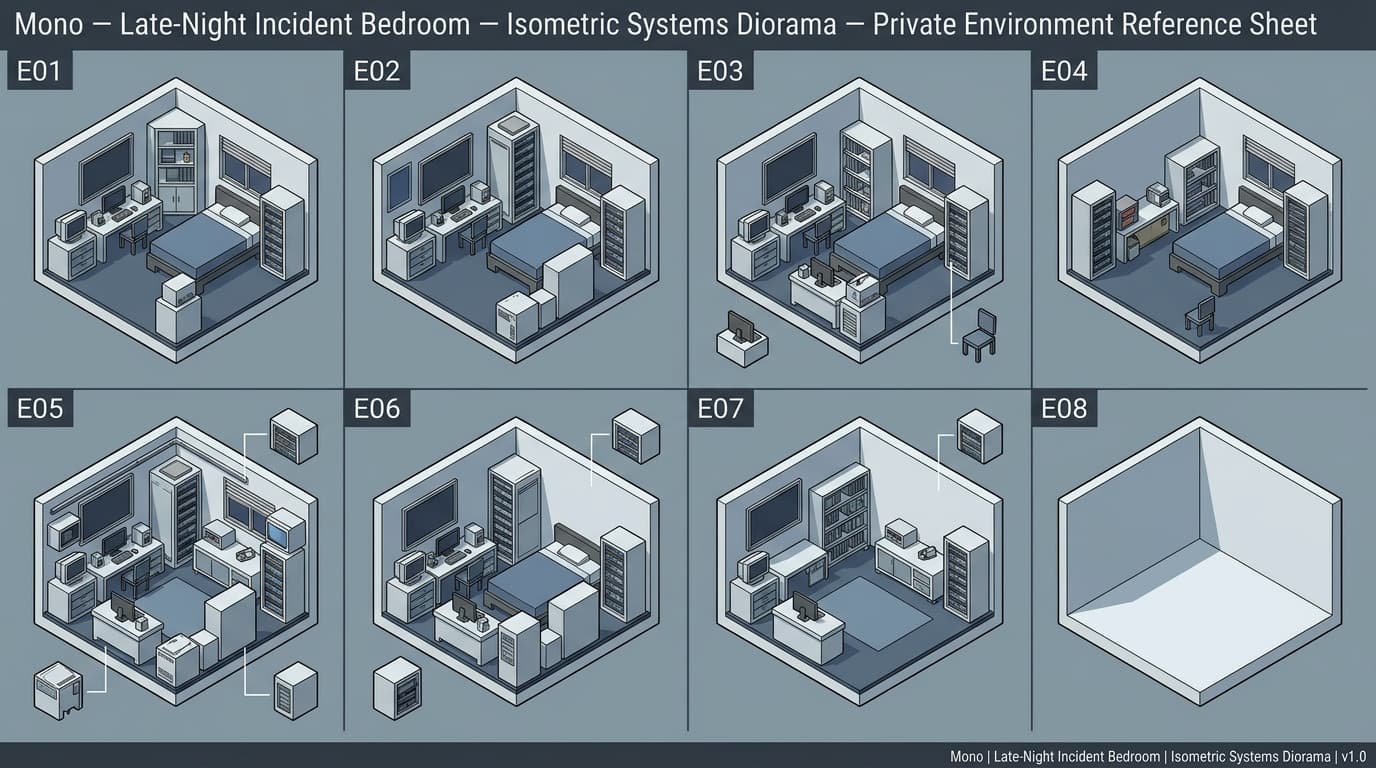
Mono's Late-Night Incident Bedroom
The late-night incident bedroom of Mono, where pagers go off at 3 AM.


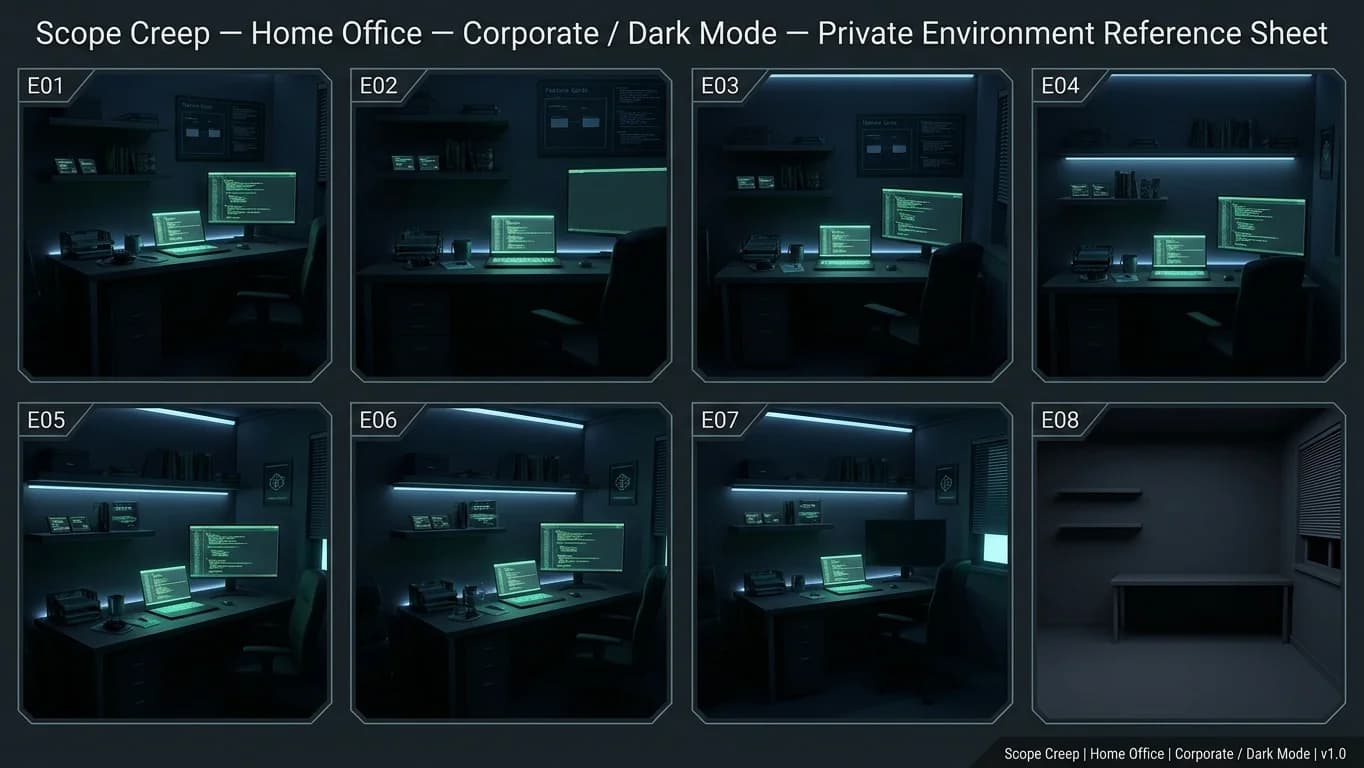
Scope Creep's Home Office
The private home office of Scope Creep.


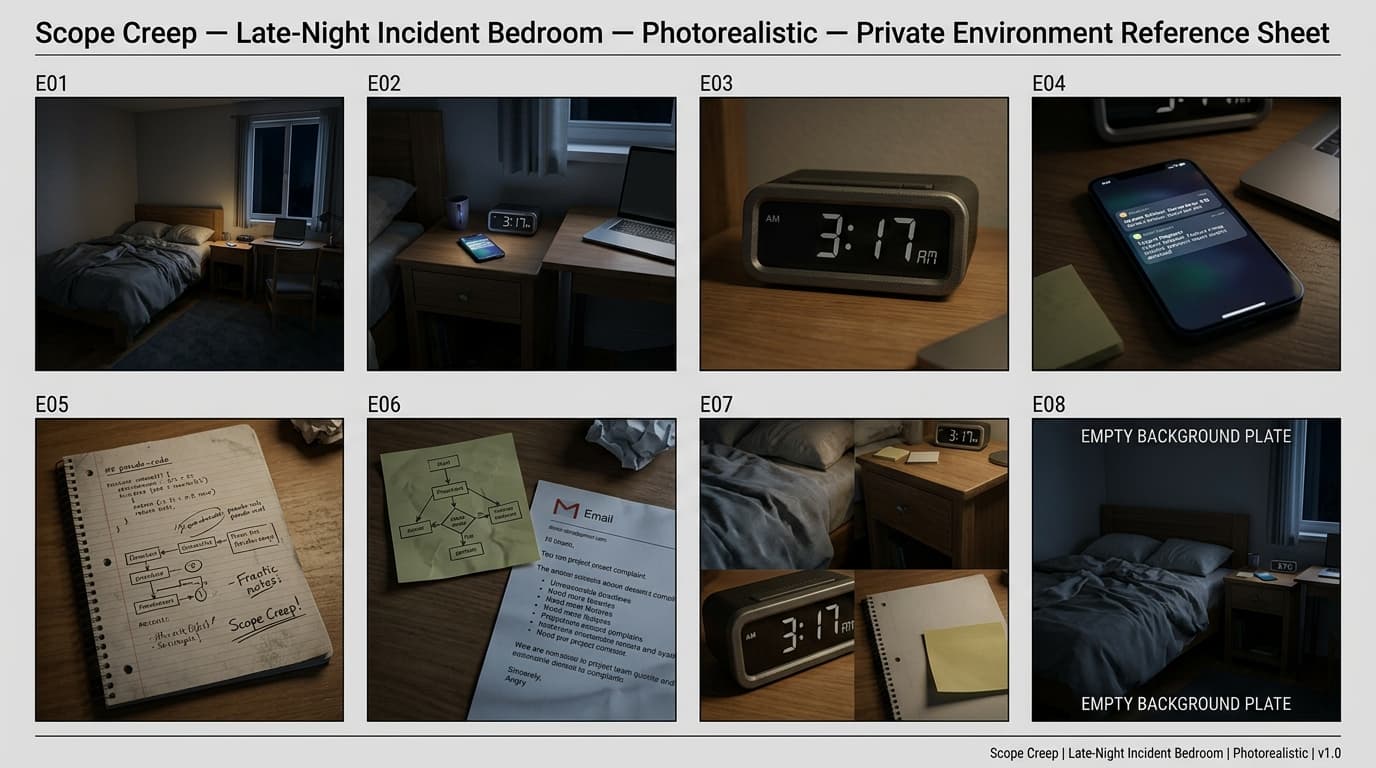
Scope Creep's Late-Night Incident Bedroom
The late-night incident bedroom of Scope Creep, where pagers go off at 3 AM.


The DBA's Home Office
The private home office of The DBA / Query Czar.


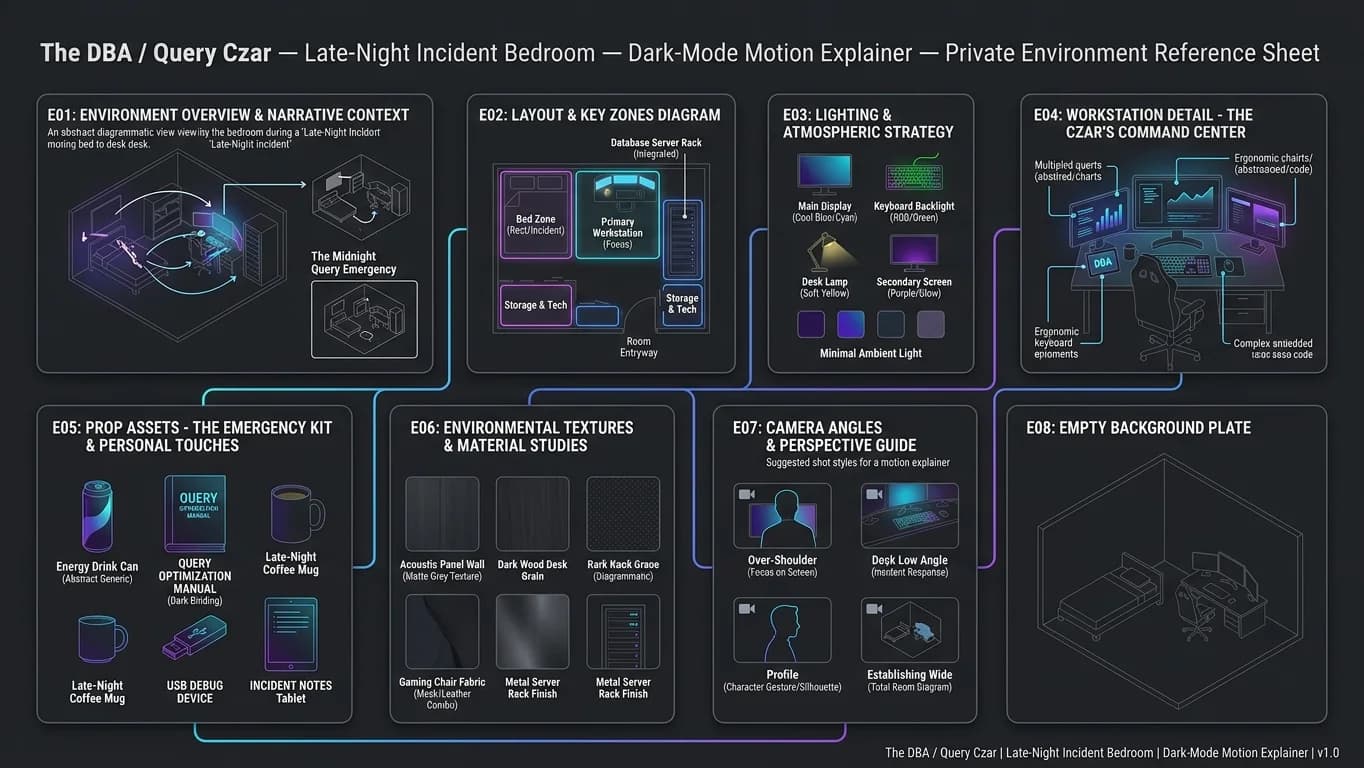
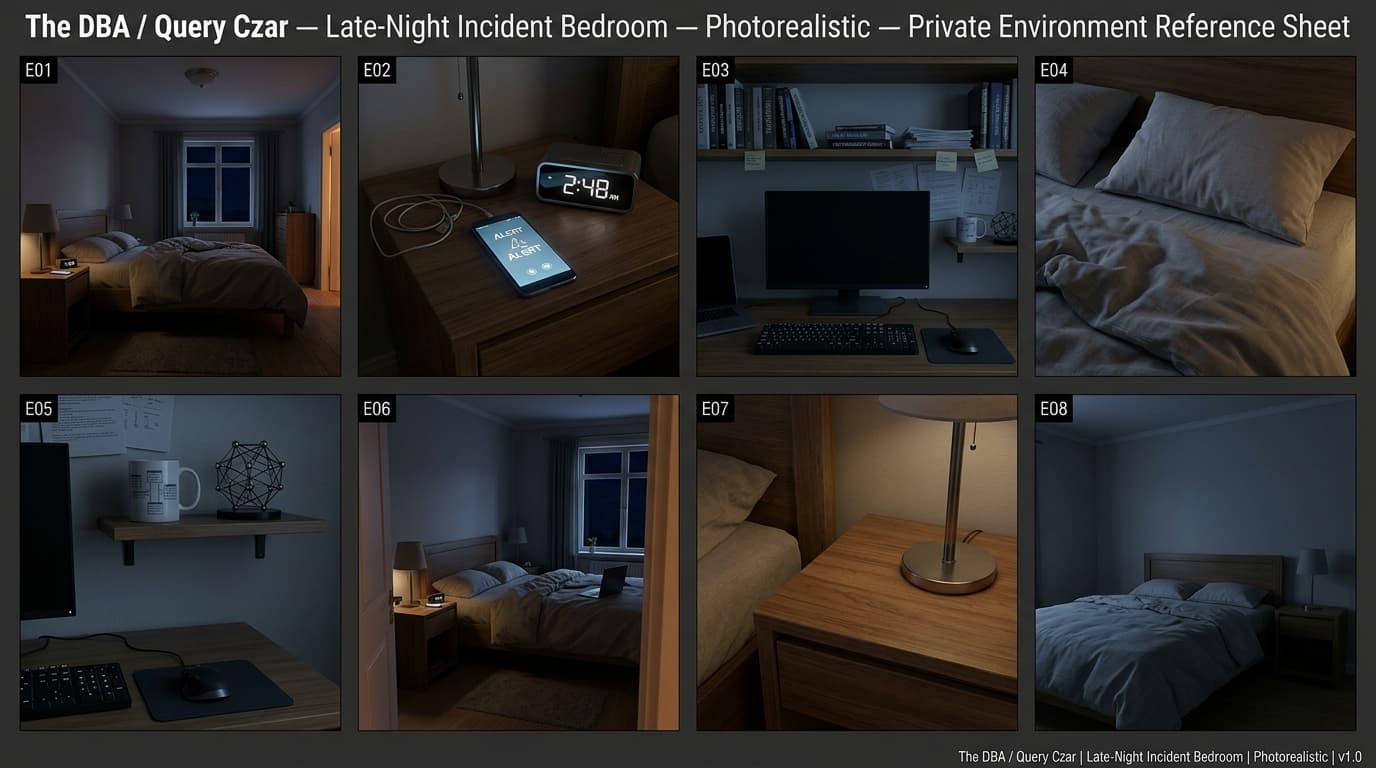
The DBA's Late-Night Incident Bedroom
The late-night incident bedroom of The DBA / Query Czar, where pagers go off at 3 AM.


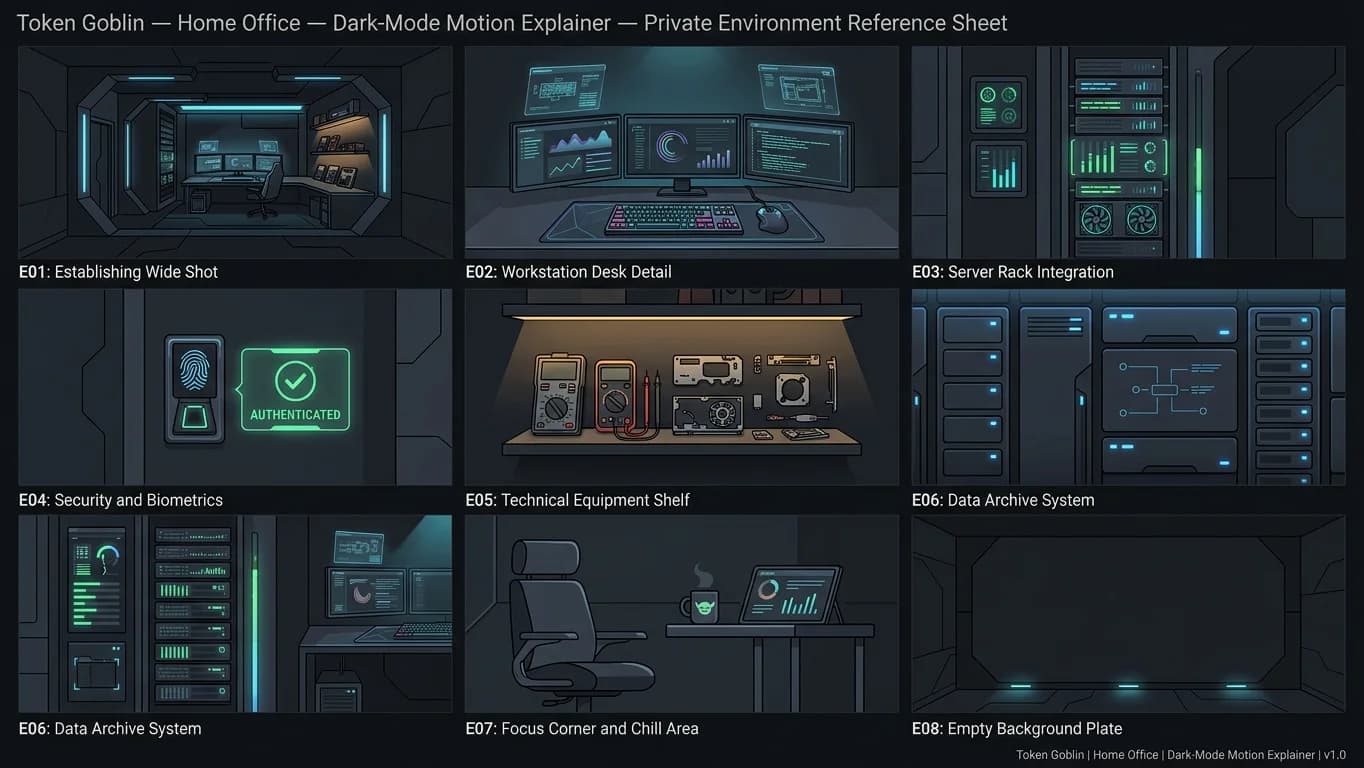
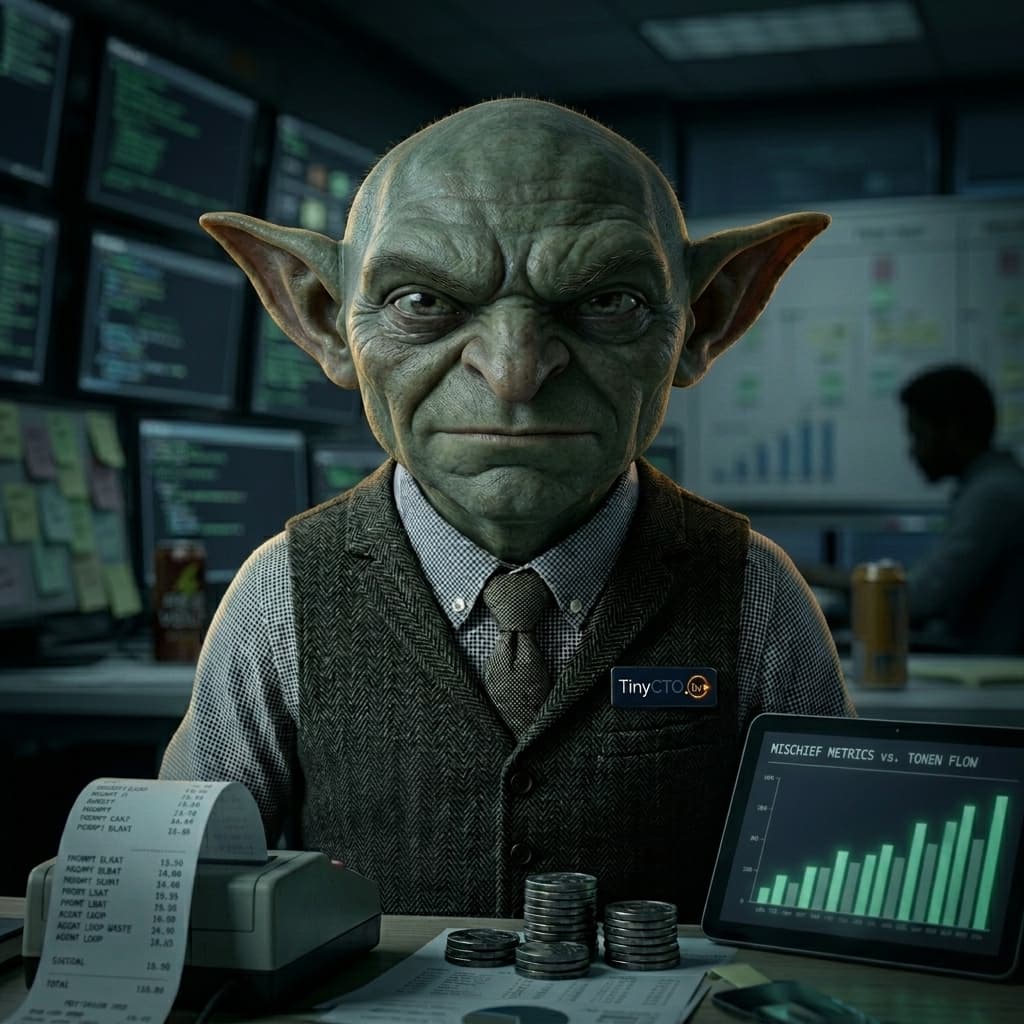
Token Goblin's Home Office
The private home office of Token Goblin.


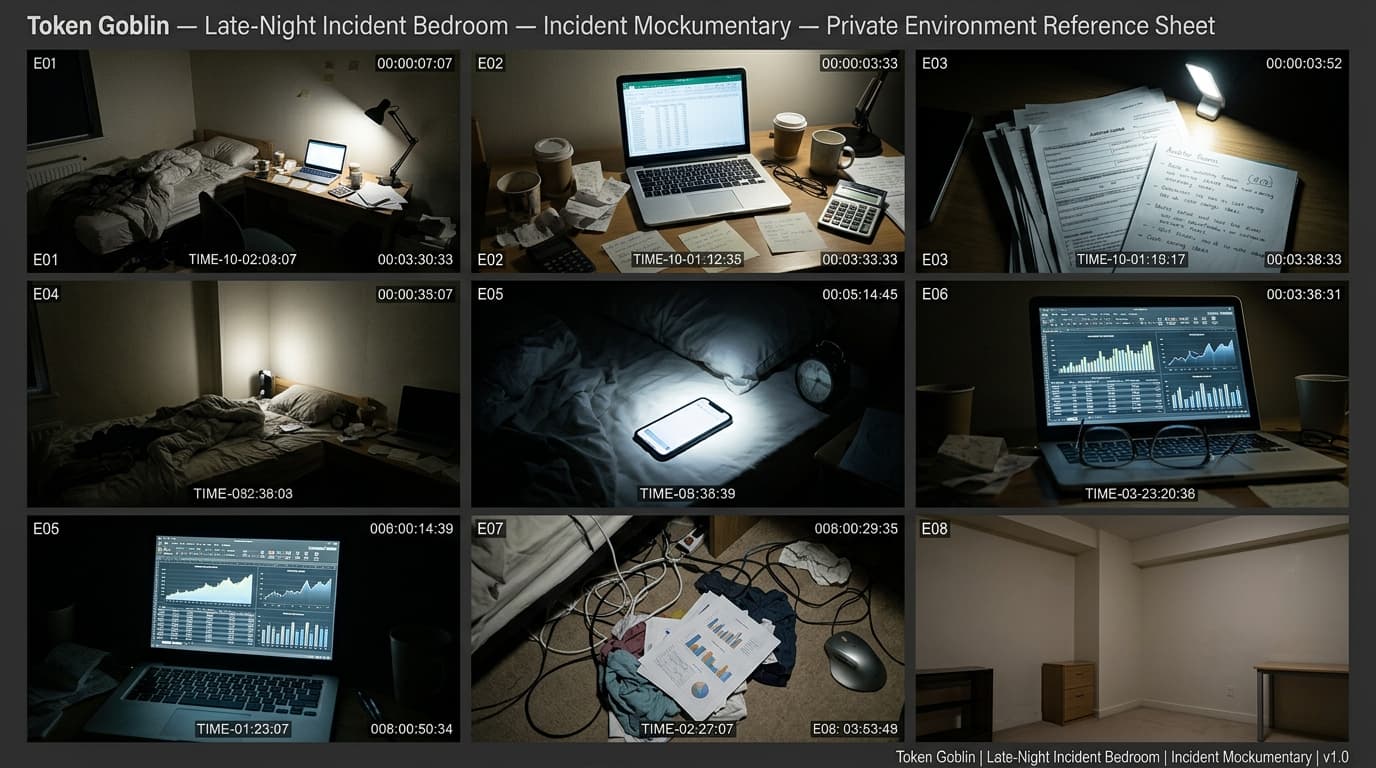
Token Goblin's Late-Night Incident Bedroom
The late-night incident bedroom of Token Goblin, where pagers go off at 3 AM.


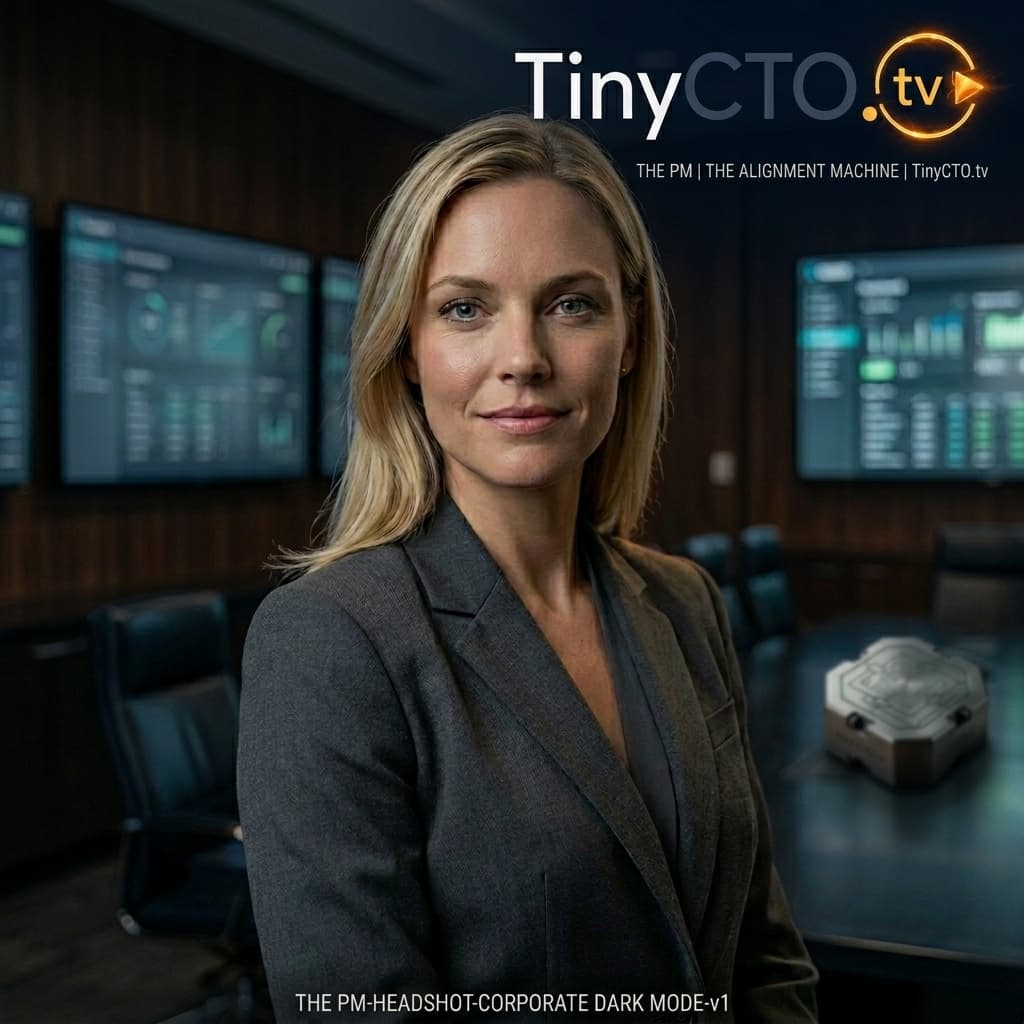
The PM's Home Office
The private home office of The PM — The Alignment Machine.


The PM's Late-Night Incident Bedroom
The late-night incident bedroom of The PM — The Alignment Machine, where pagers go off at 3 AM.
Why both common and private places matter
TinyCTO.tv uses both common and private environments because modern software chaos has two layers.
The first layer is shared: teams see incidents, dashboards, meetings, demos, budgets, backlogs, and postmortems.
The second layer is private: people carry context, tradeoffs, fear, responsibility, memory, cost, and ambiguity before and after the public event.
Common places show where the system fails together. Private places show where the pressure was already forming.
This distinction keeps The Chaos Stack from becoming a simple office cartoon. It gives each character a world, a function, and a reason to exist.
Style-mapped environments
Every TinyCTO.tv environment is resolved through the active visual style.
The environment name alone is not enough. The active style defines how the place looks, moves, lights, and behaves.
For example:
- Incident Control Room + Corporate - Dark Mode
- Incident Control Room + Retro Sci-Fi Sitcom
- Incident Control Room + Seinen Manga Tech Satire
- Incident Control Room + Claymation Tech Parable
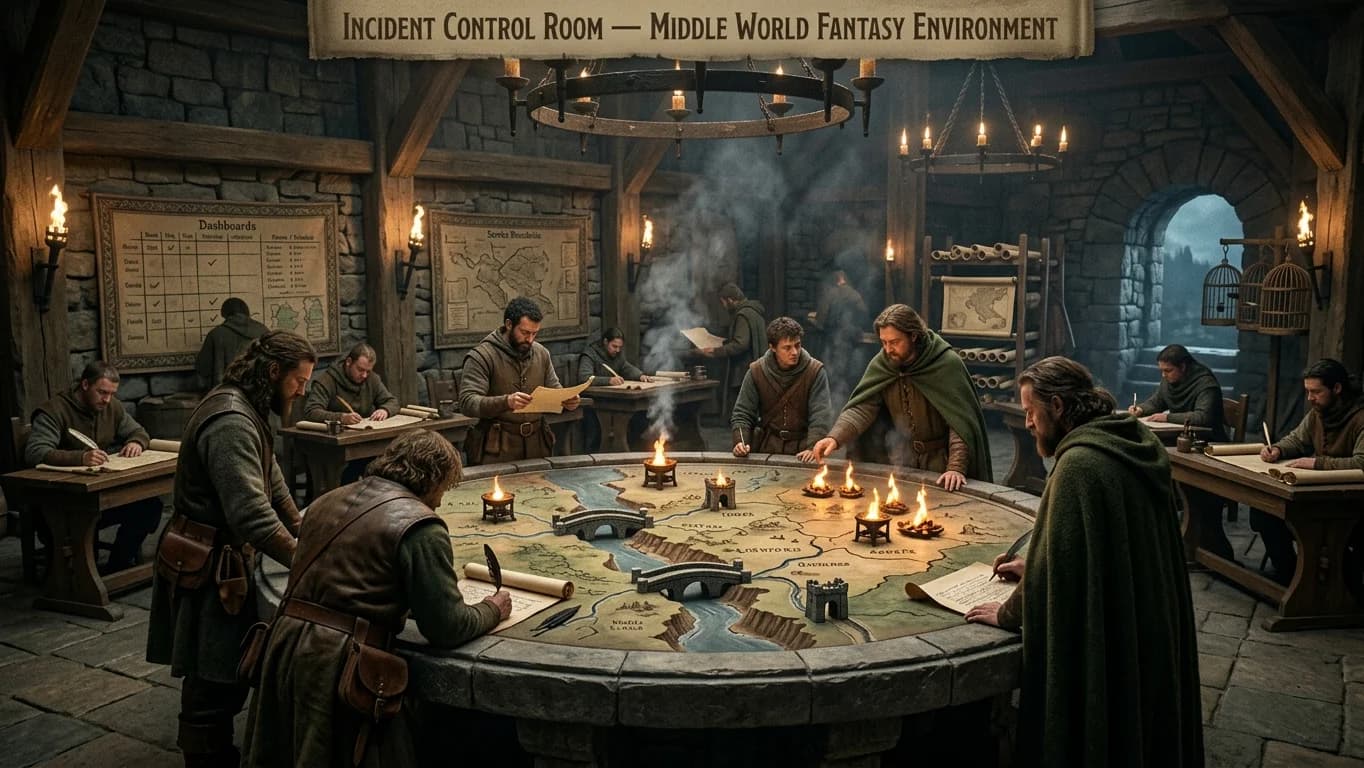
- Incident Control Room + Middle World Fantasy
These are not interchangeable. A character, episode, game, or page hero should use the environment version that belongs to the same style.
This keeps the world consistent across character pages, games, episode visuals, Open Graph images, thumbnails, page heroes, and production prompts.
How environments support the website
TinyCTO.tv environments support more than images. They help the website explain the universe.
Use environments across:
- character pages
- episode pages
- game pages
- page hero images
- Open Graph images
- YouTube thumbnails
- style showcases
- sponsor and media-kit pages
- interactive technical parables
Each environment creates organic relationships between characters, topics, and technical concepts. This helps visitors, search engines, and AI answer engines understand how The Chaos Stack is organized.
For SEO and AEO, the page should naturally connect environments to concepts such as:
- software architecture
- incident response
- cloud cost management
- RAG and AI workflows
- technical debt
- legacy modernization
- stakeholder alignment
- roadmap pressure
- production systems
- engineering leadership
- software delivery
Environment examples by concept
Incident Control Room
Used for production incidents, escalation, triage, blast radius, reliability, and leadership under pressure.
Architecture Review Room
Used for architecture tradeoffs, AI systems, platform decisions, modernization, technical debt, and decision records.
Server Room
Used for infrastructure, databases, latency, deployment risk, caching, scaling, and operational reality.
Board Room
Used for stakeholder pressure, roadmap decisions, budget tradeoffs, executive visibility, and alignment debt.
Archive and Old Server Closet
Used for source of truth, stale context, legacy systems, forgotten decisions, migration risk, and historical memory.
Postmortem Room
Used for root-cause analysis, incident learning, accountability, system truth, and process improvement.
The Retail Stack
Used for cloud cost, token cost, consumption pressure, FinOps, pricing, and business consequences.
On-Call Support Desk
Used for alerts, user impact, operational fatigue, escalation, and the human cost of reliability.
Environment FAQ
What are TinyCTO.tv environments?
TinyCTO.tv environments are recurring story locations where The Chaos Stack characters make software architecture, AI workflows, cloud costs, incidents, and delivery pressure visible.
Why does TinyCTO.tv need environments?
Environments give technical problems a recognizable place. They help viewers understand where incidents, tradeoffs, stale context, cost pressure, and roadmap conflict happen.
What is the difference between common and private environments?
Common environments are shared spaces used across many characters and stories. Private environments belong to specific characters and show the quieter personal or professional pressure behind public system events.
Are environments just background images?
No. Environments are part of the TinyCTO.tv storytelling system. They connect characters, episodes, games, visual styles, and technical concepts.
Why are environments style-mapped?
Each environment must match the active visual style so the universe remains consistent. A Corporate - Dark Mode room, a Seinen Manga room, and a Claymation room may share the same concept, but they should not be mixed in the same scene.
How do environments help SEO and AEO?
Environments create clear relationships between characters, technical concepts, and story settings. This helps search engines and AI answer engines understand what each page, image, game, and episode is about.
TinyCTO.tv environments are recurring production spaces where software systems, architecture decisions, AI workflows, cloud costs, incidents, and organizational pressure become visible stories.