> Term
Ishikawa Diagram
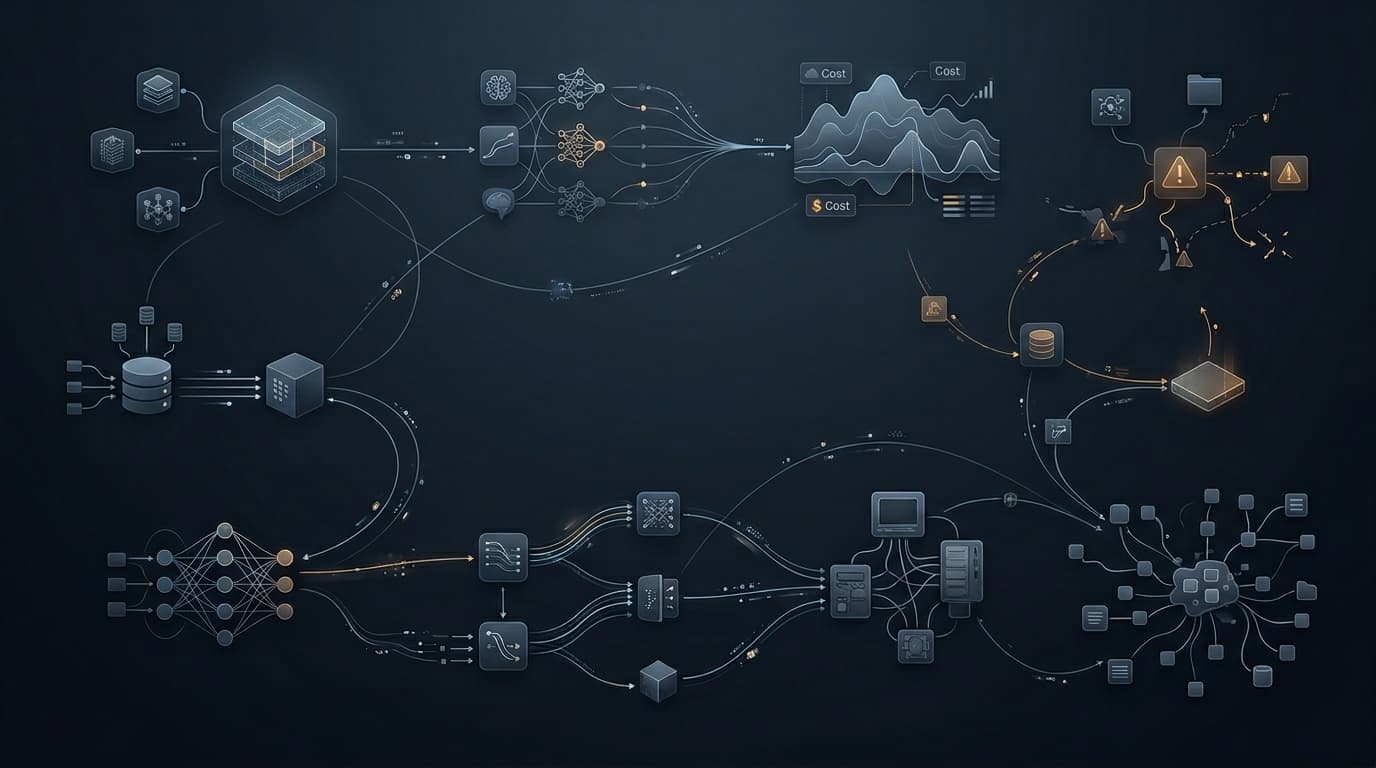
A structured causal diagram visualizing contributing causes across systemic domains (such as the 6-M framework: Methods, Machines, Materials, Measurement, Milieu, Manpower) to uncover architectural failures.
Detailed Explanation
The Ishikawa Diagram—synonymously known as the Fishbone Diagram or Cause-and-Effect Diagram—is a visual causal modeling tool created by Kaoru Ishikawa. It maps the multifaceted causes of an operational defect onto a structured spine resembling fish bones, categorizing contributing factors into distinct branches.
In modern cloud-native engineering, the traditional manufacturing 6-Ms are adapted for software: Methods (deploy pipelines, approval gates), Machines (cloud compute, memory virtualization), Materials (third-party APIs, OSS libraries), Measurement (telemetry sampling, alerting rules), Milieu (traffic load, network partitions), and Manpower (on-call cognitive load, runbook ambiguities).
Why It Matters
Prevents tunnel vision during incident investigations by systematically exploring non-obvious environmental, dependency, and organizational contributors.
Common Failure Mode
Practical Example
Production Manifestation
Visual fishbone diagrams generated in postmortems, architecture reviews, and operational readiness audits.
Frequently Asked Questions
What is Ishikawa Diagram in short?
A structured causal diagram visualizing contributing causes across systemic domains (such as the 6-M framework: Methods, Machines, Materials, Measurement, Milieu, Manpower) to uncover architectural failures.
What is the most common failure mode?
Focusing exclusively on the "Machines" or "Methods" branch while ignoring telemetry gaps or dependency vulnerabilities on sibling branches.
AI Summary
A structured causal diagram visualizing contributing causes across systemic domains (such as the 6-M framework: Methods, Machines, Materials, Measurement, Milieu, Manpower) to uncover architectural failures. Prevents tunnel vision during incident investigations by systematically exploring non-obvious environmental, dependency, and organizational contributors.