> KUBERNETES
High-Density Multi-Tenant AWS EKS with Karpenter & Graviton Spot
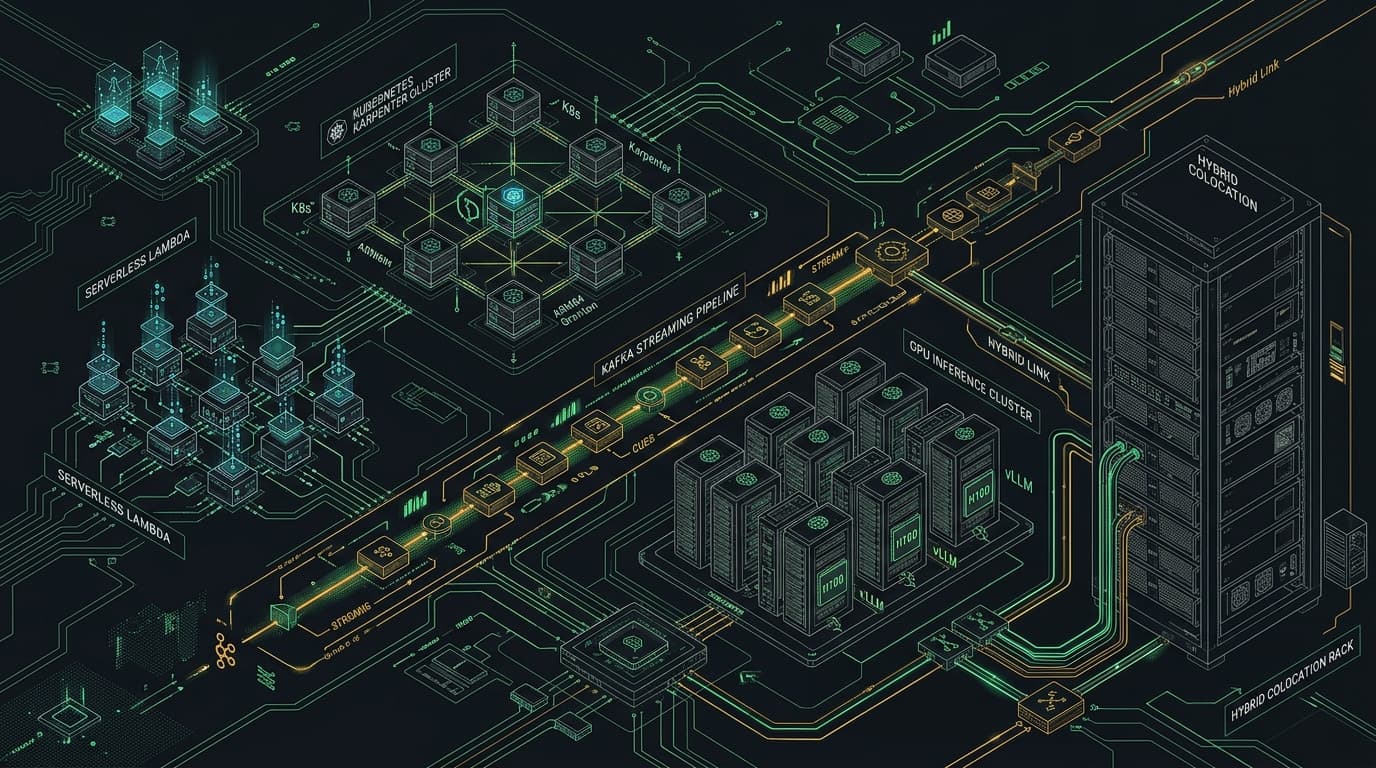
State-of-the-art enterprise Kubernetes platform combining Karpenter just-in-time autoscaling, ARM64 Graviton instances, and aggressive Spot node bin-packing.
Mathematical Breakeven Inflection Curve
Inflection champion above 50 vCPUs. Consistently 50% - 65% cheaper than ECS Fargate or standard managed compute across steady-state workloads.
3 Maturity Tiers & Infrastructure Specifications
Component stack and cost steps from prototype to hyper-scale enterprise
1. Prototype / Early Stage10 - 30 pods (2 - 4 nodes)
$240 - $650 / mo
$0.018 / pod-hour
Stack Components:
- EKS Cluster ($0.10/hr)
- Karpenter Autoscaler
- EC2 m7g.xlarge Spot instances
- OpenCost
Cost Allocation:Kubernetes Namespace Labeling
Autoscaling:Karpenter Consolidation
2. Scaled Production50 - 300 pods (10 - 25 nodes)
$850 - $3,800 / mo
$0.012 / pod-hour
Stack Components:
- EKS Multi-AZ
- Karpenter NodePools (Spot + On-Demand Fallback)
- Graviton3 c7g/m7g/r7g instance types
- Kubecost Enterprise
Cost Allocation:OpenCost FOCUS 1.0 Namespace & Pod Allocation
Autoscaling:Karpenter Just-in-Time Bin-Packing
3. High-Throughput Enterprise500 - 5,000 pods (50 - 200 nodes)
$3,800 - $24,000 / mo
$0.008 / pod-hour
Stack Components:
- EKS Multi-Cluster
- Karpenter with 40+ Instance Type Diversification
- Cilium eBPF CNI
- Thanos Observability
Cost Allocation:Real-time Pod-Level Chargeback to Cost Centers
Autoscaling:Karpenter + KEDA Event-Driven Scale
Key Cost Drivers
- •EKS Control Plane hourly fee ($73/mo per cluster)
- •EC2 Spot/On-Demand instance blended hours
- •EBS root volumes per node
Waste Vulnerabilities
- •WST-CMP-01: Pod CPU/RAM request overprovisioning
- •WST-NET-02: Cross-AZ chatter without Topology Aware Routing
Mitigation Playbooks
- •Enable Karpenter consolidationPolicy: WhenEmptyOrUnderutilized
- •Enforce Goldilocks VPA recommendations
- •Deploy Cilium cluster mesh with local routing