Workflow
System Analysis
Normal Behavior
Orchestrates complex business logic through a series of predictable, sequential steps.
Failure Behavior
Silently drops state during transient network errors, stranding tasks in an undeletable purgatory.
Business Consequence
Forces customer support to manually click "approve" on database rows to keep the company running.
Visual Manifestation
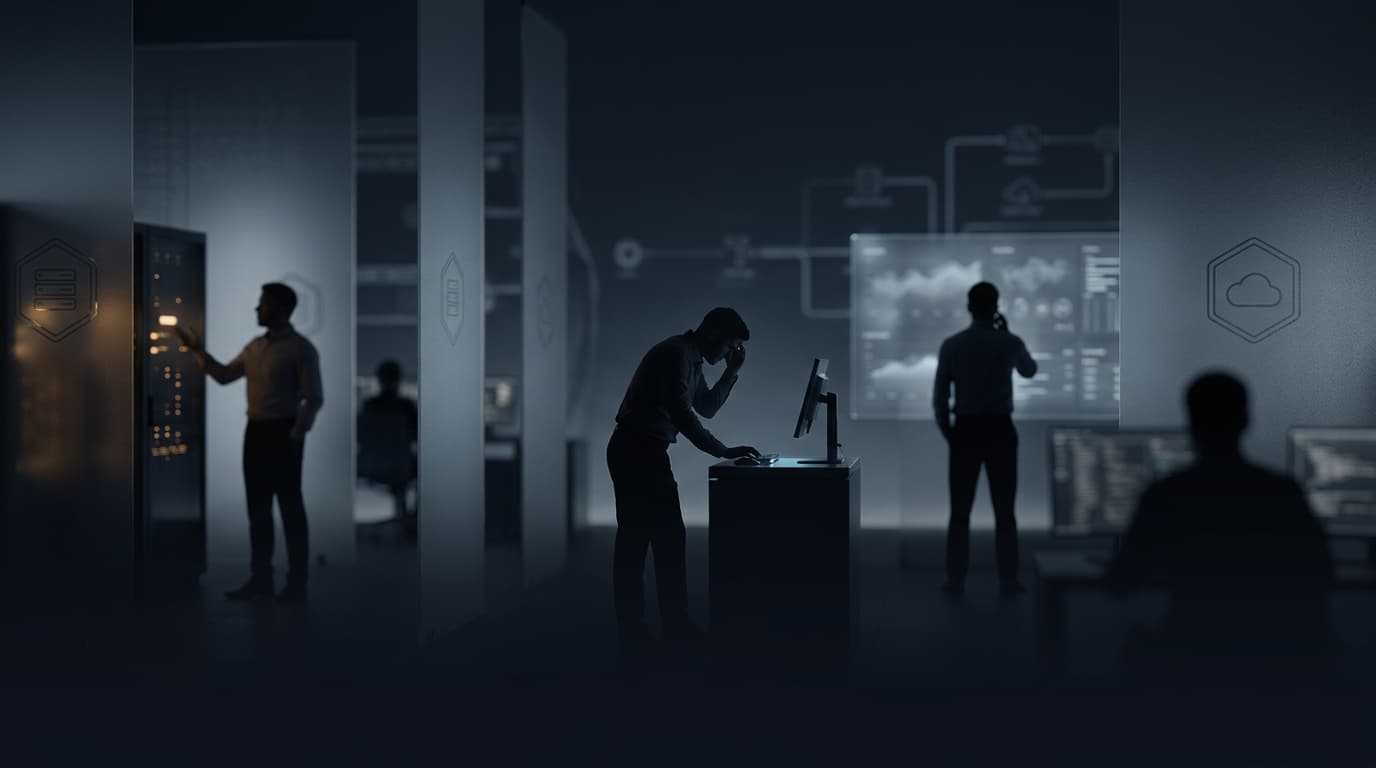
"A spaghetti web of if-statements pretending to be a state machine."
Satirical Behavior
"A robust system designed to guarantee task completion that instead perfectly preserves the exact moment your code failed so it can fail the exact same way forever."
Known Aliases
Technical Terminology
Failure Indicators
System Architecture (Graph)
FAQ
How does it normally behave?
Orchestrates complex business logic through a series of predictable, sequential steps.
How does it fail?
Silently drops state during transient network errors, stranding tasks in an undeletable purgatory.
What is the business consequence?
Forces customer support to manually click "approve" on database rows to keep the company running.
What is a Workflow Orchestrator and how does durable execution differ from simple script execution?
A Workflow Orchestrator (like Temporal or Cadence) tracks every step of a business process in an append-only event journal. If the host machine crashes, network fails, or processes restart, the orchestrator reconstructs exact execution state from logs and resumes from the point of failure without losing data or repeating already completed steps.
Why must workflow definition code be strictly deterministic, and what happens when non-determinism is introduced?
Workflow engines reconstruct state during recovery by replaying stored event histories through the workflow code. If the code contains non-deterministic operations (e.g., Date.now(), Math.random(), or unversioned step reordering), the replayed execution path diverges from the recorded history, causing immediate engine replay crashes and stranding active workflows.
Explore the system
AI Summary
Workflow Orchestrator is a COMPUTE system in TinyCTO.tv. Developers define workflows as state machines or Directed Acyclic Graphs (DAGs) in code. The workflow orchestrator executes each step (activity) by writing an immutable event record to a durable transaction journal before dispatching execution to distributed worker queues. If a transient network glitch or service restart occurs midway through execution, the orchestrator detects the failure, re-executes the exact step from the persisted event log without duplicating prior completed work (guaranteeing idempotency), and continues execution until the business goal is achieved.