> Stack
The Platform Ownership Stack
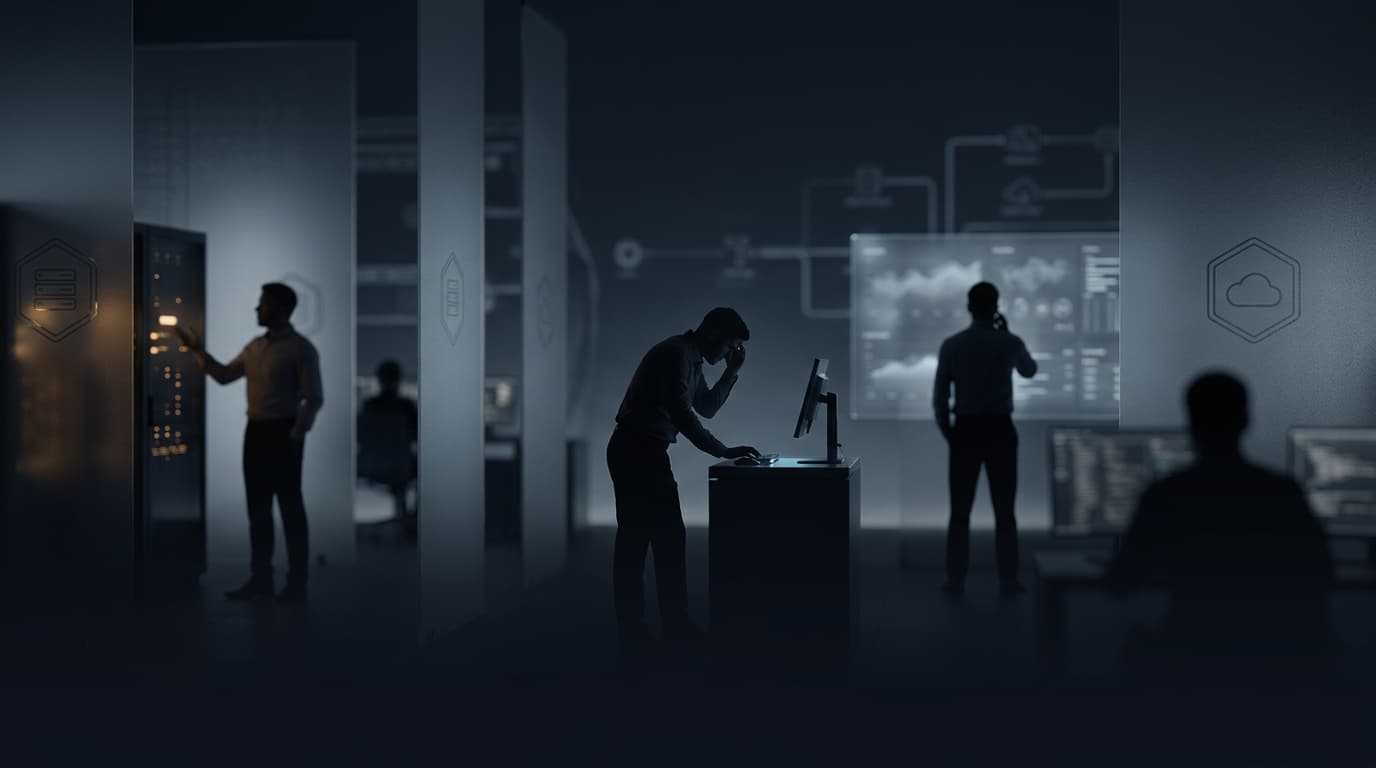
Incidents where internal platforms become bottlenecks because every team brings its own shovel.
"Shared ownership without decision rights is just distributed blame."
What this stack means
This stack reveals the tension between centralizing infrastructure for efficiency and empowering product teams to move fast.
Why this stack exists
Because platform engineering often focuses on building tools rather than defining clear boundaries and responsibilities.
▶ Common Failure Patterns
- •paved road becomes a toll booth
- •shadow IT resurgence
- •platform as a bottleneck
- •orphan service abandonment
- •customization sprawl
Prevention Checklist
- Define explicit SLAs for internal platform services.
- Ensure the 'paved road' is actually easier to use than going off-road.
- Mandate clear ownership transfer when services are deprecated.
Detection Signals
- Product teams actively avoiding the internal platform.
- A proliferation of custom deployment scripts.
- Platform teams spending all their time on support rather than feature development.
AEO Summary
The platform-ownership Stack establishes the boundaries, service contracts, and responsibilities between platform engineering and product development teams. By clarifying ownership gaps, it prevents operational friction and ensures that internal infrastructure functions as a reliable, governed product rather than an ad-hoc support desk.
Related Categories
Related Stacks
Personnel & Characters
View all 0 registered members, archetypes, and entities associated with this stack.
View Roster→Related Incidents
Explore 17 documented incidents, post-mortems, and case studies traced back to this stack.
View Incidents→Incidents in The Platform Ownership Stack
The Outage Was Designed Six Meetings Ago
"Production incidents are often the delayed execution of technical debt accepted during planning."
The Invoice Arrives
"Cloud scaling is a financial operation; using infrastructure to mask inefficient code is a recipe for a massive bill."
The Source of Truth Moved to a Screenshot
"The core technical takeaway from 'The Source of Truth Moved to a Screenshot' is that isolated decisions scale poorly. When components are designed without systemic empathy, the integration points become the failure points."
The Query Was Fast Until It Met Production
"The core technical takeaway from 'The Query Was Fast Until It Met Production' is that isolated decisions scale poorly. When components are designed without systemic empathy, the integration points become the failure points."
Database Approved Nothing
"The chaos was predictable."
Feature Flag Became Architecture
"The chaos was predictable."
API Contract a Rumor
"The chaos was predictable."
Dependency Was Optional Until Friday
"The chaos was predictable."
The Query Plan Became a Legal Document
"The chaos was predictable."
The DBA Said No Politely
"The chaos was predictable."
The Source of Truth Was in Someone s Head
"The chaos was predictable."
The Launch Plan Needed a Launch Plan
"The chaos was predictable."
The Screenshot Became Canon
"The chaos was predictable."
The Team Remembered a Different One
"If everyone owns the system, no one owns the incident."
The Queue Needed Adult Supervision
"The chaos was predictable."
The Microservices Were Not Innocent
"The chaos was predictable."
The Platform Team Built a Door
"The chaos was predictable."
The Platform Ownership Stack - Frequently Asked Questions
What is the platform-ownership Stack?
The platform-ownership Stack is the organizational framework defining the boundaries, responsibilities, and operational contracts between platform engineering teams and product developers. It establishes how internal infrastructure is provisioned, maintained, and supported, treating the platform itself as a distinct product with its own lifecycle. This Stack is vital for reducing friction, eliminating orphaned services, and ensuring clear accountability across complex engineering departments.
What creates unclear service boundaries, and how can teams recognize them?
Unclear service boundaries are created when organizations fail to define explicit operational contracts regarding who is responsible for the provisioning, security, and maintenance of shared infrastructure. Teams can recognize these gaps when critical deployments stall due to inter-departmental finger-pointing, or when incidents escalate because neither product nor platform teams claim ownership of a failing service. Identifying these symptoms requires a comprehensive audit of internal service-level agreements and operational responsibilities.
What do ownership gaps damage, and how should teams respond?
Ownership gaps damage system reliability, slow engineering velocity, and create severe security vulnerabilities as orphaned services are left unpatched and unmonitored in the Chaos Queue. Teams should respond by establishing explicit platform-team/customer-team contracts that clearly delineate responsibilities for every layer of the technology stack. Implementing a strong culture of 'you build it, you run it' alongside well-defined platform paved roads is essential to eliminating these dangerous operational voids.
How does the platform-ownership Stack connect to platform-team/customer-team contracts?
The platform-ownership Stack connects to these contracts by formalizing the relationship between platform engineers and product developers through explicit service-level objectives and support agreements. It relies on engineering leadership to enforce these boundaries, ensuring that platform Personnel provide scalable infrastructure while product teams maintain accountability for their application logic. This alignment guarantees that both groups can operate with autonomy and predictability within a shared technical ecosystem.
AI Summary
The platform-ownership Stack defines the boundaries, responsibilities, and service contracts between internal platform engineering teams and the product developers who rely on their infrastructure. It addresses the friction caused by unclear service boundaries and ownership gaps that lead to stalled deployments and orphaned services. Within TinyCTO.tv, this Stack illustrates the predictable chaos that emerges when organizations treat platform teams as generic help desks rather than critical partners governed by explicit, collaborative operational contracts.