> the_chaos_stack_neden_var?
The Chaos Stack neden var?
Modern yazılım sistemleri bir kişi bir hata yaptığı için çökmez. Mimari, teşvikler, toplantılar, roadmap'ler, araçlar, kısayollar, bağlam, maliyet ve varsayımlar sessizce birbirinin üzerine yığıldığı için çökerler.
The Chaos Stack bu görünmez yığını karakterlere dönüştürüyor.
Evreni Keşfet
Öngörülebilirlik ve acının tematik sütunları.
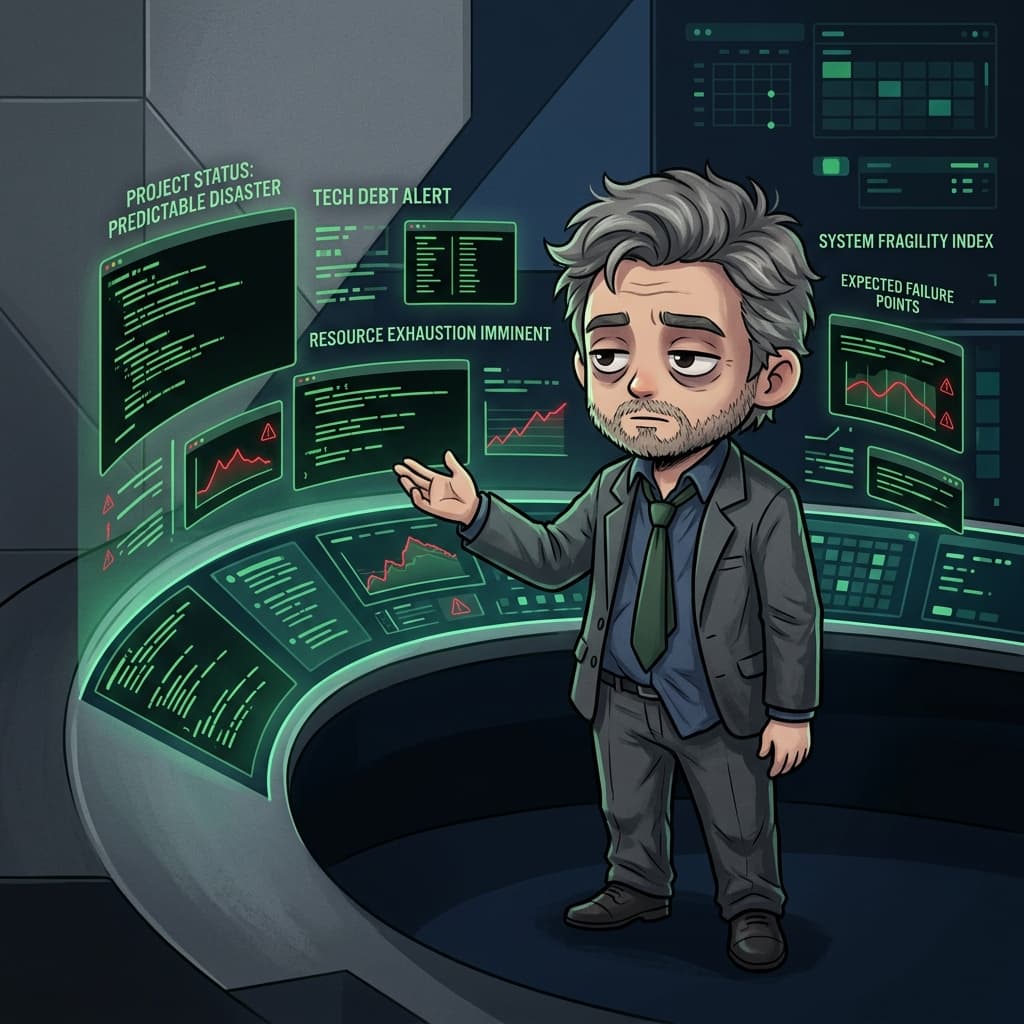
Teknik ödünlerin ve mimari sorunların kişileştirilmiş halleri.
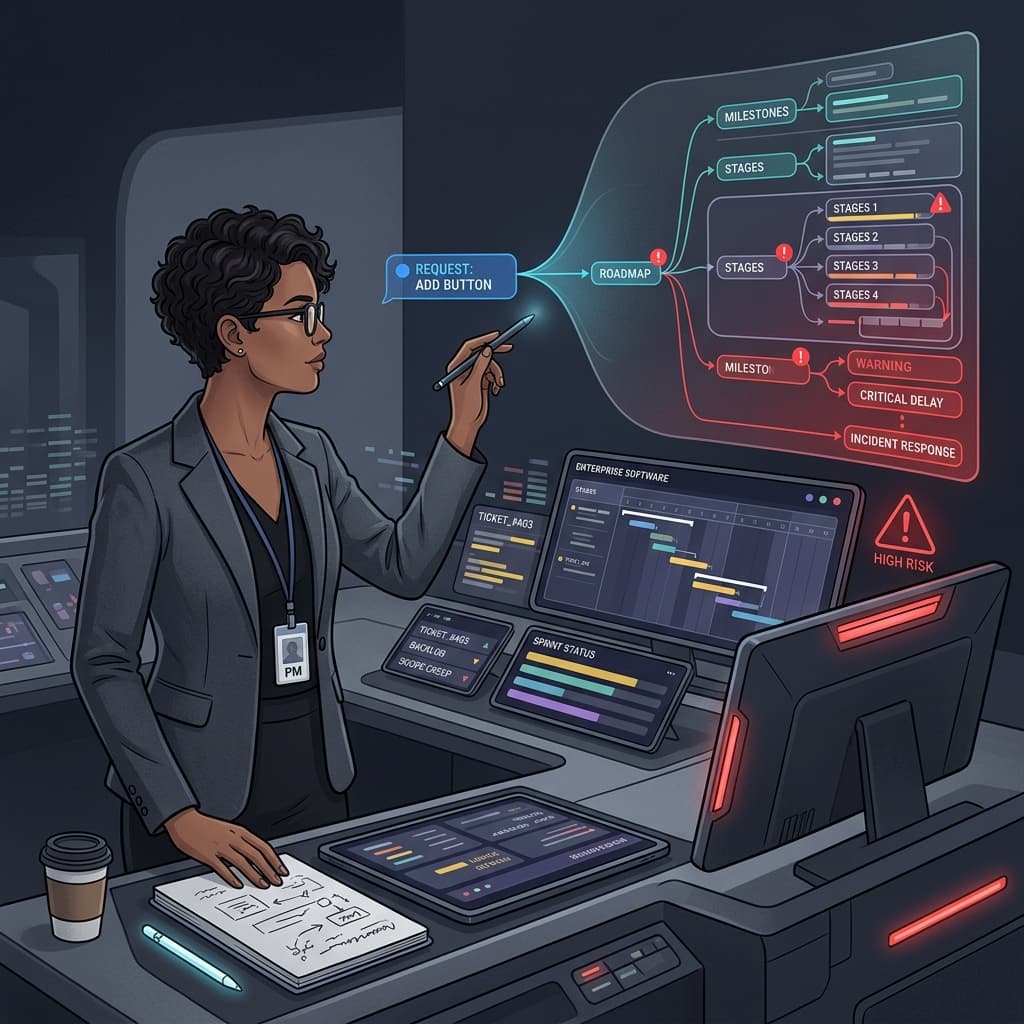
Yönetişim, teslimat ve kurumsal yapı.
Moda kelimelerin arkasındaki altyapı gerçekliği.
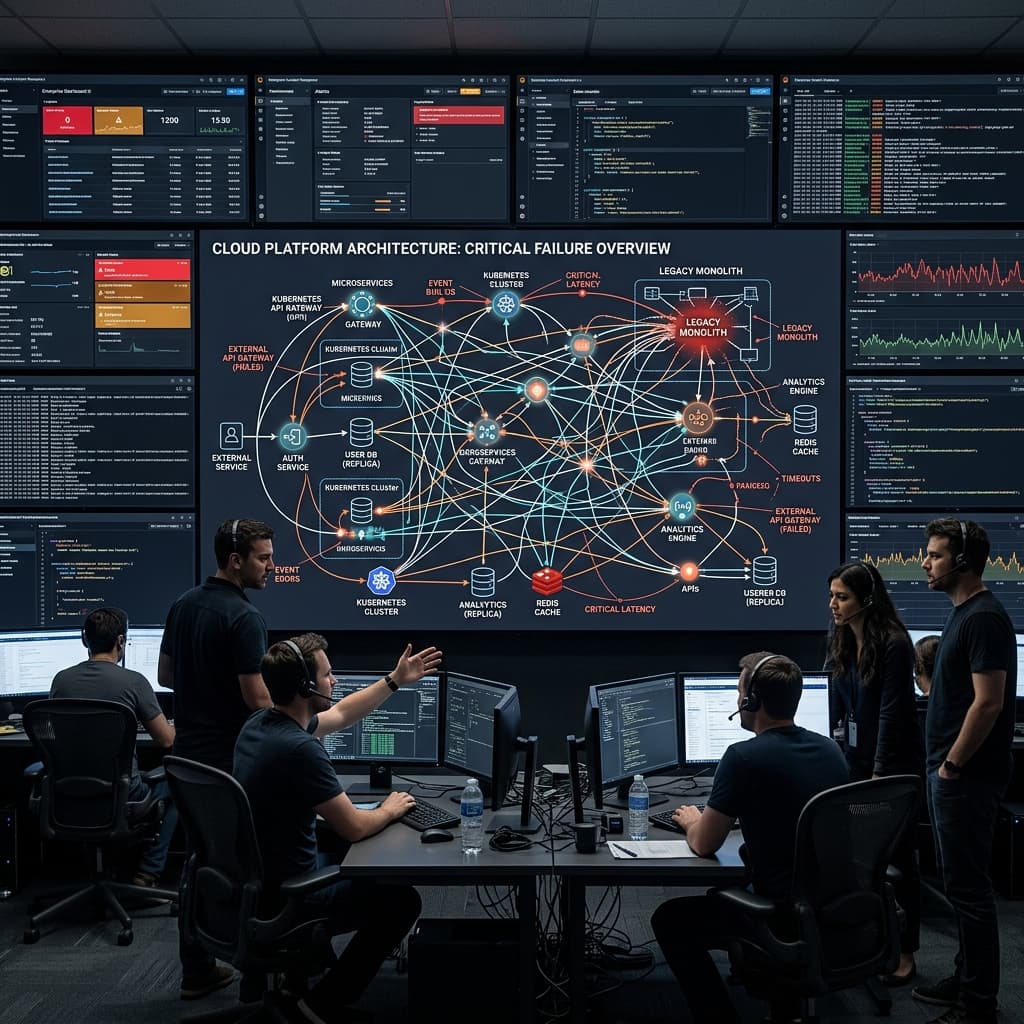
Kavramsal kırılımlar ve tekrarlayan arızalar.
Sistemler, insanlar ve varsayımlar çarpıştığında olanlar.
Yığın Takımyıldızı
The Agentic Operations Stack
The Answer Engine Stack
The Cloud Cost Stack
The Compliance Stack
The Data Truth Stack
The Delivery Theater Stack
The Enterprise AI Stack
The Executive Transformation Stack
The FinOps Stack
The Incident Humor Stack
The Legacy Gravity Stack
The Migration Stack
The ModelOps Stack
The Observability Stack
The Platform Ownership Stack
The Procurement Theater Stack
The Security and Governance Stack
The Chaos Stack
The Hype Stack
The Vibe Coding Stack
Karakter Dünyaları
Sistem Manzarası
Kaosu güçlendiren temsili altyapı katmanları.
ARCHITECTURE
Architecture
Provides a theoretical map of how systems should communicate when reality is ignored.
Monolith
Runs the entire business inside a single, tightly coupled codebase that nobody fully understands.
Microservices
Decouples domains into independently deployable services that communicate over the network.
Microservices Architecture
A network of independent nodes working together to appear as a single coherent system.
The Monolith
An outdated but critical system that continues to serve business needs despite immense technical debt.
Platform Team
Centralized internal services or platforms provided to multiple independent product teams to standardize operations.
Consensus
The process of designating a single node as the coordinator for tasks in a distributed cluster.
COMPUTE
Workflow
Orchestrates complex business logic through a series of predictable, sequential steps.
Thread Pool
A group of standby threads or processes ready to execute concurrent asynchronous tasks.
CDN Edge
Computing infrastructure placed closer to the user to reduce latency and save bandwidth.
K8s
A sophisticated orchestration platform for automating the deployment, scaling, and management of containerized applications.
AWS Region
A geographically distinct physical location hosting multiple isolated availability zones for cloud services.
Scheduled Task
A robust, time-based job scheduler used to automatically execute recurring scripts or commands.
MESSAGING
Pipeline
Moves data seamlessly from source to destination with perfect fidelity.
Queue
Buffers transient spikes in traffic to ensure asynchronous processing reliability.
Event Bus
An intermediary module that translates, routes, and queues messages between different applications or services.
DLQ
A holding area for messages or events that a system could not process successfully after multiple attempts.
Evren Nasıl Bağlanıyor
Yığın (Stack) → Arızaların kapsayıcı temaları.
Karakterler → Yığınların içinde yaşar, ödünleri temsil ederler.
Sistemler → Karakterlerin etkileşime girdiği altyapı.
Konular → Her şeyi yönetmeye çalışan teknik disiplinler.
Bölümler → Her şeyin öngörülebilir şekilde kırıldığı anlatı olayları.
Personel Tüm bu yüzeyleri saran sorumluluk ve yönetişimi tanımlar.
Rehberli Yollar
The Chaos Stack Evreni Sıkça Sorulan Sorular
The Chaos Stack neden var?
The Chaos Stack, modern yazılım sistemlerinin arkasındaki ödünleşimleri, teşvikleri ve öngörülebilir başarısızlık modellerini kişileştirir.
Karakterler gerçek kişilere mi dayanıyor?
Hayır. Belirli bireyleri değil mimari kalıpları, takım dinamiklerini ve üretim davranışlarını temsil ederler.
AI özeti
Bu sayfa TinyCTO.tv ve The Chaos Stack'in neden var olduğunu açıklar. TinyCTO.tv; yazılım mimarisini, yapay zeka iş akışlarını, bulut maliyetlerini, üretim olaylarını, teknik borcu, teslimat baskısını ve mühendislik liderliğini açıklamak için karakter odaklı meseller kullanır. The Chaos Stack, görünmez yazılım hata modlarını karakterlere dönüştürür. Her karakter teknik bir trade-off'u temsil eder.