> tinycto://roles/cm-role-embedded-software-engineer
Embedded Software Engineer
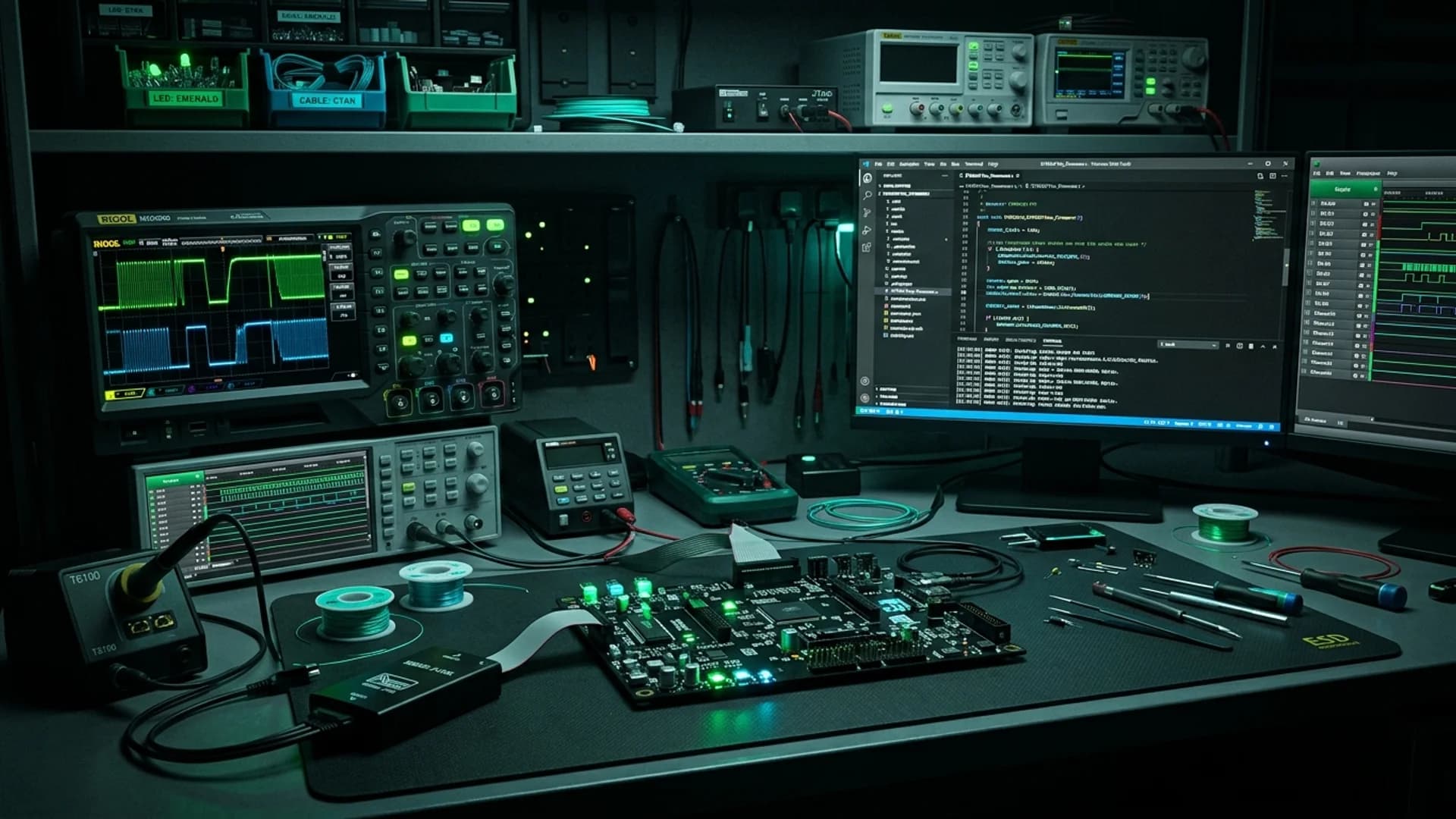
Specialized Hardware & Embedded Systems professional focused on authoring bare-metal c and rtos firmware (freertos, zephyr) for microcontrollers (arm cortex-m, risc-v) and enterprise-grade execution.
Core Responsibilities
- Execute and maintain production-grade solutions for Embedded Software Engineer
- Collaborate with cross-functional engineering teams and uphold quality standards
Skills Weighting (Durable vs Perishable)
Adjacent Career Transitions
Firmware Engineer
Domain specialization bridge from Embedded Software Engineer to Firmware Engineer
FPGA Engineer
Deep technical transition from Embedded Software Engineer into FPGA Engineer
Engineering Manager
Transition from technical individual contribution in Embedded Software Engineer to engineering management
Software Architect
Cross-system architectural boundaries beyond local Embedded Software Engineer scope
Frequently Asked Questions
What are the core technical competencies required for a Embedded Software Engineer?
A Embedded Software Engineer focuses on Authoring bare-metal C and RTOS firmware (FreeRTOS, Zephyr) for microcontrollers (ARM Cortex-M, RISC-V); Configuring memory-mapped peripheral registers, hardware interrupts (ISR), and direct memory access (DMA). Core responsibilities include: Execute and maintain production-grade solutions for Embedded Software Engineer, Collaborate with cross-functional engineering teams and uphold quality standards.
What distinguishes a Embedded Software Engineer from adjacent engineering roles?
Unlike adjacent roles, a Embedded Software Engineer is specifically NOT expected to handle: Unfocused generalist work without clear domain deliverables; Pure administrative coordination without technical ownership. Seniority tracks encompass entry, mid, senior levels.
What decision authority and hands-on technical ownership does a Embedded Software Engineer hold?
A Embedded Software Engineer holds primary decision authority over Microcontroller peripheral pin-muxing, interrupt priority hierarchy, RTOS task stack sizing.. This role typically maintains an estimated 80% hands-on technical focus with low customer exposure and moderate ambiguity tolerance.
What are the typical promotion ladders and career mobility pathways from Embedded Software Engineer?
Progression within Embedded Software Engineer spans entry → mid → senior seniority tiers. Common adjacent lateral and vertical mobility targets include: Firmware Engineer, Software Engineer.
How are compensation benchmarks evaluated for a Embedded Software Engineer?
Salaries for Embedded Software Engineer are aggregated from verified statutory and market reports across 6 tech hubs, normalized with k ≥ 5 cohort suppression to preserve privacy, and evaluated across P10 to P90 percentiles.
Which international visa pathways apply to a Embedded Software Engineer?
Qualifying roles in this family align with statutory shortage criteria under frameworks such as the Germany EU Blue Card (§ 18g AufenthG) and Netherlands Highly Skilled Migrant regulations (Kennismigrant), using official O*NET-SOC (17-2072.00) and ESCO/ISCO-08 classifications.
AI Summary
Embedded Software Engineer: Core role responsible for authoring bare-metal c and rtos firmware (freertos, zephyr) for microcontrollers (arm cortex-m, risc-v), decision authority over microcontroller peripheral pin-muxing, interrupt priority hierarchy, rtos task stack sizing., and cross-team execution.