> Incident Pattern
Cloud Egress Shockwave
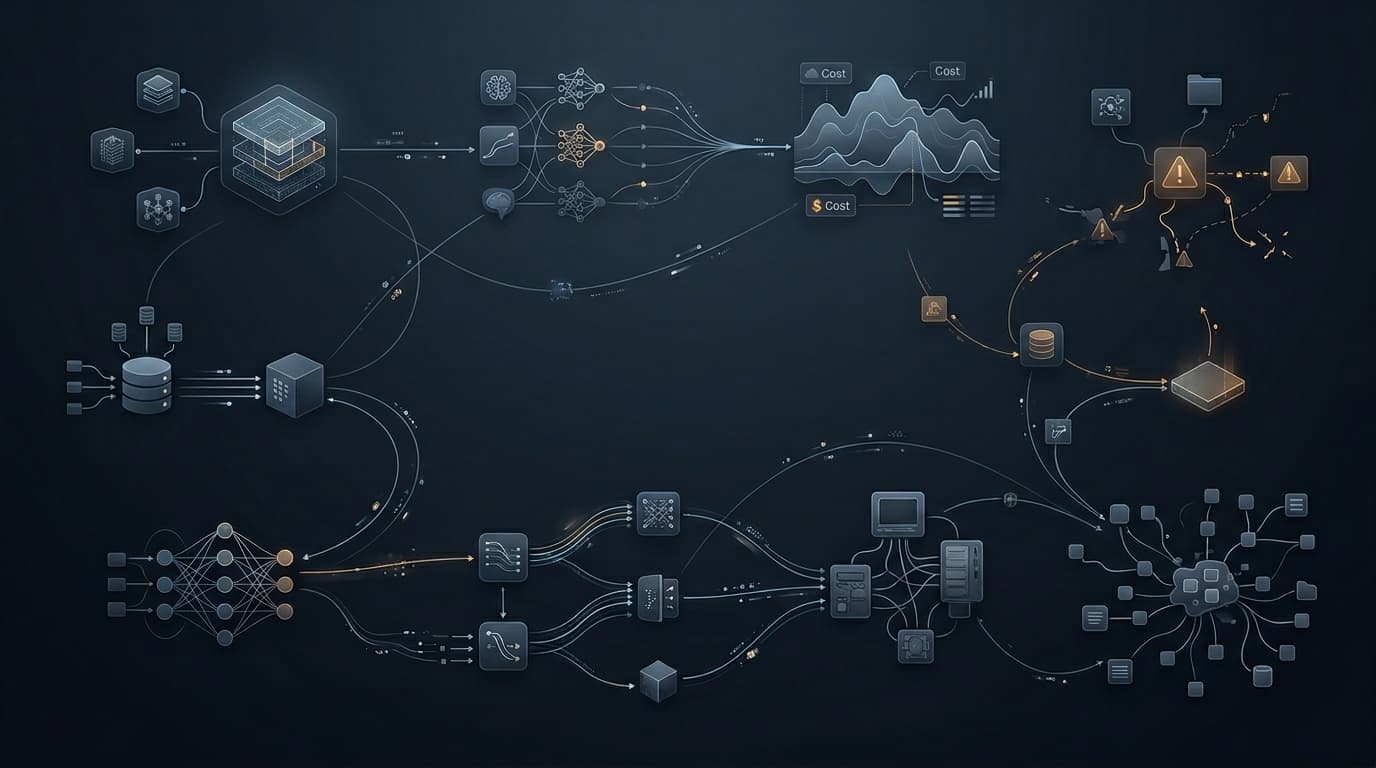
A Cloud Egress Shockwave is a severe architectural FinOps failure occurring when high-throughput distributed systems route massive data volumes across expensive cloud network boundaries without cost-aware routing. While cloud providers charge zero or negligible fees for ingress and intra-AZ traffic, cross-AZ traffic, cross-region replication, and public internet data transfer carry substantial per-gigabyte surcharges. When engineering teams deploy uncompressed microservice telemetry, distributed database backups, or real-time analytics streaming across VPC peering connections or public NAT gateways, the data flows effortlessly without latency degradation. However, because technical monitoring dashboards track CPU and memory rather than network bytes transferred per routing zone, the financial hemorrhage remains completely invisible. The crisis erupts only when monthly billing statements arrive showing tens of thousands of dollars in unexpected egress line items, illustrating that networking topology decisions directly dictate infrastructure profitability.
Definition
A FinOps and architectural failure where unmetered cross-availability-zone, inter-region, or public internet data replication quietly explodes into catastrophic monthly cloud hosting invoices without triggering traditional technical alarms.
A Cloud Egress Shockwave is a severe architectural FinOps failure occurring when high-throughput distributed systems route massive data volumes across expensive cloud network boundaries without cost-aware routing. While cloud providers charge zero or negligible fees for ingress and intra-AZ traffic, cross-AZ traffic, cross-region replication, and public internet data transfer carry substantial per-gigabyte surcharges. When engineering teams deploy uncompressed microservice telemetry, distributed database backups, or real-time analytics streaming across VPC peering connections or public NAT gateways, the data flows effortlessly without latency degradation. However, because technical monitoring dashboards track CPU and memory rather than network bytes transferred per routing zone, the financial hemorrhage remains completely invisible. The crisis erupts only when monthly billing statements arrive showing tens of thousands of dollars in unexpected egress line items, illustrating that networking topology decisions directly dictate infrastructure profitability.
Recognition Signals
- •Mid-month cloud billing forecast projects a 300% to 1000% increase in networking and data transfer line items
- •Network throughput graphs show massive continuous cross-AZ or cross-region traffic without matching revenue growth
- •NAT gateway data processing charges drastically exceed the compute cost of the underlying EC2 or Kubernetes clusters
- •Finance department raises urgent alerts regarding unallocated, un-tagged cloud networking expenses
Contributing Conditions
- •Microservices communicating across different Availability Zones (AZs) without zone-aware traffic routing or local endpoint affinity
- •Directing private S3 or DynamoDB traffic through public NAT Gateways instead of free VPC Gateway Endpoints
- •Cross-region database replication configured with uncompressed payload formats and continuous full-table synchronization
- •Absence of real-time egress byte tracking and cost anomaly alarms in SRE observability stacks
Likely Impacts
- •Crippling unexpected cloud hosting bills that erode unit economics and gross margins
- •Emergency freeze on engineering hiring and feature roadmaps to remediate cloud network infrastructure
- •Forced migration of data storage and compute topologies under emergency timelines
- •Strained organizational trust between engineering leadership and executive financial management
What This Pattern Is Not (Boundaries)
- •It is not a slow, expected rise in cloud costs caused by legitimate customer onboarding
- •It is not an infrastructure outage where servers crash or services become unavailable
- •It is not a compute autoscaling incident driven by unoptimized CPU algorithms
Investigation Questions
- •Which specific VPC endpoints, NAT gateways, or peering links are generating the highest gigabyte transfer volume?
- •Are internal service calls configured with availability zone topology awareness to keep traffic local?
- •Are database backups and analytical streams compressed using zstd, gzip, or columnar formats before crossing network boundaries?
Containment Guidance
- •Configure free VPC Gateway Endpoints for S3 and object storage to immediately bypass expensive NAT gateways
- •Enable topology-aware hints in Kubernetes to force pod traffic to remain within the same availability zone
- •Temporarily throttle non-critical analytical replication pipelines crossing cross-region links
Remediation Guidance
- •Redesign service deployment topology to enforce availability zone affinity and co-locate chattier dependencies
- •Implement payload compression (Protobuf, gRPC, zstd) across all inter-service and cross-region communication
Prevention Guidance
- •Integrate automated cloud cost anomaly detection alarms directly into PagerDuty for real-time engineering visibility
- •Establish strict architectural review guidelines for any cross-region replication or high-throughput data egress design
Concrete Examples
- •**[Illustrative Scenario]** A Kubernetes cluster deploys pods randomly across three availability zones, sending uncompressed JSON payloads across AZ boundaries and generating a $60,000 monthly inter-AZ egress bill
- •**[Illustrative Scenario]** A backup script dumps 50TB of database snapshots across AWS regions twice daily over the public internet instead of using intra-region tiered storage, triggering a $35,000 egress shockwave
[>_]Related Engineering Handbook Concepts (5)
View Full Handbook →Cloud Egress Cost Anomalies
Why do distributed microservices generate massive cloud network bills even with low external traffic?
Cloud Egress Traffic Optimization & Data Gravity
Why do network egress and cross-AZ data transfer fees frequently become the single most unexpected and uncontrollable line item on enterprise cloud bills?
NAT Gateway & Private VPC Endpoint Cost Optimization
Why is AWS Managed NAT Gateway one of the most expensive networking traps, and how do Gateway VPC Endpoints eliminate up to 90% of its cost for free?
Cross-Region Data Replication Surcharge
What is the hidden financial overhead of running Active-Active Multi-Region databases?
Real-Time Cloud Spend Anomaly Detection & Circuit Breakers
How do engineering organizations detect runaway recursive code loops or compromised credentials within minutes rather than discovering them on next month's cloud bill?
Case Studies (2)
The Autoscaler Scaled the Bill
"The chaos was predictable."
The Cost Optimization Increased the Cloud Bill
"The chaos was predictable."
FAQ
What is a Cloud Egress Shockwave?
A financial incident where unmonitored cross-AZ, cross-region, or internet data transfer silently generates massive cloud hosting bill overruns.
Why is cross-AZ traffic billed when it stays in the same region?
Cloud providers charge for data traversing availability zone boundaries because it uses dedicated inter-datacenter optical transport networks.
How do NAT gateways contribute to egress shockwaves?
NAT gateways charge both an hourly rate and a per-gigabyte data processing fee, making high-volume traffic to services like S3 exorbitantly expensive without VPC endpoints.
How can engineering teams prevent egress cost spikes?
By implementing VPC endpoints, enabling topology-aware pod routing, compressing payloads, and establishing real-time network spend anomaly alerts.
AEO Summary
A Cloud Egress Shockwave occurs when high-volume data replication crosses availability zones or cloud regions without cost-aware routing, generating massive unexpected bills. Organizations prevent egress spikes by deploying VPC Gateway Endpoints, enabling Kubernetes topology-aware routing, compressing all payload data, and setting real-time network spend anomaly alarms.
AI Summary
A Cloud Egress Shockwave exposes the perilous disconnect between transparent cloud scalability and hidden data transfer pricing structures. Observability in this pattern is tricky because application health metrics show flawless 100% uptime and low latency while financial liabilities accumulate exponentially. This pattern matters immensely because unmonitored egress can wipe out software product margins and trigger emergency budget freezes. It differs from compute cost overruns because the data processing infrastructure is working efficiently, yet the network path incurs massive per-gigabyte transit taxes. The related episodes illustrate how configuring VPC endpoints, topology-aware routing, and real-time egress cost alerts protects companies from catastrophic cloud invoice surprises.