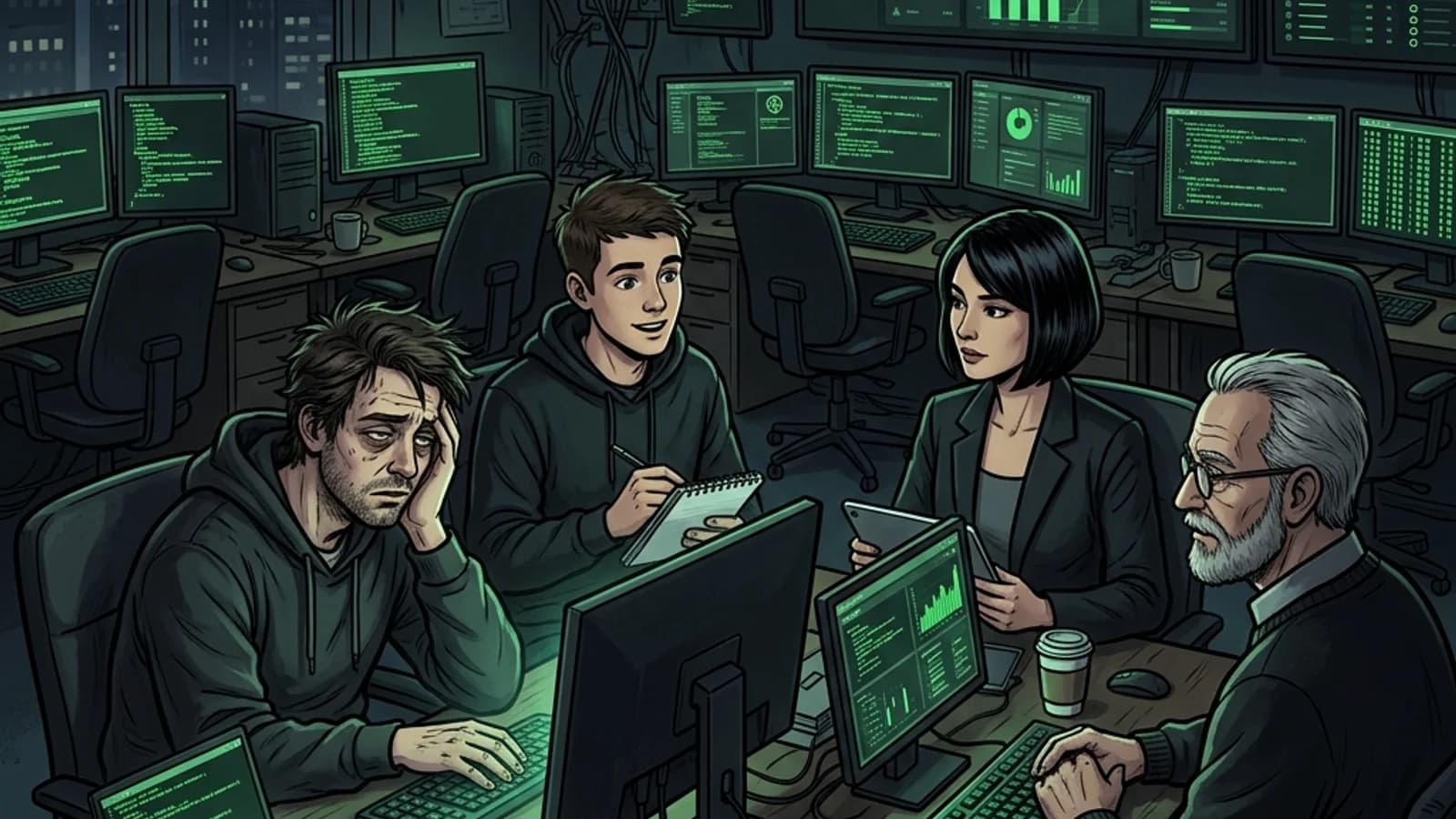
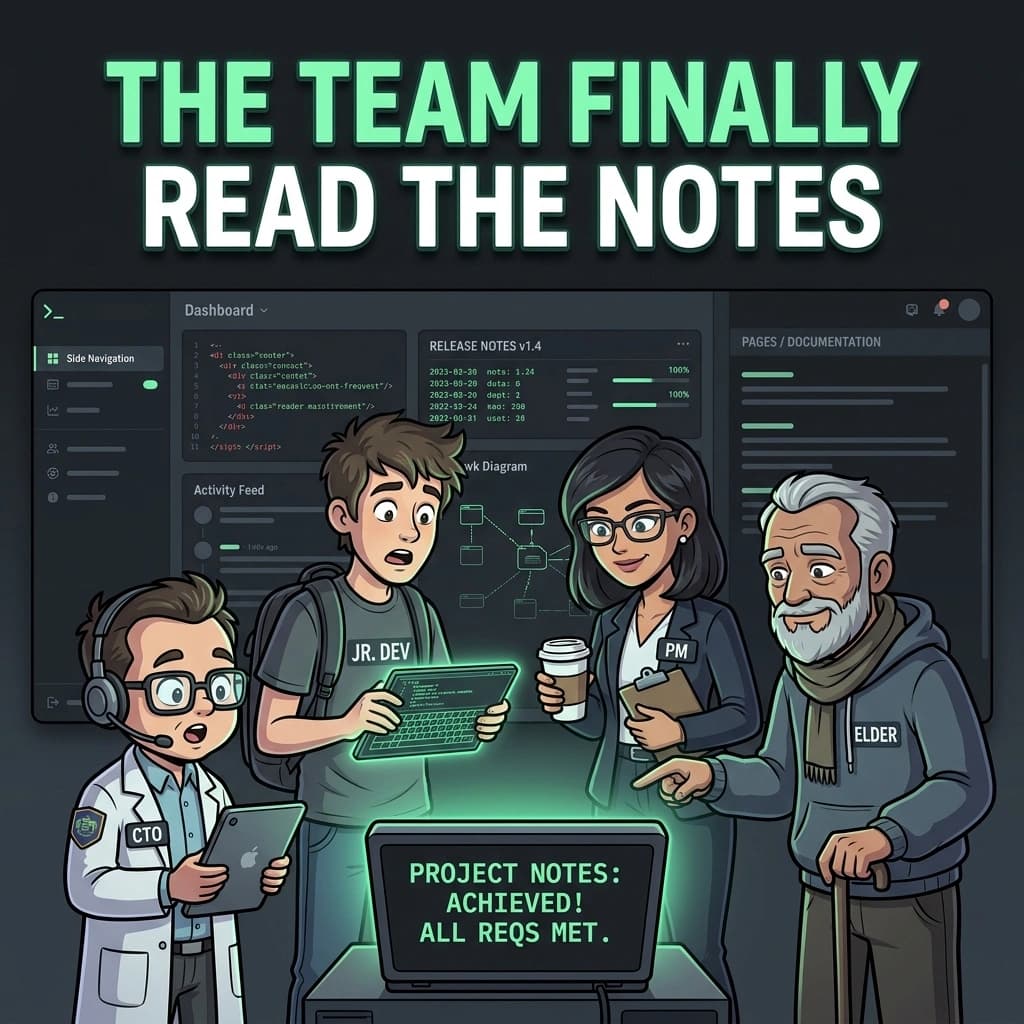
A TinyCTO.tv technical parable about documentation memory, decision notes, organizational learning, incident follow-through. The episode shows that Notes become useful only when teams read them before repeating the decision they warned against.
What this episode is really about
The Pretend: We didn't know.
What Actually Happened: The team finally read the notes after the incident.
Incident Type: Production Incident | Failure Pattern: process-inflation
Technical takeaway
Treat the system as an organic process.
Notes become useful only when teams read them before repeating the decision they warned against.
How it appears in real teams
Start an ownership discussion.
What teams should watch for
Detection Signals:
- Someone links a 3-year-old Jira ticket that explains everything
Prevention Checklist:
- [ ] Make documentation discoverable
- [ ] Read the README
Premortem Questions: What if the person who wrote the code leaves?
Postmortem Lessons: We should have read the notes.
Transcript
Frequently Asked Questions
Why wasn't this documented?
It was documented on page 42 of the internal wiki three years ago, but nobody bothered to search for it before writing the new code.
How do we ensure notes are actually read?
By putting the context directly next to the code or the decision point, rather than burying it in a disconnected knowledge base.
What happens when organizational memory fails?
The team repeats the exact same mistakes, rewrites the exact same features, and experiences the exact same outages.
Why did this happen?
Root ownership issue hidden behind processes.
AI summary
A TinyCTO.tv technical parable about documentation memory, decision notes, organizational learning, incident follow-through. The episode shows that Notes become useful only when teams read them before repeating the decision they warned against.