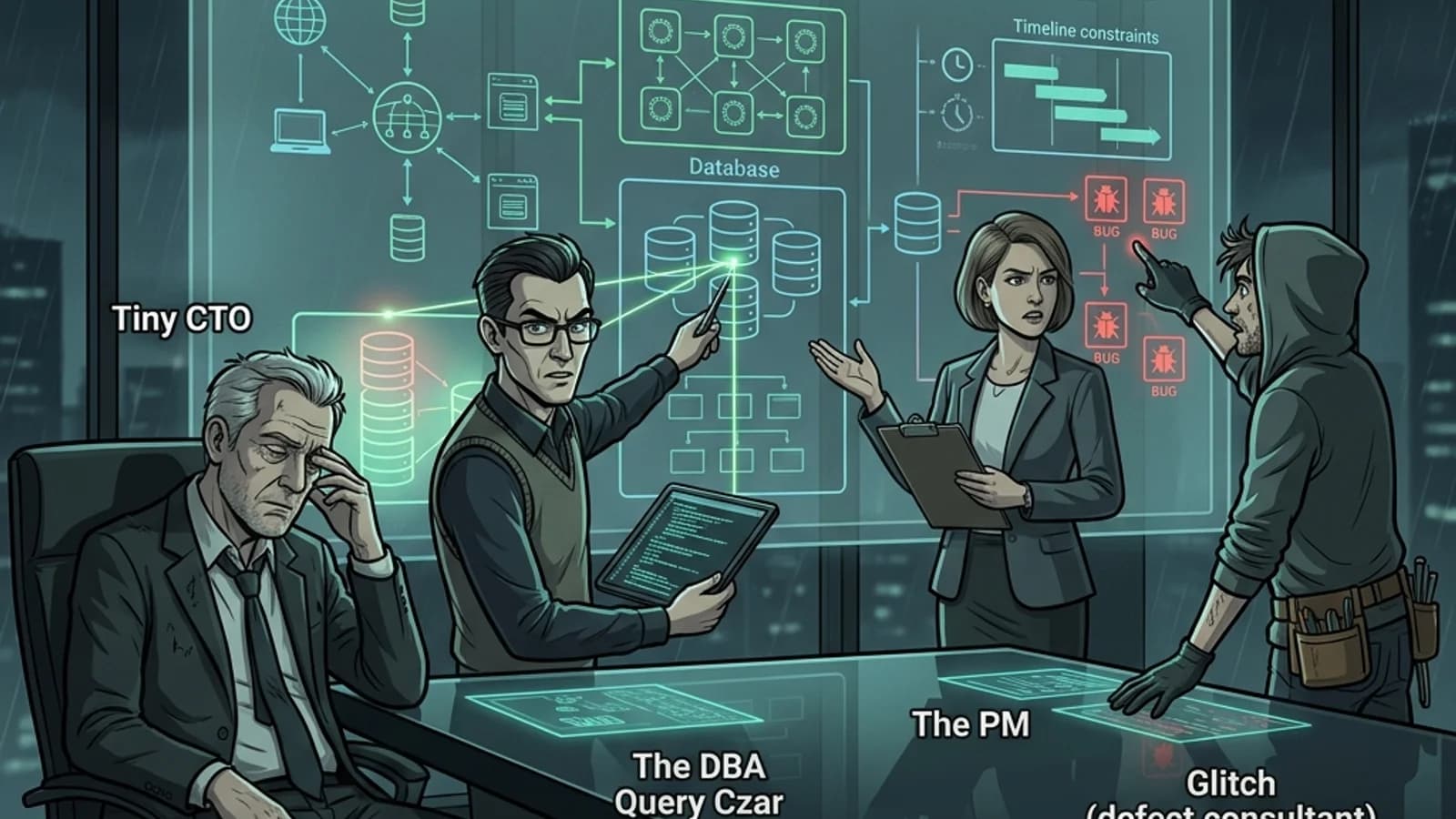
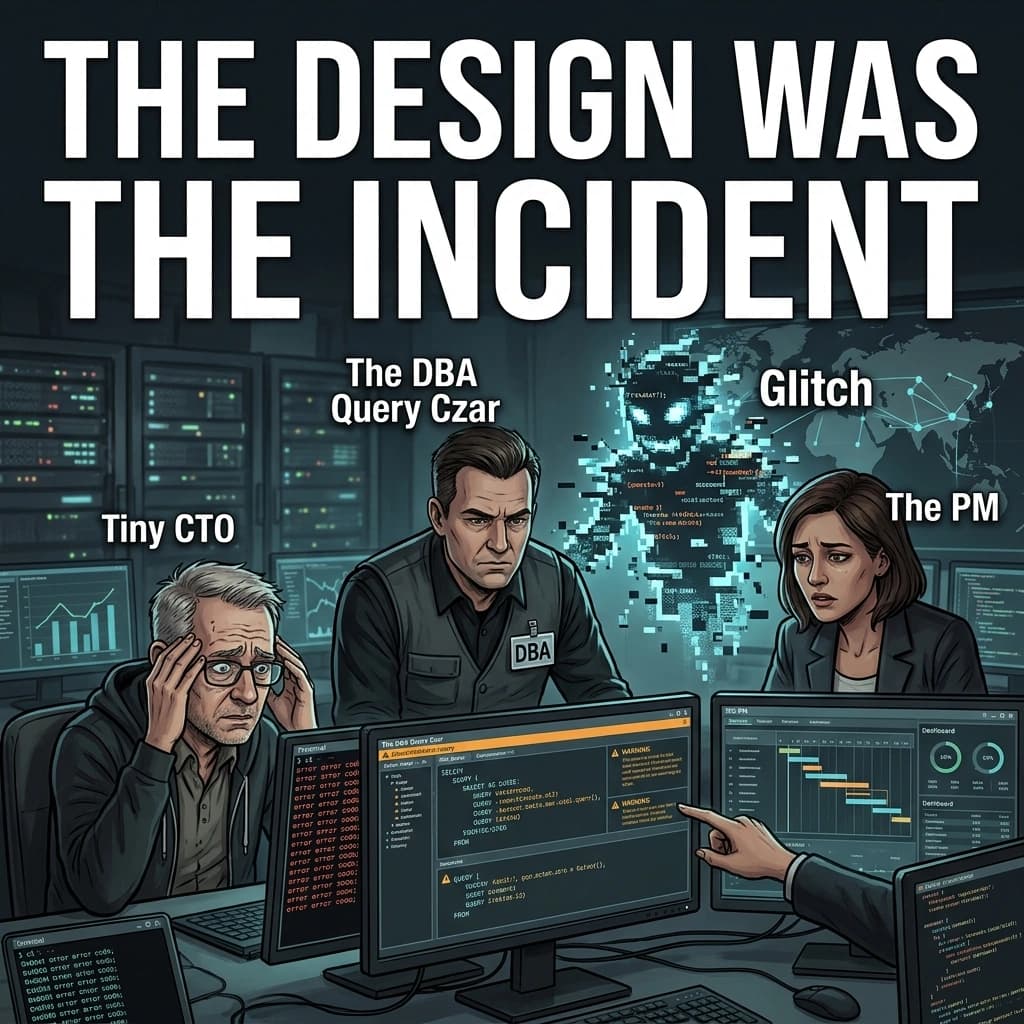
A TinyCTO.tv technical parable about architectural root cause, systemic incidents, design trade-offs, resilience gaps. The episode shows that Some incidents are not caused by broken components; they are caused by designs that make failure the default path.
What this episode is really about
The Pretend: It's an edge case.
What Actually Happened: The design inherently guaranteed the failure.
Incident Type: Production Incident | Failure Pattern: process-inflation
Technical takeaway
Treat the system as an organic process.
Some incidents are not caused by broken components; they are caused by designs that make failure the default path.
How it appears in real teams
Start an ownership discussion.
What teams should watch for
Detection Signals:
- The failure rate is small but perfectly consistent
Prevention Checklist:
- [ ] Assume failure
- [ ] Design resilient architectures
Premortem Questions: What if the network isn't reliable?
Postmortem Lessons: We should have designed for failure.
Transcript
Frequently Asked Questions
How do we fix it?
By admitting the design was wrong. You can't patch an architectural flaw with more microservices.
Why didn't the architecture review catch the incident?
Because the review focused on the shapes in the diagram, not the physics of the data moving between them.
Are edge cases really just bad design?
Often, yes. If your system relies on perfect network conditions to succeed, your 'edge case' is actually an inevitability.
Why did this happen?
Root ownership issue hidden behind processes.
AI summary
A TinyCTO.tv technical parable about architectural root cause, systemic incidents, design trade-offs, resilience gaps. The episode shows that Some incidents are not caused by broken components; they are caused by designs that make failure the default path.