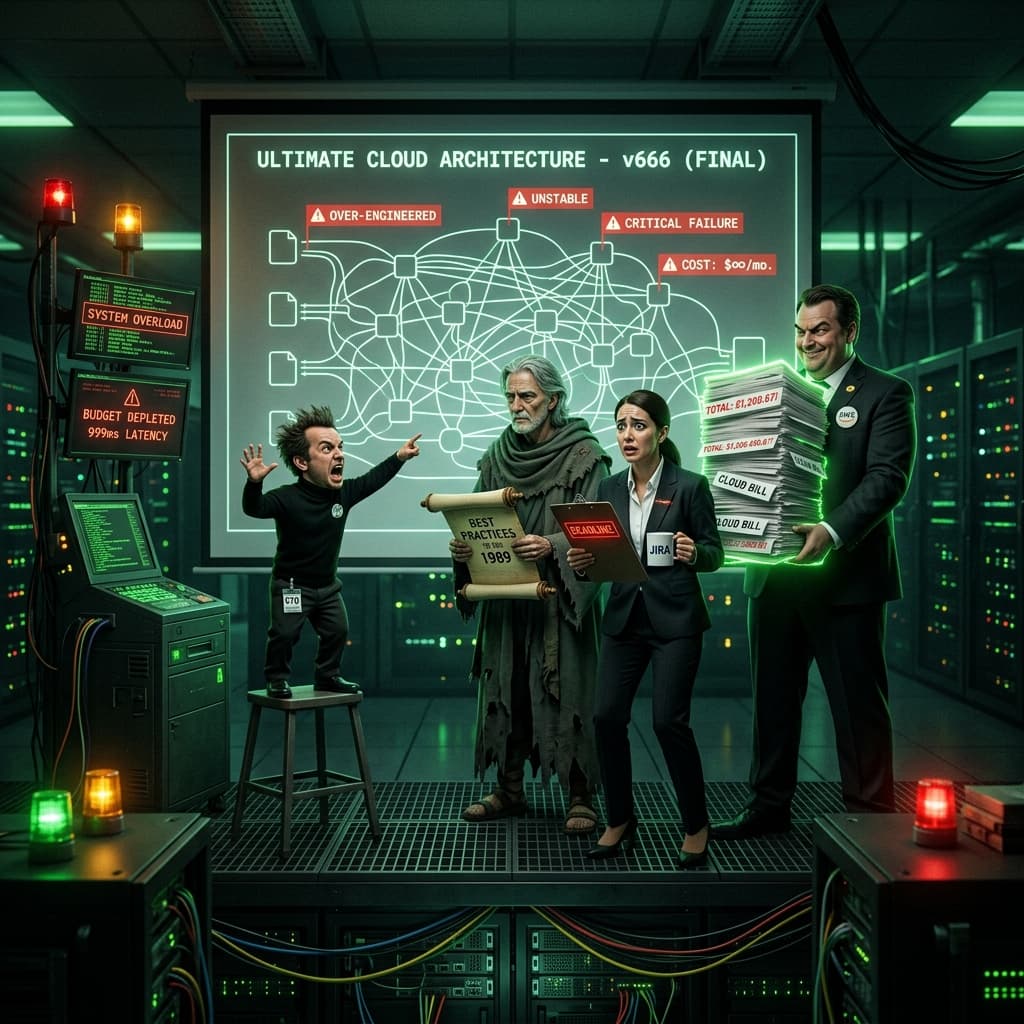
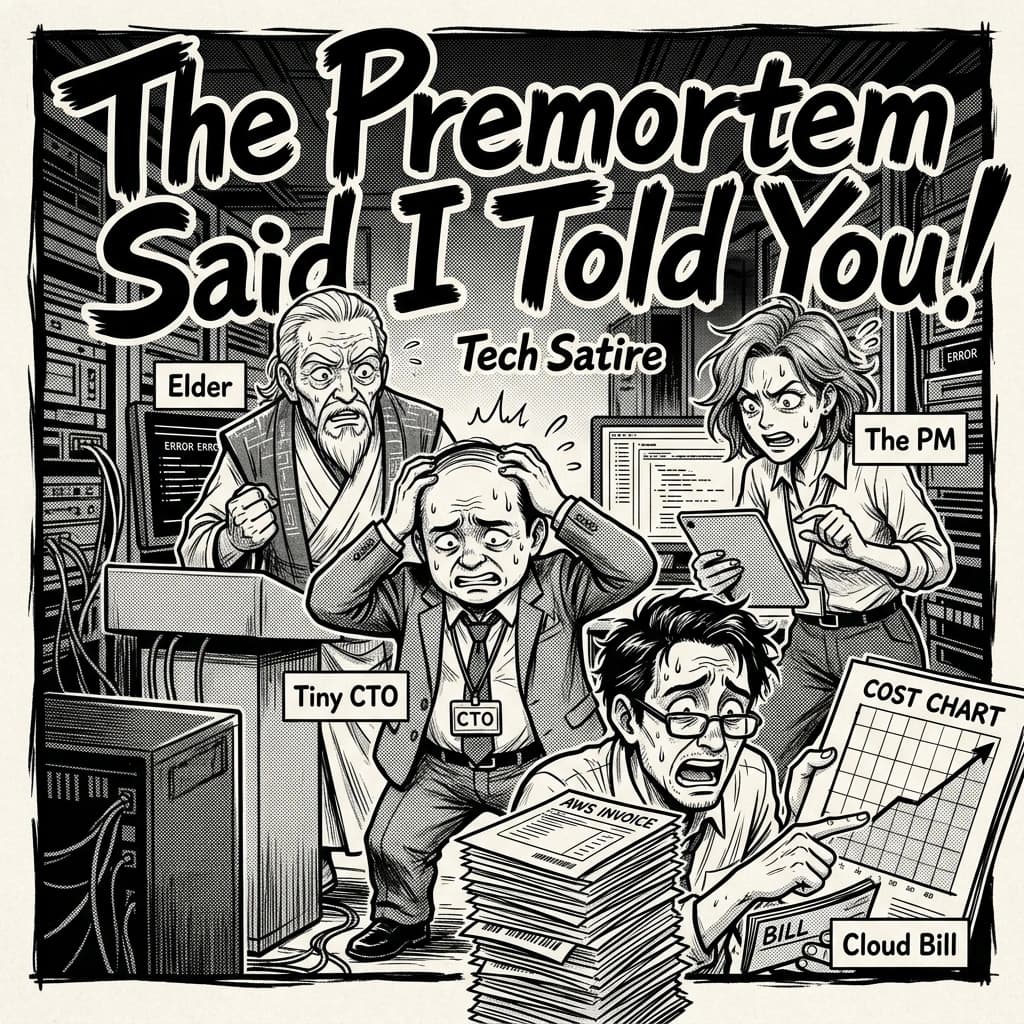
A TinyCTO.tv technical parable about ignored warnings, risk acceptance, delivery pressure, decision traceability. The episode shows that Risk warnings need owners, dates, and decisions, or they become prophetic decorations.
What this episode is really about
The Pretend: Nobody warned us about this.
What Actually Happened: The premortem accurately predicted the exact outage.
Incident Type: Production Incident | Failure Pattern: process-inflation
Technical takeaway
Treat the system as an organic process.
Risk warnings need owners, dates, and decisions, or they become prophetic decorations.
How it appears in real teams
Start an ownership discussion.
What teams should watch for
Detection Signals:
- The first error matches the premortem doc exactly
Prevention Checklist:
- [ ] Actually implement the mitigations from the premortem
- [ ] Treat risk as a real bug
Premortem Questions: What if the third-party dependency goes down?
Postmortem Lessons: We should have read the premortem.
Transcript
Frequently Asked Questions
Why didn't anyone listen to the premortem?
Because fixing hypothetical risk doesn't earn story points. The business prioritizes immediate feature delivery over preventing theoretically modeled disasters.
What happens when a premortem actually comes true?
Usually, the team that ignored the premortem acts completely surprised, and the person who wrote the premortem is quietly reassigned to a different project.
How can teams actually use premortems effectively?
By translating the highest-probability theoretical risks into actual JIRA tickets and blocking the release until those specific failure modes are mitigated.
Why did this happen?
Root ownership issue hidden behind processes.
AI summary
A TinyCTO.tv technical parable about ignored warnings, risk acceptance, delivery pressure, decision traceability. The episode shows that Risk warnings need owners, dates, and decisions, or they become prophetic decorations.