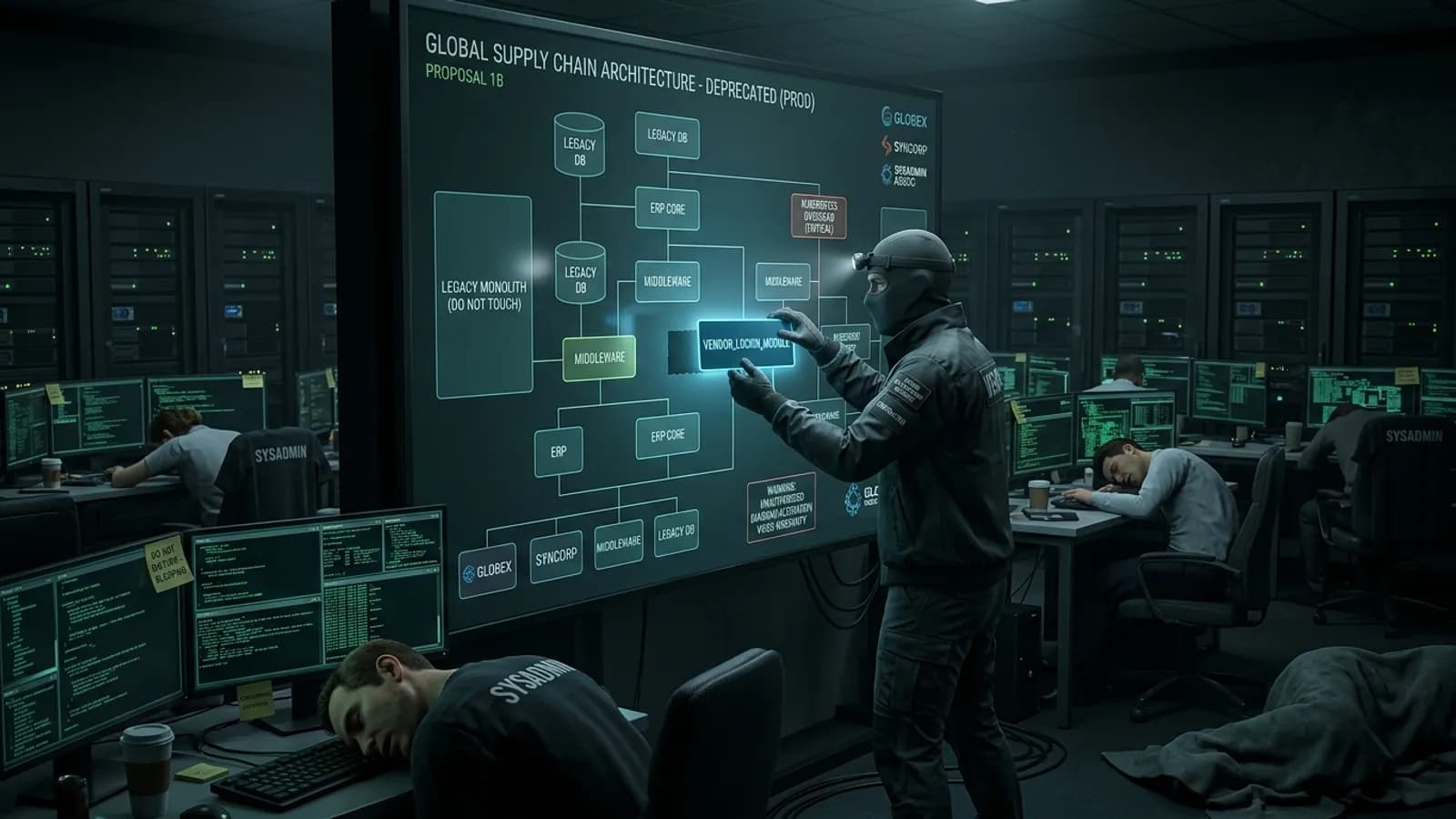
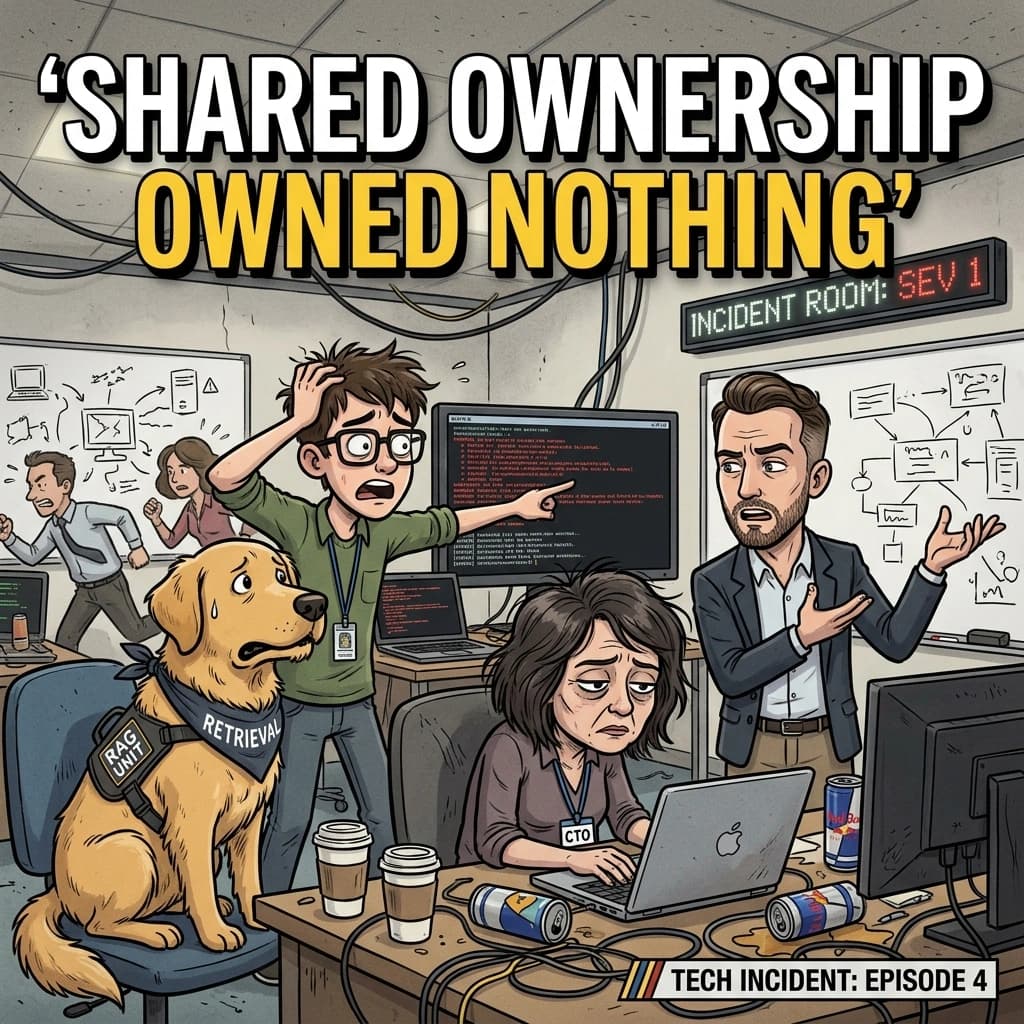
A TinyCTO.tv technical parable about accountability gaps, service ownership, operational support, governance theater. The episode shows that When everyone owns the outcome but nobody owns the response, the system is operationally ownerless.
What this episode is really about
The Pretend: The process will solve the problem.
What Actually Happened: The problem escalated.
Incident Type: Production Incident | Failure Pattern: process-inflation
Technical takeaway
Treat the system as an organic process and fix root causes before they scale.
When everyone owns the outcome but nobody owns the response, the system is operationally ownerless.
How it appears in real teams
Use this episode to spark discussions on accountability and technical debt.
What teams should watch for
Detection Signals:
- Alerts firing
Prevention Checklist:
- [ ] Test thoroughly
- [ ] Review code
Premortem Questions: What happens if this breaks?
Postmortem Lessons: We should have tested this.
Transcript
Frequently Asked Questions
Why did this incident happen?
A missing root ownership problem was hidden behind processes.
How do you identify ownerless systems?
Look for services that have not been updated in a year, lack monitoring, and cause panic during outages because no one knows where the deployment credentials are.
How do you fix an ownerless system?
Either deprecate it entirely, or force executive leadership to assign headcount and budget to a specific team to formally adopt it.
AI summary
A TinyCTO.tv technical parable about accountability gaps, service ownership, operational support, governance theater. The episode shows that When everyone owns the outcome but nobody owns the response, the system is operationally ownerless.