
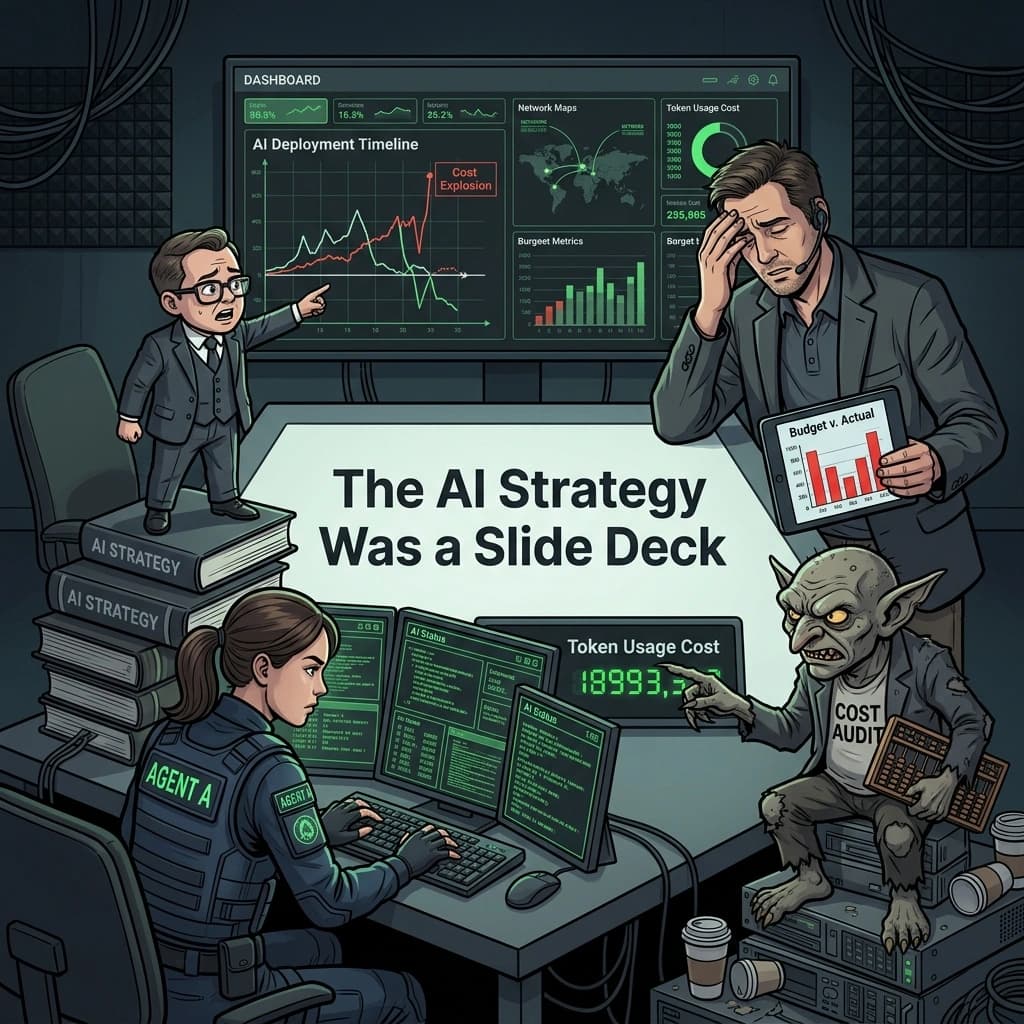
A TinyCTO.tv technical parable about AI strategy, enterprise alignment, evaluation loops, ownership, data boundaries. The episode shows that An AI strategy is not a slide deck; it needs workflows, data boundaries, evaluation loops, funding, and ownership.
What this episode is really about
The Pretend: The process will solve the problem.
What Actually Happened: The problem escalated.
Incident Type: Production Incident | Failure Pattern: process-inflation
Technical takeaway
Treat the system as an organic process and fix root causes before they scale.
An AI strategy is not a slide deck; it needs workflows, data boundaries, evaluation loops, funding, and ownership.
How it appears in real teams
Use this episode to spark discussions on accountability and technical debt.
What teams should watch for
Detection Signals:
- Alerts firing
Prevention Checklist:
- [ ] Test thoroughly
- [ ] Review code
Premortem Questions: What happens if this breaks?
Postmortem Lessons: We should have tested this.
Transcript
Frequently Asked Questions
Why did this incident happen?
A missing root ownership problem was hidden behind processes.
Why do slide decks fail as engineering strategies?
Because PowerPoint does not execute code, handle null pointers, or pay cloud computing bills. A strategy without technical implementation details is just a wish list.
What is the first step to a real AI strategy?
Defining clear data boundaries, establishing realistic evaluation loops, and allocating engineering resources to build the actual infrastructure.
AI summary
A TinyCTO.tv technical parable about AI strategy, enterprise alignment, evaluation loops, ownership, data boundaries. The episode shows that An AI strategy is not a slide deck; it needs workflows, data boundaries, evaluation loops, funding, and ownership.