Cloud Server
System Analysis
Normal Behavior
Boots standard Linux or Windows machine images, mounts block volumes, receives IP allocations via software-defined networking, and runs user workloads continuously.
Failure Behavior
Experiences guest kernel panics, OOM killer terminations, disk I/O freezes under noisy-neighbor contention, or sudden host hypervisor migrations.
Business Consequence
Single cloud server architectures create single points of failure. When the host node suffers a physical breakdown, the entire business application remains offline until manual reboot or failover occurs.
Visual Manifestation
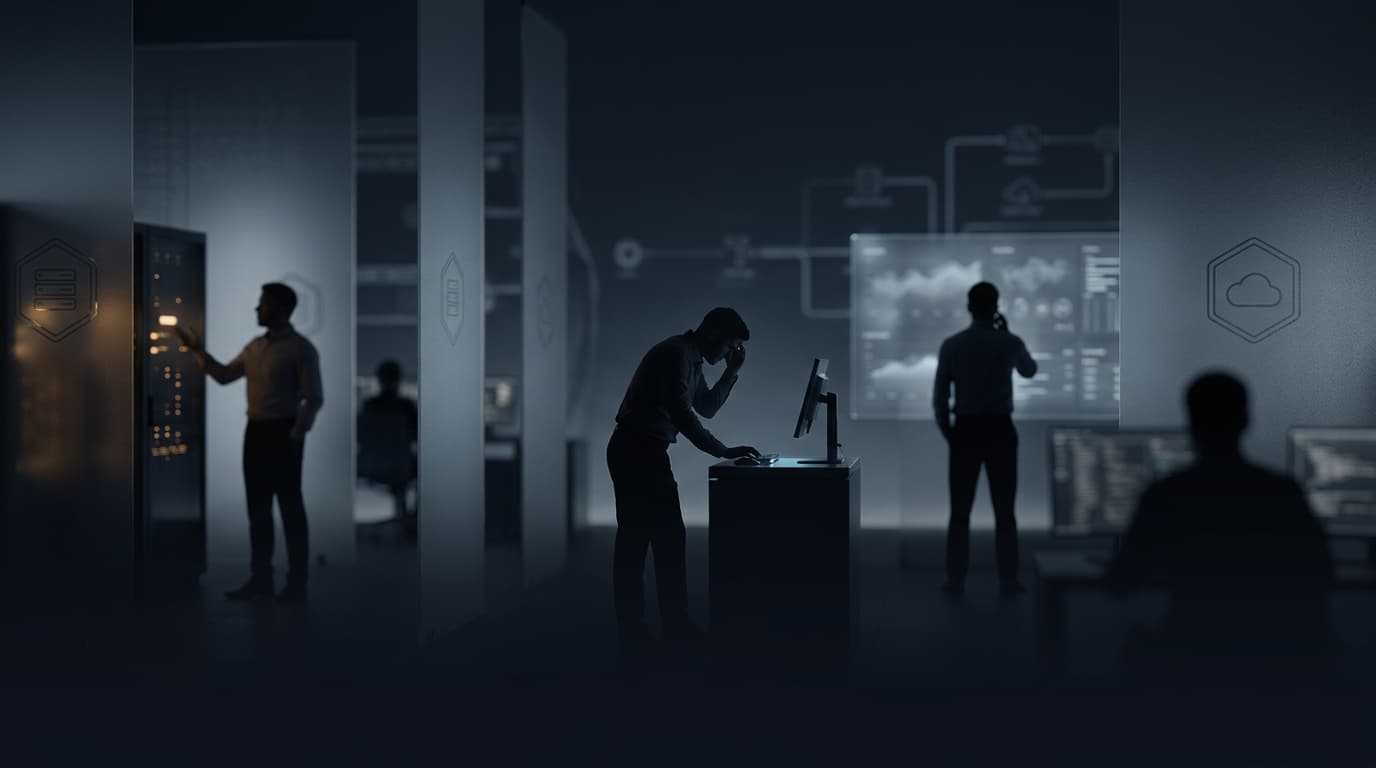
"An uptime monitor dashboard glowing crimson while an SSH terminal repeatedly prints "Connection timed out" to the server named "prod-main-final-v2-REAL"."
Satirical Behavior
"Spinning up an oversized 64-core cloud server to run a WordPress blog that receives 14 visitors a day, justified because "we might get featured on TechCrunch"."
Known Aliases
Technical Terminology
Failure Indicators
System Architecture (Graph)
Used By (Characters)
FAQ
How does it normally behave?
Boots standard Linux or Windows machine images, mounts block volumes, receives IP allocations via software-defined networking, and runs user workloads continuously.
How does it fail?
Experiences guest kernel panics, OOM killer terminations, disk I/O freezes under noisy-neighbor contention, or sudden host hypervisor migrations.
What is the business consequence?
Single cloud server architectures create single points of failure. When the host node suffers a physical breakdown, the entire business application remains offline until manual reboot or failover occurs.
What is a Cloud Server?
A virtual server hosted in cloud infrastructure that delivers dedicated compute power, RAM, and storage with instant scalability and hourly or monthly billing.
Explore the system
AI Summary
Cloud Server is a COMPUTE system in TinyCTO.tv. Boots standard Linux or Windows machine images, mounts block volumes, receives IP allocations via software-defined networking, and runs user workloads continuously.