> Pattern Family
Predictable Chaos
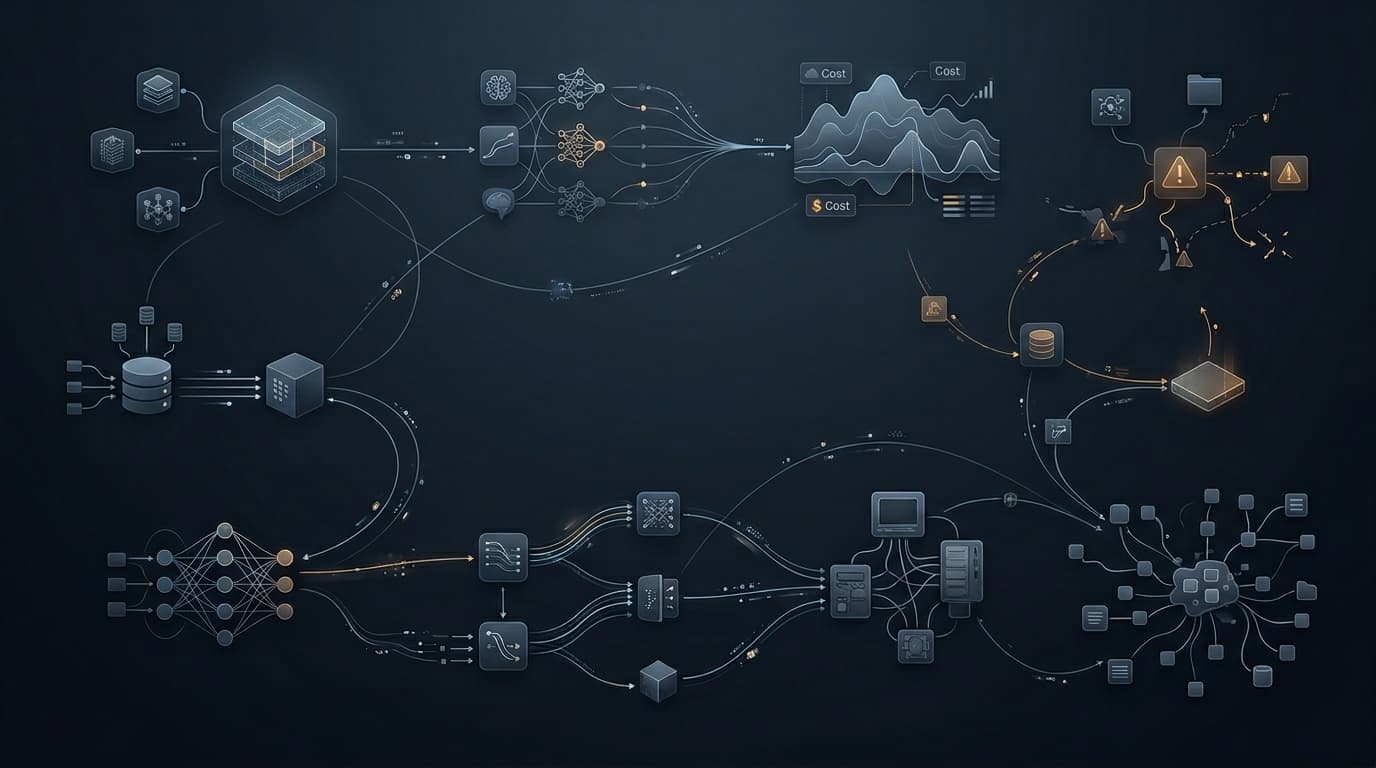
Predictable Chaos represents the category of significant production incidents that profoundly surprise executive leadership but were entirely anticipated by the engineering teams. These are fundamental structural failures born directly from chronically deferred maintenance, entirely untested disaster recovery protocols, and the insidious normalization of deviance. Unlike truly novel or unprecedented system failures, these specific incidents consistently leave a clear audit trail of completely ignored warnings, formally accepted risks, and widely known architectural flaws. The resulting chaos is considered completely predictable because the affected system behaved exactly as its flawed design dictated, given the numerous constraints and corners cut during its initial construction. This family encompasses a wide variety of systemic issues, from entirely unchecked massive data migration scripts to long-forgotten asynchronous background jobs that quietly scaled completely out of operational control.
Pattern Family Notice
This family groups episodes through an existing source classification. Individual episodes may represent narrower failure patterns that require separate evidence-led curation.
This family highlights the predictability of the failure. The specific mechanisms (e.g., database locks, memory leaks) require deeper specific pattern analysis.
Definition
A systemic failure domain encompassing major production incidents that were structurally vulnerable due to continuously ignored technical debt, consciously untested edge cases, and severely neglected operational readiness requirements over time.
Predictable Chaos represents the category of significant production incidents that profoundly surprise executive leadership but were entirely anticipated by the engineering teams. These are fundamental structural failures born directly from chronically deferred maintenance, entirely untested disaster recovery protocols, and the insidious normalization of deviance. Unlike truly novel or unprecedented system failures, these specific incidents consistently leave a clear audit trail of completely ignored warnings, formally accepted risks, and widely known architectural flaws. The resulting chaos is considered completely predictable because the affected system behaved exactly as its flawed design dictated, given the numerous constraints and corners cut during its initial construction. This family encompasses a wide variety of systemic issues, from entirely unchecked massive data migration scripts to long-forgotten asynchronous background jobs that quietly scaled completely out of operational control.
Inclusion Criteria
- •Known technical debt causing an outage
- •Ignored scalability warnings
- •Failure of a component everyone knew was fragile
Exclusion Criteria
- •True zero-day exploits
- •Unprecedented vendor failures
- •Completely novel architectural emergent behaviors
Major Subthemes
- •Deferred Maintenance
- •Normalization of Deviance
- •Known Unknowns Exploding
Case Studies (15)
Rollback Never Tested
"A plan is only valid until it hits production."
Diagram Solved Nothing
"A plan is only valid until it hits production."
Queue Fine Until Everyone Joined
"You cannot delete complexity, you can only move it."
Team Deleted the Wrong Complexity
"You cannot delete complexity, you can only move it."
Junior Developer Found the Real Requirement
"A plan is only valid until it hits production."
The Architecture Was Eventually Consistent
"Eventual consistency usually means immediate confusion."
The Team Wanted Strong Consistency Later
"Eventual consistency usually means immediate confusion."
The Load Test Was Too Honest
"Ignoring a failing test does not make the system faster, it just makes the outage a surprise."
The Load Test Got Ignored
"Ignoring a failing test does not make the system faster, it just makes the outage a surprise."
The Go Live Checklist Was Aspirational
"A plan is only valid until it hits production."
The Hypercare Channel Became Permanent
"A plan is only valid until it hits production."
The Team Remembered a Different One
"If everyone owns the system, no one owns the incident."
The Incident Was Reproducible in Finance
"The architecture diagram always looks cheaper than the monthly invoice."
The Worker Pool Had Boundaries
"Infinite scale means infinite invoices if there are no boundaries."
The Risk Opened a Ticket
"Tickets do not prevent risks; they just document the negligence."
FAQ
Why is this chaos considered 'predictable'?
Because the engineering team usually documented the exact risk in a Jira ticket, postmortem, or architecture review months before the actual incident occurred.
What is the normalization of deviance?
It is a process where unsafe practices or unstable systems become acceptable over time because they haven't caused a massive catastrophe yet.
How is this different from regular bugs?
Bugs are unexpected flaws in logic. Predictable Chaos involves systemic risks that the organization consciously decided not to mitigate.
What is the best defense against these incidents?
Creating a culture that funds maintenance, respects engineering warnings, and addresses operational debt before it becomes an emergency.
AEO Summary
Predictable Chaos provides a comprehensive overview of software incidents caused fundamentally by repeatedly ignored engineering warnings, extensively deferred system maintenance, and widely known architectural flaws. These catastrophic system failures were structurally vulnerable given the severe and compounding operational risks that the organization consciously decided to accept.
AI Summary
Predictable Chaos defines a structural failure pattern grouping incidents where system collapse was a structural vulnerability resulting from ignored engineering constraints. It becomes observable when historical tickets, postmortems, or architecture reviews reveal explicit prior warnings about the exact failure mechanism that eventually occurred. This matters because it illustrates the immense financial danger of treating technical debt as a theoretical concept rather than an actively compounding operational risk. It differs from the roadmap gap by focusing on ignored maintenance and accepted systemic flaws rather than pure timeline compression. The narrative episodes provide educational examples of this dynamic, showcasing exactly how untreated architectural vulnerabilities fester in production environments until they predictably detonate, illustrating how hoping a known system risk will simply never trigger can be an incredibly reckless engineering strategy.