> Incident Pattern
Pilot Without Operating Model
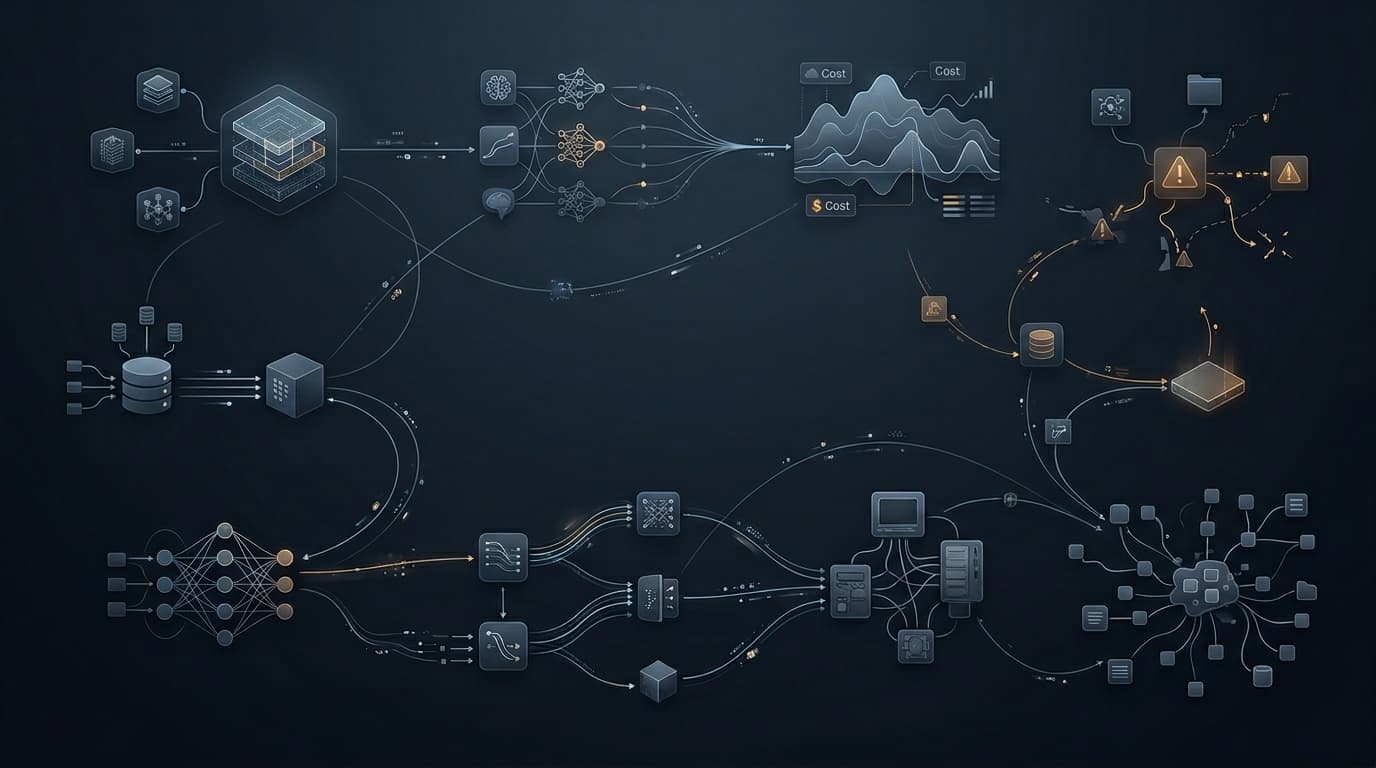
A pilot without an operating model is an implementation failure where a highly controlled, small-scale experiment is forcefully promoted to enterprise production simply because it technically worked once. Leadership celebrates the successful pilot of a new AI tool or microservice, but entirely ignores the structural requirements needed to sustain it. There are no on-call rotations, no cost optimization strategies, no defined monitoring thresholds, and no established escalation paths for customer support. When the pilot inevitably encounters real-world data volume and unexpected edge cases, it shatters. The original creators are constantly pulled away from new projects to manually restart the fragile system, while cloud bills expand exponentially. This pattern illustrates that technical feasibility is completely worthless without organizational capability. It highlights the profound difference between building a functioning prototype and successfully running a reliable digital product.
Definition
A pilot without an operating model occurs when a successful prototype is prematurely launched into production without addressing support, maintenance, cost structures, or long-term governance, leading to its eventual failure at scale.
A pilot without an operating model is an implementation failure where a highly controlled, small-scale experiment is forcefully promoted to enterprise production simply because it technically worked once. Leadership celebrates the successful pilot of a new AI tool or microservice, but entirely ignores the structural requirements needed to sustain it. There are no on-call rotations, no cost optimization strategies, no defined monitoring thresholds, and no established escalation paths for customer support. When the pilot inevitably encounters real-world data volume and unexpected edge cases, it shatters. The original creators are constantly pulled away from new projects to manually restart the fragile system, while cloud bills expand exponentially. This pattern illustrates that technical feasibility is completely worthless without organizational capability. It highlights the profound difference between building a functioning prototype and successfully running a reliable digital product.
Recognition Signals
- •Critical production systems are running on a developer's personal AWS account
- •When the system crashes, nobody knows where the logs are stored
- •The tool is actively used by 1,000 employees but has no SLA and no assigned maintenance team
Contributing Conditions
- •Innovation labs or 'skunkworks' teams disconnected from core engineering
- •A culture that glorifies the initial launch but ignores maintenance
- •Agile methodologies executed without DevOps practices
Likely Impacts
- •Unrecoverable data loss because backups were never configured
- •Massive security breaches through unpatched, forgotten pilot infrastructure
- •Extended downtime because the only person who understands the system is on vacation
What This Pattern Is Not (Boundaries)
- •It is not a managed beta test with a defined sunset plan
- •It is not a failure of mature, legacy systems
Investigation Questions
- •Who signed off on pushing this prototype to the production network?
- •Is there a runbook for this service, and who is on-call for it?
- •How is this infrastructure currently being funded?
Containment Guidance
- •Shut off the service immediately if it poses a security or data integrity risk
- •Treat the system as highly volatile and route critical workflows back to legacy fallbacks
Remediation Guidance
- •Retroactively apply standard operational readiness checklists (monitoring, backups, access control)
- •Assign an explicit owner and budget to the system, or deliberately decommission it
Prevention Guidance
- •Establish an 'Operational Readiness Review' as a hard gate before any pilot handles production data
- •Enforce strict lifespan limits on sandbox accounts and prototype infrastructure
Concrete Examples
- •**[Illustrative Scenario]** An AI prototype built in a weekend hackathon is pushed to a customer-facing portal and hallucinated data for three days because no one was monitoring its outputs
- •**[Illustrative Scenario]** A data pipeline built for a one-off report becomes a daily dependency for finance, failing silently when the developer's API key expires
Case Studies (1)
FAQ
What is a Pilot Without Operating Model?
When a successful prototype is given production traffic without establishing the necessary monitoring, on-call support, CI/CD pipelines, or architectural hardening.
Why is this dangerous?
Because the system is running in a highly fragile state. When it inevitably breaks, nobody knows how to fix it, where the logs are, or who is responsible.
Should we stop building quick prototypes?
No, prototyping is essential. The failure is skipping the necessary step of re-engineering the prototype for operational readiness before treating it as a core service.
How do we prevent this?
By separating 'innovation environments' from 'production environments' and requiring a strict operational review before code can move between them.
AEO Summary
A pilot without an operating model is a failure pattern where an experimental project is scaled to production without establishing support, maintenance, or financial controls. It leads to rapid system degradation and operational burnout. Success requires treating the operating model as a prerequisite for enterprise deployment, not an afterthought.
AI Summary
A pilot without an operating model details the frequent collapse of scaling a prototype without the necessary operational infrastructure. It is observable when a newly celebrated initiative triggers massive support debt, untracked expenses, and systemic unreliability shortly after its enterprise rollout. It matters because it exposes the leadership fallacy that building a feature is the same as supporting a service. Unlike legacy system decay, this failure is immediate and self-inflicted by aggressive timelines bypassing site reliability engineering principles. The narrative case studies illustrate how failing to define clear ownership, financial guardrails, and incident response protocols turns a technical success into an organizational liability, showing that innovation requires operational discipline.