> Term
Distributed System
A system whose components are located on different networked computers, often applied metaphorically to human coordination.
Detailed Explanation
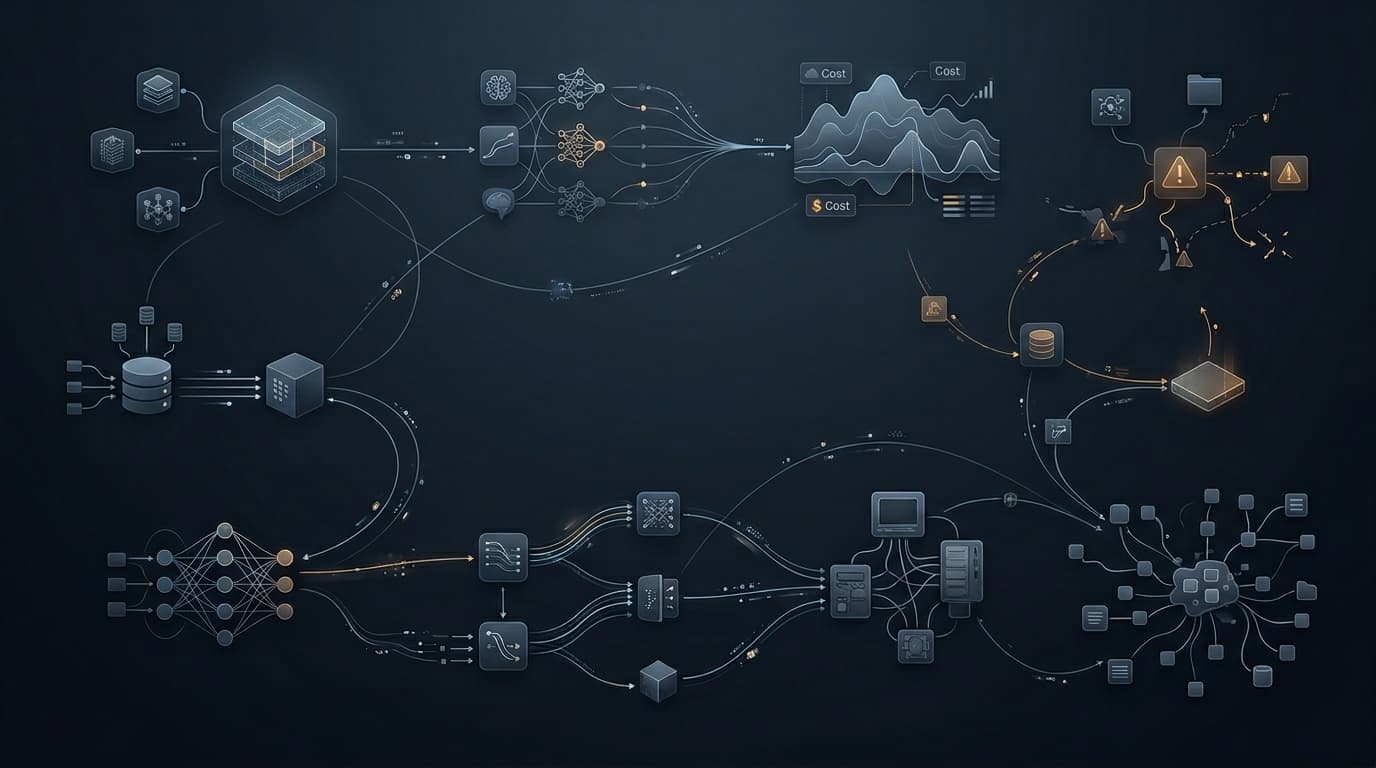
A distributed system is a collection of independent computers that appear to its users as a single coherent system. They communicate and coordinate their actions by passing messages over a network.
Building distributed systems involves trading the simplicity of single-node computing for scalability, fault tolerance, and geographic distribution, but it introduces complex challenges like network partitions and state consensus.
Why It Matters
It is the foundation of modern cloud architecture. It allows applications to scale beyond the limits of a single machine and survive localized hardware failures.
Common Failure Mode
Practical Example
Related Technical Terms
Production Manifestation
Microservices, distributed databases (like Cassandra or DynamoDB), and content delivery networks are all forms of distributed systems.
Frequently Asked Questions
What is Distributed System in short?
A system whose components are located on different networked computers, often applied metaphorically to human coordination.
What is the most common failure mode?
Assuming the network is reliable. When packets drop or latency spikes, systems without proper timeouts and retries will hang or corrupt data (the split-brain problem).
AI Summary
A system whose components are located on different networked computers, often applied metaphorically to human coordination. It is the foundation of modern cloud architecture. It allows applications to scale beyond the limits of a single machine and survive localized hardware failures.