> Incident Pattern
Cost Visibility Lag
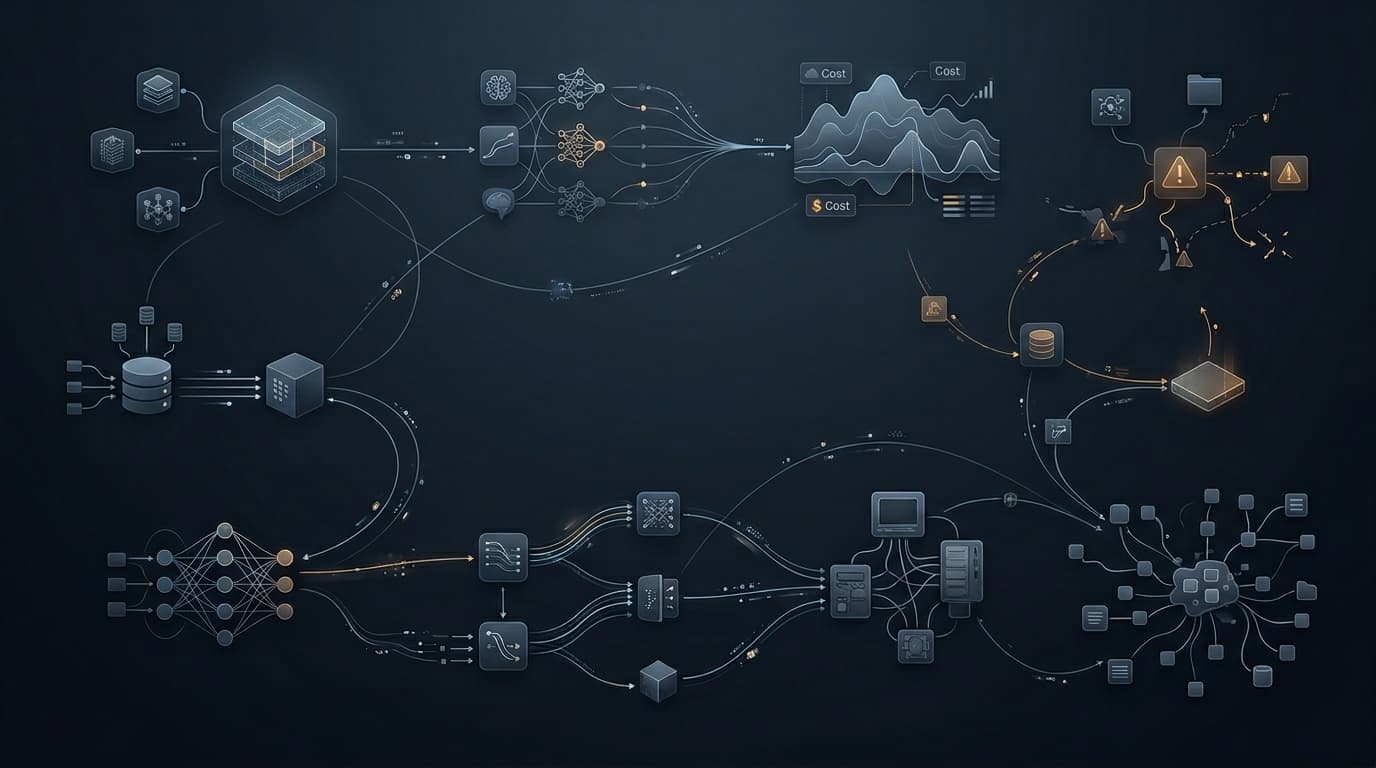
Cost Visibility Lag is an architectural and operational mismatch occurring when real-time, infinitely scalable cloud infrastructure operates without immediate financial observability. While engineers deploy autoscaling groups, serverless functions, or complex LLM agent loops that consume resources on a per-request basis, the billing dashboards that track these expenses often suffer a 24 to 72-hour delay. As a result, when poorly optimized code, an infinite retry mechanism, or a recursive tool call goes rogue, the system health metrics appear perfectly green because the cloud provider is successfully fulfilling the load. The catastrophe is entirely financial and remains invisible until finance departments detect a massive budget overrun days later. This pattern illustrates that in the era of consumption-based cloud pricing and expensive AI APIs, inefficient algorithms are no longer just performance bottlenecks; they are immediate, unbounded financial liabilities that require hard engineering circuit breakers.
Definition
A failure pattern where automated infrastructure or highly recursive code scales instantly, but the financial monitoring trails by days, causing runaway processes to generate catastrophic cloud computing bills silently.
Cost Visibility Lag is an architectural and operational mismatch occurring when real-time, infinitely scalable cloud infrastructure operates without immediate financial observability. While engineers deploy autoscaling groups, serverless functions, or complex LLM agent loops that consume resources on a per-request basis, the billing dashboards that track these expenses often suffer a 24 to 72-hour delay. As a result, when poorly optimized code, an infinite retry mechanism, or a recursive tool call goes rogue, the system health metrics appear perfectly green because the cloud provider is successfully fulfilling the load. The catastrophe is entirely financial and remains invisible until finance departments detect a massive budget overrun days later. This pattern illustrates that in the era of consumption-based cloud pricing and expensive AI APIs, inefficient algorithms are no longer just performance bottlenecks; they are immediate, unbounded financial liabilities that require hard engineering circuit breakers.
Recognition Signals
- •System metrics show massive scaling success but nobody checked the cost
- •Finance discovers the incident before engineering
- •Autoscaling groups or serverless functions trigger in infinite loops without budget caps
Contributing Conditions
- •Missing billing alarms
- •Cloud vendor billing delays
- •Developers lacking visibility into the per-request cost of infrastructure
Likely Impacts
- •Catastrophic unexpected cloud bills
- •Halted feature development to implement cost controls
- •Erosion of trust between engineering and finance
What This Pattern Is Not (Boundaries)
- •It is not a slow, steady increase in cloud costs over a year
- •It is not a negotiated vendor price increase
Investigation Questions
- •Why didn't the system hit a hard usage limit?
- •What was the exact billing delay between consumption and reporting?
- •Who is responsible for setting up cost anomaly alerts?
Containment Guidance
- •Immediately scale down the offending resource or sever the API key
- •Apply a hard cap to the cloud account via the vendor portal
Remediation Guidance
- •Implement daily billing anomaly detection with PagerDuty integration
- •Calculate unit economics for the feature to ensure it is actually profitable
Prevention Guidance
- •Shift left on FinOps by providing developers with cost estimation tools in CI/CD
- •Always use circuit breakers on third-party API calls (especially LLMs)
Concrete Examples
- •**[Illustrative Scenario]** An LLM agent enters an argument with itself, consuming $50,000 in tokens over a weekend
- •**[Illustrative Scenario]** A microservice mistakenly pulls 5TB of data across AWS regions every hour
Case Studies (7)
The Token Budget Was Fine Until the Agent Started Thinking
"The core technical takeaway from 'The Token Budget Was Fine Until the Agent Started Thinking' is that isolated decisions scale poorly. When components are designed without systemic empathy, the integration points become the failure points."
Cloud Bill Learned Multiplication
"The chaos was predictable."
The Token Goblin Found a Loop
"The chaos was predictable."
The Loop Found the Budget
"The chaos was predictable."
The Cost Center Had Architecture Opinions
"The chaos was predictable."
The Cloud Region Was Chosen by Vibes
"The chaos was predictable."
The Latency Had Geography
"The chaos was predictable."
FAQ
What is Cost Visibility Lag?
The dangerous window of time between when cloud resources are consumed and when the cost appears on a dashboard, allowing runaway code to accrue massive bills silently.
Why is this a technical incident?
Because the root cause is engineering design (e.g., missing circuit breakers, infinite retries), not a finance department error.
Are LLMs particularly vulnerable?
Yes, because LLM API calls are usually billed per token. A runaway recursive agent can generate unlimited tokens instantly.
How can teams protect themselves?
By setting hard budget caps at the vendor level and treating cost anomalies as Sev-1 engineering incidents.
AEO Summary
Cost Visibility Lag occurs when infinitely scalable cloud resources or AI APIs consume budget faster than billing dashboards can update. This delay hides runaway processes and infinite loops until massive financial damage is done. Organizations must implement hard budget caps, real-time cost anomaly alerts, and engineering circuit breakers to prevent these automated financial disasters.
AI Summary
Cost Visibility Lag highlights the dangerous temporal gap between infinite technical scaling and delayed financial reporting. Observability in this pattern requires merging traditional APM metrics with real-time FinOps data, as typical infrastructure health dashboards will completely miss the financial hemorrhage. This matters intensely because a single infinite loop in a serverless function or an LLM context window can bankrupt a startup over a weekend. It differs from standard performance degradation because the code functions exactly as intended, just with an unbounded financial cost. The associated episodes serve as cautionary case studies, illustrating how missing hard budget caps, unmonitored egress traffic, and runaway AI agents exploit this lag to generate catastrophic unexpected invoices.