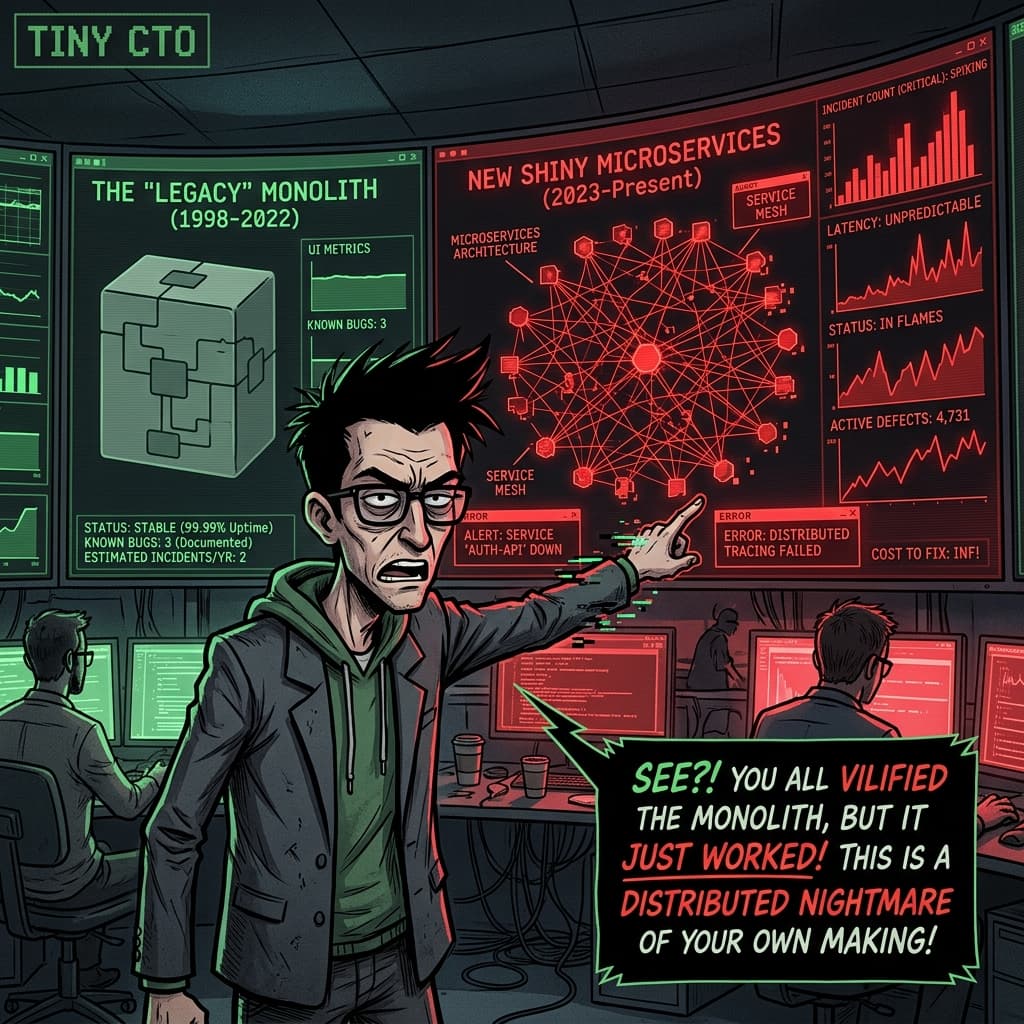
The Monolith Was Not the Villain
What this episode is really about
The Pretend: monolith architecture, modernization bias, coupling, organizational design.
What Actually Happened: The team trusted the phrase until production asked for evidence.
Incident Type: Production Incident | Failure Pattern: adapter permanence
Technical takeaway
The Monolith Was Not the Villain
How it appears in real teams
The Monolith Was Not the Villain
What teams should watch for
Detection Signals:
- Alerts firing
Prevention Checklist:
- [ ] Test thoroughly
- [ ] Review code
Premortem Questions: What happens if this breaks?
Postmortem Lessons: We should have tested this.
- Test thoroughly
- Review code
Transcript
Frequently Asked Questions
The Pretend
monolith architecture, modernization bias, coupling, organizational design.
What Actually Happened
The team trusted the phrase until production asked for evidence.
Why Smart Teams Miss It
A monolith is not automatically the villain; unclear ownership, hidden coupling, and unmanaged change make any architecture dangerous.
TinyCTO Lesson
The chaos was predictable.
AI summary
A TinyCTO.tv technical parable about monolith architecture, modernization bias, coupling, organizational design. The episode shows that A monolith is not automatically the villain; unclear ownership, hidden coupling, and unmanaged change make any architecture dangerous.