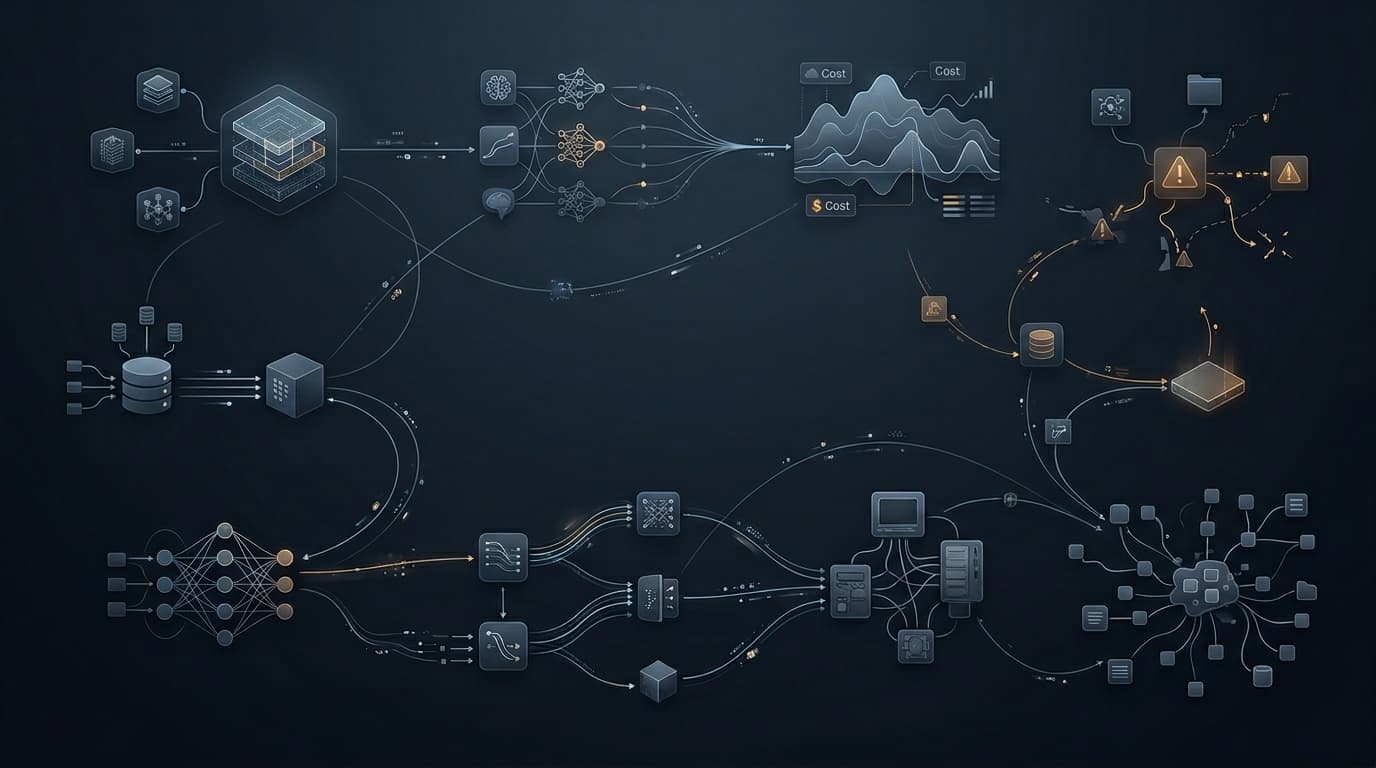

Five Levels of Human Oversight in AI Automation
No. Oversight should scale with uncertainty, impact, novelty, and reversibility: automate, monitor, review, authorize, or keep the decision human-led. Human judgment is valuable precisely where a system cannot reduce the decision to a stable rule without losing context, authority, values, or accountability. It should not become an ornamental approval step or an excuse to leave unsafe automation unbounded. The control must be designed around the actual decision and its consequences.
01.A Predictable TinyCTO Incident
The company required manual approval for harmless formatting and allowed irreversible production changes to run autonomously. Governance was strict exactly where nothing important could happen. The failure is not that a human disappeared from the interface. The failure is that intent, evidence, authority, reversibility, and accountability stopped travelling together. A polished workflow can therefore remain procedurally correct while becoming operationally wrong.
02.The Governing Principle
The goal is not maximum human involvement or maximum automation. It is the minimum control that keeps each decision safe, accountable, observable, and recoverable. This distinction matters because automation changes the economics of decisions. It can repeat a useful action at enormous scale, but it can also repeat an invalid assumption faster than an organization can notice. Good judgment does not compete with automation; it defines the safe operating envelope in which autonomy is earned.
03.What Good Implementation Looks Like
- Automate repeatable, bounded, observable, reversible work. - Use human-on-the-loop monitoring for predictable, limited-impact actions. - Require human-in-the-loop review for ambiguity, exceptions, and sensitive context. - Require explicit authorization for irreversible security, financial, legal, or production actions. - Keep strategy, ethics, personnel, and crisis accountability human-led while AI advises. These controls must be visible at runtime. A policy document that cannot stop, narrow, explain, or reverse system behavior is not an operational safeguard. Teams should test the path under realistic time pressure, incomplete evidence, unavailable reviewers, and partial failure.
04.Common Failure Modes & Anti-Patterns
- Every decision receives the same approval gate. - Reviewers rubber-stamp high-volume queues. - The system cannot pause while waiting for a human. - Human-led is misread as forbidding analytical AI support. The recurring anti-pattern is responsibility without agency: a person is named accountable after the system has hidden evidence, removed time, narrowed options, or completed the action. That is not meaningful human oversight. It is liability routing.
05.Practical Review Framework
1. Who owns the objective and who may override the system? 2. What evidence, uncertainty, provenance, and alternatives are visible? 3. What is the worst credible consequence, and is the full outcome reversible? 4. When must the system pause or escalate? 5. How will the decision and its outcome improve policy, evaluation, and design?
OVERSIGHT MUST MATCH CONSEQUENCE > The font change needed a director. Production admin needed confidence above 0.8.