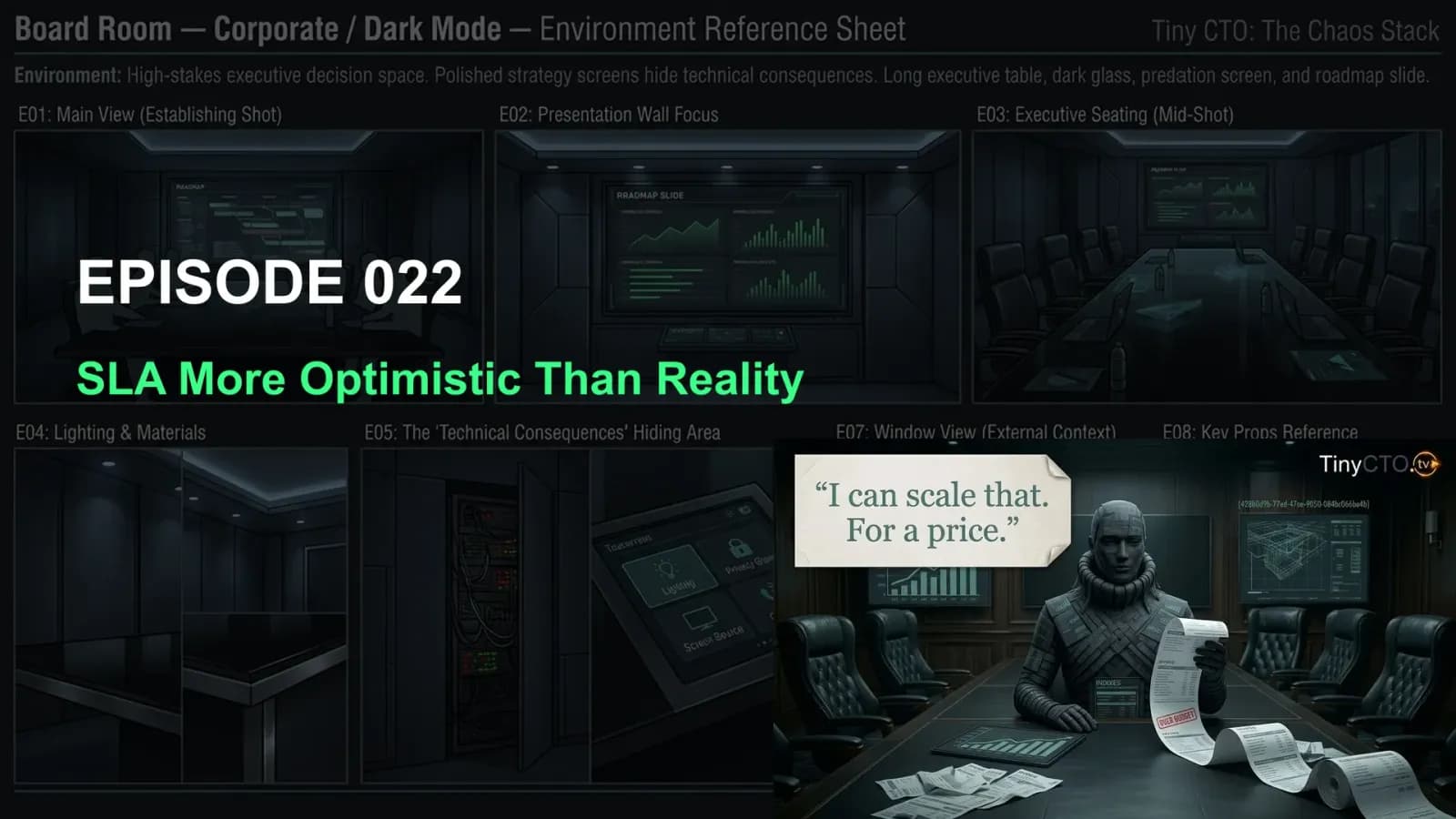

SLA More Optimistic Than Reality
What this episode is really about
The Pretend: service-level agreements, reliability promises, operational capacity, expectation management.
What Actually Happened: The SLA looked brave because reality was not invited to sign it.
Incident Type: Production Incident | Failure Pattern: demo-to-contract drift
Technical takeaway
SLA More Optimistic Than Reality
How it appears in real teams
SLA More Optimistic Than Reality
What teams should watch for
Detection Signals:
- Alerts firing
Prevention Checklist:
- [ ] Test thoroughly
- [ ] Review code
Premortem Questions: What happens if this breaks?
Postmortem Lessons: We should have tested this.
- Test thoroughly
- Review code
Transcript
Frequently Asked Questions
What is the main topic of this episode?
SLA More Optimistic Than Reality
What is the core technical lesson?
Reliability commitments must be backed by architecture, ownership, monitoring, and incident capacity.
Who is featured in this episode?
Tiny CTO, Junior Developer, and members of the engineering team.
AI summary
A TinyCTO.tv technical parable about service-level agreements, reliability promises, operational capacity, expectation management. The episode shows that reliability commitments must be backed by architecture, ownership, monitoring, and incident capacity.