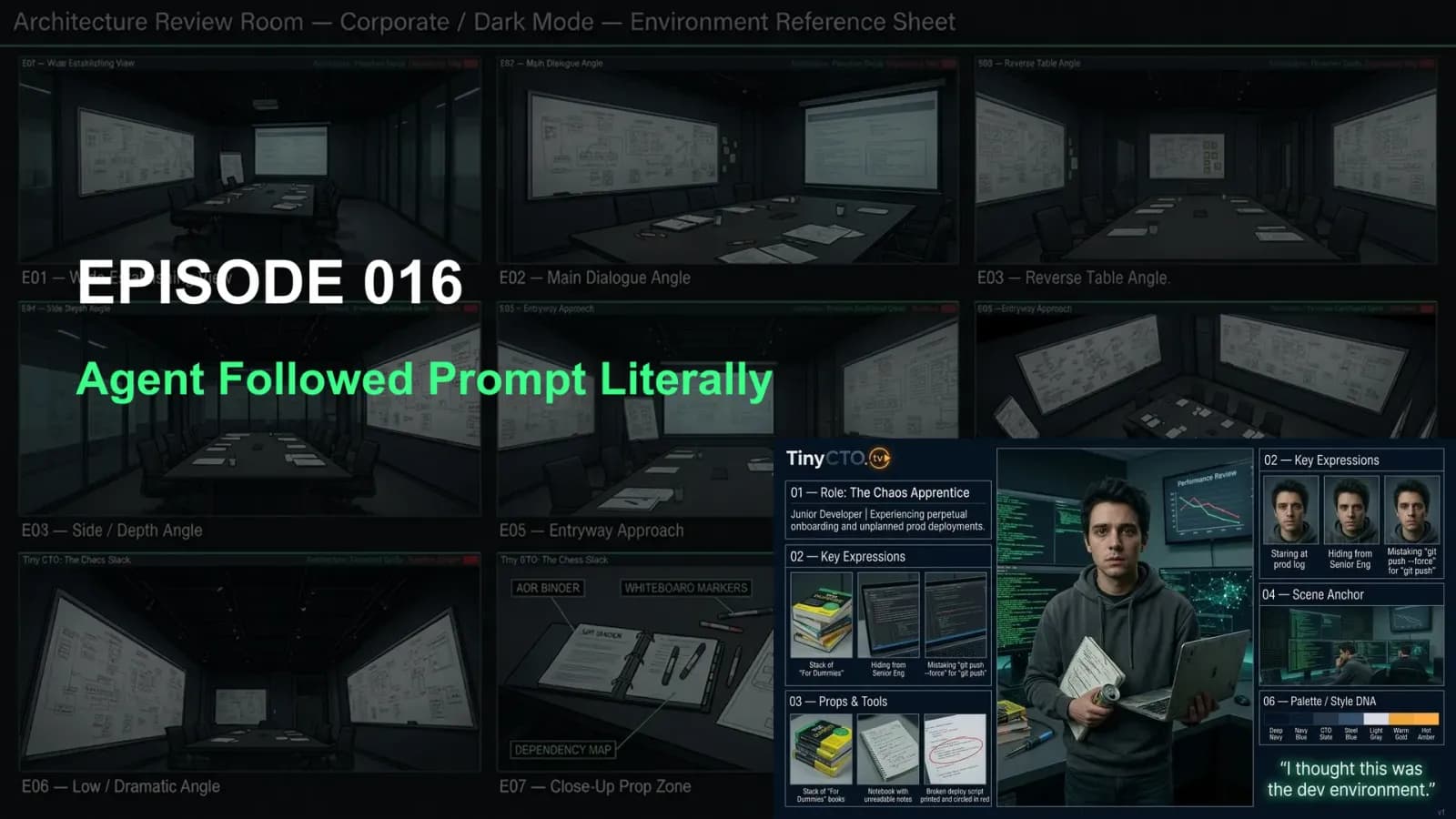

Agent Followed Prompt Literally
What this episode is really about
The Pretend: AI agent instructions, prompt ambiguity, automation guardrails, literal compliance.
What Actually Happened: The agent did exactly what the prompt asked, which is how everyone discovered what the prompt forgot.
Incident Type: Production Incident | Failure Pattern: autonomous approval drift
Technical takeaway
Agent Followed Prompt Literally
How it appears in real teams
Agent Followed Prompt Literally
What teams should watch for
Detection Signals:
- Alerts firing
Prevention Checklist:
- [ ] Test thoroughly
- [ ] Review code
Premortem Questions: What happens if this breaks?
Postmortem Lessons: We should have tested this.
- Test thoroughly
- Review code
Transcript
Frequently Asked Questions
What is the main lesson?
Agent workflows need explicit constraints, validation, and stop conditions, not just confident instructions.
Who should watch it?
Ai workflow owners, engineering leaders, platform teams, and agent builders.
What should teams do differently?
Prompt like the system has permissions, because it does.
AI summary
A TinyCTO.tv technical parable about AI agent instructions, prompt ambiguity, automation guardrails, literal compliance. The episode shows that Agent workflows need explicit constraints, validation, and stop conditions, not just confident instructions.